Apivar strips temperature range: what actually works in the hive
TL;DR
- Apivar (amitraz 3.2%) strips work when hive temperatures stay between roughly 50°F (10°C) and 106°F (41°C).
- Below 50°F the active ingredient off-gasses too slowly to reach a killing dose.
- Above 106°F efficacy drops and bees can be harmed.
- Best results come treating in the 59 to 95°F range while brood is present.
What is the official temperature range for using Apivar strips?
The Apivar product label, registered with the EPA, says strips should be used when ambient temperature is at least 50°F (10°C) and does not exceed 106°F (41°C) [1]. That is the manufacturer's working window. You agree to follow it the moment you open the package, because using a pesticide outside its label conditions is a federal violation under FIFRA.
Most treatment cycles land in the sweet spot between 59°F and 86°F (15 to 30°C). At those temperatures amitraz volatilizes steadily, bees move across the strips regularly, and the mite kill builds over the full 6 to 8 week window.
The 50°F floor is not arbitrary. Amitraz is a contact and fumigant acaricide, and its vapor pressure drops sharply as temperatures fall. Below 50°F the volatilization rate slows enough that mites on adult bees may never get a lethal dose, even with normal bee traffic across the strip. The 8-week label duration assumes temperatures stay inside the working range for most of that stretch, more than a few warm days.
What happens to Apivar efficacy if temperatures drop below 50°F?
Efficacy falls off, sometimes hard. The core problem is physics. Amitraz needs warmth to move from the polymer strip into the hive air and onto bee cuticle. A study in the Journal of Apicultural Research found amitraz-based treatments showed significantly reduced mite mortality at lower ambient temperatures compared with warm-weather applications, though the researchers noted variability between colonies [2].
For hobbyists in northern climates, this creates a real scheduling problem. Start a fall treatment in September with temperatures above 50°F through October, and you are fine. But a cold snap that pushes daytime highs below 50°F for a sustained stretch turns those days into wasted treatment time, and your 42-day contact window may not deliver enough cumulative exposure.
Here is the honest part: nobody has clean published data on exactly how many sub-50°F days ruin a cycle. The closest guidance comes from the Honey Bee Health Coalition's Varroa Management Guide, which recommends timing fall Apivar treatment so sustained warm periods overlap the brood-rearing window before winter bees are produced [3]. The practical move is to start fall treatment by late August or early September in most of the northern US, so you finish before hard cold sets in.
Cold also changes cluster behavior. Below about 57°F bees start clustering tightly, cutting contact with the strips. If your hive is already in a winter cluster, strip contact essentially stops no matter what the volatilization rate is.
Does high heat above 100°F hurt Apivar treatments?
The 106°F (41°C) ceiling covers two separate concerns: faster amitraz breakdown at high temperatures, and direct heat stress on the colony [1].
Amitraz degrades faster when it is hot. Faster degradation means a strip can exhaust its active ingredient before the 42-day minimum contact period ends, leaving surviving mites untreated during the back half of your window. Whether that causes real treatment failure under typical summer heat is debated. Bees regulate internal hive temperature to around 93 to 95°F (34 to 35°C) in summer, well within the working range, even when outside air hits 105°F [4].
Trouble shows up with very small colonies or nucleus hives that thermoregulate poorly, or hives baking in unshaded desert sun. In those cases internal temperatures can spike. The fix is simple: give your hives shade and ventilation during summer treatments.
For most beekeepers in temperate climates, cold is the bigger enemy. The common real-world failure is treating too late in fall, when nights have already dropped below freezing.
How does temperature interact with Apivar's 42-day minimum treatment period?
Apivar's label requires a minimum of 42 days (6 weeks) and a maximum of 56 days (8 weeks) of continuous strip exposure [1]. Temperature does not move those calendar limits, but it decides how much work the strips actually do during that window.
Think of the window as a budget of effective strip-contact days. If 10 of your 42 days fall below 50°F, the strips sat idle those days. The label will not let you stretch treatment past 56 days to make up for it, because prolonged amitraz exposure raises the risk of resistance and residue buildup in wax [5].
The Honey Bee Health Coalition recommends treating in spring after the honey super comes off (or before it goes on) and again in late summer or early fall [3]. Spring treatments in zones that still see April frost may partly dip below the floor. Late-summer treatments started in August usually give the most reliable warm window before brood rearing winds down.
A practical rule: count the forecast. Before strips go in, check a 6-week temperature outlook for your area. If sustained cold is expected inside the first four weeks, hold off, or plan to watch your mite load closely and re-treat once conditions allow.
At what temp can Apivar strips be used in a cold climate or winter?
Short answer: Apivar is not a winter treatment. If your colony is in a winter cluster and ambient temperatures stay below 50°F, skip it. The strips accomplish almost nothing, and you burn a treatment cycle, adding resistance pressure without the kill you need.
For cold-climate beekeepers in Minnesota, Vermont, or Montana, the fall window is short and unforgiving. Oregon State University Extension puts the ideal Pacific Northwest fall window at mid-August through mid-September, arguing that timing catches the pre-winter brood cycle before temperatures drop [6]. That logic carries across the northern tier of the US and into Canada.
Missed the fall window with high mite loads and cold already here? Oxalic acid vapor or dribble is the better tool for broodless or near-broodless colonies at low temperatures. Oxalic acid does not share amitraz's temperature floor, and it hits phoretic mites hard in a broodless cluster [3].
Apivar's strength is treating through a capped-brood cycle, killing mites as they emerge from cells onto returning nurse bees. That advantage vanishes in a broodless winter cluster anyway, which is one more reason oxalic acid fits winter and Apivar fits spring and late summer.
How do you place Apivar strips correctly for maximum contact at any temperature?
Placement decides how many bees actually walk across the strip, which decides how much amitraz reaches the mite population. The label says two strips per brood box, hung between frames in the center of the brood nest, roughly the third and seventh frame positions in a 10-frame box [1].
At colder temperatures the cluster pulls toward the center of the hive. Strips at the outer edges of a cold hive get no bee contact. Move strips closer to the cluster core when treating in marginal cool weather.
Strips hang vertically between frames, touching the top bar above and ideally the comb below. Strips lying flat on the bottom board, or jammed sideways between frames, get far less traffic. This is one of the most common avoidable mistakes.
Running two brood boxes? Use two strips per box (four total), placed in the brood nest of each. Do not bunch all four in the bottom box. The Honey Bee Health Coalition reinforces this: one strip per five frames of bees, which maps to roughly two strips per standard brood box [3].
For monitoring supplies and treatment accessories that make seasonal treatments easier to track, beekeeping supplies resources help you set up a simple seasonal kit.
After placing strips, check within the first two weeks that they have not been propolized to the frame or dropped to the bottom board. Bees sometimes chew or move them. If a strip is on the bottom board, hang it back up.
Can you use Apivar in a honey super or during a nectar flow?
No. This is one of the label's clearest prohibitions. Apivar strips must not be used when honey supers intended for human consumption are on the hive [1]. Pull all supers before inserting strips, and do not add supers back until strips are out and a reasonable residue-clearance period has passed.
Amitraz residues turn up in honey and wax from treated hives. A 2017 study in PLOS ONE detected amitraz and its metabolite DMPF in commercial honey samples from hives treated with amitraz [5]. The levels found were generally below regulatory limits, but that does not make treating during a flow acceptable. The label prohibition exists for good reason.
The scheduling consequence is straightforward. Plan spring treatment to finish before your main nectar flow starts, or push it to after your last honey harvest. In most US climates, an August treatment dodges both the honey flow and the cold-weather efficacy problem.
How does temperature affect Apivar compared to other varroa treatments?
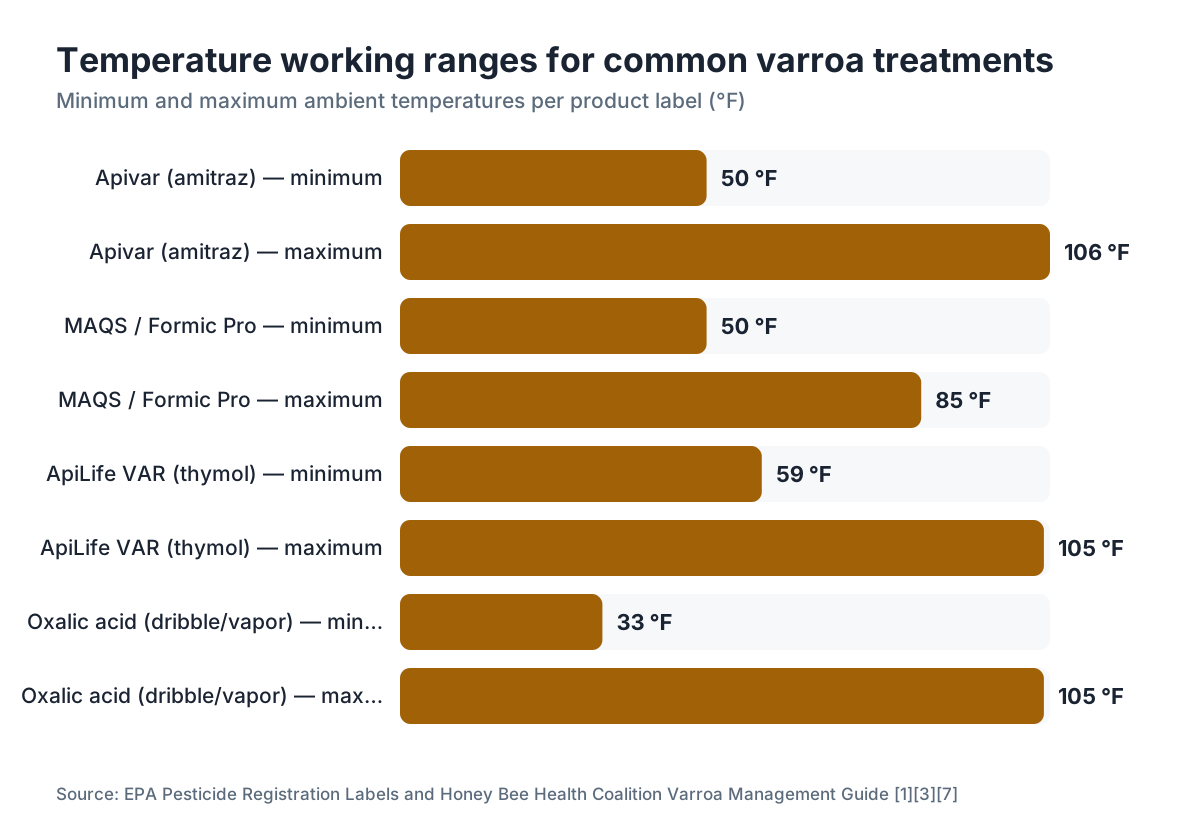
The table below compares the four main varroa treatment types on temperature requirements. This is data-shaped information and worth seeing side by side.
| Treatment | Active ingredient | Min temp | Max temp | Brood present needed? |
|---|---|---|---|---|
| Apivar strips | Amitraz 3.2% | 50°F (10°C) | 106°F (41°C) | Yes (works through brood cycle) |
| Oxalic acid (dribble) | Oxalic acid | Above freezing, bees moving | No stated ceiling | No (broodless best) |
| Oxalic acid (vapor) | Oxalic acid | Above freezing | No stated ceiling | No (broodless best) |
| Mite Away Quick Strips | Formic acid 68.2% | 50°F (10°C) | 85°F (29.4°C) | Yes |
| ApiLife VAR | Thymol / eucalyptol | 59°F (15°C) | 105°F (41°C) | Yes |
Sources: EPA product labels and Honey Bee Health Coalition Varroa Management Guide [1][3][7].
A few things jump out. Mite Away Quick Strips (MAQS/Formic Pro) have a much tighter maximum than Apivar: go above 85°F and you risk serious bee mortality. That makes Apivar the better summer choice in hot climates. Thymol products like ApiLife VAR carry a higher minimum than Apivar (59°F vs 50°F), so they are worse for marginal cool-weather fall treatments.
Oxalic acid has no meaningful temperature floor, which makes it the winter and early spring tool for broodless colonies, a job Apivar cannot do.
For a broader look at how varroa mite biology drives treatment timing, the mite's reproductive cycle explains why temperature matters beyond the chemistry.
What does Apivar resistance look like, and does temperature affect it?
Amitraz resistance in Varroa destructor is documented in the United States, Europe, and parts of South America. A USDA Agricultural Research Service survey published in Pest Management Science confirmed amitraz-resistant Varroa populations in several US states [8]. Resistance comes from steady use of amitraz in the same colonies without rotating to a different chemical class.
Temperature does not directly cause or prevent resistance. But bad temperature conditions can mimic it. If your mite counts barely move after six weeks of Apivar, and you ran the strips through a cold stretch, ask whether poor temperatures explain the result before you conclude you have a resistant population. Do an alcohol wash before and after treatment, and count how many treatment days actually fell inside the 50 to 106°F range.
That said, if Apivar has been your only varroa tool for several years, documented sub-therapeutic results warrant real concern. The Honey Bee Health Coalition recommends rotating between chemical classes (amitraz, oxalic acid, formic acid, thymol) to slow resistance [3].
For free mite-count tracking and rotation templates, VarroaVault offers a no-cost seasonal protocol planner that schedules treatment class rotation across years, which makes rotation discipline easier to keep.
Resistance monitoring by bioassay is possible but impractical for most hobbyists. A simpler heuristic: if Apivar delivers less than 90% mite reduction after a full compliant cycle under good temperatures, rotate to a different class and call your state apiarist.
How should you monitor mite levels before and after an Apivar treatment?
Treat without monitoring and you are flying blind. An alcohol wash or sugar roll before and after treatment is the only way to know whether Apivar did the job.
The Honey Bee Health Coalition's threshold is clear: 2 or more mites per 100 bees (2%) at any point in the active season means treatment is warranted [3]. Some researchers push for a lower action threshold (1%) in late summer, when winter bees are being produced, because heavy mite loads on winter bees shorten their lifespan and can collapse a colony before spring.
Sampling protocol:
- Do a baseline alcohol wash on a 300-bee sample (about half a cup of bees from a brood frame) before installing Apivar.
- Record the result as mites per 100 bees.
- After pulling strips at day 42 to 56, wait 48 to 72 hours, then sample again.
- Calculate percent reduction. Less than 90% reduction is a flag.
Temperature affects this math indirectly. If your window included a lot of cold days, you may need a second treatment with a different active ingredient rather than immediately re-treating with more Apivar. Rotating to oxalic acid for a broodless treatment, if you can time it to a broodless period, is the standard recommendation [3].
For a quality alcohol wash kit, beekeeping supply companies that specialize in IPM supplies usually carry the cups and isopropyl kits you need.
What are the safety and storage requirements for Apivar strips?
Store Apivar strips in their original sealed packaging at 32°F to 77°F (0 to 25°C), out of direct sunlight [1]. A hot car trunk or a shed that regularly hits 100°F in summer degrades the active ingredient before you even open the package. I keep mine in a cool closet inside the house.
Wear nitrile gloves when you handle strips. Amitraz absorbs through skin and can cause dizziness, bradycardia, and drowsiness in sensitive people. The National Pesticide Information Center classifies amitraz as moderately toxic [9]. The label requires gloves and says to wash hands thoroughly after any contact.
Toss used strips in household trash. Do not burn or compost them. Burning amitraz-containing material releases toxic combustion products. Do not leave used strips in the hive past the 56-day maximum; a prolonged stay adds wax residue and resistance pressure without adding benefit [5].
Do not use Apivar in hives headed for honey production without the full post-treatment clearance period. The label is the legal document. Read it end to end before your first treatment, more than the quick-start card on the package.
How do you build a seasonal Apivar schedule around temperature windows?
Most hobbyists run two Apivar cycles a year if it is their primary amitraz rotation, though resistance best practice calls for using a different class at least once per year [3].
Spring treatment window (roughly late March through May, depending on climate):
- Install strips after removing winter equipment, once daytime temperatures stay above 50°F
- Time the end of treatment (day 42 to 56) before your main nectar flow begins
- In a late-spring climate (upper Midwest, New England), that may mean April 1 to mid-May
Fall treatment window (roughly August through mid-September across most of the US):
- This is the most important cycle because it protects the winter bees produced in late August and September
- Oregon State University Extension recommends completing fall treatment by mid-September in the Pacific Northwest, because mite levels must drop before the winter bee production period [6]
- Starting August 1 and pulling strips September 12 to 26 works in most temperate US zones
Miss the fall window with dangerous mite levels, and switch to oxalic acid for a winter broodless treatment rather than forcing Apivar into cold it cannot work in.
Where you are unsure about local brood cycle timing, understanding your beekeeping species helps you calibrate windows to actual biology instead of calendar dates.
Frequently asked questions
Can I use Apivar strips when it's 45°F outside?
No. The Apivar label minimum is 50°F (10°C). At 45°F, amitraz volatilization slows enough that mites on adult bees may never get a lethal dose, even with normal bee traffic across the strip. If your forecast shows consistent temperatures below 50°F during your planned window, wait for warmer conditions or switch to oxalic acid, which works at lower temperatures in a broodless colony.
Does it matter if nighttime temperatures drop below 50°F during an Apivar treatment?
Nighttime cold matters less than daytime cold because bees cluster at night anyway and strip contact is minimal after dark. What matters is whether daytime highs consistently reach 50°F or above. A window with cold nights but warm days (55 to 75°F) should still deliver adequate cumulative amitraz exposure over the 42-day minimum. Sustained below-50°F daytime temperatures are the real concern.
How long do Apivar strips take to work, and does temperature speed that up?
The label requires a minimum of 42 days (6 weeks) because Apivar works through the brood cycle, killing mites as bees emerge from cells and contact the strips. Higher temperatures within the working range (59 to 86°F) may slightly raise volatilization and daily contact, but do not shorten the required period. You still leave strips in for the full 42 days minimum regardless of temperature.
Can I use Apivar in the summer during a heat wave?
The label ceiling is 106°F (41°C). Bees regulate internal hive temperature to around 93 to 95°F even when outside air is hotter, so most summer heat waves do not actually push internal hive temperatures over the limit. Hives in direct sun or small nucleus colonies that cannot thermoregulate are the exception. Provide shade during summer treatments if your area regularly tops 100°F ambient.
How do I know if Apivar failed because of temperature or because of resistance?
Do an alcohol wash before treatment and another 48 to 72 hours after removing strips. Calculate percent mite reduction. If reduction is below 90%, assess conditions: how many days fell below 50°F, whether strips were placed correctly, whether bees had adequate contact. If conditions were ideal and reduction is still below 90% across multiple seasons, resistance is the likelier explanation. Consult your state apiarist.
What is the maximum number of days I can leave Apivar strips in the hive?
The label maximum is 56 days (8 weeks). Leaving strips in longer does not improve treatment and adds amitraz residue in wax and propolis. Prolonged low-level exposure also speeds resistance selection. Remove strips by day 56 even if you think results are poor. Rotating to a different chemical class is the correct next step.
Is Apivar safe to use when there is brood in the hive?
Yes, and brood actually helps Apivar work. The treatment kills mites as they emerge from capped cells and contact amitraz on bees that walk the strips. A colony with active brood and heavy bee traffic across strips is the ideal scenario. The label restricts use to brood boxes only (no honey supers), but brood in those boxes is expected and desirable.
Can I use Apivar and oxalic acid at the same time?
There is no label prohibition against using both, but the Honey Bee Health Coalition does not recommend concurrent amitraz and oxalic acid treatments as standard practice. Some beekeepers do a broodless oxalic acid dribble or vaporization early in a season, then follow with Apivar when brood is present. Sequencing rather than running both at once is the safer, more evidence-based approach.
How do I store Apivar strips before use?
Store sealed Apivar packages at 32 to 77°F (0 to 25°C) away from direct sunlight, in the original sealed foil. Do not store in a hot shed, car trunk, or anywhere that regularly exceeds 77°F. Heat degrades amitraz before you open the package, which means you could start a cycle with strips already below labeled potency. A cool indoor closet works well.
What gloves should I wear when handling Apivar strips?
The Apivar label requires protective gloves. Nitrile gloves are the standard because amitraz can absorb through skin. Latex is a second option, but nitrile is preferred for chemical resistance. Wear gloves during both installation and removal, wash hands thoroughly after contact, and keep strips away from children and pets. NPIC classifies amitraz as moderately toxic.
Can Apivar strips be used on package bees or newly installed nucleus hives?
Apivar can go into newly installed packages or nucleus colonies, but timing matters. Wait until the colony has a brood nest and enough adult bees for good strip contact, usually 2 to 4 weeks after installation. A very small package with minimal bee coverage on the strips will not get adequate exposure. Monitor mite levels first and treat when the population is large enough to make strip contact meaningful.
Does Apivar work in a top-bar hive or other non-Langstroth hive designs?
The Apivar label is written for Langstroth-style framed hives, specifying placement between frames. Using it in a top-bar hive or a mud beehive style horizontal design is an off-label use, which violates FIFRA. Some beekeepers do adapt strip placement in top-bar hives by hanging strips vertically in the brood zone. Consult your state department of agriculture if you run alternative hive designs commercially.
How many Apivar strips do I need per hive?
The label recommends two strips per brood box, with the general rule being one strip per five frames of bees. A standard 10-frame Langstroth single deep needs two strips. A double-deep hive needs four total, two in each box, placed in each brood nest. Using fewer strips than recommended cuts bee-strip contact and efficacy, especially in large, well-populated colonies.
Where can I find free tools to plan my Apivar treatment timing around my local temperature window?
VarroaVault offers free seasonal protocol planning tools that map treatment windows to local temperature forecasts and mite-count thresholds. Your state extension service and the Honey Bee Health Coalition's Varroa Management Guide (free PDF download) both include regional timing recommendations. The NOAA Climate Prediction Center provides 30- and 90-day temperature outlooks useful for planning fall treatment windows.
Sources
- EPA, Apivar (Amitraz 3.2%) Pesticide Registration Label: Apivar label states minimum use temperature of 50°F (10°C), maximum 106°F (41°C), 42-day minimum and 56-day maximum treatment duration, no use with honey supers present, two strips per brood box.
- Journal of Apicultural Research, amitraz temperature efficacy studies: Amitraz-based treatments showed reduced mite mortality at lower ambient temperatures compared with warm-weather applications.
- Honey Bee Health Coalition, Varroa Management Guide: HBHC recommends timing fall Apivar treatment to the brood-rearing window before winter bees are produced; action threshold of 2 mites per 100 bees; recommends rotating chemical classes to slow resistance; one strip per five frames of bees.
- USDA Agricultural Research Service, Honey Bee Biology: Honey bee colonies thermoregulate internal hive temperature to approximately 93 to 95°F (34 to 35°C) during summer regardless of outside air temperature.
- PLOS ONE, Amitraz and metabolite DMPF residues in honey (2017): Amitraz and its metabolite DMPF were detected in commercial honey samples from hives treated with amitraz-based products; prolonged strip exposure increases wax residue accumulation.
- Oregon State University Extension, Varroa Mite Management in the Pacific Northwest: OSU Extension recommends completing fall varroa treatment by mid-September in the Pacific Northwest to protect winter bee production; August, September ideal fall treatment window.
- EPA, Mite Away Quick Strips and ApiLife VAR Pesticide Labels: MAQS label maximum temperature 85°F (29.4°C), minimum 50°F; ApiLife VAR minimum 59°F (15°C).
- Pest Management Science, USDA ARS, Amitraz resistance in Varroa destructor in the United States: USDA ARS survey confirmed amitraz-resistant Varroa destructor populations in several US states.
- National Pesticide Information Center, Amitraz General Fact Sheet: EPA and NPIC classify amitraz as moderately toxic; can be absorbed through skin; symptoms include dizziness, bradycardia, and drowsiness.
- University of Minnesota Bee Lab, Varroa Treatment Timing and Efficacy: Late-summer treatment starting August 1 is recommended to protect winter bees in northern US climates; alcohol wash before and after treatment used to assess efficacy.
- Pennsylvania State University Extension, Varroa Mite Control: Some researchers recommend a lower action threshold of 1 mite per 100 bees in late summer when winter bees are being produced.
Last updated 2026-07-10