Apivar strips in the UK: dosing, timing, and what actually works
TL;DR
- Apivar (amitraz 3.3% strips) is a Veterinary Medicines Directorate-approved varroa treatment in the UK.
- You place two strips per brood box for 6 to 10 weeks, ideally in late summer or during a broodless winter spell.
- Efficacy runs 90-95% in amitraz-naive colonies.
- Resistance is real and growing, so rotation with oxalic acid is standard practice.
What is Apivar and is it legal to use in the UK?
Apivar is an amitraz-impregnated plastic strip made by Veto-pharma. Each strip holds roughly 500 mg of amitraz at a 3.3% concentration, and the active compound kills varroa by disrupting the octopamine receptors in their nervous system [11]. In plain terms: the mites touch the strip or a treated bee and die.
Apivar holds a Veterinary Medicines Directorate (VMD) marketing authorisation in the UK. It's classified as a POM-VPS medicine, which means you can buy it from a pharmacist, vet, or Suitably Qualified Person (SQP) without a prescription. You do have to buy it through an authorised retailer. Buying unlicensed amitraz strips from overseas and using them in a UK hive breaks the Veterinary Medicines Regulations 2013 [1].
The legal route is simple in practice. Most UK beekeeping suppliers stock Apivar or can order it. If you're comparing sourcing options, the beekeeping supply companies guide covers UK-registered vendors who hold the right authorisations.
One point that is not negotiable: amitraz is banned while honey supers are on the hive. Amitraz residues in honey are a food safety issue, and the label prohibits it flatly [2].
How do you use Apivar strips correctly in a UK hive?
Two strips per brood box, pushed into the brood nest between frames of capped brood. A double-brood hive gets four strips. The strips only work through direct bee contact, because bees carry the amitraz to their nestmates and to the mites riding on them. Bury the strips in the cluster, never on the outside frames.
Leave the strips in for 6 weeks minimum, 10 weeks maximum. The range exists because of brood. Apivar wipes out phoretic mites (the ones riding adult bees) very efficiently, but it does nothing to mites sealed inside brood cells. You have to wait through at least two full brood cycles to flush out those hidden, breeding mites. Most UK beekeepers settle on 8 weeks, which covers two cycles comfortably even if the queen is still laying hard when you start.
After removal, run an alcohol wash or count your mite drop to confirm it worked. If your post-treatment count sits above threshold (roughly 2 mites per 100 bees using the Honey Bee Health Coalition's guidelines [3]), something went wrong. Resistance is the first suspect.
Record the treatment date, product batch number, and colony ID in your medicine register. UK law requires keepers to hold medicine records for five years under the Veterinary Medicines Regulations [1].
| Step | Detail |
|------|--------|
| Strips per brood box | 2 |
| Placement | Between frames in the brood nest |
| Minimum treatment time | 6 weeks |
| Maximum treatment time | 10 weeks |
| Supers allowed? | No |
| Record-keeping | Required; retain 5 years |
When is the best time to apply Apivar in the UK?
Late July through September is the window most UK beekeepers target. Here's the logic. After the main flow ends and before the winter bees are raised, the colony builds its long-lived winter population. Those winter bees carry varroa into spring, so a heavy mite load in September means a colony that enters winter already sick. Treat then and you protect the bees that actually have to survive.
The second window is midwinter, when the colony is broodless or close to it. A broodless spell is when any varroa treatment, amitraz included, hits hardest, because no sealed cells shelter the mites. Many UK colonies go genuinely broodless in December and January, though it depends on your region and how mild the autumn was.
Spring treatment works but it's the weakest choice. By spring you've often let the mite population climb through winter bee rearing, and you risk knocking back a colony that's trying to expand fast.
Treat in late summer, then find high mite counts the following spring? The right answer is a supplementary oxalic acid treatment during a broodless spell, not a second back-to-back Apivar course.
What mite levels should trigger Apivar treatment?
Treat when a colony passes 2% infestation, measured by alcohol wash or sugar roll of a 100-bee sample. That's about 2 mites per 100 bees, and it's the Honey Bee Health Coalition threshold [3]. Some UK practitioners and the National Bee Unit use a natural mite drop of 6-10 mites per day on a clean insert as a rough trigger, though the alcohol wash is more accurate [4].
The National Bee Unit (NBU) tells UK keepers to monitor at least twice a year, and the Beebase guidance sets thresholds for different seasons. A colony at 2% in August will hit 10-20% by October if you leave it alone. Mite populations roughly double every four weeks while there's open brood, so when you decide to sample matters more than most beekeepers realise.
Low mite drop is not a reason to skip treatment. A colony with light natural drop can still hide a dangerous load if the queen is laying hard and most mites are sealed in cells. Use a direct sampling method (alcohol wash or sugar roll) before you call any hive clean.
The varroa mite reference article breaks down the reproductive cycle that makes this threshold timing so unforgiving.
How effective is Apivar and what does the research actually show?
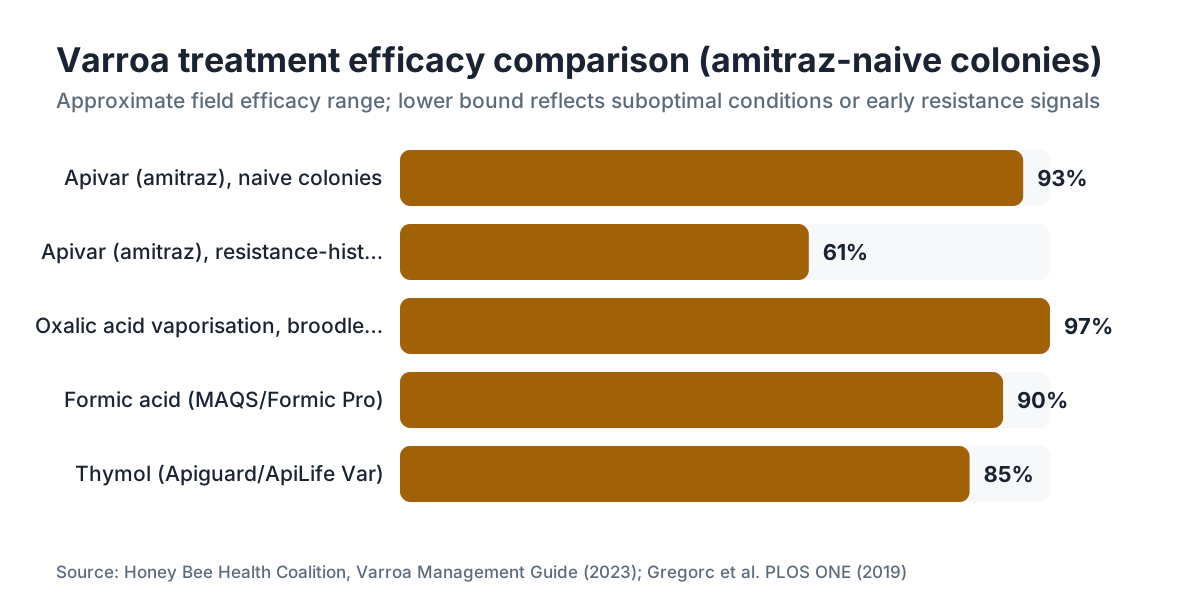
In amitraz-naive colonies, where resistance hasn't set in, Apivar efficacy runs 90-95% or higher in field trials [5]. A 2019 study in PLOS ONE found amitraz strips reached 93% efficacy in colonies with no documented prior amitraz use, against 61% in colonies from apiaries with a repeated amitraz history. The authors put that gap down to resistance [5].
The Honey Bee Health Coalition's Varroa Management Guide describes amitraz as among the most effective treatments available when it's used correctly and resistance is absent [3]. That last condition carries a lot of weight.
Efficacy collapses when resistance is present. Amitraz resistance has been confirmed in US field populations, and UK beekeepers increasingly report weaker performance, especially in apiaries that leaned on Apivar as their only treatment for several years running. No large UK resistance survey has been published as of this writing, though the NBU lists it as a monitoring priority [4].
The practical read: Apivar works very well inside a rotation. It works poorly as the only tool you reach for, year after year. Rotate it with oxalic acid (no known resistance pathway) and you keep both treatments useful.
What are the risks of amitraz resistance developing?
Amitraz resistance in varroa is real, and it's been confirmed in the USA, France, and several other countries [6]. The mechanism is a mutation in the octopamine receptor gene that weakens how amitraz binds. Mites carrying the mutation survive treatment, breed, and hand the trait to their offspring. Resistance can spread fast once it's in an apiary.
The conditions that speed resistance along are exactly what sloppy varroa management looks like: sub-lethal exposures (strips pulled too soon), the same mode of action every time with no rotation, and timing that leaves big mite populations behind. Each of those gives partially resistant mites an edge.
The countermeasures are well established. Rotate Apivar with oxalic acid, a different mode of action with no confirmed resistance pathway. Never run strips past the 10-week maximum, because degraded amitraz delivers exactly the sub-lethal dose that selects for resistance. Monitor after every treatment. If your counts stay poor despite following the label, stop using Apivar in that apiary for at least a full season.
The National Bee Unit runs the BeeBase advisory system and publishes resistance management guidance, though UK confirmation data is thin next to North American surveillance programmes [4].
How does Apivar compare to other varroa treatments available in the UK?
UK beekeepers have several licensed options, and each owns a niche where it beats the rest.
| Treatment | Active ingredient | Works in brood? | Efficacy (naive colonies) | Supers OK? | Resistance risk |
|-----------|------------------|-----------------|--------------------------|------------|----------------|
| Apivar | Amitraz | Partial (phoretic only) | 90-95% [5] | No | Yes, confirmed |
| MAQS / Formic Pro | Formic acid | Yes (penetrates cells) | 85-95% [3] | Limited | None known |
| Oxalic acid (Api-Bioxal) | Oxalic acid | No (broodless only) | 95%+ broodless [3] | No | None known |
| Apiguard / ApiLife Var | Thymol | Partial | 80-90% [3] | No | None known |
Apivar's edge over oxalic acid is that it doesn't need a broodless period. You can treat in late summer with brood still present, which widens the treatment window a lot. Its weaknesses are the resistance risk and the 6-10 week commitment.
Formic acid (MAQS or Formic Pro) is the only UK-licensed treatment that penetrates sealed cells and kills the mites inside, which makes it handy in summer. The catch is temperature sensitivity and higher queen loss at some dosing rates.
Oxalic acid, by vaporisation or trickle, is the backbone of winter treatment in most well-run UK apiaries. No resistance pathway, near 100% efficacy in a broodless colony. Following a summer Apivar course with a winter oxalic treatment is the one-two combination experienced UK keepers rely on.
Where can you buy Apivar strips in the UK?
Apivar comes from UK beekeeping suppliers holding the right authorisation for POM-VPS veterinary medicines. Big suppliers such as E.H. Thorne, Maisemore Apiaries, and National Bee Supplies stock it. NHS-registered online pharmacies and SQP-qualified online retailers can sell it legally too.
Prices move around. As of mid-2025, a pack of 10 strips (enough for 5 brood boxes) usually runs between £20 and £30 in the UK, depending on supplier and whether you buy a multi-pack. Bulk packs of 50 strips knock the per-strip cost down noticeably once you're running more than five or six hives.
Don't buy Apivar from overseas websites or unauthorised channels. This isn't caution for its own sake. Counterfeit and substandard amitraz strips have turned up in some markets, and strips stored badly degrade faster than the label promises. The authorised supply chain at least gives you some assurance of product integrity.
Sourcing alongside other hive health supplies? The beekeeping supplies overview covers what to check in a UK supplier's credentials. For free-shipping options across UK bee suppliers, the free shipping honey bee supply companies article has current comparisons.
Can you use Apivar in a nucleus colony or small hive?
Yes, with a smaller dose. The label allows one strip per nucleus or small colony with fewer than five seams of bees. The principle doesn't change: sit the strip in the brood nest where bees touch it constantly. One strip covers a nuc of four to five frames.
Small colonies absorb treatment stress less well. A nuc already dragged down by a failing queen or poor nutrition handles any chemical treatment badly. Make sure the colony has decent food stores before you start Apivar, especially in late summer when forage is falling off.
Don't skip treatment because a colony is small. Mites don't respect colony size. A nucleus carrying a high mite load into winter will almost certainly die, and while it's dying it can seed neighbouring hives with mites through drifting and robbing.
What should you monitor during and after Apivar treatment?
The minimum protocol is a natural mite drop count before treatment (ideally over 24-48 hours on a clean insert) and an alcohol wash of roughly 300 bees from the brood nest 2-4 weeks after you pull the strips. The pre-treatment count shows where you started. The post-treatment count shows whether Apivar did its job.
During treatment, some beekeepers check natural drop every week or two to see whether mite fall is climbing or easing off. The ideal pattern is a spike in the first two weeks, then a fall toward zero. That says the phoretic population went down fast. A drop that stays high for weeks can mean the colony still has plenty of brood releasing fresh mites as cells hatch.
If your post-treatment alcohol wash shows more than 1% infestation (roughly 1 mite per 100 bees in September or later), call it a partial failure and dig into why. The usual causes: strips placed too far from the brood, colony too big for the strip count, strips pulled too early, or emerging resistance.
VarroaVault's free monitoring tools include a mite count tracker and a treatment calendar that set post-treatment check reminders and log results across colonies. That gets genuinely useful once you're past three or four hives.
What are the safety precautions for handling Apivar strips?
Amitraz is a pesticide, so handle it like one. Wear nitrile gloves when you handle strips. Amitraz absorbs through skin and affects the human nervous system at high enough doses. Brief bare-handed contact with a strip won't send you to hospital, but repeated casual exposure adds up, and some people react to amitraz on the skin.
Don't eat, drink, or touch your face while handling strips. Store them in their original packaging, away from children and pets, out of direct sunlight. Heat degrades amitraz faster than the label assumes.
Used strips still carry amitraz residue, so dispose of them with care. Environment Agency guidance on pesticide disposal applies. In practice, small-scale beekeepers wrap used strips in the original packaging and put them in normal household waste, but check your local authority guidance if you're unsure.
Dogs are unusually sensitive to amitraz. If you use amitraz dog tick collars, or your dog roams your apiary, know that amitraz from several sources stacks up and raises the toxicity risk.
How should Apivar fit into a full-year varroa management plan?
The annual protocol that keeps showing up in the literature and in experienced keepers' practice looks roughly like this.
Spring (March to May): monitor with an alcohol wash. Above 1-2% infestation, run a short oxalic acid treatment during any broodless spell, or plan for an earlier summer intervention.
Early summer (June to July): monitor again. If mites are climbing toward 2%, MAQS or Formic Pro can treat through the brood (the only licensed option that reaches sealed cells), as long as you follow the temperature guidelines.
Late summer (August to September): treat with Apivar for 6-8 weeks after the main flow and before any supers go on for an autumn flow. This is the treatment that protects the winter bees.
Winter (December to January): if the colony goes genuinely broodless, follow up with an oxalic acid trickle or vaporisation. This clears any survivors before spring brood build-up starts.
This four-stage plan uses two modes of action (amitraz plus oxalic acid) and covers both brood-present and broodless scenarios. It matches the structure in the Honey Bee Health Coalition's Varroa Management Guide [3] and lines up with NBU guidance [4].
For keepers who want to track this across colonies and seasons, the free protocol tools at VarroaVault give you a calendar you can adapt to your own region.
Frequently asked questions
Do I need a prescription to buy Apivar strips in the UK?
No prescription is needed. Apivar is classified as POM-VPS in the UK, so you can buy it from a vet, pharmacist, or Suitably Qualified Person (SQP) without a vet's prescription. You do have to use an authorised retailer. Most UK beekeeping suppliers hold the correct authorisation to sell it legally.
How many Apivar strips do I need for one hive?
The standard dose is two strips per brood box. A single-brood hive needs two; a double-brood hive needs four. A nucleus with fewer than five seams of bees needs one. Place them in the brood nest, between frames of capped brood, for maximum bee contact.
Can I leave Apivar strips in the hive longer than 10 weeks?
No. The label maximum is 10 weeks, and exceeding it is both illegal and counterproductive. As amitraz degrades, the exposure level drops toward sub-lethal concentrations that select for resistance rather than kill mites. Pull the strips at or before the 10-week mark regardless of what your counts show.
Does Apivar work if the colony still has brood?
Partially. Apivar kills mites on adult bees (phoretic mites) very effectively but does not reach sealed brood cells. You need the full 6-10 week duration so the treatment spans several brood cycles and exposes mites as they emerge. That's why the window exists; it isn't an arbitrary number.
What is the shelf life of Apivar strips?
Veto-pharma states a 3-year shelf life from manufacture when strips are stored in original packaging below 25 degrees Celsius, out of direct sunlight [11]. Heat degrades amitraz, so a hot car or shed in summer shortens effective life significantly. Check the batch expiry on the packet before use.
Can Apivar cause harm to the queen or colony?
At label doses, queen loss directly tied to Apivar is rare and not well documented in controlled trials. Amitraz is considered safe for adult bees at approved concentrations. Treating a colony that's already stressed, queenless, or underfed raises the chance of any treatment doing harm. Treat healthy colonies, or fix the problem first.
Can I treat with Apivar and have honey supers on at the same time?
No. This is a hard prohibition on the label and a legal requirement, not a suggestion. Amitraz can contaminate honey, and UK food safety law sets maximum residue limits. Remove all supers before placing strips, and don't add supers again until after the strips come out and a reasonable clearance period has passed.
How do I know if Apivar is not working in my hive?
Run an alcohol wash 2-4 weeks after strip removal. If infestation stays above 1% (roughly 1 mite per 100 bees) despite correct duration and placement, efficacy was poor. Common causes are resistance, wrong strip placement, too few strips for the hive size, or early removal. Repeated poor results in one apiary point strongly to resistance.
Is it safe to use Apivar near other hives or beekeeping sites?
Apivar poses no real risk to neighbouring hives or wild pollinators when used inside the hive per the label. Amitraz isn't volatile enough to drift between colonies in meaningful amounts. The risk to other bees comes from drift and robbing at the treated hive, which spreads mites, not from chemical contamination.
Can amitraz resistance be confirmed without laboratory testing?
Not with certainty. Field signs of resistance include poor mite drop during treatment, high post-treatment infestation despite correct protocol, and repeat Apivar failures over several seasons. Definitive confirmation needs a bioassay or genetic test. The UK's Animal and Plant Health Agency (APHA) can advise through NBU channels [10].
What should I do with used Apivar strips after treatment?
Used strips still carry amitraz residue. Wrap them in the original packaging and put them in household waste. Never leave strips in the hive, in compost, or where animals can reach them. Dogs are unusually sensitive to amitraz. If you run a commercial operation, check Environment Agency guidance on pesticide waste disposal.
Is Apivar the same as other amitraz products sold online?
Apivar is the VMD-licensed brand for UK use. Other amitraz products sold online, including some imported strips, may not hold UK marketing authorisation. Using unlicensed veterinary medicines in the UK is illegal under the Veterinary Medicines Regulations 2013. Quality and amitraz concentration can also vary a lot in unregulated products.
Sources
- UK Government, Veterinary Medicines Regulations 2013 (SI 2013/2033): Apivar is a POM-VPS veterinary medicine in the UK; use of unlicensed veterinary products is prohibited under the Veterinary Medicines Regulations 2013.
- Veterinary Medicines Directorate, UK Product Information Database: Apivar label prohibits use when honey supers are on the hive; amitraz is not approved for use in the presence of honey supers.
- Honey Bee Health Coalition, Varroa Management Guide (2023 edition): Recommends treatment when infestation exceeds 2% (2 mites per 100 bees by alcohol wash); amitraz achieves 90-95% efficacy in naive colonies; oxalic acid achieves 95%+ in broodless colonies.
- UK National Bee Unit, Beebase Varroa Management Guidance: NBU recommends monitoring at least twice yearly; provides threshold guidance for treatment timing; flags amitraz resistance as a monitoring priority.
- Gregorc A. et al. (2019), PLOS ONE, 'Acceptability of acaricide treatments in honey bee colonies': Field trial found amitraz strips achieved 93% efficacy in colonies with no prior amitraz history, compared to 61% in colonies from apiaries with documented repeated amitraz use.
- Kamler M. et al. (2016), Pest Management Science, amitraz resistance in Varroa destructor: Amitraz resistance in Varroa destructor confirmed in USA, France, and other countries; mechanism identified as mutation in octopamine receptor reducing amitraz binding affinity.
- US EPA, Pesticide Registration (Apivar/Amitraz product label): Standard label requires 2 strips per brood box, 6-10 week treatment duration, and removal before adding honey supers.
- Pennsylvania State University Extension, Varroa Mite Treatment Options: Apivar is listed as an approved hard miticide; extension guidance recommends rotation with oxalic acid to reduce resistance selection pressure.
- University of Minnesota Extension, Varroa Management and Monitoring: Alcohol wash threshold of 2% infestation rate (2 mites per 100 bees) as treatment trigger; monitoring twice per year minimum recommended.
- Animal and Plant Health Agency (APHA), UK Government: APHA oversees bee health surveillance in the UK including the NBU; can advise on laboratory confirmation of acaricide resistance.
- Veto-pharma, Apivar Product Information (manufacturer): Each Apivar strip contains approximately 500 mg amitraz at 3.3% concentration; stated shelf life is 3 years when stored correctly below 25 degrees Celsius.
Last updated 2026-07-09