Can oxalic acid be used on bees in California? Complete guide
TL;DR
- Oxalic acid is legal for varroa control in California with no extra state permit.
- Use the EPA-registered product Api-Bioxal (registered 2015) and follow its label.
- Three methods work: dribble, vaporization, and glycerin-soaked pads.
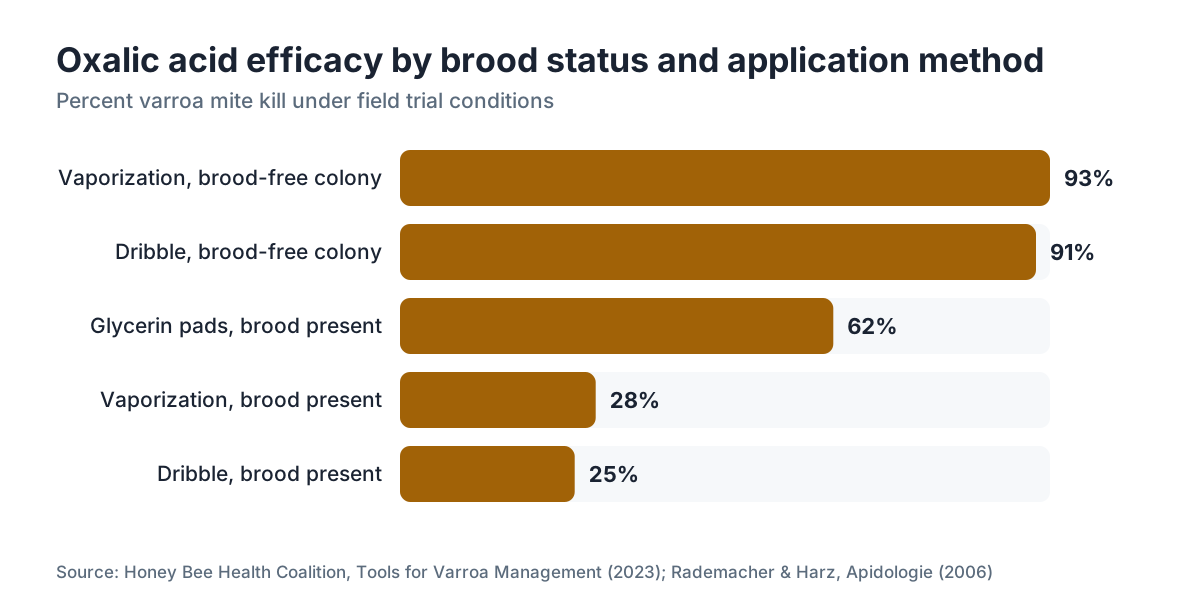
- Brood-free colonies see over 90 percent mite kill.
- Vaporization needs a respirator with organic vapor cartridges.
- California follows federal registration.
Is oxalic acid legal to use on honey bees in California?
Yes. Oxalic acid dihydrate is federally registered by the EPA as a miticide for varroa control, and California beekeepers can use it with no state permit beyond the product label. The EPA approved Api-Bioxal, the only oxalic acid product registered for bees in the United States, in 2015 under EPA Registration No. 84736-3 [1]. California's Department of Food and Agriculture follows federal EPA registration for this class of product, so Api-Bioxal is the legal and required formulation in the state [2].
Here is the part that trips people up. You cannot legally mix your own oxalic acid solution from bulk hardware-store crystals and apply it to managed colonies in California, or any other state. An unregistered product is a label violation, which is a pesticide law violation under California Food and Agricultural Code section 12973. The price gap between Api-Bioxal and raw crystals is real. So is the legal and residue exposure.
Buy Api-Bioxal. Read the label. Follow it exactly. You're legal everywhere in California, from Humboldt to the Imperial Valley.
What is oxalic acid and why do beekeepers use it for varroa?
Oxalic acid is an organic acid found in plants like rhubarb and spinach. In the hive it kills varroa by direct contact, breaking down the mite's outer cuticle. Exposed mites die within hours to a few days. Bees shrug it off at approved concentrations because their cuticle chemistry differs enough from the mite's to give a usable selectivity window [3].
Varroa destructor is the external parasitic mite that drives more US colony loss than anything else. The Honey Bee Health Coalition's 2023 Tools for Varroa Management guide calls oxalic acid one of the most effective treatments for brood-free colonies, with trials showing greater than 90 percent mite kill under good conditions [4]. That number comes from replicated, peer-reviewed work, not a marketing sheet.
Want the biology of the mite itself and why it wrecks colonies? See our varroa mite reference page.
Here is the catch that shapes everything else. Oxalic acid only kills mites riding on adult bees. Mites sealed inside capped brood cells are untouched. That single limit drives almost every decision about when and how you apply it, and it's where most hobbyists go wrong.
What are the three approved methods for applying oxalic acid to bees?
The Api-Bioxal label approves three application methods. Each has its own job.
Dribble (trickle) method: Dissolve Api-Bioxal in 1:1 sucrose syrup at 3.5 grams of oxalic acid dihydrate per liter, then dribble about 5 mL per occupied seam of bees, up to 50 mL total per colony. The label limit is one treatment per year. It works best on brood-free colonies in late fall or winter when clusters are tight [1].
Vaporization (sublimation) method: Place 1 gram of Api-Bioxal crystals in a heated vaporizer pan and let the vapor fill the hive. This is generally the most effective method for brood-free colonies, and it disturbs the cluster less than dribbling does. The label allows up to three treatments per brood-free period, each at least 5 days apart [1].
Extended-release method (glycerin-soaked pads): The newest approved option. Cardboard or cellulose pads soaked in glycerin and Api-Bioxal go into the hive, and bees contact the treated surface over several weeks. It gives some kill even when brood is present, a real advantage for California beekeepers who can't count on a brood-free window. The label allows one application per colony per year [1].
Each earns a spot in a California rotation. I'd reach for vaporization in the winter brood-free stretch and use glycerin pads as a mid-season backup when you can't pull queens or wait for a natural brood break.
How is oxalic acid used for bees in practice, step by step?
Vaporization is the method most California beekeepers use for their main winter treatment, so let's walk it through.
First, confirm the colony is brood-free or as close as you can get. That window shows up naturally in most of California from late November through January, depending on elevation and climate. A sugar roll or alcohol wash under 1 mite per 100 bees doesn't cancel the treatment, but it means you caught things early. Above 2 mites per 100 bees in late summer means you're already behind [4].
Gear you'll need: an approved vaporizer (ProVap 110, Varrox, or similar), a digital scale accurate to 0.1 grams, a respirator with organic vapor and acid gas cartridges (a half-face unit with P100/OV combination cartridges beats a bare N95), nitrile gloves, eye protection, and foam or tape to seal the entrance and gaps during treatment [5].
Weigh exactly 1 gram of Api-Bioxal per hive. Block the entrance. Insert the pan into the bottom of the hive, apply power for the manufacturer's specified time (usually 2 to 3 minutes), then leave the hive sealed at least 10 minutes after the heating cycle. Never breathe the vapor. Oxalic acid vapor is a serious respiratory irritant.
Repeat at 5-day intervals up to three treatments per brood-free period. The repeat schedule catches mites that were under capped brood during the first round, though a truly brood-free colony usually gets excellent results in one or two passes.
For the dribble method, dissolve Api-Bioxal in warm 1:1 syrup (warm, not hot, since heat degrades the acid), load a syringe, and apply 5 mL per seam. Wet the bees. Don't drench them or pool syrup on the bottom board.
When is the best time to use oxalic acid in California's climate?
Time it to the lowest brood presence you can reach, which in most of California lands in December or January. The state's climate swings more than almost any other, and that changes the calendar by region. Coastal and Bay Area colonies may never go fully brood-free because mild winters keep queens laying. The Central Valley usually gives you a window from December into January. The Sierra foothills and mountains can start earlier and last longer.
The working plan for most California beekeepers: monitor with an alcohol wash or sticky board in September and October, treat aggressively if counts climb, then set a late November or December oxalic acid treatment on the lowest-brood day you can find [4]. In regions where brood never stops, the glycerin pad method becomes your most realistic tool for ongoing suppression.
Almond pollination changes the math. If colonies ship to the almonds in February, plan your varroa calendar backward from that date. A December oxalic acid treatment followed by a January mite count tells you exactly where you stand before the bees hit the orchards. Sending mite-loaded colonies into pollination hurts your hives and drags down their survival through spring [6].
Nobody has clean data on the exact brood-free window by California county. The Honey Bee Health Coalition's seasonal guide and UC Cooperative Extension's bee program both say the same thing: treat during the lowest-brood period you can get, whatever that looks like where you keep bees [4][6].
What safety rules apply to using oxalic acid vaporizers in California?
Vaporization is regulated as a pesticide application in California, but beekeepers treating their own colonies are exempt from the licensed applicator requirement. You still have to follow the EPA label, which carries the force of federal law [2].
The Api-Bioxal label safety requirements include [1]:
- Wear a respirator with organic vapor cartridges rated for acid gas. The label specifies NIOSH-approved respirators, and the requirement is stronger than a dust mask, so read the language carefully.
- Wear chemical-resistant gloves and eye protection.
- Keep bystanders and animals away during and right after treatment.
- Don't apply when wind could push vapor toward bystanders.
California's Department of Pesticide Regulation can inspect and does take label violations seriously, especially in agricultural counties where bees sit near other pesticide-sensitive operations [2]. A simple treatment log (date, product, lot number, method, colony count) is smart and gives you documentation if a question ever comes up.
Running 50 or more colonies on commercial pollination agreements? Call your county agricultural commissioner about local notification rules. They vary by county and change from time to time.
Does oxalic acid leave residues in honey?
No, not at any level that matters with proper timing. Oxalic acid is already present in honey at natural background levels, and treatment studies show only minimal increases that stay inside the normal range across honey types [3][7].
The Api-Bioxal label bars the dribble method on colonies with honey supers in place. That's partly a residue precaution and partly practical, since syrup mixing into surplus honey is a mess. The label instructs you to remove supers before vaporizing too, though the residue rationale there runs more conservative than the evidence strictly requires. Follow the label either way.
The Honey Bee Health Coalition's Tools for Varroa Management guide ranks oxalic acid among the most favorable miticides on residue, part of why it's the go-to for beekeepers selling certified organic honey. Organic rules are set by your certifier, not the EPA, so confirm your specific program's requirements.
Treat before supers go on in spring. Treat again in late fall after supers come off. Residue stops being a concern.
How does oxalic acid compare to other varroa treatments available in California?
Oxalic acid fills a clear niche: excellent on brood-free colonies, minimal residue, and no known resistance in US varroa populations as of 2024 [4]. It's also the cheapest effective option per cycle. Here's how it lines up against the main alternatives California beekeepers use.
| Treatment | Active ingredient | Brood present? | Resistance reported? | Approx. cost per colony | Temp. restrictions |
|---|---|---|---|---|---|
| Api-Bioxal (OA dribble/vaporization) | Oxalic acid | No (best results) | No US reports | $1-3 | Below 50°F tolerated for dribble |
| Api-Bioxal glycerin pads | Oxalic acid | Tolerated | No US reports | $3-6 | None specified |
| Apivar strips | Amitraz | Yes | Yes (reported) | $5-8 | Above 50°F needed |
| Apiguard / Api Life Var | Thymol | Yes | Minimal | $4-7 | 60-105°F ideal |
| Formic Pro / MAQS | Formic acid | Yes | No | $6-10 | 50-85°F |
| Hopguard 3 | Hop beta acids | Limited | No | $5-9 | None specified |
Sources: HBHC Tools for Varroa Management 2023 [4], EPA registrations [1], manufacturer labels.
The one limit is brood, which is why experienced beekeepers rotate rather than rely on a single tool. Hit mites hard in the brood-free window with oxalic acid. Use formic acid or thymol through summer when brood is present and counts are rising. Don't lean on amitraz year after year in the same yard, because resistance is already reported.
Want a structured way to build that rotation? VarroaVault's free protocol tools sort treatment choice by season and colony status.
Can you use oxalic acid when a hive has brood?
You can, but efficacy falls off a cliff. Mites inside capped cells are fully protected regardless of method, so the dribble and vaporization methods do essentially nothing to under-cap mites [4].
The glycerin pad method is the partial fix. Because bees contact the pads again and again over three to five weeks, you get ongoing kill as mites emerge with new adult bees. Published studies put glycerin-pad efficacy in the 50 to 70 percent range in colonies with brood, versus 90-plus percent brood-free [3][7]. That 50 to 70 percent beats doing nothing by a wide margin, but it won't carry the load alone if populations are already high.
The practical California play for colonies that won't go brood-free: knock mites down with formic acid or thymol in summer, then follow with oxalic acid vaporization once the colony hits its winter brood minimum. Stacking tools across the season beats any single treatment used alone [4].
A planned brood break gives you an artificial brood-free window too. Cage the queen for about 24 days and the colony runs out of capped brood. Some sideliners do this on purpose in August to line up a high-efficacy oxalic acid hit during peak mite season. It works. It also costs management time and needs confidence in your re-queening.
Where can you buy Api-Bioxal in California?
Api-Bioxal ships from most major beekeeping supply companies and several California-based retailers. No pesticide applicator license is needed to buy it as a beekeeper treating your own hives.
For suppliers, the beekeeping supply companies and free shipping honey bee supply companies pages list vetted options. A 2.275 lb (1 kg) container of Api-Bioxal runs roughly $25 to $40 depending on the retailer, enough to treat about 30 to 40 hives by vaporization at 1 gram each. That puts the per-treatment cost under $1, the cheapest registered miticide going.
Sublimation needs a vaporizer. Entry-level battery units like the Varrox run about $150. The ProVap 110 (120V corded) runs around $200. These last many seasons, so the per-colony cost drops fast once you're past a few hives. Vaporizers, protective gear, and Api-Bioxal itself are usually stocked at major beekeeping supplies retailers from October through January when demand peaks.
Check expiration dates at purchase. Api-Bioxal has a labeled shelf life, and degraded product can lose efficacy.
What records should California beekeepers keep after oxalic acid treatments?
California doesn't mandate a record-keeping format for hobbyists applying EPA-registered miticides to their own hives. Keep records anyway, for three reasons: they show you what's actually working, they protect you if a neighbor's pesticide complaint or a colony-loss dispute lands on you, and they're required if you run a commercial operation with a licensed applicator on staff.
At a minimum, log for each treatment: the date, product name and EPA registration number, lot number, application method, number of colonies treated, approximate colony strength, and the mite count before treatment (ideally 72 hours after too). A notebook or spreadsheet does the job. Some beekeepers use hive management apps.
Under a commercial pollination contract in California, your contracting orchard may want proof your colonies were treated and what the pre-delivery mite counts were. That request has grown more common as almond growers connect varroa loads to pollination results [6].
CDPR's record-keeping guidance for agricultural pesticide use [2] is written for licensed applicators, but hobbyists can copy the format. The fields it asks for are the same ones that make your own records useful.
Are there any California-specific restrictions or local rules for oxalic acid?
At the state level, no. California follows the federal Api-Bioxal label with no oxalic-acid-specific restrictions and no state registration requirement for the product on honey bees.
Counties are where it varies. Some agricultural counties in the Central Valley and Southern California require advance notification to the county agricultural commissioner before pesticide applications near certain crops or sensitive areas. If your apiary sits on agricultural land or next to organic operations, call your county ag commissioner and ask about notification rules. This isn't specific to oxalic acid. It applies to any pesticide used on managed colonies in those areas.
California also runs strict ambient air quality rules in certain air basins, notably the San Joaquin Valley Air Pollution Control District. Oxalic acid vaporization makes a very localized vapor that dissipates quickly, and there are no SJVAPCD restrictions targeting oxalic acid vaporizers as of 2024. Worth watching if you operate at scale in a regulated basin.
One practical note near California's organic almond and specialty crop orchards: some growers contractually require that placed colonies were treated only with organically acceptable products. Oxalic acid is on the OMRI-listed materials list and is generally acceptable under most organic programs [8], but confirm with the operation's certifier.
Frequently asked questions
Do I need a pesticide license to use oxalic acid on my bees in California?
No. California beekeepers applying Api-Bioxal to their own colonies are exempt from the licensed pesticide applicator requirement. You do need to follow the EPA product label exactly, which is federal law. If you hire someone to treat your hives, that person may need a license depending on whether they're being compensated. Contact your county agricultural commissioner if you're unsure about your specific situation.
How many times can I treat a hive with oxalic acid in one year?
The Api-Bioxal label allows one dribble treatment per year and up to three vaporization treatments per brood-free period, each at least 5 days apart. The glycerin pad extended-release method allows one application per year. These limits are on the label, which has the force of federal pesticide law. Exceeding them is a violation regardless of what you've read elsewhere.
Does oxalic acid work in the summer when my hive has a lot of brood?
Not well with dribble or vaporization, because sealed mites in brood cells are completely protected. Efficacy drops from 90-plus percent in brood-free colonies to roughly 50-70 percent with the extended-release glycerin pads when brood is present. Summer is better served by formic acid or thymol products that can penetrate brood cells to some degree. Use oxalic acid as your primary tool in the brood-free window.
Is Api-Bioxal the same as hardware store oxalic acid?
No. Api-Bioxal is the only EPA-registered oxalic acid product for use on honey bees in the US. Hardware store oxalic acid crystals (sold as wood bleach) are not registered for this use, may contain different impurities, and applying them to managed colonies is illegal under federal pesticide law. The concentration and formulation in Api-Bioxal are what the label efficacy data and residue studies are based on.
What respirator do I need for oxalic acid vaporization?
The Api-Bioxal label requires a NIOSH-approved respirator with organic vapor and acid gas cartridges. A simple dust mask or N95 alone does not meet this requirement. A half-face respirator with P100 and organic vapor cartridges (such as a 3M 6000 series or equivalent with OV/P100 combination cartridges) is the practical standard most experienced beekeepers use. Replace cartridges according to manufacturer guidelines.
Can I use oxalic acid on nucs or newly hived packages?
Yes, with the same caveats. A new package with a newly released queen will quickly begin producing brood, so the brood-free window is short. Treat within the first few days of hiving a package to catch mites while no capped brood is present. Nucs often have capped brood already, so vaporization efficacy will be reduced; plan accordingly and monitor mite counts.
Will oxalic acid hurt my queen?
At label rates, queens generally tolerate oxalic acid treatment, but there is evidence that repeated high-dose exposures can increase queen loss rates. Studies have found higher queen loss with repeated vaporizations than with the single dribble method in some trials. Follow label limits on treatment frequency and use the minimum effective dose. Don't treat more often than the label allows just because a hive's mite count is still high.
How long do I have to wait after treating with oxalic acid before putting honey supers on?
The Api-Bioxal label requires that honey supers be absent during treatment. There is no explicit post-treatment waiting period specified on the current label before supers can be added, but the practical standard among experienced beekeepers is to wait at least 2 to 4 weeks after the last treatment before installing supers. If you're treating in December and supers go on in late January for early flows, timing usually works out without issue.
Does varroa ever develop resistance to oxalic acid?
No resistance to oxalic acid in varroa populations has been documented in the United States as of 2024, according to the Honey Bee Health Coalition's Tools for Varroa Management guide. The mode of action (physical and chemical disruption of the mite cuticle rather than a specific enzyme target) makes resistance development less likely than with synthetic miticides like amitraz. This is a genuine advantage for long-term management.
Can I use oxalic acid on Africanized honey bee colonies in California?
The Api-Bioxal label applies to honey bee colonies generally and does not differentiate by subspecies. Africanized honey bees in California, which are present in some southern counties, are still Apis mellifera and can be treated with the same protocols. The management challenges with Africanized colonies are behavioral, not treatment-related. See our africanized honey bee page for background on identifying and working with them safely.
What mite count threshold should trigger an oxalic acid treatment?
The Honey Bee Health Coalition recommends treating when alcohol wash counts reach 2 mites per 100 bees during the brood-rearing season and using the brood-free period for a preventive oxalic acid treatment regardless of count. Some researchers use a 2 percent threshold (2 mites per 100 bees) as the intervention point; above 3 percent, colony health is already compromised. Don't wait for high counts to confirm you need to act.
How does the oxalic acid glycerin pad method work and is it better than vaporization?
Glycerin-soaked pads release oxalic acid slowly over 4 to 6 weeks as bees walk across them. The advantage is sustained exposure and some efficacy when brood is present. The disadvantage is lower peak efficacy compared to vaporization in brood-free colonies. The two methods aren't in competition; they work best in different situations. Vaporization wins for brood-free winter treatments; glycerin pads make sense as a mid-season supplement when you can't achieve a brood break.
Sources
- EPA, Api-Bioxal Registration (Reg. No. 84736-3) product label: Api-Bioxal is the only EPA-registered oxalic acid product for honey bee varroa control; label specifies dribble (one treatment/year), vaporization (up to three treatments per brood-free period, 5 days apart), and extended-release glycerin method
- California Department of Pesticide Regulation (CDPR), Pesticide Registration and Use: California follows federal EPA registration for miticides used on managed honey bee colonies; label compliance is required under California Food and Agricultural Code
- Gregorc, A. & Smodiš Škerl, M.I. (2007). Killing of Varroa destructor with oxalic acid. Apidologie.: Oxalic acid kills varroa by contact with the mite cuticle; honey residue increases from treatment remain within the natural variation range of honey types
- Honey Bee Health Coalition, Tools for Varroa Management Guide (2023 edition): Oxalic acid efficacy exceeds 90 percent in brood-free colonies; 2 mites per 100 bees is the recommended intervention threshold; no US resistance documented
- NIOSH, Respirator Selection and Personal Protective Equipment: NIOSH-approved respirators with organic vapor and acid gas cartridges are required for oxalic acid vaporization per Api-Bioxal label
- University of California Agriculture and Natural Resources, Bee and pollinator programs: High varroa mite loads in colonies going to California almond pollination reduce pollination efficacy and increase colony mortality through spring
- Rademacher, E. & Harz, M. (2006). Oxalic acid for the control of varroosis in honey bee colonies. Apidologie.: Extended-release oxalic acid methods in glycerin show 50-70 percent efficacy in colonies with brood, compared to 90+ percent in brood-free colonies
- USDA AMS National Organic Program: Oxalic acid is on the OMRI-listed materials acceptable under most organic certification programs
- California Department of Food and Agriculture (CDFA), Apiary Program: California CDFA administers apiary registration and references EPA-registered products for varroa control; no additional state registration required for Api-Bioxal
- Penn State Extension, Varroa Mite Management in Honey Bee Colonies: Alcohol wash counts above 2 percent (2 mites per 100 bees) indicate need for immediate treatment; brood-free oxalic acid treatment recommended as annual protocol
Last updated 2026-07-09