Can varroa mites affect humans? What beekeepers need to know
TL;DR
- Varroa destructor mites cannot bite, infest, or reproduce on humans.
- They are host-specific to Apis mellifera and a few other honeybee species.
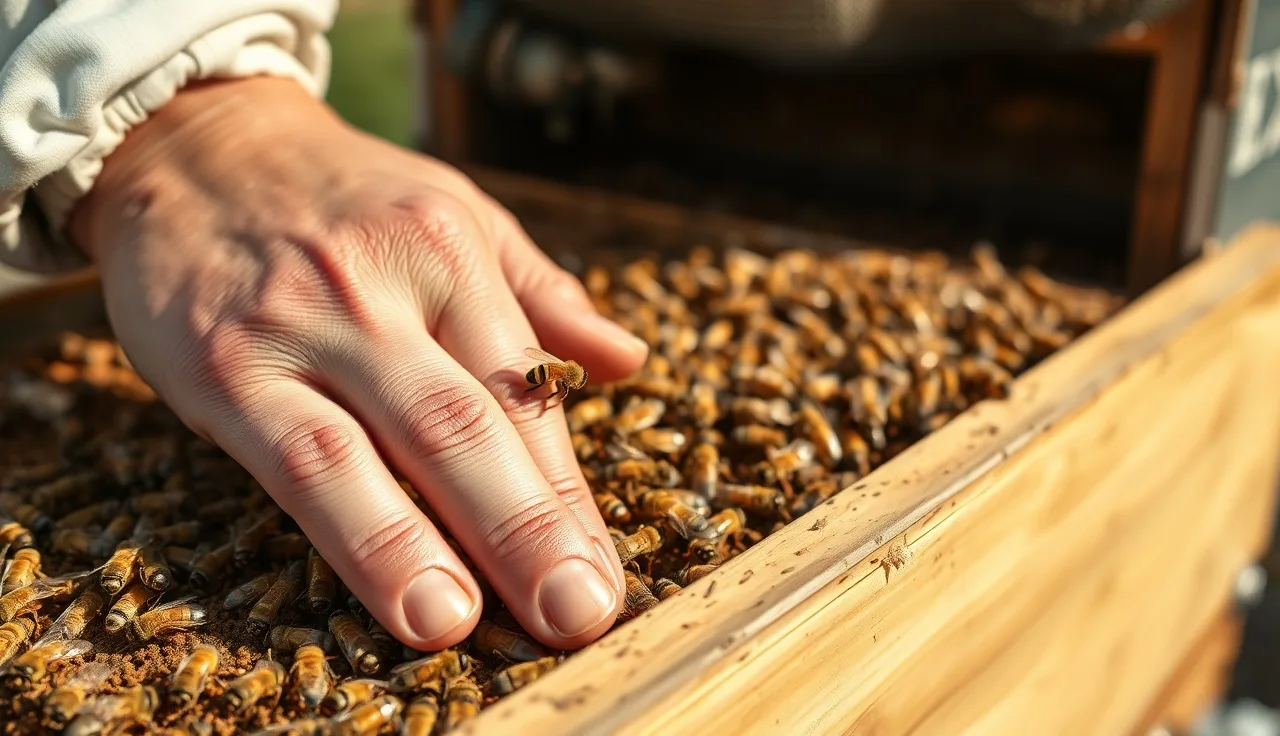
- A mite may crawl across your skin for a few seconds during a hive inspection, but it cannot feed on you, embed itself, or cause any skin condition.
- The real threat is entirely to your bees, and the only human health caution is the chemicals you treat with.
What are varroa mites, and why do people worry about human exposure?
Varroa destructor is an external parasite that feeds on the fat body tissue of adult honeybees and developing pupae. It is the single biggest driver of managed honeybee colony losses across the Northern Hemisphere. Beekeepers open hives dozens of times a season and brush against frames crawling with mites. So the "can they affect me?" question is completely fair.
The worry usually starts one of two ways. A beekeeper notices something crawling on a hand after an inspection and wants to know what it is. Or they read about parasitic mites that do hit humans (scabies, cheyletiellosis, bird mites) and assume all mites behave alike. They don't. Mite biology varies wildly. A parasite that spent millions of years evolving to exploit a single host is not built, physiologically or behaviorally, to exploit a different one.
Varroa mites were first described on Apis cerana, the Asian honeybee, and jumped to Apis mellifera when Western beekeeping expanded into Asia during the 20th century [1]. That host jump was itself a rare evolutionary event, and it took the mite a long time to adapt even to a close bee relative. Humans are nowhere in that picture.
For more on the mite's basic biology, the varroa mite overview covers its life cycle and reproductive behavior in detail.
Do varroa mites bite humans?
No. Varroa mites do not bite humans in any meaningful sense. They lack the mouthpart anatomy to pierce human skin, and they have no drive to try.
Here is why. Varroa mites feed by piercing the soft intersegmental membrane between bee body segments with chelicerae shaped specifically for bee cuticle. Human skin is far thicker and structurally different. The mite would not know where to start. It also relies on chemical cues from its bee host to find a feeding site, and those cues do not exist on a human hand. The mite is essentially blind to us as food.
What can happen is small. A mite that falls off a bee or a frame may walk across your skin for a few seconds before dying or dropping off. That is the whole story. You might feel something moving, but there is no bite, no feeding, no attachment. Varroa mites cannot survive more than a day or two off their bee host under normal conditions, and they cannot reproduce without the sealed brood cells of a honeybee colony [2].
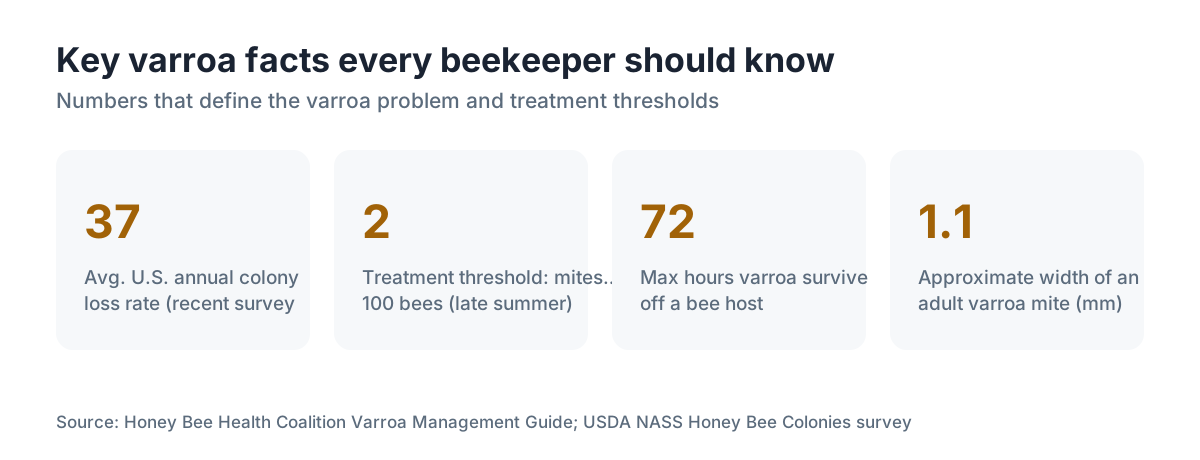
Find something crawling on you after an inspection that is reddish-brown, oval, and about 1.1 mm wide? It is almost certainly a varroa mite. It is harmless to you. Brush it off, then go check that colony's mite load.
Can varroa mites infest humans or live on human skin?
They cannot. Infestation means a parasite can feed, survive, and ideally reproduce on a new host. Varroa mites fail all three tests on humans.
Feeding fails first. The mite cannot penetrate human skin and gets no host-recognition signals from human biochemistry.
Survival fails next. Off a bee, varroa mites die fast. Studies have measured survival of 24 to 72 hours at typical room temperatures, dropping further at higher temperatures or low humidity [2]. Nothing about the human body stretches that window.
Reproduction fails hardest. Varroa reproduction depends entirely on the sealed brood cell of a honeybee colony. The foundress enters a cell just before capping, lays eggs on the developing pupa, and her offspring mate inside the sealed cell. Take away that microenvironment and no reproduction happens at all [3].
The scientific literature holds no documented case of varroa mites causing skin symptoms in humans. That is not a research gap. It is exactly what the mite's biology predicts.
How is varroa different from mites that actually do affect humans?
Here is where the comparison earns its keep. Several mite species genuinely cause human health problems, and it is easy to tar all mites with the same brush.
| Mite species | Host(s) | Affects humans? | Mechanism |
|---|---|---|---|
| Varroa destructor | Apis mellifera, Apis cerana | No | Cannot feed or reproduce on humans |
| Sarcoptes scabiei | Humans, some mammals | Yes | Burrows into and reproduces in human skin |
| Dermanyssus gallinae (poultry red mite) | Poultry, wild birds | Temporarily | Bites humans opportunistically, causes dermatitis |
| Cheyletiella spp. | Cats, dogs, rabbits | Temporarily | Bites humans near infested pets, self-resolving |
| Demodex folliculorum | Humans | Normal skin flora | Lives in hair follicles; usually benign |
The dividing line is host specificity paired with mouthpart structure. Sarcoptes scabiei evolved specifically to exploit mammalian skin. Dermanyssus and Cheyletiella are opportunistic biters with a wider host range. Varroa is the opposite extreme: so tightly specialized to its bee host that it has no capacity to exploit anything else.
Develop a rash or itch after working bees? The likelier culprits are propolis sensitization, a sting reaction, contact dermatitis from your gear, or coincidental contact with a completely different mite in your yard or barn.
Can beekeepers develop allergies or health issues from varroa-related chemicals?
This is the interesting question, and the honest answer has some nuance. Varroa treatments are the real concern here, not the mites.
The common acaricides are oxalic acid, amitraz (Apivar), and formulations of formic acid and thymol. Every one of them asks for beekeeper caution.
Oxalic acid is registered with the EPA (EPA Reg. No. 87685-1 for Api-Bioxal) and carries specific PPE requirements on its label. For the vaporized form, the label calls for chemical-resistant gloves, protective eyewear, and a particulate respirator [4]. Oxalic acid vapor irritates the respiratory tract and mucous membranes. Repeated exposure without protection is not something to shrug off.
Amitraz (Apivar strips) is a formamidine acaricide. Its EPA label requires gloves and warns against inhaling vapors, and people with certain sensitivities should handle it with extra care [5].
Formic acid (Mite Away Quick Strips) evaporates inside the hive and can irritate eyes and airways in enclosed spaces. Apiguard (thymol) is generally low-risk but can trigger respiratory irritation in sensitive people.
Used correctly per label directions, none of these represent unusual occupational risk. But "correctly" carries all the weight. The chemicals, not the mites, are where real human exposure happens.
For a full breakdown of approved treatments, the Honey Bee Health Coalition's Varroa Management Guide is the best single reference for U.S. beekeepers [6].
What real risks do varroa mites pose to beekeepers?
The risks are indirect but serious, and every working beekeeper should understand them. Losing colonies is the whole game.
Colony collapse from varroa drives most of the economic and emotional cost of beekeeping losses. The USDA Agricultural Research Service and USDA NASS have tracked managed colony losses for years. Annual U.S. colony loss rates have averaged roughly 30 to 40 percent in many survey years, with varroa and its associated viruses consistently ranked as the top contributing factor [7].
Varroa does its damage two ways at once. Direct parasitism weakens adult bees and pupae, and the mite spreads viruses. Varroa is an efficient vector for Deformed Wing Virus (DWV) and several other bee pathogens. A mite feeding on a pupa injects virus straight into the hemolymph. Heavily parasitized colonies often collapse not from the mite load itself but from the viral burden those mites carry [8].
The practical cost is dead colonies. Dead colonies cost money, time, and a lot of frustration. A sideliner running 50 to 150 hives can lose thousands of dollars in a single winter if varroa loads slip past the late-summer treatment window.
Still working out your seasonal protocol? VarroaVault's free varroa management tools put mite-wash calculators, threshold tables, and treatment timing guides in one place.
Gear choices matter for your own safety around hive chemicals too. Our beekeeping supplies page covers what to look for in equipment that handles both hive work and chemical applications.
Can varroa mites spread from bees to other animals or pets?
Almost certainly not in any harmful way. Host specificity applies straight across the board.
There is no documented evidence that varroa mites can establish on dogs, cats, horses, or any common domestic animal. A mite that drops off a frame and lands on a dog sniffing around the hive is in the same spot as one landing on your hand. It cannot feed, cannot reproduce, and dies within a day or two.
Other bee species are where it gets slightly more complicated. Varroa destructor can parasitize Apis mellifera and Apis cerana. Researchers have looked at whether it could affect other cavity-nesting Apis species, but it is not established as a problem for non-Apis bees like bumblebees or solitary bees in the field. Those species have different brood cell structures and biology that do not support varroa reproduction [3].
Keep chickens near your hives? Poultry red mite (Dermanyssus gallinae) is a real concern for you and the birds, but it has nothing to do with varroa. Do not confuse the two.
What should a beekeeper do if they find mites on their skin or clothing?
Brush them off. From a personal health standpoint, that is the whole answer.
From a hive management standpoint, mites on your gloves, veil, or skin after working a colony are useful data. Seeing several without hunting for them can point to a high mite load in that hive. If mites are visibly dropping or walking across your equipment, run an alcohol wash or sugar roll and get an actual count. Three percent infestation (roughly 3 mites per 100 bees on an alcohol wash) is the commonly cited treatment threshold, though the Honey Bee Health Coalition recommends considering treatment at 2 percent or higher during the late-summer buildup before winter bees are raised [6].
Wash your gear regularly. Varroa can survive briefly on fabric and hive tools, and while they will not harm you, moving equipment between colonies is a real way mites spread inside an apiary. That matters for keeping disease from jumping between your own hives, and it matters even more if you borrow or lend equipment.
Does working with varroa-infected hives require any special safety precautions?
For the mites themselves, no. Normal beekeeping PPE (veil, gloves, suitable clothing) covers you completely.
For varroa treatments, yes, and the distinction matters. Read the label of whatever you use before you open the container, not after. EPA pesticide labels are legal documents, and their PPE requirements exist because these chemicals carry real human health implications at certain exposure levels.
Oxalic acid vaporization deserves a special mention. It is growing in popularity, and the vaporizer setup puts the beekeeper close to the application site. The Api-Bioxal label requires a NIOSH-approved P100 or P95 particulate respirator for vaporization, more than a paper dust mask [4]. Under FIFRA, the Federal Insecticide, Fungicide, and Rodenticide Act, label directions are enforceable [9]. More practically, oxalic acid vapor can cause lasting lung damage with repeated unprotected exposure. Wear the respirator.
Amitraz strips are relatively low-volatility at hive temperatures, but you still should not handle them barehanded or leave them in unventilated spaces. The label is your guide.
Pregnant beekeepers often ask about treatment risk. Human reproductive toxicology data on amitraz at beekeeping exposure levels is limited. If you are pregnant, talk to your physician about chemical handling and consider having someone else run the applications during that stretch.
How do I know if my hive has a varroa problem worth treating?
The alcohol wash (also called an ethanol wash) is the gold standard for measuring mite infestation. Take a half-cup sample of nurse bees (about 300 bees) from a brood frame, wash them in 70 percent isopropyl alcohol, shake, and count the mites that fall out. Divide mites by bees, multiply by 100, and you have percent infestation.
The common treatment threshold is 2 to 3 percent. Below 2 percent in spring and early summer, many beekeepers monitor and wait. At or above 2 percent in late summer (July through August across most of the U.S.), treatment is generally recommended, because that is when winter bees are being produced and mite-damaged winter bees cannot carry the colony through cold months [6].
Sugar rolls are a gentler alternative that return the bees alive, but they read a little low because mites cling better to wet bees. Sticky boards give a mite drop count, not a true infestation percentage, unless you apply conversion estimates that add their own error.
Nobody has perfect data on exactly which threshold triggers which level of colony damage. The research that exists suggests thresholds may need to run lower in regions with long warm seasons where mite populations build faster. The 2 to 3 percent figure comes from integrated pest management work that is reasonable but not carved in stone.
Are there any situations where varroa-related concerns legitimately touch human health?
Two indirect ones are worth naming honestly. Both trace back to treatment chemicals, not the mites.
First, honey and bee products from heavily treated hives can carry trace acaricide residues. Amitraz and its metabolites (particularly 2,4-dimethylaniline) have been detected in beeswax and honey from hives treated with Apivar [10]. The EU sets maximum residue limits for amitraz in honey. The U.S. currently has no specific honey MRL for amitraz, a regulatory gap that has drawn attention from food safety researchers. Detected levels in properly treated hives generally sit well below acute toxicity thresholds, but the long-term low-level exposure question is not fully settled. If you sell honey, know this.
Second, beeswax from heavily treated hives accumulates fat-soluble acaricides over time, coumaphos in particular (from old-generation CheckMite+ strips). Wax with high coumaphos loads has been linked to queen problems and drone fertility issues. That is a bee health matter more than a human one, but beekeepers who render wax for cosmetics or lip balm should know what is in their base material.
These are real but small concerns. The bigger picture is that varroa is destroying colonies at scale, and the public health stake there is food security and pollination, not direct human contact with the mites.
Frequently asked questions
Can varroa mites live on humans?
No. Varroa mites cannot feed on, survive on, or reproduce on humans. They are obligate parasites of Apis honeybees, meaning they need a bee host to complete their life cycle. A mite that lands on human skin cannot penetrate it and dies within one to three days without a bee. There are no documented cases of varroa causing any skin condition in humans.
Do varroa mites bite humans?
No. Varroa mites do not bite humans. Their mouthparts (chelicerae) are shaped to pierce the soft membrane of bee cuticle, not mammalian skin, and they lack the cues to seek out a human host. You may feel a mite walking on your hand after hive work, but it cannot feed on you or leave a bite wound.
What happens if a varroa mite lands on you?
Nothing harmful. The mite walks around briefly, then dies or falls off. No bite, no feeding, no attachment, no infestation. If you spot a reddish-brown oval mite about 1 mm wide on your glove after an inspection, brush it off. Treat it as a signal to check that colony's mite load, since visible mites on gear often point to high hive infestation.
Can varroa mites spread from bees to dogs or cats?
No meaningful risk exists. Varroa mites are host-specific to Apis honeybees and cannot infest, feed on, or reproduce on pets. A mite that lands on a dog or cat near a hive dies within a day or two. There are no documented cases of varroa causing any health problem in companion animals.
Are varroa mite treatments dangerous to humans?
The treatments carry real chemical risks if used without proper PPE. Oxalic acid vapor requires a P100 or P95 particulate respirator per the EPA-approved Api-Bioxal label. Amitraz (Apivar) requires chemical-resistant gloves. Formic acid formulations irritate eyes and airways. Always read the full EPA label before applying any treatment. The mites are not a human health hazard; the chemicals used against them need care.
Can varroa mites get into honey and affect people who eat it?
The mites themselves do not end up in harvestable honey in any meaningful way. The more legitimate concern is acaricide residue from treatments like amitraz, which can be detected in honey and beeswax at trace levels. Detected levels in properly treated hives generally sit well below acute toxicity thresholds, but long-term low-level exposure data in humans is limited. The EU sets maximum residue limits for amitraz in honey; the U.S. currently does not.
What is the treatment threshold for varroa mites?
The Honey Bee Health Coalition recommends considering treatment at 2 percent infestation or higher, especially in late summer when winter bees are being produced. Measure it with an alcohol wash: count mites from a half-cup sample of nurse bees, divide by bee count, multiply by 100. A result of 2 mites per 100 bees or more in July or August warrants immediate treatment across most U.S. regions.
Can I get a rash from working in a hive with varroa mites?
A rash after hive work is almost certainly not from varroa. More likely causes include a bee venom reaction, contact dermatitis from propolis (a well-documented allergen), sensitivity to the material in your gloves or suit, or contact with a different mite species in your environment (bird mites, clover mites, storage mites). Varroa mites do not bite or irritate human skin.
How long can varroa mites survive off a bee host?
Studies show varroa mites survive 24 to 72 hours off a bee host at typical room temperatures, with survival dropping at higher temperatures or low humidity. They cannot feed without a bee and cannot reproduce without the sealed brood cell of a honeybee colony. That short off-host window is exactly why varroa cannot establish on humans, pets, or any other non-bee organism.
Are varroa mites dangerous to wild bees or other pollinators?
Varroa destructor parasitizes Apis mellifera and Apis cerana but does not establish on wild solitary bees or bumblebees, which have very different brood cell structures. The indirect threat is real though: heavily infested managed colonies can spread varroa to nearby feral Apis mellifera, and mite-vectored viruses like Deformed Wing Virus have been detected in wild bumblebees near apiaries, though the clinical significance is still being studied.
Should I be worried about varroa mites if I'm not a beekeeper but live near hives?
No. Varroa mites do not leave the hive environment in any way that risks people nearby. They move between colonies through bee-to-bee contact (robbing, drifting), not through the air or via humans. A neighbor's varroa-infested hive poses zero personal health risk to you. The risk falls entirely on the bees.
What viruses do varroa mites spread, and can humans catch them?
Varroa mites vector several bee-specific viruses, most significantly Deformed Wing Virus (DWV). These are RNA viruses that infect insects and have no documented ability to infect mammals. No pathway exists by which DWV or other varroa-associated bee viruses can infect or affect humans. Bee viruses and human viruses are biologically incompatible at the cellular and receptor level.
How do I protect myself when applying oxalic acid to treat varroa?
Follow the Api-Bioxal EPA label exactly. For vaporization, wear a NIOSH-approved P100 or P95 particulate respirator, chemical splash goggles, chemical-resistant gloves, and a long-sleeved shirt. Do not apply in wind that could blow vapor toward your face. Never enter the hive right after vaporization; wait several minutes for vapor to clear. The label is a legal document and its PPE requirements are not optional.
Can children or pregnant people be harmed by varroa mites?
Varroa mites themselves pose no risk to children, pregnant people, or anyone else, based on everything known about their biology. The treatment chemicals are a different matter. Pregnant beekeepers are sometimes advised to have someone else handle applications like amitraz or vaporized oxalic acid, given limited reproductive toxicology data at beekeeping exposure levels. The mites are harmless to humans regardless of age or health status.
Sources
- USDA Agricultural Research Service - Bee Research (Varroa destructor biology and history): Varroa destructor originated as a parasite of Apis cerana and transferred to Apis mellifera during the 20th century as Western beekeeping expanded into Asia.
- Journal of Apicultural Research - studies on varroa mite survival off host: Varroa mites survive 24 to 72 hours off a bee host under typical ambient conditions; survival declines rapidly without a bee to feed on.
- Rosenkranz et al., Journal of Invertebrate Pathology (2010) - Biology and control of Varroa destructor: Varroa reproduction is entirely dependent on the sealed brood cell environment of Apis honeybee colonies and does not occur on any other organism.
- EPA - Pesticide Product and Label System (Api-Bioxal oxalic acid label): The Api-Bioxal EPA label requires a NIOSH-approved P100 or P95 particulate respirator, chemical-resistant gloves, and protective eyewear for vaporization applications.
- EPA - Pesticide Registration (Apivar amitraz label): The Apivar amitraz label requires chemical-resistant gloves during handling and warns against inhalation of vapors.
- Honey Bee Health Coalition - Tools for Varroa Management guide: The Honey Bee Health Coalition recommends considering varroa treatment at 2 percent infestation or higher, particularly during late summer when winter bees are produced.
- USDA National Agricultural Statistics Service - Honey Bee Colonies survey: U.S. managed honeybee colony loss rates have averaged roughly 30 to 40 percent in many recent survey years, with varroa and associated viruses ranked as a top contributing factor.
- Grozinger & Flenniken, Annual Review of Entomology (2019) - Bee Viruses: Ecology, Pathogenicity, and Impacts: Varroa mites are efficient vectors of Deformed Wing Virus, depositing it directly into bee hemolymph during feeding on pupae, which amplifies viral burden and accelerates colony collapse.
- EPA - Summary of the Federal Insecticide, Fungicide, and Rodenticide Act (FIFRA): EPA pesticide labels are legal documents under FIFRA; PPE requirements on pesticide labels are enforceable, not suggestions.
- Mullin et al., PLOS ONE (2010) - High Levels of Miticides and Agrochemicals in North American Apiaries: Amitraz metabolites and other acaricides such as coumaphos have been detected in beeswax and honey from treated hives, with coumaphos accumulating in wax over time.
Last updated 2026-07-09