Do varroa mites die in winter? What really happens in a cold hive
TL;DR
- Varroa mites do not die in winter.
- They ride adult bees inside the warm cluster and feed on fat bodies all through the cold months.
- Mite counts usually drop in fall when brood rearing slows, but the mites persist and rebuild fast the moment spring brood starts.
- Winter is one of your best treatment windows.
What do varroa mites actually do during winter?
They go on the bees. That's the short answer. Once a colony stops or severely reduces brood rearing in late fall, varroa mites have nowhere to reproduce, so every surviving mite shifts to the phoretic phase, clinging to adult honey bees and feeding on their fat bodies [1]. The mites don't hibernate. They don't go dormant. They ride.
This matters because the winter cluster is a warm, dense ball of bees, which means mites sit concentrated on a shrinking population of workers. The bees carrying those mites into winter are the same long-lived winter bees your colony needs to survive until spring. Each mite feeding on a winter bee shortens her life and drains her protein reserves, weakening the cluster from inside [2].
So the picture isn't "mites slow down in winter, I can relax." The picture is "every mite I leave alive in October is riding my most valuable bees through January."
Do varroa mite populations drop in cold weather?
Yes, but not because of the cold. Mite populations peak in late summer or early fall, then fall off as brood rearing declines [3]. A mite reproduces only inside a capped brood cell, so no brood means no reproduction. A December alcohol wash can read lower than one from September, which hands some beekeepers a false sense of safety.
The trouble is what comes next. The moment the queen resumes laying in late winter, often January or February even in cold climates, those surviving phoretic mites start entering cells again. Small, stressed bee population plus early spring brood equals a fast spike. The Honey Bee Health Coalition's Varroa Management Guide states that "a colony that goes into winter with a high mite load is unlikely to survive," and calls fall treatment timing the most consequential decision of the beekeeping year [3].
The winter dip in mite numbers is a pause. Not a reset.
| Season | Brood present | Mite reproduction | Mite infestation trend |
|---|---|---|---|
| Summer peak | Heavy | Active, rapid | Rising fast |
| Early fall | Moderate | Slowing | Near peak |
| Late fall | Minimal or none | Stopped | Stable or slight drop |
| Winter (broodless) | None | Stopped | Stable, mites on bees |
| Late winter / early spring | Resuming | Restarting | Rising again |
Can varroa mites survive freezing temperatures?
Exposed to freezing air on their own, mites die fast. But they're never exposed to freezing air inside a healthy cluster. The winter cluster holds its core temperature between roughly 68 and 95 degrees Fahrenheit (20 to 35 degrees Celsius) even when the outside air drops well below zero [4]. A mite tucked between the abdominal segments of a bee near the cluster core is as warm as it would be in July.
This is why "it was a brutal winter" does not mean "my mites are gone." The only way cold kills your mites is if a tiny, struggling cluster breaks apart and the bees themselves freeze. By then you've lost the colony anyway.
The cluster is a thermostat. Mites know how to use it.
Can you treat for varroa mites in winter?
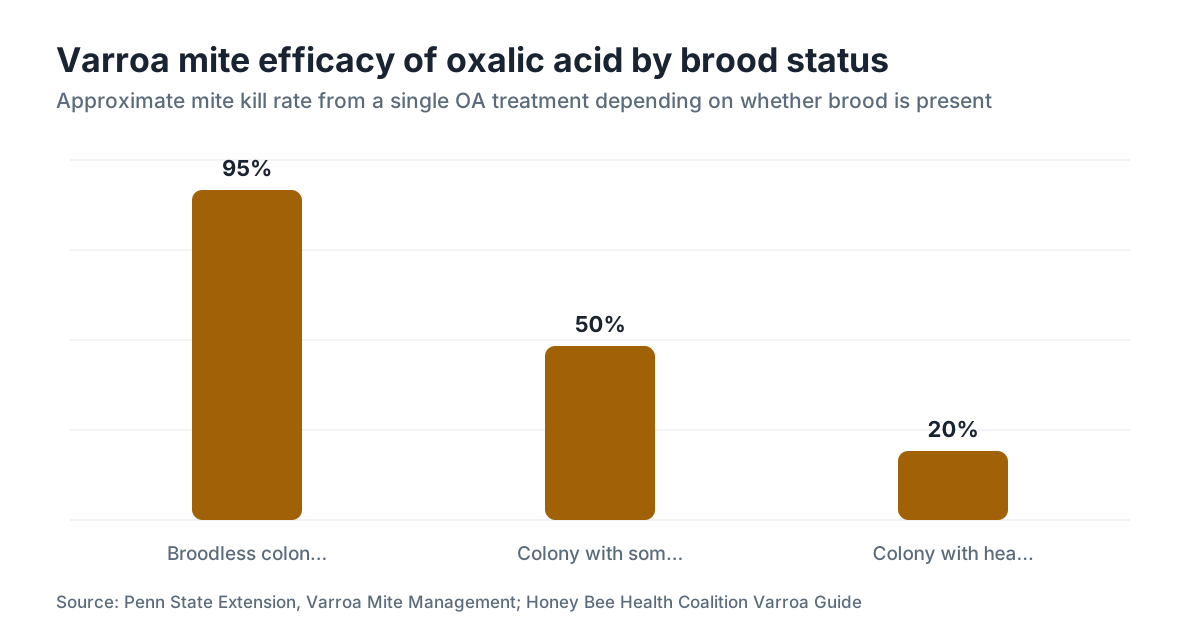
Yes, and in a lot of situations you should. The one variable that decides your options is whether the colony is broodless or still has brood, because that controls which treatments work.
When bees sit in a fully broodless state, oxalic acid (OA) is the best option a hobbyist or sideliner has. Oxalic acid works almost only on phoretic mites, the ones riding adult bees, so efficacy jumps when there's no capped brood for mites to hide in. A single oxalic acid treatment during a natural broodless period can kill 90 to 97 percent of the mites in a colony [5]. That beats what the same treatment does with brood present, by a wide margin.
In the United States, oxalic acid is registered by the EPA for use in honey bee colonies. The two main delivery methods are dribble (Api-Bioxal label) and vaporization. Both are legal. The label sets dose and application details, and you follow the label as law [6]. For colonies clustered tight, vaporization reaches more bees than dribbling, though the evidence on which method wins in broodless colonies is mixed. Penn State Extension recommends vaporization as the preferred method when colonies are clustered and broodless [5].
If your colony still holds some brood in winter (common in mild climates or during warm spells), OA efficacy drops. Then you decide whether a treatment is worth doing at all or whether you should wait for a genuine broodless window. Extended-release OA products designed for use with brood exist, but read the current label carefully before you apply anything.
For a fuller look at mite biology and every treatment option, the varroa mite overview on this site is a good place to start.
Amitraz strips (Apivar) and formic acid products (Mite Away Quick Strips, FormicPro) carry their own winter caveats. Apivar needs a minimum temperature to work and runs a 56-day exposure window, which makes it awkward mid-winter in cold climates. Formic acid products need temperatures above 50 degrees Fahrenheit (10 degrees Celsius) and get risky in the cold. Using them outside their labeled temperature range is both less effective and potentially harmful to bees [7].
What happens to colonies that go into winter with high mite loads?
They die, or they come out of winter so damaged they collapse by early spring. This is the pattern behind what beekeepers call spring dwindle or spring collapse. The colony survives December, and by March it's a tennis-ball cluster with a failing queen and no population to build on [3].
The mechanism is well documented. Varroa feeding during pupal development produces bees that emerge with shorter lifespans, lower body weight, and suppressed immune function [2]. A heavy fall mite load means most of your winter bees are already compromised before the cold arrives. Add the Deformed Wing Virus and the other pathogens varroa carry, and you're not looking at a honey bee colony so much as a slow-motion collapse.
The Honey Bee Health Coalition's Varroa Management Guide puts colonies above 2 percent on an alcohol wash in August or September at serious risk of winter loss [3]. Two percent means 2 mites per 100 bees. It's a low bar, and plenty of beekeepers can't stay under it without treating in late summer.
Here's the good news. Fall treatment followed by a winter OA treatment when the colony goes broodless is a protocol that works. You don't need to guess. You need a plan and a calendar.
When exactly does a colony become broodless in winter?
It depends on climate, colony genetics, and the queen's own pattern. In the northern US and Canada, most colonies go broodless somewhere between late October and late December. In southern states, some colonies never go fully broodless. In the UK and northern Europe, the broodless window usually runs November through January [8].
You can't tell from the outside without checking. On a warm day above 50 degrees Fahrenheit, a quick look or a brood check with a probe thermometer tells you what's happening. Many beekeepers run a sugar roll or alcohol wash in late October to read mite load, then watch for the broodless window as their signal to apply oxalic acid.
Beekeepers in warm climates who never see a natural broodless period sometimes force one by caging the queen for a few weeks in fall so all brood emerges. That opens a window for OA treatment. It's a legitimate strategy, though it adds work. The University of Florida IFAS Extension has guidance on managing varroa in year-round brood climates [9].
Broodless status is not an assumption. Verify it.
How do you know how many mites your winter colony has?
You test. There is no reliable way to guess mite levels without a sample. Eyeballing bees or brood tells you almost nothing at low to moderate infestation.
The two standard methods are the alcohol wash and the sugar roll. Alcohol wash is more accurate. It kills the sampled bees but gives you a reliable count. Sugar roll is gentler and undercounts mites by roughly 20 to 40 percent in some studies [10]. For winter monitoring, alcohol wash is the honest choice when you want a real number.
Sample size matters. Use 300 bees, about half a cup. Divide the mite count by three to get your percentage. Two mites on a 300-bee sample is roughly 0.7 percent. Six mites is 2 percent. The math is easy. The discipline of actually doing it is where most hobbyists fall down.
Winter sampling takes some care. Pull bees from the cluster itself, not stragglers near the entrance. A warm day when bees are moving is safer than cracking open a tight cluster in sub-freezing air. Some beekeepers skip winter sampling, treat preventively in late fall, then sample in spring to see how the treatment held. That's reasonable if you know your fall counts were borderline.
VarroaVault's free monitoring tools include a mite wash calculator and a treatment timing calendar that track counts across seasons and flag when a winter treatment makes sense.
If you're sourcing alcohol wash supplies or OA vaporizers, checking beekeeping supplies before the winter window closes is worth doing early.
Does the type of winter climate affect how mites behave?
Climate shapes everything about winter mite dynamics. In a northern climate where colonies stay clustered for four to five months with no brood, mite populations sit essentially frozen in place. Whatever phoretic load the colony carries into November is roughly what it carries in February, minus the bees that die over winter (which takes some mites down with them).
A mild climate is more dangerous. Bees may rear brood all winter, mites reproduce year-round, and a late-fall treatment becomes one piece of a bigger puzzle. Beekeepers in Florida, southern California, or coastal regions often treat more often because there's no seasonal break in mite reproduction [9].
Migratory beekeepers and sideliners who haul hives to warm-climate pollination contracts hit this too. A colony that was broodless in a northern winter suddenly parks next to almond orchards in California in January, brood cranks up, and mites that were idle start reproducing again. Treatment planning has to follow where the hives are going, more than where they started.
What is the best winter varroa treatment protocol, step by step?
Here's where the evidence and most extension recommendations land.
Step one: treat in late summer, before the winter bee generation is raised. The threshold most often cited is 2 percent on an alcohol wash in August. Above that, treat immediately. Apivar, formic acid products, or an oxalic acid extended-release treatment are all options here, temperature permitting [3][7].
Step two: verify the fall treatment worked. Run another alcohol wash 4 to 6 weeks after treatment. Still above 2 percent means you have a resistance or efficacy problem to fix before winter.
Step three: watch for the broodless window. Once daytime temps hold below 50 degrees Fahrenheit and a quick inspection confirms no brood or very little, apply oxalic acid. A single Api-Bioxal treatment by vaporization or dribble, following the label exactly, is enough during a true broodless period [6].
Step four: in early spring, before brood rearing ramps up, run another alcohol wash. If mite levels are creeping, you have a short window to treat again before the population explodes on spring brood.
This two-treatment strategy, one in late summer and one in the broodless winter window, is what most university extensions and the Honey Bee Health Coalition recommend as a survival baseline in high-varroa-pressure environments [3][5].
To put this protocol on a calendar and track it across multiple hives, the scheduling tools at VarroaVault make it easier to stay consistent without holding it all in your head.
If you're sourcing treatment products, browsing beekeeping supply companies that stock Api-Bioxal and OA vaporizers saves time during the narrow windows winter creates.
Are there mite-resistant bee strains that make winter survival easier?
Yes, and hobbyists underuse them. Varroa Sensitive Hygiene (VSH) bees, Minnesota Hygienic bees, and ankle-biter stock (bees that groom mites off themselves) are all selected for mite resistance. These strains don't erase the need to monitor or treat, but they slow mite population growth, which buys time and cuts how often you have to step in [11].
Research on VSH bees shows they hold lower mite levels than unselected colonies under similar conditions, though the amount of suppression depends on how consistently the trait shows up in the local queen population. Breeding programs at the USDA Baton Rouge Bee Lab and several universities keep improving these stocks [11].
This is no magic fix. A VSH colony in a high-pressure area with no monitoring can still collapse. But if you're running four or five hives and chemical treatments feel like too much, shifting toward resistant genetics can lighten the load. Buy queens from breeders who actually test their colonies for VSH trait expression, not ones who just claim the genetics.
What else kills varroa mites besides chemical treatments?
Cold doesn't, as covered. Heat can. Experimental thermal treatment devices use the fact that mites are more sensitive to heat than bees, but they're not widely available or proven at scale for hobbyists yet.
Drone comb removal is a cultural control that works because varroa prefer drone brood at roughly eight times the rate of worker brood. Insert drone comb, let the bees raise drone brood, then pull and freeze it before the drones emerge. You drag mites out of the population with no chemicals. It's labor-heavy and works best as a supplement, not a replacement [3].
Screened bottom boards catch some mites that fall off bees naturally, but studies keep showing they cut mite loads by only a small percentage. The Honey Bee Health Coalition states that screened bottom boards alone are insufficient to manage varroa at biologically meaningful levels [3]. Don't count on them.
Brood breaks, natural (winter) or forced (queen caging), are among the stronger non-chemical tools because they halt reproduction and push all mites into the phoretic phase where OA can reach them.
The honest answer: no single non-chemical method replaces monitoring plus a well-timed oxalic acid treatment. They're useful layers, not substitutes.
Bee biology beyond varroa matters too. The beehive pollen article covers how pollen nutrition drives winter bee health, which ties straight into how well your bees shrug off mite-related stress.
Frequently asked questions
Can you treat for varroa mites in winter?
Yes. Oxalic acid (Api-Bioxal) is the standard winter treatment and works best when the colony is broodless, which is common from November through January in northern climates. Efficacy during a broodless period reaches 90 to 97 percent. Formic acid products need warmer temperatures (above 50 degrees Fahrenheit) and generally don't suit mid-winter use. Apivar can be used but needs warmth for the active ingredient to off-gas.
Do varroa mites die when it gets cold outside?
No. Mites live on bees inside the winter cluster, which holds a core temperature between 68 and 95 degrees Fahrenheit no matter the outside conditions. Mites off the bees would die in freezing air, but they're never exposed. A cold winter does not reduce mite populations in a healthy, clustered colony.
When is the best time to treat varroa in winter?
The best window is during the natural broodless period, typically November to January in cold climates. Confirm the colony is broodless before treating. This maximizes oxalic acid efficacy because all mites ride adult bees and sit within reach of the treatment. If the colony still has brood, wait for a broodless window or use a treatment labeled for use with brood.
What happens to a colony with high varroa mites going into winter?
It usually dies or collapses in early spring. Mites feeding on winter bees shorten those bees' lifespans and suppress their immune function. A heavily infested colony enters winter with already-compromised bees, lacks the population to build up in spring, and often shows as a small, struggling cluster in March or April before collapsing. The Honey Bee Health Coalition sets 2 percent on an alcohol wash in August as the treatment threshold.
Does oxalic acid work in winter?
Yes, and winter is often when it works best. Oxalic acid hits phoretic mites sitting on adult bees. A broodless winter colony has all or nearly all mites in the phoretic phase, so a single OA treatment by vaporization or dribble (following the Api-Bioxal label) can knock out 90 to 97 percent of the mites. Always follow the EPA-approved label for dose and method.
How many varroa mite treatments do colonies need per year?
Most extension recommendations and the Honey Bee Health Coalition suggest a minimum of two targeted treatments per year for colonies in temperate climates: one in late summer (July to September) before winter bees are raised, and one during the broodless winter window using oxalic acid. Colonies with persistent mite pressure or year-round brood in warm climates may need more. Base timing on alcohol wash results, not the calendar alone.
Can varroa mites survive without bees?
No. Varroa mites are obligate parasites of honey bees and can't survive more than a few days without a host bee to feed on. They can't live in empty comb, in honey, or in a deadout for long. But they transfer between colonies via drifting bees, robbing, or swarms, so a dead, mite-laden hive nearby can reinfest your survivors.
How do you monitor varroa mites in winter without harming the cluster?
On a mild day above 45 to 50 degrees Fahrenheit, pull about 300 bees from the cluster into an alcohol wash jar. Skip sampling on very cold days when disturbing the cluster is dangerous. Mite counts below 1 percent in winter are generally fine. Above 2 percent warrants a treatment if you haven't already done a broodless-window OA application. Some beekeepers skip winter monitoring and treat preventively after a confirmed fall count.
Do varroa mites reproduce in winter?
Only if brood is present. Varroa reproduce exclusively inside capped brood cells. In colonies that go fully broodless in winter, mite reproduction stops entirely. In mild climates where some brood rearing continues year-round, mites keep reproducing at whatever rate the available brood allows. That's why winter treatment efficacy ties directly to confirming broodless status before applying oxalic acid.
Is a screened bottom board enough to control varroa in winter?
No. Screened bottom boards remove a small fraction of naturally falling mites but don't cut mite loads to safe levels on their own. The Honey Bee Health Coalition states plainly that screened bottom boards alone are insufficient for varroa management. They help with monitoring mite fall and add some ventilation, but they can't substitute for an actual treatment.
Can varroa mites spread between hives in winter?
Less than in summer, but it happens. Bees drift between nearby hives even in winter during warm spells, and robbing, which often intensifies in early spring when colonies are stressed, is a major mite-transfer pathway. If a neighboring colony collapses from varroa in late winter, bees from your survivor hives may rob its stores and haul mites home. Clean out dead-outs promptly.
How long does a varroa mite live in winter?
A phoretic mite riding an adult bee in winter can live several months, roughly as long as the bee it rides. Winter bees live far longer than summer bees, up to 4 to 6 months, so a mite that attaches to a newly emerged winter bee in October could still be alive in February. Another reason cutting mite loads before winter bees are raised matters so much.
What is the economic threshold for varroa mite treatment in fall?
The most widely cited threshold is 2 percent on an alcohol wash (2 mites per 100 bees) in August or September. The Honey Bee Health Coalition uses this as the trigger for immediate fall treatment. Some researchers argue an even lower threshold (1 percent) is safer ahead of winter bee rearing, especially in areas with high Deformed Wing Virus pressure. If you're at or above 2 percent in August, don't wait.
Sources
- Honey Bee Health Coalition, Varroa Management Guide (6th edition): During broodless periods, all varroa mites shift to phoretic phase, riding adult bees and feeding on fat bodies
- Ramsey et al., 2019, PNAS, Varroa destructor feeds on honey bee fat bodies: Varroa mites feed primarily on fat bodies of adult and pupal bees, shortening lifespan and reducing immune function
- Honey Bee Health Coalition, Varroa Management Guide (6th edition): Colonies with mite levels above 2 percent on an alcohol wash in August or September are at serious risk of winter loss; the Guide states 'a colony that goes into winter with a high mite load is unlikely to survive'
- USDA Agricultural Research Service, Bee Research Laboratory: Winter clusters maintain core temperatures of 68 to 95 degrees Fahrenheit regardless of ambient outdoor temperatures
- Penn State Extension, Varroa Mite Management: A single oxalic acid treatment during a natural broodless period can achieve 90 to 97 percent mite kill; vaporization is preferred for clustered broodless colonies
- EPA, Api-Bioxal (Oxalic Acid) Registration, EPA Reg. No. 79671-3: Oxalic acid (Api-Bioxal) is EPA-registered for use in honey bee colonies via dribble and vaporization methods; the label specifies legal dose and application requirements
- University of Minnesota Extension, Varroa Mite Treatments: Formic acid products require temperatures above 50 degrees Fahrenheit for safe and effective use; Apivar efficacy declines at low temperatures
- FERA Science / UK National Bee Unit, Managing Varroa: In the UK and northern Europe, the broodless window typically runs November through January, making it the standard window for oxalic acid treatment
- University of Florida IFAS Extension, Varroa Mite Management in Florida: In warm climates like Florida, colonies may never go fully broodless, requiring more frequent treatments and different management strategies
- Macedo et al., 2002, American Bee Journal, Comparison of mite monitoring methods: Sugar roll undercounts mites by roughly 20 to 40 percent compared to alcohol wash in several comparative studies
- USDA ARS Baton Rouge Bee Breeding and Genetics Lab, VSH Research: VSH (Varroa Sensitive Hygiene) bees demonstrate significantly slower mite population growth under equivalent conditions compared to unselected bees
Last updated 2026-07-09