Essential oil varroa treatments: do they actually work?
TL;DR
- Thymol-based products (Apilife VAR, Apiguard) are the best-studied essential oil varroa treatments, hitting 90-95% mite reduction under ideal conditions.
- Efficacy falls hard outside the 59-105°F window.
- Oxalic acid is organic but not an essential oil.
- No essential oil treatment reliably replaces oxalic acid or synthetic miticides when infestation is heavy.
What counts as an essential oil varroa treatment?
An essential oil varroa treatment uses plant-derived volatile compounds as the active ingredient. Thymol, from thyme oil, is the only one with real regulatory standing and consistent peer-reviewed data. You'll also see products built around wintergreen oil, spearmint oil, and various blends sold as "natural" miticides.
Oxalic acid gets lumped in here by a lot of beekeepers because it's allowed in organic operations. It isn't an essential oil. It's a dicarboxylic acid found in plants like rhubarb, and it has its own efficacy profile and EPA registration separate from the oil-based products. This article stays on the true essential-oil options, with thymol front and center, since thymol is the one product in this category with an EPA-registered label and hive-trial data behind it.
The varroa mite is the target for all of these. Varroa destructor completes part of its life cycle inside capped brood cells. That's the weakness every essential oil treatment shares: volatiles that kill phoretic mites riding on adult bees can't reliably push through wax cappings to reach reproducing mites underneath. That ceiling on efficacy is the first thing to understand before you pick a product.
How well does thymol actually kill varroa mites?
Thymol is the workhorse of this category, and under the right conditions it hits 85-95% mite reduction. The two EPA-registered thymol products in the US are Apiguard (a slow-release gel) and Apilife VAR (a vermiculite wafer blend of thymol, eucalyptol, menthol, and camphor). Both have published efficacy data.
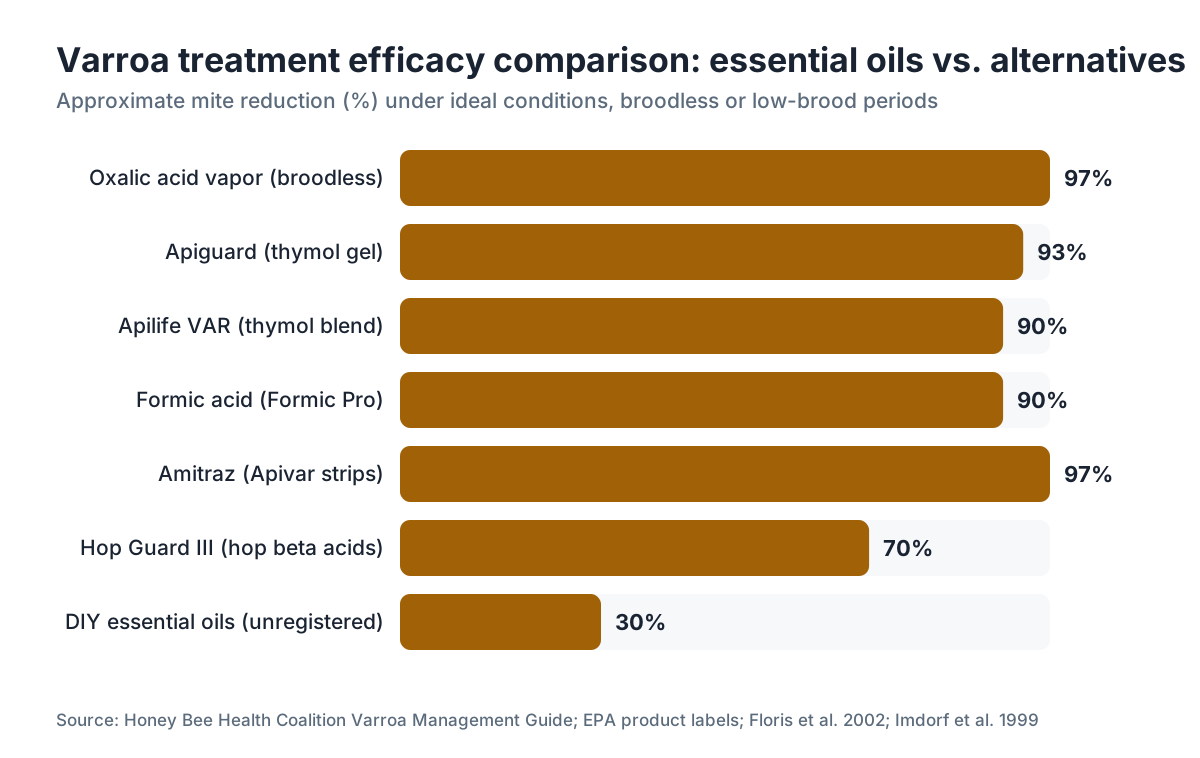
A 2002 study by Floris and colleagues in Apidologie found Apiguard averaged 93% reduction in mite loads when applied to label in late summer [1]. Apilife VAR lands in the same neighborhood in Italian and US trials, generally 85 to 95% when temperatures cooperate [2].
Here's the catch that wrecks results in the field: temperature. Thymol evaporates too slowly below about 59°F (15°C) to reach effective concentrations inside the hive. Above 105°F (40°C) it triggers queen rejection, brood damage, and absconding. The Apiguard label specifies 59-105°F [3]. Most experienced beekeepers target 65-85°F for reliable kill without stressing the colony. If you're in the upper Midwest reaching for thymol in late September, your window has probably already closed.
The second ceiling is brood. Thymol vapor doesn't penetrate capped cells at concentrations current formulations reach. Studies have documented mites surviving inside capped brood through a full thymol course, then repopulating the adult bees once they emerge [4]. Treat during a broodless stretch or a natural late-summer brood break and your outcomes jump.
| Product | Active Ingredient | EPA Reg. | Efficacy Range | Temp. Window |
|---|---|---|---|---|
| Apiguard | Thymol 25% gel | Yes | 85-95% | 59-105°F |
| Apilife VAR | Thymol blend (74.09% thymol) | Yes | 85-95% | 65-95°F |
| Hivesalve | Thymol + wintergreen | No (as of 2024) | Limited data | Not established |
| Hop Guard III | Hop beta acids | Yes | Variable (60-80%) | Wide range |
| DIY essential oil strips | Various | No | Unknown | Unknown |
How does thymol compare to oxalic acid and synthetic miticides?
Thymol is a solid second-tier option. It's not as lethal as oxalic acid dribble or vapor during a broodless period (which can hit 95-99%), and it's nowhere near the 97-99% kill amitraz (Apivar strips) delivers in ideal conditions [5]. What it gives you back: no synthetic chemical residues in wax and honey. For certified organic operations, or beekeepers committed to softer treatments, thymol is the best tool available.
Running 50 hives on a certified organic operation? Apiguard in August is a legitimate protocol. Find a 6% wash count in October on a hobby hive? Thymol is the wrong call, no matter how you feel about synthetics. The colony surviving winter beats the treatment philosophy.
The Honey Bee Health Coalition's Varroa management guide puts thymol in the "organic" column next to oxalic acid and formic acid, and says all three are acceptable but each fails under specific conditions [6]. The guidance is blunt: mite loads above the economic threshold, during weather or brood conditions that don't favor essential oils, call for a different approach.
Hop Guard III earns a mention. Made from hop beta acids, it's EPA-registered, works during a honey flow (most treatments don't), and tolerates a wider temperature range. The efficacy data is shakier, with some trials showing only 60-70% reduction. Niche product. Handy when you need to treat with supers on [7].
What temperature and seasonal conditions make or break essential oil treatments?
Temperature is the single biggest variable in essential oil treatment outcomes. Thymol is a solid at room temperature. It only vaporizes at therapeutic concentrations inside the hive when ambient temperatures stay consistently warm. Below 60°F, not enough thymol evaporates to reach lethal concentrations. That's physical chemistry, not a formulation flaw a different brand fixes.
The practical result: thymol's treatment window closes earlier than most people expect. Across most of the continental US, that window runs roughly mid-July through mid-September, shifting with your latitude. Michigan beekeepers often get six to eight weeks of viable weather. Texas beekeepers get a longer window but slam into the upper temperature ceiling through July and August.
Brood matters just as much. A full-strength colony in August carries 8-12 frames of brood, and roughly 70-80% of your mites sit inside those capped cells at any moment, sealed off from thymol vapor. You're treating phoretic mites only. This is why the University of Minnesota Bee Lab recommends timing treatments to the natural or induced brood break some colonies hit in late summer, or caging the queen to force one [8].
Rain and ventilation move the needle too. High humidity slows thymol evaporation and drops vapor concentration. Very dry air in arid climates can dry the gel out before the treatment period ends. Neither is fully controllable, and both feed the efficacy spread you see across regions.
Are DIY essential oil treatments (spearmint, wintergreen, tea tree) safe and effective?
No. Not as primary varroa treatments.
Beekeepers have run spearmint syrup, wintergreen oil-soaked towels, tea tree oil, and every other homebrew for decades. The appeal is obvious: cheap, on the shelf already, feels natural. The problem is there's essentially no peer-reviewed data showing any DIY essential oil preparation reaches consistent therapeutic kill rates, and some preparations demonstrably harm bees and brood.
Menthol, derived from peppermint oil, was actually EPA-registered for varroa in the US at one point but is no longer sold in that form. The studies backing that registration found efficacy swung wildly, roughly 25 to 80%, all depending on temperature [4]. If a registered product with dosing guidance couldn't hit reliable numbers, your improvised version won't either.
The EPA's position is clear: pesticides (which varroa treatments legally are) must be registered before use. Applying an unregistered preparation to bees violates FIFRA (the Federal Insecticide, Fungicide, and Rodenticide Act) no matter how natural the ingredients [9]. Not everyone loses sleep over this in their backyard, I get it. Know the legal reality anyway, and know the deeper reason registration demands data: dosing and formulation actually decide both efficacy and safety.
Want to see what's genuinely registered and available? The beekeeping supplies market has grown a lot in the last decade. More real options exist now for beekeepers who want to stay organic.
Does thymol work in a honey super, and is the honey safe to eat?
Thymol occurs naturally in trace amounts in honey. Thyme honey carries thymol straight from the nectar. The question for treated hives is whether applied thymol pushes residues above that background level in your harvest.
Both Apiguard and Apilife VAR labels tell you to pull honey supers before treatment and not to apply when a honey flow is coming [3]. That's a practical rule more than a paperwork one. Studies have found elevated thymol residues in honey produced during treatment. The levels sit below human toxicological concern thresholds, but they change honey flavor and can put you crosswise with labeling requirements.
Standard practice is to treat after your last harvest, which in most of the US means late summer once supers come off. That timing lines up with the good temperature window and the pre-winter mite peak, so the calendar cooperates even setting the honey flow aside.
Selling honey and want an honest "no synthetic chemical" claim? Thymol-treated hive honey needs a careful look against whatever certification standard you're chasing. The USDA National Organic Program allows thymol as a treatment material, but your specific certifier (Oregon Tilth, CCOF, and others) may layer on extra requirements about treatment timing relative to harvest.
What does the research say about essential oils other than thymol?
Honest uncertainty is the right posture here. Plenty of lab work has tested plant compounds against varroa in Petri dish assays or short cage studies: lemon balm, lavender, clove oil, neem, garlic, dozens more. Some show acaricidal activity in vitro. Very few have been tested inside real hives with real efficacy measurements.
A 2019 review in Insects (MDPI) assessed dozens of plant extracts against varroa and concluded that while many showed lab activity, "field applications have not always confirmed laboratory results, and standardization of active compound concentrations remains a challenge" [10]. That's the whole problem in one sentence: getting a compound to the mite at lethal concentration inside a working hive, without cooking the bees, brood, or queen, is a far harder engineering job than a lab assay lets on.
Formic acid sometimes gets filed with essential oils in the "organic" bucket, and its efficacy data beats most of the field. Mite Away Quick Strips and Formic Pro are EPA-registered and show 90%+ efficacy in some trials, with the rare advantage of penetrating capped brood to reach reproductive mites. Formic acid isn't an essential oil, but beekeepers comparing organic options weigh it against thymol constantly, so it belongs in the conversation.
The bottom line on the lesser-studied oils: don't run them as primary treatments. If a compound isn't EPA-registered with efficacy data from hive trials, you're running an experiment on your colonies with no safety net.
How do you apply Apiguard and Apilife VAR correctly?
Both products go on top of the frames, directly above the cluster. Placement matters. Thymol needs to sit in the bee space over the brood nest so bees contact the vapor and carry small amounts down into cells as they clean up the gel or wafer.
Apiguard protocol: two applications of one 50g tray, four weeks apart, for a six to eight week total. Open the foil lid, set the tray gel-side down (or gel-side up depending on the label version, so check your batch) on the top bars. Some beekeepers score or perforate the tray surface to speed evaporation in cooler weather. Remove the first tray after four weeks and drop in a fresh one [3].
Apilife VAR protocol: break the wafer into four pieces and set them in the corners of the upper brood box on top of the frames. Replace every nine to ten days, three treatments total across 28-30 days [2]. The multicompound formula (thymol, eucalyptol, menthol, camphor) works together, though thymol carries most of the mite-killing load.
A few things that quietly ruin results: too little upper ventilation lets thymol build faster than bees can tolerate, which triggers balling or absconding. Keep a screened bottom board open during treatment. And don't treat a weak colony with either product. A colony below five frames of bees can't spread the treatment evenly, and the higher vapor concentration relative to colony size hammers them.
Tracking mite loads before and after treatment (you should be) is where VarroaVault's free monitoring tools earn their keep: log your wash results and flag when counts aren't dropping far enough after a thymol course.
When should you skip essential oil treatments entirely?
Three situations call for something else.
Late fall or winter is the first. If it's October in zone 5 and your alcohol wash or sugar roll reads above 2% infestation, you've missed the thymol window. The colony is raising winter bees or about to. Oxalic acid vapor or dribble is your play, and it works best during the broodless stretch that often arrives in November and December.
Severe infestation at any time of year is the second. At 5% or higher, a 90% thymol treatment still leaves a crowd behind. Do the math: 5% infestation in a 10,000-bee colony, with a standard brood-to-adult ratio, might mean 1,500+ total mites. Kill 90% and you've left 150+ to breed into the next brood cycle. Recoverable, but barely, and only if monitoring confirms the drop. At 10%, you need something faster and harder.
Uncooperative brood is the third. If the queen is ramping into a fall buildup and every frame is packed with brood, most of your mites are sealed in cells. A thymol treatment will feel like it worked (the mite drop looks great) and then the count rebounds hard four to six weeks later as treated bees die off and mite-laden new bees emerge.
The Honey Bee Health Coalition's Varroa management guide sets decision thresholds by season, recommending action at 2% for most of the year and 0.5-1% heading into winter [6]. Let those numbers drive your treatment choice, not the calendar alone.
What's the real cost of essential oil treatments compared to alternatives?
For a hobbyist running a handful of hives, cost rarely decides anything. The numbers still help.
Apiguard runs roughly $8-12 per treatment (two trays per hive), depending on supplier. Apilife VAR is similar, around $6-10 per hive per course. Apivar (amitraz strips) runs about $12-18 per hive per treatment. Oxalic acid glycerin-soaked towels (Api-Bioxal applied through an extended-release carrier) can drop to $2-5 per hive once you've bought the Api-Bioxal and materials [5].
The real cost isn't the product. It's a failed treatment. Apply thymol outside its temperature window, or against a high infestation, and it won't knock the mites down. You lose bees, maybe the whole colony, and you pay for another treatment cycle on top of whatever the loss cost you. Colony replacement runs $150-200+ for a package and $200-250+ for a nuc, going by 2024 pricing from most US suppliers.
For sideline operations managing beekeeping supplies costs across 25-100 hives, the math earns attention. Many sideliners run thymol or formic acid as a summer treatment, then follow with oxalic acid in the broodless period, holding annual per-hive treatment cost under $25 while covering both warm-season and winter protocols. Reasonable combination strategy, if your monitoring shows it's working.
How do you monitor whether an essential oil treatment actually worked?
Monitor it the way you monitor any treatment: alcohol wash or sugar roll before, then again two to four weeks after the full course ends. If all you do is count mite drop on the sticky board during treatment, you're measuring vapor activity, not colony mite load. A pile of dead mites on the board looks reassuring and tells you nothing about where the survivors are.
The target post-treatment threshold shifts by season. Heading into summer, under 1-2% is the goal. Heading into fall and winter, you want under 1%, ideally under 0.5%, before winter bees are raised (roughly August through September in most of the US) [6]. If your post-treatment wash comes back above threshold, retreat or switch to a different product class.
The University of Minnesota Bee Lab and Penn State Extension both keep detailed mite monitoring guides with alcohol wash technique, and both recommend the alcohol wash over the sugar roll for accuracy. Sugar rolls undercount mites by 30-50% on average against an alcohol wash [8][11].
Tracking treatments across multiple hives over multiple seasons turns into genuinely useful data if you log it consistently. You'll start to see which hives resist mites, which treatment windows actually worked in your microclimate, and whether resistance is building. VarroaVault's monitoring tools are built for exactly this kind of longitudinal tracking across your operation.
Frequently asked questions
Is thymol safe to use when honey supers are on?
No. Both Apiguard and Apilife VAR labels require removing honey supers before treatment. Thymol can leave elevated residues in honey produced during a treatment period, affecting flavor and potentially violating labeling standards. Standard practice is treating after the last harvest of the season, typically late summer across most of the US.
Can I make my own thymol varroa treatment at home?
Legally, no. Any pesticide use on bees, including natural compounds, must come from an EPA-registered product with a label you follow exactly. DIY thymol preparations are technically a FIFRA violation. Practically, dosing and formulation matter: too little thymol kills nothing, too much harms bees and brood. Apiguard and Apilife VAR are cheap enough that a homebrew isn't worth the legal and efficacy risk.
Does spearmint or wintergreen oil actually kill varroa mites?
In controlled lab assays, several essential oils including spearmint and wintergreen show some acaricidal activity. In field conditions inside a functioning hive, there's no peer-reviewed evidence that DIY spearmint or wintergreen preparations reach consistent mite kill. They aren't EPA-registered as varroa treatments, and efficacy data from hive trials doesn't exist for these formulations.
What temperature is too cold for thymol treatments to work?
Below 59°F (15°C), thymol doesn't evaporate fast enough inside the hive to reach mite-lethal concentrations. The Apiguard label lists 59-105°F as the effective range. In practice, most beekeepers aim for sustained ambient temperatures of 65°F or above throughout the treatment period, which closes the window in most northern states by late September or early October.
How long does a thymol treatment take?
Apiguard requires two applications four weeks apart, for a six to eight week total treatment period. Apilife VAR uses three applications over 28-30 days, with each wafer replaced every nine to ten days. These run longer than synthetic options like Apivar (seven to eight weeks technically, though mite kill happens throughout) or a single oxalic acid vaporization.
Can essential oil treatments cause queen loss or absconding?
Yes, particularly at high temperatures. Above roughly 90-95°F, thymol vapor builds to concentrations that stress colonies. Queen rejection has been documented at the upper end of the range. Absconding shows up more in Africanized or feral colonies, but domesticated colonies will abscond too if thymol concentration becomes intolerable. Adequate ventilation during treatment cuts this risk significantly.
Do essential oil treatments work on varroa in capped brood?
No. This is the fundamental limit of thymol and all volatile essential oil treatments. Thymol vapor doesn't penetrate wax cappings at concentrations registered products reach. Mites in capped cells survive a full course and repopulate the hive as those bees emerge. That's why efficacy climbs during a broodless period, and why essential oils never fully replace treatments like oxalic acid vaporization.
How does Hop Guard III compare to thymol for varroa?
Hop Guard III (hop beta acids) has one real edge over thymol: it can be used with honey supers on, and it works across a wider temperature range. The downside is lower, more variable efficacy, generally 60-80% in field trials versus 85-95% for thymol under good conditions. Best used when you need to treat during a flow, not as a substitute for a full-efficacy late-summer treatment.
Are thymol-based varroa treatments approved for organic beekeeping?
Yes. Thymol is on the USDA National Organic Program's National List of allowed materials for livestock, which includes bees. Apiguard and Apilife VAR are accepted by most organic certifiers in the US. Specific certification bodies may add requirements about timing relative to honey harvest, so confirm with your certifier before treating in a way that affects certified honey.
What mite count threshold should trigger a thymol treatment?
The Honey Bee Health Coalition recommends treating at 2% or higher by alcohol wash for most of the active season, and at 0.5-1% before winter bees are raised (roughly August in northern states). If your wash reads 2% or above in July or August and you're inside the temperature window, thymol is a reasonable first-line choice for beekeepers preferring organic options.
Can varroa mites develop resistance to thymol?
Current evidence suggests thymol resistance in varroa isn't a significant concern, unlike amitraz resistance, which has been documented in some US populations. Thymol's mode of action is physical (vapor disrupting the mite's nervous system and spiracles) rather than receptor-based, which may slow resistance development. Even so, rotating treatment classes is still good practice and reduces any selection pressure.
How do I know if my thymol treatment failed?
Do an alcohol wash two to four weeks after the course ends. If your mite load is still at or above your pre-treatment threshold, or hasn't dropped by at least 80-90%, the treatment didn't achieve adequate knockdown. Common reasons: temperatures dipped too low during part of the period, brood levels ran too high, or infestation was already severe enough that 90% kill left too many mites. Switch to a different treatment class.
Is formic acid the same as an essential oil treatment?
No. Formic acid is a naturally occurring organic acid, not an essential oil. It gets grouped with thymol in the "organic treatment" category because both are allowed in certified organic operations and both leave no synthetic residues in wax. Formic acid has an advantage thymol lacks: it penetrates capped brood cells and kills reproductive mites. Formic Pro and Mite Away Quick Strips are EPA-registered formic acid treatments.
Sources
- Floris et al., Apidologie 2002, 'Effectiveness of Apiguard against Varroa destructor': Apiguard achieved average 93% mite reduction under label conditions in late-summer application trials
- Imdorf et al., Bee World 1999, 'Use of essential oils for the control of Varroa jacobsoni': Thymol vapor does not penetrate capped brood cells; mites in capped cells survive treatment and repopulate; menthol efficacy ranged 25-80%
- EPA, Api-Bioxal (oxalic acid) product registration and label, EPA Reg. No. 86202-8: Oxalic acid vaporization (Api-Bioxal) shows 95-99% efficacy in broodless colonies; cost competitive with essential oil treatments
- Honey Bee Health Coalition, Varroa Management Guide (current edition): HBHC recommends action threshold of 2% mite wash during active season and 0.5-1% before winter bees are raised; thymol listed as acceptable organic treatment
- University of Minnesota Bee Lab, Varroa Monitoring and Management: Sugar rolls undercount mites by 30-50% compared to alcohol wash; University of Minnesota recommends alcohol wash for accuracy and coordinating thymol treatment with brood break
- EPA, Federal Insecticide, Fungicide, and Rodenticide Act (FIFRA) overview: All pesticide products including natural compounds must be EPA-registered before use; unregistered application is a FIFRA violation
- Conte et al., Insects (MDPI) 2019, 'Essential oils and plant extracts for varroa control': Review concluded: 'field applications have not always confirmed laboratory results, and standardization of active compound concentrations remains a challenge'
- Penn State Extension, Varroa Mite Monitoring Methods: Alcohol wash recommended over sugar roll for mite monitoring accuracy; post-treatment wash should be done 2-4 weeks after treatment course ends
- USDA National Organic Program, National List of Allowed and Prohibited Substances (7 CFR 205.603): Thymol is on the NOP National List as an allowed material for organic livestock (bee) operations
Last updated 2026-07-09