Fogging for varroa mites: does it actually work?
TL;DR
- Fogging a hive with mineral oil or oxalic acid vapor kills phoretic varroa mites on adult bees quickly, with some studies showing 90-plus percent knockdown in broodless colonies.
- The catch: it does almost nothing to mites inside capped brood cells, so it works best when brood is absent or as a supplement to a full treatment protocol.
What is fogging for varroa mites and how does it work?
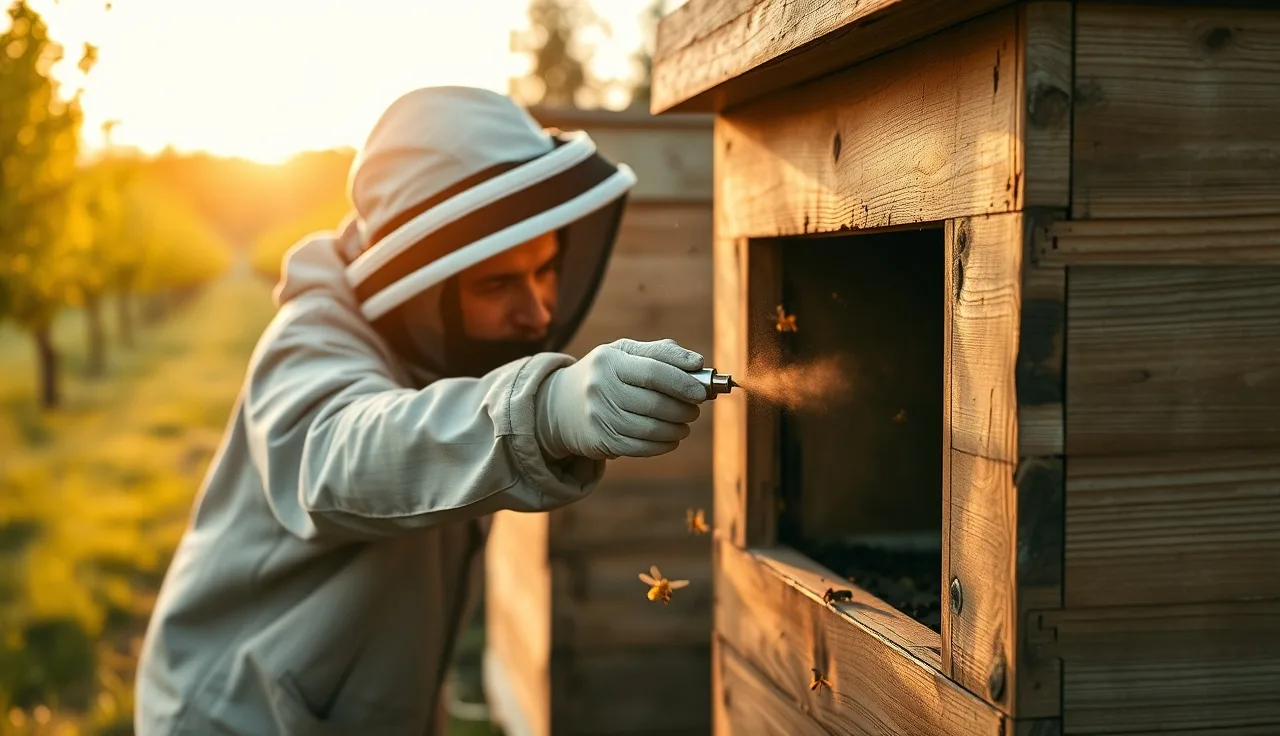
Fogging pushes a fine aerosol or vapor through a hive to coat adult bees and exposed surfaces with a mite-killing substance. The most common materials are food-grade mineral oil and, less often, oxalic acid in an alcohol carrier. A dedicated hive fogger, sometimes called a bee fogger, heats the liquid into micro-droplets small enough to slip between frames and contact mites riding on bee bodies.
The mechanism depends on the substance. Mineral oil works physically: the thin coating disrupts the waxy outer layer of the mite's cuticle, causing it to dry out [1]. It also coats the sticky pads varroa use to grip bees, loosening their hold. Oxalic acid fog, where it's registered, works by direct contact with exposed mite tissue at low pH.
What fogging does not do is reach capped brood. A phoretic mite sitting on an adult bee is vulnerable. A mite sealed inside a cell with a developing pupa is completely protected. That single distinction decides whether fogging is worth your afternoon or a waste of it.
What does the research actually say about fogging effectiveness?
The honest answer: the published evidence is thinner than the forum enthusiasm suggests, and most of the rigorous data comes from Europe where different products and protocols get tested.
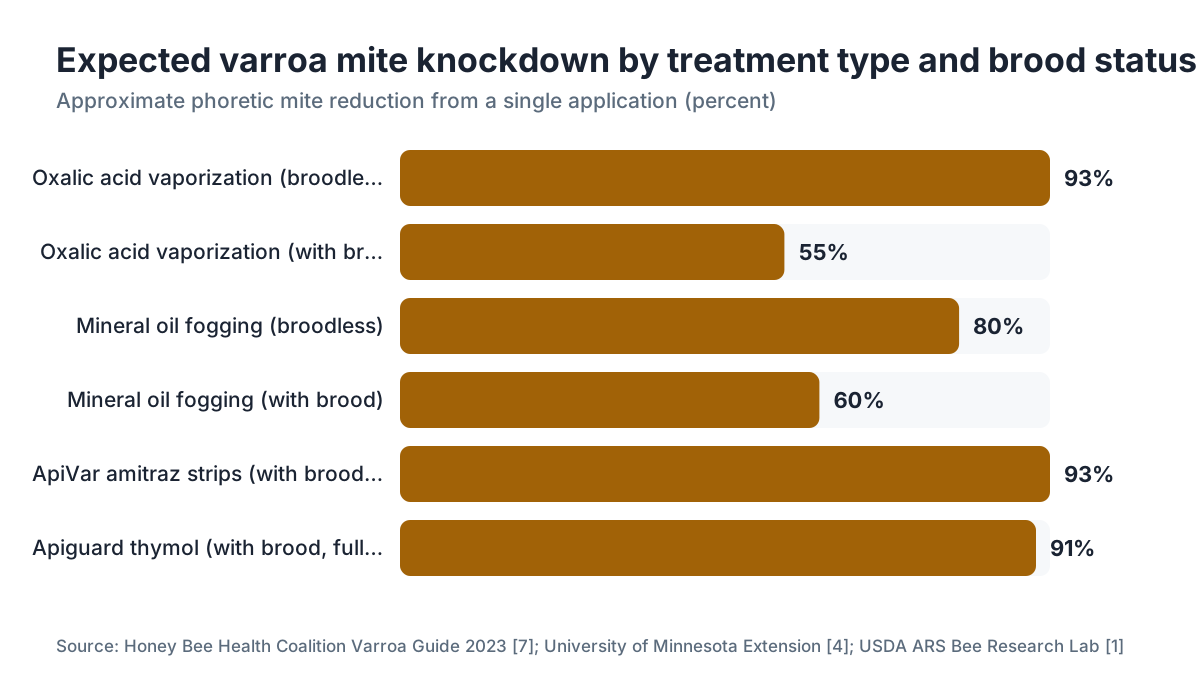
Mineral oil fogging studies from the early 2000s, including work summarized by the USDA ARS Bee Research Lab, found knockdown of phoretic mites in the 50-90 percent range depending on dose, colony strength, and brood status [1]. That wide range matters. In colonies packed with brood, reinfestation from emerging cells can undo a fog treatment within days. In broodless winter colonies, efficacy climbs toward what you'd get from an oxalic acid dribble.
A 2001 study by Calderone in the Journal of Economic Entomology tested mineral oil fogging over multiple applications and found no significant colony-level mite reduction when brood was present, even with repeated treatments [2]. That's the finding practitioners keep overlooking: frequency doesn't fix the brood refuge problem.
Oxalic acid fogging (vaporization, technically) is a different story with better data behind it. EPA registered oxalic acid vaporization in the U.S. in 2015, and the approved label allows up to three treatments per brood cycle [3]. University of Minnesota extension work puts single-application efficacy in broodless colonies around 90-95 percent mite kill [4]. For colonies with brood, you need multiple timed applications over several weeks to catch mites as they emerge.
What are the differences between mineral oil fogging and oxalic acid vaporization?
People swap these terms around, but they aren't the same thing, and the regulatory and safety profiles are worlds apart.
| Feature | Mineral Oil Fogging | Oxalic Acid Vaporization |
|---|---|---|
| EPA registered treatment? | No (food-grade MO is not registered as a pesticide for this use) | Yes, Oxalic Acid Dihydrate products [3] |
| Primary action | Physical (cuticle disruption) | Chemical (acid contact) |
| Efficacy on phoretic mites | 50-90% depending on conditions | 90-95% in broodless colonies [4] |
| Efficacy in capped brood | Essentially zero | Essentially zero |
| Bee safety at low dose | Generally well tolerated | Well tolerated at labeled rates; high doses harm bees |
| Human safety concerns | Low; avoid inhaling oil mist | Significant; acid vapor damages lungs and eyes; PPE required [3] |
| Equipment cost | $50-150 for a basic fogger | $100-300 for a vaporizer; oxalic acid ~$20-30/lb |
| Honey/wax residue concern | Mineral oil residues documented in wax [5] | Oxalic acid degrades; residues at approved rates not considered a concern by EPA [3] |
The registration status is the big divide for U.S. beekeepers. Using mineral oil as a pesticide treatment without an EPA registration is technically a violation of FIFRA, the Federal Insecticide, Fungicide, and Rodenticide Act [6]. Plenty of hobbyists do it anyway, especially in the off-label trickle and fogging methods documented in older USDA and university publications, but know the legal position before you decide. Oxalic acid vaporizers, run with a registered product per label directions, keep you legal and give you better, more predictable results.
If you're sourcing equipment for either approach, cross-referencing what's available from beekeeping supply companies before buying saves money, since fogger quality varies a lot.
When in the season does fogging for varroa make the most sense?
The answer is almost always the same: when brood is minimal or absent. That means late fall after brood rearing winds down, midwinter in climates warm enough to open a hive briefly, or right after a forced broodbreak.
Fog a colony in July with frames of capped brood wall to wall and you might knock down 60 percent of phoretic mites today, then watch the mite count rebuild over the next three weeks as brood emerges. Net effect: maybe a small bump in the colony's mite-to-bee ratio, not the clean reduction that protects winter bees.
The Honey Bee Health Coalition's Varroa management guide (updated 2023) is blunt about this. Treatments that only contact phoretic mites need broodless or low-brood conditions to achieve meaningful population-level control [7]. The guide points toward integrated approaches where fogging or vaporization is timed to brood cycles or paired with mechanical broodbreaks.
Practical windows:
- After a swarm, the original colony has a laying gap of roughly 3-4 weeks. Good fog window.
- In late September or October across the northern U.S., brood rearing slows sharply. A treatment here protects winter bees.
- Splits and packages without laying queens: treat immediately.
Track your actual mite loads with an alcohol wash or sugar roll before and after fogging. Don't guess. If your post-treatment wash still reads above 2 percent infestation, you need a follow-up or a different approach [7].
How do you actually fog a hive for varroa? Step-by-step
These steps cover mineral oil fogging with a standard propane or electric hive fogger. Oxalic acid vaporization uses similar hive prep but different equipment and mandatory PPE (see the next section).
- Do this in late afternoon or evening when most foragers are home. More bees inside means more mite-carrying adults get contacted.
- Close or reduce the entrance to a small gap, about 1 inch. You want the fog to build up inside rather than drift straight back out.
- Load the fogger with food-grade mineral oil. Dosing in older USDA literature ranged from 1-3 ml per application [1], but fogger output varies, so check your specific fogger's guidance and start at the low end.
- Insert the fogger nozzle into the bottom entrance and apply for 5-10 seconds. Let the fog settle 30-60 seconds, then open the entrance fully.
- Some folks briefly insert the nozzle through the top when running a screened bottom board, but bottom entry is standard since hot air and fog rise through the frames on their own.
- Repeat every 5-7 days for several applications if you're trying to catch mites across a brood cycle, or use a single application for broodless colonies.
- Always do an alcohol wash 48-72 hours after treatment to confirm knockdown.
A note on frequency: repeated fogging with mineral oil in warm months can leave bees coated and agitated, and there's some evidence (in Camazine and Morse's early work) that very frequent applications cut foraging. Keep intervals at least 5 days apart.
What PPE and safety precautions do you need when fogging?
For mineral oil fogging, the risks stay low but they aren't zero. Fine oil aerosol is an inhalation irritant. Wear a dust/mist respirator (N95 minimum) and eye protection. Don't fog into the wind. Your standard beesuit handles skin contact.
Oxalic acid vaporization demands far more serious PPE. The EPA label for registered oxalic acid products calls for a full-face respirator with an acid gas and P100 particulate cartridge, chemical-resistant gloves, and protective clothing [3]. Oxalic acid vapor causes irreversible lung and eye damage with repeated exposure. Seal the vaporizer wand and the hive entrance while the unit heats so vapor doesn't escape before insertion. After applying, keep the entrance plugged for at least 10 minutes and stay upwind.
Bees don't need any particular setup for either treatment. You don't hunt for the queen or pull frames. That's one real operational advantage of fogging over some other treatments.
Store mineral oil in original food-grade containers away from heat. Store oxalic acid dihydrate in a locked cabinet away from children and pets. It's corrosive.
Does fogging with mineral oil leave residues in honey or wax?
This is a real concern that gets too little attention in hobbyist circles. Mineral oil residues in beeswax have been measured in several studies. A 2002 analysis by Bogdanov and colleagues in Apidologie found repeated mineral oil applications led to detectable residues in wax combs, and the levels rose with the number of treatments [5]. Whether those levels harm bees or people at the concentrations found is genuinely uncertain. Food-grade mineral oil has low acute toxicity, but the chronic sublethal picture in bees isn't well characterized.
For honey, timing decides a lot. Treating with no supers on and no active nectar flow cuts the chance of oil aerosol reaching stored honey. The standard move is to pull supers before any treatment and put them back only after the treatment period ends.
Oxalic acid residue in honey reads differently. The European Food Safety Authority and EPA have both reviewed it, and at the rates on approved labels, oxalic acid residues in honey aren't treated as a regulatory concern, partly because oxalic acid already occurs naturally in honey [3]. EPA's approval language reflects that judgment.
So mineral oil fogging deserves more caution on residues than oxalic acid vaporization, and it lacks the regulatory review that registered products carry.
How does fogging compare to other varroa treatments like Apiguard or ApiVar?
Fogging is fast and low-disruption. Open the entrance, fog for 10 seconds, done. That's genuinely handy when you have many colonies to treat quickly, or when you're managing splits and packages.
The efficacy ceiling when brood is present is the serious limitation. Apiguard (thymol gel) hits 90-plus percent efficacy in field conditions when used correctly in warm temperatures, and it works over several weeks, catching mites as they emerge from brood [8]. ApiVar (amitraz strips) reaches 90-95 percent efficacy and has the longest data record of any miticide currently registered in the U.S. [8]. Both registered chemical options beat mineral oil fogging in colonies with active brood, by a wide margin.
The Honey Bee Health Coalition's treatment efficacy table gives a clean summary of expected performance across methods [7]. Fogging doesn't appear there as a standalone recommended treatment. It sits in the supplemental or emergency column.
The honest use case for mineral oil fogging: you need to do something right now, you don't have a registered treatment on hand, and you understand you're buying time rather than solving the problem. For a varroa mite infestation above 3 percent in a colony with brood, reach for a registered treatment.
To track all of this across your operation, VarroaVault's free protocol tools let you log treatment dates, mite counts, and efficacy by hive, so you're not relying on memory when decisions compound across a season.
Is mineral oil fogging legal to use as a varroa treatment in the U.S.?
Technically, no, not as a standalone pesticide application. Under FIFRA, any substance applied to a colony specifically to kill a pest has to be registered with the EPA for that use [6]. Mineral oil is not registered as a miticide for honey bee colonies. Using it that way is an off-label application that could, in theory, expose you to regulatory action, though enforcement against individual hobbyists is essentially nonexistent in practice.
The FDA classifies food-grade mineral oil as GRAS (Generally Recognized as Safe) for food applications, which is a separate question from FIFRA registration as a pesticide [9]. The two frameworks run in parallel.
Some university extension publications from the late 1990s and early 2000s recommended mineral oil fogging and trickle methods, and many beekeepers cite those as permission. They aren't. Those were research communications, not EPA-approved use directions. Virginia Cooperative Extension's apiculture materials, for example, note the registration gap in their updated guidance [10].
If legality matters to you (and it should, especially if you sell honey or run a commercial operation), use a registered oxalic acid product. The equipment cost is modest and the efficacy is better.
What fogging equipment do you need and what does it cost?
Basic hive foggers for mineral oil run $50-150. The common type is a propane-powered model like a wasp-spray fogger, with a metal nozzle you slide into the entrance. Electric foggers with adjustable heat cost more ($120-250) and give more consistent droplet size, which matters for oil coverage.
For oxalic acid vaporization, the wand style (a metal cup on an electric rod that you set in the hive entrance and seal) runs $100-200 for basic models. Automated systems with timers cost $200-350. On top of that, a quality full-face respirator with acid gas cartridges runs $50-150, and that part is not optional.
Oxalic acid dihydrate (the raw chemical) costs roughly $20-30 per pound from apiculture suppliers. A standard dose per colony is about 1 gram, so a pound lasts a very long time across a season [4]. Ready-mixed branded products like Api-Bioxal cost more per treatment but come with an EPA-registered label, which matters legally.
Finding equipment from reputable beekeeping supply companies is worth the time. Cheap foggers from general Amazon listings often have inconsistent output that makes dosing unreliable. If you're comparing options as you start out, the free shipping honey bee supply companies guide has sourcing notes that can cut your upfront costs.
Can you fog packages, nucs, or splits for varroa?
Yes, and this is one of the best use cases for any fogging or vaporization treatment. Packages and nucs installed without drawn comb are either completely broodless or carry very little capped brood in the first week or two, so the brood-refuge problem shrinks or disappears.
For a freshly installed package with no brood at all, a single oxalic acid vaporization treatment can cut mite loads by 90-plus percent [4]. That's a real head start. Many beekeepers treat packages within the first few days of installation for exactly this reason.
A split made from a colony with brood frames needs more care. That split carries capped brood still harboring mites. Wait until brood has mostly emerged (roughly 21 days from when the split was made) and the new queen is laying, then treat during the next laying gap if you can, or use a registered chemical treatment that works through the brood phase.
Mineral oil fogging on packages is where the off-label legality tension carries the lowest practical risk, but it still applies technically. Oxalic acid vaporization with Api-Bioxal is the cleaner choice.
What mistakes do beekeepers most often make with varroa fogging?
The biggest one: treating colonies loaded with brood and expecting real mite population reduction. Fog a colony in July with six frames of capped brood and you're running on a treadmill. The phoretic mites you kill today get replaced in two to three weeks by mites emerging with new bees. Your mite count dips briefly, then climbs again while you're not looking.
Second: skipping the post-treatment mite count. Fogging feels like doing something. The real question is whether mite loads actually dropped below the 2 percent action threshold the Honey Bee Health Coalition uses for late-season colonies [7]. Without an alcohol wash, you're guessing.
Third: assuming frequent fogging makes up for low single-application efficacy. More fog means more bee stress and more wax contamination, not proportionally better mite control.
Fourth, for oxalic acid vaporization specifically: skimping on PPE. The vapor is invisible and builds up under clothing and in your airway before you feel irritation. "I only did a few hives" is how occupational lung injuries happen slowly.
Fifth: leaning on fogging as the primary treatment in a high-mite year. Go into August with colonies above 3 percent infestation and fogging alone won't get them through winter. Use a full-efficacy treatment.
Frequently asked questions
How often can you fog a hive for varroa mites?
For mineral oil fogging, intervals of 5-7 days are commonly cited in older USDA literature, with 4-6 applications over a treatment period. For registered oxalic acid vaporization products like Api-Bioxal, the EPA label allows up to three applications per brood cycle, spaced roughly 5-7 days apart. More frequent treatment increases bee stress and residue buildup without proportionally increasing efficacy.
What kind of oil do you use to fog for varroa?
Food-grade mineral oil is the standard for hive fogging. It should be USP or food-grade quality, not hardware-store petroleum products, which can contain additives toxic to bees. Typical viscosity is light-grade (like that sold for laxative or baby oil use). Do not use vegetable oils; they go rancid in the hive and can contribute to chalkbrood and other problems.
Will fogging for varroa hurt my bees?
At recommended doses, mineral oil fogging at 1-3 ml per application has minimal acute toxicity to adult bees. Heavy or very frequent applications can leave bees coated and impair flight. Oxalic acid vaporization at labeled rates is well tolerated by bees; overexposure from too-high doses or too-frequent applications can damage bee tissue. Brood is more sensitive than adults to both substances.
Can you fog for varroa when honey supers are on?
No. Remove honey supers before any varroa fogging treatment. Mineral oil aerosol can contact stored honey directly, creating a residue concern and potentially making honey unmarketable. Oxalic acid vaporization labels specifically prohibit application when honey supers are present. Supers should stay off until the treatment period is complete.
Is oxalic acid vaporization the same as fogging?
Not exactly. Oxalic acid vaporization heats solid oxalic acid dihydrate directly into vapor, while fogging atomizes a liquid into fine droplets using a fogger. The delivery route into the hive is similar, but the chemistry, equipment, and PPE requirements differ. Oxalic acid vaporization is EPA registered for varroa in the U.S.; mineral oil fogging is not.
How do I know if fogging actually worked?
Do an alcohol wash or sticky board mite count 48-72 hours after treatment and compare it to your pre-treatment baseline. The Honey Bee Health Coalition recommends getting below 2 percent infestation (roughly 2 mites per 100 bees on an alcohol wash) as a late-season target. If you're still above threshold after fogging, switch to or add a registered chemical treatment immediately.
Does fogging work in the winter for varroa?
Winter is the best time for oxalic acid vaporization, not fogging per se. In broodless winter clusters, vaporization can reach 90-95 percent mite kill with a single application because all mites are phoretic. Mineral oil fogging in winter is problematic because the fog condenses on cold surfaces and doesn't disperse well through a tight cluster. Vaporization is the preferred broodless-season method.
What concentration or dose of oxalic acid do you use when vaporizing?
The Api-Bioxal label (the primary EPA-registered product in the U.S.) specifies 1 gram of oxalic acid dihydrate per brood box. A standard 10-frame Langstroth single deep gets 1 gram; two deep boxes get 2 grams. Follow the label exactly; higher doses increase bee mortality without proportionally improving mite kill. The label is the law under FIFRA.
Can fogging replace other varroa treatments like ApiVar or Apiguard?
Not reliably, especially in colonies with brood. Registered miticides like amitraz strips (ApiVar) and thymol (Apiguard) reach 90-plus percent efficacy even with brood present, because they work over several weeks. Mineral oil fogging tops out around 50-90 percent and only contacts phoretic mites. Use fogging as a supplement or emergency measure, not a replacement for proven treatments.
Why does fogging for varroa work better in broodless colonies?
Roughly 70-80 percent of varroa mites in an active colony sit inside capped brood cells at any given moment, unreachable by any surface treatment. When brood is absent, all mites are phoretic on adult bees where fog can contact them. That's why single-treatment efficacy climbs from 50-70 percent in heavily brooded colonies to 90-plus percent in broodless ones.
Do I need special equipment to fog for varroa mites?
Yes. A standard garden or agricultural fogger isn't well suited; it produces droplets too large to penetrate between frames. Dedicated hive foggers produce a finer mist with a nozzle sized for bee entrances. For oxalic acid, you need a purpose-built vaporizer wand with a metal cup, plus a full-face acid-gas respirator. Budget $100-300 total for a basic but functional oxalic acid vaporization setup.
Can you combine fogging with other varroa treatments at the same time?
Combining mineral oil fogging with chemical strip treatments like ApiVar or Apiguard at the same time isn't recommended; there's limited data on interactions and the oil can interfere with strip efficacy. Sequential use (fog first, follow up with a registered treatment) is more logical. Oxalic acid vaporization is sometimes paired with a brood-penetrating treatment like amitraz for a two-phase protocol in high-mite colonies.
What is the fogging method for varroa in organic or treatment-free beekeeping?
Mineral oil fogging attracts treatment-free and organic beekeepers because it leaves no synthetic chemical residues. It's not certified organic under USDA NOP because it lacks the necessary EPA registration. Oxalic acid is permitted under USDA organic regulations when used according to a registered label. If organic certification matters to your operation, check with your certifier before using either method.
How does brood status affect whether fogging will work?
Brood status is the single biggest variable in fogging efficacy. In a colony with six or more frames of capped brood, 70-80 percent of mites sit unreachable inside cells. A fog treatment under those conditions might temporarily cut phoretic mites but won't prevent rapid population rebound as brood emerges. Time any fogging treatment to a natural or induced broodbreak for meaningful results.
Sources
- USDA ARS Beltsville Bee Research Lab, Mineral Oil Fumigation for Varroa Control: Mineral oil fogging knockdown of phoretic mites ranged 50-90 percent depending on colony brood status and dose; mechanism is physical disruption of mite cuticle
- Calderone NW, 2001, Journal of Economic Entomology, Mineral oil treatment and varroa in colonies with brood: Repeated mineral oil fogging in colonies with brood present showed no significant colony-level mite reduction
- EPA, Api-Bioxal Oxalic Acid Dihydrate Pesticide Registration: EPA registered oxalic acid vaporization for varroa control in 2015; label allows up to 3 applications per brood cycle; PPE includes full-face respirator with acid gas cartridge; residues in honey not a concern at labeled rates
- Bogdanov S et al., 2002, Apidologie, Mineral oil residues in beeswax after treatment: Repeated mineral oil applications led to detectable and increasing residue levels in beeswax combs
- EPA, Federal Insecticide Fungicide and Rodenticide Act (FIFRA) Overview: Under FIFRA, substances applied to kill a pest must be EPA registered for that use; unregistered pesticide applications are a violation
- Honey Bee Health Coalition, Varroa Management Guide, 2023 edition: Treatments that only contact phoretic mites require broodless conditions for population-level control; 2 percent infestation rate on alcohol wash is a late-season action threshold; integrated approaches timed to brood cycles recommended
- Honey Bee Health Coalition, Varroa Treatment Efficacy Comparison Table: Apiguard (thymol) and ApiVar (amitraz) achieve 90-plus percent efficacy in field conditions with brood present; mineral oil fogging is not listed as a primary standalone recommended treatment
- FDA, Generally Recognized as Safe (GRAS) Substances, Mineral Oil: FDA classifies food-grade mineral oil as GRAS for food applications; this is separate from EPA registration as a pesticide under FIFRA
- Virginia Cooperative Extension, Varroa Mite Management in Honey Bee Colonies: Virginia Tech apiculture extension materials note the EPA registration gap for mineral oil fogging as a varroa treatment
Last updated 2026-07-09