Formic acid bee ventilation: what you actually need to know
TL;DR
- Formic acid (Mite Away Quick Strips or Formic Pro) volatilizes inside the hive and kills varroa, but the same vapor that works on mites can suffocate or burn bees if airflow is too low or the temperature runs above 92°F.
- A screened bottom board, a propped or offset lid, and staying inside the 50 to 92°F window are the basics you cannot skip.
Why does ventilation matter so much with formic acid?
Formic acid kills varroa by vapor contact. The acid volatilizes off the strip, fills the hive atmosphere, and reaches mites hiding inside capped brood cells. That vapor does not discriminate. Push the concentration too high or trap heat, and the same mechanism that kills mites burns the bees' respiratory tracts and drives them out of the hive in a chaotic, often fatal, flight.
The physics are simple. Formic acid is heavier than air, so it pools at the bottom of the hive. A sealed bottom board lets vapor concentrate. A screened bottom board lets it drift out at floor level, which sounds counterproductive but works: the steady low-level release matches what the label wants across most temperature ranges. You get a lethal dose for mites without a lethal spike for bees [1].
Bee losses right after a formic treatment are the top complaint from new users. Most of those losses trace to three things: daytime highs above 92°F, a solid bottom board with no lid gap, or a colony that was already heat-stressed going in. Ventilation handles all three if you set it up right.
What temperature range is safe for formic acid treatment?
Both registered formic acid products in North America, Mite Away Quick Strips (MAQS) and Formic Pro, carry EPA label language with a temperature window. MAQS lists 50°F to 92°F (10°C to 33°C) as the acceptable daytime high range [2]. Formic Pro shares the 50°F floor but sets a lower ceiling for its 14-day protocol: do not apply when daytime highs exceed 85°F [3].
Those numbers are not gentle suggestions. Above 92°F, the volatilization rate climbs fast, vapor concentration inside the hive spikes, and bees start dying in clusters at the entrance. The scientific term is acute vapor toxicity. The beekeeper term is "piles of dead bees."
Here is the working rule: check a week-long forecast before you apply, not the temperature the day you open the box. One hot afternoon can wreck a treatment and cost you thousands of bees. If a heat wave lands inside the treatment window, wait. If your region routinely tops 90°F in summer, formic acid is a poor summer choice. Oxalic acid dribble or vaporization is far more forgiving in heat [4].
Cold cuts the other way. Below 50°F the acid barely volatilizes. You leave the strips in, the mites survive, and you have accomplished nothing but annoying the colony. The Honey Bee Health Coalition's Varroa management guide tells you to pick your treatment by your local seasonal temperature window, not by what is convenient that weekend [5].
How should you set up the hive for formic acid ventilation?
The goal is controlled vapor flow, not maximum airflow. You want enough exchange to prevent a lethal buildup without dumping the vapor so fast it stops killing mites.
Screened bottom board, insert removed. This is the baseline for most hobbyist hives. The screen lets vapor escape at floor level, where it settles. Do not slide the sticky-board insert back in during treatment. It acts as a vapor dam.
Offset or propped outer cover. Lift the rear of the outer cover with a small stick or a ventilation shim (a 3/8 to 1/2 inch gap) to give hot air and excess vapor an upper exit. Some beekeepers open the inner cover notch and slide the outer cover back an inch instead. Either works. You are building a chimney: vapor enters at the brood area, bees and mites meet it, then it exhausts upward rather than pooling.
Entrance reducer open. A pinched entrance in hot weather makes clustering and fanning worse. Leave it open during treatment, especially above 80°F.
Do not work inside an enclosed structure without ventilation for yourself. Formic acid vapor is corrosive to human mucous membranes. The OSHA permissible exposure limit for formic acid is 5 ppm as an 8-hour time-weighted average [6]. Inside a shed or garage with several treated hives, you can hit that number faster than you would guess. Work in open air, or wear an acid-vapor respirator cartridge (a dust mask does nothing here).
For a hobbyist with a few colonies, setup takes about ten minutes. Screened bottom with no insert, entrance open, lid propped. Apply the strips at label dosage (one strip per five frames of bees for MAQS). Then walk away. Opening the hive again during the first 48 hours is the single most common mistake. Every intrusion drops the vapor load right when the bees are working to move it through the brood.
How much bee loss is normal with formic acid, and when is it a problem?
Some bee death is expected. The MAQS label itself says queen loss and higher bee mortality can happen, especially in hot weather or weak colonies [2]. A realistic baseline: a cluster of dead bees at the entrance for two to four days, sometimes a few hundred bees total. Ugly to look at. Not a crisis.
The line between normal and serious runs about here. If you are losing a tablespoon or two of dead bees a day at the entrance and the cluster inside looks calm and intact after 48 hours, you are inside the normal range. If you see heaps of dead bees, bees walking in circles or unable to fly, and a cluster that has shrunk sharply, you have a ventilation or temperature problem. Pull the strips.
Queen loss is the other real risk. High vapor concentration can kill or injure a queen. Studies of MAQS efficacy reported queen loss between 4% and 15% depending on temperature and colony strength [7]. Weak colonies and single-story hives have less buffer volume, so vapor concentrates faster. Treating a nuc or a single deep with six or fewer frames of bees? The math shifts. Run Formic Pro's slower two-strip, 14-day protocol instead of the seven-day MAQS dose. The gentler release is easier on a small colony.
The phrase "formic acid dead bees" is one of the most searched terms after treatment. Most of those beekeepers did everything right. They just underestimated how much die-off shows up even in a treatment that worked. Efficacy at 90 to 95% under good conditions [7] is worth the entrance pile. What you do not want is that same pile three weeks later next to a dead or missing queen.
Does a screened bottom board really improve formic acid efficacy?
It depends on conditions, and that is the honest answer. University apiculture trials found that at moderate temperatures (65 to 80°F), screened bottom boards give efficacy comparable to solid bottoms, because the vapor still lingers long enough in the brood zone. Above 80°F the screened bottom clearly wins, because it stops the lethal accumulation that heat drives [7].
A Penn State Extension review noted that screened bottom boards trim mite populations through increased airflow as a small passive effect, but their real value during a formic treatment is safety, not raw kill [8]. So use the screened bottom for bee safety. Do not use it chasing an extra percentage point of mite kill.
Solid bottom boards are not banned. The MAQS label does not prohibit them. But run solid bottoms, apply on a warm day, and watch heavy bee loss, and the bottom board is probably part of the problem. Switching to screened is cheap. Most beekeeping supply companies carry them for under $15, and it is one of the more useful equipment upgrades for varroa work in general.
What happens to ventilation in a double-deep versus a single-deep hive?
Volume matters a lot. A double-deep ten-frame hive holds roughly 4,700 cubic inches of interior space. A single deep holds about 2,350. The same strip releasing the same vapor produces roughly twice the concentration in a single deep as in a double deep, all else equal.
That is why the MAQS label sets dosage by frames of bees, not by box count. In practice, beekeepers treating a strong double-deep with eight or nine frames of bees per box report less stress than those treating a packed single deep. Extra volume buys the bees more buffer before concentration peaks.
Running double deeps does not let you skip the setup. Screened bottom, offset lid, open entrance, same as always. The stakes are just a bit lower than with a single-story colony. Honey supers are where it gets tricky. The MAQS label allows application with supers on, one of its real advantages. But supers add volume and vertical height, which changes how you prop the outer cover. With supers on, open the inner cover notch and face it forward so it works as an upper entrance. That gives the chimney more surface to pull through.
Can you use formic acid on a hive with honey supers?
Yes, and this is one of the specific advantages MAQS and Formic Pro hold over other varroa treatments. Both are registered for use with honey supers in place, so you do not have to pull your supers, stash them somewhere, and hope they do not get robbed while the treatment runs [2][3].
Formic acid is an organic acid already present in honey at low levels. The EPA determined that residues from label-directed treatment do not exceed natural variation. The condition attached to that: treat at label rates and do not stack extra strips.
Ventilation with supers on needs a little more thought. A queen excluder, if you run one, can slow vapor movement between the brood box and supers. Open the inner cover notch at the front. Some beekeepers pull the excluder during treatment to let vapor spread more freely; others leave it and report no trouble. No controlled trial I know of has compared the two head to head. I'd leave the excluder in and just keep the upper notch open.
One structural note worth knowing: varroa mites reproduce on worker and drone brood, so vapor reaching the brood nest is what matters, not coverage of the supers.
How do you monitor whether your ventilation setup is actually working?
You cannot measure formic acid vapor concentration inside your hive without lab equipment. What you can watch:
Entrance behavior in the first 12 hours. Some fanning is normal. Bees clustering outside the entrance ("bearding" that was not there before treatment) says the interior is too hot or the vapor is too concentrated. If that happens on a warm day and you have a solid bottom, open it. If you already run a screened bottom, check whether the insert is still in.
Mortality rate over days 2 through 4. A taper is healthy. Plenty of dead bees on day one, fewer on day two, very few by day four. A flat or climbing mortality curve signals trouble: high ambient temperatures, a re-queening event (if you also see the eggs gone), or a colony too weak to take the dose.
Alcohol wash after treatment. The most objective test of whether your setup preserved efficacy is a mite count three weeks out, once a new adult bee cycle has finished. Target: under one mite per 100 bees (1% infestation) [5]. If you are above that after a full formic treatment, either the conditions were off (temperature, ventilation) or your mite load going in was severe enough to need a second round.
VarroaVault's free protocol builder can walk you through the timing of pre- and post-treatment mite washes if you want structure instead of guesswork.
Tracking supplies and costs across several hives? Linking your treatment schedule to your equipment inventory pays off. A search for beekeeping supplies turns up screened bottoms, ventilation shims, and mite-counting kits if you need to update gear before the next treatment window.
What are the beekeeper safety rules for handling formic acid?
Formic acid is corrosive. The commercial products deliver it in gels or saturated strips to make handling workable, but you still need basic precautions.
Gloves. Nitrile or rubber, not bare hands. The acid absorbs through skin and burns at higher concentrations. The strips run lower than pure formic acid (the active ingredient in MAQS is 68.2% formic acid [2]), but direct contact still stings and reddens skin.
Eye protection. Splash goggles if you are handling multiple strips outdoors on a windy day. A strip that flips onto your face makes for a bad afternoon.
Respiratory. For a hobbyist opening two or three hives in open air, you usually do not need a respirator. Handling dozens of strips, working in still air, or treating several hives in an enclosed space changes that. Use a NIOSH-approved organic vapor cartridge respirator rated for acid gases [6].
Storage. Keep strips cool, away from food and out of direct sun. They can off-gas before application if stored hot.
First aid. Formic acid on skin: flush with water for 15 to 20 minutes. Eye exposure: flush and get medical attention. Ingestion: call poison control (1-800-222-1222 in the US). The MAQS label and its safety data sheet carry the full first aid instructions [2].
How does formic acid compare to other varroa treatments for hive impact?
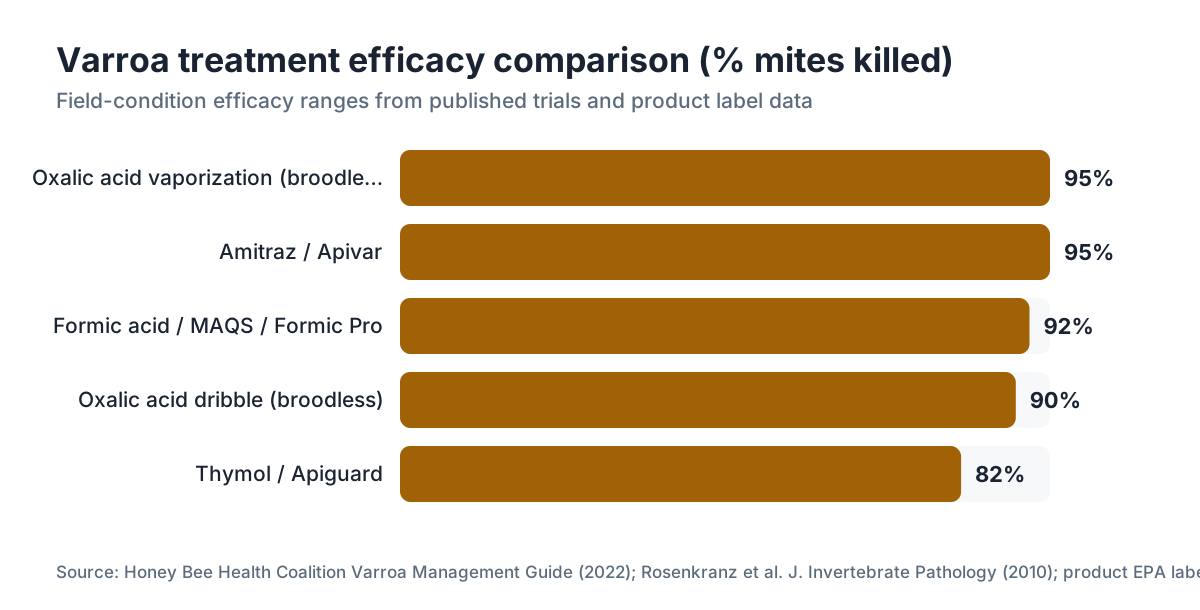
Every effective varroa treatment carries a tradeoff. Here is a straight comparison based on labeled use and published efficacy data.
| Treatment | Efficacy (mites killed) | Temperature window | Supers on? | Brood penetration | Main ventilation concern |
|---|---|---|---|---|---|
| Formic acid (MAQS/Formic Pro) | 90 to 95% [7] | 50 to 92°F | Yes | Yes | Vapor buildup in heat |
| Oxalic acid vaporization | 90 to 99% (broodless) [4] | >40°F | No | No (adults only) | OA vapor to beekeeper |
| Oxalic acid dribble | 90%+ (broodless) | >40°F | No | No (adults only) | Minimal |
| Amitraz (Apivar) | 90 to 99% [9] | 50 to 85°F | No | No | Minimal |
| Thymol (Apiguard) | 74 to 90% [10] | 59 to 105°F optimal | No | Partial | Moderate vapor risk |
Formic acid's biggest advantage is brood penetration paired with supers-on use. Its biggest weakness is the narrow temperature window and the real risk of bee and queen loss in heat. Live somewhere with reliable 60 to 80°F windows in spring and fall, and formic acid fits well. Short springs and brutal summers point you elsewhere: oxalic acid vaporization on a broodless winter cluster, Apivar for summer management.
The Honey Bee Health Coalition's Varroa management guide (2022 edition) is the best free resource for matching treatment to season and region. It states: "Integrated pest management for Varroa requires using multiple control methods and timing them to the colony's brood cycle and the beekeeper's regional climate" [5].
What common mistakes wreck a formic acid treatment?
Applying in heat. The number one cause of excess bee death and failed treatments. Check the ten-day forecast, more than the day you open the box.
Leaving the sticky-board insert in. A screened bottom board with the insert in is a solid bottom board. Pull the insert before the strips go in.
Opening the hive again in the first 48 hours. Every time you crack the lid, you dump the vapor load the colony has been building. That vapor needs time at concentration to reach the capped cells. Open on day two because the entrance pile spooked you, and you may reset the efficacy clock.
Underdosing a big colony. The label sets one strip per five frames of bees covered. A double deep with a heavy population can mean four strips. Beekeepers who default to two strips for everything report weaker results in strong colonies, consistently.
Treating a queenless or failing colony. A stressed colony plus formic acid vapor stress can tip it over. Fix the queen problem first. The mites can wait a few weeks anyway, because a queenless, broodless colony has no brood for mites to reproduce in, so they are stuck in the phoretic phase.
Skipping the post-treatment wash. You put the colony through stress, lost some bees, maybe risked the queen. Confirm the treatment worked with an alcohol wash three weeks after the strips come out. Still above 2%? You need a follow-up before the mites rebuild.
Frequently asked questions
How much ventilation does a hive need during formic acid treatment?
Enough airflow to prevent a lethal vapor buildup without losing efficacy. The setup: screened bottom board with insert removed, entrance fully open, outer cover offset or propped about 3/8 to 1/2 inch at the rear to make a chimney. Do not seal the hive. Do not leave the sticky-board insert in. This works for most hives in the 50 to 85°F range.
Can I use a solid bottom board with formic acid strips?
The MAQS and Formic Pro labels do not prohibit solid bottom boards, but vapor concentrates much faster in a sealed-floor hive. Above 75°F, a solid bottom meaningfully raises the risk of bee death and queen loss. If you run solid bottoms and want to use formic acid, prop the lid and watch the entrance closely. Switching to a screened bottom before treating is the simpler fix.
What temperature is too hot for formic acid?
The MAQS label upper limit is 92°F daytime high. Formic Pro's 14-day protocol ceiling is 85°F. Above those thresholds, volatilization climbs fast, vapor concentration inside the hive spikes, and you risk heavy bee mortality and queen loss. Check the seven to ten day forecast before applying, more than the day's temperature.
How many dead bees is normal after formic acid treatment?
Some mortality is normal. A cluster of dead bees at the entrance for two to four days, maybe a few hundred bees total, is within range for a full-strength colony. If bees are disoriented, walking in circles, and clustering outside in unusual numbers, and the interior cluster has visibly shrunk, that is abnormal. It usually means the temperature ran too high or ventilation was inadequate. Remove the strips if you see those signs.
Can formic acid kill my queen?
Yes. Published studies report queen loss of 4 to 15% depending on temperature and colony strength. The risk is higher with MAQS than with slower-release Formic Pro, in single-deep hives, and above 85°F. Verify queen presence about two weeks after treatment. Eggs and young larvae mean she survived. If the colony is queenright going in, the risk is real but manageable with proper ventilation.
Do I need to remove honey supers during formic acid treatment?
No. Both MAQS and Formic Pro are registered for use with honey supers in place. Formic acid is an organic acid naturally present in honey, and the EPA determined that label-rate applications do not push residues past natural variation. This is one of formic acid's biggest advantages over treatments like Apivar, which require supers off.
How long do I leave formic acid strips in the hive?
MAQS is a seven-day single-dose treatment: two strips go in for exactly seven days, then out. Formic Pro offers a seven-day protocol (two strips, remove after seven days) or a 14-day protocol (two strips, left for 14 days). Never exceed the labeled duration. Leaving strips in longer does not improve mite kill and adds cumulative bee and queen stress.
Can I treat with formic acid in cold weather?
The lower limit on both products is 50°F. Below that, formic acid barely volatilizes and the treatment is essentially useless. In cold climates, the best formic acid windows are spring and early fall. For winter varroa management on a broodless cluster, oxalic acid dribble or vaporization is far more effective and carries no lower-temperature concern around vapor buildup.
Is formic acid safe for beekeeper health?
At label concentrations, with basic precautions, yes. Wear nitrile gloves and avoid direct skin or eye contact. In open air with a few hives, respiratory exposure during application usually stays below OSHA's 5 ppm PEL (8-hour TWA). Treating many hives in enclosed spaces or handling large quantities of strips calls for an organic acid vapor respirator. Store strips cool and away from food.
How do I know if the formic acid treatment worked?
Do an alcohol wash or sugar roll three weeks after treatment, after the first new adult bee cycle finishes. A successful treatment should bring infestation below 1 mite per 100 bees (1%). Still above 2%? Conditions during treatment may have undercut efficacy: temperatures out of range, ventilation issues, or an extremely high starting mite load. A follow-up treatment may be needed.
Why are bees fanning heavily at the entrance after formic acid application?
Fanning is the colony's response to elevated vapor concentration or heat inside the hive. Some fanning in the first 24 to 48 hours after application is normal. If it turns frantic, bees are clustering at the entrance, and it is a warm day, check that the bottom insert is out and the lid is propped. The bees are telling you the internal environment is uncomfortable.
Can I use formic acid with a nuc or small colony?
With caution. Small colonies have less interior volume, so vapor concentration peaks faster relative to the bee population. The Formic Pro 14-day two-strip protocol is gentler than the seven-day MAQS protocol for small colonies. Some extension offices recommend waiting until a nucleus colony reaches at least five frames of bees before treating with formic acid. Oxalic acid dribble is often a safer choice for nucs.
Does a screened bottom board reduce formic acid efficacy by letting vapor escape?
University trials show efficacy is comparable between screened and solid bottoms at moderate temperatures. Vapor concentration near the brood area stays high enough for mite kill even with a screened floor. The screened bottom's main benefit in formic acid treatment is bee safety, preventing lethal vapor buildup in heat. Above 80°F, the screened bottom may actually preserve efficacy by keeping bees healthy enough to finish the treatment.
Sources
- EPA, MAQS (Mite Away Quick Strips) pesticide product label: Formic acid vapor from MAQS is heavier than air and pools at the hive floor; screened bottom boards allow vapor to escape, preventing lethal concentration buildup
- NOD Apiary Products, MAQS Label (EPA Reg. No. 83923-1), active ingredient 68.2% formic acid, temperature range 50 to 92°F: MAQS label specifies 50°F to 92°F daytime high temperature window and one strip per five frames of bees
- NOD Apiary Products, Formic Pro Label (EPA Reg. No. 83923-3), 14-day protocol upper limit 85°F: Formic Pro 14-day two-strip protocol should not be applied when daytime highs exceed 85°F
- University of Florida IFAS Extension, Oxalic Acid for Varroa Mite Control: Oxalic acid vaporization achieves 90 to 99% mite kill in broodless colonies and has no upper temperature concern for bees comparable to formic acid
- Honey Bee Health Coalition, Varroa Management Guide (2022 edition): The guide states 'Integrated pest management for Varroa requires using multiple control methods and timing them to the colony's brood cycle and the beekeeper's regional climate'; target infestation below 1 mite per 100 bees
- OSHA, Occupational Chemical Database: Formic Acid, PEL 5 ppm (8-hour TWA): OSHA permissible exposure limit for formic acid is 5 ppm as an 8-hour time-weighted average
- Rosenkranz P. et al., Biology and control of Varroa destructor, Journal of Invertebrate Pathology, 2010: Formic acid efficacy in controlled trials typically 90 to 95% mite kill; queen loss rates 4 to 15% depending on temperature and colony strength
- Penn State Extension, Varroa Mite Management for Honey Bee Colonies: Screened bottom boards reduce mite populations as a minor passive benefit but primarily help bee safety during formic acid treatments by preventing vapor accumulation
- Elanco, Apivar Label (EPA Reg. No. 64771-3), amitraz 3.3%, efficacy 90 to 99%: Apivar label specifies no-supers-on requirement during treatment and efficacy of 90 to 99% mite kill
- Gregorc A. and Planinc I., Acaricidal effect of thymol in honeybee colonies, Slovenian Veterinary Research, 2001: Thymol-based treatments (Apiguard) reported 74 to 90% efficacy under field conditions
- USDA Agricultural Research Service, Honey Bee Research, varroa treatment guidelines: USDA ARS provides seasonal treatment timing recommendations for varroa management across US climate zones
- University of Minnesota Extension, Varroa Mite Management in Honey Bee Colonies: University extension guidance on formic acid application protocols, ventilation setup, and monitoring post-treatment
Last updated 2026-07-09