Ventilation adjustments during formic acid treatment
TL;DR
- Formic acid works by vapor, and ventilation is the dial that sets how strong that vapor gets inside the hive.
- Open the screened bottom board fully, add an upper entrance once daytime highs push past 80°F (27°C), and never seal a hive during treatment.
- Too little airflow kills queens.
- Too much drops mite kill under capped brood.
Why does ventilation matter so much during formic acid treatment?
Formic acid kills mites as a vapor. The compound evaporates off the strip, fills the hive atmosphere, and diffuses into capped brood cells. That last part is the whole reason people reach for it, because an alcohol wash and an oxalic acid dribble both stop at the cappings. Vapor concentration inside the box is the mechanism, and ventilation is the dial that sets it.
Too high a concentration and you cook the queen. Too low and you get maybe 60% mite kill instead of the 90%-plus the label promises under good conditions [1]. The window is genuinely narrow. This is not a set-it-and-forget-it treatment. It rewards attention to conditions more than almost anything else in the varroa toolkit.
Temperature is the other lever, and it's tangled up with ventilation. Heat speeds evaporation. A hive baking in full sun at 90°F on a screened bottom board with a wide upper entrance is dumping acid fast. A hive in shade at 60°F on a solid board is releasing it at a crawl. The label temperature ranges exist because the EPA reviewed field data showing queen loss climbs sharply outside those numbers [1][2].
There isn't much wiggle room here. The Honey Bee Health Coalition's Varroa management guide states that formic acid "volatilizes more rapidly at higher temperatures, increasing the risk of queen loss and bee mortality." [3] That's the tension you manage every time you open a vent slot.
What do the product labels actually say about ventilation?
Two products own the U.S. market: MAQS (Mite Away Quick Strips) and Formic Pro. Both use formic acid as the active ingredient. Their EPA-registered labels are legally binding, not friendly advice, and both carry specific ventilation language.
Formic Pro's label (EPA Reg. No. 83923-3) tells applicators to open the bottom screen board and make sure the hive has adequate ventilation before placing strips. It sets a treatment temperature range of 50°F to 85°F (10°C to 29°C) for the standard 14-day application. The label also allows a 20-day treatment where you split the strips across two applications, which suits cooler climates [2].
MAQS (EPA Reg. No. 83923-2, same registrant) also requires a screened bottom board or equivalent ventilation and uses the same 50°F to 85°F window [7]. MAQS runs a 7-day treatment at a higher effective dose. The evaporation rate is more aggressive, so ventilation management matters more with MAQS, not less, compared with the slower Formic Pro release.
Here's the label line worth memorizing. Formic Pro instructs beekeepers not to use the product when daytime highs are expected to top 85°F (29°C) during the treatment period [2]. That ceiling is there because above 85°F, even a screened bottom board may not shed vapor fast enough to keep your queen alive.
So: open the screen board, stay in the temperature window, add ventilation as conditions climb toward the top of it. Anything else is off-label.
Should you use a screened or solid bottom board during treatment?
Use a fully open screened bottom board. Every current product label either requires it or points hard toward it. A solid bottom board traps vapor and drives internal concentration up to the point where queen loss roughly doubles compared with screened setups in the field guidance [4].
A screened bottom board does two jobs at once. It lets excess vapor drop out the floor, and it gives you passive airflow up through the brood nest. Neither effect is dramatic on a cool day. On a 78°F afternoon with sun hitting the hive, that screen is the difference between a treatment and a funeral.
Running solid boards for winter and forgetting to swap before treatment is a real trap. It happens. The fix takes two minutes: pull the solid board and drop in the screen insert, or at minimum slide the solid board partway out to open a gap. Some folks prop the front of a solid board on a stick. That works. A proper screened board is cleaner.
One wrinkle. In cold conditions (below 55°F), a wide-open screened bottom board can push you under the minimum effective vapor concentration and slow the mite kill. Below 50°F, formic acid treatment isn't recommended at all, screen or no screen [1][2]. The acid just doesn't evaporate fast enough to hit therapeutic levels near the cluster.
When should you add upper entrances or ventilation during treatment?
Add an upper entrance any time daytime highs sit consistently above 80°F (27°C) and your hive is in direct sun, or any time you see bees bearding heavily during treatment. Bearding is a behavioral flag that inside conditions are hard on the colony. It doesn't always mean the acid is too strong, but paired with temperature data, it usually does.
The trigger most extension apiculturists name is 80°F for adding an upper vent or entrance during formic acid treatment [4][5]. Use a ventilated inner cover, a migratory cover tilted forward an inch, or a notch entrance cut into the second brood box. You want cross-ventilation: air in low through the screen, warm air and spent vapor out high.
What you don't want is a stack of boxes with no airflow path between them. Formic acid vapor is heavier than air, so it pools low in the hive. Upper ventilation protects the queen because she usually works the brood frames, not the top of the stack. Getting that vapor to rise and clear is the whole game.
One field note. If you're treating a hive with three or more boxes in warm weather, a single upper entrance slot often isn't enough. Some beekeepers add a half-inch shim between boxes during treatment to create a mid-column vent. That stays on-label as long as strip placement follows label directions, and it can meaningfully cut vapor concentration in the lower brood box.
What temperature range is safe for formic acid treatment?
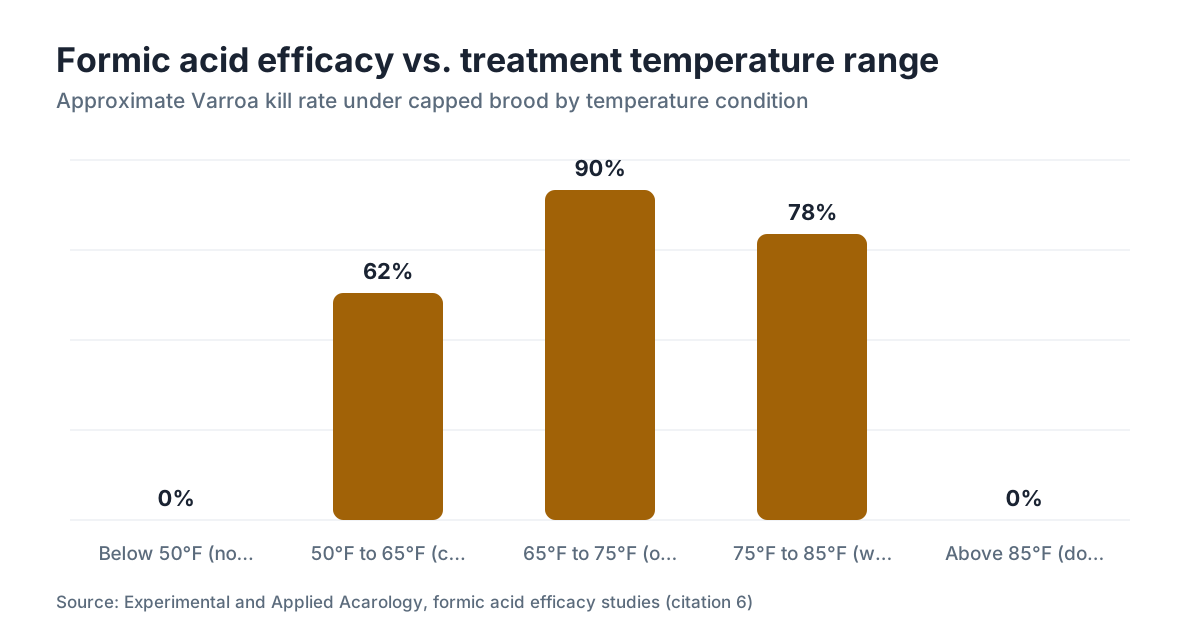
The safe range for both major formic acid products is 50°F to 85°F (10°C to 29°C) daytime high, with nighttime lows staying above 50°F across the treatment window [1][2]. Those numbers come from the EPA label review and the field trials the registrant submitted, which showed acceptable queen survival and mite kill inside that band.
| Daytime High | Treatment Status | Ventilation Adjustment |
|---|---|---|
| Below 50°F | Do not treat | N/A |
| 50°F to 65°F | OK, slow release | Screened bottom board sufficient; watch for low efficacy |
| 65°F to 75°F | Optimal window | Screened bottom board; standard setup |
| 75°F to 85°F | OK with care | Add upper entrance; check for bearding daily |
| Above 85°F | Do not treat | N/A |
The hardest scenario is a heat wave mid-treatment. You slide strips in on a 74°F Monday and by Wednesday it's 91°F. The label says remove the strips if temperatures exceed the maximum. Do that. Don't leave them in hoping it cools off. A partial treatment at high temperature does more colony damage than pulling the strips and retreating in better weather.
Night temperatures count too. If your lows drop to 48°F, the acid barely evaporates overnight, and the treatment timeline stretches because you only get active vapor release during the warm hours. Formic Pro's 20-day protocol was built partly for this in cooler climates [2].
How do you adjust ventilation for different hive types and configurations?
A standard Langstroth on a screened bottom board is the baseline everything else measures against. It's simple: open the screen fully, add an upper entrance at the inner cover notch or a ventilated outer cover once temperatures call for it.
Flow Hives and other modified Langstroth designs usually take the same screen board options. The real question is whether the Flow super is still on during treatment. Formic Pro's label prohibits treating with honey supers in place when the honey is meant for people, and there's a gray zone around what counts as a super in an integrated design. When in doubt, pull it [2].
Warré and top-bar hives have less standard ventilation. Top-bar hives often carry a mesh floor already. If yours doesn't, prop the back slightly to open airflow underneath. Strip placement in these designs is thinly studied, and the Honey Bee Health Coalition's guide is written around Langstroth-style vertical hive bodies [3].
Nucs are a genuine problem with formic acid. The small air volume builds vapor concentration fast, and queen loss runs higher in nucs than in full colonies even under identical outside conditions. Some commercial beekeepers cut the strip dose in half and add extra ventilation when treating a nuc. That's off-label, and you accept lower mite kill as the tradeoff. Many varroa specialists lean toward oxalic acid vaporization for nucleus colonies precisely because you control exposure time [5][6].
If you're juggling several hive setups, the tracking tools at VarroaVault let you record which hives got which treatment under what conditions. That record earns its keep when you're trying to work out why one yard lost queens and another didn't.
What are the signs that ventilation is wrong during treatment?
Heavy bearding outside the hive, more than you'd expect at that temperature, is the first warning. Bees pile onto the outside because it's intolerable inside. That can be heat alone, but during formic acid treatment it's often heat and acid concentration together.
Dead bees stacking up at the entrance in the first 48 hours is more serious. Some mortality is normal during treatment, since the acid is toxic to bees at high concentration too. A pile that grows fast tells you the vapor is too strong. Check your temperature, confirm the screen board is open, and add upper ventilation right away.
The worst sign shows up late: a queenless hive 10 to 14 days after treatment. By then the damage is done. That's why daily checks during the first three days, when most queen loss happens, are worth it even if you normally inspect weekly. You won't always catch a problem in time to save her. You'll at least know what happened.
Flip side. Bees looking fine most of the time, with heavy bearding only on the hottest afternoons, is roughly normal. A little washboarding and some fanning at the entrance during treatment is the colony managing the same problem you are. It doesn't mean you need to step in.
Does ventilation affect how well formic acid actually kills mites?
Yes, and it isn't a straight line. The vapor has to reach a concentration threshold to push through cappings and kill mites on developing pupae. Below that threshold, efficacy falls off fast. Mites riding adult bees die easily. Mites under cappings need sustained vapor penetration [6][8].
A study in Experimental and Applied Acarology found formic acid efficacy against Varroa destructor under capped brood ran from roughly 60% to over 90% depending on treatment conditions, with temperature and vapor concentration as the main variables [6]. That's a 30-point swing tied to how well you manage conditions.
Over-ventilating protects your queen but drops how much vapor reaches the brood nest. That's the tradeoff nobody likes talking about. You can save the queen with aggressive airflow and still hand the colony enough mites to crash in fall. The tightest approach usually wins: stay in the temperature window, use a screened bottom board (not a solid board, not a wide-open double-vented rig), and add upper ventilation only when temperature or bee behavior tells you to.
For beekeepers using formic acid specifically to hit brood mites, the 14-day Formic Pro protocol at moderate temperatures (65°F to 75°F) with a screened bottom board and no extra ventilation is probably the highest-efficacy setup you can run. The cost is some added queen risk versus a more ventilated approach. Nobody has clean data on exactly where the sweet spot sits on the ventilation-efficacy curve for every hive configuration. The label ranges are the registrant's best evidence, not a guarantee.
How do you monitor and track ventilation conditions across a treatment?
The minimum kit is a max-min thermometer in your hive yard, checked daily. You want the daytime high and the nighttime low for every day the strips are in. Free weather apps get you close, but microclimates matter. A hive in a south-facing hollow can run 10°F hotter than the airport station your app pulls from.
A data logger inside the hive gives you finer detail, though most hobbyists don't run one routinely. If you've had queen loss during formic acid treatment and can't explain it, borrowing or buying a cheap logger for the next cycle will often tell you exactly when and how hot it got inside.
Keep a treatment log: date strips placed, daytime highs each day, ventilation setup (screen open or closed, upper entrance yes or no), and any behavior you saw. When you do a mite wash 7 to 10 days after strip removal and the count still looks high, that log tells you whether weak efficacy traces back to ventilation or to something else.
VarroaVault's free protocol tracking tools are built for exactly this kind of record-keeping across multiple hives and cycles. Logging ventilation state next to temperature and mite counts sharpens your decisions over time, because you're working from your own numbers instead of guessing.
If you're sourcing strips and monitoring gear, beekeeping supply companies that carry data loggers, min-max thermometers, and screened bottom boards are a fine place to start. Buy a thermometer that actually reads min and max, more than the current temperature.
Are there special ventilation considerations for treating in spring versus fall?
Spring and fall hand you nearly opposite problems, and both are real.
In fall, temperatures usually sit in the right range but they're falling. Your main risk is treating too late, when nighttime lows are near or below 50°F and daytime highs are marginal for evaporation. A wide-open screened bottom board in October in a northern climate can hurt efficacy, because it pulls in cold air that suppresses vapor release. Some beekeepers partly close the screen in cool fall weather, leaving a 2-inch gap instead of full open, to trade off ventilation against heat retention and vapor concentration. The labels don't spell this out, so it's a judgment call.
In spring, the bigger risk is treating during a warm spell that turns hot. Spring weather is volatile. A treatment set on a 68°F day can ride out a 92°F heat wave three days later. Formic acid gets queen-right colonies through the season when you manage it carefully, but it kills more queens in unstable weather than fall treatments do, because fall temperatures tend to hold steadier in the right band [4][5].
The Honey Bee Health Coalition's guide names fall as the preferred season for formic acid for this reason: more predictable temperatures, brood already tapering, and a hit on the mite population that would otherwise blow up over winter [3]. Spring treatment is legitimate. It just demands you watch the forecast for the full treatment window, not only the day you apply.
Knowing how varroa mites reproduce across brood cycles will sharpen your timing instincts for both seasons.
Frequently asked questions
Can I treat with formic acid if my hive has a solid bottom board?
You shouldn't. Every current formic acid label requires adequate ventilation, and most guidance flags a solid bottom board as inadequate. Vapor builds to levels that cause queen loss and bee mortality. If solid boards are all you have, swap one out before treating or prop the board to open a real gap. A screened bottom board is the right tool for this treatment.
What happens if temperatures go above 85°F during a formic acid treatment?
Remove the strips right away. The EPA-registered Formic Pro label prohibits treatment above 85°F daytime high because the acid evaporates too fast at that temperature, even with full ventilation. Leaving strips in through a heat wave is the most common cause of treatment-related queen loss. You can retreat once temperatures settle back into the 50°F to 85°F window.
Does adding an upper entrance reduce formic acid efficacy against varroa?
It can, a little. More ventilation lowers internal vapor concentration, which matters most for mites under capped brood. The tradeoff is real: upper entrances protect queens in warm weather but may shave 5 to 15 percentage points off mite kill in brood cells. Add upper ventilation when highs top 80°F or bees beard heavily. In the 65°F to 75°F window, a screened bottom board alone is usually enough.
How do I know if my hive has enough ventilation during formic acid treatment?
The fully open screened bottom board is the baseline. Signs of inadequate ventilation: heavy bearding at any temperature below 80°F, unusual numbers of dead bees at the entrance in the first 48 hours, or bees fanning hard at every entrance all day. Signs of good ventilation: normal traffic, some extra fanning during peak afternoon heat, and steady brood and forager activity through the treatment.
Can I treat a nucleus colony (nuc) with formic acid?
The labels allow it, but queen loss in nucs runs meaningfully higher than in full colonies because the smaller air volume concentrates vapor faster. If you treat a nuc, some beekeepers use a half-strip dose and add extra ventilation, though that's off-label. Many varroa specialists prefer oxalic acid vaporization for nucs because you control exposure time precisely. If formic acid is your only option, monitor daily and be ready to pull strips early.
How long should I leave formic acid strips in, and does ventilation change the timeline?
Formic Pro's standard protocol is 14 days; MAQS is 7 days. Cooler temperatures slow evaporation, which stretches the effective treatment period without changing the strip-removal date. In cooler conditions, Formic Pro offers a 20-day split protocol. Ventilation doesn't change the label timeline, but if you've run extra ventilation during a heat spell and then temps drop, the remaining strips release more slowly, which can modestly affect total mite kill.
Is it safe to have honey supers on during formic acid treatment?
No. Both MAQS and Formic Pro labels prohibit treatment when honey supers meant for human consumption are present. Remove all supers before placing strips. Formic acid vapor can migrate into honey stores. Formic acid does occur naturally in honey at low levels, but contamination from treatment residues at higher concentration is a legitimate food-safety concern, and treating with supers on violates the label.
Why does formic acid kill varroa mites under capped brood?
Formic acid vapor diffuses through beeswax cappings at sufficient concentration and exposure time, so the mite and the developing pupa inside the cell take a lethal dose. That's the main advantage over oxalic acid, which can't penetrate cappings at all. USDA Agricultural Research Service guidance describes this vapor-diffusion mechanism. Killing capped-brood mites depends on holding adequate vapor concentration in the brood nest across the treatment, which is why ventilation matters so much.
What is the best time of day to apply formic acid strips?
Apply in the morning as temperatures rise but before the daily peak. That gives the colony several hours of moderate-temperature treatment ahead of the afternoon heat. Avoid the heat of the day, when evaporation spikes immediately. Check the three-day forecast before you open the hive. If a heat wave is coming, wait for a stable cooler window rather than starting a 7-to-14-day treatment you may have to interrupt.
Does hive orientation (shade vs. sun) affect formic acid treatment?
Yes, a lot. A hive in full afternoon sun can run 10°F to 15°F above ambient, which pushes internal conditions toward or past the 85°F ceiling even when the forecast reads 78°F. During formic acid treatment in warm weather, shade your hives or block afternoon sun. A piece of plywood propped against the south face makes a real difference. It's worth doing even when you wouldn't normally shade your hives.
Can I reuse formic acid strips if I remove them early due to heat?
Don't reuse strips. If you pulled them because temperatures exceeded label limits, the remaining acid content is unquantifiable. Putting a partially spent strip of unknown concentration back in the hive makes dosing a guess. Start a fresh treatment with new strips once conditions hold steady. New strips cost far less than re-queening or losing a colony.
How soon after formic acid treatment can I add honey supers back?
Formic Pro's label bars supers during treatment but doesn't set a mandatory waiting period after strip removal before supers go back on, because residues dissipate quickly. Most extension apiculturists suggest waiting at least 24 to 48 hours after removal to let residual vapor clear. Formic acid occurs naturally in honey, so residue concerns are lower than with synthetic miticides, but following the label's intent is the safe move.
What ventilation setup works best for Warré or top-bar hives during formic acid treatment?
These hive types lack standard screen-board systems, which complicates formic acid use. Make sure some mesh or gap-floor ventilation exists before treating. Prop the hive body slightly if needed to open airflow underneath. Follow label guidance on strip placement as closely as the design allows. Efficacy and safety data for non-Langstroth designs are limited, and oxalic acid vaporization is often the more practical choice for these hives.
Sources
- Honey Bee Health Coalition, Tools for Varroa Management Guide (7th edition): Formic acid volatilizes more rapidly at higher temperatures, increasing the risk of queen loss and bee mortality; temperature range and ventilation requirements for treatment
- EPA, Formic Pro pesticide product label (EPA Reg. No. 83923-3): Do not use when daytime high temperatures are expected to exceed 85°F; screened bottom board required; 14-day and 20-day treatment protocols; prohibition on use with honey supers
- Honey Bee Health Coalition, Varroa Management Guide, fall treatment recommendation: Fall is the preferred season for formic acid treatment due to more predictable temperatures; bearding and bee mortality as signs of over-concentration
- Penn State Extension, Varroa Mite Management: Solid bottom boards associated with higher queen loss rates during formic acid treatment; 80°F as trigger threshold for additional upper ventilation
- University of Minnesota Extension, Managing Varroa Mites in Honey Bee Colonies: Spring formic acid treatment associated with higher queen loss due to unpredictable temperatures; oxalic acid preferred for nucleus colonies
- Experimental and Applied Acarology, formic acid efficacy against Varroa destructor under capped brood: Formic acid efficacy against Varroa under capped brood ranged from approximately 60% to over 90% depending on temperature and concentration conditions
- EPA, MAQS (Mite Away Quick Strips) pesticide product label (EPA Reg. No. 83923-2): MAQS treatment window 50°F to 85°F; screened bottom board or equivalent ventilation required; 7-day treatment protocol
- Cornell University College of Agriculture and Life Sciences, Honey Bee Varroa Resources: Vapor concentration thresholds needed to penetrate capped brood cells; ventilation management during formic acid treatment
- USDA Agricultural Research Service, Varroa Management: Formic acid mechanism of action: vapor diffuses through beeswax cappings at adequate concentration to kill mites on developing pupae
- University of Florida IFAS Extension, Varroa Mite Management in Honey Bees: Nighttime low temperatures above 50°F required for effective formic acid evaporation; treatment not recommended below 50°F
Last updated 2026-07-09