Formic acid effect on bees: what it does, what it risks
TL;DR
- Formic acid kills varroa mites, including the ones hiding under capped brood, because its vapor crosses the wax cap.
- That same vapor irritates bees.
- Above 29°C (85°F), or with sloppy dosing, it kills queens, open brood, and foragers.
- Used right, products like Mite-Away Quick Strips and Formic Pro hit 88 to 95% efficacy and leave no drug residue in honey.
What does formic acid actually do to bees and varroa?
Formic acid (HCOOH) is the simplest carboxylic acid, and bees already make trace amounts of it in their venom and honey. When you treat a hive, the compound turns to vapor and does two things at once. It attacks varroa's nervous system directly, and it crosses the wax cappings into sealed brood cells where most mite reproduction happens. That subcap reach is the single biggest reason to pick formic acid over other treatments. Oxalic acid, for comparison, cannot touch mites under a cap at all [1].
For the bees, the vapor is an irritant. At low concentrations they tolerate it fine, and grooming behavior actually picks up, which helps shed weakened mites. Push the concentration higher, or let the hive warm up so the vapor pours off faster than the product was designed to release it, and things go wrong. Bees show respiratory distress. Foraging falls apart. In bad cases the colony piles out the front door or absconds. The queen takes the worst of it because she lives in the brood nest where the vapor concentrates [2].
Here is the reassuring part. Formic acid is a compound bees already carry. Honey naturally holds roughly 0.01 to 0.1% formic acid depending on the floral source. Treatment doses run far higher, but this background presence is why regulators grant honey supers a "no withdrawal period" status in many places, and why post-treatment residues drop back into the natural range within a week or two [3].
How effective is formic acid against varroa mites?
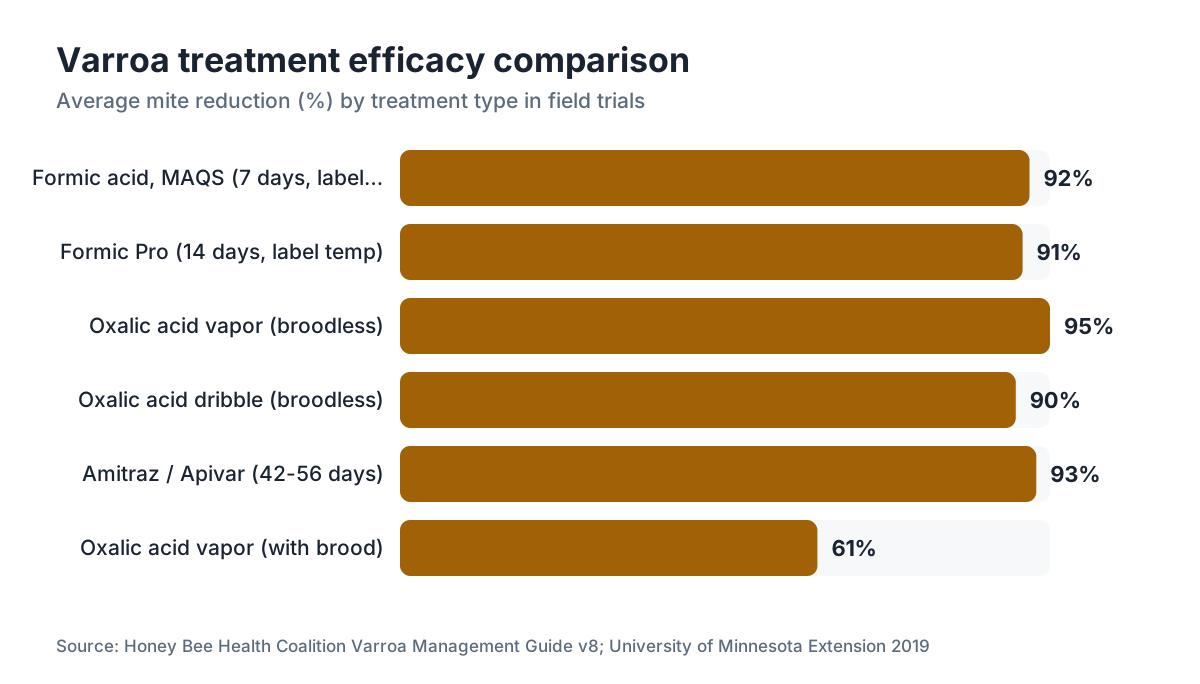
Formic acid knocks down 88 to 95% of the mite load in a single properly timed treatment, including the mites hiding under cappings. Efficacy shifts with product format, temperature, and starting infestation, but the numbers hold up well across trials. A field trial cited in the Honey Bee Health Coalition's Varroa Management Guide put Mite-Away Quick Strips (MAQS) at 90 to 95% varroa reduction from a single two-strip, seven-day treatment under label conditions [4]. That same guide states that "extended-release formic acid products can effectively treat colonies with honey supers in place," which sets it apart from synthetics you can't run with supers on.
Formic Pro, the longer extended-release format from NOD Apiary Products, uses two pads for up to 14 days at a lower peak release rate, trading some speed for a smaller temperature-spike risk. A 2019 University of Minnesota Bee Lab trial found Formic Pro cut mite loads by an average of 91% in August-treated colonies, with queen loss around 3 to 5% under label conditions [5]. That's within range for a high-efficacy treatment.
The subcap effect is what matters most. Studies put 60 to 80% of a colony's varroa inside capped brood at any given moment. A treatment that only hits phoretic mites leaves the majority alive. Formic acid's vapor penetration means one well-timed application can crash the whole population instead of trimming it [1].
| Product | Format | Application days | Efficacy range | Queen loss risk |
|---|---|---|---|---|
| MAQS | 2 strips | 7 days | 88-95% | 3-9% |
| Formic Pro | 2 pads | 14 days | 88-93% | 3-5% |
| Generic formic gel (EU/CA) | Sponge | 10-20 days | 80-92% | 2-6% |
| Api-Bioxal formic formulation | Gel | 10 days | ~88% | 3-5% |
Note: Efficacy and queen loss figures are ranges pulled from multiple published trials; see citations [4][5][6]. Your results shift with colony strength, hive setup, and ambient temperature.
What temperature range is safe for formic acid treatment?
Keep daytime highs between 10°C and 29.5°C (50°F to 85°F) for the whole treatment window. Temperature drives the vapor release rate, and that rate climbs sharply with heat. At 15°C (59°F) a MAQS strip barely off-gases. At 29°C (85°F) it's releasing near the top of the safe range. Above 37°C (98°F) the vapor concentration inside the box can spike high enough to kill open brood, push foragers out for good, and kill the queen [2].
The MAQS label from the EPA registration (EPA Reg. No. 92459-1) sets the treatment temperature at 10°C to 29.5°C (50°F to 85°F). Formic Pro caps its single-application method at the same 29.5°C. If your highs are heading past 85°F during the window, you have two moves: split the pads so only one is active at a time (Formic Pro's optional method for hot weather), or switch to a different treatment [6].
That makes formic acid a spring and fall tool across most of the continental US. It also explains why formic acid in California gets complicated. Coastal and northern California open up in May and June, then again in September and October. The Central Valley and the south can stay locked out for months of summer. Check the 10-day forecast before you place pads. Treating at 92°F is how beekeepers lose a queen and a third of their foragers right before a nectar flow, and set the colony back for weeks.
Does formic acid harm queens and brood?
Yes, and queen loss is the effect beekeepers report most. The Honey Bee Health Coalition's Varroa Management Guide puts queen loss from MAQS-style products at roughly 3 to 9% under label conditions, climbing past 15 to 20% once temperatures break the label maximum [4]. Queens are exposed because they stay in the brood nest where vapor collects, and their physiology differs from workers in ways that may change how they handle the acid.
Open brood is the second concern. At high concentrations the vapor kills larvae, and you'll see it as spotty or sunken brood a few days out. At label temperatures the effect is usually mild and the colony bounces back fast. Above label temperatures it can set a colony back hard, especially a small one that can't out-lay the damage.
Capped brood is mostly protected by the wax cap. The vapor slips through enough to kill varroa at the low concentrations inside the cell, but the developing bee sits out of the main airspace where peak concentrations build. That's a big part of why the treatment can gut the mite population without gutting the brood nest.
Here's the practical line: treat colonies with two boxes or more. A nuc, or a colony on three or fewer frames of bees, has no buffer and shows damage at doses a full production colony shrugs off.
Can you use formic acid with honey supers on?
Yes, and this is one of formic acid's real edges. The EPA registration for MAQS allows treatment with honey supers in place, and Formic Pro carries the same allowance. The logic is that residues in honey fall back to natural background levels within the normal gap between treatment and harvest [3][6].
Supers on doesn't mean zero effect on honey, though. Some beekeepers taste a faint metallic or sour note in honey pulled during or right after treatment. Waiting at least a week after you remove the pads before extracting is the standard precaution. The Honey Bee Health Coalition's guide recommends the wait as good practice even though no withdrawal period is legally required [4].
Stack that against the synthetics. Amitraz (Apivar) needs 56 days before honey can come off, and flumethrin products carry similar limits. Formic acid's no-withdrawal status is why a lot of certified-organic beekeepers and premium raw-honey sellers reach for it, temperature headaches and all.
For California beekeepers, the state's Department of Pesticide Regulation oversees hive treatments, but an EPA-registered formic acid product is legal to use without a separate state permit as long as you follow the label. MAQS and Formic Pro both carry that registration [7].
How does formic acid compare to oxalic acid and other varroa treatments?
The clean difference between formic and oxalic acid is the brood cap. Oxalic acid doesn't cross wax cappings, so it only reaches phoretic mites. Formic acid vapor goes through the cap and reaches mites in sealed brood. In a colony full of capped brood, that gap in mechanism produces very different single-treatment efficacy.
Oxalic acid dribble or vapor during a broodless stretch (winter cluster, a fresh split, or after a queen-caging pause) can reach 95%+ because there's no brood shielding mites. Formic acid's trade is that you skip the wait: you don't have to find or engineer a broodless window [1].
Amitraz (Apivar strips) runs high efficacy across the season but demands a long withdrawal, forbids supers on, and carries resistance risk. Tau-fluvalinate (Apistan) and other synthetic pyrethroids face widespread resistance in North American varroa and aren't a smart primary treatment anymore.
For a hobbyist watching mite counts who wants a mid-season knockdown without pulling supers or waiting for a broodless window, formic acid is the practical first pick when temperatures cooperate. Read up on varroa mites and the pest's biology before you lock in a treatment calendar.
| Factor | Formic acid | Oxalic acid | Amitraz (Apivar) |
|---|---|---|---|
| Penetrates brood cap | Yes | No | No |
| Effective broodless period required | No | Yes (optimal) | No |
| Supers on allowed | Yes | Yes (vapor) | No |
| Withdrawal period for honey | None | None | 56 days (label) |
| Resistance documented | No significant | No significant | Some reports |
| Temperature sensitive | High | Low | Low |
What are the real risks to the beekeeper handling formic acid?
Formic acid is corrosive, and the vapor off an opened pad is a real hazard even though the commercial products keep the liquid sealed in a gel. MAQS and Formic Pro come as gel-impregnated pads in foil, so you're not splashing raw acid on your skin in normal use. The EPA label requires nitrile gloves and eye protection during placement at minimum. Plenty of experienced beekeepers add an N95 or a half-face respirator with organic vapor cartridges when they open pads in tight spaces or work through a row of hives back to back [6].
Skin contact with concentrated formic acid solution causes fast chemical burns. Compounding your own acid treatment isn't recommended and isn't legal as a varroa treatment in the US without EPA registration, so that exposure shouldn't come up. The gel matrix in the commercial products holds the acid in slow release and cuts the risk a lot, but an opened pad near your face in a hot apiary will burn your eyes and lungs quickly.
The safety data sheet for Mite-Away Quick Strips lists formic acid at 68.5% w/w in the gel. That's a serious concentration. Glove up, work upwind when you can, and don't crack the foil until you're ready to set the pad in place. Wash your hands hard after every hive.
Does formic acid leave residues in wax or honey?
No, not in any lasting way. Honey residue data is the more studied side, and it's reassuring. A 2013 analysis in the Journal of Apicultural Research found honey formic acid concentrations return to background levels within one to two weeks after a MAQS treatment [3]. The EPA leaned on data like this to grant the no-withdrawal status for honey supers.
Wax behaves differently but still fine. Formic acid doesn't build up in beeswax the way lipophilic compounds like fluvalinate or coumaphos do. It's a small polar molecule and a volatile acid, so it clears wax fast at room temperature. How long any compound lingers in comb depends on how long it was present during treatment, plus the age and makeup of the comb, but formic acid doesn't stick around.
Here's the payoff: with synthetic miticides, old wax becomes a running source of chemical exposure for bees and brood. Formic acid doesn't accumulate over repeated treatments, so it drops neatly into a program that includes regular comb rotation.
Before you plan a treatment, sort out your gear. Beekeeping supply companies that focus on varroa management stock MAQS, Formic Pro, and the protective equipment you'll need.
When is the right time of year to use formic acid?
Late summer, mid-August through September, is the treatment window that matters most for winter survival. Timing rides on two things: temperature and colony status. Temperature we've covered. Colony status matters because you want a hive that can absorb some brood disruption and worker loss, which means at least 6 to 8 frames of bees and a laying queen you can afford the small odds of losing.
Across most of the northern US, the two best windows are late summer and early spring (April to May, before the flow). The late-summer treatment carries the year. Colonies treated in August drop their mite loads before the winter bees are raised, and those winter bees live longer and start next year's buildup strong. Work from the USDA ARS Beltsville lab, repeated in state extension trials, shows colonies treated for mites in late summer survive winter at higher rates than untreated ones [8].
In the Pacific Northwest and upper Midwest, temperatures stay in range through most of September. In the South, the fall window may not open until October, when highs finally drop below 85°F. In California's Central Valley you might only get a reliable window in April to May and again in October. Plan around it.
VarroaVault's free protocol builder (at varroavault.com) takes your zip code and hive count and maps treatment windows against historical temperature data, which helps if you're slotting formic acid into a multi-product rotation.
What happens if you overdose or misapply formic acid?
Overdose damage is fast and unmistakable. Within 24 to 48 hours of placing pads above label temperature, or stacking two strips in a small colony, you'll see bees clustering outside in a beard that won't settle, forager return dropping off a cliff, dead and dying bees on the landing board, and larvae dragged out of cells. If the temperature jumps mid-treatment to 90°F-plus and bees pile up out front, that's the colony trying to dump heat and escape the vapor. Open the entrance all the way, immediately. Pulling one of two pads on day two or three when temperatures run hot is the label-endorsed fix for Formic Pro.
Queen failure shows up 2 to 4 weeks later at a routine inspection: scattered pattern, no fresh eggs, maybe laying workers if she's been gone long enough. Check for a laying queen 3 to 4 weeks after any formic treatment. If she's gone, you can introduce a mated queen, combine with a queenright colony, or let the bees raise emergency queens if young larvae are present.
Underdosing is quieter but still costs you. One pad when the label calls for two, or treating below 50°F where the vapor barely off-gases, produces weak mite kill and burns a treatment cycle while the mite population keeps climbing.
Is formic acid approved for bees in California and other states?
Yes. EPA-registered formic acid products are legal in all 50 states, California included, as long as you follow the label. The EPA label is federal law, and FIFRA (Federal Insecticide, Fungicide, and Rodenticide Act, 7 U.S.C. § 136 et seq.) preempts state rules that would block a federally registered pesticide from being used per its label [9].
California layers on extra oversight through the Department of Pesticide Regulation (CDPR) and county agricultural commissioners, but MAQS and Formic Pro are registered in the state and need no separate permit for a beekeeper treating their own colonies per label. Beekeepers who apply treatments commercially or for hire may need a pest control operator license under California Business and Professions Code § 8560 et seq., but that's a different situation from a hobbyist or sideliner treating their own hives [7].
Formic acid also appears on the USDA National Organic Program's approved materials list as a synthetic substance allowed for organic livestock production, which covers honeybee colonies [10]. That makes it one of the few high-efficacy varroa treatments compatible with organic certification.
Keep your purchase receipts and log treatment dates in your hive records. If an agricultural inspector ever asks, proof that you used a registered product at label rates is your whole defense.
How do you apply formic acid correctly, step by step?
The application is simple. The details are what save your colony. This covers MAQS and Formic Pro, the two dominant EPA-registered products in the US.
First, check the 10-day forecast. Daytime highs have to stay between 50°F and 85°F for the entire treatment. If you can't count on that, wait.
Second, size up the colony. At least 6 frames of bees, a laying queen, and a current mite wash above your action threshold. Most extension services and the Honey Bee Health Coalition recommend treating at 2% or higher, meaning 2 or more mites per 100 bees [4].
Third, gear up. Nitrile or rubber gloves, eye protection, and a respirator if you're running multiple hives.
Fourth, open the foil pouch and lay the pads directly on the top bars of the brood box, flat side down, one strip or pad per brood-box space the colony fills. MAQS uses two strips side by side. Formic Pro uses one pad per box in hot conditions, or two pads in the same box for cooler weather.
Fifth, close up and open the entrance to maximum. Ventilation matters here: some vapor needs to leave the box to prevent a lethal buildup while still holding a therapeutic concentration inside.
Sixth, leave it alone for five to seven days. Opening the hive scrambles the vapor distribution and gives you bad information on how the treatment is going.
Seventh, at the end of the treatment (7 days for MAQS, up to 14 for Formic Pro), pull the spent pads and bag them for the trash. Don't compost them.
Eighth, run an alcohol wash or sugar roll 48 to 72 hours after pad removal to confirm efficacy. Then write it all down. Good records are how you spot resistance trends before they become losses. The VarroaVault treatment tracker logs mite counts, treatment dates, and outcomes in one place.
For the full hive-management picture and the equipment you'll need, see our guide on beekeeping supplies.
Frequently asked questions
Does formic acid kill mites under the brood cap?
Yes. This is formic acid's main advantage over oxalic acid. The vapor crosses wax cappings and reaches varroa reproducing inside sealed brood cells. Trials consistently show 88 to 95% total mite reduction in a single treatment, including the subcap population that makes up 60 to 80% of the mite load in an active colony. No other approved organic treatment does this without a broodless period.
What temperature is too hot to use formic acid on bees?
The EPA label for both MAQS and Formic Pro caps the maximum treatment temperature at 29.5°C (85°F). Past that, the vapor pours off faster than the product was designed to release it, and concentrations inside the hive can cause queen loss, brood kill, and forager exodus. Check your 10-day forecast before placing pads. If highs will break 85°F at any point during treatment, wait for a cooler window or pick a different product.
Will formic acid kill my queen?
It can. Under label conditions (below 85°F, correct dosing, at least 6 frames of bees), queen loss runs about 3 to 9% in published field trials. Above label temperatures, or in weak colonies, that jumps to 15 to 20% or higher. Always inspect for a laying queen 3 to 4 weeks after treatment. The risk is real but manageable, and for most beekeepers the near-complete mite knockdown outweighs the odds of losing a queen when used correctly.
Can I use formic acid with honey supers on the hive?
Yes. Both MAQS and Formic Pro are EPA-registered for use with honey supers in place. Residues in honey return to natural background concentrations within one to two weeks of treatment, and no mandatory withdrawal period applies. Still, wait a week after pad removal before extracting as standard good practice. This supers-on approval sets formic acid apart from synthetics like amitraz, which require 56 days without supers.
How long does a formic acid treatment take?
MAQS is a 7-day treatment. Formic Pro runs 14 days for the standard application, or the label allows two sequential single-pad applications with a break between for hot climates. After pad removal, wait 48 to 72 hours before the follow-up mite wash to confirm efficacy. Total time from placement to confirmed result is roughly 10 to 20 days depending on the product.
Is formic acid safe to use in organic beekeeping?
Yes. Formic acid appears on the USDA National Organic Program's approved materials list as a synthetic substance allowed for organic livestock production, which includes honeybees. It leaves no residues that disqualify honey from organic certification. For California beekeepers chasing organic or Certified Naturally Grown status, formic acid and oxalic acid are the two main varroa options. Always confirm with your specific certifier that the product brand meets their requirements.
What protective gear do I need when applying formic acid to my hives?
At minimum, the EPA label requires nitrile or rubber gloves and eye protection. The gel-impregnated pads cut splash risk, but the vapor off an opened pad is a respiratory irritant. For a single hive in open air, gloves and goggles usually do it. For multiple hives or enclosed spaces, add an N95 or a half-face respirator with organic vapor cartridges. Work upwind and don't crack the foil pouch until you're ready to place the pad.
Does formic acid build up in beeswax over time?
No. Unlike lipophilic synthetic miticides such as fluvalinate or coumaphos, which accumulate in wax and create ongoing exposure for bees and brood across seasons, formic acid is a small polar volatile molecule that clears wax quickly. There's no documented accumulation problem in comb. That keeps it compatible with normal comb rotation and removes a concern that dogs long-term use of some synthetics.
How do I know if formic acid worked?
Do an alcohol wash or sticky-board count 48 to 72 hours after pad removal and compare it to your pre-treatment count. A good treatment drops mite loads 88 to 95%. If the post-treatment wash still reads above 1 to 2% infestation, you had a dosing problem (wrong temperature, one pad instead of two), a very high starting load, or, less likely, a treatment failure. Repeat the count two weeks later, since mites emerging from any surviving capped brood also die on contact with residual vapor.
Can weak colonies or nucs handle a formic acid treatment?
Weak colonies and nucs run higher risk. Vapor concentration scales with colony volume, but the release rate is fixed by pad size, so a small colony ends up with proportionally higher concentrations than a full hive. Most beekeepers and extension services recommend treating only colonies with at least 6 frames of bees. For nucs or splits, oxalic acid vapor or dribble is usually safer and still highly effective if the colony is broodless or nearly so.
Is formic acid legal for bees in California?
Yes. EPA-registered products like MAQS and Formic Pro are legal in California under federal FIFRA preemption. They're registered with California's Department of Pesticide Regulation for use by beekeepers on their own colonies per label. No extra state permit is needed for hobbyists or sideliners. Formic acid also appears on the USDA National Organic Program's approved materials list, which keeps it compatible with organic honey production in California.
How does formic acid compare to Apivar (amitraz) for mite control?
Both hit high efficacy but differ hard on constraints. Apivar strips run 42 to 56 days, require supers off, and carry a 56-day pre-harvest interval. Amitraz accumulates in wax and resistance has been reported in some populations. Formic acid treats in 7 to 14 days, allows supers on, leaves no residues, and reaches brood cappings that Apivar can't. The trade is formic acid's narrow temperature window and higher short-term queen and brood risk.
When should I treat my bees with formic acid to protect them for winter?
The key window for winter prep is mid-August through mid-September in most of the US. That's when the colony raises its last big cohort before winter, and those bees need low-mite conditions to live the 4 to 6 months the colony needs to reach spring. Treating at or above a 2% mite wash in early August gives formic acid's 7 to 14 day treatment time to crash the population before critical winter-bee brood is laid.
Does formic acid affect bee brood development?
At label temperatures and doses, formic acid causes minimal brood disruption in strong colonies. Some spotty brood can show in the first 2 to 3 days as the colony reacts to the irritant. Above label temperatures, brood kill can be heavy, especially in open larvae. Capped brood is better protected by the wax cap. The colony usually recovers its brood pattern within 2 to 3 weeks if the queen survived and temperatures returned to normal.
Sources
- Honey Bee Health Coalition, Varroa Management Guide (v8): Formic acid vapor penetrates wax cappings and kills varroa in sealed brood; oxalic acid does not penetrate cappings
- Penn State Extension, Varroa Mite Management: Formic acid at temperatures above label threshold causes queen loss, brood damage, and forager disruption
- Journal of Apicultural Research, 2013, Formic acid residues in honey after MAQS treatment: Honey formic acid concentrations return to background levels within one to two weeks after MAQS treatment
- Honey Bee Health Coalition, Varroa Management Guide (v8), MAQS efficacy data: MAQS achieves 90-95% varroa reduction under label conditions; queen loss rate 3-9%; treatment allowed with honey supers in place; action threshold recommended at 2% mite wash
- University of Minnesota Extension, Bee Lab, Formic Pro field trial 2019: Formic Pro reduced mite loads by average of 91% in August treatments; queen loss rate approximately 3-5% under label conditions
- EPA, MAQS and Formic Pro product label (EPA Reg. No. 92459-1 / 92459-3): Label specifies treatment temperature range 10-29.5°C (50-85°F); requires nitrile gloves and eye protection; pad removal at 7 days (MAQS) or up to 14 days (Formic Pro)
- California Department of Pesticide Regulation, Pesticide Registration: MAQS and Formic Pro are registered in California for use per EPA label by beekeepers on their own colonies
- USDA ARS Beltsville Bee Research Laboratory, seasonal mite management and winter survival: Colonies treated for varroa in late summer (August) show higher winter survival rates than untreated colonies in repeated trials
- Federal Insecticide, Fungicide, and Rodenticide Act (FIFRA), 7 U.S.C. § 136 et seq.: FIFRA preempts state restrictions that would prohibit use of a federally registered pesticide per its label
- USDA National Organic Program, Approved Materials List for Livestock: Formic acid is listed as a synthetic substance allowed for organic livestock production including honeybee colonies under NOP regulations
- Oregon State University Extension, Varroa Mite Treatment Options for Honey Bees: Formic acid efficacy comparison with oxalic acid and synthetic treatments; temperature sensitivity and brood penetration summarized for practitioners
- Cornell University, Dyce Lab for Honey Bee Studies, Mite Management Resources: Formic acid does not accumulate in beeswax; compatible with comb rotation programs unlike lipophilic synthetic miticides
Last updated 2026-07-09