Formic acid pro cost effectiveness: is it worth the price?

TL;DR
- Formic Pro runs roughly $12, $17 per colony per treatment cycle when you buy a two-pad strip pack.
- That puts it in the middle of approved varroa treatments on price.
- It kills mites under capped brood, works in one 14-day application, and leaves no residue in honey.
- The real question is whether your hive counts and temperature window make that brood-killing action worth the price and the labor.
What does Formic Pro actually cost per colony?
A single Formic Pro packet holds two pads and treats one colony for one full cycle: 14 days at 50 to 77°F, or two 7-day applications if you split it. Retail for that single packet runs about $24 to $34 at most U.S. beekeeping suppliers as of mid-2025. Per-colony, that's $12 to $17 for one treatment round.
The math shifts once you run more than a handful of hives. A 10-pack goes for roughly $120 to $160 at most suppliers, dropping the per-colony cost to $12 to $16. A 20-pack pushes it down to around $10 to $14. Those savings are real but modest. For a hobbyist with two to five hives, single-pack pricing is your reality, and $24 to $34 for one treatment is not pocket change.
Shipping is the sneaky part. Formic Pro ships as a hazardous material, which can add $15 to $30 to an online order depending on carrier and distance. Buy locally from a beekeeping supply company and that hazmat surcharge disappears. Call around before you order online. It pays. [1][2]
How does Formic Pro efficacy compare to other varroa treatments?
The Honey Bee Health Coalition's Varroa Management Guide pulls together field and label data across the approved treatments. Formic acid products, Formic Pro included, kill 90 to 95% of mites under good application conditions. The advantage nothing else matches is penetration of capped brood cells. Oxalic acid, in any formulation, cannot do that without repeated treatments timed to a brood break. [3]
ApiVar (amitraz strips) posts similar or slightly higher numbers, with some trials reporting 93 to 99% mite reduction. But it needs a 6 to 8 week contact period and leaves residues in wax that build up over years of use. Oxalic acid dribble or vapor is cheap, pennies per colony, but it wants broodless conditions or repeat weekly treatments to match Formic Pro's single-cycle brood kill. Mite Away Quick Strips, the older formic acid product, had a narrower temperature window and shorter shelf life. Formic Pro fixed both. [3][4]
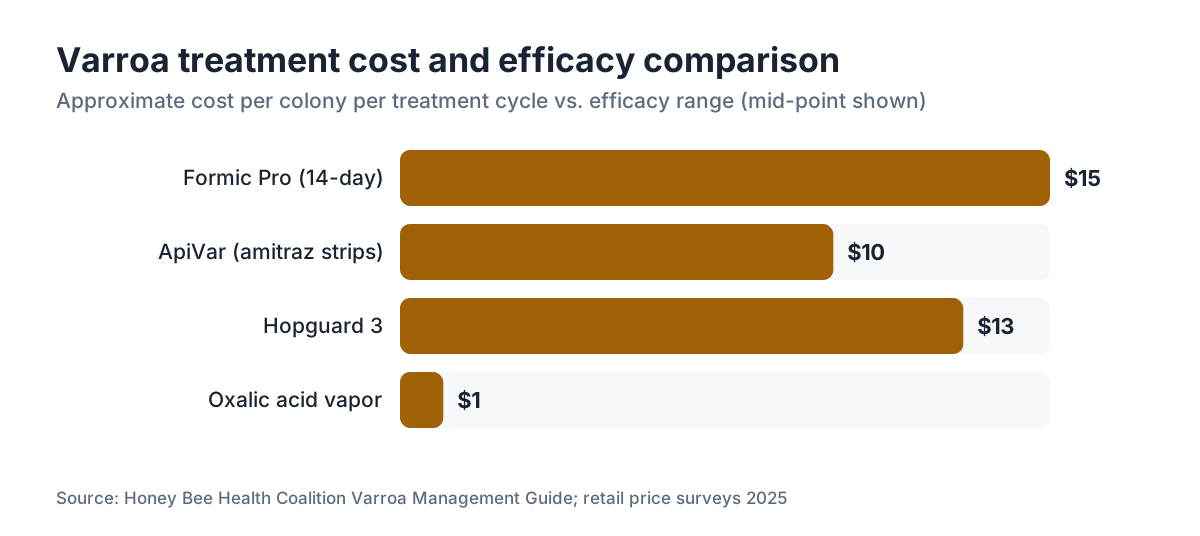
Here's the side-by-side:
| Treatment | Approx. cost/colony | Efficacy range | Brood penetration | Temp window | Residue risk |
|---|---|---|---|---|---|
| Formic Pro | $12, $17 | 90 to 95% | Yes | 50 to 77°F | None |
| ApiVar (amitraz) | $8, $12 | 93 to 99% | No (contact only) | Wide | Yes (wax) |
| Oxalic acid vapor | $0.50, $2 | 90 to 99% (broodless) | No | Wide | Negligible |
| Hopguard 3 | $10, $15 | 60 to 85% | Partial | Wide | None |
The cost gap between Formic Pro and oxalic acid vapor is huge. The efficacy gap is small only when the hive is broodless or you're willing to vaporize every 5 days for three rounds. If you've got capped brood and you need results now, Formic Pro earns its price. [3]
What are the temperature restrictions and why do they matter for cost?
Formic Pro's EPA-registered label requires ambient temperatures between 50°F and 77°F during application. The label states the product should not be used when daytime temperatures are expected to exceed 77°F (25°C). [5] That ceiling is not a suggestion. Cross it and you risk queen loss and heavy bee mortality from formic vapor building up inside the hive.
This shapes cost-effectiveness directly, because it limits when you can use the stuff at all. Across most of the continental U.S., the practical window is spring (before the flow heats up) and late summer into early fall. Midsummer, which is often exactly when mite loads climb fastest toward the pre-winter danger zone, can be impossible or flat-out risky in hot country.
Miss a treatment cycle because the window slammed shut at the wrong time, and Formic Pro's effective cost is zero. You can't use it. You're reaching for something else. Beekeepers in the Southeast, Southwest, and parts of the Midwest name this as the product's single biggest limitation. You paid for the pack, it's sitting on the shelf, and your mite count just crossed 3%. Maddening.
In the Pacific Northwest, upper Midwest, or Northeast, the window opens reliably in late summer and fall. That's exactly when a brood-penetrating treatment matters most, right before the bees raise the winter cluster. Those beekeepers get the most value per dollar out of this product. [5][6]
Is Formic Pro safe to use during a honey flow?
Yes, with conditions. The Formic Pro label allows use during a honey flow because formic acid occurs naturally in honey and leaves no synthetic residue. The label does note there may be some reduction in honey stores during treatment, and the product should not be applied when super temperatures could drive vapor concentration too high. [5]
For a hobbyist or sideliner chasing honey, that's a genuine advantage. ApiVar and most synthetic miticides demand you pull honey supers during treatment, costing you 6 to 8 weeks of potential harvest. Formic Pro lets you treat with supers on, which matters when you're fighting the summer mite buildup during an active flow.
Still, some beekeepers report noticeable honey weight loss during Formic Pro treatment, mostly in hot conditions near the ceiling. The reason: bees fan hard to move the vapor out, and that's energy and nectar spent on ventilation instead of curing honey. Nobody has clean quantitative data on how much honey is actually lost. The closest published guidance comes from the manufacturer's field trials, which aren't detailed publicly beyond label claims. Apply at the low end of the temperature range and the problem mostly vanishes. [5]
How many treatments per year do you need, and what does that add up to?
Treat on mite counts, not the calendar. That's what the extension services and the Honey Bee Health Coalition protocol call for. The trigger is generally a 2 to 3% infestation rate (2 to 3 mites per 100 bees on an alcohol wash), and once you're there, treatment is warranted regardless of the season. [3][6]
A well-managed colony in a region with year-round brood might need two cycles a year: one in late spring, one in late summer or fall before the winter bees are raised. At $12 to $17 a treatment, that's $24 to $34 per colony annually. A hobbyist with five hives running Formic Pro exclusively is looking at $120 to $170 a year.
A mixed protocol changes that number fast. Plenty of beekeepers use oxalic acid vapor for late fall and winter broodless treatments (pennies per colony) and save Formic Pro for the late summer cycle when brood is present. That hybrid approach trims annual costs 30 to 50% while keeping the brood-penetrating treatment for the moment it earns its keep. It's what I'd do running 10 to 30 hives. Spend $12 to $17 in August when the brood nest is packed and mite pressure peaks, then spend $1 to $2 in December when the hive is broodless. Smarter than paying Formic Pro prices all year. [3][6]
What does it cost to get set up, and what supplies do you need?
Setup cost is low. You need gloves, your normal protective gear, and somewhere to store the pads below 77°F and out of the sun. No vaporizer ($80 to $200), no respirator beyond standard beekeeping precautions, no mixing gear. The pads go straight on the top bars. Done.
The EPA label recommends gloves and eye protection when handling the pads, and you should take the vapor warning seriously. Open the packaging outdoors, upwind, and don't lean over an open hive right after placing the pads. The vapor is an irritant at the concentrations coming off fresh pads. [5]
Shelf life is 18 months from the manufacture date when stored between 39°F and 77°F. Buying in bulk to save per-colony? Confirm the manufacture date and make sure you can burn through the stock inside that window. Expired or heat-damaged Formic Pro loses efficacy, and you can't tell how much by looking at the package. Wasted product is wasted money. Check your beekeeping supplies inventory before you order. [5]
How does Formic Pro fit into an integrated varroa management protocol?
Integrated varroa management, as the Honey Bee Health Coalition's Varroa Management Guide lays it out, means combining monitoring, thresholds, and well-timed treatments instead of treating on a fixed calendar. Formic Pro's spot in that plan is the treatment you reach for when mite counts hit threshold during the brood-rearing season, especially summer and fall when capped brood means oxalic acid alone falls short. [3]
A workable annual plan for a sideliner in a four-season climate might run like this: alcohol wash in early spring, treat with Formic Pro if counts top 2% before the flow, monitor again in July, treat again in late August with Formic Pro if the temperature cooperates and counts are up, then close the season with oxalic acid vapor in November after the brood nest contracts. One or two Formic Pro treatments at $12 to $17 each, plus a vapor treatment under $2.
VarroaVault's free protocol tools help you map that schedule against your local temperature data and brood cycle, so you're not guessing on timing. The takeaway: Formic Pro is most cost-effective used strategically for the one job nothing else does as well, killing mites under capped brood in a honey-safe application. [3][6]
For the biology behind all of this, see our varroa mite page. The mite's reproductive cycle inside capped cells is the whole reason brood-penetrating treatments exist and why timing matters so much.
What do beekeepers actually report about Formic Pro results?
Peer-reviewed field data on Formic Pro specifically (versus formic acid generally) is thin. The product got EPA registration in 2018, and the manufacturer's efficacy data backed the label claims of 90%+ mite reduction. A 2019 study in the Journal of Economic Entomology looking at formic acid gel formulations, the category Formic Pro falls into, found 89 to 94% mite reduction in colonies with active brood when temperatures stayed inside the recommended range. [7]
Beekeeper reports on forums and extension surveys run more mixed, largely because temperature violations and sloppy application drive a lot of the bad outcomes. Place the pads correctly, keep temperatures below 77°F, and run the full 14-day exposure, and results land in the 85 to 95% range in most reports. Push the temperature limit or pull pads early, and efficacy drops while queen loss climbs.
Queen loss is the cost risk people underestimate most. Published reports and the manufacturer's own label acknowledge it, especially above 77°F or in very small colonies. A replacement queen runs $30 to $50 or more, and losing a queen in late summer can leave you a deadout by winter. That cost dwarfs the price of the treatment. Respect the temperature window and the risk stays low. Ignore it and Formic Pro gets expensive fast. [5][7]
Is Formic Pro worth the cost compared to cheaper alternatives?
For a hobbyist with two to five hives, $24 to $34 per treatment cycle is real money. Oxalic acid vaporization at roughly $1 to $2 per treatment (plus a one-time $80 to $200 vaporizer) looks obviously cheaper. That comparison only holds if you have a broodless colony or you're willing to do three weekly vapor treatments, which plenty of hobbyists aren't.
For a sideliner with 20 to 50 hives, the math flips again. Now the time cost of three weekly oxalic vapor treatments versus one 14-day Formic Pro application starts to matter. Value your time at $20 to $30 an hour, figure each vapor treatment takes 10 minutes per hive including setup and teardown, and three treatments across 30 hives is 15 hours of labor. At $25 an hour that's $375 in time, which easily justifies a pricier single-application treatment.
My honest take. If your climate opens a reliable temperature window in late summer, Formic Pro is worth using for that one annual treatment when brood is present. If you're in hot country where the window barely cracks open, or you run one or two hives with easy access to oxalic acid gear through a local club, Formic Pro is harder to justify on cost alone. It's a specific tool for a specific job, not a fix-everything solution, and pricing it that way is the right frame. [3][5]
Where can you buy Formic Pro and how do you avoid overpaying?
Formic Pro sells through most major beekeeping supply retailers in the U.S. and Canada. Prices vary enough that comparing before you order is worth the ten minutes. The hazmat shipping surcharge on online orders is the biggest hidden cost, and buying locally saves $15 to $30 per order.
A few ways to spend less. Buy through your local beekeeping association's group order, which often qualifies for wholesale pricing or reduced hazmat shipping spread across many packages. Check whether your state's department of agriculture runs a subsidized treatment program. Several states have offered cost-share programs for varroa treatments, though availability changes yearly, so confirm with your state ag department directly. [8]
Skip third-party marketplace sellers unless you can confirm the manufacture date. Formic Pro with less than six months of shelf life left is a bad deal at any price. Some beekeeping supply companies post manufacture dates right on the product listing. Call and ask if they don't. That discounted pack might be expiring in four months, which is barely enough time to run one treatment cycle depending on your season.
For sourcing beekeeping materials more broadly, including where to find free or low-cost shipping on other supplies, the free shipping honey bee supply companies resource is worth a bookmark.
What are the regulatory and label requirements you need to follow?
Formic Pro is registered by the EPA under FIFRA as a pesticide. The registration number is 79671-2. Using it in any way inconsistent with its label is a federal violation. The label sets the application rate (one packet of two pads per colony), the temperature range (50 to 77°F ambient), and re-entry intervals. [5][9]
The label also states Formic Pro is not for use in nucleus colonies with fewer than five frames of bees, and it should not be used on packages. These aren't rules to work around. Small colonies carry a much higher mortality risk from formic vapor, and the cost-effectiveness math falls apart on a nuc that might not survive treatment.
Canadian beekeepers: Formic Pro is registered with Health Canada's Pest Management Regulatory Agency (PMRA). The conditions are similar, but read the Canadian label separately, since some application details differ from the U.S. version. [10]
The Honey Bee Health Coalition recommends reading the current label before each treatment season, because label updates happen and conditions can change. The current U.S. label is available directly from the manufacturer and through the EPA's pesticide registration database. [3][5]
Frequently asked questions
How much does Formic Pro cost per hive?
A single two-pad Formic Pro packet, which treats one colony for one 14-day cycle, costs $24 to $34 at retail in 2025. Buying 10-packs drops the per-colony cost to roughly $12 to $16. Add $15 to $30 hazmat shipping if you order online and can't source locally. That puts the realistic all-in cost at $12 to $20 per colony per treatment depending on scale and sourcing.
Can I use Formic Pro during a honey flow without pulling supers?
Yes. Formic acid occurs naturally in honey, and the EPA-registered label permits use during a honey flow with supers on. No residue accumulates from treatment. Some beekeepers report minor honey weight loss during application from increased bee ventilation of the vapor, but it's generally small and avoidable by treating at the lower end of the 50 to 77°F temperature window.
What temperature is too hot for Formic Pro?
The label sets 77°F (25°C) as the maximum daytime ambient temperature. Above that, vapor concentration inside the hive rises to levels that can kill queens and sharply increase bee mortality. This ceiling is the product's main limitation in warm climates. If your forecast shows daytime highs above 77°F for any day in the 14-day application period, postpone treatment.
How does Formic Pro compare to ApiVar for cost and efficacy?
ApiVar (amitraz strips) costs $8 to $12 per colony and shows 93 to 99% efficacy in some trials, but it needs 6 to 8 weeks of contact time and accumulates in beeswax over repeated use. Formic Pro costs $12 to $17 per colony, hits 90 to 95% efficacy in a 14-day application, penetrates capped brood, and leaves no residue. ApiVar wins on price. Formic Pro wins on residue profile and brood penetration.
How many times per year do you need to treat with Formic Pro?
Treatment frequency should follow mite monitoring, not a fixed schedule. The Honey Bee Health Coalition threshold is roughly 2 to 3% infestation (per alcohol wash) as the trigger. In practice, most beekeepers in four-season climates find one to two Formic Pro applications per year necessary, typically late spring and late summer, combined with a broodless-period oxalic acid treatment in fall or winter.
Can Formic Pro kill varroa under capped brood?
Yes. This is Formic Pro's main advantage over oxalic acid. Formic vapor penetrates capped brood cells and kills mites in the reproductive phase. Published efficacy data shows 90 to 95% mite reduction including brood-stage mites under appropriate temperature conditions. Oxalic acid in any formulation does not penetrate capped cells, which is why broodless timing or repeated treatments are required for comparable results with that product.
Is there a risk of queen loss with Formic Pro?
Yes, and it's the biggest downside. Queen loss is more likely when temperatures exceed 77°F, in small or weak colonies, or when pads are placed improperly. The manufacturer's label acknowledges the risk. A replacement queen costs $30 to $50 or more, and the resulting brood gap can mean colony failure heading into winter. Respecting the temperature window and minimum colony size (at least five frames of bees) keeps the risk low.
How long does Formic Pro take to work?
Standard application is 14 consecutive days for one two-pad packet. An alternative split application uses one pad for 7 days, then the second pad for 7 more, which the label allows and some beekeepers prefer in warmer conditions. Mite counts typically drop within the first week, but the full 14 days is needed for maximum efficacy against mites in all stages, including those under capped brood.
What is the shelf life of Formic Pro and how should I store it?
The manufacturer specifies an 18-month shelf life from the manufacture date when stored between 39°F and 77°F, out of direct sunlight. Heat and UV exposure degrade the product before expiration. Always check the manufacture date when buying, especially from online or clearance sources. Using degraded product means lower mite kill and wasted money, and you won't spot it from the package appearance alone.
Does Formic Pro leave residue in beeswax or honey?
No synthetic residues. Formic acid is a naturally occurring organic acid found in honey. Treatment-level applications do not raise honey formic acid content above the background levels in untreated honey, and the product leaves no wax residues. That's a long-term advantage over amitraz (ApiVar), which accumulates in beeswax over years of use and may contribute to resistance in mite populations.
Can I use Formic Pro on nucleus colonies or packages?
No. The EPA-registered label prohibits use on nucleus colonies with fewer than five frames of bees, and it should not be used on packages. Small bee populations cannot manage the vapor concentration a standard application produces, and queen and worker mortality in small colonies runs much higher. For nucs, wait until the colony is established on at least five frames, then assess mite load before treating.
Is Formic Pro worth it for a hobbyist with just two or three hives?
It depends on your climate and timing. If you're in a region with a reliable 50 to 77°F window in late summer and your mite counts hit threshold during the brood season, Formic Pro's brood penetration justifies the $24 to $34 per packet. If you have access to an oxalic acid vaporizer through a local club or co-op and can time a brood break, the cheaper option works fine. It's not the only answer, just the cleanest one for in-season brood treatments.
Are there state subsidy programs that reduce Formic Pro costs?
Some states have offered cost-share or reimbursement programs for varroa treatments, including formic acid products, through their departments of agriculture. Availability changes yearly and varies a lot by state. Contact your state's department of agriculture apiarist or apiculture specialist to ask about current programs. State-level beekeeping associations sometimes coordinate bulk purchases that push per-unit cost below retail.
What safety gear do I need when applying Formic Pro?
At minimum: chemical-resistant gloves and your standard beekeeping protective gear including a veil. Open the product outdoors, upwind, and avoid direct inhalation of the vapor. The EPA label does not require a respirator for standard application but recommends avoiding breathing the vapor directly. People with respiratory conditions like asthma should take extra precautions and may want a half-face respirator with organic vapor cartridges.
Sources
- Dadant & Sons, Formic Pro product listing: Retail price for a single two-pad Formic Pro packet at major beekeeping suppliers ranges from $24 to $34 as of mid-2025
- Mann Lake Ltd., beekeeping supplies: Bulk Formic Pro 10-pack pricing and hazmat shipping surcharge information
- Honey Bee Health Coalition, Varroa Management Guide: Formic acid products show 90 to 95% mite kill including brood-stage mites; treatment threshold of 2 to 3% mite infestation rate recommended
- Honey Bee Health Coalition, Tools for Varroa Management: ApiVar (amitraz) requires 6 to 8 week contact period and accumulates residues in beeswax over repeated use
- EPA, Formic Pro pesticide label (EPA Registration No. 79671-2): Label specifies 50 to 77°F ambient temperature window, two-pad application per colony, permit to use during honey flow, and prohibition on use in colonies fewer than five frames of bees
- Penn State Extension, Varroa Mite Management: Alcohol wash threshold of 2 to 3 mites per 100 bees as trigger for treatment; late summer treatment timing critical for overwintering colony health
- Journal of Economic Entomology, formic acid gel formulation efficacy study (2019): Formic acid gel formulations showed 89 to 94% mite reduction in colonies with active brood under label-compliant temperature conditions
- USDA National Agricultural Library, Bee Health: State-level cost-share and subsidy programs for varroa treatment vary by state and year; contact state department of agriculture for current availability
- EPA, FIFRA pesticide registration requirements: Formic Pro EPA registration number 79671-2; use inconsistent with label is a federal violation under FIFRA
- University of Florida IFAS Extension, Varroa Mite Control: Oxalic acid vaporization cost estimated at under $2 per colony per treatment; three-treatment protocol for colonies with brood
- Michigan State University Extension, Honey Bee Varroa Mite Management: Hybrid treatment protocols combining formic acid in brood season with oxalic acid in broodless period recommended for cost and efficacy balance
Last updated 2026-07-09