Formic acid pro for bees: complete treatment guide
TL;DR
- Formic Pro is a formic-acid miticide that kills varroa under sealed brood, which most other treatments can't do.
- You use two pads per colony, apply between 50 and 85°F, and leave them 14 days.
- One two-strip treatment runs about $15 to $25 and is approved with honey supers on.
- It hits the whole mite population in a single application.
What is Formic Pro and how does it work against varroa?
Formic Pro is a miticide made by NOD Apiary Products. Each pad holds formic acid inside a polymer matrix that releases the acid slowly as a vapor across 14 days. That vapor gets into sealed brood cells. That is the whole point, and it is what sets Formic Pro apart from oxalic acid dribble or vaporization, which only reach phoretic mites (the mites riding on adult bees, not the ones hiding under cappings).
Formic acid is a natural compound. It shows up in honey at low levels, and the EPA classifies it as a biochemical pesticide partly because of that natural occurrence and its low environmental persistence [1]. When a varroa mite inside a capped cell meets formic acid vapor at an effective concentration, the mite dies before it can reproduce. The bee larva survives, because bees tolerate the acid at the levels the pads produce. That tolerance has limits, and those limits are tied to temperature, which is covered further down.
Formic Pro pads are 65% formic acid [2]. That is a higher concentration than the older Mite-Away Quick Strips (MAQS) product, which also used formic acid but released it on a different curve. Formic Pro replaced MAQS across most North American markets around 2018 to 2019. The mechanism didn't change. Formic acid vapor wrecks the mite's respiratory and reproductive systems. No genetic resistance to formic acid has been documented in varroa populations, so the treatment still works even in apiaries that leaned hard on synthetic miticides for years [3].
For a deeper look at what you're actually fighting, see our overview of the varroa mite.
What is the correct Formic Pro dosage for a standard hive?
The EPA-registered label calls for two pads per colony for a full treatment [2]. You lay both pads flat on the top bars of the brood frames, side by side, and peel the paper backing off the top surface only. The bottom paper stays on to slow the downward release.
Running two brood boxes? Split the pads. Put one on the top bar of the lower box and one on the top bar of the upper box. That spreads the vapor better when bees are working both boxes. For a single deep or a nuc, both pads go on top of the frames.
Leave the pads for 14 days. The label also offers a shorter seven-day option for when you need a faster turnaround or when a heat spike makes a long run risky. The seven-day protocol still uses two pads, but it catches fewer mites cycling out of capped brood, because the worker brood cycle runs about 12 days from cap to emergence [2]. Most experienced beekeepers run the full 14 days whenever the weather cooperates.
Never stack more than two pads per colony. The label bans it, and overdosing formic acid kills queens and cooks brood. More is not better here.
One thing the label buries: pull the pads at day 14 even if there's material left in them. Pads left past that point keep stressing the queen and brood without adding much mite kill, because most of the release happens in the first ten days.
What temperature range is safe for Formic Pro application?
Temperature is the variable that makes or breaks a Formic Pro treatment. The label sets the range at 50°F to 85°F (10°C to 29.4°C) for the treatment period [2]. Both ends matter.
Below 50°F, the pads barely release. The vaporization rate drops off in the cold, so you'd be leaving pads in the hive with little mite kill and some bee stress for nothing.
Above 85°F is where it gets dangerous. Heat speeds vapor release fast. When ambient temperatures climb past 85°F, especially for several days running, the concentration inside the hive can spike high enough to kill queens and wipe out open brood. Field reports put queen loss in hot conditions somewhere around 15 to 30%, though controlled data is thin and the numbers swing with colony size and hive ventilation. The steadiest guidance comes from NOD's technical documents and from the Honey Bee Health Coalition's varroa management guide, which names temperature compliance as the top cause of adverse events with formic acid products [3].
So check the ten-day forecast before you apply. A heat wave on the way? Wait. Early-morning application in late August or September, when nights cool off but days stay warm, is often the sweet spot in temperate zones. In southern states, late September and October usually beat midsummer.
Some beekeepers open the entrance wider or add a screened bottom board during treatment to move more air when temperatures are marginal. The label doesn't forbid it, and it's a sensible move.
Can you use Formic Pro with honey supers on?
Yes. This is a big reason Formic Pro gets so much attention from commercial and sideliner operations. The EPA label plainly allows application when honey supers meant for human consumption are on the hive [2]. Formic acid occurs naturally in honey, and studies have found that formic acid treatment doesn't push honey residue levels above natural background concentrations in any way that raises a food-safety flag [4].
That same natural-occurrence argument is why formic acid is accepted for organic production under the USDA National Organic Program. If you run certified organic colonies, check with your certifier first, but formic acid is generally on the accepted inputs list [5].
The honey-super approval matters for beekeepers who don't want to pull supers before treating in late summer. Pulling supers is disruptive and can push bees to backfill the brood nest with nectar, which complicates winter prep. With Formic Pro, you treat through the supers and leave them where they are.
How effective is Formic Pro at reducing varroa mite levels?
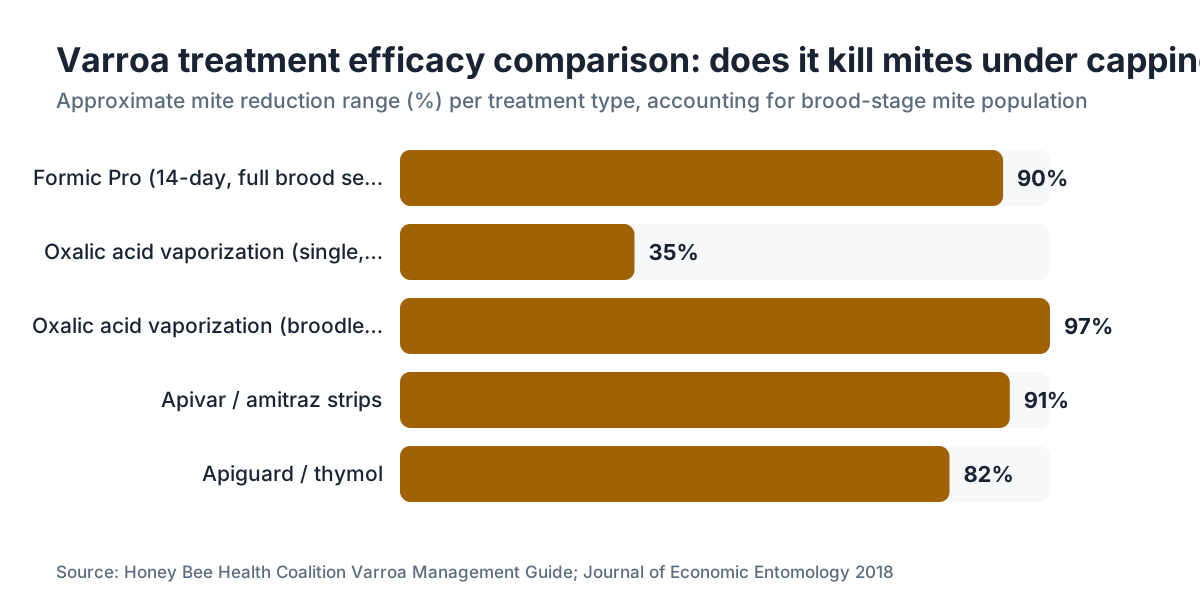
Efficacy numbers in the published trials move around, so be skeptical of anyone quoting a single fixed percentage. The data is still encouraging. A 2018 field study in the Journal of Economic Entomology found that Formic Pro and its MAQS predecessor knocked mite levels down by roughly 85 to 95% in colonies treated inside the approved temperature range [6]. The Honey Bee Health Coalition's varroa guide reports similar ranges and lists formic acid as a "Tier 1" treatment specifically because of its brood penetration [3].
Brood penetration is the whole story. Oxalic acid vaporization, for example, hammers phoretic mites but does nothing to the 60 to 80% of the mite population sitting under cappings during the brood season [3]. To match a single Formic Pro run with oxalic acid, you'd need several treatments spaced across brood cycles. Formic Pro does it once, over 14 days.
Efficacy falls off if temperatures drift out of range mid-treatment, if the colony is tiny (the pads can overwhelm a weak hive), or if the backing paper comes off wrong. A post-treatment alcohol wash is the only honest way to confirm you got results. Do it three to five days after you pull the pads.
| Treatment | Kills under cappings? | Honey super approved? | Resistance reported? | Typical efficacy range |
|---|---|---|---|---|
| Formic Pro (formic acid) | Yes | Yes | No | 85-95% [6] |
| Oxalic acid vaporization | No | No (supers off) | No | 90-99% phoretic only [3] |
| Apivar (amitraz) | Yes | No | Yes (some populations) | 85-97% [3] |
| Apiguard (thymol) | Partial | No | No | 74-90% [3] |
Source: Journal of Economic Entomology 2018 [6]; Honey Bee Health Coalition [3].
What are the real-world risks and side effects of Formic Pro?
Queen loss is the biggest risk, and it's real. In hot weather, or in colonies that are small or already stressed, formic acid vapor can make a queen stop laying, fail, or die outright. Extension publications put queen loss around 5 to 10% under good conditions, and much higher when temperatures blow past the label range [7]. Check the colony about seven days into treatment. Look for eggs and young larvae. If the queen has quit laying, pull the pads right away.
Brood damage is another documented effect. Some open brood, mostly the larvae closest to the pads, can die from vapor exposure. It's worse in warm weather and in poorly ventilated hives. The colony usually bounces back fast if the queen is fine, but expect a spotty brood pattern for a week or two after treatment.
Bees sometimes drag the pads around or chew at them. A pad shoved off the frames isn't treating anything. Check placement at day three or four and reposition if it moved.
Formic acid is hazardous to you, too. The vapor stings your eyes, nose, and throat. Wear nitrile gloves and eye protection when you handle pads. Get acid on your skin, flush with water immediately. The foil pouches should be opened outside or somewhere with good airflow.
If you're planning a full treatment program, keep track of what you have on hand. A solid beekeeping supplies checklist will remind you to stock gloves, eye protection, and extra alcohol wash supplies before treatment season.
When should you apply Formic Pro in your seasonal treatment schedule?
Timing depends on your climate, but the rule holds everywhere: treat when mite loads threaten the colony and when you can stay inside the temperature window.
In most temperate climates, the two highest-value windows are late summer (July to August in the North, later in the South) and fall (September to October). Late summer treatment matters most, because the bees raised in August and September are the ones that overwinter. High mite loads then infect those bees with deformed wing virus and cut their lifespan short. A Formic Pro treatment in early August, with daytime highs in the 70s and low 80s°F, is often ideal.
The fall window is your second shot to knock mites down before the cluster forms. Miss the summer window, or find your counts creeping back up after a summer treatment, and fall Formic Pro is the safety net. The catch: once temperatures settle below 50°F for good, switch to oxalic acid dribble or vaporization.
The Honey Bee Health Coalition sets the treatment trigger at 2 to 3% mites (2 to 3 mites per 100 bees on an alcohol wash) [3]. Don't wait for visible deformed wing virus. By the time you see it, the colony is already in trouble.
Spring Formic Pro is possible but uncommon. Spring colonies are often small, so vapor exposure is harder to manage, and temperature swings are less predictable. Plenty of beekeepers run oxalic acid vaporization in early spring and save formic acid for summer and fall.
VarroaVault's free protocol tools can map these windows against your local climate and mite counts, so you're not guessing on timing.
How does Formic Pro compare to oxalic acid and thymol treatments?
Each of these three has a real job, and none of them wins across the board. The right pick depends on your timing, your colony's condition, and what you're after.
Formic acid is the only one of the three that kills mites under brood cappings in a single application. That's its edge. The cost is the temperature restriction and the queen loss risk.
Oxalic acid, dribbled or vaporized, is gentler on bees and queens, dirt cheap, and very good against phoretic mites. It shines in winter when there's no brood (a broodless application can hit 95%+ reduction of phoretic mites) or on a freshly installed package with no capped brood. The limit: during the brood season you'd need four to six vaporizations spaced seven days apart to catch mites cycling out of cells, which piles up labor and time [8].
Thymol treatments like Apiguard work fine but need sustained temperatures above 59°F, run four to six weeks, and can't go on with supers present. In cool climates or early fall, results get inconsistent.
For a beekeeper who wants one mid-season treatment that covers the whole mite population at once, Formic Pro is the strongest option. For winter treatment on a broodless colony, oxalic acid wins on simplicity and cost. These tools work together, not against each other.
What do Formic Pro reviews from beekeepers actually say?
Reading across extension reports and beekeeper forums (not manufacturer testimonials), a few themes show up again and again in formic acid reviews.
The good: beekeepers report strong mite drops, especially from summer treatments on active colonies loaded with sealed brood. The honey-super-on approval comes up constantly as a practical win. The 14-day single-treatment protocol appeals to sideliners who can't get back to every hive weekly.
The bad: queen loss is the top complaint, and it almost always traces back to temperatures that crept above 85°F during the window. Second is forager disruption in the first few days, with some beekeepers noting reduced foraging activity, mostly in warm weather. It usually settles within a week.
Pad placement is a common stumbling block for new users. People leave the backing on wrong or fail to seat the pads flat on the frames, and efficacy suffers. Read the instruction sheet in the box carefully the first time.
Honest caveat: there's no large, independently published satisfaction survey comparing Formic Pro to MAQS. Most field data lumps the two together or comes from extension trials rather than hobbyist reports. The controlled trial data [6] holds up well. The anecdotal reports skew positive when temperature rules are followed and frustrated when they aren't.
If you're sourcing products, comparing costs and suppliers gets easier once you have a solid beekeeping supply companies shortlist.
What does the EPA registration say about Formic Pro safety and handling?
Formic Pro is registered with the EPA under registration number 81310-3 [2]. The label is a legal document. The rules on it are not suggestions.
Key label requirements:
- Do not apply when ambient temperature is above 85°F or below 50°F.
- Do not use more than two pads per colony per treatment.
- Do not retreat sooner than 14 days after the first treatment (if a second treatment is needed, wait the full interval).
- Wear chemical-resistant gloves and protective eyewear during handling.
- Keep pads away from children, food, and water sources.
- Store pads at room temperature in the sealed foil pouches until use. Do not refrigerate.
The label also states Formic Pro can be used in organic production, which follows from the EPA's biochemical pesticide classification. That classification covers naturally occurring substances that control pests through non-toxic mechanisms, or through toxicity to the pest with minimal toxicity to non-target organisms [1].
Read the current label before every treatment. Labels get updated between product runs, and the version in your box may differ from the latest registered one. The EPA's biopesticides section holds the scientific review record if you want to see what the agency actually evaluated [1].
How do you monitor mite levels before and after a Formic Pro treatment?
An alcohol wash is the most accurate way to measure mite loads before and after treatment. Take a half-cup sample of bees (about 300 bees) from the brood area, add 70% isopropyl alcohol, shake for 60 seconds, and count the mites that drop off [3]. Divide mites by bees and multiply by 100 for your infestation percentage.
A sugar roll is the non-lethal alternative, but it reads consistently lower, often 20 to 30% under an alcohol wash on the same colony [9]. If you're making treatment decisions, the alcohol wash gives you a number you can trust.
The Honey Bee Health Coalition states plainly: "An alcohol wash is the most accurate method for detecting varroa mites on adult bees" [3]. That's the standard.
Check mite levels before you apply Formic Pro. At 2% or higher during the active brood season, treat. After the 14-day period, wait three to five days, then run another alcohol wash. Still above 1%? Decide whether a second treatment is warranted or whether switching to oxalic acid for a follow-up fits the timing better.
Keep a written or digital mite log by hive. It's the only way to know whether a treatment worked and to spot colonies that keep reinfesting from neighboring apiaries. If one hive spikes over and over while the rest stay low, that tells you something about local mite pressure or possible robbing.
Where can you buy Formic Pro and what does it cost?
Formic Pro sells through most major beekeeping supply retailers in North America. A two-pack (one colony's worth) usually runs $15 to $25 depending on supplier and year. A ten-pack, enough for five colonies, runs roughly $60 to $90 at most suppliers, so buying larger quantities saves a few dollars per treatment (based on typical retail listings at major beekeeping suppliers, prices as of 2025; confirm with your current supplier).
That puts Formic Pro in the mid-range on cost. Oxalic acid is cheaper (vaporization supplies come to a few cents per treatment once you own the vaporizer). Apivar (amitraz strips) runs about $3 to $5 per strip and you use two per colony, so the cost lands close. Apiguard tends to cost more per treatment.
NOD Apiary Products, the manufacturer, sells direct and also through retailers. If you want to compare prices and suppliers, checking free shipping honey bee supply companies can save real money when you buy in bulk for multiple hives.
One thing to watch: Formic Pro has a shelf life. The pads degrade in storage, especially if the foil pouches get opened and resealed. Check the expiration date on your box before treating. Degraded pads are a common cause of surprise treatment failures.
Frequently asked questions
Can I use Formic Pro when temperatures might dip below 50°F at night?
The label says ambient temperature should stay between 50°F and 85°F during the treatment period. Brief overnight dips below 50°F across a 14-day run are a gray area. Most extension sources say a few cool nights won't wreck the treatment, but sustained cold below 50°F for several days cuts efficacy hard. Check your forecast and aim for a window with stable temperatures.
How long do I leave Formic Pro pads in the hive?
Fourteen days for the full treatment, or seven days for the shorter optional protocol. Remove the pads promptly at the end even if material remains. Leaving them past 14 days doesn't add meaningful mite kill and keeps stressing brood and queen. Most of the formic acid release happens within the first ten days.
Will Formic Pro kill my queen?
It can, especially in hot weather. Queen loss runs roughly 5 to 10% under good conditions and climbs noticeably above 85°F. Check for eggs and young larvae around day seven. If the queen has stopped laying, pull the pads. Strong, well-populated colonies in good shape and treated within the temperature window have the lowest queen loss rates.
Can Formic Pro be used on nucs or small colonies?
The label doesn't prohibit it, but small colonies are more vulnerable to vapor stress, because the bee population can't buffer the concentration as well. For nucs under five frames of bees, many beekeepers use one pad instead of two, though that's an off-label change. A weak colony is also slower to recover from any brood loss. Treat weak colonies with caution.
Does Formic Pro kill varroa in capped brood cells?
Yes. That's its main advantage over oxalic acid treatments. Formic acid vapor penetrates sealed brood cells at concentrations lethal to varroa while the bee larva survives. A single 14-day treatment can reach the 60 to 80% of mites hiding under cappings during brood season, something a single oxalic acid application cannot do.
Is Formic Pro safe to use when honey supers are on the hive?
Yes. The EPA label explicitly permits use with honey supers meant for human consumption present. Formic acid occurs naturally in honey, and studies show treatment doesn't raise residue levels beyond natural background concentrations. This approval is a key advantage over treatments like Apivar or Apiguard, which require super removal.
How many treatments can I do per year with Formic Pro?
The label allows up to two complete treatments per year per colony. Each is 14 days with two pads. To retreat, wait at least 14 days after removing the first set before applying a second. Many beekeepers treat once in late summer and once in fall if counts stay elevated, staying inside the two-treatment annual limit.
What should I do if my bees beard or act stressed after applying Formic Pro?
Some bearding and reduced forager activity in the first few days is normal, especially in warm weather. It usually settles by day four to seven. If bearding is severe and lasts past day five, or you see large numbers of dead bees at the entrance, check hive temperature, consider propping the entrance open for ventilation, and look for signs of queen failure. In extreme cases, remove the pads.
Can I use Formic Pro in an organic beekeeping operation?
Generally yes. Formic acid is classified as a naturally occurring biochemical pesticide by the EPA and is typically accepted under USDA National Organic Program standards. Always verify with your specific certifier before applying, since certification body requirements vary. NOD Apiary Products markets Formic Pro as suitable for certified organic operations.
What's the difference between Formic Pro and MAQS (Mite-Away Quick Strips)?
Both use formic acid as the active ingredient, and both came from NOD Apiary Products. Formic Pro replaced MAQS across most North American markets around 2018 to 2019. The formulation and release profile differ: Formic Pro uses a higher active-ingredient concentration (65% formic acid) and is built for a 14-day treatment period. The core mechanism and temperature restrictions are similar.
How do I know if my Formic Pro treatment actually worked?
Run an alcohol wash on a 300-bee sample from the brood area three to five days after removing the pads. Compare your mite percentage to the pre-treatment count. A successful treatment should drop levels by 85% or more. If you're still above 1 to 2%, decide whether a second treatment or a switch to oxalic acid for residual phoretic mites makes sense.
Can varroa mites develop resistance to formic acid?
No resistance to formic acid has been documented in varroa populations in the current scientific literature. That's a real advantage over amitraz (Apivar) and some pyrethroids, where resistance is confirmed in varroa populations across Europe and North America. The Honey Bee Health Coalition names formic acid's lack of documented resistance as a factor in its Tier 1 recommendation.
What protective equipment do I need when applying Formic Pro?
At minimum: chemical-resistant nitrile or rubber gloves and safety glasses or a face shield. Formic acid vapor irritates mucous membranes, eyes, and the respiratory tract. Open the foil pouch outside or in a well-ventilated area. If you're sensitive to chemical fumes, a half-face respirator with an acid-gas cartridge is a reasonable precaution. Flush any skin contact immediately with water.
Sources
- EPA, Biopesticides section (Biochemical pesticide classification and registration action documents): Formic acid is classified by the EPA as a biochemical pesticide because it is a naturally occurring substance; the agency's biochemical pesticide definition and registration action documents are housed in this section.
- EPA, Pesticide Product and Label System (Formic Pro, EPA Reg. No. 81310-3): Label specifies two pads per colony, 50-85°F temperature range, 14-day treatment period, permitted use with honey supers on, and 65% formic acid active ingredient.
- Honey Bee Health Coalition, Tools for Varroa Management (current edition): Formic acid listed as Tier 1 treatment; 2-3% mite threshold for treatment; alcohol wash described as most accurate mite-monitoring method; temperature compliance flagged as leading cause of adverse events; oxalic acid vaporization cited as effective only against phoretic mites in a single application.
- Journal of Apicultural Research (formic acid residue in honey research): Treatment with formic acid products does not elevate honey residue levels measurably above natural background formic acid concentrations in honey.
- USDA Agricultural Marketing Service, National Organic Program rules and regulations: Formic acid is generally accepted under USDA National Organic Program standards for use in certified organic beekeeping operations.
- Journal of Economic Entomology, 2018 (formic acid MAQS/Formic Pro field efficacy trial): Formic acid treatments achieved varroa mite reduction rates of approximately 85-95% in colonies treated within the approved temperature range in published field trials.
- Penn State Extension, honey bee and pollinator resources: Queen loss risk associated with formic acid products estimated at roughly 5-10% under ideal label conditions, with significantly higher rates reported when temperature guidelines are exceeded.
- University of Minnesota Bee Lab, varroa management resources: Oxalic acid vaporization cited as requiring four to six repeated applications spaced seven days apart to achieve comparable total-population mite reduction to a single formic acid treatment during brood season.
- Oregon State University Extension, home page and pollinator resources: Sugar roll monitoring consistently reads approximately 20-30% lower mite infestation levels compared to alcohol wash on the same colony sample.
- Cornell University College of Agriculture and Life Sciences, Pollinator Network: Alcohol wash described as the most reliable quantitative method for determining varroa infestation rates in managed colonies.
Last updated 2026-07-09