How bees handle oxalic acid vapor: safety, stress, and what the science says
TL;DR
- Honey bees tolerate oxalic acid vapor (OAV) well when it's applied at the right dose and temperature.
- Adult bees experience only minor, temporary stress.
- Brood mortality rises sharply with repeated treatments, so the EPA label limits vaporization to once per week for a maximum of three consecutive treatments.
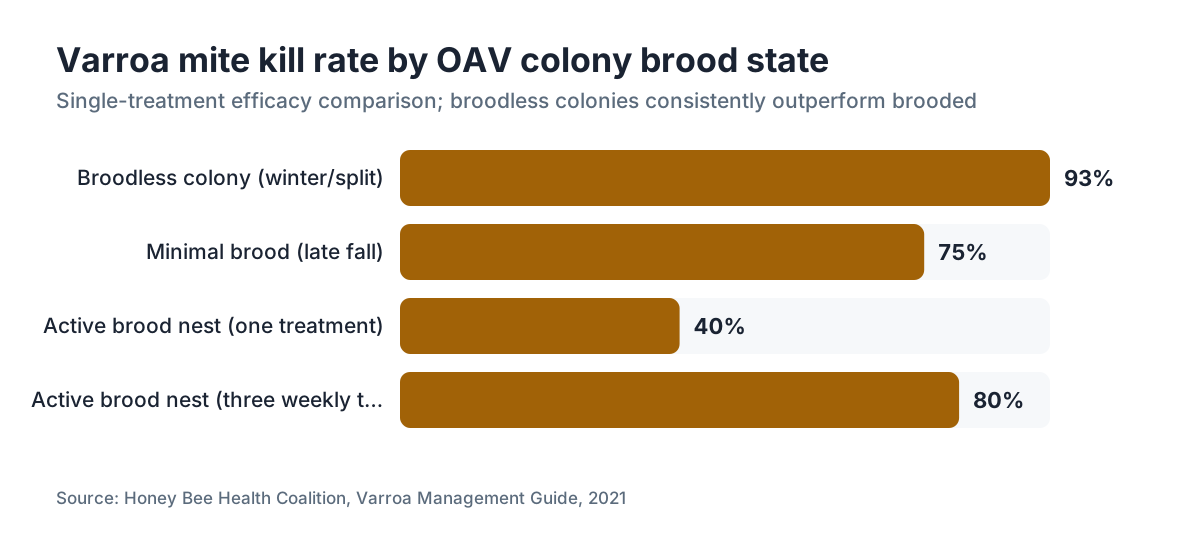
- Mite kill routinely reaches 90 to 95% in broodless colonies.
What actually happens to bees when they're exposed to oxalic acid vapor?
Run a vaporizer in a hive and the oxalic acid sublimates from solid crystals into a fine aerosol that settles on every surface inside the box, bees included. The mites die because oxalic acid disrupts their cuticle and, at physiological concentrations, interferes with their neuromuscular function [1]. Bees are far less vulnerable.
The reason bees survive exposure that kills mites comes down to physiology. Varroa mites breathe through book lungs and have a thin, permeable cuticle that absorbs the acid readily. Honey bees have a thicker, waxier cuticle and spiracle-controlled tracheal breathing that limits how much vapor they take in during a short treatment. They also move freely and can cluster away from the densest part of the vapor cloud, something a mite clinging to a bee's abdomen cannot do.
Here's what you actually see in treated hives. During and immediately after vaporization, bees at the entrance fan hard and get agitated. This settles within 15 to 30 minutes in most colonies [2]. There's no reliable evidence of significant adult bee mortality from a single properly dosed treatment. The EPA-registered label for products like Api-Bioxal specifies 2.05 grams of oxalic acid dihydrate per hive body, and staying at that dose is where the safety data lives [3].
Overdosing is where things go wrong. Beekeepers who have doubled or tripled doses chasing faster mite kill have reported dead bees at the entrance within hours. The vapor is corrosive at high concentrations and can damage tracheal tissue. Stick to the label. Full stop.
Does oxalic acid vapor harm bee brood?
Yes, and this is the single biggest biological limit on the treatment. Oxalic acid is toxic to developing brood [4]. Larvae and pupae in capped cells cannot escape the vapor, and even sub-lethal concentrations interfere with development.
A study published in the Journal of Apicultural Research found that adult bees emerging from cells treated with oxalic acid vapor showed reduced body weight and hypopharyngeal gland development compared to untreated controls [4]. Smaller, nutritionally compromised bees are weaker foragers and nurses. That matters for colony recovery after treatment.
The EPA label addresses this directly. Api-Bioxal is approved for repeated vaporization once per week for up to three treatments, but that repeated-use scenario is meant for colonies that have some brood present when you cannot wait for a broodless window [3]. Treat during the honey flow or in the middle of the active season when brood is wall-to-wall and three rounds of OAV will clear mites from emerging bees as they hatch, but you'll pay a brood cost for it.
The cleanest, most bee-safe protocol is still treating during a natural or induced broodless period: late fall after the queen has stopped laying, midwinter in cluster, or after a split that leaves one half queenless for a couple of weeks. Under those conditions a single OAV treatment can knock mites down by 90% or more with essentially no brood to worry about [5].
Treat a colony with a full brood nest and the math changes. You'll need multiple treatments timed to when capped brood hatches, and you should expect some collateral brood loss. Weigh that against leaving mites to explode through the fall population.
How much oxalic acid vapor is safe for bees, and what dose should you use?
The registered dose in the United States is 2.05 grams of oxalic acid dihydrate per hive body, with a maximum of three hive bodies treated per application, meaning up to 6.15 grams per single vaporization event [3]. That number comes from efficacy and safety trials submitted to the EPA during the Api-Bioxal registration process.
Think of the label dose as calibrated to put enough vapor in the air to contact mites on bee bodies without saturating the hive with corrosive aerosol for long. The exposure window matters. Most commercial vaporizers complete sublimation in 2 to 3 minutes, and vapor disperses or settles within about 10 minutes after that. That brief pulse is what the safety data is based on.
Temperature shapes how bees respond as much as dose does. Treatments at or below 50°F (10°C) are harder on bees because the cluster is tight and bees cannot fan and disperse the vapor as efficiently. Some beekeepers prefer to treat on warmer winter days when bees are loosely clustered and can move. The Honey Bee Health Coalition's Varroa Management Guide recommends treating on days above 40°F to keep vapor distribution reasonable and bee stress low [5].
Humidity inside the hive is a secondary factor. High humidity can cause oxalic acid to condense into a liquid that sits on bees longer than the aerosol form would. Most beekeepers don't have hive humidity monitors, so this is mainly a theoretical concern, but it's one reason good ventilation during treatment makes sense.
Don't exceed the label dose thinking you'll get better mite kill. The mite-kill ceiling with OAV in broodless colonies is already near the biological limit of the method. More vapor does not kill more mites once you've hit saturation inside the hive. It just raises bee stress and brood damage.
How does OAV compare to other oxalic acid methods for bee safety?
There are three EPA-registered application methods for oxalic acid in honey bee colonies: vaporization (OAV), dribble (trickle), and extended-release glycerin-soaked pads like Api-Bioxal Strips [3]. Each has a different safety profile.
The dribble method pours a 3.5% oxalic acid solution directly onto bees between frames. It's effective in broodless colonies but requires direct contact between the liquid and every bee. Research from the University of Minnesota and elsewhere has found dribble slightly harsher on adult bees at the point of contact compared to vapor, particularly in cold weather when wet bees struggle more [6]. It also requires opening the hive, which breaks the cluster.
Extended-release strips work by slowly off-gassing oxalic acid from a glycerin-soaked cellulose material over 30 to 56 days. Bees see much lower peak concentrations than with vaporization, and the method is EPA-labeled for use in colonies with or without brood over an extended period [3]. The continuous low-level exposure makes it gentler on adult bees at any given moment, though the long-term brood effects over a 6-week treatment period haven't been characterized as thoroughly as single-shot OAV.
Here's the honest comparison for a broodless winter treatment. OAV wins on simplicity and speed, produces equivalent or better mite kill with minimal bee disruption, and is over in 10 minutes per hive. For an active-season colony with lots of brood, extended-release strips are likely more bee-friendly because they avoid the repeated vapor pulses.
| Method | Brood safe? | Adult bee stress | Mite kill (broodless) | Treatment time |
|---|---|---|---|---|
| OAV (vaporization) | No | Low to moderate (brief) | 90 to 95% [5] | 2 to 3 min per hive |
| Dribble | No | Moderate (wet contact) | 90 to 95% [5] | 5 to 10 min per hive |
| Extended-release strips | Partially | Low (chronic low dose) | Variable, up to ~93% [3] | 30 to 56 days |
For most hobbyist beekeepers with a handful of hives, OAV during a broodless window is the method I'd reach for first. It's fast, it's effective, and the bee-safety record is solid when you follow the label.
What temperature and timing conditions make OAV safest for bees?
Temperature is the most controllable variable in how bees experience OAV. The general guidance from the Honey Bee Health Coalition is to treat when ambient temperature is above 40°F (4°C) and below about 80°F (27°C) [5]. The lower bound keeps vapor from condensing too quickly and makes sure bees can move enough to distribute it through the cluster. The upper bound matters mainly because you're likely to have brood above 80°F conditions (summer), not because heat itself is the problem.
Midwinter treatments in the northern U.S. are typically done on the warmest available day in late December through February. Some beekeepers in zone 6 and colder treat on days that briefly touch 45 to 50°F when the cluster is active but brood is absent or minimal. That combination, warm enough for vapor to move through the cluster but cold enough that the queen has paused laying, is the sweet spot.
Time of day matters less than weather, but mid-morning to early afternoon treatments make sense. More bees are home (fewer foragers out), and ambient temps are at their daily peak.
Whether to seal the hive during treatment is worth thinking through. Most protocols recommend sealing entrances for 10 minutes after vaporizing to keep the aerosol inside the hive and in contact with mites and bees. Open too soon and you lose efficacy. Leaving it sealed for 30 minutes doesn't appear to raise bee mortality much based on field reports, but there's no controlled trial I'm aware of that has pinned down an exact optimal time. Ten minutes is the commonly cited minimum, and it matches what you see in most university extension guidance [6].
For managing your mite counts and timing treatments, VarroaVault's free varroa tools can help you schedule OAV rounds around your brood cycle.
Can oxalic acid vapor affect queen bees differently than worker bees?
This is a real concern and one that gets underweighted in casual beekeeping talk. Queen bees are larger and may contact more treated surface area relative to workers, but the bigger issue is queen loss after OAV.
Anecdotal reports of queens being superseded or lost in the weeks after OAV are common enough to take seriously. The mechanism isn't understood. One hypothesis is that the queen's pheromone production, or the workers' perception of it, gets temporarily disrupted by the treatment. Another is that a queen treated in the middle of a laying cycle takes some physiological stress.
The data here is genuinely thin. No large controlled trial has specifically compared queen loss rates post-OAV against untreated colonies with equivalent mite loads. The closest work comes from field observations and smaller studies. The Honey Bee Health Coalition's guide notes that queen loss can occur with any treatment and doesn't flag OAV as specifically riskier than other methods when applied correctly [5].
What you can do: avoid treating a newly mated or recently introduced queen until she's been laying at least three weeks and is well-established. Treating a package or newly hived swarm? Wait. Some beekeepers temporarily cage the queen inside the hive during treatment as a precaution, though that adds complexity and its own risks.
Properly dosed OAV doesn't reliably or predictably harm queens more than workers. But queen loss is always a possibility after any significant hive disturbance, and OAV is no exception.
How many OAV treatments can a colony handle before the bees are stressed?
The EPA label caps vaporization at once per week for a maximum of three consecutive treatments [3]. That limit exists because cumulative brood exposure is where harm compounds, not primarily in adult bee physiology.
A single treatment in a healthy colony with good numbers causes minor, transient stress. Three treatments in three weeks in a brood-heavy colony can measurably reduce the number of healthy emerging workers through repeated brood exposure. At that point you're trading mite suppression against future population.
For wintering colonies or midsummer splits that are broodless or near-broodless, the three-treatment limit is rarely the binding constraint. One or two treatments separated by 5 to 7 days often gets you to the mite level you want, and adult bee losses over that short window are negligible.
If you're pushing into the third treatment, you're in a situation where mite loads started high or brood is present, and the colony is already stressed. At that point the stress from high mite loads almost certainly exceeds the stress from the treatment. Don't let perfect be the enemy of good. Treat.
One practical signal: more-than-usual bearding at the entrance or elevated dead-bee counts on the bottom board in the days after treatment is worth noting. Some of that is normal mite drop being confused for bee mortality. Collect and count the dead bees versus mites on a sticky board for a few days after treatment and you'll learn a lot about what you're actually seeing.
Is OAV safe to use in honey supers on the hive?
No. This is a hard label restriction, not a suggestion. The EPA-registered label for Api-Bioxal explicitly prohibits use when honey supers intended for human consumption are present [3]. Oxalic acid vapor deposits on every surface it contacts, including wax, frames, and stored honey.
Oxalic acid is naturally present in honey at low background levels (typically 8 to 40 mg/kg depending on floral source) [7], and treated hives show elevated oxalic acid residues in honey in the period right after treatment. European residue studies have found that OAV raises honey OA concentrations, though levels generally return toward baseline over weeks as bees process the stores [7].
The FDA and EPA have not set a specific maximum residue limit for oxalic acid in honey in the United States as of this writing, but the prohibition on treating with supers on is the regulatory line, and violating it puts your honey's marketability at legal risk.
In practice, your treatment window for OAV is between your last honey removal and the start of the next nectar flow. Late summer or fall, after pulling supers, is the most common and appropriate time. Combine that with the natural broodless window heading into winter and you have both the regulatory and biological conditions lined up.
If you keep bees in a state where fall OAV is standard practice, check whether your state's department of agriculture has any additional guidance. Some extension programs layer specific recommendations on top of the federal label [8].
Do bees groom off oxalic acid after a treatment, and does that hurt them?
Bees absolutely groom themselves and each other after OAV, and that grooming is part of how the treatment works. As bees clean oxalic acid off their bodies and pass it to nestmates through trophallaxis (food sharing) and contact, the acid spreads through the colony and reaches mites on bees that the original vapor cloud might have missed.
The question is whether ingesting oxalic acid during grooming is harmful. Short answer: at the concentrations bees ingest from grooming after a properly dosed treatment, no serious harm has been documented. Oxalic acid is a normal dietary component for bees since it's naturally present in plant nectars and pollen [7]. Their digestive physiology handles low-level exposure.
High doses are a different story. Overdose a hive and bees are grooming off more concentrated acid, which raises the theoretical risk of gut irritation. This is another reason the label dose isn't a suggestion.
Grooming also has a secondary effect on mites. Bees with higher hygienic behavior may remove more mites during the treatment period, which is why colonies selected for hygienic behavior often show better OAV outcomes than average colonies. If you're selecting breeders, colonies that clean up quickly post-treatment and show low mite rebound are worth noting [9].
Understanding the varroa mite life cycle is key to knowing when bees' own grooming behavior matters most relative to OAV timing.
What safety gear do beekeepers need, and why does it matter for the bees too?
Oxalic acid vapor is a respiratory and mucous membrane hazard for humans. The EPA label requires a respirator rated for acid vapors (an organic vapor cartridge is not enough; you need an acid gas cartridge or a P100 combination cartridge), nitrile or rubber gloves, and eye protection [3]. This isn't optional boilerplate.
For the bees, your safety practices matter indirectly. Beekeepers who rush treatments because they're uncomfortable with vapor exposure, or who stand in the exhaust, often cut the sealing time short or apply erratically. Good gear means you're calm and accurate, which translates to better-applied treatments and less stressed bees.
Keep a window of at least 10 minutes after inserting the vaporizer before you remove it and open the hive. Stand upwind. Don't crack the entrance to check on things mid-treatment. Let the vapor do its job.
For sourcing vaporizers and protective equipment, see our guide to beekeeping supply companies. The difference between a well-built vaporizer that heats evenly and a cheap one that scorches the OA crystals (producing combustion byproducts rather than clean vapor) is real and affects both efficacy and bee safety.
Store oxalic acid dihydrate in a sealed container away from humidity. Crystals that have absorbed moisture clump and vaporize unevenly, which can cause hot spots of concentrated vapor inside the hive.
How do you know if your OAV treatment worked and the bees are okay afterward?
The primary efficacy measure is a mite wash or alcohol wash before and 48 to 72 hours after treatment, or a sticky board count over the 24 to 48 hours right after treatment. A successful OAV in a broodless colony should show a mite drop of hundreds to thousands of mites on the sticky board in the first two days [5]. Few mites dropping after a pre-treatment wash showed high loads means something went wrong, either with the dose delivery, hive sealing, or the vaporizer itself.
For bee health specifically, watch for these signals in the week after treatment:
Normal signs: brief fanning at the entrance on treatment day, mites visible on sticky board, forager activity resuming to baseline within 24 hours.
Concerning signs: dead adult bees piling up at the entrance beyond the normal background rate, the queen absent or reduced laying two to three weeks post-treatment (though this can be hard to distinguish from seasonal patterns), or larvae that look withered or sunken if you treated a colony with open brood.
Do a mite wash three to four weeks after treatment to confirm the load is back within a safe threshold (below 2% infestation on an alcohol wash is a commonly used target) [5]. Mite loads back up quickly often means brood was present during treatment and mites were protected in capped cells. Plan a follow-up treatment round timed to when that brood hatches.
VarroaVault's free mite tracking tools can help you log pre- and post-treatment counts and flag when your rebound curve looks faster than expected for a broodless versus brooded treatment scenario.
Frequently asked questions
Can bees die from oxalic acid vapor if you treat them?
Adult bee mortality from a single properly dosed OAV treatment is very low and generally not distinguishable from normal daily die-off. Overdosing or treating in sealed, poorly ventilated conditions raises that risk. Brood is more vulnerable than adults: repeated treatments in colonies with open or capped brood can reduce the number of healthy emerging bees over the following weeks. Follow the EPA label dose of 2.05 grams per hive body.
How long does oxalic acid vapor stay in the hive after treatment?
The active aerosol phase lasts roughly 10 minutes after vaporization is complete. After that, the acid has either settled onto surfaces or ventilated out. Residue on wax and frames persists longer, which is why honey supers must be off the hive during treatment. Bees continue grooming deposited acid off surfaces and each other for a day or two post-treatment, which extends the mite-contact effect somewhat.
Can you use OAV when there is brood in the hive?
Yes, the EPA label permits it, but with reduced efficacy and some brood cost. Mites in capped brood cells are protected from the vapor and survive treatment. The label allows up to three weekly vaporization treatments to catch mites as brood hatches. Best practice is to treat broodless colonies whenever possible: mite kill is dramatically better and brood damage is zero.
Does OAV affect the queen bee specifically?
The queen is exposed to the same vapor as workers. There's no confirmed physiological mechanism that makes queens uniquely vulnerable to properly dosed OAV. Queen loss after treatment does happen and gets attributed to OAV, but controlled data comparing queen loss rates in OAV-treated versus untreated colonies of equal mite burden doesn't clearly implicate the treatment. Wait until a new queen has been laying at least three weeks before treating.
How many times can you treat a hive with OAV in one season?
The EPA label caps a single treatment event at three consecutive weekly vaporizations. There's no stated annual limit on the number of separate treatment events (e.g., a spring round and a fall round), but repeated heavy use over the season compounds brood exposure effects. Most beekeepers do one to two treatment rounds per year: a midsummer or early fall treatment after pulling supers, and sometimes a late winter treatment before the first brood.
What is the correct OAV dose to avoid harming bees?
The EPA-registered dose for Api-Bioxal is 2.05 grams of oxalic acid dihydrate per hive body, with a maximum of three hive bodies per application (6.15 grams total per event). Studies supporting this dose show acceptable bee safety with 90%+ mite kill in broodless colonies. Do not exceed the label dose. More vapor does not improve mite kill and increases risk of adult bee respiratory damage and brood mortality.
Is oxalic acid vapor safe for bees in winter when they are in a cluster?
Yes, and winter is one of the best times to treat. Colonies are typically broodless or near-broodless, so the main brood-safety concern disappears. Treat on a day above 40°F so bees can move and distribute vapor through the cluster. A single winter OAV treatment in a broodless colony can reduce mite loads by 90 to 95%, setting the colony up for a healthier spring buildup.
Will OAV contaminate my honey?
OAV deposits oxalic acid on hive surfaces including stored honey. Oxalic acid is naturally present in honey (8 to 40 mg/kg depending on floral source), and residues from treatment can temporarily elevate this level. The EPA label prohibits use with honey supers present for this reason. Remove all supers intended for human consumption before treating, and don't replace them until the next nectar flow.
How do I know if OAV worked and my bees are okay?
Use a sticky board under the hive for 48 hours post-treatment and count mite drop. A successful treatment in a broodless colony should produce a visible mite fall of hundreds to potentially thousands depending on colony size and pre-treatment load. Do an alcohol wash 3 to 4 weeks later to confirm infestation is below 2%. Normal bee behavior (foraging resumed within 24 hours, no unusual entrance die-off) also indicates the bees handled the treatment well.
What temperature should it be to use OAV safely on bees?
The Honey Bee Health Coalition recommends treating when ambient temperature is above 40°F (4°C). This keeps bees active enough to distribute vapor through the cluster and prevents condensation of the acid that can make it harder on bees. There's no firm upper limit, but if it's warm enough for a full brood nest, you're likely in a season where extended-release methods or waiting for a broodless split is a better strategy.
Do bees develop resistance to oxalic acid the way varroa mites can?
No known resistance mechanism in honey bees to oxalic acid has been documented. Bee tolerance to OAV is a fixed physiological trait, not something that changes with repeated exposure. On the mite side, varroa has not shown confirmed field resistance to oxalic acid as of 2026, which is one of the treatment's long-term advantages over synthetic miticides like amitraz or tau-fluvalinate where resistance is documented.
Can you use OAV on a package of bees or a new swarm?
Proceed carefully. New packages and swarms are under stress from relocation, comb-building, and small populations. If mite loads are known to be high (test before treating), a single OAV treatment can be justified. But many beekeepers wait until a newly installed queen has been laying for 3 to 4 weeks and the colony has settled. The broodless window immediately after installation is actually ideal for OAV if you choose to treat early.
Is OAV better for bees than Apivar (amitraz strips)?
They work differently and serve different moments in the season. OAV is ideal for broodless or near-broodless colonies and leaves no residue in wax. Apivar works in colonies with brood (amitraz contacts mites when they emerge from cells) but leaves residue in wax over time and faces documented resistance concerns in some varroa populations. Neither is universally better; the right choice depends on your colony's brood state, your region, and your resistance management rotation.
Sources
- EPA, Api-Bioxal Federal Insecticide, Fungicide, and Rodenticide Act (FIFRA) registration (Reg. No. 9688-12): Oxalic acid dihydrate is registered as a miticide for varroa control in honey bee colonies under EPA registration number 9688-12
- Penn State Extension, Bee Health program: Bees show brief fanning and agitation after OAV that typically resolves within 15 to 30 minutes
- Api-Bioxal product label (Véto-pharma), EPA Reg. No. 9688-12: EPA label specifies 2.05 grams oxalic acid dihydrate per hive body, maximum three hive bodies per application, once per week for up to three consecutive treatments; honey supers must be absent
- Journal of Apicultural Research, Gregorc & Smodiš Škerl (2007), 'The effect of oxalic acid on honey bee (Apis mellifera carnica) worker development': Adult bees emerging from OAV-treated colonies showed reduced body weight and hypopharyngeal gland development compared to untreated controls
- Honey Bee Health Coalition, Varroa Management Guide (2021 edition): OAV in broodless colonies achieves 90 to 95% mite kill; treatment recommended when ambient temperature is above 40°F
- University of Minnesota Extension, Bee Lab resources on varroa management: Dribble method is slightly harsher on adult bees at point of contact compared to OAV, particularly in cold weather
- Journal of Agricultural and Food Chemistry, Lodesani et al. (2012), 'Oxalic acid residues in honey after treatments against Varroa destructor': Oxalic acid occurs naturally in honey at 8 to 40 mg/kg; OAV treatment temporarily elevates honey residue levels that tend to return toward baseline over weeks
- USDA Agricultural Research Service, Carl Hayden Bee Research Center resources: Federal-level research supports OAV efficacy and identifies brood state as the primary variable affecting both mite kill rate and bee safety
- Honey Bee Health Coalition, Varroa Management Guide (2021 edition): Colonies with higher hygienic behavior show better OAV outcomes; grooming behavior spreads oxalic acid contact to mites on bees not initially hit by vapor
- EPA, Pesticide Registration Notice for oxalic acid in bee colonies (Docket EPA-HQ-OPP-2013-0136): No established maximum residue limit for oxalic acid in honey in the United States; label prohibition on honey supers during treatment is the regulatory line
- Apidologie, Maggi et al. (2010), 'Varroa destructor resistance to acaricides: looking for an explanation': Varroa resistance to oxalic acid has not been confirmed in field populations as of study date, unlike documented resistance to tau-fluvalinate and amitraz
- Cornell University Dyce Lab for Honey Bee Studies, apiculture extension resources: A below 2% mite infestation level on an alcohol wash is a commonly cited management threshold for post-treatment evaluation
Last updated 2026-07-09