How often can you treat bees with oxalic acid, and how long between doses
TL;DR
- Oxalic acid dribble or spray: once per broodless period, no repeat.
- Vaporization: up to 3 treatments per year per the EPA label, with individual doses spaced at least 5 days apart (many beekeepers use 7-day intervals over 3 weeks to hit emerging mites).
- Extended-release strips follow their own label schedule.
- Brood presence is the one variable that decides everything.
What does the EPA label actually say about oxalic acid treatment frequency?
It depends on the product and method, and the label is the law. Read that twice, because beekeepers get in trouble by treating the label as a suggestion.
The two main EPA-registered oxalic acid formulations in the US are Api-Bioxal (oxalic acid dihydrate) and a handful of generic equivalents registered under the same active ingredient. The Api-Bioxal label, which is the benchmark most beekeepers reference, states that vaporization (sublimation) may be applied up to three times per year, with treatments spaced no less than 5 days apart. The dribble (trickle) method is limited to a single application per year, applied only when the colony is broodless or has very little sealed brood. [1]
That 5-day minimum between vaporizations is a floor, not a target. Most experienced beekeepers and university extension programs advise 7-day spacing when doing a series, because mites emerging from cells between days 5 and 7 will get hit by the next dose rather than slipping through. [2]
The Honey Bee Health Coalition's Varroa Management Guide puts it plainly: "Oxalic acid is most effective when colonies are broodless because the treatment does not penetrate capped cells." Pin that sentence to your hive tool. [3]
Why does brood presence change how often you can treat?
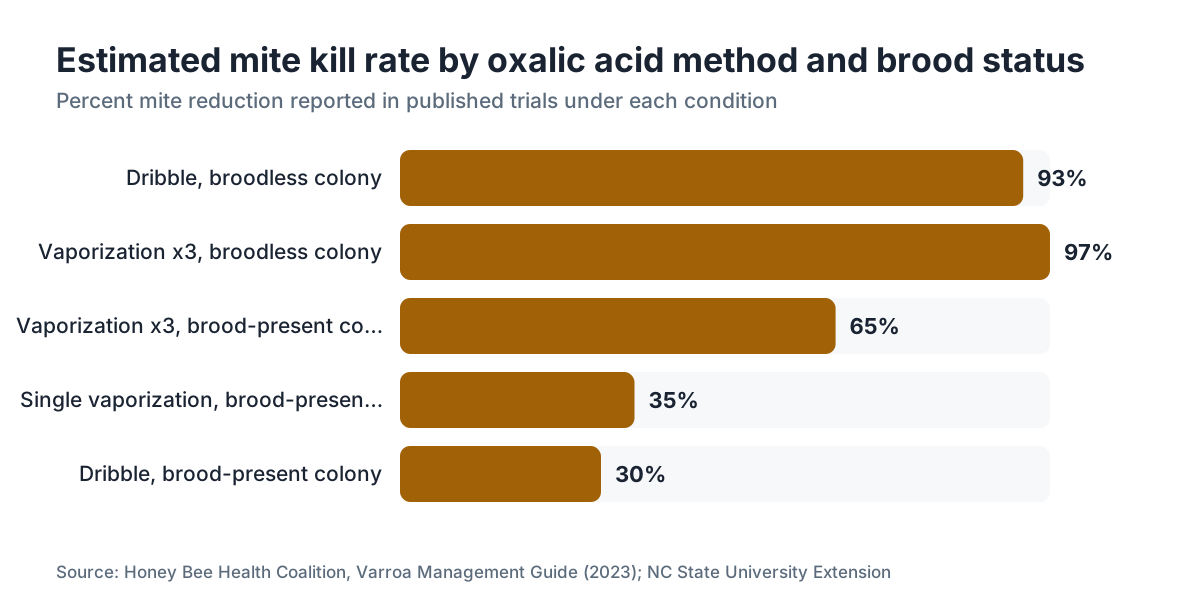
Oxalic acid kills phoretic mites, the ones riding on adult bees. It does nothing to mites sealed inside capped brood cells. That single fact drives every timing decision you'll make. It's why a one-shot dribble in December can clear 90-plus percent of your mite load in a broodless colony, while the same treatment in June might knock down only 30 percent because most mites are hiding under cappings. [2]
When brood is present, the mites that were phoretic at treatment die. Then a new wave emerges from capped cells within a week and climbs right back onto adult bees. That's why repeated vaporizations, spaced 5 to 7 days apart, are the mid-season strategy. You're not giving one big dose. You're running a gauntlet over 3 to 4 weeks, catching mites as they emerge. Each vapor treatment has a short residual, so spacing carries the whole load. [3]
The dribble method deposits liquid directly on bees clustered in the seams. That contact kills phoretic mites on the spot but leaves nothing behind for mites that emerge later. Doing it twice in a brood-present colony barely helps and stresses the bees with extra acid. The label doesn't allow it anyway. One dribble, per colony, per year. Full stop. [1]
If you want the biology behind all of this, the varroa mite article here walks through the reproductive cycle, which makes the timing logic click.
How many times can you vaporize a hive in one season?
Three times per year for the registered use. That's the Api-Bioxal cap. Most beekeepers doing a mid-season knockdown run three consecutive weekly vaporizations (days 1, 7, and 14), and all three count as their one treatment episode against the annual limit. If mite levels spike again later, check whether you've already used your three before reaching for the vaporizer. [1]
Some commercial operations and research programs have used more frequent applications in trials, but that's not what the registered label permits for US hobbyist or sideliner beekeepers. Working outside the label is illegal under FIFRA (the Federal Insecticide, Fungicide, and Rodenticide Act), and the published data on colony tolerance doesn't strongly support that more doses produce better outcomes once you've done three. [4]
A few states layer extra registration requirements on top of the federal label, so check your state department of agriculture's pesticide division before assuming the federal label is the whole story. [5]
| Method | Max treatments per year | Min interval between treatments | Brood status required |
|---|---|---|---|
| Vaporization (sublimation) | 3 | 5 days (7 days recommended) | Any, but broodless is more effective |
| Dribble (trickle) | 1 | N/A (one-shot only) | Broodless strongly preferred |
| Extended-release strips (commercial or DIY towel method) | Per label (varies) | Per label | Any |
The table reflects Api-Bioxal label guidance [1] and Honey Bee Health Coalition recommendations [3]. Extended-release strip products carry their own labels and you need to read them separately.
What is the minimum time you should wait between oxalic acid treatments?
Five days is the label floor between vaporizations. Seven days is what most extension apiculturists recommend, and the reasoning sits in mite biology. The varroa mite's phoretic phase, the stretch spent on adult bees between reproductive cycles, runs from about 4 to 11 days depending on season and colony conditions. Spacing treatments 7 days apart gives you the best shot at catching mites as they leave cells and before they enter new capped brood. [2]
Go shorter than 5 days and the colony can't clear acid residues, so you add stress without meaningful extra kill. Go much longer than 7 days in a brood-present colony and a fresh cohort of mites from capped cells establishes on adult bees, maybe re-entering cells before your next treatment lands. [3]
For the dribble method, interval doesn't apply. One application is the protocol. If you dribble and still have a mite problem a few weeks later, switch to vaporization (if brood is now present) or check whether a queen issue is producing continuous brood that's dragging down your efficacy.
Is a second round of oxalic acid needed after the first treatment?
Sometimes yes, but figure out why the first round underperformed before repeating it. If you treated during a broodless window with a dribble or single vaporization, and a mite wash 2 to 3 weeks later still shows infestation above your action threshold (typically 2 percent, or 2 mites per 100 bees by alcohol wash, per the Honey Bee Health Coalition), then a second round is warranted. [3]
The usual reasons a first treatment falls short: the colony wasn't truly broodless when you thought it was, you missed a hive with a laying queen, your vaporizer leaked and cut the exposure, or the bees reinfested from neighboring apiaries. Requeening to force a brood break before retreating often beats piling on more acid. [2]
A second series of vaporizations (up to 3 more, spaced 7 days apart) is a reasonable move if you haven't hit your annual label limit and mite counts justify it. Count mites after treating. Don't guess. An alcohol wash is the most accurate read you can get. [3]
For the rest of the seasonal picture, VarroaVault's free protocol builder walks through when to test, which treatment fits each scenario, and how to sequence treatments across the year.
Can you use oxalic acid in winter, and how does that change the timing?
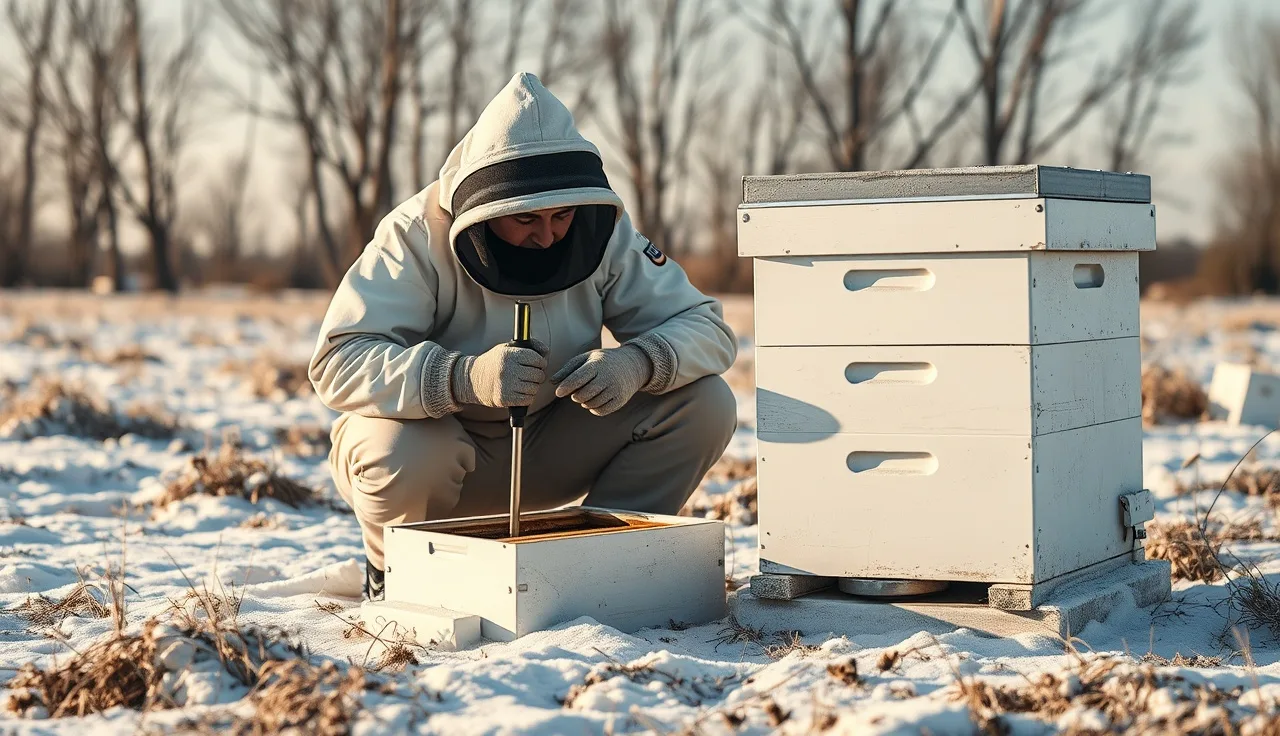
Winter is the best time for a one-shot oxalic acid dribble or vaporization in climates where colonies go broodless. Across much of the northern US and Canada, colonies from November through early February are broodless or close to it, so nearly all mites ride phoretically on adult bees and sit fully exposed. A single well-timed winter application can cut mite loads by 90 percent or more under broodless conditions. [2]
The real constraint in winter is temperature. For vaporization, most beekeepers aim for outside temperatures above 40 degrees F (about 4 degrees C), so bees stay clustered but not dangerously cold and the vaporizer can sublimate the crystals properly. For dribbling, the threshold is similar: you want bees clustered and reachable in the seams but not so cold that you chill them while applying liquid. Treating below 40 F kills bees through cold exposure, not the acid. [6]
In the deep South and similar climates where colonies rarely go fully broodless, that winter window doesn't really open. Those beekeepers lean on repeated vaporization series timed around natural brood breaks, or on extended-release formulations that work over a longer stretch. [3]
How do extended-release oxalic acid products change the treatment schedule?
Extended-release formulations, sometimes called slow-release or matrix-based oxalic acid products, are a newer category. Oxalic acid gets embedded in a material (glycerin-soaked cellulose in some commercial and DIY approaches, or other carrier systems) that releases the active ingredient over weeks instead of minutes. That changes the whole timing math.
Because the product keeps releasing acid over an extended window, it kills mites as they emerge from cells during that window, something a single vaporization can't touch. The tradeoff is continuous exposure rather than episodic, and research on effects on brood and queen quality over long exposure periods has come back mixed. [7]
A registered extended-release product sets its schedule on the label, and you must follow it. If you're using the popular DIY glycerin-soaked shop towel method, you're in a regulatory gray zone in most states, since that specific formulation isn't EPA-registered as a commercial product even though the underlying active ingredient is. Some state apiarists have offered informal guidance on this; check with yours before relying on it. [5]
Extended-release products give a real edge to beekeepers who can't or won't vaporize repeatedly. They are not set-it-and-forget-it. You still test mite levels before and after to know whether it worked.
How long after an oxalic acid treatment can you add honey supers or harvest honey?
There's no required withdrawal period. Oxalic acid occurs in honey at low background levels, which is part of the regulatory rationale for treating it as a soft chemical. The EPA and the Api-Bioxal label set no pre-harvest waiting period for honey, so you can treat and harvest at any time. [1]
Still, most extension apiculture programs and the Honey Bee Health Coalition recommend treating with supers off, both to keep acid off your honey stores and to cut your own exposure risk. Vaporize with supers on and the vapor penetrates them, depositing on combs. Residue studies show oxalic acid in honey from treated colonies isn't significantly different from untreated colonies, but "no significant difference" is a statistical finding, not a zero-residue claim. [7]
My own practice: treat in fall after pulling supers, and in late winter before honey flows begin. If a mid-season mite emergency forces treatment during a flow, I pull supers, treat, wait a week, and put them back. It's extra work, but it keeps me comfortable about what's in my jars.
What happens if you treat too often or with doses that are too large?
Oxalic acid is not forgiving of sloppy dosing. Too much, applied too often, damages adult bees. Research shows oxalic acid harms bee hemolymph and shortens bee lifespan at elevated exposure levels. Queen loss after aggressive treatment gets reported anecdotally by plenty of beekeepers, though controlled studies find queen survival is generally acceptable when you stay inside label guidelines. [7]
The registered vaporization dose is 2.17 grams of Api-Bioxal per hive body per application. Some beekeepers assume more is better and add extra. It isn't, and the physiology data agrees. Stick to the label dose. [1]
For dribbling, the label specifies 5 mL of 3.2 percent oxalic acid solution per occupied seam of bees, up to a maximum of 50 mL per colony. Over-dribbling soaks the bees and raises queen loss. Concentration matters too. Mix your own from raw oxalic acid and syrup and one math error produces a solution that burns bees. Pre-made Api-Bioxal packets take the math out of it. [1]
Treating too often without monitoring is how you waste money and colony health chasing a mite problem you may have already solved, or one you never actually measured. Wash mites after treatment. Every time.
How do you know when to treat again: testing after oxalic acid
The trigger for a second round is a mite count above your threshold, not a date on the calendar. Two mites per 100 bees on an alcohol wash (2 percent infestation) is the commonly cited action threshold in the Honey Bee Health Coalition's guidelines, though some beekeepers and researchers use 1 percent during the late-summer buildup when colonies are rearing the winter bees. [12]
Test at least 2 to 3 weeks after finishing a treatment series. Testing right after treatment tells you about the mites that got exposed. Testing a few weeks later tells you whether reinfestation or mite emergence from surviving brood has pushed levels back up. Both numbers help, but the 3-week post-treatment count is the one that should drive your re-treatment call. [3]
Alcohol wash is the most accurate method, full stop. Sugar rolls consistently undercount mites, sometimes by 40 percent or more, and sticky boards show trends but not real infestation rates. If a number is going to steer a treatment decision, use the method that gives you the true one. [8]
For colony-level tracking, a simple spreadsheet or the free mite count tracker at VarroaVault keeps treatment history and test results together, which matters when you're managing several hives or hunting for your chronic re-infestors.
Can you combine oxalic acid with other varroa treatments in the same period?
You can, but sequencing matters and so does label compliance. The most common combination pairs an organic acid (oxalic or formic) with a miticide from a different chemical class later in the season, to rotate mode of action and slow resistance. [3]
Running oxalic acid at the same time as thymol-based products (Api-Life VAR, Apiguard) is not recommended. The two have overlapping activity windows, and co-application hasn't been well studied for safety or efficacy. The Honey Bee Health Coalition recommends sequential rather than simultaneous use of treatments from different chemical families. [3]
Oxalic acid and Apivar (amitraz strips) get run in sequence often: Apivar goes in during the main season, and an oxalic acid vaporization follows at the end of the Apivar period to catch mites that emerged after the strips came out. It's a common, sensible protocol. Just confirm you're within the annual treatment limits for both products before combining them. [9]
If you're buying treatments and gear, the beekeeping supply companies page lists major US suppliers that carry Api-Bioxal, vaporizers, and alcohol wash kits. Prices vary enough that comparing before you order pays off.
What do university extension programs recommend for oxalic acid timing?
Extension apiculture programs at land-grant universities have published oxalic acid timing guidance that lines up with each other and with the Honey Bee Health Coalition's framework, though the calendar dates shift by region.
Penn State Extension recommends a broodless-period dribble or vaporization in late November through December for Pennsylvania beekeepers, followed by spring monitoring and a second series of vaporizations if mite levels top 2 percent at the spring inspection. [10]
NC State University's apiculture program recommends the 3-treatment vaporization series at 7-day intervals as the mid-season protocol for brood-present colonies, noting that a single summer vaporization gives incomplete control because so many mites sit protected in capped cells. [2]
The consensus across programs: one treatment episode in winter when broodless, one or two vaporization series in the active season timed around your mite monitoring, and always a post-treatment count to close the loop. No guessing, no calendar-only scheduling.
Frequently asked questions
How many times a year can you treat bees with oxalic acid?
The Api-Bioxal label allows vaporization up to 3 times per year total, with at least 5 days between applications. The dribble method is limited to once per year. In practice, most beekeepers do one broodless-season dribble or vaporization in winter and one series of 3 weekly vaporizations if mite levels spike during the active season, staying within the annual limit.
What is the minimum days between oxalic acid vaporizations?
The EPA-registered Api-Bioxal label sets 5 days as the minimum interval between vaporization treatments. Most extension apiculture programs recommend 7-day spacing because that better matches the varroa mite's reproductive cycle, catching mites as they emerge from cells before they can re-enter new capped brood. Never vaporize more frequently than the label allows.
Can I use oxalic acid dribble twice in the same season?
No. The Api-Bioxal label permits the dribble method only once per year, and it's most effective in broodless colonies. If your mite levels are still high after a dribble, switch to vaporization (which is more effective when brood is present anyway) rather than applying a second dribble. Repeated dribbling stresses the colony and violates the registered label.
Does oxalic acid work when there is brood in the hive?
It works on phoretic mites riding on adult bees, but it does not penetrate capped cells. With brood present, a single treatment misses the mites sealed inside. That's why a series of 3 vaporizations spaced 7 days apart is the mid-season approach: repeated doses catch mites as they emerge from cells over 3 weeks. Efficacy is still lower than a broodless treatment.
How long after oxalic acid treatment can I put honey supers back on?
The Api-Bioxal label has no mandatory pre-harvest withdrawal period because oxalic acid occurs naturally in honey. Most extension programs still recommend treating with supers off to avoid direct acid deposition on honey stores. If you had to treat with supers on, a week's gap before re-adding fresh supers is a reasonable precaution, though not a label requirement.
Can you use oxalic acid in winter when it's cold?
Yes, winter is often the best time because colonies are broodless and nearly all mites are exposed on adult bees. Most beekeepers target temperatures above 40 degrees F (4 degrees C) for vaporization so the bees are clustered but not at risk of chilling during the brief hive opening. Dribbling in very cold weather adds cold stress on top of chemical stress and should be avoided below 40 F.
How soon can I treat with oxalic acid after using Apivar or another miticide?
There's no label-specified waiting period between Apivar removal and oxalic acid application. Many beekeepers vaporize oxalic acid during the final week of Apivar treatment or immediately after removing strips, to catch mites that survived the amitraz exposure. Confirm you're within annual label limits for each product and that the colony is not under excessive stress from the preceding treatment.
How do I know if my oxalic acid treatment worked?
Do an alcohol wash 2 to 3 weeks after completing a treatment series. Target fewer than 2 mites per 100 bees (2 percent) as your post-treatment benchmark, per Honey Bee Health Coalition guidelines. Testing immediately after treatment only shows the phoretic mites killed; the 3-week count shows whether mites from sealed brood have re-established on adult bees. Never skip the post-treatment count.
Is oxalic acid safe for the queen, and does repeated treatment hurt her?
At label-prescribed doses, queen survival after oxalic acid treatment is generally acceptable based on available research. Over-dosing or treating more frequently than the label allows increases queen loss risk. The biggest practical risk to queens from oxalic acid is over-application of the dribble method, which can soak and chill queens in the cluster. Follow label doses exactly.
Can extended-release oxalic acid strips replace vaporization?
For some beekeepers, yes. Extended-release formulations work over weeks rather than minutes, which means they can kill mites emerging from brood cells during the treatment window. The tradeoff is longer continuous hive exposure and some unanswered questions about effects on brood and queens over long periods. They're a real alternative to repeated vaporizations, but you still need to test mite levels to confirm efficacy.
What concentration of oxalic acid is used for the dribble method?
The Api-Bioxal dribble solution is 3.2 percent oxalic acid in 1:1 sugar syrup (weight-to-weight). The label specifies 5 mL per occupied seam of bees, with a maximum of 50 mL per colony regardless of size. Using pre-mixed Api-Bioxal packets eliminates the risk of mixing errors. Never improvise concentration or dose; too strong a solution burns bees and kills queens.
How does oxalic acid treatment timing differ for package bees vs established colonies?
A newly installed package is broodless for about 21 to 24 days after the queen begins laying and cells are capped. If you can treat in the first few days after installation, before any brood is capped, a single dribble or vaporization hits nearly all mites at once. After brood is established, switch to the repeated vaporization protocol if mite counts warrant treatment.
Sources
- EPA, Api-Bioxal (oxalic acid) product label, Registration Number 83623-4: Api-Bioxal label limits vaporization to 3 times per year with minimum 5-day intervals; dribble method limited to once per year; dose is 2.17g per hive body for vaporization and 5mL per seam for dribble
- NC State University Apiculture Program, Varroa Mite Management: 7-day vaporization intervals recommended; single treatments in brood-present colonies give incomplete control; winter broodless treatment efficacy above 90 percent
- Honey Bee Health Coalition, Varroa Management Guide (2023 edition): "Oxalic acid is most effective when colonies are broodless because the treatment does not penetrate capped cells"; 2 mites per 100 bees action threshold; sequential rather than simultaneous use of treatments from different chemical families
- EPA, Federal Insecticide, Fungicide, and Rodenticide Act (FIFRA) overview: Applying a pesticide inconsistent with its registered label is a violation of FIFRA
- National Pesticide Information Center, State Pesticide Regulatory Agencies: Individual states may impose additional restrictions on federally registered pesticides; beekeepers should check state department of agriculture guidance
- Penn State Extension, Varroa Mite Control in Honey Bee Colonies: Winter dribble and vaporization should target ambient temperatures above 40 degrees F to reduce cold stress on clustered bees
- Gregorc, A. & Planinc, I. (2012), Acaricidal effect of oxalic acid in honeybee colonies, Plant Protection Science: Oxalic acid residue levels in honey from treated colonies are not significantly different from untreated controls; elevated doses reduce adult bee lifespan
- Honey Bee Health Coalition, Tools for Varroa Management (2023 edition): Sugar roll consistently undercounts mites compared to alcohol wash, sometimes by 40 percent or more; alcohol wash recommended for treatment decisions
- Elzen, P.J. et al. (2001), Amitraz resistance in Varroa destructor mite, Apidologie: Rotating treatments across chemical classes reduces resistance selection pressure in varroa populations
- Penn State Extension, Integrated Pest Management for Varroa Mites: Penn State recommends broodless-period dribble or vaporization in late November through December for Pennsylvania beekeepers, followed by spring monitoring
- USDA Agricultural Research Service, Bee Research Laboratory publications: Varroa mite phoretic phase averages 4 to 11 days depending on season and colony conditions
- University of Minnesota Extension, Varroa Mite Management for Hobbyist Beekeepers: 1 percent infestation threshold recommended during late-summer period when winter bees are being reared
Last updated 2026-07-09