How to apply formic acid for varroa mite control in bee hives

TL;DR
- Formic acid kills varroa mites under capped brood, which most treatments can't do.
- Apply Mite Away Quick Strips at 50-85°F (10-29°C) for 7 days, or use a labeled formic acid gel per its directions.
- Wear nitrile gloves and an organic-vapor respirator.
- Count mites before and after.
- Never treat colonies below two deep boxes, and never above 85°F.
What is formic acid and why do beekeepers use it on varroa?
Formic acid is a naturally occurring organic acid that kills varroa mites by vapor, including the mites hiding under the cappings of sealed brood cells. That reach is what makes it worth the trouble. Most synthetic miticides, and even oxalic acid, only kill the phoretic mites riding on adult bees. Formic acid gets the ones tucked away reproducing in the brood, which is exactly where the population grows.
It's the only treatment approved in the US and Canada that kills varroa inside capped brood without pushing honey residues above natural background levels, because formic acid already occurs in honey on its own [1]. That's why the EPA label gives it a zero-day honey withholding period when used correctly.
The tradeoff is real. It's dangerous to handle, it's fussy about temperature, and it can injure or kill a colony if you get it wrong. This isn't a beginner's first treatment. But once you understand the limits, it's one of the strongest tools you own, especially in spring before a capped-brood explosion, or in late summer when you're staring down a high-mite collapse.
Read our varroa mite guide first if you want the background on the problem itself.
What formic acid products are approved for use in bee hives?
Two formic acid products hold EPA registration for varroa control in US honey bee colonies as of 2025.
Mite Away Quick Strips (MAQS) are the ones most people reach for. Each package holds two pads pre-loaded with 68.5% formic acid. The label calls for both strips placed on the frame tops in the brood nest at the same time, for a 7-day treatment [2]. MAQS is approved with honey supers on.
Formic Pro is the sister pad-based product from the same maker, NOD Apiary Products. It's the dominant formic acid product in Canada and carries a longer-duration single-strip option. Formulation gel products exist in Europe, but US beekeepers should stick to EPA-registered products.
Using unregistered formic acid or DIY lab-grade acid is illegal under FIFRA, and it creates genuine liability and residue risk [3]. Skip it.
Prices move around by supplier. MAQS usually runs $15 to $25 for a two-strip pack, which treats one colony. Buy from a real beekeeping supply company and check the expiration date, because formic acid pads lose potency over time, faster if they've been stored warm.
| Product | Active Conc. | Treatment Duration | Honey Super Allowed | Temp Window |
|---|---|---|---|---|
| MAQS (Mite Away Quick Strips) | 68.5% FA | 7 days | Yes | 50-85°F (10-29°C) |
| Formic Pro (Canada) | 65% FA | 14 days (1 strip) or 7 days (2 strips) | Yes | 50-85°F |
| DIY / unregistered FA | Varies | N/A | No | N/A (illegal in US) |
What temperature range does formic acid treatment require?
Temperature is the one variable that decides everything with formic acid. Get it wrong and you either kill bees or waste a treatment.
The EPA-approved MAQS label sets an ambient window of 50°F to 85°F (10°C to 29°C) across the whole 7-day treatment [2]. Both the daytime high and the nighttime low need to stay inside that band. If you apply on a mild 75°F day but temps hit 90°F by day three, pull the strips immediately.
Below 50°F, the acid doesn't vaporize fast enough to reach useful concentrations in the brood nest. The treatment won't fail loudly. It'll just do almost nothing. Efficacy falls off hard below 60°F.
Above 85°F is the danger zone. Heat speeds vaporization to the point where the concentration inside the hive can kill the queen, cause heavy worker die-off, and drive bees to abscond. The Honey Bee Health Coalition's Varroa management guide names temperature exceedance as one of the two most common causes of queen loss from formic acid [4].
Pull a 10-day forecast before you open the box. Southeastern US in July? Don't attempt MAQS. Upper midwest in September? Watch the nighttime lows. A few days outside the window wrecks either the treatment or the colony.
What do you need before you apply formic acid?
Protective gear is non-negotiable. Formic acid vapor at the concentration you meet when you open a treated hive burns your respiratory tract, eyes, and skin. Here's the minimum:
- Nitrile or rubber gloves (NOT latex, which breaks down fast)
- Safety glasses or a full face shield
- A half-face respirator with organic vapor cartridges (a dust mask does nothing here)
- Long sleeves and covered shoes
The MAQS label states it plainly: "Wear chemical-resistant gloves, protective eyewear, and a NIOSH-approved respirator with an organic vapor cartridge" [2]. That sentence exists because people got hurt ignoring it.
On the colony side, confirm four things before you treat:
- At least two deep boxes (or equivalent volume) of bees and comb. Small colonies get hurt by formic vapor far more easily.
- A queen present and laying. Formic acid at high temperatures can kill queens, so you want a confirmed laying queen going in, to know what you're comparing against afterward.
- A mite load high enough to warrant the risk. A sugar roll, alcohol wash, or sticky board reading 2% or higher (roughly 1 to 2 mites per 100 bees in a 300-bee sample) is the Honey Bee Health Coalition's action threshold [4].
- A forecast that clears 50-85°F for the full 7 days.
Have your mite-wash kit staged so you can run a post-treatment count 5 to 7 days after you pull the strips.
How do you install Mite Away Quick Strips step by step?
This is the heart of it. Follow the sequence closely the first time.
Step 1. Read the full product label. Every time, even if you've done this a dozen times. Labels get revised. The EPA label is the legal document. This article is not [2].
Step 2. Gear up completely before you open the package. The moment you break the bag, you're handling formic acid. Gloves, eye protection, and respirator go on first.
Step 3. Decide on your honey supers. MAQS is the one formic acid product labeled for use with supers on. Leave them if you like. If supers are on, vapor takes longer to build in the brood box, so some beekeepers pull them to concentrate the dose in the brood nest.
Step 4. Do a quick pre-treatment check. Confirm queen presence (or signs of a laying queen), eyeball the population, note any problems. Five minutes, not a full inspection. You're taking a snapshot.
Step 5. Lay both strips at once on the top brood box frames. Run them lengthwise, one on each side of the frame tops, centered over the brood cluster. Do NOT fold them. Do NOT set them on the bottom board. Both strips go in together, not one after the other.
Step 6. Close the hive. Replace the inner and outer covers. Leave the bottom board screened or the slide cracked open a little for ventilation, which helps vapor spread.
Step 7. Watch the temperature daily. If ambient temps top 85°F during the 7 days, pull the strips right away and watch the colony for queen trouble.
Step 8. Remove the strips at exactly 7 days. Full gear again. The pads are partly spent but still hold formic acid. Bag them sealed and dispose of them in household trash per your local rules.
Step 9. Wait 5 to 7 days, then run a mite wash. This is how you know it worked. A drop from 3% to 0.5% is a win. Sitting at 2.8% means you need a new plan.
What are the common mistakes that cause formic acid treatments to fail or harm colonies?
Most formic acid failures trace back to a short list of predictable errors.
Treating outside the temperature window. The number-one mistake. Check the forecast for the full 7 days, more than the morning you apply.
Treating a weak colony. If you can't cover six to eight frames with bees, the vapor-to-bee ratio turns dangerous. Combine the colony first, or use a different product.
Putting the strips in the wrong place. Flat on the bottom board or jammed into a corner, they won't vaporize evenly. On top of the brood box frames, centered over the cluster, is where they belong.
Skipping the follow-up count. No post-treatment wash means you're guessing. The Honey Bee Health Coalition recommends a count 5 to 7 days after removal [4]. Plenty of beekeepers skip it and assume they're fine. They aren't always.
Stacking treatments back to back. One 7-day MAQS round has a defined efficacy window. A second round right after mostly adds queen and worker risk without much extra mite kill, because you've already hit the phoretic and early-reproductive mites. If you need a second pass, wait at least 14 days and re-check counts first.
Using expired or heat-cooked strips. Pads stored above 70°F for a long stretch lose potency. Buy fresh, store cool, check the date on the package.
To keep treatments and follow-up counts straight, VarroaVault's free varroa management tools let you log applications, temperature windows, and mite counts in one spot, so nothing slips through the cracks across multiple colonies.
How effective is formic acid at killing varroa mites?
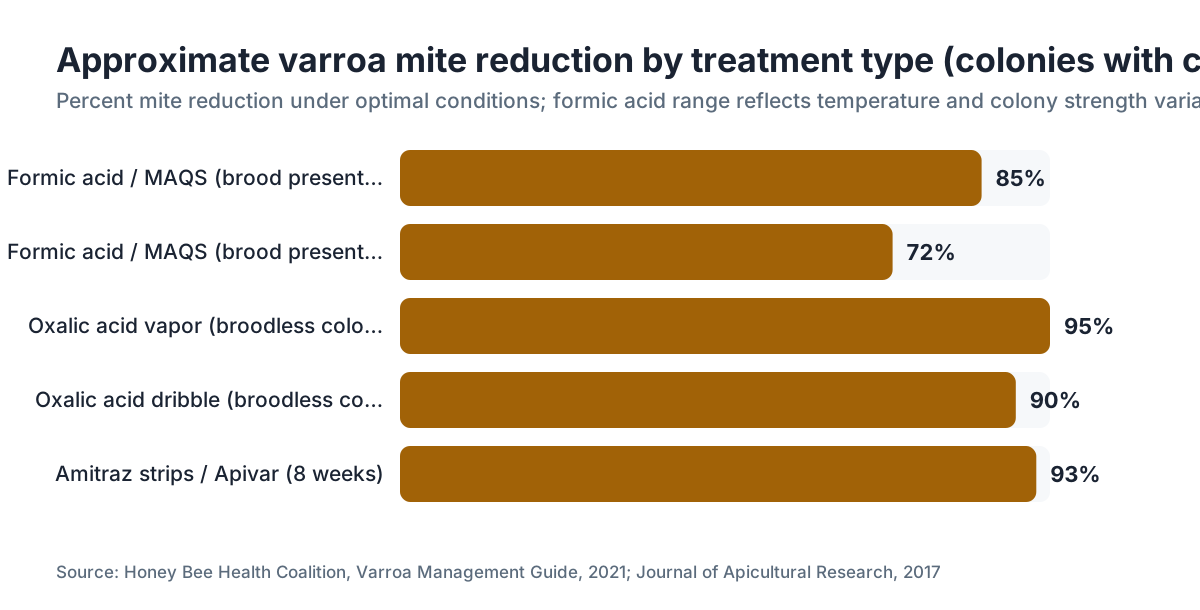
Formic acid efficacy swings quite a bit with temperature, colony strength, and whether the colony has brood. In colonies with capped brood treated inside the window (50-85°F), field studies generally put MAQS at 72% to 95% mite reduction when applied correctly [5].
A 2017 field trial in the Journal of Apicultural Research found MAQS cut mite levels substantially in colonies with capped brood, landing in the 80% to 90% range under good temperature conditions [5]. The low end shows up when temps wobble near the limits or when colonies are on the weak side.
In broodless colonies (swarms, packages, or intentionally broodless queen-rearing setups), a single 7-day treatment hits harder. There's no brood reservoir feeding fresh mites back into the population, so the acid clears a larger share of phoretic mites. Efficacy there can reach 95% or better.
Against oxalic acid dribble or vapor, formic acid's one advantage is the ability to kill mites inside capped brood. Oxalic vapor in a broodless colony matches or beats those numbers. Which one you pick comes down to timing, whether you have brood, and how much temperature babysitting you're willing to do.
Formic acid is not a rescue treatment. If your colony is already at 5% or higher in August, it helps but won't turn things around fast enough alone. Pair it with a brood break, or follow up with oxalic acid once the brood has hatched.
Is formic acid safe to use when honey supers are on?
Yes, for MAQS specifically. The EPA label allows application with honey supers in place, and the product carries a zero-day pre-harvest interval for honey [2]. Formic acid is a natural component of honey, and the small amount a treatment adds doesn't push honey above background levels in the literature EPA reviewed for registration.
Some beekeepers, and some honey buyers and certifiers, prefer to pull supers during treatment anyway as a conservative move, especially in cooler weather when vapor spreads slowly. Not required, but a defensible call.
Never apply unregistered or DIY formic acid preparations with supers on. Registered products like MAQS were calibrated so residues stay within safe limits. A home brew has no such guarantee, and the concentration is anyone's guess.
Producing certified organic honey? Check with your certifier before any treatment. The National Organic Program sets specific rules on permitted products, and the certification status of a given formic acid product can hinge on your certifier [6].
What should you do if the queen dies after a formic acid treatment?
Queen loss after formic acid is real, and you should plan for it. It happens most when temperatures run above 85°F during treatment, in weak colonies where vapor concentration per bee climbs, or when the queen sat on a heavily dosed patch of comb.
The Honey Bee Health Coalition puts the risk of queen loss from a single MAQS treatment at roughly 5% to 10% in normal conditions, higher in heat or in weak colonies [4]. That's not nothing. Know your plan before you treat.
Open the hive 7 to 10 days after treatment and look for eggs. No eggs, no queen cells, no queen means the colony is queenless. Your options: introduce a mated queen, drop in a frame of eggs from another colony so they can raise emergency queens, or combine them with a queenright colony using a newspaper combine.
Find queen cells started after treatment? The bees are already handling it. Give them another 14 days before you interfere.
Some beekeepers routinely run a single strip instead of two to cut queen-loss risk, mostly in smaller colonies or warmer weather. A single MAQS strip is off-label in the US, so you carry the legal and efficacy risk of that choice. In Canada, Formic Pro is explicitly labeled for a single-strip 14-day application, which is worth knowing if you're north of the border.
The safest hedge is simple: keep a mated queen or a queenright nuc on hand whenever you treat with formic acid in summer.
How does formic acid fit into a full-year varroa management schedule?
Formic acid is a spring and fall tool in most climates. It's not a year-round answer.
In spring (April to May across much of the US), a formic acid treatment before supers go on knocks down a mite population that overwintered and is now climbing with the brood. The temperature window is usually workable, and hitting mites early heads off the midsummer explosion.
In late summer (August in northern states, September to October in the south), formic acid is one of the better pre-winter choices, because temperatures often still sit in the window and colonies still carry brood. Clearing mites out of capped brood now protects the long-lived winter bees being raised in September and October, and those bees decide whether the colony survives winter [4].
Midsummer is usually too hot for safe MAQS use across most of the US. Northern beekeepers may catch a short July window when daytime highs stay under 85°F. Everyone else is better off with a heat-tolerant treatment like Apivar (amitraz strips) through that stretch, saving formic acid for fall.
The Honey Bee Health Coalition's Varroa management guide, free to download and the best single resource on this, recommends at least two to three mite-count checks a year plus at least one pre-winter treatment timed to protect winter bees [4]. Formic acid can anchor that pre-winter treatment when your temperatures cooperate.
Tracking treatment dates, mite counts, and temperature logs across an apiary goes easier with a real tool. VarroaVault's varroa management tools are free and built for exactly this kind of seasonal tracking.
What do extension services and the Honey Bee Health Coalition say about formic acid?
University extension apiculture programs in the US generally recommend formic acid as a first-line treatment for beekeepers who want to hit mites in capped brood without a honey withholding period. Penn State Extension, the University of Minnesota Bee Lab, and University of Florida IFAS Extension all include MAQS in their varroa recommendations [7][8][10].
The Honey Bee Health Coalition's Varroa management guide states that formic acid is the only registered treatment that kills varroa in sealed brood, and it recommends the product for colonies that have brood present when treatment is needed and honey supers can't come off [4]. That's a plain, practical endorsement of where it fits.
The EPA's registration for MAQS (EPA Reg. No. 83923-1) carries a full label with use directions, safety requirements, and precautionary statements that are legally binding [2]. The label is the law. Anything in this article that conflicts with the current label, the label wins.
In Canada, Health Canada's Pest Management Regulatory Agency (PMRA) regulates Formic Pro under a separate registration, with similar temperature and application requirements [9].
Want the full picture of your options? The HBHC guide is free at their website and worth reading cover to cover. It's the best synthesis of current science and practical advice available to US beekeepers.
How do you measure whether the formic acid treatment actually worked?
You need a post-treatment mite count. There's no shortcut around it.
The standard method is an alcohol wash. Collect a 300-bee sample (about half a cup) from a brood frame, wash them in 70% isopropyl alcohol or windshield washer fluid, shake, and count the mites that drop out. Divide mites by 300 for your infestation percentage. If you started at 2.5% and you're at 0.3% five days after strip removal, it worked. If you're at 2.1%, something went wrong.
Run the count 5 to 7 days after you pull the strips, not the same day. Mites still inside treated cells keep emerging on adult bees for a few days, and they'll show up in your sample if you wait.
The Honey Bee Health Coalition's action threshold is 2% infestation during brood-rearing season, spring through early fall [4]. Above that after treatment, you act again. Options: a second formic round (if temperatures and colony strength allow), a switch to Apivar or another product, or a brood break paired with oxalic acid vaporization.
Write down every count and every treatment. The pattern across a season tells you far more than any single number. Most varroa disasters start with a beekeeper who treated once and assumed the year was handled.
Frequently asked questions
Can I use formic acid in winter?
Generally no. MAQS needs ambient temperatures of at least 50°F throughout the 7-day treatment for the acid to vaporize at effective levels. Across most of the US, winter temps sit below that. In a warm-winter climate where daytime highs hold above 50°F it's technically possible, but check your nighttime lows too. Most beekeepers save formic acid for spring and fall, when temperatures behave.
How many MAQS strips do I use per hive?
The EPA label for MAQS specifies two strips per colony, applied at the same time on the upper brood box frames for 7 days. Both go in together. A single strip is off-label in the US. In Canada, Formic Pro is labeled for a single-strip 14-day treatment as an alternative to the two-strip 7-day protocol. Follow the label of the product you're actually holding.
What happens if it rains during a formic acid treatment?
Rain itself won't stop the treatment as long as temperatures stay in the 50-85°F window. The strips sit inside the hive, protected from rainfall. The real concern is that rainy weather often brings temperature swings. Watch your thermometer, not the sky. If a cold front drops temps below 50°F for more than a day or two, the treatment loses much of its punch for those days.
Can formic acid harm the queen?
Yes. Queen loss is the most commonly reported adverse effect, hitting roughly 5% to 10% of applications under normal conditions and more often when temperatures top 85°F or colonies are weak. Confirm the queen before treating, keep a backup ready (a mated queen or queenright nuc), and check for eggs 10 to 14 days after treatment. If the colony is queenless, act quickly.
Do I need a veterinary prescription to buy formic acid for bees?
No. As of 2025, formic acid products registered for varroa (MAQS, Formic Pro) are not prescription or Veterinary Feed Directive products under FDA rules. They're EPA-registered pesticides, not antibiotics. You can buy them from beekeeping suppliers without a prescription. That sets them apart from products like tetracycline, which does require a veterinary prescription for livestock use.
How long should I wait after formic acid treatment before adding honey supers?
MAQS has a zero-day honey pre-harvest interval, so you can run treatment with supers on and harvest normally afterward, no waiting period. The EPA label states this directly. It applies to MAQS specifically. If you're using any other formic acid formulation or an unregistered product, don't assume the same rules carry over.
Can I treat a nucleus colony (nuc) with formic acid?
It's risky. The MAQS label recommends colonies with at least two deep boxes of bees. Nucs are typically one box with 4 to 5 frames, below that threshold. In a smaller volume, formic vapor reaches higher concentration per bee, raising the risk of queen and worker death. Most extension services suggest waiting until a nuc grows to full size, or using a gentler treatment like oxalic acid dribble instead.
What's the difference between MAQS and Formic Pro?
Both are pad-based formic acid products with close active concentrations (MAQS at 68.5%, Formic Pro at 65%). The main difference is registration: MAQS is the EPA-registered product sold in the US, while Formic Pro is registered by Health Canada's PMRA for use in Canada. Formic Pro also offers a labeled single-strip 14-day protocol as an alternative to the two-strip 7-day method. In the US, buy MAQS and follow its label.
Can I use formic acid and oxalic acid together?
Not at the same time. Running two acid treatments simultaneously sharply raises the risk of colony and queen injury with no clear efficacy gain. Some beekeepers follow a MAQS treatment with oxalic acid vaporization once the brood from the treatment window has hatched, as a cleanup pass on remaining phoretic mites. That sequence makes sense, but leave at least 10 to 14 days between treatments and run a mite count in between to see if the second is even needed.
Does formic acid leave residue in wax or honey?
Formic acid is naturally present in honey and beeswax at low levels. Studies EPA reviewed for MAQS registration found treated colonies did not carry honey formic acid levels meaningfully above untreated controls, because the acid volatilizes and dissipates rather than building up. That's why MAQS carries a zero-day pre-harvest interval. These findings are specific to MAQS at labeled rates. DIY or higher-concentration applications have not been reviewed the same way.
How do I dispose of used formic acid strips?
Wear gloves when you remove spent strips, even after 7 days, because they still hold residual formic acid. Bag them sealed. The MAQS label directs disposal in household trash per your local solid waste rules. Don't compost them, don't leave them near the hive, and don't pour any liquid residue down a drain. Check your municipality's rules if you're unsure, since chemical waste rules vary.
What is the correct temperature window for applying formic acid for bees?
For MAQS, the approved window is 50°F to 85°F (10°C to 29°C) across the entire 7-day treatment, more than the day you apply. Below 50°F, vapor generation is too slow for effective mite kill. Above 85°F, vapor concentration rises to levels that can injure or kill the queen and workers. Check a 10-day forecast before you start, more than today's high.
How do I know if my formic acid treatment actually worked?
Run an alcohol wash mite count 5 to 7 days after you pull the strips. Collect a 300-bee sample from a brood frame, wash in 70% isopropyl alcohol, and count the fallen mites. Divide by 300 for your percentage. The Honey Bee Health Coalition's action threshold during brood season is 2% infestation. If your post-treatment count sits at or above that, you need another intervention.
Sources
- EPA - Pesticide Registration (Mite Away Quick Strips, EPA Reg. No. 83923-1 label): Formic acid is naturally occurring in honey; MAQS has a zero-day pre-harvest interval for honey when used per label
- EPA - Pesticide Registration (MAQS product label, EPA Reg. No. 83923-1): MAQS label specifies two strips simultaneously, 50-85°F treatment window, 7-day duration, requires chemical-resistant gloves, protective eyewear, and a NIOSH-approved organic vapor respirator
- EPA - Summary of the Federal Insecticide, Fungicide, and Rodenticide Act (FIFRA): Using unregistered pesticide products including unregistered formic acid formulations is illegal under FIFRA
- Honey Bee Health Coalition - Tools for Varroa Management Guide (2021 edition): Formic acid is the only registered treatment that kills varroa in sealed brood; action threshold is 2% infestation during brood-rearing season; temperature exceedance is a leading cause of queen loss; queen loss risk roughly 5-10%; recommends post-treatment count 5-7 days after strip removal
- Journal of Apicultural Research - MAQS efficacy field trial (2017): MAQS achieved 80-90% mite reduction in colonies with capped brood under optimal temperature conditions in field trials
- USDA Agricultural Marketing Service - National Organic Program: NOP sets specific rules on permitted treatments for certified organic honey production; certifier approval required
- Penn State Extension - Varroa mite management in honey bee colonies: Penn State Extension includes MAQS in varroa management recommendations for beekeepers
- University of Minnesota Bee Lab: University of Minnesota Bee Lab recommends formic acid as a first-line treatment for varroa in capped brood
- University of Florida IFAS Extension (EDIS): UF IFAS Extension includes formic acid among recommended varroa treatments and notes the temperature-sensitive application window
Last updated 2026-07-09