How to combine emergency varroa treatment with requeening
TL;DR
- You can treat for varroa and requeen at once, but the order matters.
- Oxalic acid vapor is the safest choice during the broodless gap after you pull the old queen and before you release the new one.
- Keep formic acid and synthetic miticides away from a caged queen.
- The broodless window, usually 7 to 24 days depending on method, is also your highest-efficacy treatment window.
Why would you ever need to treat and requeen at the same time?
Hive problems rarely show up one at a time. You open a colony, find a failing or dead queen, and the mite count has already crossed the action threshold. Or you decide to replace an aggressive queen and realize the colony is under mite pressure that can't wait another month. Both problems need solving now.
The instinct is to handle one thing at a time. Varroa doesn't cooperate with that plan. A mite count above 2 percent (roughly 2 mites per 100 bees on an alcohol wash) is the broadly accepted point where colony health starts sliding, and the damage speeds up once bees are already stressed from queenlessness or from raising a new queen [1]. Brood production slows. Adult population drops. Mites keep breeding in every capped cell they can reach.
Here's the part that turns the problem into an opportunity. The broodless or reduced-brood window that shows up naturally during requeening is the best time you'll ever get to treat. Varroa reproduces inside capped brood, so a hive with little or no brood has most of its mites riding on adult bees, exposed, where treatments reach them directly. Skip that window by delaying, and the mites restock fast once the new queen starts laying.
What happens to varroa mite loads when a colony goes queenless?
Pull the old queen and the colony stops making new capped worker brood after about 9 days, the point when her last eggs reach capping. Once that final wave emerges, roughly 21 to 24 days after removal, the colony is fully broodless [2]. Every mite that was hiding in a capped cell is now out on the adult bees, riding phoretically.
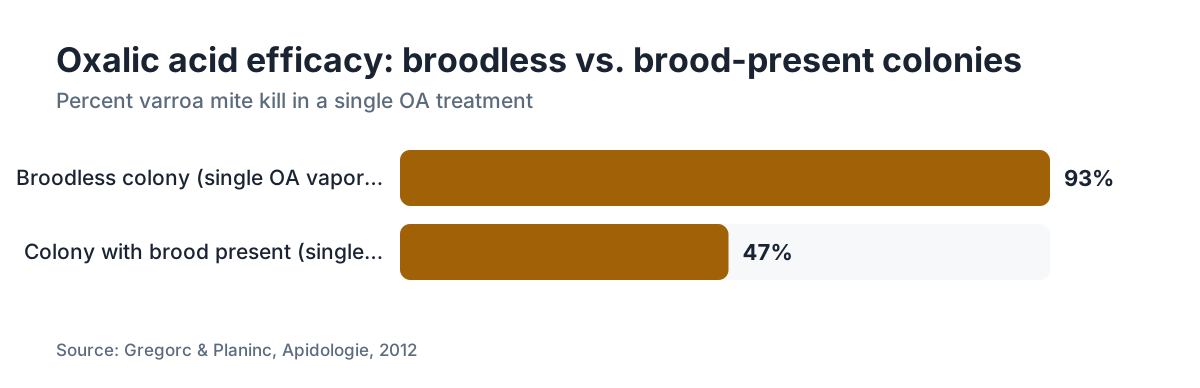
Phoretic mites are the ones treatments actually kill well. Oxalic acid is deadly on phoretic mites and nearly useless against mites tucked in capped brood [3]. A 2012 study in Apidologie by Gregorc and Planinc found oxalic acid efficacy above 90 percent in broodless colonies versus below 50 percent in colonies with brood present. That gap is the whole reason the broodless window is worth chasing.
The window is short. Introduce a mated queen in a cage and she'll start laying within a few days of release, with capped brood back about 9 days after that. Your full broodless stretch is roughly 3 to 4 weeks if you time the treatment well, less if introduction goes faster than you planned.
Which varroa treatments are safe around a caged or newly introduced queen?
This is where beekeepers get burned. Not all treatments behave the same around a queen, and the wrong one during introduction can kill her.
Oxalic acid (OA) vapor is the pick for this job. The EPA-registered oxalic acid label allows application in queenless colonies and in colonies with a caged queen, as long as you follow the label exactly [4]. When the queen sits in her shipping cage or a push-in cage, OA vapor spreads through the hive without concentrating on one spot, and the cage itself gives some physical buffer. Beekeepers who regularly combine OA with requeening report acceptable introduction success, but no controlled trial has measured queen survival in this exact scenario. Treat that as field experience, not a hard number.
Oxalic acid dribble (the 3.2 percent solution poured over the clusters between frames) is registered for broodless colonies. The label puts no restriction on queenless periods, but direct contact with a caged queen is a real risk if you're sloppy. Keep the dribble off the cage.
Formic acid (Mite-Away Quick Strips, MAQS) is a different animal. The MAQS label states plainly that it may cause queen loss, and the Honey Bee Health Coalition's Varroa Management Guide notes queen loss between 5 and 15 percent even under normal conditions [5]. Running MAQS while introducing a new queen stacks the odds against you. If you truly need formic acid's brood-penetrating power, wait until the new queen has been laying steadily for two to three weeks first.
Amitraz strips (Apivar) run a 42-day course. They aren't flatly prohibited with a new queen, but the long exposure plus the stress of a queen getting established adds variables you don't want. Some beekeepers do run Apivar through a requeening with success. The Honey Bee Health Coalition recommends finishing requeening before starting an amitraz treatment where you can [5].
Thymol (Apiguard, Api-Life VAR) is temperature-sensitive (it wants 59 to 105 degrees F) and throws fumes that irritate bees and stress a new queen. Skip it during introduction.
| Treatment | Safe during queen introduction? | Brood present? | Notes |
|---|---|---|---|
| OA vapor | Yes, with care | No (or caged) | Best option for broodless gap |
| OA dribble | Yes, with care | No | Avoid direct contact with cage |
| Formic acid (MAQS) | No | Penetrates brood | High queen loss risk |
| Amitraz (Apivar) | Marginal | Yes | 42-day commitment, monitor queen |
| Thymol | No | Partial | Fume stress, avoid introduction window |
What is the ideal sequence: treat first, then requeen, or the other way around?
The order that wins in most cases: remove the old queen, wait for the brood to cap and then for at least one OA vapor treatment to land during the broodless window, then introduce the new queen.
Here's a practical timeline. Day 1: remove the old queen. Day 9 to 10: her last eggs have capped, existing brood keeps hatching but nothing new is being started. Day 18 to 21: most or all of that final brood has emerged and the colony is broodless. Day 19 to 21: apply one to three OA vapor treatments spaced 5 days apart (the EPA label allows up to three treatments per year for OA vaporization, and multiple treatments in a broodless stretch deliver the best kill) [4]. Day 24 to 28: introduce the new queen. She stays caged 3 to 5 days before release, which gives any residual vapor time to clear.
Got a caged queen in hand when you find the mite problem? The sequence compresses. Apply one OA vapor treatment while she's caged and the colony is broodless or close to it. Wait 24 to 48 hours, then introduce her normally. Not zero-risk, but it captures most of the broodless efficacy without forcing you to hold a new queen for three more weeks.
One wrinkle worth knowing: a split or emergency-cell colony raising its own queen changes the math. Cells mean brood, and brood means OA vapor drops in efficacy. In that case, run a focused alcohol wash to confirm the mite load is real, then decide whether to treat now with a less-ideal option or wait for the new queen to lay and trigger a brood break. That's the honest call.
How do you run an alcohol wash to confirm you actually need emergency treatment?
Confirm the mite load before you do anything else. The Honey Bee Health Coalition uses a 2 percent threshold (2 mites per 100 bees) as the treatment trigger for most of the country, with some regions and seasons justifying treatment at 1 percent [5].
An alcohol wash takes about 10 minutes. Scoop a half-cup (roughly 300 bees) from a frame of nurse bees, cover with 70 percent isopropyl alcohol, shake for 60 seconds, pour through a mesh strainer into a white container, count the mites, and divide by the bee count. Quick estimate: 300 bees weigh about 30 grams [1].
If the count sits below 1 percent and you're already queenless, you can hold off on emergency treatment and just finish requeening. Mite loads often dip in a queenless colony because there's less brood to breed in. A second wash after the new queen has laid for three to four weeks tells you if the population is bouncing back. Above 2 percent at any point, treat.
For a hive in crisis (bees look disoriented, you see deformed wing virus symptoms with shriveled wings on emerging bees, or the population is crashing), don't wait for a second wash. Treat during the broodless gap and requeen.
How do you protect a new queen during oxalic acid vaporization?
The real concern with OA vapor and a caged queen is concentration. Vaporization fills the hive with OA crystals that settle on bees and mites. If she's in a standard two-hole wood candy cage or a plastic JZBz cage, the cage structure shields her somewhat, but she still catches vapor.
A few things help. Don't overdose. The standard dose is 1 gram of OA per brood box (some practitioners run 1 to 2 grams; the Dadant API-Bioxal label specifies 1 gram per brood box) [4]. More OA barely improves the kill on phoretic mites and does raise bee stress. Place the cage toward the upper part of the hive where vapor concentration runs lower right after application. Then let the hive ventilate at least 30 minutes before you reopen.
Some beekeepers wrap the cage loosely in a single layer of newspaper or park it in a small screen enclosure during treatment. No published data compares queen survival with and without that step, but the logic holds. It's a cheap hedge.
What if the colony already has emergency queen cells and high mite loads?
This is the messiest case. The colony is queenless, raising its own queen, and mites are high. You have a few options and none of them is clean.
Option 1: Let them raise their own queen, accept lower OA vapor efficacy because of the brood, and treat anyway. Even a 50 to 60 percent kill beats nothing when mites hit emergency levels. Plan a follow-up treatment after the new queen's first batch of brood emerges.
Option 2: Knock down all the emergency cells, treat during the resulting broodless gap, then introduce a mated queen you choose. You get the high-efficacy window plus control over genetics. The tradeoff is cost (mated queens run $30 to $60 or more depending on source and stock) and the 3 to 5 day delay while the colony sits truly queenless and unsettled.
Option 3: Pull the frame with the best queen cell, treat the remaining queenless hive with OA vapor, then return that frame once the vapor settles. Timing is tight because you can't leave the colony broodless forever without a population hit, but it works inside a 24 to 48 hour window.
Option 2 is what I'd do in most cases if I can source a good mated queen fast. The genetics control and the clean broodless treatment window earn their cost when the colony is already in trouble.
How many OA treatments should you apply during the broodless window?
The EPA label for oxalic acid vaporization (API-Bioxal) allows up to three treatments per application event, applied 5 days apart [4]. Research from the USDA Beltsville Bee Lab, summarized in the Honey Bee Health Coalition guide, backs multiple treatments in a broodless colony: a single treatment hits 90-plus percent efficacy on phoretic mites, and a second treatment 5 days later catches mites that were in late-stage capped brood during the first pass and have since emerged [5].
For a colony in a true 3-week broodless gap, two treatments spaced 5 days apart is the practical call. Go to three if mites were very high (above 4 to 5 percent) going in. Don't tighten the spacing below 5 days. Bees need time to groom off and drop dead mites between treatments, and over-treating with OA irritates them and slows cluster recovery.
After you introduce the new queen and she settles in (4 to 6 weeks of laying), run another alcohol wash. If loads climb back above 2 percent, you're looking at a full treatment cycle, most likely Apivar in late summer or an extended OA vapor protocol in fall.
What mite load should prompt emergency treatment even if you weren't planning to requeen?
The Honey Bee Health Coalition sets the general threshold at 2 mites per 100 bees via alcohol wash for most of the U.S. during the active season [5]. In late summer and fall, when winter bees are being raised, some researchers and experienced beekeepers push for treating at 1 mite per 100 bees, because those winter bees carry the colony through and damage to them lasts.
Hit 4 or 5 percent during an inspection and you have a colony in real trouble, queen or no queen. At that level deformed wing virus is almost certainly circulating, and collapse can arrive within 4 to 6 weeks. Requeening turns urgent, less for productivity and more because the old queen's brood is dying to mites and DWV faster than it can rebuild the population.
"The 2 percent threshold" comes straight from the Honey Bee Health Coalition's Varroa Management Guide, available free on the HBHC website, which lays out seasonal thresholds and regional timing in more detail than most state extension guides do [5]. It's the most referenced document in U.S. varroa management, and for good reason.
To track mite counts over time and build a treatment calendar, the free tools at VarroaVault let you log alcohol wash results, flag when you've crossed a threshold, and plan the timing around a requeening event.
What should you do in the weeks after combining treatment with requeening?
Check for a successful introduction at day 5 to 7 after you release the new queen. Look for eggs and young larvae in a consistent laying pattern. A scattered or spotty pattern can mean the queen is failing, laying workers have taken over from a long queenless stretch, or the mite load is still chewing up brood.
Run an alcohol wash 4 to 6 weeks after the new queen starts laying. That's your first honest read on whether the treatment worked and the colony is rebuilding. Below 1 to 2 percent, you're in decent shape. Climbing toward 3 percent at 4 to 6 weeks means you had a higher starting population than the broodless treatment could knock down, and you need a full treatment cycle before fall.
Watch the population curve too. A healthy mated queen from good stock rebuilds a hive from a low cluster to strong in 6 to 8 weeks during a nectar flow. Flat or still declining at week 6 means something else is wrong: laying workers competing with the queen, a disease other than varroa, or an underperforming queen. Pull her and start over if that's the read.
For supplies during a rebuild, comparing beekeeping supply companies before you buy can save real money, especially when you're replacing a full colony's worth of drawn comb or buying feed.
Are there resistant bee stocks that reduce how often you face this situation?
Yes. Hygienic bees, VSH (Varroa Sensitive Hygiene) stock, and Russian bees all show measurable drops in varroa reproductive success compared to standard Italian stock [6]. VSH bees interrupt mite reproduction in capped brood by detecting and uncapping cells where mites are breeding, which can hold mite populations low enough that you treat less often.
The USDA Baton Rouge Bee Breeding Lab has developed and distributed VSH stock for decades, and commercial breeders now sell queens selected for VSH or hygienic behavior. A VSH or locally-adapted resistant queen is a sensible pick when you're already requeening a mite-damaged colony.
The caveat: resistant traits aren't absolute. VSH bees in a yard surrounded by feral colonies or untreated neighbors will still pick up reinfestation from drifting bees and robbers. Regular monitoring stays necessary no matter the stock. But a colony with good VSH genetics often stays under threshold longer between treatments, which is a genuine quality-of-life win for the beekeeper.
Knowing the varroa mite biology in detail helps you choose stock and treatment timing with more precision. The mite's reproductive cycle inside capped brood is the core reason VSH traits work, and understanding that cycle makes every management decision clearer.
Frequently asked questions
Can I introduce a new queen immediately after an oxalic acid vapor treatment?
Wait at least 24 to 48 hours after OA vaporization before introducing a caged queen. Most of the active vapor clears in that window and the bees settle back to a normal cluster. Introducing during active treatment raises queen loss risk. If you're running multiple treatments 5 days apart, introduce the queen after the final treatment and the 48-hour wait.
Will formic acid kill a newly introduced queen?
Very likely yes. The MAQS label warns of queen loss in 5 to 15 percent of colonies even under normal conditions. A newly caged or recently released queen is far more vulnerable than an established layer. Formic acid vapor floods the whole hive fast and concentrates near the brood nest where a new queen would be. Avoid formic acid during any requeening period.
How long is the broodless window when I remove a queen myself versus letting the colony raise one?
When you remove the queen yourself and block queen cells, the broodless window opens about 9 to 10 days after removal (when the last capped brood emerges) and runs until you introduce a new mated queen and she starts laying, usually 3 to 5 days after release. That gives you roughly 10 to 20 days of broodless conditions, enough for two OA vapor treatments.
What mite level requires emergency treatment regardless of requeening plans?
The Honey Bee Health Coalition sets 2 mites per 100 bees (2 percent) as the standard treatment threshold during the active season. At 4 to 5 percent, treat immediately. Waiting at those levels while you sort out requeening lets the mite population roughly double every 2 to 3 weeks, and deformed wing virus damage gets severe enough to crash the colony before new bees can cover the losses.
Is oxalic acid dribble or vaporization better during a requeening?
Vaporization for nearly every scenario. Dribble means pouring liquid over every seam of bees, which disturbs the cluster and risks direct contact with a caged queen. Vaporization spreads gas through the hive without disruption and is registered for broodless colonies, including those with a caged queen. Efficacy runs comparable between the two methods in truly broodless colonies.
Can laying workers develop during the broodless gap, and how does that affect treatment?
Yes. A colony queenless for more than 3 to 4 weeks risks developing laying workers, which lay unfertilized drone eggs scattered across the comb. Laying workers make queen introduction extremely hard, mite treatment aside. Keep the broodless window under 4 weeks by having a new queen ready before it ends. If laying workers appear, a full colony shake-out or a newspaper combine with a queenright colony is usually the fix.
How do I do an alcohol wash on a queenless colony without accidentally washing the queen?
Sample from nurse bees on a frame of brood or honey, not where you last saw the queen or where a queen cage sits. In a queenless colony with no cage, there's no risk. If a caged queen is present, just avoid her frame when you pull your sample. Nurse bees give an accurate read on the mite load riding on adult bees throughout the hive.
Does requeening with VSH or hygienic stock help bring down mite loads on its own?
Over time, yes. VSH bees interrupt mite reproduction in capped brood, which slows population growth. But VSH stock doesn't kill existing phoretic mites, and a colony already at high loads won't recover on genetics alone. Treat first, then requeen with resistant stock. The VSH traits reduce how fast mites rebuild after treatment, not how fast they drop.
What is the earliest sign that mite damage is killing brood after requeening?
Spotty or sunken cappings in worker brood, chewed-open cappings with mottled or twisted pupae, and newly emerged bees with shriveled or underdeveloped wings all point to high Deformed Wing Virus load driven by varroa. See these within 2 to 3 weeks of a new queen starting to lay and run an alcohol wash immediately. The mite count may be climbing faster than expected.
How long after combining OA treatment and requeening should I wait before checking for the queen?
Wait 5 to 7 days after you expect the queen to be released from her cage. Opening sooner can interrupt acceptance behavior and prompt the bees to ball a queen they'd otherwise take. At 5 to 7 days, look for eggs and young larvae. If you see capped brood but no eggs, she may be released and laying; wait another 5 days to confirm a normal pattern.
Can I combine varroa treatment with requeening in fall?
Yes, and fall is one of the better times for this combination because the broodless or reduced-brood window matches the critical period for protecting winter bees. Treat early enough that the new queen has time to lay 4 to 6 weeks of winter bees before the cluster forms, typically by mid-September in northern states. A late requeening in October risks too few winter bees before the season closes.
What do I do if the new queen is rejected or killed after treatment?
First, check for laying workers. If eggs sit one per cell in a mostly normal pattern, the queen is likely laying and you misread the introduction. Multiple eggs per cell in worker comb means laying workers are active. For a plain rejection without laying workers, wait 48 hours, confirm the colony is calm, and try again with a new queen in a fresh cage. A frame of open brood from another hive helps reset their behavior.
Is it worth treating a mite-damaged colony or should I just combine it with another hive?
If the colony has fewer than 2 frames of bees, a collapsing population, and mites above 4 percent, combining is often more practical than emergency treatment and requeening. A very small colony can't raise a new queen well, will struggle to hold hive temperature for a new queen cage, and will likely fail before new bees can replenish it. Combine it with a healthy queenright colony using the newspaper method and treat that combined unit.
Sources
- USDA Agricultural Research Service, Bee Research Lab, Beltsville MD: 2 percent mite threshold (2 mites per 100 bees) and 300-bee sample weight of approximately 30 grams as standard alcohol wash protocol
- Gregorc A, Planinc I, Apidologie 2012 vol 43 pp 430-438: Oxalic acid efficacy above 90 percent in broodless colonies versus below 50 percent in colonies with brood present
- EPA, API-Bioxal (Oxalic Acid Dihydrate) Pesticide Label: 1 gram OA per brood box; up to 3 treatments per year via vaporization; registered for use in broodless colonies and with caged queens
- Honey Bee Health Coalition, Varroa Management Guide (current edition): 2 percent threshold as action trigger; formic acid queen loss rates 5 to 15 percent; recommendation to complete requeening before amitraz where possible; multiple OA treatments in broodless period for best efficacy
- USDA ARS Honey Bee Breeding, Genetics and Physiology Laboratory, Baton Rouge LA: VSH (Varroa Sensitive Hygiene) stock development and measurable reductions in varroa reproductive success compared to standard stock
- University of Minnesota Bee Lab, Varroa Monitoring and Control: Alcohol wash methodology and mite count interpretation for hobbyist and sideliner beekeepers
- EPA, Mite-Away Quick Strips (Formic Acid) Pesticide Label: MAQS label explicitly states queen loss may occur; product may not be used in colonies queenless or with virgin queens
- Honey Bee Health Coalition, Best Management Practices for Honey Bee Health: VSH traits reduce mite reproduction rate rather than kill phoretic mites directly; continued monitoring required regardless of bee stock
- Ohio State University Extension, Honey Bee Diseases and Pests: Laying worker development risk in colonies queenless for more than 3 to 4 weeks; recommended intervention timeline
Last updated 2026-07-09