Rescue treatment for a colony with 10% mite wash: what to do now
TL;DR
- A 10% mite wash (10 mites per 100 bees) is roughly five times the action threshold and means the colony is in immediate danger.
- You need a fast-acting, high-efficacy treatment today, not next week.
- Oxalic acid vaporization, Apivar strips, or Apiguard are the main options depending on your brood state and temperature.
- Waiting even two weeks at this level typically means the colony collapses.
What does a 10% mite wash actually mean for your colony?
A 10% alcohol wash result means you counted roughly 10 mites per 100 bees sampled. Most university and extension guidelines treat 2% (2 mites per 100 bees) as the action threshold during the brood-rearing season, and 3% as an emergency in summer when varroa reproduction peaks [1]. At 10%, you are at three to five times that emergency level.
The population math is grim. The mites you see on adult bees are only the phoretic fraction, the ones riding on bees between brood cells. The majority of your mite load, typically 70-80% of total mites in a colony with open brood, are inside capped cells reproducing [2]. So a 10% phoretic rate likely reflects a total mite population that has been compounding for weeks. You are seeing the tip of a very bad iceberg.
Colony collapse from varroa is not a gradual fade. It tends to accelerate. Mites vector deformed wing virus (DWV) and other pathogens, and once the emerging bee population is compromised, the colony can tip into a death spiral fast. The Honey Bee Health Coalition's Varroa management guide states that "mite populations can double every 3-4 weeks during the summer brood cycle" [1]. At 10%, you do not have 3-4 weeks to experiment.
If your wash came from a frame of bees that looked noticeably unhealthy, with shriveled wings on young bees or crawlers on the bottom board, the situation is worse than the number alone suggests. Treat immediately.
Is there any chance the 10% result is a sampling error?
Yes, sampling error is real, and understanding it helps before you panic. It should not delay treatment at this count.
The standard alcohol wash protocol calls for 300 bees (roughly half a cup) taken from the brood nest [1]. At smaller sample sizes, the confidence interval widens considerably. A sample of 100 bees instead of 300 can read off by several percentage points in either direction. The Honey Bee Health Coalition recommends always washing at least 300 bees for this reason [1].
Even if your true infestation rate is 7% or 8% because you ran a slightly small sample, the colony still needs emergency treatment. Splitting hairs over whether it is 8% or 10% wastes energy you do not have. Wash a second sample if you want to confirm, but do it while you order or pull your treatment supplies.
The one scenario where a 10% result might mislead you is if you accidentally sampled from a mite-laden frame near dying brood, or sampled during a robbing event where foreign bees with high mite loads contaminated your sample. If either sounds plausible, do a second wash from the center of the main cluster. Then treat anyway.
Which treatments can actually rescue a colony at this mite level?
You need one of three things: oxalic acid vaporization repeated on a schedule, Apivar (amitraz) strips, or Apiguard/ApiLife VAR (thymol-based) if temperatures allow. Each has real tradeoffs at a 10% infestation level.
Oxalic acid vaporization (OAV)
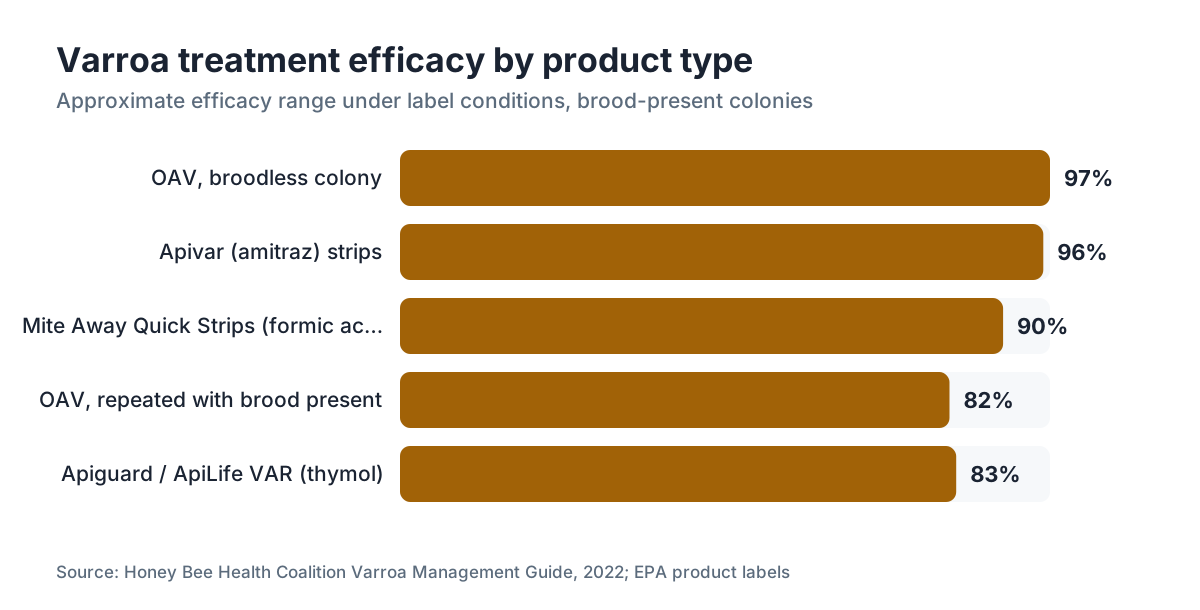
Oxalic acid is the fastest tool to put mites on the floor, but its weakness is brood. A single OAV treatment kills phoretic mites only, the ones on adult bees. It does nothing to mites sealed in cells. The EPA label for Api-Bioxal (the only oxalic acid product registered for use in the US) allows up to three treatments per year, with treatments spaced 5-7 days apart in a brood-present colony to catch mites as they emerge [3]. In practice, a series of three vaporizations 5 days apart can knock a high-mite colony back significantly, but it takes discipline and follow-up washes to confirm.
If you can induce a broodless period (by caging the queen for 24 days, removing her temporarily, or using a split), a single OAV treatment becomes dramatically more effective because nearly all mites become phoretic [1]. This is the best option for a rescue if you have the time and skill to manage it.
Apivar strips (amitraz)
Apivar is a contact treatment. You hang two strips in the brood nest, and bees walking across them pick up amitraz and spread it through the colony. Efficacy reported in label studies runs 93-99% under proper conditions [4]. The advantage for a 10% colony: it works with brood present, because the strips stay in for 42-56 days and treat mites as they emerge from cells continuously.
The downside is time. Apivar does not produce a dramatic overnight drop. Mite counts fall over weeks, not days. Amitraz resistance is a real and growing problem in some regions [5]. If you have treated with Apivar repeatedly over the past two seasons with no rotation, there is a meaningful chance some resistance has developed in your local mite population, and a rescue is not the time to discover the treatment is only 60% effective.
Thymol-based treatments (Apiguard, ApiLife VAR)
Apiguard gel and ApiLife VAR wafers both rely on thymol vapor. They work (efficacy typically 74-93% depending on conditions) but they are temperature-sensitive [6]. Thymol treatments need ambient temperatures between 59°F and 105°F (15-40°C) during the day, and they work best above 65°F [6]. If you are treating in late fall or early spring, thymol is often off the table. In summer, it can be your best option if you want to avoid synthetic chemicals.
For a colony at 10%, thymol alone is probably not your first choice as a rescue because efficacy is lower than OAV or Apivar and the treatment period runs 4-6 weeks.
| Treatment | Works with brood? | Time to full efficacy | Typical efficacy | Temp requirement |
|---|---|---|---|---|
| OAV (broodless) | No | 1-2 days | 95-99% [3] | Above freezing |
| OAV (repeated, brood present) | Partially | 15-21 days | 75-90% [1] | Above freezing |
| Apivar strips | Yes | 42-56 days | 93-99% [4] | 50-86°F |
| Apiguard / ApiLife VAR | Yes | 28-42 days | 74-93% [6] | 59-105°F |
| Mite Away Quick Strips (formic acid) | Yes | 7 days | ~90% [7] | 50-85°F |
Formic acid (Mite Away Quick Strips)
MAQS deserves mention because it penetrates cappings and kills mites in cells, which matters a lot at 10%. A single 7-day application can deliver roughly 90% efficacy [7]. The tradeoff is queen loss risk (around 3-15% depending on conditions and colony strength) and a narrow temperature window of 50-85°F [7]. For a colony already stressed at 10%, queen loss is a serious added risk. If you go this route, make sure the colony is queen-right and reasonably populous first.
Does brood presence change which treatment you should pick?
Yes, dramatically. This is the most important variable in your treatment decision.
If the colony is broodless, a single oxalic acid vaporization or an oxalic acid dribble (per the Api-Bioxal label) hits nearly all of your mites in one shot. Many experienced beekeepers create a broodless window on purpose during a rescue, by removing the queen for 24 days or by making a split and treating the queenless portion before reintroducing.
If the colony has a normal brood pattern with capped brood, you cannot rely on a single OAV treatment. The mites inside those cells are completely protected. You need either a treatment that penetrates cappings (formic acid), a long-acting contact treatment (Apivar), or a repeated OAV schedule timed to catch mites as they emerge.
Late-season colonies building winter bees (roughly August through September in most of the US) change the stakes. The bees being born right now will overwinter. If even 30% of them emerge carrying a heavy DWV load, your winter cluster is compromised before it forms. Getting mites down before the fall brood cycle produces winter bees is the whole ballgame in autumn.
You can check for a broodless window by inspecting for eggs and young larvae. No eggs means the queen stopped laying within the last three days. No young larvae means she stopped within about six days. Capped brood alone means you have a week or more before new bees emerge. Plan your treatment around that timeline.
How fast do you need to act, and what happens if you wait a week?
Act today. Not this weekend. Today.
At 10%, the varroa population reproduces faster than the colony can compensate with new bee births. The Honey Bee Health Coalition notes that mite populations can double in 3-4 weeks during peak summer brood conditions [1]. But a colony already at 10% is not starting from a healthy baseline. It has probably sat above threshold for at least 4-6 weeks already, given typical mite reproduction curves.
Waiting a week means more capped brood with mites in it, more newly emerged bees carrying DWV, and a weaker adult population to hold hive temperature and defend against robbing. Weak colonies at high mite loads become robbing targets, which spreads mites to neighboring hives. If you run multiple colonies, a collapsing mite-bombed hive threatens all of them. Delayed treatment of high mite loads produces significantly higher winter mortality than timely intervention, a pattern documented in colony field trials [9].
The practical delay most beekeepers face is not indecision but supply. If you do not have a treatment on hand, call every local beekeeper supply store you know, check for overnight shipping, or contact your local beekeeping association. Some state departments of agriculture run emergency varroa assistance programs. In the meantime, if you already have oxalic acid and a vaporizer, start a vaporization series now even with brood present. It will not match a broodless treatment, but it reduces your phoretic load while you wait for your primary treatment to arrive.
What is the step-by-step rescue protocol for a 10% colony?
Here is how I would actually handle this, in order.
Step 1: Assess brood state and queen status. Open the hive. Is the queen present and laying? Is there a normal brood pattern or spotty, failing brood? Spotty brood at 10% can mean sacbrood or chalkbrood compounding the mite problem, or it can mean the colony already has compromised winter-bee production. Photograph the brood frames.
Step 2: Choose your treatment based on what you find. If the colony is broodless or you can create a broodless window within 3-4 days, use OAV. If full brood is present and temperatures are 50-85°F, MAQS or Apivar are your primary options. If it is summer and above 65°F, Apiguard is a viable addition after a first OAV series.
Step 3: Apply treatment per the label, no improvising. Api-Bioxal's label specifies 1 gram of oxalic acid dihydrate per brood box vaporized for a maximum of three applications per year [3]. Apivar label calls for two strips per brood box, not shared between boxes [4]. Follow the label exactly. Underdosing at a 10% infestation does not help you.
Step 4: Assess colony strength. A colony at 10% with a shrinking adult population may benefit from a frame of emerging brood donated from a healthy colony, to buy the treatment time to work before population drops below a viable level. Do not combine the 10% colony with a healthy colony without treating first.
Step 5: Retest at day 21-28 after treatment starts. Do another alcohol wash. A successful rescue should bring counts below 2% by that point. If counts are still above 3%, your treatment may be failing (possible resistance or a label deviation) and you need to switch chemistry.
Step 6: Plan the next treatment cycle. A single rescue is not a program. Map out your next wash date and build a rotation schedule so you are not back here in six months. Tools like the protocol builder at VarroaVault help you build a calendar based on your region and hive status.
For finding quality treatment supplies and equipment, check resources among beekeeping supply companies in your area, or services that offer free shipping honey bee supply companies if you need to order fast.
Can you use more than one treatment at the same time to speed up results?
You can in some cases, but it is not always safe or legal.
Combining two synthetic treatments (say, Apivar and oxalic acid together) is off-label in most cases and creates unknown residue risks in wax and honey. The EPA registers each treatment as a standalone product, and using them simultaneously generally violates the label, which is federal law in the US [8].
What you can do: a repeated OAV series during an Apivar treatment cycle is debated but practiced by some commercial beekeepers. Some researchers report additive efficacy; others find minimal benefit because amitraz already hits high efficacy when applied correctly. I would not layer chemicals on a stressed colony without a clear reason.
The safe combination is sequential. Complete a short OAV series (3 treatments, 5 days apart) to knock down the immediate phoretic population, then transition to Apivar strips for the sustained brood-present kill. That order keeps you on-label.
Never mix formic acid and oxalic acid treatments in the same colony at the same time. Both produce significant bee mortality at high doses, and a colony already stressed at 10% mites does not need the extra insult.
How do you know if the rescue treatment is actually working?
The answer is in your sticky board and your follow-up wash. Not your gut.
After starting OAV, place a sticky board (a bottom board lined with a greased or sticky insert) and count natural mite drop over 24 hours. During the first few days after OAV, a heavy infestation can drop hundreds of mites per day. That initial fall is reassuring but not conclusive, since it does not tell you what is still in the brood.
The definitive check is an alcohol wash at day 21-28 after starting treatment. For Apivar, the Honey Bee Health Coalition recommends checking at the end of the treatment period (42-56 days) [1]. For OAV series, check at day 21-28. Your goal is below 2% during the brood season, and ideally below 1% going into fall.
If your day-28 wash is still above 3%, do more than extend the same treatment. That result points to possible resistance, improper application, or a reinfestation event (robbing bees bringing mites from a collapsing neighbor colony). Switch to a different class of chemistry. Amitraz resistance and tau-fluvalinate resistance (Apistan) are both documented in Varroa destructor populations in the US [5].
Sticky board counts alone are not reliable for confirming treatment success. A colony with many bees always drops more mites than a small colony, even at the same infestation rate. Wash counts are the standard.
What if the colony is too weak to survive even a successful treatment?
This is the hardest conversation in varroa management, and it comes up at 10% more than beekeepers want to admit.
A colony with a 10% mite wash, a shrinking adult population, spotty brood, and crawlers on the bottom board may already be past the point where treatment alone saves it. Varroa combined with deformed wing virus can leave a colony with too few healthy adults to hold temperature, nurse brood, and defend against robbing all at once.
In that scenario you have three options: treat anyway and add a frame of emerging brood from a healthy donor to boost population, combine the failing colony with a strong mite-treated colony after treating the failing one, or accept that the colony is unrecoverable, remove and freeze the frames, and clean the equipment.
Combining requires that you treat the failing colony first to reduce its mite load before merging. Combining a 10% colony untreated directly into a healthy one transfers your mite problem to your best hive. Give the failing colony 5-7 days of OAV treatments, then combine using the newspaper method.
The third option is not failure. It is responsible beekeeping. A collapsing mite-heavy colony left to robbing spreads mites to every hive within a two-mile radius. Removing it protects your apiary and your neighbors'.
How did the colony get to 10% and how do you prevent it next time?
Honest answer: usually one of three things happened.
First, the treatment used last time did not work as expected. Either it was applied incorrectly, resistance was present, or the timing was wrong (treating in a brood-heavy period with a brood-contact-only product like OAV).
Second, a reinfestation event happened. This is common and underappreciated. A neighboring colony collapses from varroa, bees from that colony rob your hive, and they bring mites with them. Your mite count can jump several percentage points in a matter of days during a robbing event [12]. You cannot stop your neighbors' colonies from collapsing, but reducing hive entrances in late summer and early fall limits robbing chances.
Third, the monitoring schedule lapsed. If you wash every 4-6 weeks during the active season (May through September in most of the US), you should catch a rising infestation before it hits 10%. The Honey Bee Health Coalition recommends at minimum monthly washes during peak mite season [1]. Many beekeepers stretch that to every six weeks, and some go the whole summer without testing. That is how a colony goes from 2% in June to 10% in August.
A good monitoring calendar, built around your climate and your hive count, is the single most effective thing you can add to your program after the treatment protocol itself. The free protocol tools at VarroaVault let you set wash reminder dates and track results over time so a 10% surprise becomes much less likely.
For more background on the mite itself and how its life cycle drives these numbers, see our overview of the varroa mite.
Are there any treatments you should avoid on a stressed 10% colony?
Yes. A few things can hurt more than help at this point.
High-dose formic acid (MAQS at the higher temperature end of its range, above 85°F) in a colony already showing stress risks significant bee mortality and possible queen loss. If the colony is already small and the weather is hot, MAQS is a gamble. The manufacturer label explicitly warns against use when temperatures exceed 85°F [7].
Apistan (tau-fluvalinate strips) should be avoided unless you have tested and confirmed susceptibility in your local mite population. Resistance to fluvalinate in Varroa destructor is widespread and has been documented in US populations since the late 1990s [5]. Using a treatment that provides 30-40% efficacy on a 10% colony is worse than waiting for a better option.
Hops-based and essential oil treatments have no strong evidence of efficacy at high mite loads and are not registered by the EPA as standalone varroa treatments in the US. Do not waste time on them in a rescue.
Do not skip feeding a stressed colony just because you are treating. If the colony is light on stores (less than two frames of honey in warm weather), add a 1:1 sugar syrup feeder. Nutritional stress compounds mite stress, and the bees need resources to raise new healthy brood after treatment brings mite levels down.
Frequently asked questions
How quickly will mite levels drop after starting treatment on a 10% colony?
With OAV in a broodless colony, phoretic mites start falling within hours and the bulk drops in 24-72 hours. With brood present, you will not see a meaningful reduction in your wash count for 2-3 weeks because mites keep emerging from capped cells. Apivar strips show significant reduction in wash counts at 4-6 weeks. Expect a slow burn with any brood-present treatment, and confirm by re-washing at day 21-28.
Can a colony recover from a 10% mite infestation if treated aggressively?
Yes, many colonies do recover, but it depends on how much DWV damage has already occurred and how many healthy adult bees remain. If the colony still has a laying queen, capped brood, and a cluster covering at least 4 frames, treatment plus a brood donation from a healthy colony gives a good survival chance. Colonies down to 2-3 frames of bees at 10% rarely recover without a merge.
Does the time of year affect which rescue treatment I should use?
Significantly. In summer (above 65°F), thymol products and MAQS are viable and oxalic acid vaporization is convenient. In fall when temperatures drop below 50°F, thymol and formic acid go off-label or lose efficacy. Apivar and oxalic acid work in cooler conditions. Always check the temperature range on the product label before applying, and note that treating before winter-bee production starts (late July through August) is especially time-sensitive.
Can I do an oxalic acid dribble instead of vaporizing for a 10% colony?
The dribble (Api-Bioxal mixed in sugar syrup, applied directly on the bees between frames) is label-legal and requires no vaporizer equipment. However, the label restricts it to broodless colonies for a reason: efficacy on colonies with capped brood drops to around 50-60%. At 10% mites with brood present, dribble alone is insufficient for a rescue. If vaporization is not possible, combine dribble with Apivar strips or another brood-penetrating treatment.
How do I make the colony broodless to improve oxalic acid effectiveness?
The most controlled method is caging the queen in a queen cage on a frame for 24-26 days (one full brood cycle). All remaining brood hatches during that window, mites become phoretic, and you then vaporize once while the queen is still caged. Release her the next day. You can also do a split, treat the queenless half (which raises an emergency queen or you introduce one), and treat the mite-heavy splits separately. Both methods require practice and calm bees.
Should I move frames between hives to help a 10% colony?
Yes, with one firm rule: never move frames from the 10% colony to a healthy one before treating. You can move frames of emerging brood or honey from a healthy low-mite colony into the sick colony to boost its population, but bees on those frames should be shaken off first to minimize transferring mites. Monitor the donor colony with a wash two weeks later to confirm it did not receive a mite burden from the exchange.
How often should I wash for mites to catch problems before they reach 10%?
Every 4 weeks during the active brood season (roughly May through September in most of the US). Monthly washes give you enough data points to see a rising trend before it becomes a crisis. The Honey Bee Health Coalition recommends at least monthly monitoring during peak mite season. A colony going from 2% in June to 10% in August has been climbing for 6-8 weeks, which is two monitoring cycles if you stretch your intervals.
What is the alcohol wash threshold that requires immediate treatment?
Most university extension guidelines place the action threshold at 2 mites per 100 bees (2%) during the brood-rearing season. Some sources, including the Honey Bee Health Coalition, set an emergency threshold at 3% in summer. At 10%, you are well past both thresholds. Treat immediately regardless of the season, the brood state, or how healthy the colony appears visually.
Is it safe to harvest honey from a colony treated for mites at 10%?
It depends entirely on the product. Oxalic acid treatments require a zero-day pre-harvest interval per the Api-Bioxal label, meaning honey supers can stay on during treatment. Apivar strips require that all honey supers be removed before applying and not returned until strips are out. Apiguard requires supers off during treatment. MAQS has a zero-day honey super interval. Always read and follow the specific product label before applying to a colony with honey supers.
Can varroa mites spread from my 10% colony to neighboring hives?
Yes, and this is urgent. A collapsing mite-heavy colony becomes a robbing target. Healthy bees rob it out, pick up hitchhiking mites, and carry them home. Robbing events can raise mite counts in healthy colonies significantly within days. Reduce the entrance of the affected colony to a 1-2 bee width immediately to limit robbing access while you treat. If the colony is too weak to defend even a small entrance, place a robbing screen.
What should I do if my mite count is still high after a full Apivar treatment?
If a 56-day Apivar treatment cycle leaves you above 2%, suspect amitraz resistance or misapplication. Check that you used two strips per brood box (not shared across boxes), that the strips were replaced at 42 days if required, and that the colony was not overwintered in a configuration that kept strips away from the cluster. If application was correct, switch chemistry. Use oxalic acid vaporization or a thymol product for the next cycle and do not return to amitraz for at least a full season.
Does a 10% mite wash guarantee my colony will die if untreated?
Not a guarantee, but the odds are strongly against survival without treatment. Research and field observation consistently show that colonies exceeding 3-5% during summer rarely survive to the following spring without intervention. At 10%, most colonies are already sustaining significant DWV damage in emerging bees. Untreated colonies at this level typically collapse within 4-8 weeks, often becoming mite bombs that spread infestation to neighboring hives in the process.
Do I need to treat all my hives if one tests at 10%?
Wash all your hives immediately when one tests at 10%. Given that robbing and drifting spread mites between colonies, a 10% count in one hive is a strong signal that others may be elevated too. You may find several hives above threshold. Treat every hive that tests above your action threshold (2% during brood season), more than the worst one. Leaving a 4% neighbor untreated while rescuing your 10% hive will likely cause reinfestation within weeks.
Sources
- Honey Bee Health Coalition, Varroa Management Guide (2022): Action threshold of 2-3% during brood season; mite populations can double every 3-4 weeks; 70-80% of mites are in capped brood; monthly monitoring recommended during peak season
- Rosenkranz P, Aumeier P, Ziegelmann B. Biology and control of Varroa destructor. Journal of Invertebrate Pathology, 2010: Approximately 70-80% of total mite population resides in capped brood during the active brood season
- EPA, Api-Bioxal (oxalic acid) Federal Pesticide Label: Api-Bioxal label allows up to 3 vaporization applications per year; 1 gram oxalic acid per brood box; zero-day pre-harvest interval for honey supers
- EPA, Apivar (amitraz) Federal Pesticide Label: Two strips per brood box; 42-56 day treatment period; 93-99% efficacy under label conditions; honey supers must be removed during treatment
- Sammataro D, Untalan P, Guerrero F, Finley J. The presence of resistance to coumaphos in Varroa destructor (Acari: Varroidae). International Journal of Acarology, 2005: Resistance to tau-fluvalinate and amitraz documented in US Varroa destructor populations
- Elzen PJ, Westervelt D. Detection of coumaphos resistance in Varroa destructor in the United States. American Bee Journal, 2002; Apiguard EPA product label via Vita Bee Health: Apiguard temperature requirement 59-105°F (15-40°C); efficacy 74-93% depending on conditions; treatment period 4-6 weeks
- EPA, Mite Away Quick Strips (formic acid) Federal Pesticide Label: MAQS temperature range 50-85°F; single 7-day application; approximately 90% efficacy; queen loss risk 3-15%; penetrates brood cappings; zero-day pre-harvest interval
- US EPA, Pesticide Labels and Compliance (FIFRA): Each miticide is registered as a standalone product; using registered pesticides inconsistent with labeling violates federal law
- Delaplane KS, Hood WM. Effects of delayed acaricide treatment in honey bee colonies parasitized by Varroa jacobsoni. Journal of Apicultural Research, 1999: Delayed treatment of high mite loads results in significantly elevated colony winter mortality compared to timely intervention
- University of Minnesota Extension, Varroa Mite Management: Alcohol wash methodology; 300-bee sample size for accurate counts; action thresholds by season
- Pennsylvania State University Extension, Varroa Mite Control: Oxalic acid dribble restricted to broodless colonies; vaporization protocols for brood-present colonies
- Oregon State University Extension, Managing Varroa Mites in Honey Bee Colonies: Reinfestation from collapsing neighbor colonies can significantly elevate mite counts within days of a robbing event
Last updated 2026-07-09