Queen loss risk with formic acid treatment: how to minimize it
TL;DR
- Formic acid treatments (MAQS, Formic Pro) can kill or injure queens at rates of roughly 5 to 15% per application, depending on conditions.
- The big drivers are heat, small colonies, and weak queens.
- Cut that risk sharply by treating below 85°F, confirming the queen is healthy before you start, running the 14-day Formic Pro protocol, and opening up ventilation.
Why does formic acid kill queens at all?
Formic acid vapor is heavier than air and sinks toward the bottom of the hive, but it doesn't spread evenly. Hot weather, tight ventilation, and heavy dosing all drive vapor into the brood nest faster than workers can fan it out. The queen lives in that brood nest almost full time. She's bigger than a worker, she moves slower, and she leans on her attendants to buffer her surroundings. When concentration spikes, she has less room to escape or be moved.
She can die outright. Or she can take sub-lethal damage, which is the sneakier problem. A queen that looks fine two days after treatment may have had her reproductive organs stressed enough that she fails to lay well a few weeks later. You'll see shotgun brood, laying gaps, or a slide into drone-laying. By then most beekeepers have forgotten the formic and go chasing a different diagnosis.
The manufacturers admit the risk in plain sight. The MAQS (Mite Away Quick Strips) label states that "queen loss may occur" and flags higher risk "during high ambient temperatures." [1] That's not a buried footnote. It's prominent label language, which means the EPA reviewed it and agreed it needed disclosure.
How common is queen loss during formic acid treatment?
The honest answer: the numbers swing with conditions, and no single trial captures every scenario. But the available data clusters in a consistent band, and 5 to 15% covers most of it.
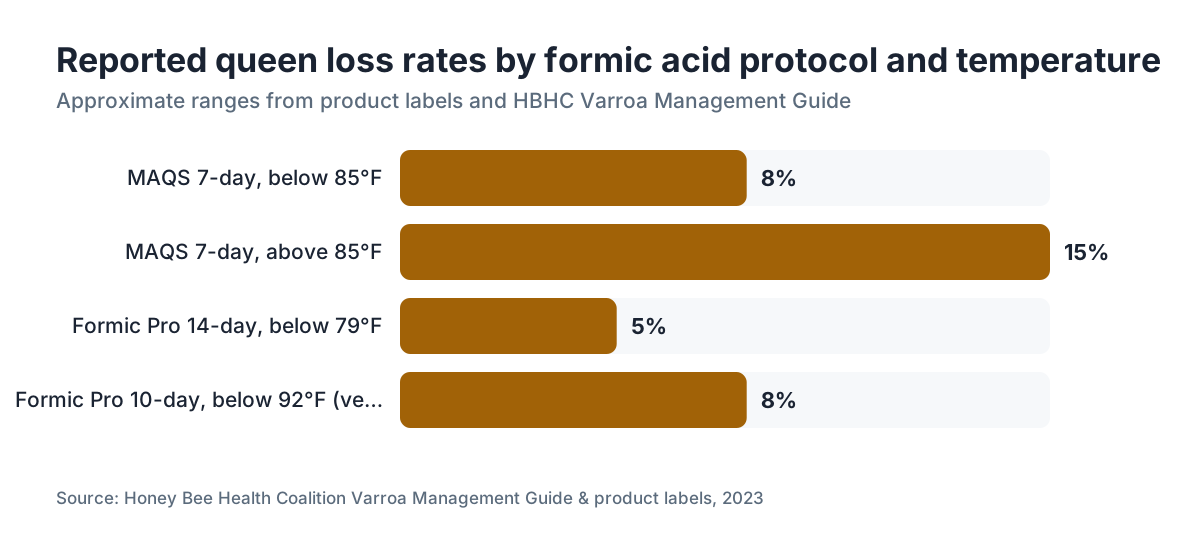
The Honey Bee Health Coalition's Varroa Management Guide cites queen loss of roughly 5 to 10% under normal conditions for MAQS, climbing when temperatures pass 85°F. [2] Field reports and extension summaries push the upper end closer to 15% when conditions are bad: hot weather, single-story hives, weak colonies. A 2020 Canadian study comparing formic acid products found queen loss was the main adverse event across formic treatments, with Formic Pro's 14-day extended-release protocol showing somewhat lower acute queen mortality than the 7-day MAQS approach under matched conditions. [3]
Run the math for a hobbyist with 5 to 20 hives. A 10% loss rate means one queen per ten applications. Treat twenty hives in late summer and expect one or two queens to fail before your fall build-up, right when you can least afford it.
| Protocol | Typical temp range | Reported queen loss rate | Source |
|---|---|---|---|
| MAQS 7-day | Below 85°F | ~5 to 10% | HBHC Varroa Guide [2] |
| MAQS 7-day | Above 85°F | 15%+ reported | MAQS label / HBHC [1][2] |
| Formic Pro 14-day | Below 79°F | ~3 to 8% | Camacho-Rodríguez et al., 2020 [3] |
| Formic Pro 10-day | Below 85°F | ~5 to 10% | Formic Pro label [4] |
These aren't precision statistics. They're the best honest estimate from the trials and label data we have.
What temperature threshold should you respect to protect your queen?
Both labels set treatment windows by ambient temperature, and 85°F is the number to burn into memory. The EPA-registered MAQS label lists the safe window as 50°F to 85°F (10°C to 29.5°C). [1] The Formic Pro label runs similar, with the 14-day protocol recommended between 50°F and 79°F and the 10-day protocol reaching up to 92°F under specific ventilation conditions. [4]
Here's the part people miss. The temperature the day you apply matters less than the forecast for the whole treatment window. A strip you set at 80°F on Monday can sit in a hive through a 95°F stretch by Thursday. Plan around the 10-day forecast, not the reading on the day you're standing in the apiary.
Exposure matters too. A hive in full afternoon sun on a black-painted box runs 10 to 15°F hotter inside than ambient. A hive in dappled shade, or turned to dodge peak sun, is meaningfully safer for a formic treatment. If you can't keep your hives under 85°F for the full duration, wait for cooler weather or reach for a different varroacide.
Does the 14-day Formic Pro protocol reduce queen loss compared to 7-day MAQS?
Probably yes, at least in cooler weather. The difference is release rate. MAQS strips push a rapid, high-concentration release over 7 days. Formic Pro's extended-release matrix lets the acid off more slowly, spreading the mite-killing exposure over 10 or 14 days. Lower peak concentration is generally kinder to the queen.
The 2020 Canadian field study by Camacho-Rodríguez and colleagues, published in PLOS ONE, found the extended-release Formic Pro 14-day treatment matched MAQS on mite knockdown but had a lower incidence of queen loss. [3] The gap wasn't huge. It was consistent across trial apiaries.
If you're treating in marginal weather, or you have a queen you'd hate to lose (a locally adapted survivor line, say), the 14-day protocol is the safer play. The catch: you need 14 days of steady below-79°F weather, which across much of the South and Southwest is a narrower window than you'd like.
For monitoring your mite loads before you commit to timing, the varroa mite overview on this site has current threshold guidance.
What colony conditions make queen loss more likely?
Temperature is the headline. Colony condition sits right behind it. Four situations raise the danger.
A weak or already-stressed colony. Low population means fewer workers to ventilate the brood nest and buffer vapor. The Honey Bee Health Coalition guidance notes formic acid is generally harder on smaller populations. [2] Treating a five-frame nuc is a different animal from treating a double-deep.
A queen already under stress. One that was recently clipped, marked, or introduced. One dealing with nosema or a laying gap. One in the middle of a supersedure attempt. Formic on top of a marginal queen often tips her into full failure.
Single-box or restricted setups. A colony packed into one brood box with heavy honey stores has less volume to dilute vapor and less airflow. Upper entrances, screened bottom boards, and pulling the SBB insert all help.
Timing against the queen's laying cycle. A queen laying a heavy pattern spends more time sitting in the hottest, most concentrated part of the brood nest. There's no strong trial data on this one, but experienced beekeepers report more trouble with hard-laying queens mid-summer. That's anecdotal. Treat it as a secondary concern, not a rule.
How do you check your queen's condition before applying formic acid?
Do a quick queen check three to seven days before you treat. You don't need to spot the queen herself. You're looking for a solid, even brood pattern with no big gaps or scattered cappings, plus eggs in a consistent pattern, one per cell, centered. See a failing pattern, supersedure cells, or no eggs at all? Stop and assess before you treat.
Supersedure cells already in progress mean the colony may be headed toward queenlessness on its own. Applying formic mid-transition can kill the old queen before the new one is mated, or stress a virgin who hasn't mated yet. Neither ending is good.
A healthy, well-mated queen with a strong brood pattern is your best insurance against losing her to treatment stress. If she looks marginal, it's often worth waiting, requeening first, and treating once the new queen has set a solid pattern, usually four to six weeks after introduction.
What ventilation steps actually reduce queen loss risk during treatment?
Ventilation is one of the few risk factors you fully control. Heavy formic vapor pooling in the brood nest is the enemy. Here's what actually moves the needle.
Screened bottom board, insert removed. This gives you passive upflow. Cooler, lower-concentration air enters from below and pushes vapor up rather than letting it settle on the cluster. It's the single most consistently recommended step across university extension guidance. [5]
Upper entrance. Even a small one creates cross-ventilation. Plenty of beekeepers leave an upper entrance open through every formic treatment, all season.
Shade. Move hives into shade or prop a shade cloth over them for the treatment window. Full-sun hives run much hotter, and this is easy if your hives sit on portable stands.
Single strip vs. full dose. Some beekeepers split the dose, applying one strip at a time with a few days between rather than both at once. The label doesn't endorse this, and it may cut efficacy, but the logic holds for reducing peak concentration. If you go this way, run an alcohol wash after to confirm you actually knocked the mites down. The goal isn't only protecting the queen. It's killing mites too.
Don't reduce the lower entrance. A small reducer during treatment traps heat and vapor. Open the entrance fully, or add an upper entrance to compensate.
Should you remove the queen in a cage before applying formic acid?
Some beekeepers do. The idea is simple: put the queen in a hair-roller or JZ-BZ cage, park it where vapor is lower (above the top bars, for instance), and let her sit out the treatment. The mites get hit. The queen doesn't.
It works. If she's genuinely valuable and you're treating in conditions where you'd expect elevated loss, caging her for seven to ten days removes the direct mortality risk from vapor. The downsides are real. She stops laying for the cage period, which creates a brood break. A brood break in late summer can cost you bees heading into winter. You also have to find her, which takes time and carries the handling risk of injuring her.
For most hobbyists, the juice isn't worth the squeeze. Follow the temperature guidance, use screened bottom boards, treat outside peak summer, and start with a healthy queen, and your risk already sits well below 10%. Caging earns its keep when you're protecting a queen you'd pay $50 or more to replace, or one from a locally adapted line you couldn't easily source again.
One note on supplies. Shipping speed on queen cages and small parts varies a lot between vendors, so check the free shipping honey bee supply companies options before treatment day, not the morning of.
When in the season is queen loss risk lowest?
Late summer into early fall is the most common window for formic acid, because that's when mite pressure runs highest relative to bee population. [2] Lucky for us, temperatures across most of the US and Canada start dropping into the safer range (below 85°F) from mid-August through September, which lines up with the treatment need.
Early spring is the other logical window. Mite loads are usually lower in spring, but formic then helps stop exponential buildup through the honey flow. Spring temperatures in most temperate regions sit well inside the safe range.
The stretch to avoid is July through early August across most of the continental US. Mite loads climb fast, the temptation to treat is high, and daytime highs push past 85 to 90°F. If you must treat then, use Formic Pro on the 14-day protocol only during weeks where the full forecast stays under 79°F, and max out ventilation. Or switch to oxalic acid vaporization or an Apivar strip for the hottest weeks and return to formic once it cools.
If you're unsure how to time treatments across the season, the tools at VarroaVault are built to map treatment windows against your local mite curve and climate.
What should you do immediately after applying formic acid to watch for queen problems?
First inspection: 24 to 48 hours after application. You're not hunting the queen, you're reading behavior. A colony that turns suddenly loud, agitated, or piles bees on the outside of the box (beekeepers call it "bearding out more than usual") may be under vapor stress. That's also a sign ventilation is short. If it's extreme, pulling one strip for 24 hours and then replacing it beats leaving an uncomfortable colony to grind through it.
At seven days, do a brood check. Look for eggs and young larvae. Eggs mean the queen laid within the last three days, so she survived and is working. No eggs at seven days is ambiguous. It could be a brief stress-induced pause, or it could mean she's failing. Wait three more days and look again.
At fourteen to twenty-one days post-treatment, do a full brood pattern assessment. This is when sub-lethal damage surfaces. A scattered, shotgun pattern with many empty cells, or a mix of worker and drone brood in worker cells, signals queen failure. Now you decide: requeen, let the colony supersede if they have material, or combine with a healthy colony.
Keep notes on each hive. If you're losing queens to formic at higher rates than expected across the apiary, check whether your temperature or ventilation protocols are the problem before the next round.
What are the regulatory and label requirements you're legally required to follow?
MAQS and Formic Pro are both EPA-registered pesticides, which makes their labels legally enforceable. Using them off-label, including applying above the stated temperature range, is a federal violation under FIFRA (Federal Insecticide, Fungicide, and Rodenticide Act, 7 U.S.C. § 136). [6] That matters for queen loss because the temperature limits aren't safety suggestions. They're conditions of registration.
EPA's pesticide registration section is public and lists current registered products. [7] Buying from a beekeeping supply company? Make sure you're getting a registered product with a current label, not bulk formic acid meant for other uses. Bulk formic acid outside a registered product has no application rate and no safety profile tested for honey bees.
State rules vary. Some states require an applicator license to buy or apply certain pesticides, and a handful add record-keeping requirements. Check with your state department of agriculture if you're not sure. The National Pesticide Information Center keeps state-by-state contact information. [8]
How does formic acid queen loss compare to risks from other varroacides?
Formic acid carries a higher acute queen loss risk than Apivar (amitraz strips) or oxalic acid. That's the comparison to keep in front of you when you pick a treatment.
Apivar queen loss is generally rare under normal use, though it can happen when strips sit directly in the brood nest and the colony is stressed. University of Minnesota extension guidance ranks Apivar as the lower-risk option for queen safety in summer treatments. [5] The tradeoff is a 42 to 56 day treatment window and no use during a honey flow.
Oxalic acid (dribble or vaporization) has very low queen mortality risk. The vapor method is considered safe for queens at standard dose, and the dribble at labeled concentration also shows minimal queen mortality in trial data. Its limit: oxalic works best on colonies with no capped brood, which pins its main use to late fall and winter when the cluster is broodless, or right after an artificial brood break. [11]
Formic acid's edge is that it penetrates capped brood and kills mites under the cappings, which neither amitraz strips nor oxalic acid does well. [11] For late-summer treatment with brood present and mite loads in the danger zone, formic acid is still often the strongest single tool. The queen risk is the price of that capped-brood reach.
For a wider look at the mite itself and why timing matters this much, the varroa mite article here reads well alongside this one.
Frequently asked questions
What temperature is too hot to use formic acid on my hives?
The MAQS label sets 85°F as the upper limit for safe use. Formic Pro's 14-day protocol is safer below 79°F, though the 10-day option reaches 92°F with open ventilation. These are daily high ambient temperatures, not averages. If any day in your treatment window is forecast above these thresholds, wait or switch products. Full-sun hives run 10 to 15°F hotter inside than ambient.
Can a queen recover from formic acid exposure, or is damage permanent?
Sometimes she recovers, sometimes she doesn't. Sub-lethal vapor exposure can cause temporary laying disruption that clears within two to three weeks, or permanent ovary damage that leads to progressive laying failure. There's no way to grade the damage from outside during treatment. Your best diagnostic window is 14 to 21 days post-treatment, when brood pattern quality works as a proxy for her reproductive health.
Is a newly introduced or recently mated queen at higher risk during formic treatment?
Yes, meaningfully so. A newly introduced queen is still under social stress from acceptance and hasn't fully set her pheromone profile with the colony. Her attendant cluster is smaller and less protective. A newly mated virgin is physiologically fragile during the early laying period. Wait at least three to four weeks after confirmed acceptance and a solid establishing brood pattern before applying any formic acid treatment.
Does using one MAQS strip instead of two lower queen loss risk?
It likely lowers peak vapor concentration and eases acute stress on the queen. The tradeoff is weaker mite knockdown. The label protocol specifies two strips for standard colonies. If you split the dose, run an alcohol wash or CO2 wash at the end to confirm you actually pulled your mite load below the 2% threshold. Protecting the queen but missing mite control defeats the point.
How do I know if my queen died from formic acid vs. natural causes?
You often can't know for certain. Timing is your main clue: queen failure showing up one to three weeks after a formic treatment is suspicious. Natural supersedure usually gives advance warning (queen cells before the old queen fails), while formic-related failure often shows as a sudden laying stop or a fast-deteriorating brood pattern with no queen cells. Finding a dead queen on the bottom board during or shortly after treatment is the clearest sign.
Can I treat with formic acid if my colony is already queenless?
Yes. Treating a queenless colony with formic acid won't hurt anything from a queen-loss angle, since there's no queen to lose. If you're doing a merge or requeening protocol, treating the laying-worker or hopelessly queenless colony for mites before combining is good practice. Just don't introduce a new queen into a hive that still has active formic strips, because the incoming queen faces the same exposure risk.
Does a screened bottom board really help protect the queen during formic treatment?
Yes. Pulling the sticky-board insert from a screened bottom board creates passive ventilation that keeps formic vapor from pooling at high concentration in the brood nest. Multiple university extension sources recommend this as standard practice during formic treatments. It's free, takes ten seconds, and shows up in risk-reduction guidance from both HBHC and university extension programs. Do it every time.
What's the difference between MAQS and Formic Pro for queen safety?
Both use formic acid as the active ingredient but release it at different rates. MAQS releases fast over 7 days, which drives higher peak vapor concentration. Formic Pro uses a gel-matrix slow-release formula over 10 or 14 days, which lowers peak concentration and appears to reduce acute queen mortality in field comparisons. If queen safety is your top concern, the Formic Pro 14-day protocol in cool weather is the safer choice.
Should I treat in a single brood box or a two-story setup to protect the queen?
A two-box brood setup is generally safer, because the larger volume dilutes vapor and gives the queen more room to move away from high-concentration zones. Treating a colony squeezed into a single deep during a hot stretch with limited ventilation is one of the higher-risk scenarios. If your colony is on one box, open ventilation fully and consider a half-dose approach with an efficacy check after.
How long after a failed formic acid treatment should I wait before requeening?
If the queen has clearly failed (no eggs at 21 days post-treatment, scattered or absent brood), requeen as soon as you have a queen available. Don't wait for the colony to attempt supersedure unless you can see active supersedure cells already. The longer a colony stays queenless, the more likely laying workers set up, and that mess is much harder to fix than a straightforward requeen.
Can I use formic acid in a nuc or small colony without high queen loss risk?
Small colonies are higher risk, not lower. A nuc's smaller bee mass means fewer workers for ventilation and buffering. The Honey Bee Health Coalition guidance specifically flags smaller populations as a risk factor for formic acid queen loss. If you must treat a nuc, use the minimum labeled dose (one strip for a nuc on the MAQS label), max out ventilation, and treat only when temperatures sit well below 80°F. Watch closely for two weeks after.
Are there any signs during treatment that suggest my queen is in danger?
No reliable real-time signals, unfortunately. Heavy bearding beyond what the temperature explains suggests vapor stress inside. Bees clustering at the entrance or fanning hard are reacting to something uncomfortable. These aren't queen-specific, but they tell you the hive interior is too hot or the concentration is too high. Open ventilation the moment you see extreme fanning during a formic treatment. That's the right call.
Does formic acid kill mites in capped brood, and is that worth the queen risk?
Yes. Formic acid vapor penetrates capped brood cells and kills phoretic and reproductive mites at meaningful rates, one thing amitraz and oxalic acid don't do well. That capped-brood reach is the main clinical reason to accept formic acid's queen risk. In late summer with high mite loads and brood present, that penetration can be the difference between a colony surviving winter or collapsing by October.
Sources
- EPA / NOD Apiary Products, MAQS (Mite Away Quick Strips) product label: MAQS label states queen loss may occur and flags higher risk during high ambient temperatures; safe-use window is 50°F to 85°F
- Honey Bee Health Coalition, Varroa Management Guide (current edition): Queen loss rates approximately 5 to 10% under normal conditions for MAQS; higher for small populations; late summer treatment timing guidance
- Camacho-Rodríguez et al. (2020), PLOS ONE, comparative formic acid product trial: Extended-release Formic Pro 14-day protocol showed comparable mite knockdown to MAQS with lower incidence of queen loss events in Canadian field trial
- EPA / NOD Apiary Products, Formic Pro product label: Formic Pro 14-day protocol recommended 50°F, 79°F; 10-day protocol extends to 92°F with specified ventilation; queen loss disclosed on label
- University of Minnesota Extension, Varroa mite treatments and honey bee health: Screened bottom board with insert removed recommended during formic acid treatment; Apivar described as lower queen-safety risk than formic acid in summer
- U.S. EPA, Federal Insecticide, Fungicide, and Rodenticide Act (FIFRA), 7 U.S.C. § 136: Using registered pesticides outside of label directions is a federal violation under FIFRA
- U.S. EPA, Pesticide Registration for Honey Bee Treatments: EPA maintains current registered product list for formic acid-based honey bee varroa treatments
- National Pesticide Information Center (NPIC), State lead agencies: NPIC maintains state-by-state contact information for pesticide regulation inquiries including applicator licensing
- Cornell University, Honey Bee Program, Varroa treatment options: Open screened bottom board and upper entrance during formic acid treatment consistently recommended to reduce brood nest vapor concentration
- Honey Bee Health Coalition, Tools for Varroa Management guide, treatment timing section: Late summer (August, September) identified as primary treatment window when temperatures enter safe formic acid range and mite loads are highest relative to bee population
- Penn State Extension, Varroa mite management in honey bee colonies: Oxalic acid has very low queen mortality risk but is most effective when no capped brood is present; formic acid uniquely penetrates capped brood
Last updated 2026-07-09