How to make an oxalic acid cellulose sponge treatment for varroa
TL;DR
- An oxalic acid cellulose sponge is a DIY slow-release varroa treatment.
- You soak a compressed cellulose sponge in a glycerin and oxalic acid solution, set it between the brood frames, and it off-gasses oxalic acid vapor for four to six weeks.
- Small trials report mite drops of 85 to 95 percent.
- In the U.S.
- the method sits in a regulatory gray zone you should understand before you mix anything.
What is an oxalic acid cellulose sponge treatment?
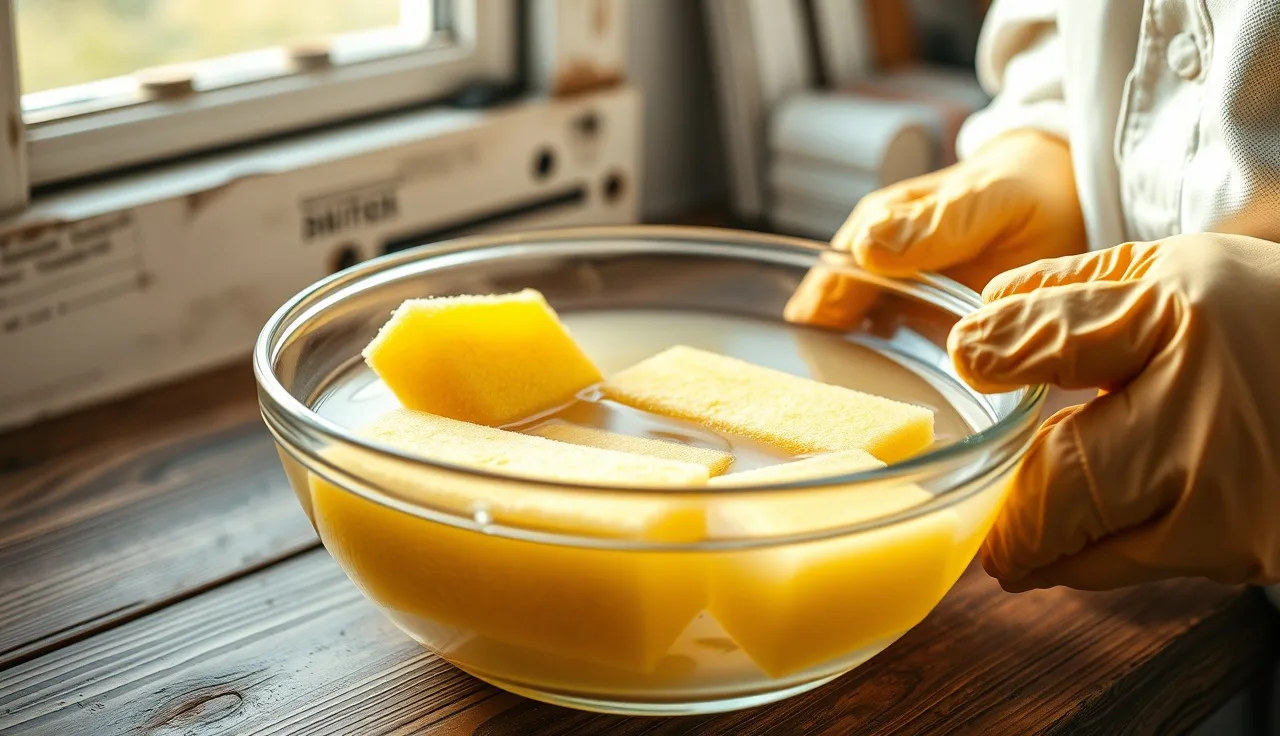
An oxalic acid cellulose sponge (beekeepers call it an OA sponge or glycerin sponge) is a slow-release varroa treatment you make at home. You saturate a compressed cellulose sponge in a solution of oxalic acid dihydrate dissolved in glycerin, set the sponge into the hive between frames, and over several weeks the mixture wicks and evaporates. That releases oxalic acid vapor, which kills Varroa destructor mites riding on adult bees.
The appeal is simple. A commercial oxalic acid vaporizer hits the hive with one fast, intense dose. A sponge is slower and lower-tech. It keeps working across brood cycles, and that matters, because varroa hiding inside capped cells is the reason a single oxalic acid treatment never clears a colony on its own.
The idea came out of academic work, notably trials at the University of Montana and elsewhere, that tested whether glycerin could carry oxalic acid and stretch out its release. Early results looked good enough that hobbyists started mixing their own versions long before any commercial product hit the shelf. That backstory matters, because it explains why the legal picture is so messy. We cover that in its own section below.
You will not find this ready-mixed at a bee supply shop. You buy the ingredients separately, mix them yourself, and apply them on your own judgment. The responsibility sits squarely on you.
Is making your own oxalic acid sponge legal in the United States?
Short answer: making and using an OA sponge is off-label or unregistered pesticide use, which is technically illegal under federal law. How illegal depends on which oxalic acid source you use and what your state adds on top.
In the U.S., oxalic acid treatments for bees are regulated by the EPA as pesticides. Api-Bioxal (EPA Reg. No. 84721-1) is the only EPA-registered oxalic acid product labeled for honey bee use. Everything else (industrial or food-grade oxalic acid) carries no bee-use label at all [1]. Using a pesticide in a way the label does not allow is a federal violation under FIFRA, codified at 7 U.S.C. § 136j [2].
The Api-Bioxal label covers three application methods: trickle (dribble), spray, and vaporization. It says nothing about sponges. So making a glycerin sponge with Api-Bioxal and placing it in a hive is off-label use. Using unregistered oxalic acid (hardware store or food-grade wood bleach) for bee treatment is unregistered pesticide use. Both break FIFRA. I am not aware of any published EPA enforcement action against an individual hobbyist beekeeper for either, but the rule is the rule.
The Honey Bee Health Coalition, in its Varroa Management Guide, notes that "oxalic acid is registered by the EPA for use in honey bee colonies" and points beekeepers to Api-Bioxal as the registered option. It does not endorse off-label sponge methods [3].
Some states pile on their own requirements. California, for example, restricts purchase of certain oxalic acid concentrations. Check your state department of agriculture before you buy anything.
Here is the honest part. Plenty of beekeepers make and use these sponges anyway, the way some drivers treat a posted speed limit. I am not telling you to do that. I am telling you what the rules say so you can choose with your eyes open. If you want a fully legal extended-release oxalic acid option, commercial glycerin-OA sponge products have started reaching some U.S. markets. Watch for more registrations, because several companies have been working through the EPA process.
What ingredients and materials do you need to make OA sponges?
You need three ingredients: oxalic acid dihydrate, food-grade vegetable glycerin, and compressed cellulose sponges. That core recipe circulated widely among hobbyists and got tested in several university-affiliated trials [4]. Everything else on this list is safety gear and mixing tools.
Gather all of it before you open the oxalic acid container.
Oxalic acid dihydrate. If you want to stay as legal as possible, use Api-Bioxal. One catch: Api-Bioxal comes pre-mixed with powdered sugar as a dribble carrier, so the actual oxalic acid content is roughly 35 percent by weight, not 100 percent. Many recipes assume pure oxalic acid dihydrate, so you have to adjust your math (more on that in the ratio section). Industrial or food-grade oxalic acid runs 99 percent-plus pure but carries no bee-use label.
Vegetable glycerin. USP-grade (food-safe), at least 99 percent pure. Brewing suppliers, soap-making shops, and online retailers all carry it. It is cheap, around $10 to $20 per liter, and a liter goes a long way.
Compressed cellulose sponges. These are the flat, hard sponges that puff up when wet, not foam rubber. They are made from plant cellulose and act as the carrier. Look for pieces around 4 by 6 inches, cut to your frame spacing. Natural cellulose sponges (Spontex-type) are what the trials used. Synthetic sponges and foam rubber behave differently and are not a substitute.
Mixing container. Glass or HDPE plastic. Skip aluminum. Oxalic acid reacts with metal.
Scale. A digital kitchen scale accurate to 1 gram.
Personal protective equipment. Nitrile gloves (two layers), chemical splash goggles, an N95 or better respirator, and an apron or clothes you do not mind ruining. Oxalic acid burns skin and eyes and is hazardous to breathe as dust.
Labeling. Date-label everything you mix. Store it locked away from kids and pets.
What is the correct oxalic acid to glycerin ratio for sponges?
The most-cited ratio is about 1 part oxalic acid dihydrate to 2 parts glycerin by weight, which gives a mixture that is roughly 33 percent oxalic acid by mass. Some beekeepers run a gentler 1:3 ratio (about 25 percent OA) to lower the risk of bee mortality [4]. Both show up in hobbyist trials.
A workable batch for a single hive season looks like this:
| Ingredient | 1:2 ratio (33% OA) | 1:3 ratio (25% OA) |
|---|---|---|
| Oxalic acid dihydrate | 100 g | 75 g |
| Vegetable glycerin | 200 g | 225 g |
| Total mix weight | 300 g | 300 g |
| Sponges soaked (approx.) | 4 to 6 | 4 to 6 |
Using Api-Bioxal powder changes the math. Because that powder is only about 35 percent oxalic acid (the rest is powdered sugar), you need roughly 2.86 times as much of it to hit the same OA content. To match 100 g of pure oxalic acid, you would weigh out about 285 g of Api-Bioxal. Get this wrong in either direction and it costs you: too concentrated and you kill bees, too weak and the mite count barely moves.
Nobody has published a peer-reviewed clinical optimum for this recipe. The closest evidence is the Montana work and related hobbyist trials, which found the 1:2 ratio effective without heavy brood or adult loss in most conditions. Sample sizes were modest and results shifted with season and colony strength. Be honest with yourself: you are running an experiment.
How do you actually make the sponges, step by step?
Work outside or in a space with real airflow. Oxalic acid dust and fumes are not something you want in your lungs.
Step 1. Put on your PPE. Gloves, goggles, respirator. All of it before you open the OA container.
Step 2. Weigh your glycerin into a glass or HDPE container. Glycerin is thick, so pour slowly and tare the scale between additions.
Step 3. Weigh your oxalic acid separately, then add it to the glycerin a little at a time while stirring. It will not fully dissolve at room temperature. That is normal. Some crystals stay in suspension. Warm the mixture gently in a warm water bath (not direct heat) to about 40 to 50°C and stir until the crystals dissolve. Do not overheat or boil it.
Step 4. Let the solution cool to room temperature.
Step 5. Prep your sponges. Expand the compressed cellulose sponges in plain water first, then squeeze them as dry as you can. Pre-expanding the cells helps them take up the glycerin solution.
Step 6. Soak the sponges in the OA-glycerin solution for at least 30 minutes, pressing them to push the solution through. Each sponge should hold roughly 40 to 60 grams of solution, though that varies with size and density.
Step 7. Let excess drain back into your container. You want the sponge saturated but not dripping.
Step 8. Bag and label any sponges you are storing. They keep for several months in a cool spot. Write the date, OA percentage, and a hazard warning on each bag.
Step 9. Clean up with water. Oxalic acid dissolves in water. Rinse every surface and tool. Do not dump large amounts of diluted solution down a drain in areas with strict wastewater rules, so check local guidelines first.
How do you apply the sponge in the hive?
Applying the sponge is easier than making it. Wear your PPE any time you handle a treated sponge.
Set one sponge directly on top of the frames in the upper brood box, or slide it between two frames with the flat side down on the top bars. Some beekeepers trim the sponge to match frame width. Others leave a small overhang. You want as much hive air as possible touching the sponge surface.
One sponge per brood box is the usual setup. A very strong double-deep colony in summer may do better with two, one in each box.
Leave the sponge in for four to six weeks. That length is the whole point. It carries the treatment through at least one full varroa reproductive cycle inside capped brood, which runs about 12 days in worker cells [5]. The glycerin slows the release so the hive stays in a range that kills mites but bees can tolerate.
Do not treat during a honey flow with supers on. Oxalic acid residue in honey is a real concern, even though honey already carries some natural oxalic acid. The Api-Bioxal label bars application when honey supers meant for human consumption are on the hive [1].
After four to six weeks, pull the spent sponge with gloved hands, bag it, and throw it in the trash. Run an alcohol wash before and after so you can measure what the treatment actually did. If your post-treatment count is still at or above the action threshold (the Honey Bee Health Coalition uses 2 percent, or 2 mites per 100 bees [3]), plan a follow-up with a different product.
How effective are oxalic acid sponges compared to other varroa treatments?
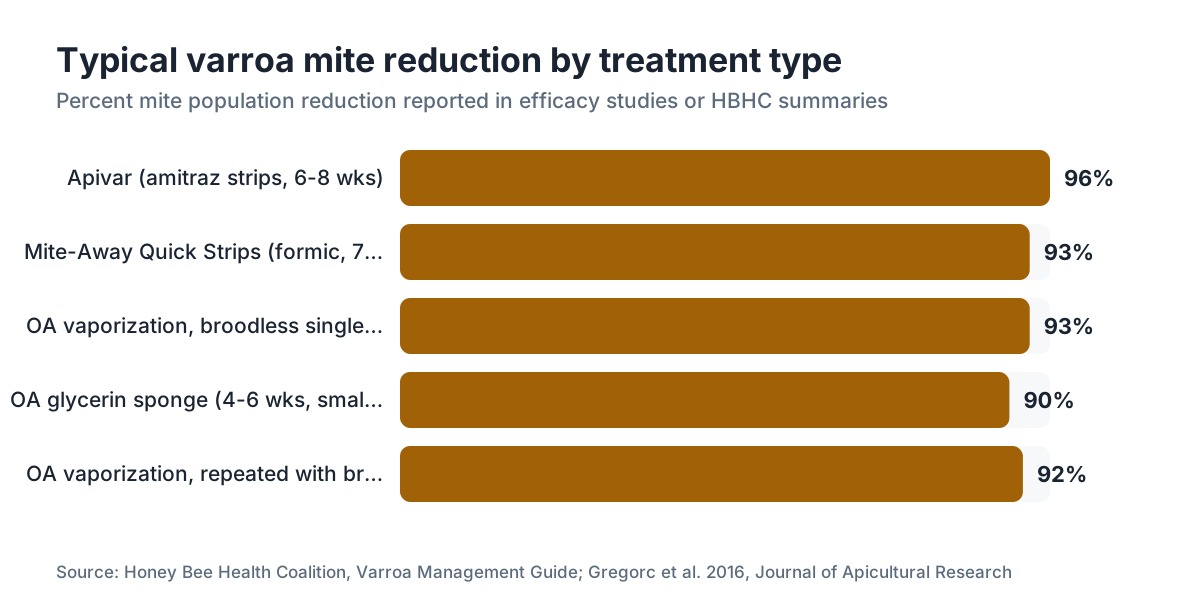
Honest answer: pretty effective, but the data is thinner than what you get from a product that ran the full EPA registration gauntlet. Small trials report 85 to 95 percent mite reduction over a four to six week treatment. Registered miticides like Apivar have deeper, better-controlled evidence behind them.
A hobbyist-run trial coordinated through the Honey Bee Health Coalition's research network found mite drop reductions above 90 percent in some colony sets over a six-week treatment. University of Montana researchers reported similar numbers in preliminary data shared at conferences between roughly 2018 and 2020, though I am not aware of a final peer-reviewed paper from that specific project as of this writing.
Here is how OA sponges sit against registered treatments, using available efficacy data:
| Treatment | Typical mite reduction | Duration | Brood penetration |
|---|---|---|---|
| OA vaporization (single) | 90-97% (broodless only) [6] | 1 application | No |
| OA vaporization (repeated) | 90-95% with brood present | 3-5 treatments over weeks | Partial |
| OA sponge (glycerin) | 85-95% (reported, small trials) [4] | 4-6 weeks passive | Partial (slow release) |
| Apivar (amitraz strips) | 93-99% [7] | 6-8 weeks | Yes |
| Mite-Away Quick Strips (formic) | 90-97% [7] | 7-14 days | Yes (with ventilation) |
The sponge's edge over a single vaporization is persistence. Its weakness against Apivar is that amitraz has a stronger evidence base, reaches mites in capped cells more reliably, and is fully registered. If a colony is collapsing under a mite load, this is not the moment to test a DIY sponge. Reach for the strongest registered tool you have.
Sponges make the most sense inside a rotation. Use them after the main honey harvest, when you want a hands-off treatment that does not need you to fire up a vaporizer over and over.
To track counts before and after any treatment, the free mite count calculator at VarroaVault helps you read your alcohol wash results and decide whether a follow-up is needed.
What are the safety risks of making and using OA sponges?
Oxalic acid is a corrosive hazard, full stop. EPA's registration review of oxalic acid for bee use flags risks to applicators from skin and eye contact and from breathing dust or vapor [1]. Treat the mixing step as the dangerous part.
For you, the mixer:
- Skin contact causes irritation and, with prolonged exposure, chemical burns. Wash right away with plenty of water.
- Eye contact is serious. Flush with water for at least 15 minutes and get medical help.
- Breathing OA dust during mixing can damage your respiratory tract. OSHA sets the permissible exposure limit for oxalic acid dust at 1 mg/m3 as an 8-hour time-weighted average [8]. An N95 cuts your exposure a lot, but a powered air-purifying respirator (PAPR) is better if you mix in bulk.
- Never eat, drink, or touch your face while working with OA.
For the bees:
Bees handle oxalic acid better than mites do, but a high enough concentration kills bees too. The danger climbs in small, stressed colonies and in high heat, because heat speeds up vapor release. Inside-hive temperatures above 35°C (95°F) are the risky zone. Check the colony two to three days after placing the sponge and watch for unusual piles of dead bees at the entrance.
For honey safety:
Honey already carries background oxalic acid, around 8 to 14 mg/kg [9]. Treated colonies show slightly higher residues that drift back toward baseline once treatment ends. The EU set a maximum residue limit of 10 mg/kg for oxalic acid in honey [9]. The U.S. FDA has not set a specific MRL for OA in honey as of this writing. The practical rule from Api-Bioxal's label is short: no supers on during treatment.
When is the best time of year to use OA sponges?
Late summer into fall is the sweet spot, after the honey harvest comes off and before the colony forms its winter cluster. Timing an OA sponge works like timing any slow-release oxalic acid treatment.
Here is why that window wins. By August across most of North America, the colony has stopped expanding hard. Mite populations, though, have been building all summer and are near their peak. Varroa in late summer can make up 25 percent or more of the adult bee mass in a collapsing colony [3]. Drop a sponge in early August, leave it six weeks, and the treatment runs through September, knocking mites down before the long-lived winter bees are raised. Winter bees that develop under heavy mite loads come out physiologically compromised and rarely make it to spring.
Spring works too, but it is trickier. The colony is building fast, the queen is laying hard, and the sponge's slow release competes with a brood nest that is expanding under it. Some beekeepers use sponges in spring to bridge the gap between inspections. If spring counts are over threshold, though, a faster tool usually serves better.
Summer with supers on is off-limits. No exceptions.
Winter, in a broodless cluster, is where oxalic acid shines as a single-dose treatment, and there a dribble or vaporization beats a sponge. The cluster is tight and the whole job ends in one visit.
How do OA sponges compare to commercial glycerin-OA products?
Commercial glycerin-OA sponge products have started moving through the EPA registration pipeline and are available in some U.S. markets. Their advantage is legal certainty: a registered label tells you the exact concentration, the approved application method, and the approved timing. You are also not on the hook for a mixing error.
The DIY version's advantage is cost. Api-Bioxal runs about $25 to $40 for a 35-gram packet, which treats one to three hives depending on method. A kilogram of food-grade glycerin costs $10 to $15. Run ten or more hives and that gap adds up fast.
Still, I would not tell a new beekeeper to start with DIY sponges. Learn the registered products first. Get comfortable with mite counting and treatment thresholds. Then decide whether the sponge method fits your operation.
For supplies, start with beekeeping supply companies that stock Api-Bioxal and glycerin through bee-specific vendors. That beats a general hardware store, where the oxalic acid products carry no bee-use label.
If you want a shopping checklist covering everything from sponges to PPE, the beekeeping supplies resources point you to reputable sources.
What do you do if the sponge treatment doesn't bring mites below threshold?
First, measure. Do an alcohol wash or sugar roll before treatment, then repeat three to five weeks after you pull the sponge. If your count is still at or above 2 percent (2 mites per 100 bees, the most-cited action threshold from the Honey Bee Health Coalition [3]), you need another round.
Second, do more than slap in another sponge. Rotating your treatment chemistry protects you against resistance. Varroa resistance to amitraz, the active in Apivar, has been documented in some U.S. populations [10]. Resistance to oxalic acid is considered less likely, because it appears to work through broad physical or toxic action rather than a single receptor pathway. Even so, leaning on any one treatment forever is a bad plan.
A practical rescue sequence after a sponge underperforms:
- Confirm the count with a second wash 24 to 48 hours later. Washing error is common.
- If the count holds high, switch to Apivar strips or Mite-Away Quick Strips for this cycle.
- Review your recipe. Right ratio? Fully saturated sponge? Placed in the brood area?
- Ask whether the starting mite load was so high that the sponge was simply overrun.
And if a colony crashes despite treatment, it happens. Write down the mite counts, the treatment dates, and the outcome. That record is how you get better at this.
Frequently asked questions
Can I use hardware store oxalic acid to make bee sponges?
Hardware store wood bleach is usually 99 percent-plus oxalic acid dihydrate but carries no EPA bee-use registration. Using it in a hive is unregistered pesticide use under FIFRA and is technically illegal in the U.S. If you want a more defensible DIY option, Api-Bioxal is the only EPA-registered oxalic acid product approved for honey bee colonies, though its label does not cover sponge application either.
How long does an oxalic acid sponge last in the hive before it needs replacing?
Most beekeepers and small trial reports say the sponge releases effective oxalic acid levels for about four to six weeks at typical summer temperatures. After six weeks it is largely spent and should come out. In hot weather the release runs faster, so a sponge in a hive above 35°C may exhaust itself in three to four weeks. Always run a post-treatment mite wash to confirm efficacy instead of trusting the calendar.
Will the sponge hurt my queen or reduce brood?
At properly mixed concentrations, most hobbyist reports and small trials have not found significant queen loss or brood damage. The risk climbs with higher OA concentrations, in small or struggling colonies, and in very hot hives. Check the colony two to three days after placing the sponge. Unusual dead bee clusters at the entrance, or a patchy brood pattern developing after treatment, means you should remove the sponge and rethink your mix ratio.
How many sponges do I need per hive?
One sponge per brood box is the standard starting point. For a single-brood-box colony, one sponge on top of the frames is enough. A large double-deep colony in peak summer may do better with one sponge in each box. More is not automatically better: too much OA surface area can spike vapor concentrations and stress the bees.
Do I need to remove honey supers before placing OA sponges?
Yes, absolutely. The Api-Bioxal label and general oxalic acid guidance require that honey supers meant for human consumption come off before treatment. Oxalic acid can deposit in honey at elevated levels during treatment. Even though honey already carries some natural OA, you do not want to contaminate a crop or blow past residue expectations for commercial or farmers market sales.
What sponge material works best, and does the brand matter?
Natural compressed cellulose sponges are the material to use. They absorb and slowly release the glycerin solution without breaking down or off-gassing anything problematic. Foam rubber and synthetic sponges behave differently, and some can interact with the OA mixture. The material matters more than the brand. Look for sponges labeled natural cellulose or plant-based, not petroleum-based foam.
Can I treat a hive with open brood using OA sponges?
Yes, and that is one of the method's main claimed advantages over single-dose OA vaporization, which works best on broodless colonies. The slow release is meant to hold a low-level toxic environment across multiple brood cycles, catching mites as they emerge from capped cells. That said, evidence that sponges fully penetrate capped cells is weak. Most of the effect likely comes from killing phoretic mites on adult bees over time.
How do I dispose of leftover OA-glycerin solution safely?
Oxalic acid dissolves in water and biodegrades in soil, but concentrated solutions should not go straight into drains or waterways. For small hobby amounts, dilute the leftover heavily with water (at least 50:1) and pour it onto soil away from water features. For larger amounts, contact your local household hazardous waste program. Never pour concentrated OA solution into a septic system or storm drain.
What mite count threshold tells me I need to treat?
The Honey Bee Health Coalition's Varroa Management Guide sets the action threshold at about 2 mites per 100 bees (2 percent) during the summer brood-rearing season. Some researchers use a stricter 1 percent in late summer, when winter bees are being raised. Below 1 percent is generally a safe range. Above 3 percent in summer, or above 1 percent in August and September, is a red flag that calls for treatment now.
Can I use OA sponges in combination with other treatments?
Running OA treatments alongside other chemicals at the same time is generally not recommended and can stress bees. The better approach is sequential: if counts are very high, use a fast-acting registered treatment like Apivar first to knock the population down, then follow with OA sponges the next season as maintenance. Never stack formic acid and oxalic acid treatments at the same time.
Is there a risk of varroa developing resistance to oxalic acid?
Resistance to oxalic acid in varroa has not been documented in the field as of this writing, and most researchers consider the risk lower than with synthetic miticides, because oxalic acid appears to work through broad physical or toxic mechanisms rather than a single receptor. Even so, leaning on any one treatment forever is poor resistance management. Rotate your treatment classes across seasons.
Do OA sponges work in cold weather or winter?
The glycerin-OA release depends on temperature and humidity inside the hive. In a tight winter cluster with low internal temperatures, the release rate drops hard, which makes sponges a poor midwinter choice. For broodless winter treatment, an OA dribble or vaporization is more reliable and fully labeled. Save sponges for warmer months, when hive temperatures hold above 20°C (68°F) consistently.
Where can I learn more about varroa mite biology to understand why this treatment works?
Understanding the varroa reproductive cycle makes every treatment decision clearer. Varroa destructor reproduces inside capped brood cells, and a full cycle takes about 12 days in worker brood. Phoretic mites (the ones riding on adult bees) are what OA treatments mainly kill. Start with the varroa mite reference page, which covers the life cycle, population dynamics, and why timing treatments to brood cycles matters.
Sources
- EPA, Api-Bioxal Registration and Product Label (EPA Reg. No. 84721-1): Api-Bioxal is the only EPA-registered oxalic acid product for honey bee use; the label prohibits use when honey supers are present and does not cover sponge application.
- FIFRA, 7 U.S.C. § 136j, Unlawful acts (via U.S. Code, Office of the Law Revision Counsel): Using a registered pesticide in a manner inconsistent with its labeling, or using an unregistered pesticide, is an unlawful act under FIFRA at 7 U.S.C. § 136j.
- Honey Bee Health Coalition, Varroa Management Guide (latest edition): The Honey Bee Health Coalition sets the action threshold at 2 mites per 100 bees during the summer brood-rearing season and recommends Api-Bioxal as the registered oxalic acid option.
- University of Montana, Bee Lab, Oxalic Acid Extended-Release Research (conference presentations and preliminary data, 2018-2020): University of Montana researchers reported 85-95% mite reduction in preliminary trials using a glycerin-oxalic acid sponge treatment at approximately 1:2 OA-to-glycerin ratios.
- USDA Agricultural Research Service, Bee Research Laboratory, Varroa biology overview: Varroa destructor reproduces inside capped brood cells, with a reproductive cycle in worker brood of about 12 days.
- Gregorc, A. et al. (2016), 'Oxalic acid treatment for Varroa destructor control in Apis mellifera colonies', Journal of Apicultural Research: Single-application OA vaporization in broodless colonies achieves 90-97% mite reduction.
- Honey Bee Health Coalition, Tools for Varroa Management Guide, Efficacy Comparison Data: Apivar (amitraz) shows 93-99% mite reduction over 6-8 weeks; Mite-Away Quick Strips (formic acid) show 90-97% reduction over 7-14 days in published efficacy summaries.
- OSHA, Occupational Chemical Database: Oxalic Acid: OSHA sets a permissible exposure limit (PEL) for oxalic acid dust of 1 mg/m3 as an 8-hour time-weighted average.
- European Food Safety Authority (EFSA), Scientific Opinion on the safety of oxalic acid for bees, EFSA Journal 2016: Naturally occurring oxalic acid in honey ranges from approximately 8 to 14 mg/kg; the EU maximum residue limit is 10 mg/kg for treated colonies.
- Rinkevich, F.D. et al. (2020), 'Resistance to amitraz in Varroa destructor from the USA', PLOS ONE: Varroa resistance to amitraz (the active ingredient in Apivar) has been documented in some U.S. mite populations.
Last updated 2026-07-09