How to treat bees with oxalic acid: the complete guide
TL;DR
- Oxalic acid kills varroa on adult bees with roughly 90 to 95% efficacy when you apply it to a broodless colony.
- Three EPA-registered methods exist: dribble, vaporization, and extended-release (Api-Bioxal).
- Timing beats method every time.
- Treat during a broodless window in late fall, or after an artificial broodbreak, for the best kill rate.
What is oxalic acid and why do beekeepers use it for varroa?
Oxalic acid is an organic compound that occurs naturally in rhubarb, spinach, and dozens of other plants. In beekeeping it's the active ingredient in Api-Bioxal, the only EPA-registered oxalic acid product approved for honey bee colonies in the United States [1]. It kills by contact. Mites riding on adult bees pick up the acid and die. Mites sealed inside capped brood cells never touch it, which is why timing decides whether your treatment works.
Beekeepers reach for oxalic acid because it works and because it leaves no detectable residue in honey at normal rates. The Honey Bee Health Coalition's Varroa management guide lists it as a core tool for integrated pest management, right alongside amitraz and the synthetic pyrethroids [2]. It's also cheap. A 35-gram packet of Api-Bioxal runs about $12 to $20 depending on supplier, and that treats multiple hives.
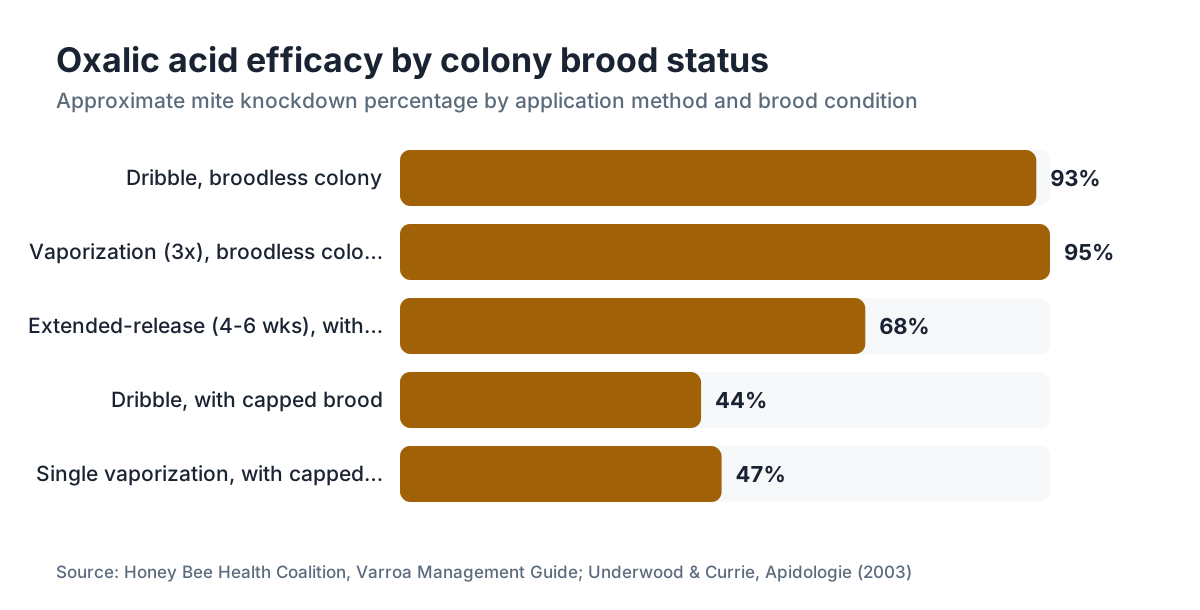
Here's the honest caveat. Oxalic acid does poorly when brood is present. Studies keep showing efficacy dropping below 50% in colonies with significant capped brood, because most of the mite population is sealed away where the acid can't reach [3]. That's not a flaw in the product. That's the mite's biology working against you.
Is oxalic acid legal to use in bee hives in the US?
Yes, with one detail that trips people up. The only legal oxalic acid product for treating honey bees in the United States is Api-Bioxal (oxalic acid dihydrate 97.3%), registered by the EPA under Registration Number 84664-1 [1]. Chemicals Laif manufactures it, and several beekeeping suppliers distribute it. Homemade oxalic acid solutions or unregistered bulk oxalic acid are off-label and not federally legal in a hive, even though the molecule is identical.
The EPA approved Api-Bioxal in 2015 for dribble application in broodless colonies. A 2021 label update added vaporization and an extended-release sponge method [1]. Each method carries its own directions, and the label is the law. Not a suggestion. The law.
Api-Bioxal can be used in colonies with the honey supers removed. For vaporization and extended-release, the label has provisions that allow treatment with supers in place under specific conditions. Read your current label closely. It has been revised more than once, and what you remember from three years ago may not match the packet in your hand [1].
What are the three oxalic acid application methods?
Api-Bioxal's current label covers three methods. They differ in equipment, timing, labor, and how long the treatment stays active inside the hive.
Dribble (trickle) method
You mix Api-Bioxal into 1:1 sugar syrup (35g of OA per liter of 1:1 sucrose syrup by weight) and dribble 5 mL per seam of bees with a syringe or a purpose-built applicator. Maximum dose is 50 mL per colony, no matter how big the colony looks [1]. This is the oldest method. It needs nothing but a syringe, and it works in broodless colonies. The bees groom each other and spread the acid around. The catch: you're adding sugar water, which can trigger brood rearing if you do it too early in spring.
Vaporization (sublimation) method
A vaporizer heats a measured dose of oxalic acid crystals (typically 1 to 2 grams per application, per the label) into a gas that condenses on the bees. It works well in cold weather when the cluster is tight, and it penetrates that cluster better than dribble does. You need a vaporizer (about $30 for a basic wand-style unit, $150 or more for a battery-powered model) and real respiratory PPE. Seal the hive entrance for about 10 minutes after treatment [1]. Space multiple treatments 5 to 7 days apart during a broodless stretch to catch mites emerging from any late cells.
Extended-release (sponge/glycerin) method
The newest approach. You soak a cellulose sponge or cardboard strip in a glycerin-based oxalic acid solution and lay it across the top bars. Bees walk over it and pick up small doses for weeks (the label puts treatment duration at roughly 4 to 6 weeks) [1]. This one keeps killing as mites emerge from brood across several cycles. It's the only oxalic acid method that shows meaningful efficacy when brood is present. Virginia Tech and other groups reported promising results, though real-world numbers in brood-heavy colonies swing more than the broodless methods [4].
A quick comparison of the three:
| Method | Brood status | Treatments needed | Equipment cost | Labor per hive |
|---|---|---|---|---|
| Dribble | Broodless only | 1 (can repeat once) | ~$5 (syringe) | Low |
| Vaporization | Broodless preferred | 1-3 over 2-3 weeks | $30-$150+ | Medium |
| Extended-release | Works with brood | 1 placement, 4-6 wks | ~$10 (materials) | Low (1 visit) |
When is the best time to treat bees with oxalic acid?
The best window is late fall to early winter, after the colony goes broodless on its own. Across most of the continental US that lands somewhere between October and January, depending on your latitude and the year's weather. The colony is clustered, the summer mite buildup has peaked, and with no capped brood, nearly every mite in the hive is riding an adult bee where the acid can find it [2].
One well-timed winter dribble or vaporization in a truly broodless colony knocks mite loads down by 90% or more [3]. That's the best return on effort in all of beekeeping. Don't skip it because the forecast looks rough. Bees shrug off a brief cold-weather intrusion far more easily than they survive a heavy mite load into spring.
The second-best window comes after an artificial broodbreak in spring or summer. Cage the queen for 24 days (one full worker brood cycle plus a few days) to force broodlessness, then treat. More work, but it resets mite levels mid-season when they'd otherwise climb out of control.
Spring treatment before the honey supers go on works too, but only if the colony is still broodless. Once brood rearing revs back up, oxalic acid loses its edge fast unless you switch to extended-release. Nobody has clean data on the exact threshold that should trigger which response, but the Honey Bee Health Coalition recommends treating once alcohol wash counts hit 2% (2 mites per 100 bees) during the brood-rearing season [2].
How do you actually apply the oxalic acid dribble method step by step?
Gather everything first: a packet of Api-Bioxal, a kitchen scale accurate to 1 gram, warm 1:1 sugar syrup (equal parts sugar and water by weight), a mixing container, a large-bore syringe (60 mL is handy), nitrile or latex gloves, safety glasses, and at minimum a dust mask [1].
Mix the solution. Weigh out 35 grams of Api-Bioxal and dissolve it into 1 liter of warm 1:1 sucrose syrup. Stir until it's fully dissolved. Do this outside or somewhere with strong airflow. The dust and vapor irritate your airways and eyes.
Open the hive and find the cluster. On a cold day the bees sit in a tight ball. Don't pry them apart. You treat each seam you can see.
Load the syringe and apply 5 mL per occupied seam (the gap between two frames where bees are clustered). Work across, one seam at a time. Respect the 50 mL cap per colony, even if the hive looks huge [1].
Close the hive gently. No need to hang around. The bees spread the treatment by grooming.
One treatment in a broodless colony usually does the job. The label allows a second if you need it, but a single application in a truly broodless hive is highly effective. Write the date on the lid so you don't re-treat too soon.
Clean the syringe well. Oxalic acid corrodes metal and will wreck a metal syringe if it dries inside.
How do you use an oxalic acid vaporizer safely?
Vaporization is faster per hive once you're set up, and it works in cold weather when you'd rather not crack the cluster open. The trade-offs are the equipment cost and a real respiratory hazard if you skip the PPE.
What you need: a vaporizer rated for Api-Bioxal (a wand-style sublimator or a battery-powered unit), a half-face respirator with OV/P100 cartridges (a dust mask won't cut it), safety glasses or a face shield, gloves, and something to seal the hive entrance [1]. A folded scrap of foam seals the entrance fine.
Load the vaporizer pan with the dose your current label specifies (check it, since the label has changed; current guidance is 1 gram per brood box). Slide the wand through the bottom-board entrance or a small opening in the hive body. Tape or foam over the other openings.
Power the unit per its instructions until the crystals fully sublimate, then leave the entrance sealed for 10 minutes [1]. Stand upwind. Don't lean over the hive during treatment or during that sealed window.
For broodless colonies, three treatments spaced 5 to 7 days apart is a common protocol, especially if you can't swear the colony is 100% broodless [2]. That spacing catches mites that were still capped during the first round.
Respiratory protection is not optional. Oxalic acid vapor damages your lungs and upper airway, the harm builds up over time, and you may not notice it until it's real. The EPA label requires the respirator. Buy a proper half-face model. They cost about $30 at any hardware store, or from beekeeping supply companies.
Does oxalic acid work when brood is present in the hive?
For dribble and vaporization, mostly no. Studies of dribble and vaporization efficacy in colonies with capped brood keep landing below 50%, sometimes far below, because mites inside sealed cells never get touched [3]. It isn't the product failing. Oxalic acid is a contact treatment, and capped wax is a wall it can't cross.
Extended-release changes the math. Because the treatment stays active for 4 to 6 weeks, it keeps killing mites as they crawl out of capped cells across several brood cycles. Virginia Tech's apiculture team published work showing extended-release oxalic acid glycerin treatments cut mite loads meaningfully in colonies with active brood, though the results varied more than in broodless colonies [4]. The Honey Bee Health Coalition has folded extended-release OA into its recommendations as a warm-weather option [2].
Got a colony with brood, a high mite count, and no broodless window in sight? Your real options are a broodbreak (cage the queen), a different miticide class (amitraz products or formic acid), or extended-release OA. Each comes with trade-offs in temperature limits, honey contamination risk, and labor.
Knowing the mite's life cycle helps you time all of this. The varroa mite article on this site goes deeper on the reproductive cycle and why the phoretic (on-bee) phase is your treatment window.
What PPE and safety precautions do you need with oxalic acid?
Oxalic acid isn't casually dangerous, but it isn't harmless either. The main risks are respiratory irritation from dust or vapor, plus skin and eye irritation from direct contact.
For dribble, nitrile gloves and safety glasses are the floor. Mixing the powder kicks up dust, so mix outdoors or wear a dust mask while you do it. Once it's dissolved in syrup, the volatility drops off.
Vaporization is stricter. The Api-Bioxal label requires a NIOSH-approved respirator with combination cartridges (organic vapor plus P100 particulate) [1]. A face shield or goggles, chemical-resistant gloves, and a long-sleeved shirt are also specified. That's a legal label requirement, not friendly advice.
Oxalic acid vapor is heavier than air. It settles near the ground and lingers around hive openings after treatment. Don't crouch beside an actively vaporizing hive without a respirator. Keep bystanders and kids well back.
Keep water nearby. If solution gets in your eyes, flush for 15 to 20 minutes and get medical attention. Skin contact is less serious but rinse it off promptly.
Store Api-Bioxal in its original container, cool and dry, away from children. Shelf life runs about 2 to 3 years from the manufacture date. Degraded product may lose potency, though there's limited published data on OA degradation rates in storage.
How many treatments do you need and how often can you retreat?
The Api-Bioxal label limits you to one treatment period per year via dribble, though it permits a fall dribble and a spring dribble if both are warranted [1]. Vaporization allows multiple treatments within a period, spaced at least 5 to 7 days apart. Extended-release is a single placement lasting 4 to 6 weeks.
In the field, most beekeepers doing a late-fall broodless vaporization run 2 to 3 treatments a week apart. The first hits mites on adult bees. Mites that were still capped during that first round emerge over the following days and get caught by the later treatments. A single vaporization in a truly broodless colony can rival multiple treatments, since there are no capped mites left to emerge, but you rarely know for certain that a colony is 100% broodless.
Don't over-treat. There's evidence that repeated high-dose oxalic acid stresses bees, especially larvae, and can raise winter mortality [3]. Follow the label. More treatment isn't better treatment.
Track mite counts before and after. An alcohol wash or sugar roll 48 to 72 hours post-treatment gives you a rough efficacy read. If mite levels stay high after a well-timed treatment, the usual suspects are brood still in the colony, reinfestation from neighboring hives, or sloppy application. A tool like the VarroaVault treatment tracker lets you log counts and compare pre- and post-treatment numbers across hives over time.
Can you treat bees with oxalic acid when honey supers are on?
This is one of the most common questions, and the answer shifted with label revisions. Under the current Api-Bioxal label, vaporization and extended-release can be applied with supers meant for human consumption in place. Dribble cannot [1]. The logic: vapor and extended-release leave lower oxalic acid residue in honey than dribble, which pours OA-laced syrup straight into the hive.
The FDA treats oxalic acid as a naturally occurring substance in honey at very low levels. Properly vaporized OA doesn't meaningfully raise honey OA above background, according to the research behind the 2021 label update [1].
Even so, plenty of beekeepers pull supers before vaporizing just to stay conservative, especially when treating in late summer ahead of a fall harvest. Treat in winter when supers are off anyway, and the question disappears.
Never dribble with supers on. The label is flat-out clear, and it makes physical sense: you're adding OA solution directly into the cluster, and it can travel upward.
How do you know if your oxalic acid treatment worked?
The only way to know is to measure mite levels before and after. Eyeballing the bees tells you nothing. You cannot see a 2% infestation rate.
Alcohol wash is the most accurate check. Pull about 300 adult bees (roughly half a cup) off a brood frame, wash them in 70% isopropyl alcohol, shake, and count the mites in the liquid. Divide mites by bees, multiply by 100 for a percentage. Go from 3% before treatment to 0.3% a week after, and that's about a 90% knockdown [2].
Sugar roll is a non-lethal alternative, a bit less accurate. Sticky-board counts track trends but won't give you a real infestation rate on their own.
Time your post-treatment check 5 to 7 days after your final vaporization, or 2 to 3 days after a dribble. Check earlier and mites from late-emerging cells may not show up in your count yet.
If counts still top 2% after treating a broodless colony, something went sideways: the application was off, the colony wasn't actually broodless, or reinfestation is coming from nearby collapsing colonies. Check your neighbors' hives if you can. Robbing in fall spreads mites fast.
Want a systematic way to track this? The free tools at VarroaVault let you log pre- and post-treatment counts and flag when a colony needs attention again.
Where can you buy Api-Bioxal and what does it cost?
Api-Bioxal sells through most major US beekeeping suppliers. A 35-gram packet, enough for 100-plus dribble treatments or many vaporization doses depending on method, runs about $12 to $20 [5]. Larger quantities (175g) go for roughly $40 to $60. Prices move with supplier and year, so shop around.
You don't need a prescription or a vet to buy Api-Bioxal in the US, unlike some other miticides. It's sold straight to beekeepers. Many suppliers offer free or cheap shipping over a set order size. See free shipping honey bee supply companies for current options.
Vaporizers are a separate buy. Wand-style units that clip to a 12V battery run about $30 to $60 from most beekeeping supply companies. Self-contained battery units climb higher, sometimes $120 to $150. The cheap wands work fine for a few hives. Run 20 or more and the time savings of a battery unit start paying for themselves.
For the broader kit you'll want on hand, the beekeeping supplies guide covers the rest.
What mistakes do beekeepers most often make with oxalic acid?
Treating with brood present is the single most common error. Beekeepers read the calendar instead of the colony, assume a November hive is broodless, and treat over a few frames of capped brood. The mites in those cells survive, emerge over the next two weeks, and the infestation rolls on. Inspect and confirm broodlessness before you treat, or use extended-release if you can't confirm it.
Using non-registered products is second. Bulk oxalic acid from wood restoration or pool suppliers is the same molecule, but it isn't EPA-registered for bees, its purity may differ, and using it breaks the label. It also makes troubleshooting harder, because you don't really know what you put in the hive.
Skipping the mite count before and after leaves you blind to whether the treatment worked or reinfestation is underway. Treating without counting is like taking antibiotics without knowing you have an infection. You did something, but you don't know what.
Treating too late in fall is another timing miss. If a mite collapse already killed your bees by December, a December treatment does nothing. The window in most northern US states is October, sometimes late September. By the time many hobbyists get worried, the damage is already done.
Skipping PPE, especially for vaporization, is a mistake that compounds. One unprotected vaporization probably won't harm you. Fifty across a season might. Don't run that experiment on your own lungs.
Frequently asked questions
Can I use oxalic acid on a hive with a laying queen?
Yes. The treatment targets mites on adult bees, not the queen. A laying queen means brood is present, which sharply cuts dribble and vaporization efficacy because mites in capped cells are protected. For a colony with a laying queen, extended-release glycerin is your best oxalic acid option, or cage the queen for a broodbreak first, then treat once the colony goes broodless.
How long does it take for oxalic acid to kill varroa mites?
Most mites on adult bees die within 24 to 72 hours of contact. You'll often see a big mite drop on your sticky board in the first 48 hours. By day 5 to 7 post-treatment the main kill pulse is over. A post-treatment alcohol wash after day 7 gives you a reliable read on how well the treatment worked.
Will oxalic acid hurt my bees?
At label doses in broodless colonies, oxalic acid has low toxicity to adult bees. Open brood (eggs and young larvae) is more sensitive and can be damaged if dribble solution hits it directly. Overdosing past the 50 mL maximum raises bee mortality. Stay on label. Some studies show repeated treatments beyond label limits increase winter die-off.
What temperature is too cold to treat with oxalic acid?
For dribble, most people treat above 40°F (4°C) so the solution flows and bees are mobile enough to spread it by grooming. Vaporization works at lower temperatures, even into the mid-20s°F, because vapor moves through a cold cluster well. Extended-release has the widest temperature tolerance since it's a slow passive release.
Do I need to remove honey supers before treating with oxalic acid?
For dribble, yes, always pull supers first. For vaporization and extended-release, the current Api-Bioxal label (revised 2021) allows treatment with supers meant for human consumption in place, because residue studies showed those methods don't meaningfully raise honey oxalic acid above natural background. Even so, many beekeepers pull supers anyway when they can.
How do I mix oxalic acid solution for the dribble method?
Dissolve 35 grams of Api-Bioxal into 1 liter of warm 1:1 sucrose syrup (equal parts sugar and water by weight). Stir until fully dissolved. That's the label concentration. Don't strengthen it thinking it works better. Apply 5 mL per seam of bees, up to 50 mL per colony. Mix it fresh each time; don't store mixed solution long-term.
How many times a year can I treat with oxalic acid?
The current Api-Bioxal label allows one treatment period per year for dribble, with the option of a fall and a spring treatment if both are warranted. Vaporization allows multiple applications within a period (typically 2 to 3 treatments spaced 5 to 7 days apart). Extended-release is one placement per period. Always read your current label, since it has been revised multiple times since 2015.
Is oxalic acid safe to use near a honey harvest?
Yes, applied correctly. Oxalic acid occurs naturally in honey at low concentrations. Research behind the Api-Bioxal label found vaporization and extended-release don't significantly raise residue above what's already present. Dribble, though, should not be used with supers on, because it introduces OA directly into the hive in solution form.
What respirator do I need for oxalic acid vaporization?
The Api-Bioxal label requires a NIOSH-approved half-face respirator with combination organic vapor and P100 particulate cartridges. A simple dust mask isn't adequate for vaporization. OV/P100 combination cartridges cost about $20 to $30 at hardware stores. Replace cartridges on the manufacturer's schedule. Wear a face shield or chemical splash goggles alongside the respirator.
What's the difference between Api-Bioxal and plain oxalic acid?
Chemically, Api-Bioxal is oxalic acid dihydrate, the same compound in bulk wood bleaching or cleaning products. The difference is regulatory. Api-Bioxal is the only EPA-registered formulation approved for honey bees in the US (EPA Reg. No. 84664-1). Using unregistered oxalic acid in hives violates federal pesticide law regardless of purity, and could expose you to liability if your hives are inspected.
Can oxalic acid be used on package bees or nucs?
Yes, and a freshly installed package or nuc is an ideal case, because they're typically broodless or nearly so for the first couple of weeks. A single dribble or vaporization when a package is freshly installed and broodless knocks mite levels down before the colony builds, giving you a cleaner start. Dose by the number of seams of bees present.
Why did my mite counts stay high after an oxalic acid treatment?
The usual reasons: brood was present during treatment (protecting capped mites), the colony wasn't inspected first, reinfestation from collapsing neighbor colonies via robbing, or application error (too little solution, poor cluster penetration). Do an alcohol wash before treating to set a baseline, confirm broodlessness, and recheck counts 7 days after. If counts stay high, switch to a different miticide class.
Does oxalic acid work on small hive beetles or other hive pests?
No. Oxalic acid kills varroa mites through contact toxicity at hive-treatment concentrations. It has no meaningful effect on small hive beetles, wax moths, nosema, or other common pests. It's a varroa-specific tool, and you'll need separate strategies for other pest pressures.
How do I count mites before and after treatment to check efficacy?
Alcohol wash is the most accurate. Collect about 300 adult bees (roughly half a cup) from a brood frame into a jar with 70% isopropyl alcohol, shake for 60 seconds, and count the mites in the liquid. Divide mite count by bee count, multiply by 100 for a percentage. Do the pre-treatment wash 1 to 2 days before treating, the post-treatment wash 5 to 7 days after your final application.
Sources
- EPA, Api-Bioxal product registration and label (Reg. No. 84664-1): Api-Bioxal is the only EPA-registered oxalic acid product for honey bee colonies in the US; label specifies dribble, vaporization, and extended-release methods, dosing, PPE requirements, and super restrictions
- Honey Bee Health Coalition, Varroa Management Guide: HBHC lists oxalic acid as a core IPM tool and recommends treating when alcohol wash counts reach 2% (2 mites per 100 bees) during brood-rearing season
- Underwood & Currie (2003), Apidologie, Oxalic acid as a miticide in honey bee colonies: Dribble and vaporization efficacy drops below 50% in colonies with significant capped brood; single broodless-window treatment achieves 90%+ knockdown
- Virginia Tech, Department of Entomology (extended-release oxalic acid glycerin research): Extended-release oxalic acid glycerin treatments reduced mite loads significantly in colonies with active brood, with more variable efficacy than broodless methods
- Penn State Extension, Varroa Mite Treatment Options: Api-Bioxal retail pricing and availability from beekeeping suppliers; 35g packet for approximately $12-20
- University of Florida IFAS Extension, Varroa Mite Management: Oxalic acid does not leave detectable residues in honey at normal application rates; efficacy and timing guidance for southern US climates
- USDA AMS National Organic Program, allowed substances: Oxalic acid is listed as an allowed substance in organic livestock management under NOP regulations
- North Carolina State University Extension (apiculture): Multiple vaporization treatments spaced 5-7 days apart recommended for colonies not confirmed broodless; broodbreak protocol details
- Michigan State University Extension, Pollinators and bees: Late-fall broodless window for oxalic acid treatment in northern US states; October timing recommendation
- Honey Bee Health Coalition, Tools for Varroa Management (treatment comparison): Oxalic acid efficacy comparison across methods; dribble and vaporization data in broodless vs. brooded colonies
- University of Minnesota Extension, Varroa Mite Control: Alcohol wash protocol for pre- and post-treatment mite monitoring; timing guidance for post-treatment count accuracy
Last updated 2026-07-09