Mann Lake Apivar strips: what beekeepers actually need to know

TL;DR
- Apivar (amitraz 3.33%) kills 90-95% of varroa in properly managed colonies.
- Slide two strips between brood frames and leave them 6 to 8 weeks.
- It works at any temperature, which oxalic and formic acid can't claim.
- The catch: amitraz resistance is documented in U.S.
- mites, and it builds fast if Apivar is your only tool.
- Rotate.
What is Apivar and how does amitraz kill varroa mites?
Apivar is a plastic strip loaded with amitraz at 3.33%. Bees walk across it, pick up the active ingredient on their body hairs, and carry it through the colony by normal contact. Amitraz is a formamidine acaricide. It binds to octopamine receptors in the varroa mite's nervous system, causing hyperactivity, detachment from the bee, and death [1]. Bees have far fewer of those receptors than mites do, which is why the margin of safety holds at label rates.
The strip releases amitraz slowly over weeks, and that's the whole point. A single acute dose would miss mites sealed inside brood cells. Sustained exposure catches new mites as brood hatches, which is why the label sets a minimum of 6 weeks and a maximum of 8 weeks in the colony [2]. Pull them early and you leave a reservoir of mites in capped cells. Leave them past 8 weeks and you gain nothing while risking wax contamination.
Apivar has no temperature restriction. That's what separates it from oxalic acid vaporization (which loses its grip on mites tucked in capped brood) and from formic acid products that need a narrow temperature window. Use it in early spring when nights still drop hard. Use it in a fall treatment starting in September. The bees do the distribution work either way.
How do you use Apivar strips correctly: dosing, placement, and timing?
The EPA-registered label is the legal document that governs this product in the United States, and it is specific [2]. Two strips per colony is the standard dose. Running a strong double-deep? The label still says two strips, one per brood box, placed in the area of active brood. For a colony packed with more than ten frames of bees, some extension guidance suggests contacting the manufacturer, but in practice most experienced beekeepers run two strips per single brood box regardless of colony size.
Placement matters a lot. The strips need direct contact with bee traffic, which means sliding them between two frames of capped or open brood, not hanging them on the outside frames where bee density is low. Bees have to physically walk over the strips again and again for transfer to happen. Hang them at the outer edge of the box and you will under-treat.
Timing is where beekeepers get burned. Two windows matter most for colony health:
- Early spring (before the main nectar flow, when brood production is ramping up): treats the overwintered mite load before it explodes on new brood.
- Late summer / early fall (after the honey supers come off, before the winter bees are raised): the more important window by far. The bees that carry the colony through winter are raised in August and September. A high mite load then means varroa-vectored viruses like deformed wing virus will cripple those bees before winter even starts [3].
Don't apply Apivar with honey supers meant for human consumption on the hive. That's a label requirement and a food safety issue [2]. Remove supers, treat, then add supers back after the strips come out.
Mark the calendar the day you put strips in. Eight weeks is the ceiling. Pull them on schedule.
What mite kill rate can you expect from Apivar?
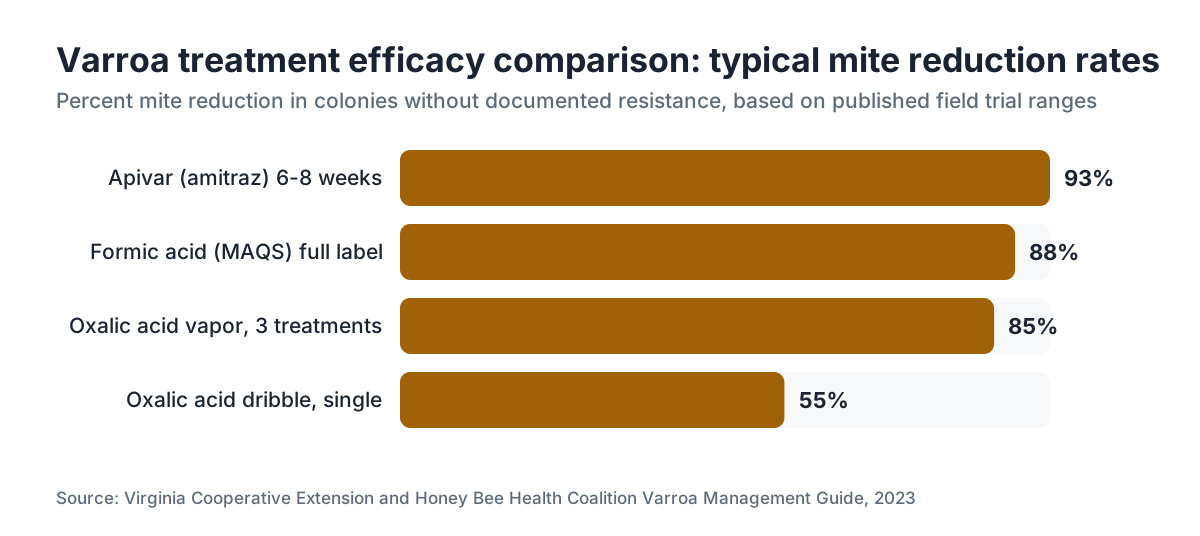
Efficacy in published trials is strong. A frequently cited Virginia Cooperative Extension study found amitraz treatments reaching greater than 90% mite reduction in colonies without documented resistance [4]. The Honey Bee Health Coalition's Varroa Management Guide calls amitraz-based products among the most effective chemical options when resistance is absent, and it cautions that "amitraz resistance has been documented in some varroa populations in the United States" [3].
That qualifier does the heavy lifting. Treat a colony, recheck mite loads three weeks later, and see barely any drop? You might be looking at resistant mites, not a placement error. An alcohol wash or sugar roll before treatment, then again 2 to 3 weeks in, tells you whether the product is working. If the numbers aren't falling, switch mode of action immediately.
Efficacy also drops if you pull strips early. Six weeks is a true minimum. The University of Minnesota Bee Lab's work supports running the full duration to catch mites emerging from late-sealed brood [5].
How much do Apivar strips cost at Mann Lake compared to other suppliers?
Apivar comes in packs of 10 strips (treats 5 colonies) or 50 strips (treats 25 colonies). Pricing shifts by supplier and season. Here's a realistic range as of mid-2025:
| Pack size | Strips | Colonies treated | Typical price range | Cost per colony |
|-----------|--------|-----------------|--------------------|-----------------|
| Small pack | 10 | 5 | $28 - $35 | $5.60 - $7.00 |
| Large pack | 50 | 25 | $110 - $135 | $4.40 - $5.40 |
Mann Lake carries both pack sizes, and its pricing sits in the middle of the market. For sideliners running 25 or more colonies, the 50-strip pack is the obvious buy. Hobbyists with 2 to 5 hives usually end up with the small pack even though the per-colony cost is higher. That's the reality of small-scale beekeeping.
One thing to watch: amitraz for bees stays available without a veterinary feed directive in most states as of 2025, but a few states have their own applicator or precursor rules [6]. Check your state department of agriculture if you're unsure. You can find good suppliers beyond Mann Lake by comparing current prices across beekeeping supply companies, since Apivar pricing moves seasonally.
Avoid strips of unknown storage history. Amitraz degrades with heat. Strips that baked in a hot warehouse or a delivery truck in July are worth less than what you paid.
Is amitraz resistance real, and how do you know if your mites have it?
Yes, resistance is real, and it's been documented in the U.S. across multiple states. The mechanism involves mutations in the octopamine receptor gene that cut amitraz binding affinity [7]. Resistance doesn't appear overnight. It builds when beekeepers lean on amitraz as their only tool year after year, which is exactly what happens when one product dominates the market and people get comfortable.
The warning sign is a treatment that does far less than expected. Do an alcohol wash before treatment and find a 4% infestation rate (4 mites per 100 bees), then repeat the wash 3 weeks in and find 3.5%? Something is wrong. Either placement was poor, the colony swarmed (taking the queen and a chunk of the mite load with it, which throws off your pre-treatment count), or the mites aren't dying.
The honest answer is that nobody has great population-level surveillance on how widespread amitraz resistance really is in the U.S. right now. The closest systematic work came from researchers at the USDA Agricultural Research Service in collaboration with state programs, but a national resistance map doesn't exist as of 2025 [7]. What we do know: this is no longer a theoretical risk.
The fix is rotation. Cycle between modes of action. Oxalic acid (a different mechanism entirely, acting on mite integument and nerve synapses), formic acid, and amitraz each kill mites by different routes. Using all three across different treatment cycles cuts selection pressure on any single resistance pathway. The Honey Bee Health Coalition's tool guide lays out rotation strategies explicitly [3].
Can you use Apivar strips with beetle traps in the same hive?
Small hive beetles are a second-tier problem in many operations, worst in the Southeast and mid-Atlantic. In-hive beetle traps (oil-based or permethrin plastic traps) go alongside mite treatments all the time, and yes, you can run them at the same time as Apivar strips.
They don't interact pharmacologically. Apivar is a contact transfer product for mites. Beetle traps work a different way, either drowning beetles in oil or trapping them physically. The one management note: don't let beetle traps crowd the brood area and push your Apivar strips out of the high-traffic zones. Both need to sit where bees are active.
If you've got a mite problem and a beetle problem at once, prioritize mite strip placement. Varroa is the colony killer. Beetle damage is usually a symptom of a weak colony, and that weakness often traces straight back to high mite loads and the viruses they carry. Treat mites hard first. A strong colony handles beetle pressure on its own.
What safety precautions do you need when handling Apivar strips?
Amitraz is toxic to humans if it gets absorbed through skin in meaningful amounts, and the EPA product label requires specific protective equipment [2]. Gloves are mandatory. The label calls for chemical-resistant gloves. Standard beekeeping gloves (leather or fabric) are not the same thing and don't meet label compliance.
The main human health concern is monoamine oxidase inhibition, a mechanism similar to certain antidepressants. Exposure symptoms include sedation, low blood pressure, and slow heart rate. Acute poisoning from handling strips at label rates is unlikely for a healthy adult wearing proper PPE, but this isn't a product to handle casually, and you don't want children or pets near it during application.
Store unused strips in the original packaging, somewhere cool, away from food. Dispose of used strips per the label, which means wrapping them in the original packaging and putting them in household waste. Don't compost or bury them.
Amitraz is highly toxic to dogs specifically [2]. This comes up more than you'd expect: someone composts used strips, and the dog digs them up. Keep used strips secured until disposal.
How does Apivar compare to other varroa treatments like oxalic acid and formic acid?
This is the comparison most beekeepers actually need before they buy.
| Treatment | Active ingredient | Temperature window | Works on mites in capped brood? | Honey super restriction | Resistance documented? |
|-----------|------------------|-------------------|-------------------------------|------------------------|----------------------|
| Apivar | Amitraz 3.33% | No restriction | Yes (sustained release) | Yes, remove supers | Yes, U.S. cases |
| Oxalic acid (vaporized) | Oxalic acid | Above 50°F for efficacy | No (broodless or extended treatment) | No restriction (API-Bioxal label) | No known resistance |
| Mite Away Quick Strips | Formic acid 65% | 50-85°F (10-29°C) | Yes | Remove supers | No known resistance |
| HopGuard 3 | Hop beta acids | No restriction | Partial | Some label guidance | No known resistance |
Apivar's strengths: broad temperature use, high efficacy when resistance is absent, dead-simple application. Its weaknesses: resistance risk if overused, and no use with honey supers on.
Oxalic acid vaporization is now the most popular alternative. No known resistance, works at any temperature when the colony is broodless (which makes mid-winter treatment very clean), and costs less per round. The drawback is that it needs repeated applications during brood-present periods to catch mites in cells, or you wait for a broodless window. The University of Florida IFAS Extension publishes a useful comparison of treatment windows and timing by product [8].
My honest take: a two-product rotation, Apivar in fall and oxalic acid in winter or spring depending on your brood situation, is a reasonable protocol for most hobbyists. Using Apivar twice a year, every year, is how you breed resistant mites in your own apiary.
When is the best time of year to apply Apivar strips?
The fall treatment is the one that keeps colonies alive. Here's why. The bees that overwinter are raised in a short window, roughly August through early October depending on your latitude. If varroa loads are high during that window, deformed wing virus spreads into those long-lived winter bees and shortens their lives. A colony that looks fine in October can crash in January, not from starvation or cold, but because its overwintering bees were already compromised at birth [3].
The Honey Bee Health Coalition recommends treating late July through August across most of the continental U.S., after the main honey flow but with 4 to 6 weeks of brood-rearing still ahead of the winter bees [3]. That window gives you time to knock down mites hard before the important bees are even laid.
Spring treatment is the second priority. A colony entering a nectar flow with a growing mite load will watch those mites multiply fast on the expanding brood. Treat in early spring, before capped brood gets extensive, and you lower the mite starting point for the whole season.
Treat on mite counts, not the calendar. An alcohol wash of 300 bees from the brood area showing more than 2% infestation (2 mites per 100 bees, or 6 per 300) is the trigger most extension programs use [5]. Below threshold in early summer? You might get away with waiting. Above threshold any time from July through September? Treat now.
For beekeepers new to sourcing supplies, comparing options across beekeeping supply companies before a scheduled treatment saves real money, especially on the 50-strip packs.
Does Apivar leave residues in wax and honey, and should you be worried?
Amitraz residue in wax is a documented, legitimate concern. Because amitraz is lipophilic (fat-soluble), it builds up in beeswax over repeated treatment cycles. Studies analyzing commercial beeswax have found amitraz and its breakdown product DMPF (2,4-dimethylaniline) in samples at varying concentrations [9].
The EPA label bans use while honey supers for human consumption are on the hive, for exactly this reason. Honey sitting in the brood box during treatment can pick up trace residue. The label answer is simple: never treat with supers on.
The long-term wax accumulation question is harder. Old comb in heavily treated apiaries can carry meaningful amitraz levels. Some researchers have linked high amitraz residue in wax to effects on queen development and drone sperm quality, though causality at real-world field concentrations is still debated [9]. The practical takeaway: rotating out old dark comb every 3 to 5 years is good management for several reasons, and this is one of them.
For what it's worth, residue concerns aren't unique to Apivar. Coumaphos (an older synthetic miticide) builds up in wax even faster. Amitraz is actually somewhat less persistent in wax than coumaphos. That's relative, not a clean bill of health.
Where can you buy Apivar strips and what should you look for from a supplier?
Apivar is sold by most major beekeeping distributors in the U.S. Mann Lake is one of the largest and most widely used. Buying from any supplier, the things that matter are storage conditions, the expiration date on the packaging, and pack size relative to your colony count.
Mann Lake's operation is big enough that stock turns over fast, which matters for a product that degrades in heat. Smaller regional suppliers can sit on slower-moving Apivar if they over-ordered in a low-treatment year.
Check for free shipping honey bee supply companies if you're buying in quantity, since shipping weight on 50-strip packs adds up. Some suppliers offer free shipping over a set order threshold, and Apivar is dense enough to tip a modest order over the line.
VarroaVault's free varroa management tools help you calculate treatment timing and doses by colony count before you order. The goal is to never have leftover strips from a past season, because there's no good way to verify storage history once packaging is open.
If you're building out a fuller toolkit beyond mite treatments, our broader beekeeping supplies guides walk through what a well-equipped operation needs across a full season.
What do the Honey Bee Health Coalition and extension programs say about Apivar in a broader mite management protocol?
The Honey Bee Health Coalition's Varroa Management Guide, updated in 2023, is the most cited practitioner-facing document on treatment protocols in the U.S. It treats amitraz (Apivar) as a first-tier option for colonies with active brood, given its efficacy across variable temperatures and its validated mite-kill rates [3]. The guide is blunt that "amitraz resistance has been documented in some varroa populations in the United States," and it builds its rotation recommendations around that fact.
The Coalition's approach is to run an integrated pest management calendar: monitor mite loads with alcohol washes or sticky boards on a set schedule (monthly during brood season, at minimum), treat when thresholds are crossed, and rotate active ingredients across cycles. The guide recommends against using the same product class in back-to-back treatments at the same apiary.
University extension programs echo this. The Penn State Extension apiculture program, the University of Minnesota Bee Lab, and the University of Florida IFAS program all publish treatment timing guides that list Apivar as a spring or fall option alongside oxalic and formic acid products [4][5][8]. None of them back Apivar as a year-round sole treatment.
The extension consensus lands here: Apivar is a good tool for the right moment in a rotation. It isn't the whole answer. The beekeepers who use it well are the ones who also know how to do an alcohol wash, read a mite count, and switch products when the numbers don't fall the way they should. Understanding varroa mite biology makes every treatment decision sharper.
Frequently asked questions
How many Apivar strips do I need per hive?
The EPA label specifies two strips per colony, placed in the active brood area between frames. For a double-deep hive, place one strip per brood box. Do not increase the dose if the colony is large. Strip count stays fixed at two regardless of colony strength under current label requirements. A 10-strip pack covers five colonies; a 50-strip pack covers 25.
Can I use Apivar when honey supers are on?
No. The Apivar label explicitly prohibits application while honey supers meant for human consumption are on the hive. Remove all supers before placing strips. You can add supers back once the full treatment period ends and strips come out. Treating with supers on is a label violation and a food safety problem.
How long do Apivar strips stay in the hive?
Six to eight weeks is the label range. Six weeks is the minimum needed to catch mites emerging from late-capped brood. Eight weeks is the maximum; leaving strips longer does not improve efficacy and increases wax residue. Mark your calendar the day you insert strips and pull them on schedule.
Does Apivar work in cold weather?
Yes. Apivar has no temperature minimum, unlike formic acid products (which need 50-85°F) or oxalic acid dribble (which loses efficacy on cold clusters). That makes it a practical choice for early spring and late fall when nights still drop hard. The contact transfer mechanism works as long as bees keep moving across the strips.
Can varroa mites become resistant to Apivar?
Yes. Amitraz resistance has been documented in varroa populations in the United States, driven by mutations in octopamine receptor genes. The Honey Bee Health Coalition names this risk directly in its Varroa Management Guide. If a full 6-8 week treatment shows minimal mite reduction on follow-up alcohol washes, resistance is possible. Rotate to oxalic acid or formic acid for the next cycle.
How do I know if Apivar is working?
Do an alcohol wash of 300 bees from the brood area before treatment, then again 2 to 3 weeks in. If mite counts aren't falling much (most research uses greater than 90% reduction as the benchmark), check strip placement first. Strips belong in the highest-traffic brood frames. If placement is right and loads aren't dropping, consider resistance and switch products.
Is Apivar safe to use around small hive beetle traps?
Yes. Apivar strips and in-hive beetle traps work through different mechanisms and don't interact pharmacologically. Run both at once with no problem. The one practical note: don't let beetle traps push Apivar strips out of high-traffic brood frames. Mite strip placement in active brood zones takes priority, since varroa is a bigger colony-level threat than beetles in most operations.
What PPE do I need to handle Apivar strips?
The EPA label requires chemical-resistant gloves. Standard leather or fabric beekeeping gloves don't meet that requirement. Amitraz absorbs through skin and is toxic to humans at sufficient doses, causing monoamine oxidase inhibition with symptoms like sedation and low blood pressure. Wash hands well after handling. Keep strips away from children and especially away from dogs, which are highly sensitive to amitraz.
Where can I buy Apivar strips other than Mann Lake?
Apivar is carried by most major beekeeping distributors in the U.S., including Dadant, Kelley Bees, and regional supply stores. Pricing runs similar across suppliers; the 50-strip pack is the better value for anyone treating more than five colonies. Always check the packaging for an expiration date and ask about storage conditions, since amitraz degrades with heat.
Can I use Apivar in a nucleus colony or a new package?
Yes, with adjustments. A nuc on 4 to 5 frames still gets two strips per label requirements, but place them closer together in the brood cluster rather than spanning the full box. For a new package with a just-released queen, wait until the first brood is capped before treating, both to confirm the queen is laying and to put strips in brood area with enough bee traffic.
Does Apivar leave residues in beeswax?
Yes. Amitraz is lipophilic and accumulates in beeswax with repeated use. Studies have detected amitraz and its breakdown product DMPF in commercial wax samples. That's one reason the label bans use with honey supers on, and one reason rotating out old dark comb every 3 to 5 years is good practice. Amitraz persists in wax less than coumaphos but more than oxalic acid products.
How does Apivar compare to oxalic acid for treating varroa?
Apivar works during brood-present periods and kills mites in and around capped cells through sustained contact. Oxalic acid has no known resistance and works cleanly in broodless colonies (winter or after an artificial broodless period), but it needs repeated applications during active brood season. A practical rotation uses Apivar in late summer and oxalic acid for winter or early spring broodless treatments.
What mite count threshold should trigger an Apivar treatment?
Most university extension programs and the Honey Bee Health Coalition use a 2% infestation rate (2 mites per 100 bees in an alcohol wash) as a treatment trigger during the main season. In late summer, some programs drop this to 1% because of the outsized hit to winter bee quality. Count mites with a 300-bee alcohol wash from the brood nest for the most accurate read.
Can I reuse Apivar strips for a second treatment cycle?
No. Apivar strips are single-use. After 6 to 8 weeks in the hive, the amitraz is largely depleted. Reusing spent strips won't deliver an effective dose and may give you false confidence while mites keep reproducing. Dispose of used strips in household waste wrapped in original packaging. Order fresh strips for each cycle.
Sources
- EPA, Apivar 3.33% Amitraz Impregnated Strips Product Label (Reg. No. 83542-5): Amitraz works by binding to octopamine receptors in the varroa mite nervous system; mechanism of action and safety rationale for bees described on registered product label.
- EPA, Apivar Product Label requirements (Reg. No. 83542-5): Label specifies 6-8 week treatment duration, two strips per colony, chemical-resistant gloves required, no application with honey supers on, and amitraz is highly toxic to dogs.
- Honey Bee Health Coalition, Varroa Management Guide (2023 ed.): Amitraz-based products are among the most effective options when resistance is absent; 'amitraz resistance has been documented in some varroa populations in the United States'; late July through August recommended for fall treatment timing.
- Virginia Cooperative Extension, Honey Bee Varroa Mite Management: Amitraz treatments achieving greater than 90% mite reduction in colonies without documented resistance.
- University of Minnesota Extension, Bee Lab Varroa Management Recommendations: 2% infestation rate (2 mites per 100 bees in alcohol wash) cited as treatment threshold; full-duration treatment recommended to catch mites in late-capped brood.
- USDA Agricultural Research Service, Amitraz Resistance in Varroa destructor: Resistance mechanism involves mutations in octopamine receptor gene reducing amitraz binding affinity; national resistance mapping not yet available.
- University of Florida IFAS Extension, Varroa Mite Treatment Options for Honey Bees: Comparison of treatment windows and temperature requirements by product including Apivar, oxalic acid, and formic acid-based options.
- PLOS ONE, Acaricide Residues in Beeswax: Amitraz and Coumaphos Accumulation in Commercial Samples: Amitraz and its breakdown product DMPF detected in commercial beeswax samples; amitraz persists less than coumaphos but researchers note potential effects on queen development and drone sperm quality at high concentrations.
- Penn State Extension, Honey Bee Varroa Mite Treatment Timing Guide: Apivar listed as spring and fall treatment option alongside oxalic acid and formic acid products; rotation recommended against using same product class in consecutive treatment cycles.
- EPA, Amitraz Product Registration and Safety Data: Amitraz classified as a formamidine acaricide; toxic to humans via monoamine oxidase inhibition pathway; symptoms of acute exposure include sedation, low blood pressure, and bradycardia.
Last updated 2026-07-09