Formic Pro varroa treatment: full guide for hobbyists and sideliner beekeepers
TL;DR
- Formic Pro is a formic acid gel strip registered by the EPA for varroa control in honey bee colonies.
- Each strip releases formic acid vapor that kills mites under capped brood, something oxalic acid cannot do.
- A single-strip treatment at 50-77°F can knock down mite loads by 90% or more, but temperature management and proper placement are non-negotiable for both efficacy and colony safety.
What is Formic Pro and how does it work against varroa mites?
Formic Pro is a formic acid acaricide made by NOD Apiary Products and sold through beekeeping suppliers including Mann Lake. Each strip holds a gel matrix that slowly releases formic acid vapor into the hive over one to fourteen days, depending on the protocol you choose. The acid is lipophilic enough to move through capped brood cell wax. That is the one thing most other varroa treatments cannot do.
Formic acid kills varroa mites by wrecking their respiratory physiology. Mites take up the vapor as it diffuses through the hive atmosphere. Because the vapor reaches under cappings, Formic Pro is one of the only registered treatments that hits phoretic mites and the reproductive mites sealed inside capped brood at the same time. That dual action matters a lot when a colony carries a heavy mite load into fall. [1]
The active ingredient is formic acid at 46.7% by weight in a slow-release gel carrier. The EPA registration number is 87606-2. The label allows treatment in colonies producing honey, with no honey withdrawal period when used according to directions, because formic acid occurs naturally in honey. [2]
Each Mann Lake package holds either 2 or 10 strips. The 10-dose package costs less per treatment and is the one most sideliners buy. Strips must be refrigerated until use, which is worth planning for if you order in bulk before treatment season.
When should you use Formic Pro? Timing by season and mite load
Timing is where most hobbyists go wrong with Formic Pro. The treatment needs ambient temperatures between 50°F and 92°F for the entire treatment period. Below 50°F the acid won't volatilize fast enough to reach therapeutic concentrations. Above 92°F it volatilizes too fast, can kill the queen, and can harm brood. [2]
That window points to two main treatment opportunities in most North American climates. The first is late summer, roughly July through August, after the main nectar flow closes but while it's still warm. This is the most important treatment of the year. Mite populations spike in late summer just as bee numbers start dropping, and controlling mites now decides how many healthy winter bees your colony makes. The second window is early spring, April through May, before the colony population explodes and while temperatures stay reliably above 50°F.
Your mite load should drive the decision more than the calendar. If your alcohol wash or sugar roll shows 2% or higher (2 mites per 100 bees), treat regardless of the season, as long as temperatures allow it. The Honey Bee Health Coalition's Varroa management guide recommends treating when infestation reaches 2% during the brood-rearing season. [3]
Don't treat in a heat wave. A week of 95°F days in August is not a Formic Pro window, even if the average temperature looks fine. Read your 10-day forecast before you place strips.
How do you apply Formic Pro correctly? Step-by-step protocol
The label allows two protocols: a short one-strip treatment over 10 days at 59-92°F, or a two-strip treatment over 14 days at 50-77°F. Read the label for your specific situation. The protocols are not interchangeable. [2]
One-strip protocol (10 days, 59-92°F):
Place one strip directly on top of the brood frames, centered over the brood nest, open side facing down toward the bees. Leave it exactly 10 days, then remove. Use this when temperatures sit in the mid-range and you want a faster cycle.
Two-strip protocol (14 days, 50-77°F):
Place both strips at once on top of the brood frames, one on each side of the brood nest. Leave for 14 days, then remove both. This is the better protocol in spring or early fall when temperatures run cooler and more variable.
A few things that matter a lot in practice:
Remove the plastic backing from both sides of the strip before placing it. The gel needs airflow on both sides to volatilize right. Bees will chew on the strip, and that's fine.
You need at least 5 frames of bees for the treatment to work. In a very small colony or nuc, the acid concentration may never reach effective levels across the box. The label sets this minimum. [2]
Do not use a queen excluder during treatment. The vapor has to circulate freely through the whole hive.
Running double brood boxes? Place strips in the upper box, since heat and vapor rise. Some beekeepers place one strip per box, which requires label compliance (check your current label version).
Wear nitrile gloves when handling strips. Formic acid irritates skin, and the gel gets on your hands. Work upwind or with a respirator if you're sensitive to the fumes, which are genuinely sharp.
How effective is Formic Pro at killing varroa mites?
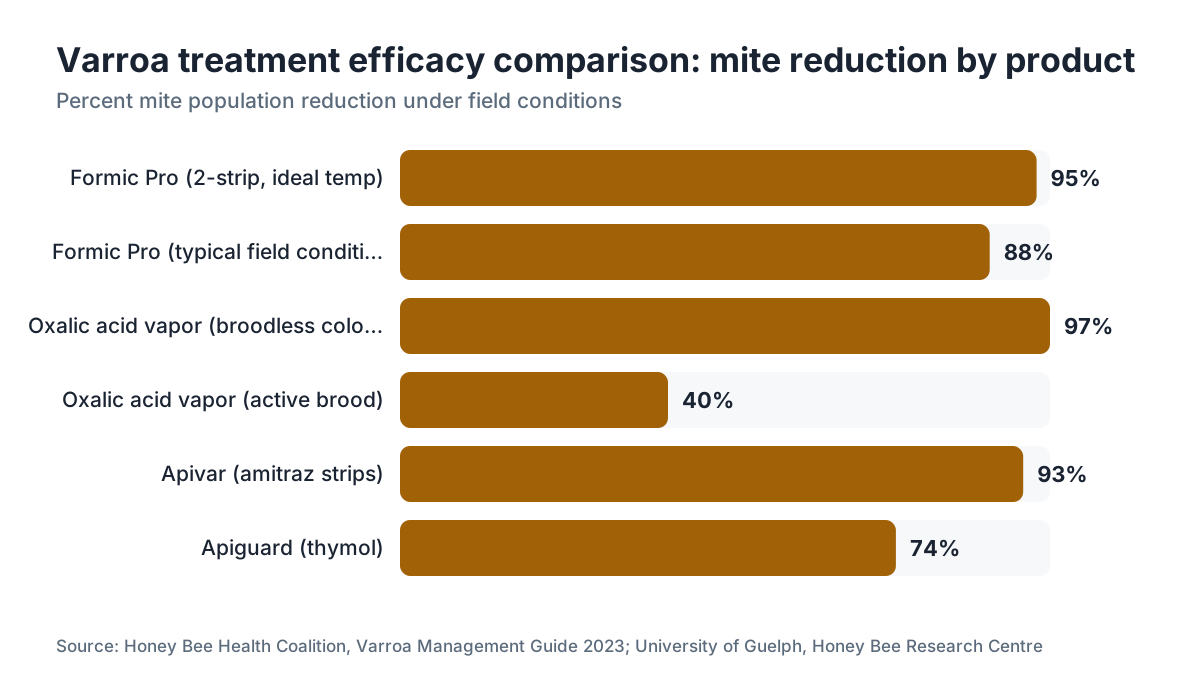
Efficacy data for Formic Pro and its predecessor MAQS (Mite Away Quick Strips, same active ingredient, same manufacturer) is reasonably solid by beekeeping-treatment standards. A University of Guelph field trial found mite reductions of 90-97% using the two-strip protocol under ideal temperatures. [4]
Real-world efficacy runs lower than trial conditions. When the Honey Bee Health Coalition reviewed formic acid products, it put efficacy in the 85-95% range under typical field conditions, with the big variables being temperature consistency, colony strength, and whether the user follows placement instructions. [3]
The sub-brood capability is the real differentiator. A 2019 review in Pest Management Science stated that formic acid is "the only organic acid that penetrates capped brood cells and kills Varroa mites inside," which is what justifies its higher price against oxalic acid. [5]
Resistance to formic acid in North American varroa populations is not documented at a meaningful level as of this writing. Compare that to synthetic miticides like fluvalinate (Apistan), where resistance is widespread. [6] Nobody has good long-term data on whether resistance will show up with heavy formic acid use, and that's an honest gap in the science.
Efficacy also leans hard on staying inside the temperature window for the whole treatment. A single day above 92°F during a 14-day two-strip protocol can blow the treatment, kill the queen, and leave your mite load mostly untouched. That's not a scare tactic. It's a reason to watch your weather and pull strips early if a heat dome rolls in.
What are the risks to the queen and brood?
Queen loss is the most common bad outcome with formic acid treatments, and it's the complaint you'll see most in beekeeping forums. The risk is real but manageable. Published field trials with MAQS and Formic Pro report queen loss around 3-5% under normal conditions, rising to 10-15% or higher when temperatures push past the label range. [4]
The mechanism is plain: formic acid at high concentrations is toxic to everything in the hive, the queen included. The gel strip is built to release acid slowly enough that the hive atmosphere stays below the lethal threshold for bees, but queens are more sensitive than workers. If volatilization spikes on a hot day, the queen can be harmed or die.
Practical risk reduction:
Never treat during a forecasted heat wave. Check the 10-day forecast before placing strips.
If daytime highs will hit 90°F or above, use the one-strip protocol (it has a higher ceiling) or wait for a cooler stretch.
Inspect the colony 3-4 days into treatment. If you see heavy bearding, bees clustering outside, or the queen gone, pull the strips immediately.
Brood loss of one to two frames during treatment sits within normal range per the manufacturer. You're running a chemical treatment in the brood nest, so some brood impact is expected. A healthy colony recovers fast.
Beekeepers who say they've never lost a queen to Formic Pro aren't lying, but they've probably had luck with their local climate too. I'd always keep a backup queen or a queenright nuc on hand during formic acid season.
How does Formic Pro compare to oxalic acid, Apivar, and other varroa treatments?
The right treatment depends on your season, your mite load, whether the colony has capped brood, and how much temperature babysitting you want to do. Here's a real comparison:
| Treatment | Active ingredient | Kills mites in capped brood? | Honey withdrawal? | Temperature window | Approximate cost (per hive treatment) |
|---|---|---|---|---|---|
| Formic Pro | Formic acid 46.7% | Yes | None | 50-92°F | $8-12 |
| Oxalic acid dribble/vaporization | Oxalic acid | No (broodless only) | None | Above 50°F (vapor); 40°F (dribble) | $1-3 |
| Apivar | Amitraz | Yes (slow) | Yes, remove before honey flow | 50-106°F | $8-14 |
| Apiguard | Thymol gel | Partial | Yes | 59-105°F | $6-10 |
| Mite Away Quick Strips (MAQS) | Formic acid 68.2% | Yes | None | 50-92°F | $10-15 |
Formic Pro replaced MAQS in the North American market. MAQS ran a higher acid concentration (68.2%) and a faster release, which meant higher efficacy but also higher brood and queen risk. Formic Pro's lower concentration and slower-release gel improves the safety profile, though it comes with stricter temperature limits on the low end. [7]
Oxalic acid vaporization is cheaper and very effective, but only when the colony is broodless or nearly so. In the thick of the brood-rearing season, oxalic acid misses most of the mite population. Formic Pro's ability to treat through capped brood is what makes it the better mid-season tool. A sensible annual plan runs Formic Pro in late summer and oxalic acid in winter when the colony is broodless.
Apivar (amitraz strips) is effective and easy to use, but it carries a honey withdrawal requirement, resistance is reported in some regions, and you can't use it during an active honey flow. If you're treating late summer with supers still on, Formic Pro and oxalic acid are your legal options with no withdrawal period. [8]
For more context on sourcing treatments and equipment at good prices, see our guide to beekeeping supply companies.
Can you use Formic Pro with honey supers on?
Yes, and this is one of its most practical advantages. The EPA label plainly permits use with honey supers in place, because formic acid is a naturally occurring compound in honey. Formic acid levels in honey treated with Formic Pro have been studied, and residue levels fall within the range of naturally occurring formic acid in untreated honey. [2]
The Honey Bee Health Coalition confirms that formic acid treatments require no honey removal before treatment and no withdrawal period after. [3] That makes Formic Pro the go-to choice for beekeepers with a late honey flow who can't afford to pull supers mid-season.
One caveat: very high ambient temperatures during treatment can push some honey to absorb elevated formic acid transiently. The practical guidance is not to extract during active treatment. Wait until the strips come out and a few days pass. The residue data supports that honey extracted after strip removal sits within acceptable limits. [2]
Check your own state's rules if you're selling honey commercially. The federal EPA label allows it, but some state departments of agriculture add labeling or documentation requirements for honey from treated colonies.
What does Formic Pro cost and where do you buy it?
Formic Pro sells in 2-strip packs and 10-strip (10-dose) packs. As of mid-2025, the 2-strip pack runs roughly $15-18 and the 10-strip pack runs $65-80, depending on the retailer. Mann Lake's 10-dose package is among the most widely stocked options for North American beekeepers, though it's also sold through other beekeeping supply companies and directly from NOD Apiary Products.
Cost per hive treatment works out to about $7-10 for the 10-strip pack, depending on protocol. Run the two-strip protocol and you get five treatments per 10-pack, which raises your per-treatment cost to $13-16.
Shipping matters because strips must stay refrigerated. Mann Lake and most major suppliers ship with cold packs, but if you order in summer, plan for two-day shipping at most and clear fridge space first. Some beekeepers buy 10-dose packages in spring to cover the whole summer season, store them in the refrigerator, and save on repeat shipping.
Managing more than 20 hives? Buying in bulk through a local beekeeping association purchase often drops the per-strip price meaningfully. If you're weighing supply options and shipping costs across vendors, the guide to free shipping honey bee supply companies has a practical breakdown.
VarroaVault's varroa treatment protocol tools can calculate how many strips you need per season based on your hive count and planned protocols, which takes the guesswork out of bulk orders.
What do you do if the treatment doesn't work or mite counts stay high?
After any varroa treatment, do a mite wash 48 to 72 hours after the strips come out to check the drop, then again at day 42 to 56 to read the residual population. If your mite count sits above 2% a month after Formic Pro treatment, a few things could have gone wrong.
Temperature excursions during treatment are the most common reason for reduced efficacy. Several days outside the label range means the acid released either too fast (too hot) or too slow (too cool) to work.
Strip placement matters. Strips sitting on top of an inner cover instead of directly on the frame top bars, or shoved into a corner instead of over the brood cluster, will underperform.
Colony too small. A nuc or a weak colony with fewer than 5 frames of bees may never hold enough acid vapor for treatment to work.
If you've ruled those out and mite counts are still high, rotate to a different treatment class. Use oxalic acid vaporization if you can force a broodless period (by caging the queen for 24 days, for instance) or switch to Apivar outside the honey-flow window. The Honey Bee Health Coalition's Varroa management guide plainly recommends rotating treatment classes to slow resistance, even for organic acids. [3]
VarroaVault's free protocol tracker logs your treatment dates and mite wash results so you're not relying on memory when troubleshooting a failed cycle.
Is Formic Pro safe for the beekeeper? Handling and PPE
Formic acid is a serious irritant and deserves respect. The OSHA permissible exposure limit for formic acid vapor is 5 ppm as an 8-hour time-weighted average. [9] When you open a hive with strips inside, especially on a warm day, vapor near the opening can top that threshold briefly.
The safety routine is simple: wear nitrile or latex gloves whenever you handle strips, work upwind of the hive entrance, and don't hang your face over an open treated hive. If you're sensitive to acid fumes or have asthma, a half-face respirator with an organic vapor cartridge is worth using.
Skin contact with the gel irritates but isn't an emergency. Rinse with water. Eye contact is more serious. Rinse with water for 15 minutes and seek medical attention if irritation persists.
Don't open a hive on a hot day with your hive tool right over the strips. Volatilization is immediate when the gel hits heat, and you'll catch a face full of fumes you won't enjoy.
Among registered varroa treatments, formic acid is one of the lower-toxicity options for the beekeeper. Amitraz (Apivar) and synthetic pyrethroids (Apistan) carry more serious mammalian toxicity concerns. Formic acid is unpleasant but manageable with basic precautions.
What are the EPA registration details and legal requirements for using Formic Pro?
Formic Pro carries EPA registration number 87606-2. It's registered for use in all 50 U.S. states as of this writing. [2] Canada approves it through Health Canada's Pest Management Regulatory Agency (PMRA). Unlike some miticides, Formic Pro needs no veterinary prescription in the United States, which keeps it within reach for hobbyists.
The EPA label is the legal document that governs use. "Use inconsistent with this label is a violation of federal law," as the label states. The provisions beekeepers overlook most: the temperature range requirements, the minimum colony size (5 frames of bees), the strip removal requirement (you must remove strips, not leave them to degrade), and the ban on using the product in ways not described on the label.
State rules can add requirements on top of the federal label. Some states require beekeepers to keep treatment records. If you're a sideliner or commercial beekeeper selling honey, your state department of agriculture may ask for those records during inspections. Get in the habit of logging treatment dates, mite counts before and after, and the lot number from your Formic Pro package.
The EPA's pesticide product information page for Formic Pro lists current registered uses and any label amendments. Labels do get updated, so if you have an old package in your fridge, check the EPA site to confirm you're working from the current version. [10]
What do beekeepers with real-world experience say about using Formic Pro?
The honest picture from the beekeeping community is mixed, the way it goes for any treatment with real trade-offs.
Beekeepers in climates with long, hot summers, places like the deep South, the Southwest, and much of the Midwest in July, find the temperature window their biggest constraint. The product works well in spring and fall, but the prime varroa window in late summer often lands right on the worst temperatures for Formic Pro. Those beekeepers often use oxalic acid vaporization with a broodless period in late summer and save Formic Pro for spring.
Beekeepers in the Pacific Northwest, New England, and higher-elevation mountain climates tend to fare better, because July and August temperatures there fall more often inside the 50-77°F window the two-strip protocol requires.
The queen loss concern is legitimate. Beekeepers who've run Formic Pro across many hives will tell you that one or two percent queen loss is real even when everything's done right. That's a cost-benefit call: a 2% queen loss rate hurts, but it hurts far less than a mite overload that crashes 30% of your colonies going into winter.
One pattern experienced beekeepers report over and over is that the treatment works best when you don't overthink it. Put the strips in correctly, leave them for the full period unless a heat emergency forces early removal, pull them on schedule, and do your post-treatment mite wash. The people who get into trouble are usually the ones who peeked, fiddled, or yanked strips early because the hive looked stressed on day four.
For a broader look at varroa mites and the full range of management options, including biological controls and breeding programs, our varroa hub has the context you need.
Frequently asked questions
How many Formic Pro strips do I need per hive?
One strip for the 10-day single-strip protocol, or two strips simultaneously for the 14-day two-strip protocol. Both are on the label; the choice depends on your ambient temperature range. At temperatures between 50-77°F use two strips. At 59-92°F one strip is appropriate. A 10-dose package gives you 10 single-strip treatments or 5 two-strip treatments.
What temperature is too hot for Formic Pro?
Above 92°F for the single-strip protocol and above 77°F for the two-strip protocol, per the EPA label. If daytime temperatures exceed those thresholds during your treatment window, pull the strips early or delay treatment. A single day above the limit can cause excessive queen loss and reduce efficacy, because the acid volatilizes too quickly and concentrations spike.
Can you use Formic Pro in a nucleus colony?
The label requires a minimum of 5 frames of bees for treatment to be effective and safe. Most standard 5-frame nucs are borderline. In a newly established nuc with fewer than 5 covered frames, skip Formic Pro and use oxalic acid dribble instead. Acid vapor concentration in a small colony may not reach therapeutic levels, and brood and queen risk is proportionally higher.
Does Formic Pro work on varroa mites in capped brood?
Yes. This is its primary advantage over oxalic acid. The formic acid vapor penetrates capped brood wax and kills reproductive varroa mites inside cells. A 2019 review in Pest Management Science confirmed formic acid is the only organic acid that penetrates capped brood. That sub-brood efficacy makes it effective during the main brood-rearing season when oxalic acid alone would miss the majority of the mite population.
How long do Formic Pro strips stay on the hive?
Either 10 days (single-strip protocol) or 14 days (two-strip protocol), according to the EPA label. You must remove the strips at the end of the treatment period. Unlike oxalic acid, the gel does not fully degrade; leaving strips in longer than the label period does not improve efficacy and increases risk to the queen and brood.
Is there a honey withdrawal period for Formic Pro?
No. The EPA label allows use with honey supers in place and requires no withdrawal period before extraction, because formic acid occurs naturally in honey. Residue studies show that honey from treated colonies stays within the natural variation range. As a practical precaution, most beekeepers wait until strips are removed before extracting, but it is not a label requirement.
What is the difference between Formic Pro and MAQS?
Both are formic acid strip products from NOD Apiary Products, but Formic Pro replaced MAQS in North America. MAQS contained 68.2% formic acid and released it faster over a shorter period. Formic Pro uses 46.7% formic acid in a slower-release gel. The lower concentration gives Formic Pro a better brood and queen safety profile, but it also requires stricter adherence to the temperature window for efficacy.
Can Formic Pro cause queen loss?
Yes, queen loss is the most commonly reported adverse event. Published field trials report queen loss rates of 3-5% under label conditions, rising to 10-15% or higher when temperatures exceed the label range. To minimize risk, treat only when a 10-day forecast shows temperatures within label limits, inspect on day 3-4 for unusual balling or bearding, and have a backup queen or queenright nuc available.
How do I know if the Formic Pro treatment worked?
Do an alcohol wash or sugar roll 48-72 hours after strip removal to check the mite drop, then repeat at 6-8 weeks post-treatment. If mites are below 2% (2 per 100 bees), the treatment was successful. If counts are still elevated, review whether temperature excursions occurred, whether strips were placed correctly over the brood nest, and whether the colony had at least 5 frames of bees.
How should I store Formic Pro strips before use?
Store unopened packages in the refrigerator at 34-40°F. Formic Pro has a shelf life of approximately 18-24 months when refrigerated. Do not store at room temperature or above, as the gel will begin to release acid and the strips will lose efficacy before you use them. If you order a 10-pack in spring, label the refrigerator package with the date of receipt.
Can Formic Pro be used in a Langstroth hive with two brood boxes?
Yes. For a two-box setup, place strips in the upper brood box, since heat and formic acid vapor rise. Some beekeepers place one strip per box when using the two-strip protocol in a double-deep hive, which distributes the vapor better across both chambers. Check your current label version for the manufacturer's guidance on multi-story hive configurations before doing this.
What safety gear do I need to handle Formic Pro?
At minimum, nitrile or latex gloves every time you touch a strip. Work upwind of the hive. If you're sensitive to acid fumes or have respiratory issues, wear a half-face respirator with an organic vapor cartridge. The OSHA permissible exposure limit for formic acid vapor is 5 ppm (8-hour TWA), and vapor near an open treated hive on a warm day can briefly exceed that level.
Does Formic Pro require a prescription in the US?
No. Formic Pro (EPA reg. 87606-2) does not require a veterinary feed directive or prescription for purchase or use in the United States. This distinguishes it from some other agricultural pesticides and makes it accessible to hobbyist and sideliner beekeepers. Regulations can change; check the current EPA label and your state department of agriculture for any state-specific requirements.
How does Formic Pro fit into an annual varroa management protocol?
Most successful protocols use Formic Pro as the mid-season treatment when colonies have capped brood and mite loads are building (typically late summer), then follow up with oxalic acid vaporization during the winter broodless period when it's most effective. The Honey Bee Health Coalition recommends treating when mite infestation reaches 2% during brood season, and rotating treatment classes annually to reduce resistance risk.
Sources
- EPA, Formic Pro pesticide label (EPA Reg. No. 87606-2): EPA label confirms active ingredient formic acid 46.7%, temperature range 50-92°F (protocol-dependent), no honey withdrawal period, 5-frame minimum colony size, and strip removal requirement.
- Honey Bee Health Coalition, Varroa Management Guide (2023 edition): HBHC recommends treating when infestation reaches 2% during brood season, confirms formic acid has no honey withdrawal period, and recommends rotating treatment classes annually.
- University of Guelph, Honey Bee Research Centre, MAQS/Formic Pro field efficacy trials: University of Guelph field trials found mite reductions of 90-97% with the two-strip formic acid protocol under ideal temperature conditions, with queen loss rates of 3-5% under label conditions rising to 10-15% with temperature excursions.
- Pest Management Science, 2019, 'Organic acids for varroa control: a review': 2019 review in Pest Management Science stated formic acid is 'the only organic acid that penetrates capped brood cells and kills Varroa mites inside.'
- USDA Agricultural Research Service, Varroa resistance to miticides: Resistance to synthetic miticides including fluvalinate (Apistan) is widespread in North American varroa populations; resistance to formic acid is not documented at a clinically meaningful level in North America.
- EPA, Apivar (amitraz) pesticide label: Apivar label requires honey super removal before treatment and a mandatory honey withdrawal period; it cannot be used during an active honey flow.
- OSHA, Chemical Sampling Information: Formic Acid: OSHA permissible exposure limit for formic acid vapor is 5 ppm as an 8-hour time-weighted average.
- EPA, Pesticide Product Label System (PPLS): Current and historical Formic Pro label versions and any amendments are available through the EPA Pesticide Product Label System under registration number 87606-2.
- Penn State Extension, Varroa Mite Management in Honey Bee Colonies: Penn State Extension recommends an integrated varroa protocol combining formic acid mid-season with oxalic acid during the broodless winter period for maximum annual mite control.
- University of Minnesota Extension, Varroa Mite Treatment Options: U of Minnesota Extension notes that formic acid treatments are effective during the honey flow because they leave no residue requiring a withdrawal period, making them suitable when supers are in place.
Last updated 2026-07-09