Mechanical varroa control methods that actually work
TL;DR
- Mechanical varroa control means physical tricks: screened bottom boards, drone comb removal, brood breaks, and queen caging.
- None kills enough mites alone.
- But a brood break paired with oxalic acid can cut mite loads over 90%, and drone comb removal knocks populations down 37-50% across a season when you pull and freeze the frame every 21 days.
What counts as a mechanical varroa control method?
Mechanical varroa controls are physical interventions that remove mites, disrupt their breeding, or shrink the brood environment mites depend on. No chemical. No acid vapor. You're manipulating the colony's structure and biology instead.
The category is wider than most beekeepers think. It covers screened bottom boards, drone comb removal, brood breaks (natural or forced by caging the queen), full brood removal, and shaker swarm splits. Each hits varroa at a different point in the mite's life cycle.
Here's the fact that decides everything else on this page: varroa spends roughly 66-70% of its reproductive life sealed inside capped brood cells, out of reach of almost every treatment [3]. Any mechanical method that targets capped brood is chasing varroa where it actually lives. Methods that touch only phoretic mites, the ones riding on adult bees, catch maybe 30% of the population on a good day.
That split between hidden mites and riding mites is exactly why some of these methods earn their keep and others waste your afternoon.
Does a screened bottom board actually reduce varroa?
A little. Not enough to matter on its own. If you bought one hoping it would control mites, that money went toward ventilation instead.
Screened bottom boards (SBBs) let mites that fall off adult bees drop through the mesh and die rather than climbing back aboard. Early studies from the late 1990s projected 20-40% mite reduction. The real numbers came in far lower.
A widely cited 2001 study by Harbo and Harris found that natural mite fall through screen removed few mites beyond those already at the end of their lives, so the colony's mite growth rate barely changed [2]. The mites you drop this way were mostly going to die anyway.
Keep the screened bottom board. It's still useful. It improves airflow, cuts winter condensation, and lets you run sticky-board counts for monitoring. Treat it as a diagnostic tool, never a treatment.
One practical note. If you're already dribbling or vaporizing oxalic acid, an SBB doesn't get in the way. It's a passive add-on, not an either-or decision.
How effective is drone comb removal at cutting mite loads?
Drone comb removal is one of the most underrated tools a hobbyist has, and one of the few backed by consistent data. Done right, it pulls a disproportionate share of your mites out of the hive every three weeks.
The logic is clean. Varroa prefers drone brood over worker brood at a ratio near 8:1 [3]. In a colony raising drones in spring, those big cells act as a mite magnet. You slot in a frame of drone-sized foundation, let the queen fill it, wait until it caps, then pull it and freeze it. The mites that piled into that comb go with it.
Research from Agroscope, the Swiss federal bee research center, showed that repeated drone comb removal on a 21-day cycle reduced mite populations by 37-50% over a season [4]. That's real. Pair it with a late-summer oxalic acid treatment and you meaningfully lower the peak mite load your colony carries into the August-September danger zone.
Timing is the whole game. Pull the frame after capping but before the drones chew their way out, which lands around day 21-24 after the queen lays it. Miss that window and the mites emerge with the drones. You accomplished nothing except feeding drones. Mark the frame with the insertion date so you don't guess.
Freezing kills the mites. Leave the comb in the freezer at least 48 hours. Then thaw it, let the bees clean it, and reuse it.
The limits are honest ones. Drone comb removal only works while the colony is actively raising drones, roughly spring through midsummer. It's a chore if you run more than a handful of hives. And it does nothing about mites hiding in worker brood. Think of it as steady pressure reduction, not a fix.
The comparison table further down shows how it stacks against the other methods.
What is a brood break and how much does it reduce varroa?
A brood break is exactly what it sounds like. For a stretch of days the colony has no capped brood, which forces every reproducing mite out into the phoretic phase where a treatment can finally reach it.
This is the strongest purely mechanical move a beekeeper has. The Honey Bee Health Coalition's Varroa management guide is direct: "No single tactic adequately controls Varroa mites. An integrated approach using multiple management tactics is more effective than any single tactic" [1]. A brood break creates the moment where the treatment you pick actually lands. Oxalic acid clears more than 90% of phoretic mites in a broodless colony. With brood present, that efficacy falls to 50-60% depending on how much sealed brood there is [5].
Brood breaks come two ways. Natural: a colony raises a new queen after swarming or supersedure, and there's a lay gap between the old queen stopping and the new one starting. Induced: you remove or cage the queen for 21 to 25 days, long enough for all worker brood to cap and emerge.
Caging the queen is the practical route for most folks. Put her in a push-in cage or a hair clip cage over comb, hold her there for 24 days, then treat with oxalic acid on day 24-25 while the colony sits broodless. Release her after treatment. This approach routinely hits 90-95% mite knockdown when the timing holds [4].
The downsides are real, so weigh them. Caging the queen stresses the colony. Egg and brood output stops for three-plus weeks, which dents your fall honey and your winter population if you run it too late. Do it in July across most of North America. September is too late. The colony can't rebuild a strong winter bee force in time.
Want to schedule a break against your own drone-decline date and first hard frost? The free tools at VarroaVault do that math for you.
If you want the biology behind why the phoretic phase is the only window that matters, the varroa mite explainer walks through the mite's life cycle.
Does splitting colonies help control varroa?
Yes, and it does double duty. Splits and shaker swarms create a temporary broodless period in the queenless half, which behaves like a managed brood break. As the existing brood emerges, every mite in that half turns phoretic and sits fully exposed to an oxalic acid treatment.
The shaker swarm is the aggressive version. You shake all the adult bees off their frames into a fresh box, leave the nurse bees behind to raise a new queen from the old brood, and treat the queenless swarm with oxalic acid 24-48 hours later while it's broodless. Mite reduction in the shaken half can top 90% [6].
For sideliners running 20 to 50 hives, using splits for swarm control while treating for varroa at the same time is smart management. One manipulation, two problems handled.
The catch is real. You need enough colonies that losing a split to a laying worker or a failed queen doesn't sting. And you're still holding a queenright colony carrying mites in its brood. That half needs its own separate treatment.
What about hyperthermia or heat treatment for varroa?
Heat treatment uses a temperature gap: varroa mites die around 40-42°C (104-108°F), while honey bees tolerate a little higher [7]. Several commercial devices run on this, including the Varroa Controller and various heat-chamber setups. The idea is elegant. The evidence is thin.
Small trials report strong reductions, some claiming over 80%, but independent replicated field studies are scarce. A 2021 review in Apidologie noted that heat treatment shows promise but lacks the controlled trial data available for established treatments [7]. Nobody has great numbers on this at scale yet.
The practical problems pile up. You have to heat the hive evenly, which is hard in a standard Langstroth. Overheat and you cook brood and warp comb. Underheat and you miss the mites sealed in capped cells, which are the ones you needed to reach. Purpose-built devices run several hundred dollars per hive.
My honest read: heat treatment is interesting research, not a replacement for standard management for most beekeepers. Watch the literature. Don't sink money into it yet.
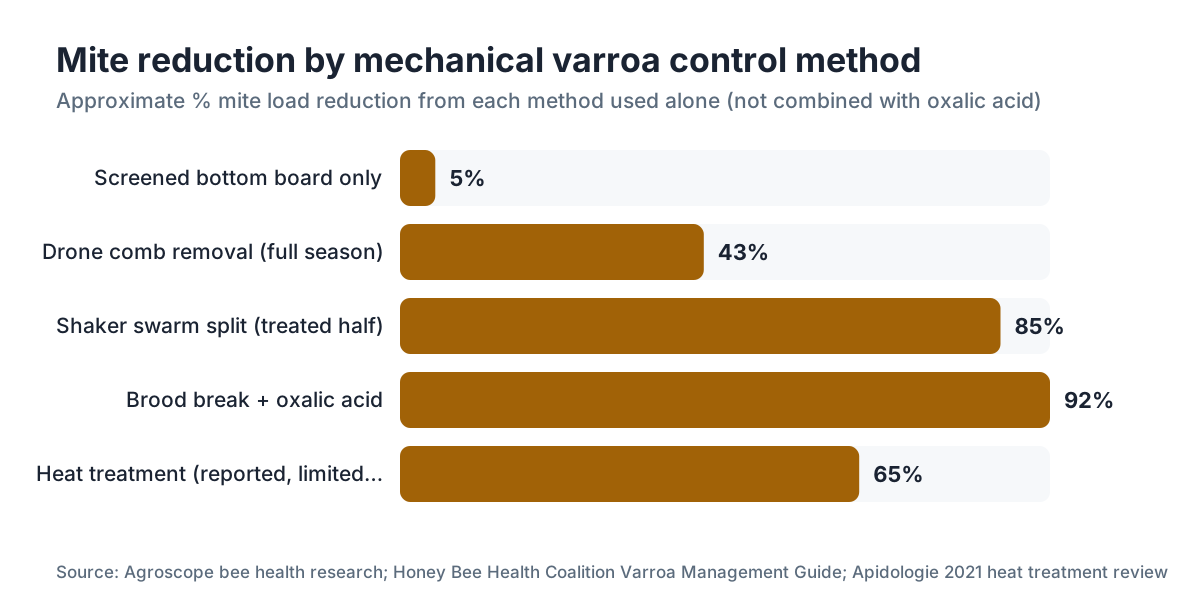
How does drone brood removal compare to other mechanical methods?
| Method | Mite Reduction (alone) | Works with brood present? | Season | Labor/hive | Cost |
|---|---|---|---|---|---|
| Screened bottom board | 0-10% | Yes | Year-round | Negligible | $15-30 |
| Drone comb removal | 37-50% (cumulative) | Yes (drone brood) | Spring-summer | Moderate | $5-10/frame |
| Brood break + OA treatment | 90-95% | No (requires broodless) | Any, timing critical | High | $1-5 for OA |
| Shaker swarm split | 80-90% (treated half) | No | Spring-early summer | High | Low |
| Heat treatment | 50-80% (reported, limited data) | Varies by device | Any | Moderate | $300-500+/device |
Sources: Honey Bee Health Coalition [1], Agroscope [4], Apidologie [7]
No single mechanical method is a complete varroa program. They're tools that shrink mite pressure so that a chemical or organic treatment, applied at the right moment, works on a smaller population.
Can mechanical methods replace chemical or organic acid treatments entirely?
Almost certainly not, for most beekeepers in most years. The data is clear on this.
Even the strongest mechanical move, a brood break plus oxalic acid, leans on acid chemistry for the actual kill. Purely mechanical methods with no treatment behind them generally can't hold mite loads under the 2-3% economic threshold across multiple seasons [1].
There are exceptions. Some beekeepers get by with repeated drone comb removal plus hygienic queens in low-pressure areas. Research on VSH (Varroa Sensitive Hygiene) and SMR (Suppressed Mite Reproduction) bees shows genetic traits can suppress mite reproduction enough to reduce, though not erase, the need for other interventions [8].
The Honey Bee Health Coalition puts it bluntly: "No single tactic adequately controls Varroa mites. An integrated approach using multiple management tactics is more effective than any single tactic" [1].
That integrated approach, IPM (Integrated Pest Management), is how serious beekeepers run their yards. Mechanical methods are a genuine part of the system. They lower baseline mite loads, sharpen treatment efficacy, and stretch the intervals between chemical treatments. Dropping chemical and organic tools completely is a high-risk bet, and most hobbyists and sideliners can't afford to gamble colonies on it.
What role does monitoring play in mechanical varroa management?
Monitoring isn't optional. It's the thing that tells you whether any of this is working. Skip it and you're managing blind.
The two standard methods are the alcohol wash and the sugar roll. Alcohol wash is more accurate, and it's what the Honey Bee Health Coalition and most state extension services recommend [1][9]. Take a 300-bee sample (about half a cup), wash it in 70% alcohol or soapy water, and count the mites. The result is mites per 100 bees, your percent infestation.
Most extension services use a 2% infestation threshold during brood-rearing season, tightening to 1 mite per 100 bees in late summer when winter bees are being raised [9]. Oregon State University Extension puts the treatment window between mid-July and August 15 for much of the Pacific Northwest; other regions shift that by 2-4 weeks [9].
Here's the payoff for mechanical work. An alcohol wash before and after a drone comb pull or a queen-caging break shows you exactly how much mite load you removed. Without that number, you're guessing whether the effort did anything.
Sticky boards under a screened bottom board give a rough natural mite-fall count, but the link between mite fall and true infestation varies too much to drive treatment decisions [2]. Use them for spotting trends, not for hitting a threshold.
If you want help turning mite counts into treatment timing, VarroaVault's free protocol tools walk you through the threshold math by colony count and region.
Shopping for wash supplies or sticky boards? The beekeeping supply companies page compares what's out there.
When should you use mechanical methods vs. chemical treatments?
Timing is where most hobbyists get tripped up. The short version: mechanical work belongs in spring and early summer, chemical work belongs in late summer.
Here's how I think about it. Drone comb removal and splits belong in spring and early summer, when you're reducing the mite population before it explodes during peak brood. Call that the pressure-reduction phase.
The treatment window that actually decides winter survival is late summer, roughly late July through August across most of the continental US. That's when you knock mites down hard before the colony raises the winter bees that carry it to spring. High mite loads maul those winter bees, and there's no fixing it in February.
A brood break in July followed by oxalic acid during the broodless gap is the single best thing most hobbyists can do for their bees. Time the queen caging so the broodless window falls in the last two weeks of July or the first week of August.
Registered chemical treatments (amitraz, fluvalinate, coumaphos) carry their own timing rules tied to temperature, honey supers, and resistance. The EPA is explicit that the label is the law and must be followed exactly [10]. For organics like oxalic acid, the label spells out the application method (vaporization, dribble, extended release) and the timing relative to brood.
Never skip the pre-winter mite check. Above threshold, you treat. Period. No mechanical method is reliable enough to earn a pass on that check.
Are there any mechanical methods that don't work despite being popular?
Yes. Powdered sugar dusting is the headline example, and it's everywhere at club meetings.
The theory sounds fine: coat the bees in powdered sugar, mites lose their grip, mites fall. It doesn't hold up. A well-designed 2010 trial by Currier, Hood, and Harmon at the University of Montana found that powdered sugar dusting did not significantly reduce varroa mite loads compared to control hives [11]. The mites that drop during dusting are mostly the ones headed off the bee anyway.
Sugar dusting stays popular because it's harmless and hands-on and makes beekeepers feel productive. It just doesn't work as a varroa treatment.
Essential oil foggers used without any active compound (just fog, no miticide) get the same overhype. The pitch is that the fog cleans bees and shakes mites loose. No reliable data backs it as standalone varroa control.
Small hive beetle traps and entrance reducers sometimes get filed under "mechanical hive health," but they fight different pests and do nothing to varroa.
Spend your hours on methods with real evidence: drone comb removal, brood breaks, splits, and properly timed chemical or organic treatments driven by your monitoring.
How do you build a full mechanical-plus-chemical varroa program?
Here's a practical annual plan a hobbyist running 3 to 15 hives can actually follow. Adjust the months to your climate; the sequence holds.
Spring (April-May in most of North America): Slot in drone comb frames as the colony starts raising drones. Run an alcohol wash every 4-6 weeks. Pull and freeze drone comb on a 21-day cycle. If mites climb above 2%, treat with an extended-release product following the label.
Early summer (June): Keep the drone comb rotation going. Consider splits for swarm control, and treat the queenless splits with oxalic acid 48-72 hours after the split while brood is minimal.
Midsummer (July, the window that counts): Cage the queen for 24 days if you want maximum efficacy from an oxalic acid treatment, or time your treatment to the natural brood break from a swarm split. Alcohol wash before and after to confirm the knockdown.
Late summer (August): Check mites again. Above 1%, treat. Apivar (amitraz) needs 6-8 weeks in the hive, so install it by late July or early August to finish and remove it before winter prep [10].
Fall (September-October): Final mite check after treatment. Get colonies into winter below 1% infestation. Oxalic acid dribble works well for small late-season colonies that are broodless or nearly so.
Winter (November-March): Where you get a true broodless period, oxalic acid vaporization is highly effective and can be done on cold days while bees are clustered [5].
For pulling together the gear, the beekeeping supplies overview covers monitoring equipment, drone frames, and caging tools.
Frequently asked questions
Can drone comb removal alone keep varroa under the 2% threshold?
In a low-mite-pressure area with very frequent removal (every 21 days from first drone comb to the end of drone season), some beekeepers report staying under threshold. But most data shows drone comb removal cuts mite load 37-50% rather than eliminating it. It works best as one layer of an integrated program, not a standalone plan. Confirm with regular alcohol washes.
How do I make a queen cage for a brood break without buying specialized equipment?
A hair clip roller cage, the kind used in salons, works reliably and costs under $2. Press it firmly over a small section of comb where the queen sits so she can't slip out. She can still be fed through the mesh. Mark the date on the hive and come back in 24 days. Push-in cages sold by suppliers work on the same principle.
Does a screened bottom board reduce varroa enough to skip treatments?
No. Studies show screened bottom boards give negligible mite reduction, around 0-10%, because most naturally falling mites are already dying. Their real value is ventilation and sticky-board monitoring. Never treat a screened bottom board as varroa control. It doesn't substitute for monitoring or treatment.
When is the worst time of year to do a brood break?
August and September are risky across most of North America. A break that long after the summer solstice delays the queen's return to lay right when winter bees need raising. Winter bees produced from late August through September carry the colony to spring. Interrupting that window can send an under-populated colony into winter. Aim for the break to end, and the queen to resume laying, no later than mid-August.
Does powdered sugar dusting actually work for varroa?
No. Multiple trials, including a 2010 University of Montana study, found powdered sugar dusting doesn't significantly reduce varroa mite loads compared to untreated colonies. The mites that fall during dusting would mostly have fallen anyway. It's a popular club demonstration, not a real treatment. Put your energy into methods with data behind them.
What is the shaker swarm method and does it work for varroa?
You shake all adult bees off every frame into a new box, leaving the original box with brood and nurse bees to raise a new queen. The shaken swarm has no brood, so all mites go phoretic. An oxalic acid treatment 24-48 hours after shaking hits 90%+ of the mites in that half. The original colony still needs treatment as its brood emerges. Effective, but labor-intensive.
How often should I monitor mite levels if I'm using mechanical controls?
Every 4-6 weeks during brood season, and always before and after any intervention. If you're doing drone comb removal or a brood break, a pre-intervention alcohol wash sets your baseline, and a post-intervention wash tells you whether it worked. The Honey Bee Health Coalition recommends alcohol wash over sugar roll for accuracy. Don't lean on sticky boards alone for treatment decisions.
Can I use oxalic acid at the same time as mechanical methods?
Yes, and you should. Oxalic acid vaporization or dribble works best combined with a brood break, because it reaches the phoretic mites that mechanical methods expose. During a queen-caged break, treat on day 24-25 when the colony is broodless. Efficacy in a broodless colony tops 90%. In a colony with active brood, efficacy drops to 50-60%.
Do VSH or hygienic queen genetics reduce the need for mechanical varroa controls?
Somewhat. VSH (Varroa Sensitive Hygiene) bees detect and remove mite-infested capped brood, which disrupts mite reproduction and slows population growth. Research from the USDA Baton Rouge lab shows VSH colonies hold lower mite loads with less treatment. They don't erase the need for monitoring or occasional treatment, but they can stretch treatment intervals and make mechanical methods more effective.
How long does it take drone comb removal to show a measurable mite reduction?
You usually see measurable reduction after two to three removal cycles, meaning 6-9 weeks of steady 21-day pulls. Agroscope research showed cumulative reductions of 37-50% over a full season of repeated removal. A single removal gives a much smaller effect. Consistency across the whole drone-rearing season is what produces real results.
Is it legal to combine mechanical methods with registered varroa treatments?
Yes, and it's usually recommended. EPA-registered treatments (Apivar, ApiLifeVar, Mite Away Quick Strips, oxalic acid products) all work alongside mechanical methods. The one requirement is following the label exactly, since the label is a federal legal document. Combining mechanical mite reduction with a well-timed chemical or organic treatment is the approach every major apiculture extension service recommends.
What's the cheapest effective mechanical varroa control for a hobbyist with three hives?
Drone comb removal, with frames at $5-10 each per hive. Add a queen-caging brood break in July (hair clip cages under $2 each) and one oxalic acid treatment in the broodless window, and you can manage three hives for well under $50 in supplies per season. Labor is the real cost. Alcohol wash monitoring adds maybe $10 in materials a season.
Does a natural swarm act as a brood break for varroa control?
Partially. The swarm cluster is largely broodless when it first leaves, so it starts as a low-mite population. But the colony that swarmed leaves behind capped brood full of mites. The parent colony gets no mite reduction unless you treat it during the queenless gap. Swarms as a mite strategy work best when you also treat the parent colony.
Sources
- Honey Bee Health Coalition, Tools for Varroa Management guide: Integrated approach using multiple management tactics is more effective than any single tactic; brood break plus oxalic acid is among the most effective strategies; 2% infestation threshold guidance
- Harbo JR, Harris JW. 2001. Journal of Economic Entomology (Oxford Academic).: Screened bottom boards remove few mites beyond those already dying; natural mite fall does not meaningfully reduce colony mite growth rate; sticky-board mite fall correlates poorly with true infestation
- Rosenkranz P, Aumeier P, Ziegelmann B. 2010. Biology and control of Varroa destructor. Journal of Invertebrate Pathology (ScienceDirect).: Varroa prefers drone brood over worker brood at a ratio of approximately 8:1; 66-70% of mite reproductive life is spent inside capped brood
- Agroscope, Swiss Centre for Bee Research: Repeated drone comb removal on a 21-day cycle reduced mite populations by 37-50% over a season; queen caging with oxalic acid achieves 90-95% knockdown
- EPA, Pesticide Registration (oxalic acid miticide label and guidance): Oxalic acid efficacy exceeds 90% in broodless colonies; drops to 50-60% with brood present; vaporization is an approved application method
- Fries I, Camazine S. 2001. Apidologie.: Shaker swarm method creates broodless condition in treated half, enabling 90%+ phoretic mite kill with oxalic acid treatment
- Apidologie, heat treatment review 2021: Varroa mites die at 40-42 degrees C; heat treatment shows promise but lacks controlled trial data available for established treatments
- USDA Agricultural Research Service, Honey Bee Breeding, Genetics and Physiology Laboratory (Baton Rouge): VSH and SMR bees detect and remove mite-infested capped brood, suppressing mite reproduction and maintaining lower mite loads with less treatment intervention
- Oregon State University Extension, Varroa mite management for honey bees: Economic threshold is 2% infestation during brood season, 1% in late summer; alcohol wash is more accurate than sugar roll; critical treatment window July through August 15 for Pacific Northwest
- EPA, Pesticide Registration (miticide label directions and legal requirement to follow the label): Registered miticides must be applied exactly per label directions; Apivar (amitraz) requires 6-8 weeks in the hive
- Currier T, Hood WM, Harmon A. 2010. Effect of powdered sugar on Varroa mite fall from honey bee colonies. Journal of Apicultural Research (Taylor & Francis).: Powdered sugar dusting did not significantly reduce varroa mite loads compared to control hives in replicated trial
Last updated 2026-07-09