Overdosing oxalic acid: what it actually does to your bees
TL;DR
- Overdosing oxalic acid damages or kills adult bees, harms open brood, and can wipe out queens.
- The EPA-registered Api-Bioxal label caps vaporization at 2.275 grams of oxalic acid dihydrate per hive per treatment.
- Go past that dose, or repeat treatments too often, and you get measurable bee mortality before you get a meaningful drop in mites.
- Stay on label.
What happens to bees when oxalic acid is overdosed?
Oxalic acid kills mites because it is corrosive at the right dose and contact time. Varroa mites sit on the soft intersegmental membranes of adult bees, so even a small exposure hits them hard. Adult bees tolerate more, but that tolerance has a ceiling. Plenty of beekeepers push past it and never realize what they did.
An overdose burns the bee's tarsal pads (the sticky feet), the antennae, and the soft cuticle around the mouthparts. Workers hit with too much vapor walk badly, lose their grip on comb, and die younger. A 2019 study by Gregorc and colleagues in PLOS ONE found that bees treated with vaporized oxalic acid at label-compliant doses showed no significant wing or body morphology deficits. The same authors flagged an honest limit: repeated or excessive doses beyond the studied range were not tested and should not be assumed safe [1].
At very high vapor concentrations the damage goes deeper. A bee's tracheal system is not sealed the way a mammal's lungs are, so prolonged high-concentration vapor irritates the inner surfaces of the spiracles and air sacs. No published study has pinned down an LD50 for oxalic acid vapor in honey bees under field conditions. That is a real gap in the research, and anyone who tells you the exact lethal vapor dose is guessing.
What we do have is the label development data submitted to the EPA. It set the 2.275 g per treatment ceiling as the dose that kills mites without causing adult bee mortality above what untreated control colonies show [2].
The short version. Bees handle label-compliant oxalic acid fine. They do not handle doubled doses, marathon vaporizing sessions, or stacked treatments with no recovery time in between.
Does oxalic acid harm brood?
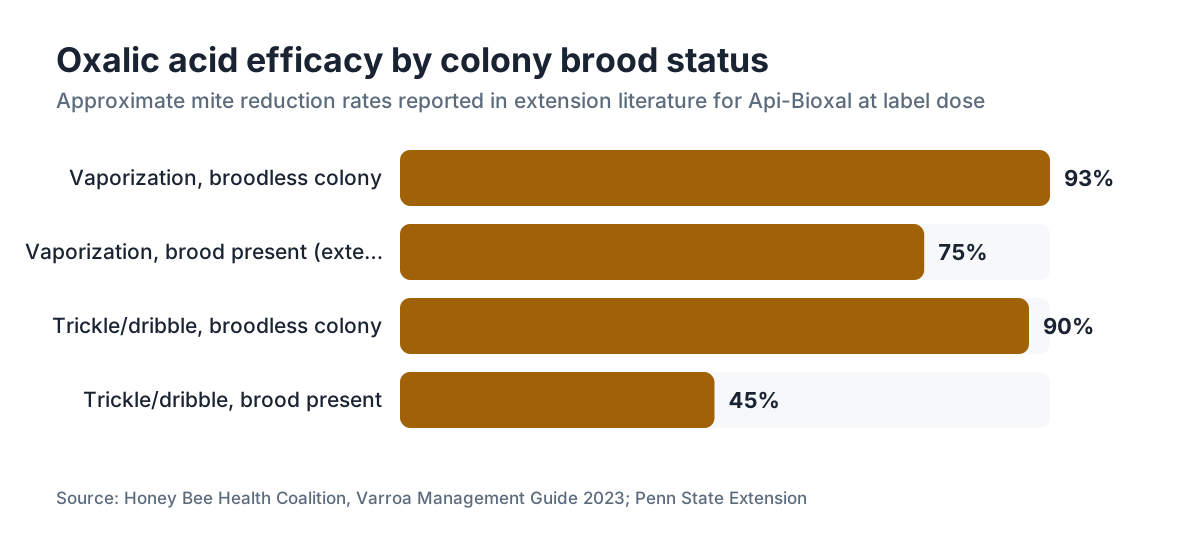
Yes. That is the clearest reason the label steers single vaporization treatments toward broodless periods. Oxalic acid does not penetrate capped cells well enough to kill the mites hiding under cappings, which is exactly why it works best when a colony has no brood. The flip side: the acid can hurt open larvae when vapor concentrations climb high enough inside the box.
The Honey Bee Health Coalition's Varroa Management Guide notes that oxalic acid applied during heavy open brood can cause larval mortality, and that trickling or spraying frames with open brood risks burning larvae directly if the solution touches them [3]. Vaporization makes this harder to control, because you cannot dictate where the condensed acid settles inside a colony.
Run an extended vaporization program during brood rearing (the Api-Bioxal label allows multiple treatments at least 7 days apart) and the risk to open brood is real and it adds up. Each pass exposes a fresh cohort of larvae. Most university extension programs suggest keeping intervals long enough that brood cycles through the window, and accepting that some larval loss is possible when you treat actively rearing colonies in summer [4].
The queen is brood too, at least at the start. Her open larval stage is vulnerable. High-concentration vapor during a queen-rearing cycle can kill young or emerging queens with chemical burns to the cuticle. This is not a hypothetical. It shows up as queen loss after aggressive treatment programs, and it shows up worst in small nucleus colonies, where the acid concentration per unit of air is higher.
How much oxalic acid is too much per hive?
The EPA-registered Api-Bioxal label is the legal ceiling in the United States. It sets 2.275 grams of oxalic acid dihydrate per hive body per vaporization treatment [2]. You get up to 3 treatments per broodless period, each at least 5 days apart. For extended summer treatment, the label allows more applications at 7-day intervals.
Those numbers look tidy. Overdosing happens in a handful of predictable ways.
- People load more product into the vaporizer pan than the label says. Some vaporizer designs make it easy to dump in 3 to 4 g instead of 2.275 g without noticing.
- People run the vaporizer too long, letting the element dwell hot while leftover acid keeps sublimating. Correct dwell time is roughly 2.5 minutes for most commercial vaporizers at their rated temperature (around 190 to 200 degrees C), then sealed for another 10 minutes. Hold the element hot for 5 to 6 minutes and you roughly double the sublimation period.
- People treat a double-deep as one unit, which it is under the label, but a big colony filling two brood boxes dilutes vapor more than a tiny colony in one box. The dose is per hive, not per super. A struggling 4-frame nuc gets the same 2.275 g as a double-deep, so its internal concentration can run many times higher.
For the dribble (trickle) method, the label allows 50 mL of 3.2% weight-per-volume oxalic acid solution, roughly 1.6 g of oxalic acid per colony. Exceed that concentration or volume and you burn every bee the solution touches.
Here is the practical rule. Weigh your dose. A postal scale accurate to 0.1 g costs about $10 to $15 and takes all the guesswork out of it. That is the single most useful piece of beekeeping supplies advice for anyone running oxalic acid.
What are the visible signs of oxalic acid toxicity in a colony?
Some signs show up in hours. Others take days or weeks.
Immediate signs (within 24 to 48 hours): bees walking the landing board instead of flying, trembling or uncoordinated movement, bees that cannot climb a surface, and a small count of dead or dying bees at the entrance. Some extra dead bees after treatment are normal. Varroa-weakened bees already close to death die faster under mild stress. The question is scale. A cup or two of dead bees over 48 hours after a properly dosed winter treatment is fine. A pile of dead bees, or a sharp cluster drop within a week, is a red flag.
Delayed signs (1 to 3 weeks): population dropping faster than the season explains, brood pattern falling apart if you treated with brood present, and less foraging traffic. These overlap with a dozen other problems, which is what makes an oxalic acid overdose hard to diagnose after the fact. If you treated recently and the colony is sliding, keep overdose on your list alongside pesticide exposure, queenlessness, and nosema.
Queen failure is one of the more telling signs. Lose a queen within 2 to 4 weeks of a vaporization treatment in a small colony or nuc, and chemical damage to the queen is worth taking seriously. Queens hit with high vapor can look normal for a week or two before their laying rate falls off a cliff.
One honest caveat. There is no blood test for oxalic acid exposure in bees. Diagnosis is clinical and epidemiological. You work backward from what you see and when you treated.
Is oxalic acid vapor more dangerous than the dribble method for bees?
They carry different risks. Neither one is inherently safer if you misuse it.
Vaporization delivers acid as a gas that fills the whole hive. Bees are surrounded by it, so exposure is whole-body and reaches the respiratory surfaces along with the cuticle. At label doses and dwell times, adult bees handle it. At excessive doses or extended dwell times, the sealed box becomes a chamber the bees cannot leave. A hive sealed for vaporization with double the correct dose is a room with no exit.
The dribble method stays localized. You apply the 3.2% solution straight onto bees in the cluster, moving down the seams between frames. Bees you do not touch get less exposure. The risk here is too much volume, too high a concentration, or dripping onto larvae. Cornell's extension guidance on oxalic acid warns against the trickle method when substantial open brood is present, because the liquid can wick into cells and reach larvae [4].
For a broodless winter colony, vaporization has the better efficacy profile (roughly 90 to 95% mite reduction in broodless colonies, versus around 90% for dribble, per various extension summaries) and a comparable safety profile when dosed right. For colonies with brood, the extended vaporization protocol carries more brood risk than casual beekeeping advice tends to admit.
Beekeepers sometimes ask about spraying oxalic acid solution onto package bees or shaken swarms. That is not an EPA-registered use for Api-Bioxal in the US, so it is outside the scope here.
Can you treat too many times with oxalic acid?
Yes. Frequency stacks the damage. The label's 7-day minimum interval between summer treatments exists partly for mite control (catching mites as they emerge from cells) and partly to give bees a recovery window between chemical hits.
There is a familiar pattern. A beekeeper sees mites coming back, so they treat, then treat again, then again, and the results keep getting worse. What is happening in those colonies is more than mite pressure. It is mite damage plus treatment damage. Summer bees are already short-lived. Workers emerging into a hive that has been vaporized every 5 to 6 days for a month start their lives under repeated chemical exposure, and their short lifespans shrink further.
The varroa mite life cycle matters here. A large share of mites is always sealed inside capped cells, where oxalic acid cannot reach them. Repeated treatments are supposed to knock down the phoretic (on-bee) population wave by wave as mites emerge. But if the colony has heavy brood, mites reproducing in cells outrun what vapor can strip off phoretic mites, and treating weekly does nothing to change that math. You stress the bees without touching the real problem.
The Honey Bee Health Coalition recommends monitoring mite loads (alcohol wash or sticky board) before and after treatment to confirm it worked, rather than treating on a fixed calendar forever [3]. If your post-treatment count is not dropping, the answer is almost never more oxalic acid. It is usually a brood management issue or a reason to switch methods.
Does overdosing oxalic acid affect honey quality or safety?
Oxalic acid occurs naturally in honey at roughly 8 to 40 mg/kg, depending on floral source and geography. That is well documented in EU residue monitoring data [5]. Because the acid is already there, the EPA and the European Food Safety Authority both concluded that Api-Bioxal treatments at label rates do not push honey residues above what you find in untreated hives.
The EPA registration for Api-Bioxal states there are no residue concerns in honey at the approved dose, and no tolerance (maximum residue limit) was set in the US because natural background levels already cover the exposure [2].
Here is the honest complication. We do not have good peer-reviewed data on whether overdose conditions, specifically repeated high-dose vaporization during active honey storage, push residue meaningfully above natural background. The registration data assumes they probably do not, because the acid metabolizes fast and honey dilutes the load. But "probably fine" is not the same as confirmed. If you have been treating hard and you want to pull honey, waiting at least two weeks before you pull supers is a reasonable precaution.
What does the EPA label actually require for oxalic acid use?
The full Api-Bioxal label is public through the EPA and through the product registration [2]. A few points get misread or ignored constantly.
The label is a federal law document. Using oxalic acid off-label is a violation of FIFRA (the Federal Insecticide, Fungicide, and Rodenticide Act), more than a departure from best practice [10]. That includes using unregistered oxalic acid sources like wood bleach or lab-grade powder, even when the chemistry is identical. The registration covers Api-Bioxal specifically.
The label requires the applicator to wear specific protective gear: at minimum a respirator rated for acid vapors (NIOSH-approved, minimum OV/P100), chemical-resistant gloves, eye protection, and protective clothing. None of that is optional. Oxalic acid vapor is a serious respiratory hazard to humans, and the beekeeping conversation leans so hard on bee safety that beekeeper safety gets shortchanged.
The label also requires vaporization with the hive entrance sealed during treatment and for about 10 minutes after the vaporizer comes out. Open the hive early and you release concentrated vapor and expose yourself to acid that is still active.
The label language on the broodless restriction reads that a single treatment is recommended when the colony is broodless, with multiple treatments at 7-day intervals permitted when brood is present [2]. The "recommended" versus "required" distinction is the regulatory wrinkle that trips people up.
Does oxalic acid build up resistance in varroa mites?
There is no confirmed field-level resistance to oxalic acid in Varroa destructor as of 2025. That is a genuine advantage over synthetic miticides like tau-fluvalinate (Apistan) and coumaphos (CheckMite+), where resistance is well documented [6].
The reason is mechanical. Oxalic acid kills mites through direct chemical injury, burning the soft tissue it touches. It does not bind a specific receptor or enzyme the way pyrethroid miticides do. For resistance to evolve through the usual routes, mites would need cuticle changes that block the acid. That is possible in theory, but nobody has seen it at population level in managed colonies.
Here is the part people miss. Overdosing oxalic acid buys you zero extra killing power. Mites in capped cells are untouched no matter how much acid is in the hive air. Higher vapor concentration does not penetrate cappings. All an overdose does is dose your adult bees harder, with no mite control benefit on the population that matters most, the reproductive mites sealed in cells.
VarroaVault's free mite management tools are worth a look if you want to schedule treatment around brood cycles and hit the phoretic mite window. That timing is where the real efficacy gains live, not dose escalation.
How do you recover a colony damaged by oxalic acid overdose?
If you think you overdosed a colony, stop treating and give the bees the best conditions to rebuild.
Stop all oxalic acid until you have assessed the population. Count bees on frames at your next inspection. If the cluster is shrinking fast and the brood pattern is poor, figure out whether the queen is still viable before you do anything else.
If the queen is present and laying, let the colony rest. A colony with a mated, functioning queen in summer can recover from moderate adult loss in 3 to 4 weeks as new bees hatch and the workforce rebuilds. Give them good forage or a light syrup feed to support wax production and nurse bee nutrition. Do not push heavy stimulative syrup on a stressed colony, because that triggers comb building at the expense of nursing.
If the queen is gone or her laying has collapsed, your recovery path depends on your resources. You can introduce a mated queen, combine the colony with a healthy one, or let them raise an emergency queen if brood is available. Combining is usually the fastest and least stressful route for a damaged colony, using newspaper or another slow-introduction method to head off fighting.
Re-treat for varroa only after the colony is stable and an alcohol wash confirms the mite level needs it. The Honey Bee Health Coalition's action threshold guidance (generally 2% infestation or higher in summer, by alcohol wash) is the standard reference [3]. If mites are still manageable, put colony recovery first. If mites are critical and the colony cannot wait, use a different method, such as amitraz (Apivar) strips, which show no reported adult bee toxicity at label rates.
What do university and extension experts recommend for safe oxalic acid use?
The message from university apiculture programs is consistent. Use the label dose, not more. Time treatments for broodless periods when you can. Monitor instead of treating blind. Protect yourself.
Cornell's apiculture extension materials stress that oxalic acid is most effective and safest in broodless colonies, and that the dribble method should not be used when substantial open brood is present [4]. Penn State Extension's mite management resources make the same point and add a temperature note: vaporization below about 50 degrees F (10 degrees C) may drop efficacy because bees cluster tightly and vapor spreads unevenly inside the cluster, though colony safety at those temperatures is generally good because the bees are less active [7].
The University of Minnesota Bee Lab, whose mite management work includes researchers like Marla Spivak, frames chemical treatments as one tool inside a system: mite-resistant genetics, monitoring, and cultural practices like drone brood removal [8]. No oxalic acid program fixes a colony carrying a 10% mite infestation during peak summer brood. The chemistry is not built for that, and forcing it causes the bee damage this article keeps circling back to.
If you are building out a treatment protocol, pair current extension guidance with a structured mite-counting calendar. That beats guessing at treatment frequency, and the free tools at VarroaVault can handle the scheduling.
Is vaporizing oxalic acid dangerous to the beekeeper?
Very. And it does not get discussed enough next to all the bee safety talk.
Oxalic acid vapor is a respiratory irritant, and at high enough concentrations it can cause severe lung injury. Chronic low-level exposure has been linked to upper respiratory damage and dental enamel erosion from acid deposition. The OSHA permissible exposure limit for oxalic acid dust and vapor is 1 mg/m3 as an 8-hour time-weighted average [9]. Around a sealed vaporization setup, the air near the entrance and equipment can spike well above that.
The Api-Bioxal label requires an OV/P100 respirator (organic vapor cartridge with a particulate filter), not a dust mask. A basic N95 does not filter acid vapor. Lots of hobby beekeepers treat with inadequate respiratory protection, often because they read that oxalic acid is "natural" and assumed natural meant harmless. It does not.
The 3.2% dribble solution burns skin and eyes on contact. It sits around the pH of weak battery acid. Gloves, eye protection, and covered skin are real requirements, not suggestions.
If you treat many hives back to back, the cumulative vapor exposure across a morning adds up. Work upwind of the entrance after sealing, step away during the dwell period, and keep your work area ventilated.
Frequently asked questions
Will overdosing oxalic acid kill my queen?
It can. Queens are no more chemically resistant than workers, and their larvae are especially vulnerable to high-concentration vapor. Queens in small colonies or nucs are at highest risk because vapor concentration per volume of air runs higher. If you lose a queen within 2 to 4 weeks of an aggressive treatment program in a small colony, chemical injury is a real possibility to weigh alongside other causes.
Can I use more oxalic acid if my mite count is very high?
No, and it will not help. Mites inside capped brood are shielded from vapor regardless of dose. Extra oxalic acid only doses your adult bees harder, not the reproductive mites. If your mite load is high, address the brood cycle, consider a brood break, or switch to a treatment like Apivar (amitraz) that has sustained contact action across the brood cycle.
How long after overdosing oxalic acid will bees recover?
If the queen is intact and laying, a colony with a healthy population can stabilize within 2 to 3 weeks as new bees emerge. If the adult population took a severe hit, expect 4 to 6 weeks minimum, because nurse bee numbers drive brood survival. Colonies with adult loss and brood damage at the same time can take 6 to 8 weeks to rebuild, and some small colonies do not make it.
Is wood bleach oxalic acid the same as Api-Bioxal?
The chemical formula is identical: oxalic acid dihydrate. But wood bleach formulations carry variable purity and often other ingredients. Using anything other than EPA-registered Api-Bioxal for bee treatment is illegal under FIFRA in the US and may expose your bees to contaminants. It also throws away any assurance of dose accuracy. The cost difference is small enough that there is no reasonable argument for the hardware store version.
Does oxalic acid damage beeswax comb?
Not at label-compliant doses. Oxalic acid residues in wax from treated hives are low, and no structural damage to comb has been reported in the peer-reviewed literature at registered application rates. Extreme overdose concentrations pose a theoretical risk of the acid degrading wax, but that is not a documented practical concern at any realistic field application.
How do I know if bees dying after oxalic acid treatment is normal or a sign of overdose?
Some dead bees after any oxalic acid treatment are expected, mostly mite-weakened bees already near death. A normal post-treatment die-off is a small pile or scatter at the entrance over 48 to 72 hours. Overdose looks like a large, continuous die-off over several days, walking bees with trembling or poor coordination, or a measurable population drop at your next inspection.
Can I use oxalic acid on a colony with open brood?
The Api-Bioxal label permits extended vaporization during brood-rearing seasons at 7-day intervals. But open larvae can be harmed when vapor concentrations get high enough. The trickle method should not be used with substantial open brood present, per Honey Bee Health Coalition guidance. Best practice is to treat broodless colonies for maximum mite kill and minimal brood risk.
What respirator do I actually need for oxalic acid vaporization?
The Api-Bioxal label requires a NIOSH-approved respirator with organic vapor cartridges and a P100 particulate filter, usually labeled OV/P100. A dust mask or N95 does not filter acid vapor and is not adequate. Half-face or full-face respirators with the correct cartridge combination work. A full-face model also protects your eyes from vapor.
Does temperature affect how dangerous oxalic acid vapor is to bees?
Colder temperatures cut vapor mobility inside the hive, so bees in a tight winter cluster may take less direct exposure than bees in a warm summer colony with good air movement. This cuts both ways: winter treatment is generally safer for bees and also less effective in very cold, tight clusters. Most extension guidance suggests treating when temperatures are above roughly 40 degrees F for adequate vapor distribution.
How many oxalic acid treatments per year is too many?
The Api-Bioxal label permits up to 3 applications per broodless period plus multiple summer applications at 7-day intervals. Most extension programs recommend a maximum of one broodless-period treatment in fall or winter, plus targeted summer treatments only when mite counts pass action thresholds. Treating more than 4 to 5 times per season without a confirmed mite-level reason pushes into territory where cumulative bee stress outweighs the benefit.
Can oxalic acid treatments affect the taste or safety of harvested honey?
At label doses, no. The EPA found no residue concern in honey at registered application rates because oxalic acid occurs naturally in honey at 8 to 40 mg/kg. Residues from Api-Bioxal treatments do not meaningfully raise levels above natural background. As a precaution, many beekeepers avoid pulling honey supers within two weeks of any chemical treatment, which is reasonable even where the data does not strictly require it.
What is the correct vaporizer dwell time for oxalic acid?
Most commercial vaporizers built for Api-Bioxal reach sublimation temperature in about 2 to 2.5 minutes. The label guidance is to heat until the product has fully sublimated, then seal the entrance and wait 10 minutes before opening. Extending the heating cycle past full sublimation gains nothing and raises the risk of overheating equipment. The 10-minute sealed dwell period after heating is where most vapor absorption by mites actually happens.
Does oxalic acid affect drone bees differently than workers or queens?
Drone brood stays capped longer than worker brood, which is why it works as a varroa trap, but there is no published evidence that adult drones are meaningfully more or less susceptible to oxalic acid vapor than workers. Drones cannot leave during a sealed treatment and take the same exposure as workers. No drone-specific toxicity data from overdose conditions exists in the peer-reviewed literature.
Sources
- Gregorc A et al., PLOS ONE 2019 - Oxalic acid vaporization and bee morphology: Bees in colonies treated with vaporized oxalic acid at label-compliant doses showed no significant wing or body morphology deficits
- EPA - Api-Bioxal Registration and Label (Reg. No. 86279-1): Api-Bioxal label specifies 2.275 grams of oxalic acid dihydrate per hive per vaporization treatment and states no residue concerns in honey at approved dose
- Honey Bee Health Coalition - Varroa Management Guide (2023 edition): Oxalic acid treatments during periods of heavy open brood can cause larval mortality; action threshold guidance is generally 2% infestation rate by alcohol wash in summer
- Cornell University College of Agriculture and Life Sciences - Honey Bee Extension Resources: Trickle method should not be used when substantial open brood is present; oxalic acid most effective and safest when colonies are broodless
- European Food Safety Authority - Oxalic acid residues in honey (2016): Oxalic acid occurs naturally in honey at concentrations between roughly 8 and 40 mg/kg depending on floral source
- USDA Agricultural Research Service - Varroa resistance to miticides: Resistance to tau-fluvalinate and coumaphos is well-documented in Varroa destructor; no confirmed field-level resistance to oxalic acid
- Penn State Extension - Varroa Mite Management in Honey Bee Colonies: Vaporization at ambient temperatures below about 50 degrees F may reduce efficacy because bees are clustered tightly and vapor distribution inside the cluster is uneven
- University of Minnesota Bee Lab - Integrated Varroa Management: Chemical treatments are one tool in a system that includes genetics, monitoring, and cultural practices; no oxalic acid program alone fixes high mite loads during peak summer brood
- OSHA - Oxalic Acid Occupational Exposure Limits: OSHA permissible exposure limit for oxalic acid dust and vapor is 1 mg/m3 as an 8-hour time-weighted average
- EPA - FIFRA Federal Insecticide Fungicide and Rodenticide Act overview: Using a pesticide inconsistently with its label is a violation of FIFRA; this applies to using non-registered oxalic acid sources for bee treatment
Last updated 2026-07-09