Oxalic acid for bees in the UK: the complete guide
TL;DR
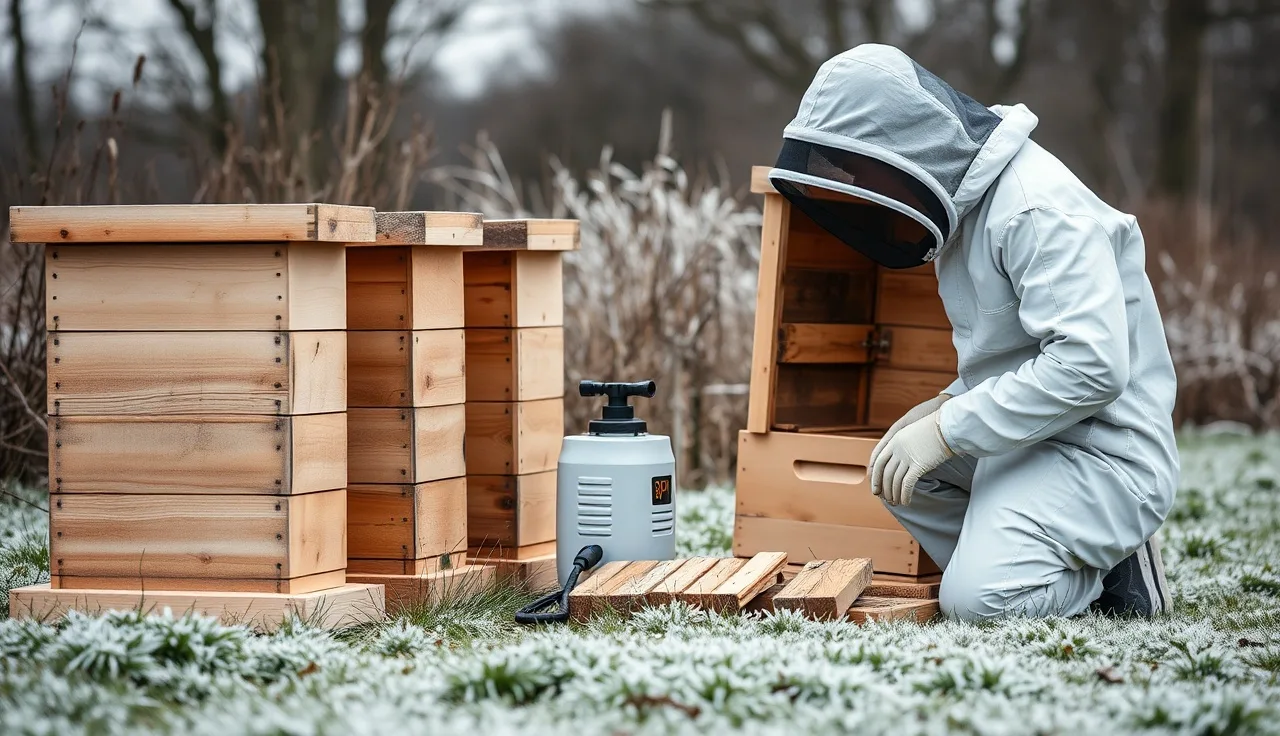
- Oxalic acid (OA) is the most effective varroa treatment for broodless UK colonies, killing 93-97% of phoretic mites in one application.
- Two methods are legal here: trickle and vaporisation, both using Api-Bioxal, the only authorised product.
- Timing around winter broodlessness decides everything.
- Used at label doses it's safe for bees and leaves no harmful residue in honey.
What is oxalic acid and why do UK beekeepers use it for varroa?
Oxalic acid is an organic acid found in rhubarb, spinach, and dozens of other plants. Beekeepers use it because it kills Varroa destructor mites on contact while leaving the bees mostly unharmed at the right dose. That selectivity is the whole point.
European researchers have studied OA against varroa since the late 1980s, and the evidence is hard to argue with. Work from the Swiss Research Institute of Organic Agriculture reported efficacy of 93-97% against phoretic mites (mites riding on adult bees) in broodless colonies [1]. Most synthetic miticides can't reliably beat that at this point in the resistance story.
Varroa reached the UK in 1992 and now lives in nearly every colony [2]. Treatment isn't optional if you want your bees alive in spring. Oxalic acid sits near the top of most UK protocols because it's cheap, no resistance has been documented, and it's cleared for organic production.
The biology explains the rest. During the active season, roughly 80-90% of mites are hidden inside capped brood cells at any moment [3]. OA only kills what it touches on adult bees. That single fact is why treating a broodless colony works so much better than treating one full of open and capped brood.
Is oxalic acid legal to use on bees in the UK?
Yes, with one product caveat. You cannot legally treat bees with raw oxalic acid dihydrate from a lab supplier or hardware store. You must use a veterinary-authorised product. As of 2024, the only oxalic acid product authorised for honey bees in Great Britain is Api-Bioxal [4].
Api-Bioxal is authorised by the Veterinary Medicines Directorate (VMD). The VMD runs a searchable product database at gov.uk where you can check current authorisation before you buy [4]. This matters because the rules can move. Northern Ireland has followed different arrangements tied to EU alignment, so beekeepers there should check the VMD database directly instead of trusting older guidance.
Under the Veterinary Medicines Regulations 2013 (Statutory Instrument 2013/2033), using an unauthorised product on livestock, bees included, is an offence in Great Britain [5]. The practical version is short. Buy Api-Bioxal, keep the receipt, follow the label.
One thing trips people up: the Api-Bioxal label gives concentrations as oxalic acid dihydrate, not pure OA. The dihydrate form is heavier. If you compare numbers against an old European paper quoting anhydrous OA, don't mix the two figures.
What are the approved oxalic acid application methods in the UK?
Api-Bioxal's UK authorisation covers two methods: trickling (dribbling) and vaporisation (sublimation). A third method, OA-in-syrup extended release on a sponge or card used in some US states, is not part of the UK Api-Bioxal authorisation as of 2024. Your real choice is trickle or vaporisation.
Trickle method
You dissolve Api-Bioxal in warm sugar syrup to make roughly a 3.2% OA solution by weight (the label gives exact preparation), then dribble 5 ml per occupied seam of bees, up to 50 ml per colony [4]. It's a one-shot treatment. The acid moves from bee to bee through grooming. No special kit beyond a syringe, which makes it friendly for beginners. You do have to open the hive and work with reasonably calm bees.
Vaporisation (sublimation)
A measured dose of Api-Bioxal powder goes into a vaporiser pan, slides into the hive entrance, and heats until the OA sublimes into a fine aerosol. Bees walk through the cloud and collect OA crystals, which then meet mites during grooming. The Api-Bioxal vaporisation label specifies 2.3 g of product per treatment for a National or similar hive [4]. Vaporisation is faster per hive once you're set up, doesn't need the colony opened, and reaches bees tucked into awkward corners a little better.
The downsides are real. You need a vaporiser (good ones cost £80-200 depending on model). OA vapour is genuinely hazardous to breathe. You must wear a correctly fitted FFP3 respirator plus goggles every single time. Don't skip that. The Health and Safety Executive classifies OA as a respiratory irritant and potential sensitiser [6].
Api-Bioxal in vaporisation form is a fine crystalline powder. Keep it dry and stored sealed, because it draws in moisture from the air.
When is the best time to treat with oxalic acid in the UK?
Midwinter, when the colony is broodless. In UK conditions that window usually falls between late November and mid-January, though it shifts with region and year.
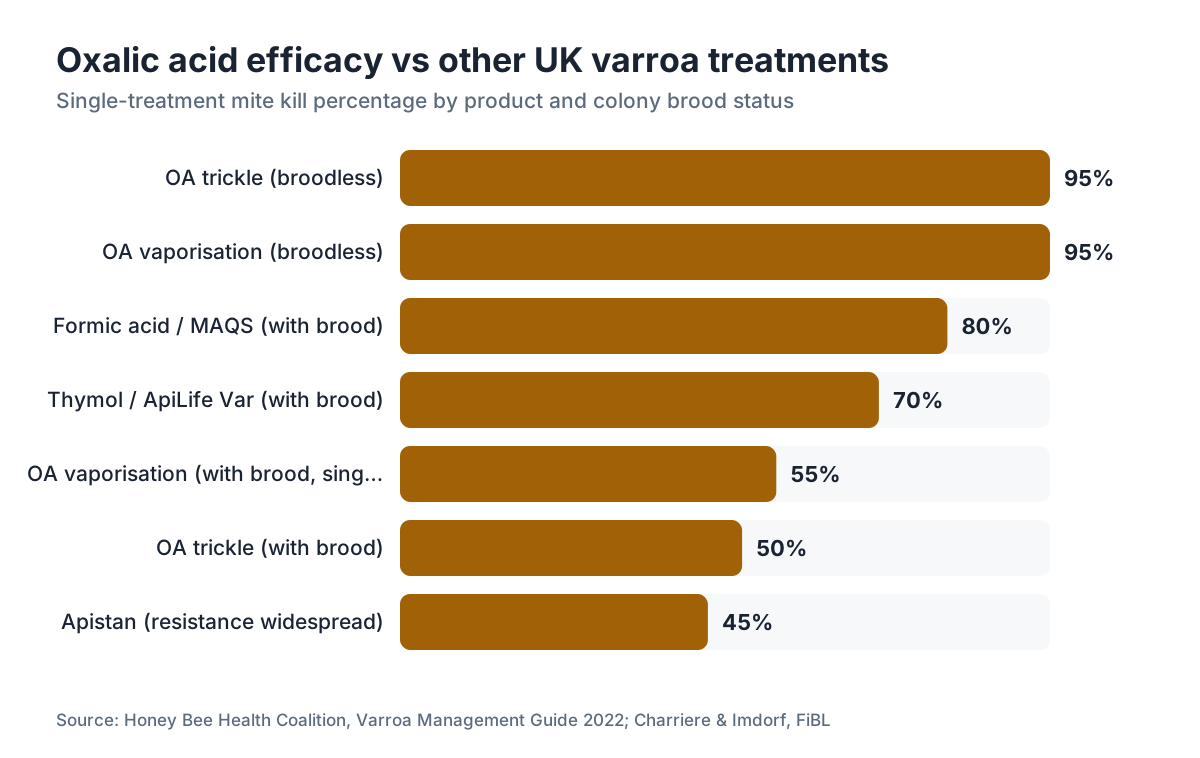
Why broodlessness matters comes straight back to the biology. A single trickle or vaporisation on a broodless colony can reach 93-97% efficacy [1]. The same treatment on a colony with capped brood gets you maybe 40-60% mite kill, because most mites are sealed inside cells and never touch the acid [3]. In practice that gap decides whether your bees see April.
If you keep bees in a mild pocket of the UK (parts of the south-west, coastal strips) the colony may never go fully broodless. When in doubt, do a brood check before treating. Some beekeepers cage the queen in late November for three weeks to force an artificial broodless window. It's more work, but it earns you a clean treatment if your winters stay warm.
For vaporisation, repeated treatments are possible, and some beekeepers run three at five-day intervals to catch mites leaving late brood. The evidence that multiple vaporisations beat one broodless treatment is modest. Research on repeated vaporisation during brood-rearing found cumulative reduction but lower efficacy per application [11]. Honest answer: if you've confirmed broodlessness, one treatment usually does it.
Spring and summer OA into colonies with brood is a longer argument. Several vaporisations across swarm season can hold mite loads down, but each treatment does less and you pay in time. Treat it as a rescue if you missed winter, not a replacement for a clean midwinter hit.
How effective is oxalic acid compared to other varroa treatments?
Here's a practical comparison of the main treatments available to UK beekeepers.
| Treatment | Active ingredient | Efficacy (broodless) | Efficacy (with brood) | Resistance documented? | Honey withholding |
|---|---|---|---|---|---|
| Api-Bioxal trickle | Oxalic acid | 93-97% [1] | 40-60% [3] | No | None (organic) |
| Api-Bioxal vaporisation | Oxalic acid | 93-97% [1] | Variable, 50-70% with repeats | No | None (organic) |
| MAQS / Formic Pro | Formic acid | ~90% | ~70-90% (penetrates cells) | No | 0 days |
| Apistan strips | Tau-fluvalinate | Historically 95%+ | ~70% | Yes, widespread in UK | 56 days from removal |
| Bayvarol strips | Flumethrin | Historically 90%+ | ~70% | Yes, increasing | 56 days from removal |
| ApiLife Var | Thymol blend | 80-90% | ~60-80% | No | Temp-sensitive |
Apistan and Bayvarol resistance in UK varroa is real and widespread, tracked by the National Bee Unit since the early 2000s [2]. Relying on either as your only treatment is a bet you'll eventually lose. OA works by a different route entirely (direct contact toxicity, not neurotoxicity), and no mite resistance to it appears in the peer-reviewed literature as of 2024.
Formic acid (Formic Pro, MAQS) has one thing OA doesn't: it gets through the cell cappings, so it works mid-season. Many experienced UK beekeepers run a combined programme. Formic acid in late summer knocks mites back before winter bees are raised, then OA in December cleans up the survivors in a broodless colony. The Honey Bee Health Coalition describes this integrated approach as "using multiple control methods to minimize mite population growth while avoiding overreliance on any single product" [7].
Cost is on OA's side. Trickle solution runs roughly £5-10 per colony per season once the product is spread across a small apiary. A vaporiser is an upfront spend, but the powder itself costs almost nothing per treatment.
How do you mix and apply the oxalic acid trickle solution correctly?
Follow the Api-Bioxal label exactly, not a recipe off a forum. The label direction: dissolve 35 g of Api-Bioxal (oxalic acid dihydrate) in 500 ml of warm water, then add 500 ml of 1:1 sugar syrup (sugar to water by weight) to give 1 litre of solution at about 3.2% OA [4]. Warm, not hot. Hot syrup degrades the acid.
Kit: a 10 ml syringe marked in 1 ml graduations, a mixing container, sugar syrup, and nitrile gloves. OA solution irritates skin and eyes, so don't handle it bare-handed.
Application is quick. Open the hive gently, find each seam of bees (the gaps between frames where bees show), and trickle 5 ml slowly along each one. Work across from side to side. Cap it at 50 ml per colony, which is ten seams. Don't puddle it on the floor. It has to land on bees. Close up and you're finished.
Cold weather packs the cluster tight, so you'll often count fewer visible seams than you did in autumn. Don't chase seams you can't see. The cluster shifts and the acid spreads through contact. That bee-to-bee spread is a big part of why one treatment works as well as it does.
Dispose of leftover solution by diluting it heavily and pouring it down a drain, not into a watercourse. Don't trickle the same colony twice in a season. The label permits one trickle treatment per colony per year.
How do you use an oxalic acid vaporiser safely in the UK?
Respirator first. You need a half-face or full-face respirator with a P3 filter (or FFP3-rated protection) that covers both particulates and acid vapour. A paper dust mask does nothing useful here. OA vapour causes upper respiratory irritation, and repeated exposure is a real concern for anyone treating many hives [6]. Buy a proper respirator (3M, Moldex, or similar) and fit-test it.
Then the rest: nitrile gloves, eye protection, and no treating on a windy day with vapour drifting back at you.
The procedure for a National hive: block the entrance with foam or a board, weigh 2.3 g of Api-Bioxal powder into the pan (a digital scale accurate to 0.1 g is essential), slide the vaporiser through the entrance, heat for 2-3 minutes or until the cycle finishes (electric models vary), then leave the entrance sealed for 10 minutes so the vapour settles before you remove and open. Don't crack the hive and breathe straight in.
Electric vaporisers are the standard choice for UK beekeepers now. Gas models exist but add fire risk in tight apiaries. Entry-level electric units start around £80. The Varrox Eddy and similar run £150-200 and heat faster and more evenly [8]. For a hobby apiary of 3-6 hives, any reliable electric model is fine.
One practical note. The pan must be bone dry before you load powder. Moisture makes OA melt instead of subliming cleanly, which cuts distribution inside the hive and corrodes the pan over time.
If you're building out your kit, the guides at beekeeping supply companies and free shipping honey bee supply companies help you compare vaporiser prices across UK suppliers.
Does oxalic acid harm bees or contaminate honey?
At label doses, oxalic acid causes no detectable harm to adult bees. Studies have looked at brood survival, queen viability, and adult bee longevity after OA treatment and found no significant negative effects at label rates [1]. Overdosing is another story. Too much OA kills bees, and in trickle applications, drowning bees in excess fluid is a genuine risk if you go over 5 ml per seam.
Honey contamination isn't a practical worry. Oxalic acid sits naturally in honey at around 8-12 mg/kg [9]. Studies treating colonies with Api-Bioxal found no significant rise in honey OA compared to untreated controls. That's why there's no honey withholding period for Api-Bioxal in the UK, and why it's cleared for organic systems. OA doesn't build up in wax or honey the way synthetic miticides do [12].
Supers are a separate question. The Api-Bioxal label requires supers removed before trickle treatment. For vaporisation, some label versions allow treatment with supers present during winter, when no super holds harvestable honey, but the wording has changed between editions. When in doubt, pull the supers.
OA doesn't harm larvae at label rates. It can damage open brood if directly hit at very high concentrations, which is one more reason to be precise with the trickle dose.
Can you treat bees with oxalic acid when they have brood?
You can, but set your expectations low. In a colony with capped brood, one OA application kills the phoretic mites on adult bees and leaves every reproductive mite sealed inside a cell untouched. Efficacy falls to roughly 40-60% in a single treatment [3]. Not nothing, but a long way from the midwinter result.
To get useful reduction during the brood season, beekeepers repeat vaporisation, usually three to five treatments at five-to-seven day intervals [11]. The logic: as mites emerge from capped cells with young bees, they spend a short phoretic phase before entering new cells, and repeated treatments try to catch them in those windows. Whether that's practical depends on your numbers. Treating 20 hives five times across five weeks is a serious chunk of your life.
One mid-season case where OA clearly earns its place is swarm control. When you split a colony and the queenless half raises a new queen, you get a natural broodless (or near-broodless) gap of about three to four weeks while she develops, mates, and starts laying. Treating that queenless unit with OA during that gap is very effective and wastes nothing. It's a standard National Bee Unit recommendation [2].
For a full summer plan, the Honey Bee Health Coalition's Varroa Management Guide is the clearest annual reference around [7]. VarroaVault also has protocol templates built on UK seasonal windows if you want a schedule ready to go.
How do you know if your oxalic acid treatment worked?
You count mites before and after. No shortcut is actually reliable.
The most accessible check for UK hobbyists is the alcohol wash (also called the sugar roll). Take about 300 adult bees (roughly half a cup) from a frame near the brood nest, wash them in isopropyl alcohol or soapy water, count the mites, and work out mites per 100 bees. A result above 2-3 per 100 during the active season flags a colony that needs treatment [7]. Take a baseline before treating, then check afterward and look for that number to drop hard.
Sticky board counts (the natural mite drop onto a board under a mesh floor) give you a relative sense of the mite burden over time, but they're harder to read as an absolute threshold. Use them to watch the trend between washes.
After a midwinter OA treatment, many beekeepers see a heavy visible mite drop on the board over the following days. That's reassuring, but it doesn't replace a proper wash in late winter or early spring to confirm the load is genuinely low before the colony expands again.
If your post-treatment count is still high, ask three questions. Did the colony have unseen brood? Check again. Was the dose adequate? Was there reinfestation from nearby colonies? Reinfestation from collapsing apiaries next door is badly underrated as a reason treatments look like they failed.
What does a complete UK varroa management calendar look like using oxalic acid?
A workable annual protocol for a UK beekeeper with a small apiary looks like this.
Spring (March-April): Run an alcohol wash as the colony expands. Below 1 mite per 100, watch and wait. At 2 or above, start weighing an early treatment.
Summer (June-August): Wash monthly. If the count climbs above 2-3 per 100 before late July, use formic acid (Formic Pro or MAQS) to treat through capped brood. Formic is the right tool here, not OA, because it penetrates cells. Manage swarms and use any broodless splits as free OA opportunities.
Late summer (August): This is the treatment that matters most. The winter bees being raised now carry the colony to spring. A high mite load in August means parasitised, short-lived winter bees and a dead hive before January. The National Bee Unit recommends treating no later than August to protect these bees [10]. Formic acid or thymol are the main options.
Autumn (September-October): Final monitoring wash. If counts are still up after a summer treatment, consider a second treatment with a different product.
Winter (November-January): When the colony is broodless (confirm with a quick check), apply Api-Bioxal by trickle or vaporisation. One treatment in a genuinely broodless colony should reach 93-97% mite kill [1]. This is your cleanest OA shot of the year.
If you track mite counts and treatments, the planning tools at VarroaVault map your colony records against this schedule.
Sourcing the right beekeeping supplies for monitoring and treatment (varroa boards, alcohol wash kits, vaporisers) in the UK is straightforward through most suppliers and local associations.
Where can you buy Api-Bioxal and what does it cost in the UK?
Api-Bioxal sells through most UK beekeeping equipment suppliers: E.H. Thorne, Abelo, and others, plus some agricultural merchants and suppliers connected to the British Beekeepers Association's regional network.
Pricing as of 2024 runs roughly £15-25 for a 175 g pack (enough for about 35-75 trickle treatments or 75-plus vaporisation treatments depending on colony size). The per-colony cost is tiny once you're past the pack purchase. If you already own a vaporiser, OA is one of the cheapest varroa treatments going.
Api-Bioxal is a veterinary medicine classed POM-VPS in the UK. That means no vet prescription, but it must be sold by an authorised supplier, a pharmacist, or a suitably qualified person. You don't need a prescription. You do need to buy from a proper supplier and use it as directed.
Keep a treatment record: date, product, batch number, dose, and colony treated. That's good practice and it's legally expected under the Veterinary Medicines Regulations 2013 [5]. A notebook is enough. Some beekeepers prefer a phone app or a spreadsheet.
If you're setting up for the first time, the wider beekeeping supplies picture is worth a look, so you buy the vaporiser, protective gear, and monitoring tools in one go rather than in three separate orders.
Frequently asked questions
Can I use oxalic acid on a colony that still has honey supers on?
For trickle treatment, the Api-Bioxal label requires supers removed first. For winter vaporisation, supers are usually empty and most label versions permit treatment, but confirm on your specific product label. To stay safe and legally compliant, remove supers before any OA application. Background OA levels in honey aren't a contamination concern, but the label guidance is the legal requirement.
How many times can I treat with oxalic acid in one year?
The Api-Bioxal label allows one trickle treatment per colony per year. Vaporisation can be repeated, and the label permits multiple applications for extended treatment periods, such as three vaporisations at five-day intervals. Don't exceed label guidance. Using OA more than needed doesn't improve outcomes in broodless colonies and adds unnecessary acid exposure for the bees.
What temperature should it be when I apply oxalic acid to my bees?
For trickle treatment, bees should be clustered but not so cold you can't disturb them safely. Above 3-5°C is the general guidance from most extension resources, active enough to spread the treatment through grooming. For vaporisation, very cold temperatures slow sublimation in some models. Avoid treating in rain or below freezing if you can help it.
Does oxalic acid kill varroa eggs or mites inside capped cells?
No. Oxalic acid only kills mites it physically touches on adult bees. Mites inside capped brood cells are fully protected. That's why broodless treatment works so well: every mite in the colony is riding an adult bee and exposed. In colonies with capped brood, only the phoretic fraction (roughly 10-20% of total mites) dies per treatment.
Is oxalic acid treatment safe for the queen?
At label doses, yes. Studies and decades of practitioner experience show queens treated at correct Api-Bioxal rates keep laying normally with no measurable drop in colony performance. Overdosing is different. Excessive trickle volumes can stress any bee, queen included. Stick to 5 ml per seam and you have a wide safety margin.
What respirator do I need for oxalic acid vaporisation?
A correctly fitted respirator with a P3 filter, which covers both fine particulates and the vapour phase, or FFP3-rated protection combined with an acid vapour cartridge. Dust masks and surgical masks are not adequate. The HSE classifies OA as a respiratory irritant and sensitiser, and repeated unprotected exposure has caused respiratory sensitisation in professional beekeepers. Buy a proper half-face respirator from a reputable maker.
Can I make my own oxalic acid solution from raw OA powder instead of buying Api-Bioxal?
Not legally in the UK. You must use a veterinary-authorised product, and Api-Bioxal is the only authorised OA product for honey bees in Great Britain. Using raw lab-grade or technical-grade OA is an offence under the Veterinary Medicines Regulations 2013, even if the concentration you mix is identical to the label product. Keep your Api-Bioxal receipt as your compliance record.
How long after oxalic acid treatment before I can harvest honey?
There's no honey withholding period for Api-Bioxal in the UK. Oxalic acid is an organic acid naturally present in honey, and studies show OA treatment at label rates doesn't measurably raise honey OA above natural background. That's one of OA's advantages over synthetic miticides like tau-fluvalinate, which carry 56-day withdrawal periods from the time strips come out.
Why is my mite count still high after an oxalic acid treatment?
The most common reason is undiscovered brood at treatment time, sheltering mites from OA contact. Other causes: too little dose (not enough solution per seam, or too little powder for vaporisation), reinfestation from collapsing colonies nearby, or bees so tightly clustered the coverage was poor. Recount mites 7-14 days after treatment and inspect for any brood you missed.
Can I treat a nucleus colony (nuc) with oxalic acid?
Yes. Scale the dose to the number of occupied seams. A small nuc with three seams of bees gets 15 ml of trickle solution (3 x 5 ml), not a full-colony dose. For vaporisation in a nuc box, use less powder and a shorter heating time to avoid overdosing the smaller airspace. Nucs are strong candidates for OA because they're often broodless after a split.
What is the difference between oxalic acid trickle and vaporisation in terms of results?
In a genuinely broodless colony, both hit 93-97% mite kill. Vaporisation has a slight edge in that you don't open the hive, which is gentler in cold weather, and it may reach bees in awkward corners a little better. Trickle is simpler and cheaper to start. Both are valid. The bigger variable by far is whether the colony is truly broodless.
Do I need to register anywhere to use oxalic acid on bees in the UK?
No registration is required for personal use of Api-Bioxal in the UK. You should keep a treatment record (date, product, batch, colony, dose) as required by the Veterinary Medicines Regulations 2013. If you sell honey commercially, good records protect you if residue questions ever come up, though OA has no practical residue concern. There's no beekeeper licence specifically for OA use.
Can oxalic acid treat other bee diseases or just varroa?
Just varroa, specifically Varroa destructor mites. Oxalic acid has no meaningful effect on bacterial diseases like American foulbrood or European foulbrood, viral conditions, Nosema, or small hive beetle. It's a varroa-specific tool. If you see other disease signs alongside high mite counts, OA handles one problem and you'll need to address the rest separately.
Sources
- Charriere & Imdorf, Swiss Research Institute of Organic Agriculture (FiBL), oxalic acid efficacy studies: Oxalic acid trickle and vaporisation achieve 93-97% efficacy against phoretic mites in broodless colonies
- Animal and Plant Health Agency (APHA), National Bee Unit, BeeBase varroa guidance: Varroa is now present in virtually every UK colony; fluvalinate and flumethrin resistance documented; broodless splits recommended as OA treatment opportunities
- Honey Bee Health Coalition, Varroa Management Guide, 2022 edition: Approximately 80-90% of mites are in capped brood at any time during the active season; single OA treatment in colonies with brood achieves roughly 40-60% efficacy
- Veterinary Medicines Directorate (VMD) Product Information Database, Api-Bioxal authorisation and label: Api-Bioxal is the only authorised oxalic acid product for honey bees in Great Britain; trickle dose 5 ml per seam to 50 ml maximum at 3.2% OA; vaporisation dose 2.3 g per National hive
- UK Veterinary Medicines Regulations 2013, Statutory Instrument 2013/2033: Using an unauthorised veterinary medicine on livestock (including bees) is an offence in Great Britain; treatment record-keeping is legally required
- Health and Safety Executive (HSE), oxalic acid COSHH guidance: Oxalic acid is classified as a respiratory irritant and potential sensitiser; P3/FFP3 respiratory protection is required during vaporisation
- Honey Bee Health Coalition, Varroa Management Guide 2022: Coalition recommends 'using multiple control methods to minimize mite population growth while avoiding overreliance on any single product'; alcohol wash threshold of 2-3 mites per 100 bees
- Penn State Extension, varroa mite treatment and oxalic acid guidance: Electric vaporisers heat more evenly than gas models; entry-level models start around $100 (approx £80) and perform adequately for small apiaries
- Bogdanov et al., Swiss Bee Research Centre, Apidologie 33 (2002): background oxalic acid in honey: Oxalic acid naturally present in honey at approximately 8-12 mg/kg; Api-Bioxal treatment at label rates does not measurably increase honey OA above natural background
- APHA National Bee Unit, Managing Varroa advisory leaflet (revised 2022): National Bee Unit recommends treating by late August to protect winter bees; OA treatment recommended during confirmed broodless winter period
- Gregorc & Planinc, Apidologie 2012, repeated oxalic acid vaporisation in colonies with brood: Repeated OA vaporisation at five-to-seven day intervals during brood-rearing season can achieve cumulative mite reduction but efficacy per application is lower than in broodless colonies
- University of Minnesota Extension, oxalic acid for varroa control: Confirms no withholding period for oxalic acid products; approved for use in organic systems; no residue accumulation in wax
Last updated 2026-07-09