Oxalic acid dosage calculation per bee cluster: the complete guide
TL;DR
- For the dribble method, apply 5 mL of 3.2% oxalic acid solution per occupied bee seam, up to 50 mL per hive.
- For vaporization, the EPA-registered Api-Bioxal label sets 2.17 g of oxalic acid per hive per application.
- Both kill only phoretic mites, so timing your treatment to a broodless period matters as much as the dose.
What is the correct oxalic acid dose per bee cluster?
Five mL of 3.2% oxalic acid solution per occupied bee seam, with a hard cap of 50 mL total per hive no matter how many seams you find. A seam is the gap between two frames where bees are clustered. That number comes straight from the Api-Bioxal EPA product label, the only federally registered oxalic acid product for honey bee hives in the United States as of 2025 [1]. Following the label isn't optional. It's a federal document.
Vaporization uses a different unit. The dose is 2.17 g of Api-Bioxal per hive per application, fixed per box rather than per cluster. The vapor spreads through the hive space and contacts bees wherever they sit, so counting clusters matters far less than it does for dribbling.
Extended-release glycerin pads (added to the Api-Bioxal label in the 2023 registration amendment) work differently again. You place one pre-saturated shop towel or cloth strip on the bottom bars of the brood nest per the labeled instructions [1]. This contact method works with or without brood present, which is its real edge over the other two.
Get the dose wrong either way and you pay. Too little leaves mites alive. Too much can kill your queen or damage the cluster, especially in cold weather when bees can't dry excess solution off their bodies.
How do you count bee clusters to get the dribble dose right?
One cluster, for dosing, means one occupied seam between adjacent frames. If bees cover the face of frame 4 and the face of frame 5, the space between them is one seam and it gets 5 mL. Ten occupied seams means 50 mL, which is also the label maximum, so anything past ten seams still caps at 50 mL.
Here's how to count in the field: open the hive without a smoker if you can (smoke scatters the cluster temporarily), look down at the top bars, and count every gap where bees are packed together. A strong winter colony might occupy 8 to 12 seams. A late-fall nuc might have 3 or 4. A struggling summer split could have 2. The dose scales to what's actually in front of you.
Don't guess. Overdosing a small cluster is more dangerous than underdosing a large one, because a small cluster has less body surface area to absorb and spread the excess. University of Minnesota Extension recommends physically counting the seams before you mix, so you know exactly how many mL to draw up [2].
Count in the late afternoon. Bees have clustered for the evening but it isn't full dark yet, so you get a cleaner read on true cluster size than you would at midday with half the foragers out of the hive.
How do you mix a 3.2% oxalic acid solution from scratch?
If you buy Api-Bioxal ready-to-mix powder, the label gives you the recipe: dissolve 35 g of Api-Bioxal in one liter of 1:1 sugar syrup (equal parts water and table sugar by weight) [1]. That yields the 3.2% concentration. Don't go stronger. The label doesn't authorize a hotter mix, and higher concentrations kill bees.
Some beekeepers mix from bulk oxalic acid dihydrate bought for other uses. Legality varies by state, but hive use requires a product labeled for beekeeping or an appropriate exemption. The Api-Bioxal label is what gives you legal cover. Using a non-labeled product (pool deck wash, wood bleach) in a hive is a FIFRA violation and can wreck your honey's food safety status [3].
The math is simple. A 3.2% solution holds 3.2 g of oxalic acid per 100 mL. At 5 mL per seam, each cluster gets 0.16 g of oxalic acid. The sugar syrup is just the carrier. It gets bees to groom and swallow tiny amounts of the acid, which is how it kills phoretic mites.
Mix fresh every time. Oxalic acid degrades slowly in sugar syrup, and solution that's been sitting in your truck cab for three weeks picks up contamination and loses potency. Fresh is a five-minute job. Do it.
Dribble vs. vaporize vs. extended-release: which method needs the most precise dosing?
Dribbling demands the most precision because the dose lands on individual clusters. Pour 15 mL on a 3-seam cluster and you've overdosed by 200%, with the excess sitting on bees who can't move it. Pour 5 mL total on a 10-seam colony and you've undertreated by 90%.
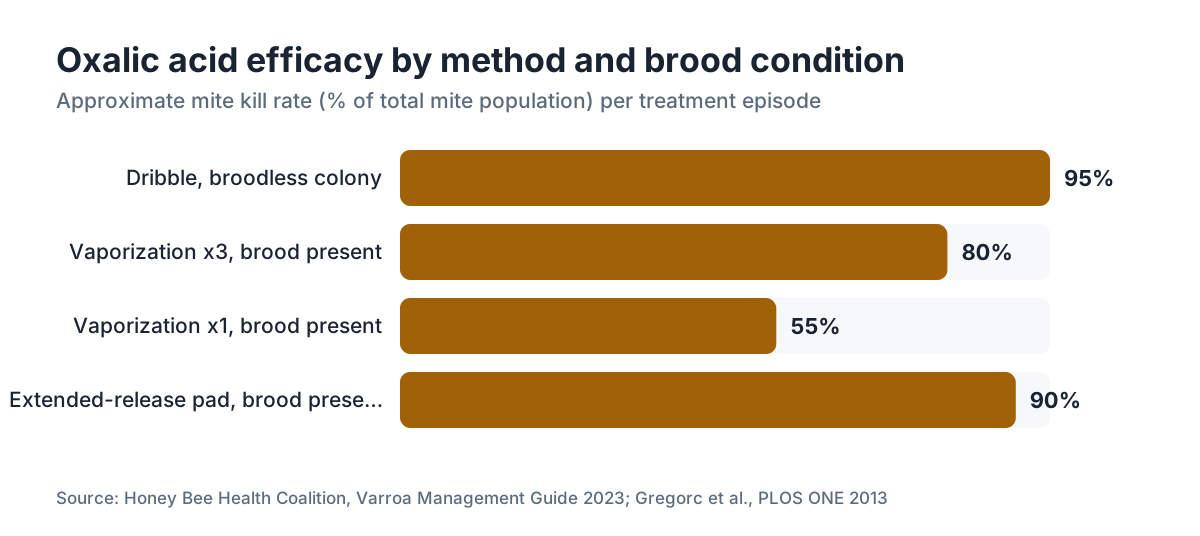
Vaporization forgives per-cluster math because the vapor disperses on its own. The 2.17 g figure assumes a standard Langstroth with a normal population. The Honey Bee Health Coalition's Varroa management guide notes that for very strong colonies in tall stacks, some beekeepers treat twice within a week to make up for vapor thinning out in a bigger air volume [4]. The label allows up to three applications at 5-day intervals.
| Method | Dose unit | Max per hive | Brood present? | Application count (label) |
|---|---|---|---|---|
| Dribble | 5 mL per seam | 50 mL | No (broodless only) | 1 per year |
| Vaporization | 2.17 g per hive | No stated cap per application | Yes (reduced efficacy) | 3 apps, 5-day intervals |
| Extended-release pad | 1 pad per brood chamber | Per label | Yes | Per label schedule |
Extended-release dosing cares least about cluster counting. The glycerin pad keeps releasing low-level oxalic acid over 4 to 6 weeks as bees walk across it, and that slow contact catches mites emerging from capped cells, which the other two methods can't do. That's its main practical advantage.
For hobbyists with a handful of hives, vaporization is the popular pick right now, and the fixed 2.17 g dose keeps it simple. But if you've got hives that can't be moved and you're treating in the dead of winter, dribbling is legitimate, and the cluster-counting math is what makes it work.
When should you treat, and how does timing affect the dose needed?
Oxalic acid dribble and vapor kill only phoretic mites, meaning the ones riding on adult bees. Neither penetrates capped brood cells. A colony with an active laying queen keeps 70 to 85% of its mite population sealed inside capped cells at any moment, so treating over brood only knocks down the exposed minority [4].
That's why timing matters as much as dose. The best window for dribble or vaporization is a naturally broodless colony: midwinter across most northern states (roughly December through January), after an induced brood break from a queen cage or removal, or in late fall once the queen stops laying.
The Honey Bee Health Coalition's Varroa Management Guide states that "oxalic acid treatments are most effective when colonies are broodless, as 100% of the mite population is phoretic" [4]. That single fact is why your mite count after a winter dribble drops so much harder than after a summer vapor treatment.
Stuck treating with brood present (a late-season emergency)? Vaporization with three applications at 5-day intervals beats a single dribble, because the repeats catch mites as they emerge from cells over time. Extended-release pads are built for exactly this.
For seasonal protocols, most northern-US extensions recommend a late-summer treatment in August, another in October, and a broodless-period treatment in December or January [9]. The threshold that triggers treatment is generally a 2% infestation rate (2 mites per 100 bees on an alcohol wash), regardless of season [5].
What safety precautions do you need when handling oxalic acid?
Oxalic acid is genuinely hazardous to people. The Api-Bioxal label requires nitrile or rubber gloves, chemical splash goggles, and respiratory protection matched to the application method [1]. For vaporization, the label specifically requires a properly fitted NIOSH-approved respirator rated for organic acid vapors (at minimum a P100 with an organic vapor cartridge). A dust mask does nothing here.
For dribbling, splash protection matters most. The solution is liquid and it drips. Tilt the hive slightly back so excess runs toward the bottom board and away from your hands. Wear a long-sleeved shirt. If solution hits skin, flush with water for 15 minutes.
Store the powder in a sealed container away from moisture, children, and food. It absorbs through skin. Dispose of excess solution per your state's rules for household chemicals; most extension services suggest diluting heavily and pouring onto bare soil away from waterways [2].
Don't treat below 10 degrees Fahrenheit (-12 C). Cold bees can't groom, so dribbled solution doesn't distribute and mortality climbs from cold stress plus wet application. The practical floor for vaporization sits around 20 degrees Fahrenheit (-7 C); below that, the vapor condenses before it reaches the cluster.
How do you verify that your dosage actually worked?
Verification starts before you reopen the hive. Slide a sticky board or a piece of corrugated cardboard coated in petroleum jelly under the screened bottom board 24 to 48 hours after treatment, then count the mite drop. A single dribble on a broodless colony often produces a dramatic first-day fall: hundreds to thousands of mites on a heavily infested hive.
The real confirmation is a follow-up alcohol wash 3 to 4 weeks later. University of Minnesota Extension recommends washing roughly 300 bees (about half a cup) in isopropyl alcohol and counting the mites [2]. Divide mites by bees, multiply by 100, and you have your infestation rate. Start at 5%, land below 2%, and your dose and timing worked.
Still above 2%? Ask three things. Was brood present during treatment? Did the dose actually reach every cluster? Are you getting reinfested by drift or robbing from nearby colonies? Check your equipment too. Vaporizers vary in how completely they volatilize the dose, and some budget units leave residue instead of turning it all to vapor [4].
You can track counts over time with free tools. VarroaVault's treatment tracker logs pre- and post-treatment alcohol wash results per hive so you can watch efficacy trends across your operation, which earns its keep once you're past three or four hives.
For why the broodless timing works mechanically, the varroa mite life cycle is worth understanding. The biology makes the numbers click into place.
Does hive size or configuration change the dosage?
For dribble treatment, hive size doesn't change the per-seam dose. You still use 5 mL per occupied seam whether it's a single 8-frame Langstroth or a double-deep 10-frame. The 50 mL cap means a physically larger colony still tops out at 50 mL total.
Vaporization raises a real question with multi-story hives. The label specifies 2.17 g per hive body application with the entrance sealed. Most beekeepers use one dose for hives up to two deep supers and add a second treatment within 5 days for three or more stories, or for very large populations. No EPA label language explicitly covers triple-deep hives, so the safer move is the three-application regimen at 5-day intervals rather than trying to crank up a single dose [1].
Nucs with 4 or 5 frames and small clusters need correspondingly small doses: typically 10 to 20 mL for a 2-to-4 seam nuc. Overdosing a nuc is easy and genuinely dangerous to the small population inside. The queen in a nuc is more exposed to acute oxalic acid because the cluster is so small.
Top-bar and Warré hives are trickier. Clusters can be hard to count through a side viewing window, and the non-rectangular frames make vaporizer placement less standardized. Extension guidance for these setups is thin. The closest applicable advice comes from Oregon State University Extension, which suggests erring toward lower doses and confirming the result with a mite wash [6].
What does the EPA label actually say about dosage limits?
The Api-Bioxal label (EPA Reg. No. 72140-4) is a public document available through the EPA pesticide registration database. For dribble, it sets a maximum single treatment of 50 mL per colony and one treatment per year [1]. For vaporization, it allows up to three treatments per episode at 5-day intervals, at 2.17 g per application. The extended-release glycerin method got its own label section in the 2023 registration amendment.
The one-per-year dribble limit is the most misread restriction on the label. It does not mean you can dribble in December and again in February when your mites rebound. It means one dribble application per calendar year, full stop. Any additional treatments that year must use a different method, such as vaporization.
The label also says treated honey supers must come off before treatment, though this eases for vaporization done during a period when supers aren't on for honey storage. Always read the current label. The 2023 amendments changed several provisions [1].
For sourcing gear to apply treatment correctly, our beekeeping supplies overview covers vaporizers, protective gear, and application syringes worth buying.
Can oxalic acid harm your queen, and does dosage affect that risk?
Yes. Overdosing or misapplication can harm or kill queens. The risk peaks with dribble on very small clusters, where the queen meets a higher concentration of solution relative to the few bees available to groom and spread it. Queen loss after dribble treatments shows up in the beekeeping literature, though the rate in properly dosed applications is low [7].
A 2013 study in PLOS ONE examining oxalic acid efficacy and toxicity found queen losses were significantly higher when application volumes exceeded label recommendations or when colonies were treated during cold snaps that cut bee mobility [7]. The study concluded that following the label dose and avoiding treatments below 50 degrees Fahrenheit substantially reduced queen mortality.
Vaporization at the correct 2.17 g dose shows lower queen mortality than overdosed dribble in published trials. That's one reason experienced beekeepers lean toward it: the fixed dose is harder to botch, and vapor treats individual bees more gently than liquid pooling in the seams.
Got a queen you care about (marked, selected genetics, purchased)? Choose vaporization over dribble regardless of season, and check the temperature before you crack the lid.
What are realistic efficacy numbers to expect from a correctly dosed treatment?
A properly dosed dribble on a broodless colony kills 90 to 99% of phoretic mites in peer-reviewed trials [7][8]. That's impressive, but remember the catch: against the total mite population in a colony with active brood, a single application typically clears only 40 to 60%, because the rest are sealed in cells.
Vaporization on a colony with brood, run as a three-application series at 5-day intervals, brings total mite kill into the 70 to 90% range depending on brood load, hive configuration, and equipment quality [4][8]. A single vaporization on a heavy-brood colony may cut only 50 to 60% of the phoretic population and leave every in-cell mite untouched until it emerges.
The Honey Bee Health Coalition's Varroa Management Guide reports that extended-release oxalic acid pads showed 90%-plus efficacy in trials, comparable to synthetic miticides like amitraz, which makes them a real option for summer treatment when brood is always present [4].
Nobody has clean data on how reinfestation from neighboring apiaries skews post-treatment counts. The closest population-level studies come from Scandinavian and Swiss apiaries, where hive density runs lower than in the American Midwest, so those efficacy numbers may read optimistic for beekeepers in crowded areas. That's honest uncertainty worth stating: the label numbers are real, but your field result will vary.
Frequently asked questions
How many mL of oxalic acid solution per cluster do I use for dribble treatment?
Apply 5 mL of 3.2% oxalic acid solution per occupied cluster seam (the space between two adjacent frames where bees are clustered). The Api-Bioxal label caps total application at 50 mL per hive. Count every occupied seam before you mix your solution so you know exactly how much to prepare.
Can I use oxalic acid when my hive has brood?
Dribble treatment is labeled for broodless colonies only and gives one application per year; it cannot reach mites in capped cells. Vaporization can be used with brood present but requires three applications at 5-day intervals to catch mites as they emerge. Extended-release glycerin pads are the most practical method when brood is continuously present through summer.
What concentration of oxalic acid solution do I need to make?
The correct concentration is 3.2% oxalic acid by weight. The Api-Bioxal label recipe is 35 g of Api-Bioxal powder dissolved in 1 liter of 1:1 sugar syrup. Do not increase concentration; higher concentrations kill bees. Mix fresh solution each treatment day rather than storing premixed solution.
How do I count bee clusters before treating?
Open the hive, look down at the top bars, and count every gap between adjacent frames where bees are visibly packed together. Each occupied seam is one cluster and gets 5 mL. Count in late afternoon when the foragers have returned and the cluster is densest. A strong winter colony typically occupies 8 to 12 seams.
How much Api-Bioxal do I use for vaporization?
The EPA-registered label dose for Api-Bioxal vaporization is 2.17 g per hive per application. You may apply up to three treatments at 5-day intervals per episode. The dose is fixed per hive, not per cluster or per frame, and should be loaded into a calibrated vaporizer with the hive entrance sealed during treatment.
What temperature is too cold to treat with oxalic acid?
For dribble treatment, avoid temperatures below 10 degrees Fahrenheit (-12 C). Cold bees cannot groom wet solution off their bodies, which raises mortality. For vaporization, the practical floor is around 20 degrees Fahrenheit (-7 C), below which vapor condenses before reaching the cluster. Many practitioners target the 40 to 60 degree Fahrenheit range for winter treatments.
Is there a maximum number of oxalic acid treatments per year?
The Api-Bioxal dribble method is limited to one treatment per year per the EPA label. Vaporization allows up to three applications per treatment episode (at 5-day intervals) with no stated annual cap on episodes, though repeated treatments should be driven by mite counts, not calendar. Extended-release pads have their own label schedule; follow it exactly.
How do I know if my oxalic acid treatment actually worked?
Place a sticky board under your screen bottom board 24 to 48 hours after treatment and count mite drop. Do an alcohol wash (about 300 bees) 3 to 4 weeks post-treatment and calculate your infestation rate. A drop below 2% mites per 100 bees indicates effective treatment. If you remain above 2%, check whether brood was present and whether you covered all clusters.
Can oxalic acid kill my queen?
Overdosing or treating in cold conditions raises queen loss risk. A 2013 PLOS ONE study found queen mortality was significantly higher when application volumes exceeded label recommendations or temperatures were low enough to reduce bee mobility. Correctly dosed treatment in appropriate conditions carries low queen mortality risk. Vaporization generally poses less queen risk than overdosed dribble applications.
Do I need to remove honey supers before oxalic acid treatment?
Yes, for dribble treatment the Api-Bioxal label requires honey supers to be off. For vaporization, supers should also be removed if they contain honey for human consumption. The label includes specific language on this; always read the current label since the 2023 amendments updated some provisions. When in doubt, remove supers.
What safety gear do I need to apply oxalic acid?
The Api-Bioxal label requires nitrile or rubber gloves and chemical splash goggles for dribble application. Vaporization additionally requires a NIOSH-approved respirator with organic vapor cartridges (more than a dust mask). Wear a long-sleeved shirt and work upwind of the hive during vaporization. Store the powder away from moisture and children.
How does an extended-release oxalic acid pad work, and what is the dose?
Extended-release pads are shop towels or absorbent strips saturated with a glycerin-oxalic acid mixture. One pad is placed on the bottom bars of the brood nest per the Api-Bioxal label. As bees walk across the pad, they pick up low-level oxalic acid and distribute it through grooming. The slow release catches mites emerging from capped cells over 4 to 6 weeks, making it effective with brood present.
What mite level should trigger oxalic acid treatment?
Most university extensions and the Honey Bee Health Coalition recommend treating at 2% infestation rate or higher, meaning 2 or more mites per 100 bees on an alcohol wash or sugar roll. During peak brood season (late summer), some protocols recommend acting at 1% because the mite population is growing fast. Test every 4 to 6 weeks during the season.
Can I use non-labeled bulk oxalic acid instead of Api-Bioxal?
Using an oxalic acid product not labeled for bee hive use is an FIFRA violation under federal pesticide law and can compromise your honey's food safety certification. Api-Bioxal (EPA Reg. No. 72140-4) is the registered product for US beekeepers. Some states have additional registration requirements. Buy the labeled product; the cost difference versus bulk oxalic acid is small.
Sources
- EPA, Api-Bioxal product label (EPA Reg. No. 72140-4): Dribble dose is 5 mL of 3.2% solution per cluster, max 50 mL per hive, one treatment per year; vaporization dose is 2.17 g per hive, up to 3 applications at 5-day intervals
- University of Minnesota Extension, Honey Bee Research and Extension Lab: Recommends physically counting bee seams before dribble treatment, performing alcohol wash of 300 bees, and a 2% threshold for treatment
- EPA, Federal Insecticide, Fungicide, and Rodenticide Act (FIFRA): Using a pesticide product inconsistent with its labeling, including non-labeled oxalic acid in hives, is a FIFRA violation
- Honey Bee Health Coalition, Varroa Management Guide (2023 edition): Oxalic acid treatments are most effective when colonies are broodless as 100% of the mite population is phoretic; extended-release pads showed 90%+ efficacy in trials
- USDA Agricultural Research Service, Varroa Mite Management: Treatment threshold of 2% mite infestation rate (2 mites per 100 bees) is the standard trigger for intervention
- Oregon State University Extension, Beekeeping in the Pacific Northwest: Guidance for treating top-bar and non-standard hive configurations recommends erring toward lower doses and verifying with mite wash
- Gregorc A. et al., PLOS ONE, 2013 - Oxalic acid efficacy and queen mortality: Dribble treatment efficacy of 90-99% on phoretic mites in broodless colonies; queen mortality significantly higher when application volumes exceeded label recommendations or temperatures were low
- Apidologie - Oxalic acid vaporization efficacy trials: Three-application vaporization series brings total mite kill to 70-90% in colonies with brood; single application with brood may achieve only 50-60% phoretic mite reduction
- Penn State Extension, Integrated Pest Management for Varroa Mites: Late-summer (August), fall (October), and winter broodless-period treatment timing protocol for northern US beekeepers
- North Carolina State University Apiculture Program, Oxalic Acid Treatment Guide: Practical guidance on mixing 3.2% solution from Api-Bioxal powder and safe storage of oxalic acid products
Last updated 2026-07-09