Oxalic acid dose for bees: the complete guide to getting it right
TL;DR
- The EPA-registered oxalic acid drip dose is 5 mL of a 3.2% oxalic acid solution per occupied seam of bees, never exceeding 50 mL per colony.
- Vaporization delivers 1 gram of oxalic acid dihydrate per hive body.
- Both methods need broodless conditions or repeated applications to reach mites emerging from capped cells.
- Underdose and mites survive.
- Overdose and bees die.
- Follow the Api-Bioxal label exactly.
What is the correct oxalic acid dose for bees?
Follow the EPA label, because that label is the law. Under the Api-Bioxal label, the only federally registered oxalic acid product for honey bees in the United States, the drip dose is 5 mL of a 3.2% weight-by-weight solution per occupied seam of bees, with a maximum of 50 mL (10 seams) per colony per treatment [1]. For vaporization, the label specifies 1 gram of oxalic acid dihydrate per hive body, delivered with an approved sublimation device [1].
Those numbers are not arbitrary. They come from the EU registration dossier and later EPA review, which found that higher amounts increase queen and worker mortality without a matching gain in mite kill. The active ingredient you're actually delivering in a drip is roughly 0.16 g of oxalic acid per seam, or about 1.6 g across a full 10-seam colony. In vapor form you're delivering 1 g of the dihydrate salt, which sublimates to a mix of oxalic acid gas and fine crystals that coat every surface bees touch.
Do not mix your own solution from bulk oxalic acid without understanding that the 3.2% figure refers to oxalic acid dihydrate by weight in sugar syrup (1:1 sugar to water by weight). Some older European protocols used slightly different concentrations, and you'll still find those numbers floating around forums. In the U.S., using anything other than a registered product at the label dose is a FIFRA violation [2]. That's not a technicality worth ignoring. Pesticide misuse on food-producing animals is taken seriously by state departments of agriculture.
See the varroa mite overview if you're new to why oxalic acid works at all.
How does oxalic acid actually kill varroa mites?
Oxalic acid kills mites by contact. The acid dissolves in the thin liquid film on a mite's body, breaks down its cuticle, and disrupts ion exchange. Bees tolerate it because their integument is built differently and because they groom the compound off each other, which actually spreads it through the cluster. Mites riding on adult bees get a lethal dose. Mites inside capped brood cells get nothing.
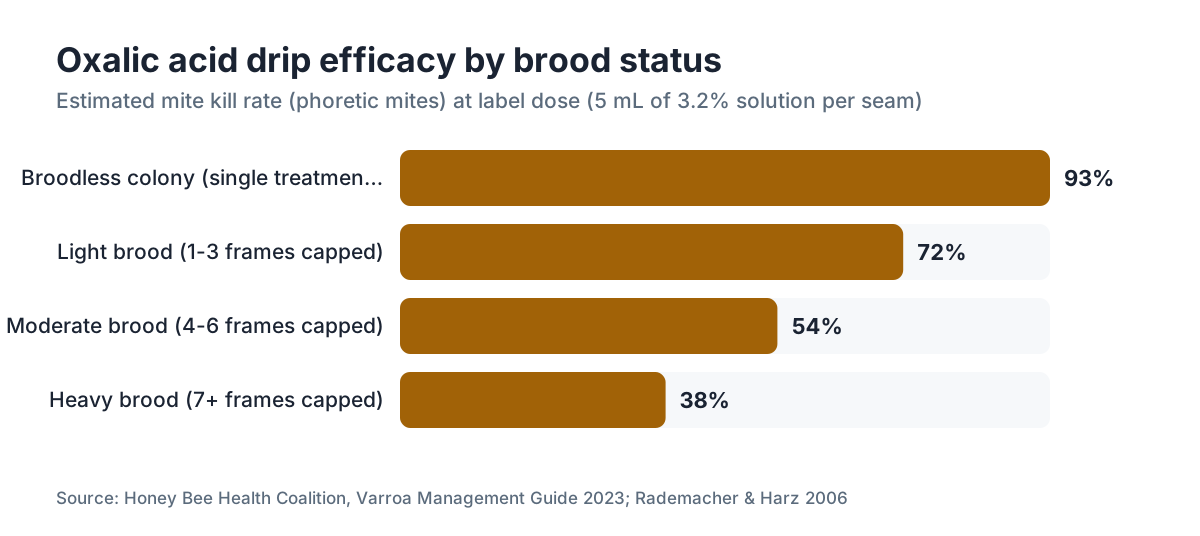
That brood-shielding effect is the single most important thing to understand about dosing. A properly dosed drip on a colony with 10 frames of capped brood might knock down only 40-60% of your total mite population, because most mites are safely tucked away in cells. Apply the same dose to a truly broodless colony and efficacy climbs to 90-95% or higher [3]. Timing, not dose size, decides whether your treatment works. The Honey Bee Health Coalition's Varroa Management Guide names the broodless condition as the factor that "has the greatest influence on efficacy" for oxalic acid [3].
With vapor, you can repeat treatments every 5-7 days during a brood break to catch mites as bees emerge from cells, mopping up what a single application misses. The label permits up to 3 consecutive treatments for exactly this reason [1]. That staggered approach is not a dose increase. Each application stays at 1 g per hive body.
What is the oxalic acid drip dose and how do you measure it correctly?
For the drip, you need a syringe calibrated in milliliters, not a squeeze bottle with an eyeball estimate. The label dose is 5 mL per occupied seam. "Occupied" means you can actually see bees covering the space between two frames. Don't count empty seams or you'll underdose, and don't pour extra on dense seams thinking more is better.
Count your seams before you fill the syringe. A standard 10-frame Langstroth deep running a healthy winter cluster might have 5 to 7 occupied seams. A weak nuc might have 2 or 3. Multiply by 5 mL and draw that amount. Apply it by running the syringe along each seam in a continuous bead, not by dumping a puddle in one spot. Bees coated unevenly get patchy contact.
The maximum per colony is 50 mL regardless of how many bees are present. A colony with 12 occupied seams still gets 50 mL split across 10 of them, or 5 mL across each of the 10 busiest seams. You cannot legally exceed 50 mL per application [1].
If you bought granular Api-Bioxal, follow the product insert exactly. If you bought a pre-mixed ready-to-use version, draw it straight from the bottle with your syringe. Temperature matters at application. The solution should not be cold. Warming it to roughly 65-70°F helps it flow evenly and keeps bees from clustering tightly away from chilled liquid.
Are bee feeders on when treating with an oxalic acid drip? No. Close feeders before treatment. Sugar syrup dilutes the active ingredient and pushes bees to haul the treated liquid out of the hive faster than it can contact mites. The Honey Bee Health Coalition protocol says feeders should be closed and entrance reducers may be used to slow bee movement during treatment [3].
What is the oxalic acid vapor dose and how is it different?
Vaporization delivers 1 gram of oxalic acid dihydrate per hive body. If you're treating a two-deep Langstroth, most beekeepers treat once from the bottom board, letting vapor rise through both boxes, rather than dosing each box separately. The label language says per hive body, so read your specific label and your state's interpretation. Some state apiarists recommend one application per hive rather than per box for standard setups [4].
The vapor condenses on every surface inside the hive, including bees, comb, and frames. Mites on bees get exposed as the bee grooms or just sits in the vapor cloud. Crystals that settle on surfaces can keep affecting mites for a short window, but don't count on residual protection past a day or two.
Approved vaporizers include electric and propane models. The ProVap 110, the Varomorus, and the Oxalic Acid Vaporizer from Mann Lake are among the devices commonly used, though you should check the current EPA-registered applicator list because approved devices change. Using an unapproved heating device, like a heat gun or a homemade wand, is not legal under the Api-Bioxal label even if the dose amount is correct [1].
One gram sounds like almost nothing. It is a very small amount of material, which is part of why vaporization has a better safety profile than overdosing a drip: you cannot easily add more thinking you'll get better kill. The sublimation device holds what it holds. The limiting factor on efficacy is almost always whether the colony has brood, not whether you delivered slightly more or less vapor.
What happens if the oxalic acid dose is too high or too low?
Underdosing leaves mites alive. A 30-40% kill when you needed 90% is worse than no treatment in some ways, because you've stressed the colony and disrupted foraging without solving the problem. Varroa populations double roughly every 4-6 weeks in a colony with open brood [5], so a failed treatment during fall buildup can hand you a collapsing colony by December.
Overdosing is genuinely harmful. European research groups found that concentrations above 4% (compared to the registered 3.2%) caused significant increases in worker mortality and reduced queen survival [10]. The queen is especially exposed because workers constantly groom her, and a colony with a failing queen after a high-dose winter treatment is a quiet loss that beekeepers often blame on something else. If you see a lot of dead bees on the bottom board within 24-48 hours after a drip, ask yourself whether you miscounted seams or applied too much.
Timing interacts with all of this. A late-fall drip on a tight cluster already stressed by cold, low stores, or disease is not the same as the same dose on a healthy September cluster. The colony's condition going in sets how much margin you have. Healthy colonies tolerate the label dose well. Weak, starving, or disease-stressed colonies take side effects harder at any dose.
If you're tracking mite load over time and adjusting protocols, the free tools at VarroaVault help you log wash counts and model when to treat. That matters most when you're running multiple hives and deciding which ones to prioritize.
When should you apply oxalic acid and does timing change the effective dose?
Timing is the multiplier that makes or breaks your dose. The same 5 mL per seam delivers 90%+ mite kill in a broodless colony and maybe 50% in a colony with six frames of brood. You haven't changed the dose. You've changed how many mites are reachable.
The best windows for a single-application drip are a natural brood break (mid-winter across most of the U.S., when queen laying has stopped) or an induced brood break (caging the queen for 21+ days). For most temperate U.S. beekeepers, late November through January is the prime drip window. Daytime temperatures should be cold enough that the colony is clustered but not so cold that application is impossible. Most beekeepers work on days above 40°F (4°C).
Vapor applications give you more room because you can do multiple rounds. A three-round vapor treatment every 5-7 days during a brood break is the protocol the Honey Bee Health Coalition recommends for the highest efficacy [3]. Some beekeepers also run a fall vapor series after pulling honey supers, even with some brood present, to knock mite numbers down before they explode into winter bees. That's reasonable if your counts are elevated. Just understand efficacy will be lower per treatment and you're relying on the cumulative effect of several applications.
Summer treatments with oxalic acid in a colony with brood require repeated applications and are not permitted under the current Api-Bioxal drip label for brood-present colonies. Vapor is the only registered option for summer use in brood-present hives [1]. Read the current label before you treat, because registration conditions have been updated more than once.
Oxalic acid drip vs. vaporization: which method should you choose?
Both methods work. The right one depends on your situation.
The drip is simpler and cheaper to start (a syringe and a bottle of Api-Bioxal ready-to-use), and it needs no electrical or propane gear. It's the best choice for a single broodless winter treatment when you have a few hives. The downside: it can only be applied once per year under the current label, which limits your options if you need to treat at another time [1].
Vaporization costs more upfront ($100-$300+ for a decent device) but allows multiple treatments and works legally in brood-present colonies for summer use. For a beekeeper running 10 or more hives, vapor speed (about 2-3 minutes per hive vs. 5-10 for a careful drip) adds up fast. Vapor also penetrates a winter cluster better, where bees pack tight and are hard to drip evenly.
Here's what I'd actually do. If you have 1-5 hives and you catch your brood break correctly, the drip is fine and you don't need to spend $200 on a vaporizer. If you have 10+ hives, or if you've had years where you missed the brood window and needed a backup, the vaporizer pays for itself quickly. If you're outfitting your operation, see this guide to beekeeping supply companies for vendor options.
| Method | Dose | Applications per year | Brood-present use | Equipment cost |
|---|---|---|---|---|
| Drip (Api-Bioxal) | 5 mL/seam, max 50 mL | 1 | No (drip label) | Under $30 |
| Vapor (Api-Bioxal) | 1 g OAD per hive body | Up to 3 per treatment series | Yes | $100-$350+ |
For more on the supplies involved, see the broader beekeeping supplies roundup.
Is oxalic acid safe for bees, brood, and honey?
At label doses, adult bees handle oxalic acid well. Open brood is a different story. Oxalic acid is toxic to young larvae in direct contact, which is why brood-present drip application is not registered and why even vapor treatments can cause some larval mortality if overused in brood-heavy hives [6]. That's not a reason to skip treatment. Varroa kills far more brood than a properly applied oxalic acid treatment ever will. It does reinforce why you follow the label timing.
Honey contamination is minimal and practically a non-issue at label doses. Oxalic acid occurs naturally in honey, which typically contains 8-40 mg per kg depending on the botanical source [7]. Properly applied drip treatments in broodless winter clusters raise honey oxalic acid concentrations only marginally above background in EU studies. The EPA label sets no pre-harvest interval for oxalic acid precisely because residues in honey are not a regulatory concern at registered rates [1].
For the beekeeper doing the treatment, respiratory protection (an N95 minimum, a P100 respirator is better) is not optional during vaporization. The vapor is acutely irritating to mucous membranes and carries long-term lung risk with repeated unprotected exposure. Eye protection and nitrile gloves are also required by the label. The drip poses much lower inhalation risk, but you still shouldn't splash it in your face.
What do I need to know about oxalic acid regulations and registration?
In the United States, Api-Bioxal (EPA Registration No. 87922-1) is currently the only federally registered oxalic acid product for honey bee treatment [1]. Some states previously allowed exemptions for compounded or bulk oxalic acid under emergency provisions, but those exemptions have largely ended. Check your state department of agriculture's current pesticide registration list if you're unsure about state-level status [4].
Using oxalic acid without a registered product, exceeding label rates, or applying it to crops (rather than directly to bees) are all violations of the Federal Insecticide, Fungicide, and Rodenticide Act (FIFRA), 7 U.S.C. § 136 et seq. [2]. The EPA has broad authority to impose civil penalties for pesticide misuse.
The Apiary Inspectors of America and most state apiarists publish guidance that tracks the EPA label but sometimes adds practical detail for local conditions. The USDA Agricultural Research Service also maintains research on oxalic acid efficacy that's worth reading if you want the science behind the registration [8]. Several university extension programs, including Penn State Extension and the University of Minnesota Bee Lab, have published current application guides that are free and reliable [4][9].
How do you know if your oxalic acid treatment worked?
Do a mite wash (alcohol wash or sugar roll) before and after treatment. Before treatment, count your mites per 100 bees. Three or more per 100 is the general threshold where treatment is indicated, though some authorities use 2 per 100 as a fall threshold ahead of winter [3]. After treatment, wait at least 7-10 days for dead mites to clear, then recount. You want a substantial drop, ideally below 1 per 100 bees.
A sticky board gives you a rough sense of mite drop in the days right after treatment. Some beekeepers slide a board in before application and count the mites that fall over the next 48-72 hours. That won't tell you your total mite load, but a very low drop after treatment in a colony that had a high pre-treatment count is a warning sign that something went wrong: poor cluster coverage, a missed queen (if you thought the colony was broodless but she was still laying somewhere), or product failure.
Recheck every colony in the apiary 30-45 days after treatment, especially heading into fall. Reinfestation from neighboring feral colonies or collapsing apiaries nearby can rebuild mite populations faster than most beekeepers expect [5]. One treatment at the right time, at the right dose, does not guarantee a mite-free winter if reinfestation pressure is high in your area.
For systematic mite tracking across multiple hives, the logging tools at VarroaVault let you record pre- and post-treatment wash counts, flag hives that didn't respond, and schedule follow-up checks automatically.
What are the most common oxalic acid dosing mistakes?
Counting empty seams as occupied seams is probably the most common drip error. If you have 10 frames in the box but bees cover only 5 seams, you're treating 5 seams. Applying 50 mL to a half-strength cluster means individual bees are getting twice the intended dose, which stresses them and still doesn't buy you better mite kill.
Treating with capped brood present and expecting a broodless result is the second big mistake. This one isn't a dosing error exactly, but it leads beekeepers to conclude oxalic acid doesn't work when what really happened is they treated the wrong population (phoretic mites on bees) and left the reproductive mites (inside cells) untouched.
Skipping PPE and then getting a face full of vapor is more common than it should be. Vaporizers with a loose seal around the entrance can leak. Treat from upwind. Confirm you're wearing the respirator before you turn the device on.
Applying the drip to a colony with a feeder running is another mistake worth calling out. The bees move actively to and from the feeder, the syrup dilutes the treatment on the frames, and you end up with reduced contact time and efficacy. Close feeders at least an hour before you treat and leave them closed for several hours after.
Frequently asked questions
How much oxalic acid do I use per hive?
For the drip method, use 5 mL of 3.2% Api-Bioxal solution per occupied seam, with a maximum of 50 mL per colony. For vaporization, use 1 gram of oxalic acid dihydrate per hive body. These are the EPA-registered label doses. Exceeding them risks bee mortality without improving mite kill.
Can I use oxalic acid when there is brood in the hive?
Vapor is the only EPA-registered oxalic acid method approved for brood-present colonies. The drip label restricts use to broodless conditions. In brood-present hives, efficacy of a single application drops significantly because mites inside capped cells are not exposed. Multiple vapor treatments spaced 5-7 days apart partially compensate for this.
How many times can I treat with oxalic acid per year?
The Api-Bioxal label allows one drip treatment per year and up to three consecutive vapor treatments per treatment series. There is no annual limit on the number of vapor treatment series stated on the current label, but repeated treatments in brood-heavy colonies can damage brood. Always read the most current label before treating.
Should bee feeders be on when treating with oxalic acid drip?
No. Close feeders before applying an oxalic acid drip. Active feeding causes heavy bee movement that reduces contact time, and syrup can dilute the treatment solution on the frames. Leave feeders closed for several hours after treatment to allow the oxalic acid to distribute properly across the cluster.
What temperature do I need to apply oxalic acid?
Most practitioners apply the drip on days above 40°F (4°C) when the cluster is loose enough that you can see and reach occupied seams. Vapor can be applied at slightly lower temperatures because you're not opening the hive. Avoid treating in rain or strong wind regardless of method, as both reduce application accuracy and bee safety.
Does oxalic acid leave residue in honey?
Oxalic acid occurs naturally in honey at 8-40 mg per kg depending on floral source. Label-rate treatments raise residues only marginally above natural background levels. The EPA does not require a pre-harvest interval for Api-Bioxal precisely because residues in honey at registered rates are not a food-safety concern. Remove supers if honey is being actively stored during treatment.
What PPE do I need for oxalic acid treatment?
For vaporization, the Api-Bioxal label requires an N95 or better respirator (a P100 half-face respirator is the safer choice with repeated use), chemical-splash goggles, and nitrile gloves. For the drip, gloves and eye protection are required. Inhalation risk is much lower but still real if you're doing many hives. Never treat in an enclosed space.
How do I know if my oxalic acid treatment worked?
Do an alcohol wash or sugar roll before and 7-10 days after treatment. A successful treatment in a broodless colony drops mite counts from above 2-3 per 100 bees to below 1 per 100 bees. A sticky board check in the 48-72 hours after treatment shows total mite drop. Very low fall counts after high pre-treatment counts suggest something went wrong with application.
Is oxalic acid safe for queen bees?
At label doses, queens generally survive. Higher concentrations or repeated treatments increase queen mortality risk. Workers grooming the queen transfer oxalic acid to her, so queens in heavily treated colonies carry more stress than those in lightly treated hives. Some package and nuc installations with young queens are more sensitive. Follow label timing carefully.
Can I mix my own oxalic acid solution for bees?
In the U.S., you must use an EPA-registered product like Api-Bioxal and follow its label. Using bulk oxalic acid to mix your own solution and applying it to bees is a FIFRA violation. Some Canadian and European jurisdictions allow extemporaneous preparation under specific rules. Check your own jurisdiction's regulations before mixing anything yourself.
What is the difference between oxalic acid dihydrate and anhydrous oxalic acid?
Oxalic acid dihydrate contains two water molecules in its crystal structure and is what Api-Bioxal is made from. Anhydrous oxalic acid lacks those water molecules and has a higher concentration of active acid by weight. The label dose of 1 gram refers to the dihydrate form. Substituting anhydrous oxalic acid at 1 gram would deliver more active ingredient than intended and could harm bees.
How often should I test mite levels before deciding to treat with oxalic acid?
The Honey Bee Health Coalition recommends testing every 30 days during the active season and especially in late summer before winter bees are being raised. An action threshold of 2-3 mites per 100 bees in late summer (July-August in most of the U.S.) is the commonly cited trigger for treatment. One test before and one test 10 days after treatment confirms whether the dose worked.
Sources
- EPA, Api-Bioxal Oxalic Acid Label (EPA Reg. No. 87922-1), searchable via EPA Pesticide Product Label System: Registered drip dose is 5 mL of 3.2% solution per occupied seam (max 50 mL per colony); vapor dose is 1 g oxalic acid dihydrate per hive body; one drip application per year; up to 3 consecutive vapor treatments permitted; no pre-harvest interval required.
- U.S. EPA, Federal Insecticide, Fungicide, and Rodenticide Act (FIFRA), 7 U.S.C. § 136: Using an unregistered pesticide or exceeding label rates on a food-producing animal is a FIFRA violation subject to civil penalties.
- Honey Bee Health Coalition, Varroa Management Guide (2023 ed.): Broodless condition has the greatest influence on oxalic acid efficacy; action threshold of 2-3 mites per 100 bees; feeders should be closed during drip treatment; 3-round vapor series recommended for highest efficacy.
- Penn State Extension, Honey Bee and Pollinator resources: State apiarist guidance on per-hive body vapor dosing and legal product requirements in Pennsylvania.
- USDA Agricultural Research Service, honey bee and varroa mite research: Varroa populations can double roughly every 4-6 weeks in brood-present colonies; reinfestation from neighboring colonies is a documented cause of treatment failure.
- Gregorc, A. & Smodiš Škerl, M.I. (2007). Toxicological and immunohistochemical testing of larvae after oxalic acid and rotenone treatments in the honey bee. Apidologie 38(1), 59-66.: Direct contact with oxalic acid is toxic to young larvae; adult bees tolerate label-dose treatments with low mortality.
- Bogdanov, S. et al. (2002). Oxalic acid residues in honey after treatment of honey bee colonies. Apidologie 33(6), 567-575.: Natural oxalic acid concentration in honey is 8-40 mg/kg depending on floral source; label-rate treatments raise residues only marginally above background.
- USDA Agricultural Research Service, Bee Research Laboratory (Beltsville, MD): Federal research on oxalic acid efficacy and its basis for EPA registration.
- University of Minnesota Bee Lab, Oxalic Acid Application Guidance: University extension guidance on oxalic acid drip and vapor protocols, timing, and mite-counting methods.
- Rademacher, E. & Harz, M. (2006). Oxalic acid for the control of varroosis in honey bee colonies. Apidologie 37(1), 98-120.: Efficacy of oxalic acid drip in broodless colonies reaches 90-95%+ under optimal conditions; concentrations above 4% increase worker and queen mortality without proportional mite kill improvement.
Last updated 2026-07-09