Plants that repel varroa mites: what the science actually says
TL;DR
- No plant alone controls varroa mites in a managed hive.
- Several plant-derived compounds, especially thymol, oxalic acid, and hop beta acids, show measurable mite-killing activity in peer-reviewed trials.
- But the gap between 'this oil kills mites in a lab dish' and 'this plant protects your colony' is enormous.
- Understand it before you skip proven treatments.
Why do people think plants can repel or kill varroa mites?
The idea has a real scientific backbone, even if the gardening folklore runs ahead of it. Varroa destructor is an arachnid, and plants spent millions of years evolving compounds to deter arthropods. Essential oils are volatile, lipid-soluble molecules that slip through the soft membranes between a mite's body segments far more easily than they penetrate the thicker cuticle of an adult bee. That biochemical asymmetry is the whole reason thymol, the active compound in thyme, became a registered commercial treatment (Apiguard, ApiLife VAR) instead of staying a folk remedy.
The research trail runs back at least to the early 1990s. A widely cited 1995 paper by Calderone and colleagues found that essential oil compounds caused significant varroa mortality in laboratory bioassays. Later work from the USDA-ARS Bee Research Laboratory and several European institutes documented activity from dozens of plant families. The Honey Bee Health Coalition, in its Varroa management guide, notes that 'some essential oils and plant-derived compounds have demonstrated acaricidal properties,' while separating that carefully from efficacy claims for unregistered products [1].
So the premise is not nonsense. The problem is the distance between a bioassay and a beehive. A lab dish has no brood to hide the mites, no ventilation, no 35°C wax matrix soaking up the volatiles. That gap is where most plant-based varroa claims collapse.
Which plant compounds have actual peer-reviewed evidence against varroa?
Focus here. The list of plants with credible data is much shorter than the internet suggests.
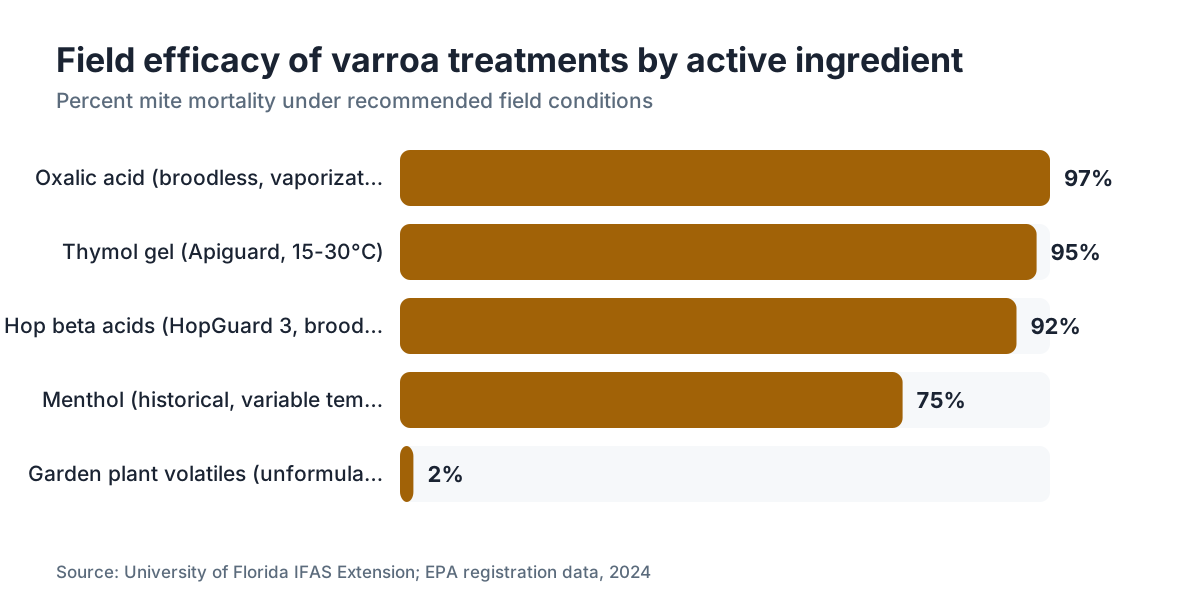
Thyme (Thymus vulgaris) and thymol. Thymol is the clearest success story. It's a monoterpene phenol that makes up 40-60% of thyme essential oil. Peer-reviewed trials going back to Marchetti et al. (1984) showed varroa mortality above 90% under controlled conditions, and formulated thymol products now carry EPA registration in the United States [2]. A University of Florida extension review found that properly applied thymol treatments reach 93-97% efficacy in the field when temperatures sit between 15°C and 30°C [3]. This is the one plant-derived compound that actually crossed the finish line.
Oregano (Origanum vulgare). Also loaded with thymol and carvacrol, oregano oil shows strong mite-killing activity in lab bioassays. A 2015 study in the Journal of Apicultural Research found carvacrol above 0.5 mg/mL caused 90%+ mite mortality in vitro [4]. Field data are thin.
Oxalic acid (found in rhubarb, sorrel, spinach). Oxalic acid occurs naturally in many plants. In concentrated solution (3.2% w/v), it's one of the most effective varroa treatments there is, with EPA-registered products reaching 90-99% efficacy in broodless colonies [2]. Plants are not a usable delivery vehicle for therapeutic concentrations, but the compound's natural origin is worth knowing.
Spearmint and peppermint (Mentha species). Menthol and other mint monoterpenes kill mites in bioassays. Menthol was a registered treatment in the 1980s and 90s before more consistent options pushed it out. Field efficacy ran anywhere from 60% to 90% depending on temperature and application [5].
Winter savory (Satureja montana). High in carvacrol and thymol. Italian and Spanish research has shown lab-level activity. No registered product exists in the US.
Lemon balm, lavender, rosemary, clove. All show some mite-killing activity in vitro. None has a registered treatment pathway in the US, and field efficacy data run from sparse to nonexistent.
| Plant / Compound | Primary Active Compound | Lab Mite Mortality | Field Efficacy | EPA-Registered Product? |
|---|---|---|---|---|
| Thyme (Thymus vulgaris) | Thymol | >90% | 93-97% (15-30°C) | Yes (Apiguard, ApiLife VAR) |
| Oregano (Origanum vulgare) | Carvacrol, thymol | >90% in vitro | Limited field data | No |
| Rhubarb/sorrel (oxalic acid) | Oxalic acid | >95% | 90-99% (broodless) | Yes (Api-Bioxal) |
| Spearmint (Mentha spicata) | Menthol | 70-90% | 60-90% (variable) | No (menthol was delisted) |
| Clove (Syzygium aromaticum) | Eugenol | ~80% in vitro | Not established | No |
| Lavender (Lavandula spp.) | Linalool, camphor | Moderate in vitro | No field data | No |
Can you actually repel varroa by planting thyme or other herbs near your hive?
No. Not in any way that matters.
This is the hardest thing to say without sounding dismissive of people who genuinely want low-chemical beekeeping. The mites live inside the hive, mostly sealed inside capped brood cells where foragers never go. Volatile compounds from garden plants dissipate to a tiny fraction of therapeutic concentration long before they reach the brood nest. The thymol concentration needed to kill mites is roughly 0.5 to 1.0 mg per liter of hive air, held there for days to weeks. A thyme patch twenty feet away delivers essentially none of that [3].
Apiguard, the gel form of thymol, works by releasing controlled vapor inside a closed hive over four weeks. Even with a measured 25g dose sitting directly on the top bars, the manufacturer's trials show efficacy needs minimum nighttime temperatures above 15°C and enough hive humidity to vaporize the gel. If a product built specifically for hive delivery needs all those conditions, a garden herb has no realistic path to a therapeutic effect.
Plant thyme, lavender, and rosemary near your hives anyway. Bees forage on them, and diverse forage supports immune function and nutrition. There's even early work suggesting propolis from thymol-rich plants may carry some antimicrobial punch inside the hive. But that's a different claim from 'this plant repels varroa.' Confusing the two is exactly how beekeepers talk themselves out of monitoring and proven treatment. That's how colonies die.
What about feeding bees essential oil supplements? Do those help?
This is a more interesting question, and the honest answer is: probably not for varroa, possibly for other pathogens, and the dose matters a lot.
Products like Honey-B-Healthy contain lemongrass and spearmint oils. They're marketed as feeding stimulants, not varroa treatments, and the EPA has not approved them for that use. A 2019 review in PLOS ONE on essential oil supplementation and bee health found some evidence of reduced Nosema spore loads and better winter survival in certain conditions, but the authors called the evidence for varroa suppression specifically 'inconsistent and insufficient to support use as a primary management tool' [4].
Here's the catch. At concentrations high enough to hurt mites, most essential oils also hurt bees. The therapeutic window is narrow. Thymol only made it into registered-treatment territory because decades of formulation work found the right delivery matrix and dose. Stir your own thyme oil into syrup and hope, and you're more likely to stress your bees than kill your mites.
Some researchers have tested thymol in pollen patties and sugar syrup as a sub-therapeutic supplement. The results aren't strong enough to replace a standard treatment protocol. If you want the current best evidence on treatment efficacy and timing, the Varroa mite hub is the right place to start.
How do plant-derived treatments compare to synthetic acaricides?
Both categories carry real tradeoffs, and which one wins depends on the problem you're solving.
Synthetic acaricides like tau-fluvalinate (Apistan) and coumaphos (CheckMite+) work through different mechanisms. They're neurotoxins that bind sodium channels or cholinesterase in the mite nervous system. They hit hard, often 95%+ in clean colonies, but resistance is real and documented. Fluvalinate-resistant varroa are widespread across North America, and coumaphos resistance has turned up in several US states [5]. These compounds also build up in beeswax, which has raised food safety questions in USDA-ARS research.
Organic-approved options (thymol, oxalic acid, formic acid, hop beta acids) are much harder for mites to develop resistance against, because they work through physical and oxidative mechanisms rather than one protein target. Oxalic acid kills by direct contact toxicity. A mite cannot evolve its way around being dissolved. That's a genuine edge, and it's why the Honey Bee Health Coalition's Varroa management guide flatly recommends rotating chemical classes and building organic acids into your annual protocol [1].
The tradeoff with plant-derived treatments is temperature sensitivity, shorter effective windows, and more work for you. Thymol quits below about 10°C. Formic acid is nearly impossible to use safely above 29°C. Oxalic acid dribble and vaporization are highly effective but need broodless periods or repeated applications to reach mites reproducing under capped cells.
For a hobbyist running a handful of hives, the organic acids make the best backbone for a program, with synthetics held in reserve as a rescue option if you've confirmed resistance isn't a problem in your local mites. Checking mite loads before and after treatment is non-negotiable, whichever class you pick.
Are there any plant-based varroa treatments that are EPA-registered?
Yes, and it matters, because registration means efficacy and safety got reviewed before the product hit the shelf.
In the United States, three plant-derived active ingredients hold EPA registration for varroa control in honey bee colonies as of 2024 [2]:
- Thymol, in Apiguard (Vita Bee Health) and ApiLife VAR (Chemicals Laif). Both are labeled for use with honey supers off (spring and fall), at temperatures between 59°F and 105°F (15°C to 40°C). Apiguard delivers 25g of thymol gel per application, two applications three weeks apart. ApiLife VAR uses a vermiculite wafer soaked in a thymol blend.
- Oxalic acid dihydrate, in Api-Bioxal (Véto-Pharma). EPA registration came in 2015. You can apply it by dribble (3.5g per colony), vaporization (1g per brood box), or extended-release sponge. The label caps you at one dribble treatment per year; vaporization limits vary by label version [2].
- Hop beta acids, in HopGuard 3 (BetaTec). Derived from hops (Humulus lupulus), this one really does come from a garden plant. Field trials showed 90-95% efficacy in broodless conditions.
These are the products worth buying. Everything else in the 'natural' bin is either a precursor compound nobody has formulated for delivery, an in-vitro result that never made it into a colony, or a product that predates modern EPA registration rules.
Read the full product label before you apply anything. The EPA label is a legal document, and using a product outside its directions is a federal violation. The National Pesticide Information Center keeps current label databases if you need to verify a claim [6].
What about propolis? Does it suppress varroa inside the hive?
Propolis is genuinely interesting here, and the research is more encouraging than most beekeepers expect.
Bees collect resins from dozens of plant species and turn them into propolis, which holds hundreds of compounds: flavonoids, phenolic acids, terpenoids, aromatic esters. The exact chemistry tracks local flora. Propolis from poplar-heavy temperate zones looks chemically nothing like Brazilian green propolis or tropical red propolis.
A 2018 PLOS ONE study found that colonies kept on rough-textured hive interiors, which push bees to lay down more propolis, showed lower Nosema loads and some immune gene upregulation. Varroa infestation levels, though, were not significantly different from control hives [7]. A 2010 paper in Apidologie found that bees in hives with a propolis envelope (created by placing a propolis trap as the inner cover) showed higher immune gene expression and lower rates of certain pathogens. Again, varroa counts weren't the primary outcome [10].
Some researchers have suggested propolis-coated brood cells might be a little less hospitable to varroa, but that hasn't shown up as a measurable drop in mite reproductive success in controlled trials. The honest read: propolis supports general hive health in ways that probably help a colony handle various stressors, varroa included, but it's no substitute for direct mite control. Encouraging propolis through textured hive interiors or propolis traps is cheap and probably a net positive. Just keep it out of your treatment math.
Can selective planting support bee health in ways that indirectly reduce varroa damage?
Here the answer is more encouraging, though it works through nutrition and immune function, not by chasing mites away.
A well-fed colony with access to diverse pollen mounts a better immune response than a colony foraging monoculture crops. Research from Pennsylvania State University found that bees fed polyfloral pollen showed higher immune gene expression and better pathogen resistance than bees on single-pollen diets [8]. Varroa weakens colonies partly by vectoring deformed wing virus and other pathogens. A colony with a strong nutritional baseline may tolerate a given mite load better than a colony under dietary stress, even though it still gets parasitized at the same rate.
Plants that support nutritional diversity near your apiary include borage (Borago officinalis), phacelia (Phacelia tanacetifolia), single-flowered sunflowers, Dutch white clover, buckwheat, and most un-hybridized herbs. Grow them near your hives for beehive pollen quality, not because they repel mites.
This is exactly where the difference between 'plant for bee health' and 'plant to control varroa' turns practical. You can do the first one aggressively and it will help your colonies. You cannot swap it in for mite management. VarroaVault's free treatment protocol tools help you build a calendar that pairs good forage planning with real mite-control windows, which is where integrated management actually lives.
What do researchers think is the most promising plant-derived varroa solution being studied now?
A few lines of work are genuinely active in the research literature as of the mid-2020s.
Acetylcholinesterase inhibitors from plant sources. Several plant alkaloids block the same enzyme as synthetic organophosphates, but with different selectivity profiles. Early work from INRAE in France has looked at compounds from neem (Azadirachta indica) and some Solanaceae. Results are preliminary, and the selectivity window (killing mites without harming bees) is the unsolved problem.
Acaricidal volatiles baked into foundation wax. USDA-ARS researchers have explored whether working plant-derived volatiles directly into beeswax foundation could give a sustained, sub-therapeutic vapor pressure that suppresses mite reproduction. It's an appealing delivery idea because it sidesteps the temperature and ventilation problems that sink hive-floor treatments. Published results aren't available yet; the work shows up in conference presentations from the 2023 Apimondia proceedings.
RNAi using plant-expressed double-stranded RNA. This one is further out but worth a mention. Some researchers are testing whether bees could eat plant material carrying dsRNA sequences that, once ingested by feeding mites, silence essential mite genes. The USDA has funded preliminary work. Commercial development is years off.
The closest near-term plant-derived advance is probably better thymol delivery. Microencapsulated thymol that releases over a longer period and shrugs off temperature swings better than current gels could widen the treatment window a lot. Several European research groups are publishing on it now.
How should a hobbyist beekeeper actually use this information?
The practical takeaway is narrower than most plant-and-bee articles want it to be, but it's still something you can act on.
First, use the plant-derived treatments that are actually registered and proven: thymol products in spring and fall when temperatures cooperate, oxalic acid (Api-Bioxal) for broodless windows or extended vaporization, hop beta acids (HopGuard) as a rotation option. These aren't compromises. Oxalic acid vaporization in broodless colonies matches or beats most synthetics without wax contamination or resistance worries [2].
Second, monitor. The Honey Bee Health Coalition recommends an alcohol wash or sugar roll before any treatment decision, with a 2% threshold (2 mites per 100 bees) triggering treatment [1]. No amount of thyme in your garden changes what the mite wash tells you.
Third, plant for forage diversity, not varroa control. Thyme, oregano, mint, borage, phacelia, and clover all support nutritional health, which helps your bees carry the stress of parasitism better. That's real value. Just stay honest with yourself about what it does and doesn't do.
Fourth, watch the research. The field is moving. Formulation improvements to thymol delivery and hop-derived compounds in new delivery formats could widen the organic toolkit within the next five to ten years. University extension programs at Penn State, University of Florida, and UC Davis publish plain-language updates worth bookmarking [3][8][9].
If you're on your first few hives and want a decision tree that accounts for season, brood status, and regional temperature ranges, the free tools at VarroaVault pull current treatment guidance into a single protocol you can follow.
For more on the mite itself and how it breeds, the Varroa mite overview gives you the biology that makes the treatment logic click. And if you're sourcing supplies for applying any of these treatments, the beekeeping supply companies guide covers what to look for.
Frequently asked questions
Will planting thyme near my beehives actually reduce varroa mite counts?
No. Thyme contains thymol, which kills varroa at therapeutic concentrations, but volatile compounds from a garden plant dissipate far below effective levels before they reach the brood nest. Thymol gel products like Apiguard work by delivering a measured dose directly inside a closed hive over four weeks. A thyme patch outside cannot replicate that. Plant thyme for forage value, not mite control.
What is the most effective plant-derived varroa treatment available?
Oxalic acid, found naturally in rhubarb and sorrel, is arguably the most effective organic varroa treatment. Api-Bioxal (3.2% oxalic acid dihydrate) reaches 90-99% mite mortality in broodless colonies and holds EPA registration in the US. Thymol products (Apiguard, ApiLife VAR) sit close behind at 93-97% efficacy within the correct temperature range of 59-105°F.
Is there an essential oil I can put in my hive to repel varroa?
Only EPA-registered formulations, used as directed on the label. Apiguard and ApiLife VAR are thymol-based EPA-registered products that deliver essential-oil-derived compounds inside the hive at controlled doses. Mixing your own essential oils into the hive is not labeled for varroa control, risks bee toxicity at effective concentrations, and counts as an illegal pesticide application under FIFRA.
Does planting lavender or mint help honey bees fight off mites?
Not directly. Lavender and mint contain linalool and menthol, which show some mite-killing activity in lab tests, but garden plantings never reach therapeutic concentrations inside a hive. Both are good forage plants that support nutritional diversity, which improves general immune function. That can help bees tolerate parasitism better, but it doesn't lower mite reproduction rates.
How does thymol work against varroa mites?
Thymol is a monoterpene phenol that disrupts the nervous system and cuticle integrity of arthropods. It vaporizes at hive temperatures, and the lipophilic molecules penetrate mite intersegmental membranes more easily than bee cuticle. Products like Apiguard hold a vapor concentration of roughly 0.5-1.0 mg per liter of hive air over four weeks. Efficacy drops sharply below 15°C because vaporization slows.
Are hop plants useful for varroa control?
Yes, in a specific formulated product. Hop beta acids from Humulus lupulus are the active ingredient in HopGuard 3, which holds EPA registration for varroa in the US. Field trials show 90-95% efficacy in broodless conditions. You cannot replicate this by planting hops; the active compound must be extracted, concentrated, and applied on strips inside the hive at a labeled dose.
Can propolis from plant resins help control varroa?
Research shows propolis supports general colony immune function and may reduce certain bacterial and fungal pathogens. A 2018 PLOS ONE study found immune gene upregulation in colonies with high propolis deposition. But no controlled trial has shown a measurable drop in varroa mite loads or reproductive success from propolis alone. It's a good hive-health factor, not a mite treatment.
What natural or organic varroa treatments are EPA-registered in the United States?
As of 2024, EPA-registered organic or naturally-derived varroa treatments include thymol gel and wafer products (Apiguard, ApiLife VAR), oxalic acid dihydrate (Api-Bioxal, by dribble or vaporization), hop beta acids (HopGuard 3), and formic acid (Mite-Away Quick Strips, MAQS). Each carries specific label requirements for temperature, brood status, and application frequency that you must follow, both legally and for efficacy.
Do varroa mites develop resistance to plant-derived treatments?
Resistance to organic-acid and essential-oil treatments is far less documented than resistance to synthetic acaricides. Oxalic acid works by direct physical contact toxicity, which is very hard for a mite to evolve around. Thymol hits multiple biochemical targets at once, also making resistance harder to build. Fluvalinate (Apistan) resistance, by contrast, is widespread in US varroa populations because of its single protein binding target.
What plants should I grow near my hives to support bee health against varroa damage?
Focus on pollen diversity rather than any single anti-mite herb. Borage, phacelia, Dutch white clover, buckwheat, and single-flowered sunflowers provide high-quality, diverse pollen. Herbs like thyme, oregano, and lavender add variety, and the bees like them. Research from Penn State found polyfloral pollen diets produce better immune gene expression than monofloral diets, helping colonies handle the stress of varroa infestation even when mite counts don't change.
Is carvacrol from oregano effective against varroa?
In laboratory bioassays, yes. A 2015 study in the Journal of Apicultural Research found carvacrol above 0.5 mg/mL caused over 90% mite mortality in vitro. Field data is very limited, and no EPA-registered product uses carvacrol as its sole active ingredient. Oregano oil is not approved for in-hive varroa treatment in the US, and applying it at effective concentrations risks harming bees.
At what mite level should I treat, regardless of what treatment I use?
The Honey Bee Health Coalition recommends a treatment threshold of 2 mites per 100 bees (2%) measured by alcohol wash or sugar roll during the active season, and 1-2% before the winter bee population builds in late summer. This threshold holds whether you're using thymol, oxalic acid, or any other registered treatment. Monitoring every 30 days is the only way to know where you stand.
Can I make a DIY thymol treatment from thyme essential oil?
No, not legally or practically. In the US, applying any substance to a beehive for pest control that isn't on the EPA-registered label for that purpose violates the Federal Insecticide, Fungicide, and Rodenticide Act (FIFRA). Beyond the legal issue, homemade thymol preparations lack the controlled-release matrix that keeps commercial products safe for bees. Dosing errors can kill adult bees and cause queens to fail.
How often should I monitor mite levels if I'm using plant-based forage as part of my management?
The same schedule as any other approach: alcohol wash every 30 days during the active season, plus a careful check in late July or August before the winter bee population rears. Forage diversity supports immune health but doesn't reduce mite reproduction. Good nutrition is not a reason to monitor less often, and a mite wash takes under 15 minutes per hive.
Sources
- Honey Bee Health Coalition, Varroa Management Guide (v.6): The HBHC states 'some essential oils and plant-derived compounds have demonstrated acaricidal properties' and recommends a 2% alcohol wash threshold for treatment decisions.
- EPA, Pesticides: Bee Pesticides, Varroa Mite Treatments: EPA registration status of thymol products (Apiguard, ApiLife VAR), oxalic acid dihydrate (Api-Bioxal), and hop beta acids (HopGuard 3) for varroa control in the United States.
- University of Florida IFAS Extension, Honey Bee Diseases and Pests: Properly applied thymol treatments achieve 93-97% efficacy at temperatures between 15°C and 30°C; therapeutic hive-air concentration is approximately 0.5-1.0 mg/L.
- Journal of Apicultural Research, Carvacrol bioassay study (2015): Carvacrol concentrations above 0.5 mg/mL caused 90%+ varroa mite mortality in vitro; essential oil supplementation shows inconsistent evidence for varroa suppression in field conditions.
- USDA-ARS Bee Research Laboratory, Acaricide Resistance in Varroa: Fluvalinate-resistant varroa populations are widespread across North America; coumaphos resistance documented in multiple US states.
- National Pesticide Information Center (NPIC): NPIC maintains current EPA label databases for registered pesticide products including varroa treatments; applying products outside label directions is a federal FIFRA violation.
- PLOS ONE, Propolis envelope and honey bee immunity study (2018): Colonies with high propolis deposition showed lower Nosema loads and immune gene upregulation; varroa infestation levels were not significantly different from control hives.
- Penn State University Extension, Bee Nutrition and Immune Function: Bees fed polyfloral pollen showed higher immune gene expression and better pathogen resistance than bees on single-pollen diets.
- UC Davis Department of Entomology and Nematology, Honey Bee Research: University extension programs publish ongoing varroa treatment research; UC Davis is a key institution for integrated varroa management research in the Western US.
- Apidologie, Propolis and bee pathogen resistance (Birnbaum et al., 2010): Bees in hives with a propolis envelope showed higher expression of immune genes and lower rates of certain pathogens; varroa counts were not the primary outcome.
- USDA National Agricultural Library, FIFRA, Federal Insecticide, Fungicide, and Rodenticide Act: Applying any substance to a beehive for pest control outside its EPA-registered label constitutes a FIFRA violation.
Last updated 2026-07-09