Powdered sugar for varroa mites: does it actually work?
TL;DR
- Powdered sugar does not control varroa mites.
- Field trials from Randy Oliver and university extension labs show it removes fewer than 1% of a colony's mites per treatment, and lab estimates cap out near 10% on phoretic mites.
- It works as a rough monitoring tool.
- It never replaces oxalic acid, Apivar, Apiguard, or Formic Pro.
What is the powdered sugar method for varroa mites?
The idea is simple. Pour about a cup of powdered sugar over a frame of bees, let it coat them, then shake or brush them off over a board and count the mites that drop. That count gives you a rough infestation level. Some beekeepers go further and claim the sugar treats the colony by dislodging mites so they fall through a screened bottom board.
The treatment claim is the part that falls apart. The monitoring use is legitimate, though less accurate than an alcohol wash.
The method got popular in the mid-2000s when Randy Oliver and other researchers tested it. The results were clear enough that the conversation should have ended there. It didn't. Beekeepers want non-chemical options, and the information spread faster than the corrections. Plenty of well-meaning hobbyists still teach it as a treatment at club meetings. That's a problem, because colonies managed with sugar rolls alone die.
Does powdered sugar actually kill or remove varroa mites?
No. The theory was that a sugar coating would make mites lose their grip and trigger grooming that knocked them off. In practice, the removal rate is tiny. Randy Oliver's field trials, published on his Scientific Beekeeping site and cited widely by extension services, found that repeated powdered sugar dustings removed fewer than 1% of the mite population per treatment [1]. Even generous lab estimates don't clear about 10% efficacy on phoretic (riding) mites, and that number ignores the mites in capped brood entirely. That's where 80 to 90% of the varroa population lives at any given moment during the active season [2].
The Honey Bee Health Coalition's Varroa Management Guide states that "powdered sugar treatments do not reduce mite populations to levels that prevent colony damage." That's about as blunt as a coalition document gets [3].
Knock off every phoretic mite in one application and you'd still leave most of the population sealed inside capped cells, breeding. Within a few weeks the numbers rebound completely. No published, peer-reviewed study has ever shown meaningful varroa population reduction from powdered sugar.
Can you use a powdered sugar roll to monitor varroa mite levels?
Yes, and this is where the method earns its keep. A powdered sugar roll gives you a mite count without killing the bees. For beekeepers who flinch at the alcohol wash (which is fatal to the sample bees), a sugar roll is a real alternative.
The standard method: collect about 300 bees (roughly half a cup) from a brood frame into a jar, add two tablespoons of powdered sugar, roll the closed jar for 60 seconds, invert over a white surface or container of water, and count the mites that fall out. Divide mites by bee count and multiply by 100 to get mites per 100 bees [4].
The catch is accuracy. The University of Minnesota Bee Lab and other extension researchers found that sugar rolls consistently undercount, typically detecting 60 to 70% of the mites an alcohol wash finds on the same sample [5]. So if your sugar roll shows 2 mites per 100 bees, the real infestation is probably closer to 3. That's not fatal if you keep it in mind. It means your action thresholds should drop a bit: treat when a sugar roll hits 1.5 to 2 mites per 100 bees rather than waiting for the standard 3% mark.
For a broader look at the varroa mite and its biology, understanding why the brood phase matters so much explains why any surface treatment stays so limited.
How do you do a powdered sugar roll for varroa mites, step by step?
Here's what actually works in the field.
What you need: A wide-mouth quart mason jar with a #8 hardware cloth lid (or a commercial mite-wash jar), two tablespoons of powdered (confectioner's) sugar, a white tray or bucket of water, and something to record your count.
Step 1: Find a brood frame with open and capped brood. The nurse bees on this frame carry the highest mite loads. Do not sample from honey frames.
Step 2: Shake or brush bees into an open container and scoop about 300 bees (half a cup by volume) into your jar. Move fast. Avoid the queen.
Step 3: Add two tablespoons of powdered sugar through the mesh lid. Roll the jar gently for 60 seconds until every bee is coated. Let it sit two more minutes.
Step 4: Invert the jar and shake hard over your white tray or bucket of water. The sugar and mites fall through the mesh. Rinse or mist with water to dissolve the sugar and make the reddish-brown mites visible.
Step 5: Count the mites. Divide by your estimated bee count and multiply by 100 to get your infestation rate. Above 2% (2 mites per 100 bees) in spring or early summer means treat. Above 1% in late summer, heading into winter cluster formation, is also a treatment trigger under most extension guidelines [4][5].
Return the sugared bees to the hive. They'll be fine.
Want to cross-check the count? An alcohol wash on a separate 300-bee sample is the gold standard. Alcohol wash protocols are published by most state apiarist offices and by your state's land-grant university extension.
What are the action thresholds for varroa mite treatment?
This is where a lot of hobbyists stall out. They monitor, get a number, and freeze. Here are the numbers that matter.
| Season | Mites per 100 bees (alcohol wash) | Recommended action |
|---|---|---|
| Early spring | 1% or higher | Treat before colony builds |
| Spring buildup | 2% or higher | Treat |
| Summer (pre-August) | 2% or higher | Treat; pick an oxalic-compatible method |
| Late summer / early fall | 1% or higher | Treat before winter bees are raised |
| Fall (post-brood) | Any mites present | Oxalic acid dribble or vaporization |
These thresholds come from Honey Bee Health Coalition guidelines and line up with most state extension recommendations [3][4]. Using sugar rolls instead of alcohol wash? Drop each trigger by about half a percent to cover the undercount.
The late summer window is the one you cannot miss. The bees raised in August and September form the winter cluster. If they emerge carrying heavy mite loads and the viruses mites vector (Deformed Wing Virus above all), your winter losses are essentially locked in before the first frost [6]. Treating in July is treating to save the bees you don't even have yet.
Why do so many beekeepers still believe powdered sugar treats varroa?
Honestly? Because the idea sounds great. No chemicals, no labels, no waiting period before pulling honey. It's the kind of simple natural fix everyone wishes existed.
The claim also spread through the community before most hobbyists could easily reach the scientific literature. It landed in books, club newsletters, and YouTube videos and took on a life of its own. The bees don't visibly die after a sugar dusting, which looks like success even though varroa numbers don't budge.
There's also real confusion between monitoring and treatment. Someone does a sugar roll, counts mites, feels like they're managing the problem, then credits the sugar when the colony survives. Survivor bias does a lot of heavy lifting here. The colonies that crash don't write testimonials.
A third factor: some beekeepers pair sugar rolls with screened bottom boards and count the mite drop on sticky boards below. They see mites on the board and assume the sugar sent them there. Mites fall through screened bottoms continuously, treatment or not. Natural mite drop is not a treatment result.
What treatments actually work for varroa mite control?
If powdered sugar is your primary varroa control, your colony is in danger. Here's what has real evidence behind it.
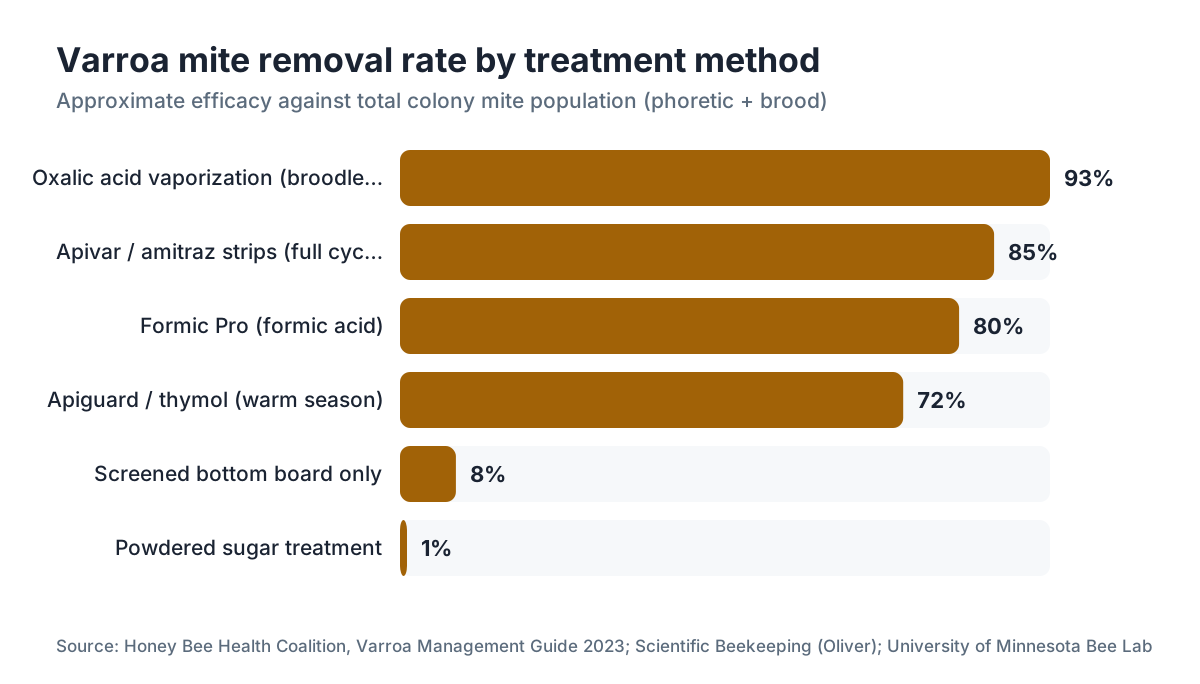
Oxalic acid is the strongest option for broodless colonies (a natural broodless stretch or after a controlled brood break). Vaporization reaches phoretic mites throughout the hive, with kill rates above 90% in broodless conditions [11]. The dribble works too, just slightly less well. EPA-registered oxalic acid carries a label allowing up to three applications in a single treatment period [7]. When brood is present, you need to treat across multiple cycles to catch mites as they emerge.
Apivar (amitraz strips) works through a different mechanism and does treat through the brood cycle, because worker bees carry the active ingredient to capped cells on their bodies. A properly run Apivar treatment (roughly 7 weeks, strips touching the cluster) is highly effective, but it needs resistance monitoring. Amitraz resistance is documented in varroa populations in multiple US states [8].
Apiguard and ApiLife VAR (thymol-based) work well in warm weather (above 59°F daytime) and leave no residue concerns in supers after the correct waiting period. They fade in cooler climates and fall treatments when temps drop.
Formic Pro (formic acid) penetrates capped brood and kills mites in the cells, which almost nothing else does. It can be used during a honey flow. It's temperature-sensitive, best between 50°F and 85°F [10].
All four hold EPA registrations for use in honey bee colonies and are backed by multi-year efficacy data [7]. Powdered sugar has neither.
For sourcing, beekeepers on a tight budget can compare options at beekeeping supply companies, and some vendors offer free shipping honey bee supply companies on treatment orders above a set amount.
VarroaVault's free protocol tools help you build a full-season treatment calendar around whichever products fit your operation, including timing relative to honey supers and your local nectar flow.
Does powdered sugar affect bees negatively?
Not much, under normal conditions. The bees clean each other and eat the sugar. Grooming does briefly spike, which is part of where the mite-removal theory started.
A few caveats. Applying sugar in very cold weather is a bad idea, because wet, sugared bees can chill fast. Grocery-store powdered sugar sometimes contains cornstarch as an anti-caking agent, and some beekeepers worry it causes digestive trouble. Nobody has good published data either way on the cornstarch question. If you're doing sugar rolls often, plain powdered sugar without additives seems like the prudent call. Skip applications during a honey flow if you're pulling cut comb, since sugar contamination is a real concern.
The bigger risk isn't to the bees. It's to the beekeeper who thinks they're treating when they're not. Those lost weeks, when a real treatment could have been running, are where colonies die.
How does powdered sugar compare to the alcohol wash for monitoring?
The alcohol wash is the gold standard for varroa monitoring. The USDA, the Honey Bee Health Coalition, and virtually every state apiarist's office recommend it. It kills the sample bees (about 300) but gives you the most accurate count a hobbyist can get without specialized gear [3][4].
The sugar roll trades accuracy for bee survival. Studies comparing the two found sugar rolls detect roughly 60 to 70% of the mites an alcohol wash finds in the same sample [5]. For a hobbyist with one or two hives, giving up 300 bees (less than 1% of a healthy colony) each month is genuinely low-stakes, and the alcohol wash hands you better data for treatment decisions.
A CO2 method exists too, where the gas briefly stuns the bees and mites detach. Early research suggests it may beat the sugar roll on accuracy while still sparing the bees. Devices like the Varroa-Tester work this way. They cost money and aren't widely stocked, so for most hobbyists the real choice is between the alcohol wash and the sugar roll.
My honest recommendation: do the alcohol wash. Better numbers, a widely validated protocol, and the bees you lose are a rounding error on a healthy colony.
What does the research say about powdered sugar and grooming behavior?
The hypothesis behind powdered sugar treatments was that coating bees with sugar would trigger grooming, and that heightened grooming would knock mites off. There is some evidence that sugar bumps grooming activity temporarily [1]. The problem is that even sharply increased grooming doesn't remove enough mites to matter at the colony level.
Grooming ability does vary across bee strains. Hygienic bees and VSH (Varroa Sensitive Hygiene) bees detect and remove mite-infested pupae at higher rates than standard Italian or Carniolan stock [6]. This is a legitimate, promising corner of bee breeding. But it's about genetic grooming capacity, not about dusting bees with sugar to briefly boost a behavior that still can't reach through capped wax.
The Honey Bee Health Coalition's research summary notes that "no peer-reviewed studies have demonstrated that powdered sugar treatments reduce varroa mite populations in a colony" [3]. That's been the scientific consensus for more than a decade. The treatment claim survives in beekeeping culture, not in the data.
What are the best practices for a complete varroa management season?
Varroa management is a year-round job, not a single event. Here's how a well-run season looks.
Late winter / early spring: Monitor as soon as you can safely open the hive. Colonies can carry high mite levels out of winter even when they look fine. See mites above 1% on a sugar roll or alcohol wash? Treat before the main buildup.
Spring through early summer: Monitor monthly. A colony that looks thriving can cross a dangerous line fast during a population explosion. Treat at 2% or above.
Late July through August: The single most critical treatment window of the year. Treat aggressively before winter bees are raised. Miss this window and no amount of fall treatment fully makes up for it [6].
Fall: After the brood nest contracts, oxalic acid (vaporization or dribble) is highly effective and easy to apply. With a dribble, two or three applications a week apart cover the bees that were sealed in cells during the first round.
Rotate treatments. Running the same product every year speeds up resistance. Alternate chemical classes across seasons: amitraz (Apivar), formic acid (Formic Pro), oxalic acid, and thymol-based products [8].
Records matter here. Track your mite counts and treatment dates over two or three years and you'll start seeing patterns specific to your apiary's location, microclimate, and bee genetics. VarroaVault's free tracking tools are built to make that record-keeping easier without a spreadsheet.
Good beekeeping supplies for monitoring, like quality mite-wash jars and sticky boards, are worth buying once and using for years.
Frequently asked questions
Does powdered sugar kill varroa mites?
No. Powdered sugar does not kill varroa mites. It has no contact toxicity to mites and doesn't remove enough of them to affect the population. Studies show removal rates below 10%, and often under 1% per treatment. The 80 to 90% of mites inside capped brood cells are completely unaffected.
Can I use powdered sugar to monitor varroa mites?
Yes, with caveats. A powdered sugar roll gives you a mite count without killing the sample bees. The tradeoff is accuracy: sugar rolls detect roughly 60 to 70% of the mites an alcohol wash finds. Adjust your action thresholds downward, treating around 1.5% on a sugar roll rather than waiting for 2% or 3%.
How many mites per 100 bees is too many?
By alcohol wash, the general thresholds are 1% in early spring or late summer (treat immediately) and 2% during the main active season. Late summer, from late July through August, is the most critical window because mites in those weeks infest the winter bees. Even 1% in August is a treatment trigger for most extension services.
How often should I do a varroa mite check?
Monthly monitoring is standard during the active season, roughly April through October across most of the US. More frequent checks, every two to three weeks, make sense in late summer when populations shift fast and the stakes peak. In winter, monitor in early spring as soon as you can safely open the hive.
Is the powdered sugar roll safe for bees?
Mostly, yes. The sugared bees go back into the hive and clean each other. Avoid applying in cold weather, since wet, coated bees can chill. Some commercial powdered sugars contain cornstarch as an anti-caking agent; there's no definitive research on harm, but plain powdered sugar without additives is the safer pick for any monitoring method.
What is a brood break and does it help with varroa?
A brood break is a period when the queen stops laying, either naturally in late fall or forced by the beekeeper (caging or removing her temporarily). With no capped brood, nearly all mites are phoretic and exposed to treatment. Oxalic acid vaporization during a brood break is one of the most effective varroa strategies available, with kill rates above 90% on phoretic mites.
What is the best varroa treatment for a new beekeeper?
Oxalic acid is a strong starting point. It's cheap, EPA-registered, leaves no residue in honey at proper doses, and works when applied correctly. Vaporization runs in all seasons and is especially powerful during broodless periods. Formic Pro is a good alternative when you need to treat through capped brood. Apivar is highly effective but demands more careful resistance management over time.
Can varroa mites become resistant to treatments?
Yes. Amitraz resistance (the active ingredient in Apivar) is documented in varroa populations in multiple US states and in Europe. Resistance to tau-fluvalinate and coumaphos, used in older products like Apistan and CheckMite, is widespread. Rotating chemical classes each season slows resistance. Oxalic acid and formic acid resistance has not been documented at meaningful levels in current published research.
Does a screened bottom board help control varroa?
Marginally. A screened bottom board lets mites that fall off bees drop out of the hive instead of re-attaching. Studies found this reduces mite loads by roughly 2 to 15% compared to solid bottoms, which isn't enough on its own. Screened bottoms are useful for monitoring (natural mite drop on a sticky board), but they are not a treatment strategy.
What are VSH bees and do they reduce varroa?
VSH stands for Varroa Sensitive Hygiene. VSH bees detect and remove mite-infested capped pupae at higher rates than standard stock. In controlled conditions, high-VSH colonies can hold low mite levels with less chemical help. In practice, VSH genetics dilute quickly through open mating, so most hobbyists need to requeen annually with VSH or hygienic-bred queens to keep the benefit.
When should I treat for varroa mites before winter?
Late July through August is the critical window across most of the continental US. The bees raised in those weeks form the winter cluster and must survive until spring. Mite-damaged winter bees have shorter lifespans and weaker immune function. Treating in early September beats not treating, but you've already missed part of the window for protecting your winter bees.
Is oxalic acid safe for bees and honey?
Yes, when used as labeled. Oxalic acid occurs naturally in honey at low levels. EPA-registered products at label rates don't significantly raise oxalic acid residues in honey. The label prohibits use when harvest supers are on the hive, a practical precaution even though the residue risk is low. Bees in properly dosed colonies show no significant mortality.
How do I make a varroa mite counting jar for a sugar roll?
Take a wide-mouth quart mason jar and replace the flat lid insert with a piece of #8 hardware cloth (eight holes per inch). Cut it with tin snips to fit inside the ring. The mesh holds bees in but lets sugar and mites fall through when inverted. Commercial versions are also available from most beekeeping suppliers.
How accurate is the powdered sugar roll compared to the alcohol wash?
Research from the University of Minnesota and other extension labs found sugar rolls detect roughly 60 to 70% of the mites an alcohol wash finds in the same bee sample. That consistent undercount means sugar rolls are usable for monitoring if you account for it, but the alcohol wash gives better data for treatment decisions. Both methods use a sample of about 300 bees from a brood frame.
Sources
- Scientific Beekeeping (Randy Oliver) - 'Powdered Sugar Dusting': Repeated powdered sugar dustings removed fewer than 1% of the mite population per treatment in field trials
- Honey Bee Health Coalition - Varroa Management Guide (2023): Approximately 80 to 90% of the varroa population lives in capped brood at any given time during the active season
- Honey Bee Health Coalition - Varroa Management Guide (2023): Powdered sugar treatments do not reduce mite populations to levels that prevent colony damage; no peer-reviewed studies demonstrate meaningful population reduction
- USDA AMS - National Honey Bee Survey and Monitoring Protocols: Standard alcohol wash and sugar roll protocol: 300-bee sample from brood frame; action threshold of 2 mites per 100 bees during active season
- University of Minnesota Bee Lab - Varroa Monitoring Methods: Sugar rolls consistently detect 60 to 70% of mites found by alcohol wash on the same sample
- Pennsylvania State University Extension - Varroa Mite Management: Late summer is the most critical treatment window; mites infesting winter bees raised August through September lead to colony losses locked in before first frost; VSH bees described
- EPA - Oxalic Acid Pesticide Registration (Reg. No. 84436-1): EPA-registered oxalic acid label allows up to three applications per treatment period; prohibited when honey supers for harvest are present
- USDA ARS - Honey Bee Research: Amitraz Resistance in Varroa destructor: Amitraz resistance documented in varroa populations in multiple US states; rotating chemical classes recommended to slow resistance development
- University of Florida IFAS Extension - Varroa Mites and Honey Bees: Screened bottom boards reduce mite loads by approximately 2 to 15% compared to solid bottoms, insufficient as standalone treatment
- North Carolina State University Extension - Varroa Mite Management for Beekeepers: Monitoring action thresholds by season: 1% early spring, 2% active season, 1% late summer pre-winter; Formic Pro penetrates capped brood and is effective during honey flow
- Cornell University College of Agriculture - Honey Bee Program: Oxalic acid vaporization during broodless period achieves kill rates above 90% on phoretic mites; resistance to oxalic acid not documented at meaningful population levels
Last updated 2026-07-10