Randy Oliver brood break: how it works and when to use it
TL;DR
- A brood break stops the queen from laying for 3 to 5 weeks, starving varroa of the capped cells they need to reproduce in.
- Randy Oliver's cage-and-treat protocol pairs the break with oxalic acid to kill the exposed mites.
- Done before the mite load crosses roughly 2% on a wash, it can drop varroa 60-90% and rescue a colony headed for collapse.
Who is Randy Oliver and why does his brood break method matter?
Randy Oliver is a California beekeeper and researcher who founded ScientificBeekeeping.com. He is not an academic in the institutional sense. He runs his own field trials, reads the primary literature obsessively, and publishes his methods and raw data in plain language. The American Bee Journal has carried his work for over a decade [10]. He keeps several hundred colonies and tests ideas on them before he recommends anything.
His brood break protocol matters because it hits varroa at the population level instead of only knocking down the adult mites you can see. The core idea is simple. Roughly 70-80% of the varroa in a colony are hiding inside capped brood cells at any given moment, out of reach of most treatments [1]. Kill only the phoretic mites (the ones riding adult bees) and the population climbs back within weeks as the brood-phase mites emerge. A brood break removes the hiding place entirely.
Oliver has written about this method for years, and his reasoning shaped the Honey Bee Health Coalition's Varroa guides. He sells no miticide. That independence is exactly why his recommendations are worth reading closely.
What is a brood break and how does it reduce varroa?
A brood break is what the name says. You interrupt brood rearing so the queen stops laying fertilized eggs. Once the last capped brood emerges, there are no sealed cells for varroa to enter and breed in. Every mite in the colony is now phoretic, riding an adult bee, fully exposed.
Varroa reproduce only inside capped worker and drone cells. A foundress mite slips into a cell just before capping, lays her eggs, and her daughters mate inside before the bee emerges. No capped brood, no reproduction. The mites can hang on to adult bees for weeks, but they cannot multiply.
That exposure window is the whole payoff. Oxalic acid works well against phoretic mites and poorly against mites sealed in brood [2]. The EPA label for Api-Bioxal, the only registered oxalic acid product in the United States, tells you to treat "when no sealed brood is present" for maximum efficacy [3]. A brood break makes that condition true across the entire colony, more than for the fraction of mites that happen to be phoretic on the day you happen to treat.
The math is blunt. If 75% of your mites are tucked in brood during normal laying, one OA treatment reaches only 25% of them. After a complete break, one OA treatment can reach close to all of them. That gap in efficacy is the reason Oliver and plenty of others call the break-plus-OA combo one of the strongest moves a beekeeper has.
How much does a brood break actually lower varroa counts?
Real numbers are harder to pin down than the theory, because field results ride on your starting mite load, colony size, whether the break was truly complete, and what treatment followed. The evidence that does exist is encouraging.
Oliver's own field trials, posted on ScientificBeekeeping.com, showed alcohol wash counts dropping from above 2% to well under 1% after a cage-and-treat protocol [4]. His 2019 series on extended-release oxalic acid documented colonies going from crisis-level counts to near-zero across a single brood cycle.
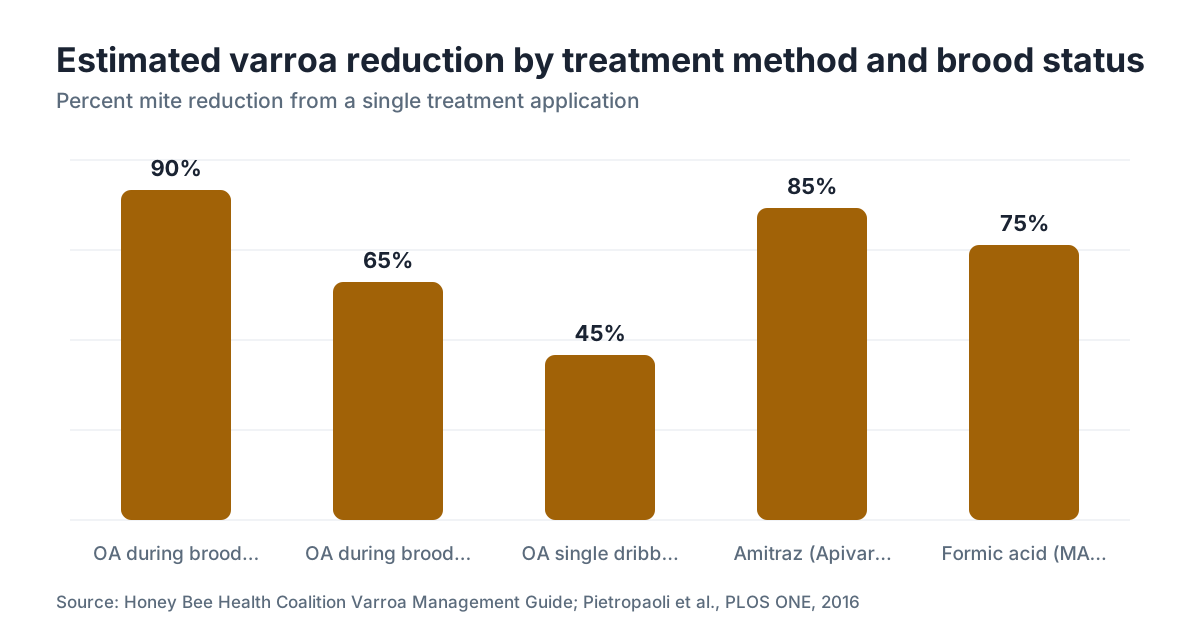
A 2016 study in PLOS ONE by Pietropaoli and colleagues found that oxalic acid applied during broodless periods achieved over 90% mite mortality in treated colonies [5]. That work used the dribble method on naturally broodless winter colonies in Italy, but the mechanism matches an artificially induced break exactly.
The Honey Bee Health Coalition's Varroa Management Guide, now in its third edition, points to the same principle: OA during broodless conditions is far more effective than OA during normal brood rearing [1]. The coalition is the closest thing North American beekeeping has to a consensus science body.
A realistic range is 60-90% reduction. The high end asks for a genuinely complete break (no worker brood, no drone brood), full OA coverage of every comb, and a start early enough that the surviving 10% does not still swamp the colony.
How do you actually do a Randy Oliver-style brood break?
There are several ways to create a brood break. Oliver reaches for queen caging most often because it is reversible, predictable, and does not force you to remove your queen for good.
The basic cage method runs like this. Find the queen. Set her in a push-in cage, or a JZ-BZ style introduction cage, on a comb. She cannot lay. Workers can still feed her through the screen. You leave her caged for 24 to 27 days, long enough for all capped worker brood to finish emerging (capping to emergence takes 12 days). By about day 24 there is no sealed worker brood left.
Now you treat with oxalic acid. Oliver's preferred delivery in recent years has been extended-release OA on a shop towel or cellulose sponge soaked in a glycerin-OA solution, laid between frames, releasing slowly over several weeks. The Api-Bioxal label covers vaporization, dribble, and spray. Read the current label for your situation, because application rates differ by method [3].
Release the queen a day or two after you treat. She goes back to laying. The brood that emerges carries very few mites because you just gutted the mite population.
A few practical notes. Drone brood takes 24 days from egg to emergence, three days longer than worker brood, so eliminating drone brood too means caging for at least 27 days or pulling the drone combs. Oliver has flagged this exact detail: "the foundress mite in the last-capped drone cell won't emerge until day 27, so a 24-day cage misses those" [4]. Mark your calendar and mean it.
Check, too, that the colony has not started emergency queens from the young larvae present when you caged the original queen. If queen cells are there when you go to treat, you may already have a newly mated queen laying. Inspect before you treat.
When is the best time of year to do a brood break for varroa control?
The timing question splits in two. What point in the season is most practical, and what mite threshold makes the break the right call.
For most beekeepers in temperate North America, late summer (mid-July through August) is the window that decides winter. This is when the winter bee population gets built. Bees raised in September and October are the ones that hold the cluster alive until spring. Raise them under heavy varroa and deformed wing virus and the colony usually will not make it. Oliver calls this the mite bomb problem. Let summer mite loads run and every fall bee is compromised before she hatches.
A break in late July or early August resets the mite population right before winter bees get reared. The colony leaves August with low mites, raises healthy fall bees, and enters winter strong.
Spring is a secondary shot. Once a winter cluster breaks and the queen ramps up, a brief break in early spring can keep the summer buildup from getting away from you. Pulling a queen during a nectar flow is a hard sell, though, so most beekeepers save this for problem colonies.
On the threshold, the Honey Bee Health Coalition recommends treating when alcohol washes hit 2 mites per 100 bees (2%) during brood rearing [1]. A break gets especially attractive at 2-3%, because chemical treatments alone at that level often cannot claw the colony back before winter. At 5% or higher in August, a break plus OA is probably your best play short of combining the colony into a stronger one.
How does the brood break compare to other varroa treatments?
Here is where opinions earn their keep.
Amitraz (Apivar strips) is the most commonly recommended first-line synthetic miticide in North America. It works decently during brood rearing because it keeps releasing over 6 to 8 weeks. The catch is resistance. Varroa with reduced amitraz sensitivity have been documented in the United States [6]. Reaching for Apivar in a colony with high mite loads is not wrong, but leaning on it alone year after year breeds resistance.
Formic acid (Mite Away Quick Strips or Formic Pro) kills mites inside capped brood, which a break does not need to do. That is a genuine advantage. No queen to find, no cage. The costs are temperature sensitivity, brood mortality risk at higher rates, and the fact that the colony still carries a mite-loaded brood population for weeks while the acid works.
Oxalic acid without a break works, but it is a fraction as good. A single dribble during normal brood rearing might kill 40-60% of phoretic mites and leave the 70-75% of total mites sitting in brood cells untouched. You would need multiple vaporizations spaced every 5 days across 3 to 4 treatments to approach the punch of one post-break treatment.
Thymol products (Apiguard, ApiLifeVar) depend on temperature and do better in late summer in many regions, but they still barely reach mites inside brood.
The break plus OA wins on efficacy when you do it right, carries zero residue concern, and adds nothing to the resistance problem. It costs labor (finding and caging a queen is real work), it costs 3 to 4 weeks of reduced honey production, and it fails hard if the break is not complete. Nobody is calling it easy. For a colony you have to save before winter, it is tough to beat.
For hobbyists running a handful of hives, queen cages and Api-Bioxal are stocked by most reputable beekeeping supply companies.
What equipment and materials do you need?
The kit is short.
A push-in cage, or a hair-roller style queen cage, runs about $2 to $5 each. You press the cage into comb over the queen, with young larvae inside so workers keep her fed. Some beekeepers use a plain JZ-BZ cage with a candy plug, but Oliver prefers the push-in because workers feed the queen through the mesh with no candy needed.
Api-Bioxal, the EPA-registered oxalic acid dihydrate product. As of 2024 a 35-gram packet runs roughly $8 to $12 and treats several hives [3]. Vaporizing means an OA vaporizer ($50 to $200 depending on style, corded or battery). Extended-release glycerin sponges (Oliver's more recent method) also need food-grade glycerin, a few dollars per pound at a grocery store or online.
A reliable varroa mite testing kit, alcohol wash or sugar roll. You need a pre-break wash and a post-treatment wash to prove the protocol worked. Alcohol wash is more accurate. Sugar roll tends to undercount.
A calendar and a permanent marker to date the cage placement right on the hive body. You will forget the day. Write it down.
Protective gear goes without saying, but OA vapor is genuinely dangerous to lungs and eyes. A properly rated respirator (N95 at minimum, OV/P100 preferred) and goggles are not optional for vaporization [3].
What can go wrong with a brood break and how do you avoid it?
Several things can wreck the protocol.
Incomplete brood elimination is the most common failure. Miscount the days, let the hive raise a new queen, or miss a corner of drone brood, and some sealed cells survive. You treat, the mites in those cells ride out the treatment, and the population rebounds faster than you expected. The fix: count calendar days carefully (27 minimum if drone brood matters to you), inspect for queen cells before treating, and do a post-treatment wash 3 to 4 weeks later to confirm.
Queen loss during caging happens. Queens sometimes die from stress, chilling, or poor worker access. A push-in cage over comb with young brood cuts that risk sharply because workers can reach her. Check her at day 10 to 14 if you can do it without breaking the interruption. If she dies, you need a replacement or you let the colony raise one, which resets your timing.
Sometimes the colony is simply too far gone. A hive already crashed to under 5 frames of bees, with heavy deformed wing virus and broken brood, is often past saving by any single move. The break earns its keep at 2-3% infestation, before the collapse. Using it as a last resort on a dying colony beats doing nothing, but expect mixed results.
Oxalic acid on brood by mistake. Treat while brood is still present and efficacy craters while you may kill brood for nothing. The point is to wait. Patience is the skill.
Then there is robbing. A caged queen means fewer foragers and a colony that is weaker for a while. During late-summer robbing pressure, drop the entrance to 1 to 2 inches and check daily.
Can you do a brood break without caging the queen?
Yes, but every alternative comes with a trade.
Split-and-requeen is one route. Move the queen into a queenless nuc with a walk-away split. The original colony goes queenless, raises emergency cells, and stays broodless for roughly 21 to 28 days before a new mated queen starts laying. You treat during that window. The downsides: you risk losing the original queen if she is valuable, natural queen rearing adds delay and uncertainty, and the split colony's population thins out.
Swarming builds a natural brood break into the swarm. The swarm leaves with the old queen and has no brood at all for the first days to weeks. Oliver has written about treating swarms in their first days in a new box to exploit that window. But you cannot schedule swarms, and letting colonies swarm as a varroa plan is not practical for most hobbyists.
Removing all brood frames by hand is another way. Pull every capped frame and either freeze them (kills mites and bees in the brood) or hand them to a strong colony to raise out. That makes a break without touching the queen, but it is heavy labor and it stresses the colony hard.
Oliver's cage method stays the cleanest because it is reversible, predictable, and keeps your best queen alive. If you have proven queen genetics, losing her in a walk-away split is a genuine cost.
How do you track whether the brood break actually worked?
The only honest answer: alcohol wash before and after.
Before you cage the queen, do a 300-bee alcohol wash (or CO2 wash) of bees pulled from the brood nest. Record the count. The Honey Bee Health Coalition protocol samples from a brood frame with young bees present, not foragers [1].
After treatment, and after the queen has been laying about 3 weeks (so any surviving mites have had a chance to move into new brood and show up in the count), wash again from the same spot. A post-treatment count below 1%, ideally 0 to 0.5%, means it worked. A count above 1.5% means something went wrong with the break or the treatment, and you need to reassess.
VarroaVault has free tools for logging wash counts over time and flagging when a colony crosses an action threshold. That helps in multi-colony yards where it is easy to lose track of which hives are trending up.
Do not skip the after check. It is the only feedback loop you have. The beekeepers who report great results from brood breaks are almost always the ones who confirm with a wash instead of assuming.
Is Randy Oliver's extended-release oxalic acid method different from standard OA?
It is, and the difference is worth its own section.
Standard OA (dribble or vaporization) delivers a concentrated dose on a single day. Vaporization in particular hits phoretic mites hard the day you treat, but a mite briefly inside a cell at that exact moment can survive. Extended-release OA, which Oliver has studied extensively, delivers a lower steady dose over several weeks from a glycerin-soaked pad set between frames.
Oliver's trials on extended-release found that a glycerin-OA sponge could hold mite control across a full brood cycle without caging the queen at all, because the slow release keeps killing mites as they emerge from cells over time [4]. That trades the break's single-shot power for persistent coverage that never immobilizes the queen.
The extended-release pads are not on the Api-Bioxal label as of the last major label revision, so their regulatory standing in the United States is murky. Legally, using Api-Bioxal means following the label, which lists dribble, spray, and vaporization. Oliver has been open about this limit and pushes for the label to be expanded. Check the current Api-Bioxal label before using any unlisted delivery method [3].
For most U.S. beekeepers right now, a brood break plus a standard vaporization treatment is the cleanest, best-documented path.
What does the science say about brood breaks beyond Oliver's own trials?
Oliver is one voice, informed as it is. What does independent research say?
A 2020 meta-analysis in Apidologie by Gregorc and colleagues reviewed oxalic acid efficacy across many studies and reported that "treatments applied during broodless periods consistently outperformed treatments applied during brood-rearing," with efficacy gaps of 20 to 50 percentage points depending on the study [7]. That lines up with what Oliver has said for years.
University of Minnesota Extension materials on varroa recommend inducing broodlessness before OA treatment as one of the highest-efficacy options a hobbyist has [8]. University of Florida IFAS Extension likewise notes that brood breaks rank among the most effective non-synthetic approaches to mite control [9].
The EPA's registration of Api-Bioxal, with its broodless-condition language in the label, is itself a quiet endorsement of the idea. Registration required efficacy data, and the submitted data showed why broodlessness matters [3].
One honest caveat. Most of the controlled studies on brood breaks come from Europe, where management, varroa genotypes, and climate differ from North America. The mechanism is the same everywhere, but the exact efficacy figures may not transfer cleanly. Nobody has run a large randomized trial on Oliver's specific cage-and-treat protocol in North American yards, at least none published in peer-reviewed form. The closest is Oliver's own detailed records, which are thorough but not blinded. That does not mean the method fails. It means you should know the shape of the evidence.
What is the full seasonal varroa management calendar that includes a brood break?
A working calendar for temperate North America, assuming overwintering colonies:
April or early May: baseline alcohol wash while colonies are actively rearing brood and building. If you are already at 1.5% or higher this early, something carried over poorly from winter and you have a treatment decision to make now.
June through early July: monitor monthly. This is the calm stretch when mite loads are still moderate but the colony grows fast. Drone brood here is a mite amplifier. Pulling one frame of capped drone brood every 3 to 4 weeks is a low-labor extra tactic.
Mid-July to mid-August: the decisive window. Do a wash. At 2% or above, plan a break immediately. Cage the queen, mark the calendar for 24 to 27 days, inspect for queen cells at day 14, and treat with OA at day 24 to 27 once no capped brood remains.
Late August to September: release the queen after treatment. Do a post-treatment wash 3 weeks after release. Winter bees are now raised into a low-mite environment.
October, or whenever the cluster tightens: if the colony goes naturally broodless in your climate, take the chance for a single OA vaporization or dribble as a final cleanup. Api-Bioxal can be used here per label instructions.
This calendar matches the Honey Bee Health Coalition's treatment timing guidance and what most university extension programs advise [1][8].
Frequently asked questions
How long does a Randy Oliver brood break take from start to finish?
Plan on 4 to 6 weeks total. The queen caging period is 24 to 27 days (27 if you want to eliminate drone brood completely). Treatment happens at the end of that window. Then you release the queen and wait 3 weeks for a post-treatment alcohol wash to confirm the mite load dropped. The colony is back to normal egg-laying within 2 to 3 days of release.
Will a brood break hurt my honey production?
Yes, some. A colony with a caged queen for 24 to 27 days raises no new foragers during that period, and the existing forager force ages and shrinks. For a late-summer break in July or August, you trade a slice of late-summer foraging for a healthy overwintering population. Most beekeepers in mite-pressure regions call that a good trade. Do not schedule a break during your main nectar flow.
Can I use Apivar strips instead of oxalic acid after the brood break?
You can, but you throw away the main advantage. Apivar (amitraz) works during brood rearing and does not need a broodless window, so pairing it with a break wastes the setup and adds synthetic chemical exposure for no reason. The whole point of a break is that oxalic acid is highly effective against phoretic mites and leaves no residue. Use OA.
How do I find the queen to cage her?
Mark her with a paint pen while she is young if you possibly can. A marked queen takes a fraction of the time to spot. If she is unmarked, work systematically through the brood-nest frames, watching for the longer abdomen and the gap workers leave around her. Reduce the hive to fewer boxes if you run multiple deeps. Queens are easiest to find on brood frames in good morning light with minimal smoke.
What happens if my colony raises a new queen during the brood break?
This is the most common failure mode. If workers find young larvae when you cage the original queen, they start emergency cells within 24 to 48 hours. At day 14, inspect for sealed queen cells. Find them, and remove all but one (or remove all if you want to keep the original queen's genetics and release her later). A virgin queen that gets mated resumes laying and ends the break, maybe before you treated.
Is a brood break the same as the checker-boarding or split techniques I've read about?
No. Checker-boarding is a swarm-prevention method that rearranges honey frames above the brood nest. Walk-away splits do create a temporary brood break in the queenless half, but that is a side effect, not the goal. Oliver's brood break is a deliberate varroa move built specifically to expose every mite to the treatment that follows. The mechanisms overlap, but the techniques are distinct.
Can I do a brood break with a nucleus colony or is it only for full-sized colonies?
You can do it with a nuc, and it may be easier because finding the queen in a 5-frame box is far less stressful. Size the OA dose to the colony: the Api-Bioxal label specifies doses per number of occupied frames. A small nuc that goes broodless is very vulnerable to chilling if temperatures drop, so time a fall break in a nuc carefully.
Does the brood break work on Africanized bees?
The biology is identical: mites reproduce in capped brood, OA kills phoretic mites. But Africanized colonies swarm more, supersede queens unpredictably, and abscond, all of which complicate a caging protocol. The safety and handling demands are also very different. If you are in Africanized range, read up on africanized honey bee management specifically before attempting this.
How many times per year can I do a brood break?
As many as the colony can tolerate, but most experienced beekeepers do one targeted break per year, usually late summer, backed up by a winter-broodless OA treatment. Two breaks per year (one spring, one late summer) is reasonable for colonies with stubborn high mite loads. More than two usually signals a deeper management problem or poor queen genetics rather than a fix.
What alcohol wash count should trigger a brood break rather than a regular treatment?
The Honey Bee Health Coalition sets the treatment threshold at 2 mites per 100 bees (2%) during brood rearing. A break becomes the preferred response at that number or above, because a one-time OA application during brood rearing simply will not be as effective. At 4-5% or higher in August, a break is urgent and may decide whether the colony survives winter or collapses.
Do I need a vaporizer to treat after the brood break, or can I dribble oxalic acid?
Both methods work during a true brood break, and both are on the Api-Bioxal label. Vaporization is faster for large yards and reaches all clusters without opening hives in cold weather. Dribble (2 to 4 ml per seam of bees, up to 50 ml per colony) needs simpler gear and works well when bees are clustered. If the break is complete and no capped brood remains, efficacy is high either way.
Randy Oliver mentions extended-release OA sponges. Are those legal to use in the U.S.?
Not currently under the Api-Bioxal label, which covers dribble, spray, and vaporization. Extended-release glycerin-OA pads are not listed. Oliver has publicly advocated for adding them. Using unlisted application methods is a federal FIFRA violation, so stick to labeled methods. If the label has been updated after mid-2025, check the current EPA-registered label at cdms.net or the Api-Bioxal product page directly.
Where can I read Randy Oliver's original brood break research and protocols?
ScientificBeekeeping.com is the primary source. Oliver's series on oxalic acid, published between 2015 and 2022, covers the biology, his field-trial data, and the extended-release work. The Honey Bee Health Coalition's Varroa Management Guide, free to download at honeybeehealthcoalition.org, builds on the same logic with more citations. Both are free and worth reading in full before you attempt the protocol.
Sources
- Honey Bee Health Coalition, Varroa Management Guide (3rd edition): Roughly 70-80% of varroa are in capped brood at any given time; treatment threshold is 2 mites per 100 bees during brood-rearing season; OA treatments during broodless conditions are substantially more effective
- EPA, Oxalic Acid Registration and Efficacy Summary: Oxalic acid has poor penetration of capped brood cells and works primarily against phoretic mites
- Api-Bioxal EPA-Registered Label (Reg. No. 86804-1): Api-Bioxal label states use when no sealed brood is present for maximum efficacy; specifies dribble, spray, and vaporization methods; requires OV/P100 respirator and goggles for vaporization
- Randy Oliver, ScientificBeekeeping.com, Oxalic Acid Series: Oliver's field trials documented alcohol wash counts dropping from above 2% to below 1% after cage-and-treat protocol; notes that the last-capped drone cell foundress mite does not emerge until day 27
- Pietropaoli et al., PLOS ONE, 2016, Oxalic Acid Efficacy in Broodless Colonies: Oxalic acid treatment during broodless periods achieved over 90% mite mortality in treated colonies
- USDA ARS Bee Research Laboratory: Varroa populations with reduced amitraz sensitivity have been documented in the United States
- Gregorc et al., Apidologie, 2020, Meta-analysis of Oxalic Acid Efficacy: Treatments applied during broodless periods consistently outperformed treatments during brood-rearing, with efficacy differences of 20-50 percentage points across studies
- University of Minnesota Extension, Varroa Mite Management: University of Minnesota Extension recommends inducing broodlessness before OA treatment as one of the highest-efficacy approaches for hobbyists
- University of Florida IFAS Extension, Varroa Mite Control: UF IFAS notes brood breaks are among the most effective non-synthetic approaches to varroa mite control
- American Bee Journal, Randy Oliver Contributor Page: Randy Oliver has published varroa management research and field trial results in the American Bee Journal for over a decade
Last updated 2026-07-09