Replacing old comb to reduce varroa treatment residues
TL;DR
- Beeswax absorbs every miticide you apply, and residues sit there for years.
- Fluvalinate and coumaphos can reach levels that harm queens and brood long after treatments stop.
- Rotating out roughly one-third of brood comb each year, and replacing all drawn comb over three years, keeps residue levels manageable without giving up chemical treatment.
Why does old comb hold so many varroa treatment residues?
Beeswax is a fat-soluble sponge, and most miticides are fat-soluble too. They dissolve into wax the second they touch it. Every treatment cycle adds another layer on top of the last, and wax never flushes itself clean. Bees make it worse by recycling comb constantly, pulling wax from one cell wall and redepositing it elsewhere, which spreads residues around the hive instead of parking them in one corner.
The problem compounds year over year. Researchers at the USDA ARS Beltsville Bee Lab measured coumaphos (Checkmite+) in commercial hive samples and found it in nearly every wax sample tested, with some above 100 ppm [9]. Fluvalinate (Apistan) behaved the same way, and both compounds turned up in pollen and honey, not only wax. These aren't trace-contamination stories. These are levels that stack up under ordinary management.
For hobbyist and sideliner beekeepers, two things follow. Sublethal residue exposure in brood comb can impair queen development, drone fertility, and larval survival, and those effects mimic other problems, so they get blamed on the wrong thing [2]. And if you ever want to lean on soft treatments like oxalic or formic acid, starting from dirty comb means you're fighting background effects you cannot see or smell.
Which miticide residues are most harmful to bees, and at what levels?
Not all residues are equal. The published concerns center on three: coumaphos, fluvalinate (tau-fluvalinate), and amitraz breakdown products.
Coumaphos is an organophosphate. It's been found above 10 ppm in old brood comb, and lab work shows that rearing queens in comb contaminated at those levels produces lighter, shorter-lived queens [2]. The Honey Bee Health Coalition's Varroa management guide notes that coumaphos resistance in varroa developed exactly because the product was used so widely and so often, which means heavy comb contamination usually flags the same management history that already bred resistant mites [3].
Fluvalinate is a pyrethroid. It builds up like coumaphos, and together the two appear to hit developing brood harder than either alone. A 2010 study by Mullin et al. in PLOS ONE found 98 pesticide or metabolite residues across 887 wax and pollen samples from U.S. apiaries, with fluvalinate and coumaphos the most common [1]. The study's conclusion states: "The ubiquity of multiple residues at high concentrations suggests that bee health problems could partly be a result of pesticide exposure within the hive."
Amitraz (Apivar) breaks down faster and does not pile up in wax at the same rate, which is why a lot of beekeepers treat it as the lower residue-risk option. Its main metabolite DMPF still shows up in wax, and amitraz-treated hives carry detectable residues if strips stay in past the label window [4].
Oxalic acid, formic acid, and thymol leave next to nothing behind. They're naturally occurring compounds that volatilize or metabolize instead of binding to fat. If you're shifting toward a soft-treatment rotation, old wax from past hard treatments is the main thing standing in your way.
| Compound | Typical persistence in wax | Notable effect at elevated levels | Natural/organic? |
|---|---|---|---|
| Coumaphos | Multi-year | Queen quality reduction, drone fertility | No |
| Fluvalinate | Multi-year | Brood impairment, additive toxicity | No |
| Amitraz (DMPF) | Months | Lower than above; dose-dependent effects | No |
| Oxalic acid | Days-weeks | Negligible wax accumulation | Yes |
| Formic acid | Hours-days | Negligible wax accumulation | Yes |
| Thymol | Days-weeks | Negligible wax accumulation | Yes |
How fast does residue build up in brood comb if you treat every year?
Faster than most beekeepers expect. Each strip treatment drops a fixed amount of active ingredient into the hive. Some goes into the bees and mites, some off-gases, and a real fraction locks into the wax. The next treatment adds to that bound fraction because wax does not break these compounds down.
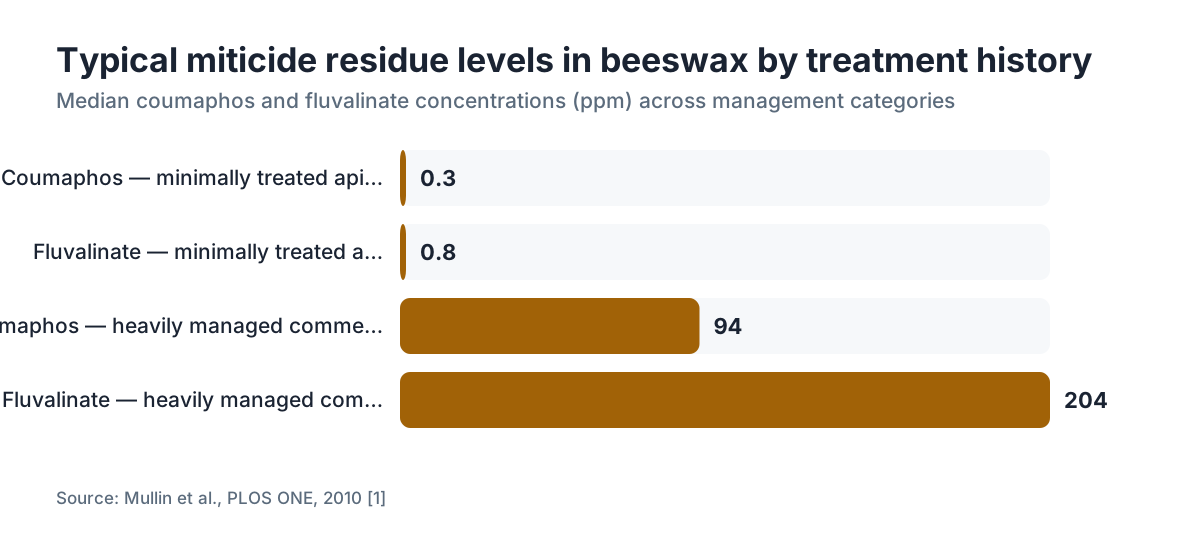
The Mullin et al. PLOS ONE study found coumaphos at a median of 0.3 ppm in wax from minimally treated apiaries but above 94 ppm in heavily managed commercial wax [1]. That's roughly a 300-fold spread driven by treatment history alone. Three to five years of annual coumaphos strips in the same drawn comb can push levels into the range tied to sublethal harm.
Foundation matters here too. Commercial beeswax foundation often comes from recycled hive material, and multiple analyses found that brand-new foundation can arrive already carrying low levels of coumaphos and fluvalinate [1]. You cannot assume a clean start unless you use plastic foundation or fresh, untreated wax from a source you can trace.
A six-year-old brood frame with a normal treatment history is almost certainly carrying residues you would not pick on purpose. Every generation of brood grows up in that chemical environment.
How often should you replace brood comb to keep residues low?
Remove and replace at least one-third of brood comb every year, and cycle all of it out over three years. That's the practical consensus from extension apiculturists and the Honey Bee Health Coalition [3]. For a standard 10-frame Langstroth running two brood boxes, you're pulling six or seven frames a year.
If you've been hitting the hive hard with coumaphos or fluvalinate and want a faster reset, some beekeepers swap all the comb in a single season. Move the cluster onto one box of fresh foundation, let them draw it, then repeat with the second box. Bigger disruption, cleaner baseline, much quicker.
Comb color is a rough stand-in for age and residue load. Fresh drawn comb runs white to pale yellow. Comb that's seen three or more brood cycles goes tan to brown. Comb that's dark chocolate brown or black has usually been in the hive five years or more, and it's the first to go. This is not a residue test. It's the only field indicator you have short of sending wax to a lab.
Penn State Extension recommends pulling the oldest, darkest frames first and starting with frames that don't currently hold brood, so you avoid breaking up the cluster [5]. Do it in late summer after the main flow, when the colony is contracting and the brood nest is shrinking on its own. That timing keeps stress low and gives the bees the whole fall to draw new foundation before winter.
What is the best method for actually rotating comb out of a hive?
Mark your frames first. A paint-pen dot on the top bar, one dot per year, lets you spot the oldest frames without pulling and reading every one. Some folks just write the year on the top bar. Either way, the marking habit is the single most useful move in comb management, and it costs about ten seconds a frame.
When you pull old frames, don't shake them out over your hive. Old comb can carry American foulbrood spores, chalkbrood, and wax moth eggs. Freeze frames for 48 hours to kill wax moths and knock back most pathogens, then melt or render the wax. Don't feed old brood comb back to your bees, and don't sell it as foundation if it has a heavy treatment history.
Rendered wax from treated hives should be labeled as such if you sell it. Residues survive melting. A foundry that recycles your old wax passes those residues straight into new foundation [1]. Some small-scale beekeepers sidestep this with plastic foundation, which is inert and can be scraped, re-waxed, and put back into service without the substrate itself soaking up chemicals.
Swapping comb also lets you catch the stuff that tracks with age: sunken or perforated cappings that hint at sacbrood or AFB, propolis bridging that makes inspection a pain, and cells warped by generations of cocoon buildup that can shrink emerging bees. Comb rotation is maintenance as much as chemistry.
If you want to line up your comb schedule with your monitoring calendar, the free tools at VarroaVault let you build both together so they support each other instead of clashing.
Does rotating comb actually reduce mite levels, or just residues?
Both, through different mechanisms and on different timelines.
On residues, the effect is direct. Remove old wax, remove the reservoir of bound chemicals. The benefit shows up over one to three years as new comb carries no prior contamination and your soft-treatment options start working without background interference.
On mites, the link is indirect but real. Old, dark comb tends toward deeper cells thanks to cocoon buildup over many brood cycles. Some research suggests varroa may prefer cells that offer better reproduction conditions, and there's an argument, not a settled one, that slightly smaller cells in fresh comb are a bit less friendly to mite reproduction. The clearer mechanism is simpler: when you pull brood frames to replace them, you physically remove whatever mites are sealed in that brood right then. Pulling three frames of old capped brood during a rotation is basically one round of brood-trapping, a recognized mite-reduction method.
The Honey Bee Health Coalition's guide files comb management under cultural controls, alongside hygienic genetics and brood breaks [3]. It doesn't replace monitoring and treatment. It removes one source of ongoing contamination and hands you a mechanical mite reduction at the same time.
Run an alcohol wash or sugar roll before and after a big rotation and you'll have real numbers on whether it moved the needle in your apiary. Nobody has clean controlled-trial data on the exact mite-reduction percentage from comb rotation by itself. The closest work is buried inside broader IPM comparisons rather than isolated experiments.
Can you test old comb for residues before deciding to replace it?
You can, but it's not cheap or fast enough to be a routine call for most hobbyists.
Several commercial labs in the US test beeswax for pesticide residues using gas chromatography-mass spectrometry (GC-MS). A panel covering the common miticides runs roughly $150 to $300 per sample [6]. That price makes sense if you're vetting foundation stock you plan to buy in bulk, or chasing down a die-off with no obvious cause. It makes less sense as a screening tool for individual brood frames in a two-hive backyard setup.
The practical shortcut is frame age plus treatment history. If your records show a frame is over three years old and was in the box during coumaphos or fluvalinate treatments, assume it's carrying elevated residues and rotate it out. A new frame and foundation costs a few dollars, well under a lab test.
If you do want to test, the USDA National Agricultural Library keeps a referral path to agricultural testing laboratories, and some state departments of agriculture provide referrals [7]. Penn State Extension's apiculture program has published sample-prep guidance if you want to submit your own wax [5].
For commercial or sideliner operations running dozens of colonies, testing a composite wax sample from your oldest comb every few years is a fair investment. It tells you where your baseline sits and helps you decide which yard gets the fastest rotation.
How does comb replacement fit into an integrated varroa management plan?
Treat it as the base layer of a longer cycle, not a treatment on its own.
A realistic plan runs like this: check mite loads with an alcohol wash every 4 to 6 weeks during the active season, treat when you hit the 2 percent threshold (2 mites per 100 bees) the Honey Bee Health Coalition and most extension services use [3], and follow the EPA-registered label on every product to keep resistance and off-label residue risk down [4]. Run that cycle on clean comb and your treatments work against mites instead of against six years of accumulated chemistry.
Comb rotation slots right into the annual inspection rhythm. Late summer is when most beekeepers size up colony health before winter prep, and that's exactly when you want to find and pull the oldest frames before the cluster settles around them. Mark them in spring, pull them in late summer, drop in foundation, and let the fall population draw the new comb before the cluster tightens up.
If you'd rather track all this in one place, VarroaVault's free protocol OS logs frame ages, treatment dates, and mite counts together, so your comb schedule sits next to your monitoring data instead of in a separate notebook.
Be honest about the limit. Comb rotation alone will not save a colony with a serious mite load. Mites breed in brood cells, and your colony makes new brood nonstop. When counts are high, chemical or mechanical intervention is not optional. Rotation cleans up the residue environment those interventions create, which makes the whole system healthier over time. It does not stand in for the interventions.
For the biology behind all of this, see the overview of the varroa mite, which covers the reproductive cycle and why brood management ties so directly into control.
What do you do with old frames and wax after removing them?
Disposal matters for your own biosecurity and for everyone you trade equipment with.
Freeze first. A 48-hour freeze at 0°F (-18°C) kills wax moth larvae and small hive beetle eggs, and it reduces (though does not eliminate) American foulbrood spore viability. Don't skip it before stashing old frames in the shed. A wax moth outbreak in stored gear is a disaster of its own.
For rendering, a solar melter or a double-boiler works fine. Rendered wax from treatment-contaminated comb belongs in non-food uses: candles, wood treatments, equipment sealing. Keep it out of cosmetics and cooking. Fluvalinate and coumaphos survive rendering and end up in the finished wax [1].
Frames themselves can go back into service if the wood is sound. Scrape them clean, scorch the wood with a propane torch (a technique most extension services recommend for cutting pathogen load), and install new foundation. That's faster and cheaper than buying new frames and keeps good wood working.
If you suspect AFB in any comb you're pulling, don't render that wax or reuse those frames. Burn them. AFB spores survive a solar melter and survive freezing, and moving contaminated wax between operations is one of the main ways foulbrood spreads. When in doubt, burn.
For replacement frames and foundation, a comparison of beekeeping supply companies can help you sort options by region and price.
Does the type of foundation affect how residues accumulate?
Yes, quite a bit.
Beeswax foundation made from recycled commercial wax carries the highest starting residue load. Studies analyzing new, off-the-shelf beeswax foundation found fluvalinate and coumaphos in a big share of samples before any treatment ever happened in the hive [1]. You're buying the history of whoever's wax went into the foundry.
Plastic foundation with a thin beeswax coating starts much lower, because the plastic substrate doesn't absorb fat-soluble compounds. Only the coating does. Over time the drawn portion does pick up residues as bees add their own wax, but the plastic core stays inert and can be scraped back to bare plastic and re-coated.
Foundation made from virgin beeswax from certified-organic operations is another route, though supply is thin and prices run higher. If clean starting chemistry matters to you and you'll pay a premium, this is the most reliable way to know what's in your foundation from day one.
Some beekeepers go foundationless and let the colony draw natural comb with no starter wax at all. That erases foundation residues completely. The catch is that foundationless comb takes more management to keep bees drawing straight in the frame, and it's harder to inspect with standard gear. It works well for beekeepers willing to adjust their technique.
For a broader look at equipment, the beekeeping supplies section covers frame and foundation options across common hive styles.
Are there any rules or label requirements about comb management and miticides?
EPA-registered miticide labels don't spell out comb rotation intervals, but they do set treatment-duration limits that drive residue accumulation. Leaving Apivar strips in past the labeled 6 to 8 weeks, or using more strips than the label allows, is a federal violation under FIFRA (Federal Insecticide, Fungicide, and Rodenticide Act) and generates higher residues than label-compliant use [4].
Coumaphos (Checkmite+) labels cap treatment at two applications per year with a set removal timeline. Blowing past those limits is a big reason coumaphos residues in wax reach the highest levels in the literature. The current label for each miticide lives in EPA's pesticide product database, and that label is the legally binding document [4].
Organic certification is related. USDA National Organic Program (NOP) rules for organic honey production prohibit synthetic acaricides in the hive. If you manage bees under organic certification, any comb that was in the hive during coumaphos or fluvalinate treatment cannot stay in a certified-organic operation [8]. Some certifiers require a full comb replacement as part of transition-to-organic protocols.
State rules vary. Some states regulate the movement of used bee equipment across state lines because of AFB risk, and a handful run apiary inspection programs that include wax residue monitoring. Check with your state department of agriculture [7].
The Honey Bee Health Coalition's Varroa management guide is probably the most cited practical reference for treatment compliance among US hobbyist and sideliner beekeepers, and it's a free download [3].
Frequently asked questions
How do I know if my comb has dangerous levels of miticide residues?
You can't tell by looking. Dark brown or black comb that sat through repeated coumaphos or fluvalinate treatments is the highest-risk category. Commercial GC-MS testing can quantify residues for $150 to $300 per sample, but for most hobbyists, frame age plus treatment history is a reasonable proxy. Comb older than three years with a heavy synthetic-miticide history should rotate out on schedule regardless.
Will replacing old comb help if I'm still using synthetic miticides?
Yes. Rotating out old comb removes the accumulated residue reservoir even while you keep treating with synthetics. New comb has no prior contamination, so residues from current treatments start from a lower baseline. A consistent rotation keeps peak residue levels below where they'd land if you used the same drawn comb forever. It won't erase contamination from current treatments, but it stops the compounding.
Does replacing comb reduce varroa mite counts directly?
Indirectly. Pulling old brood frames removes any mites sealed in cells on those frames, a one-time mechanical hit similar to brood-trapping. New clean comb may also offer marginally less hospitable cell dimensions for mite reproduction, though the evidence on that specific mechanism isn't conclusive. Comb replacement doesn't replace monitoring and treatment, but it gives you a small mite-reduction benefit alongside the residue benefit.
How many frames should I replace each year in a standard 10-frame Langstroth hive?
The Honey Bee Health Coalition and most extension apiculturists recommend replacing at least one-third of brood comb annually, roughly three to four frames per brood box per year. For a two-box setup, that's six to seven frames a year, cycling all drawn brood comb out over three years. If you're starting from very old or heavily treated comb, doing half the frames in year one is a reasonable reset.
Is plastic foundation better than beeswax foundation for avoiding residue buildup?
As a starting point, yes. New beeswax foundation from recycled commercial wax has often been found carrying fluvalinate and coumaphos before you install it. Plastic foundation with a beeswax coating starts far lower because the plastic substrate doesn't absorb fat-soluble chemicals. Over time the drawn wax layer does pick up residues, but you can scrape and re-coat plastic, which gives it an edge in long-term residue management.
Can I reuse old frames after removing the comb?
Yes, if the wood is sound and you have no reason to suspect American foulbrood. Scrape the frame clean of wax and propolis, then scorch the wood with a propane torch. That's standard extension-recommended practice for cutting pathogen load on reused gear. If AFB is possible, burn the frames. Spores survive melting and freezing and spread to other hives through reused equipment.
When is the best time of year to rotate out old brood comb?
Late summer, after the main honey flow and as the colony starts contracting its brood nest, is the most practical window. The brood nest is smaller then, so fewer frames hold brood at once. Replacing frames then gives bees the fall population peak to draw new foundation before the winter cluster forms. Avoid pulling frames mid-flow or in cold weather when bees can't draw foundation.
What happens to residues in old wax when I render it for other uses?
They survive rendering. Fluvalinate and coumaphos both persist through the heat of a solar melter or double-boiler and end up spread through the rendered wax. Wax from treatment-contaminated comb should not touch food, cosmetics, or lip balm. It's fine for candles, wood treatments, or leather conditioning. Don't sell or trade it as foundation feedstock without disclosing its treatment history.
Does oxalic acid leave residues in comb the way coumaphos does?
No, not meaningfully. Oxalic acid is a naturally occurring organic acid found in honey at background levels, and it doesn't bind to beeswax the way lipophilic synthetics do. Studies haven't found problematic oxalic acid buildup in comb after repeated treatments. That's one reason many beekeepers are shifting toward oxalic acid protocols, though oxalic acid needs specific temperature conditions and broodless periods for high efficacy.
Is there a minimum age at which comb definitely needs to be replaced?
Three years is the widely recommended maximum for brood comb in a managed hive, based on extension apiculture programs and the Honey Bee Health Coalition. Past three years, cocoon buildup shrinks cell size, pathogen load climbs, and residue accumulation from annual treatments gets significant. Some beekeepers stretch to four or five years for comb with minimal synthetic exposure, but three years is the standard benchmark for good reason.
Can comb rotation help colonies become more resistant to varroa over time?
Not directly. Varroa resistance is genetic, selected through breeding lines that show hygienic behavior, mite-biting, or suppressed mite reproduction. Comb rotation doesn't select for those traits. But clean comb lowers the sublethal chemical stress on developing bees and may let colonies with partial hygienic tendencies express them more fully without the drag of contaminated brood comb. It's a supporting condition, not a driver.
Does the color of comb reliably indicate its residue level?
Color is a rough proxy at best. Dark brown to black comb has seen many brood cycles and is more likely to carry higher residues, and it's the right place to start rotations. But color reflects age and propolis staining as much as chemical load. Lightly treated comb can darken fast in some climates, and heavily treated comb in dry apiaries can stay lighter longer. Treat color as a tie-breaker, with frame age plus treatment history as the primary indicator.
Do I need to replace honey super comb as often as brood comb?
No. Miticides go into the brood area, and most labels require honey supers off the hive during treatment. Honey super comb therefore builds far lower residues than brood comb. Rotating super comb every five to seven years for cell quality and wax freshness is reasonable maintenance, but it's not a residue-management priority the way brood comb rotation is.
Sources
- Mullin et al., PLOS ONE (2010), 'High Levels of Miticides and Agrochemicals in North American Apiaries': 98 pesticide residues found in 887 wax and pollen samples; fluvalinate and coumaphos most prevalent; coumaphos found above 94 ppm in heavily managed commercial wax; residues present in brand-new commercial foundation.
- Haarmann et al., Apidologie (2002), effects of coumaphos on queen rearing: Queen rearing in coumaphos-contaminated comb produces lighter, shorter-lived queens at elevated residue concentrations.
- Honey Bee Health Coalition, Varroa Management Guide (current edition): Recommends replacing at least one-third of brood comb annually; places comb management within cultural IPM controls; 2% mite threshold guidance; notes coumaphos resistance development.
- U.S. EPA, Pesticide Product Label System (Apivar, Apistan, Checkmite+ labels): Apivar label specifies 6-8 week treatment duration; exceeding label rates or duration is a FIFRA violation; honey supers must be removed during treatment.
- Penn State Extension, Apiculture Program: Recommends replacing oldest, darkest frames first starting with frames not currently containing brood; late-summer timing guidance for comb rotation.
- USDA Agricultural Marketing Service, National Science Laboratory pesticide residue testing: Commercial GC-MS pesticide residue panels for beeswax available through accredited agricultural labs; cost context for beeswax residue analysis.
- USDA National Agricultural Library, agricultural laboratory directory: Provides referral source for state and commercial agricultural testing laboratories for beeswax residue analysis.
- USDA National Organic Program, Livestock and Apiculture Requirements (7 CFR Part 205): NOP rules prohibit synthetic acaricides in certified-organic hives; comb present during synthetic treatment cannot remain in a certified-organic operation.
- USDA ARS Beltsville Bee Lab, wax residue surveys: Coumaphos found in virtually every commercial wax sample tested by Beltsville researchers; some samples exceeding 100 ppm.
- University of Minnesota Extension, Bee Lab, varroa mite management: Comb rotation as component of integrated varroa management; alcohol wash monitoring protocol and 2% treatment threshold context.
- North Carolina State University Extension, Apiculture, comb management: Frame-marking practices and comb rotation scheduling guidance for hobbyist and sideliner beekeepers.
Last updated 2026-07-10