When to retreat for varroa after a treatment fails
TL;DR
- A varroa treatment failed if your mite wash or sticky board count stays at or above the action threshold 3 to 4 weeks after treatment ends.
- The Honey Bee Health Coalition sets that threshold at 2 mites per 100 bees for most of the season, dropping to 1% in late summer.
- Retreatment hinges on three things: your actual count, whether brood was capped during treatment, and which product you used and why it likely underperformed.
How do you know a varroa treatment actually failed?
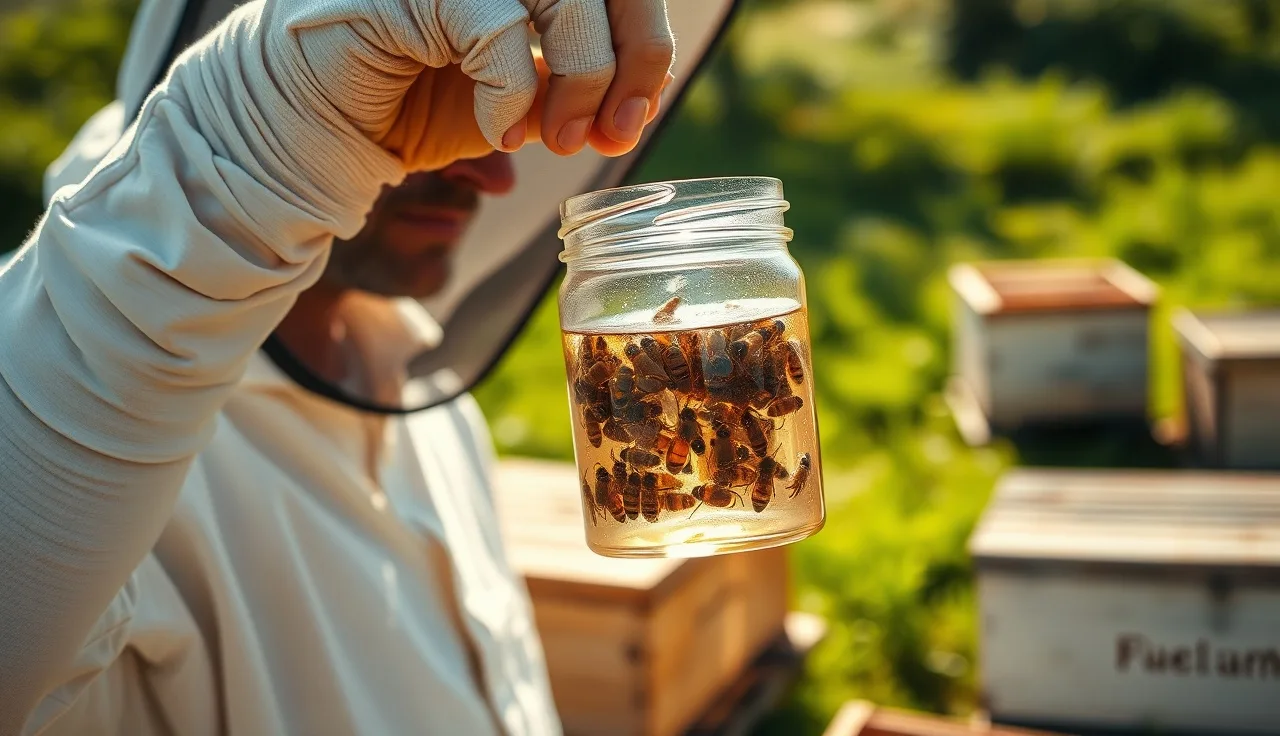
A treatment failed if your post-treatment mite count, run by alcohol wash or sugar roll on 300 bees, still sits at or above the action threshold once the treatment window closes. That is the whole test. Everything else is detail.
Most beekeepers treat, then walk away and hope. That is exactly how you lose a colony in November wondering what happened.
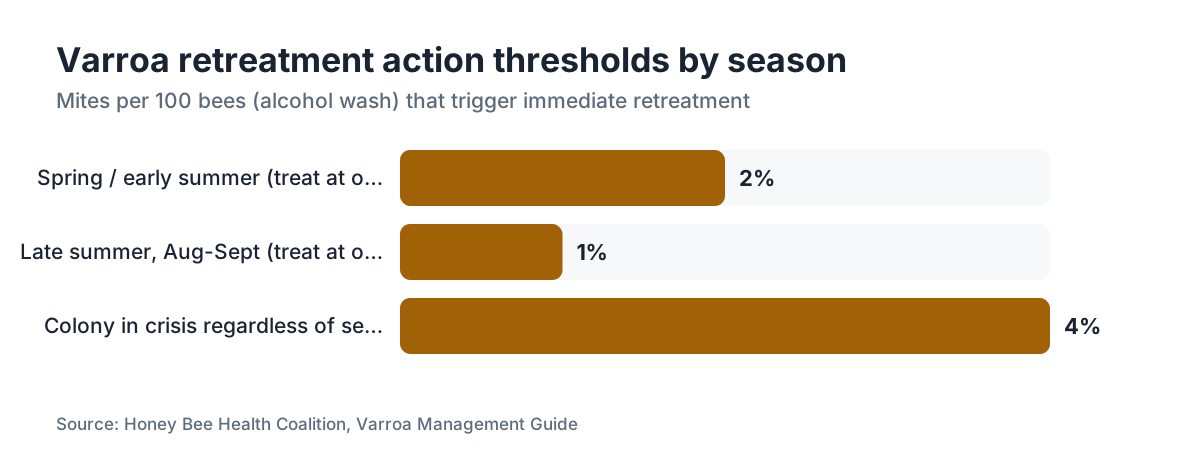
The Honey Bee Health Coalition's Varroa Management Guide sets the economic threshold at 2 mites per 100 bees (2%) during the honey-producing season, and recommends treating any time counts reach that level. Some practitioners drop to 1% in late summer, when the long-lived winter bees start to develop [1]. Test 3 to 4 weeks after a completed treatment and find yourself still at 2% or higher, and you have a failed treatment.
There is one timing detail that trips people up. A single test taken too soon will lie to you. Oxalic acid dribble kills phoretic mites but does nothing to the mites hiding inside capped brood. Those mites emerge over the next 10 to 12 days and jump right onto phoretic workers [2]. Test too early and you see a falsely low count, then get blindsided three weeks later. Wait the full 3 to 4 weeks after treatment ends before you decide whether it worked.
What mite count threshold means you need to retreat right now?
If your wash comes back at 2% or higher any time from early spring through mid-August, treat. That is not a suggestion. It is the threshold supported by research and repeated in every major extension protocol [1][3].
After mid-August the math changes. Late summer and early fall is when your colony raises the fat-bodied winter bees that have to survive until spring. A heavily parasitized winter bee has a shortened lifespan and a wrecked immune system [4]. The Honey Bee Health Coalition recommends many beekeepers use a 1% threshold in late summer precisely because the stakes climb. Losing those bees to deformed wing virus is a death sentence for the cluster.
Below 2% mid-season, and below 1% in late summer, you can reasonably wait one more monitoring cycle (every 2 to 4 weeks) before retreating. Above those numbers, you retreat now.
| Mite load (alcohol wash) | Season | Recommended action |
|---|---|---|
| Below 1% | Any | Monitor; no treatment needed |
| 1-2% | Late summer (Aug-Sept) | Treat immediately |
| 1-2% | Spring / early summer | Monitor closely, treat if trending up |
| 2% or higher | Any season | Treat immediately |
| 4%+ | Any season | Treat immediately; assess colony viability | [1]
Why do varroa treatments fail in the first place?
Before you grab a new product and dose the hive, figure out why the first one underperformed. Retreat with the same product under the same conditions and you get the same result.
The usual failure modes are temperature, brood load, application errors, and resistance. Oxalic acid vaporization works beautifully on broodless colonies but misses a large share of mites when brood is present, because the vapor does not reach capped cells [2]. If you ran OAV on a colony with several frames of capped brood, that is probably your answer. Wrong method for the colony state.
Temperature matters enormously for thymol products like Apiguard and Api Life VAR. The label specifies a range of roughly 60 to 105 degrees Fahrenheit (15 to 40 degrees Celsius) for efficacy [5]. Treat on a cold week in early September and the thymol barely volatilizes. The mites barely notice. Amitraz strips (Apivar) tolerate a lower floor, but they still work poorly below about 50 degrees Fahrenheit.
Resistance is real, but it is probably not your first culprit unless you are using pyrethroids (Apistan, CheckMite+). Pyrethroid resistance in Varroa destructor is widespread and well documented. If fluvalinate or coumaphos is still your primary tool, switch [6]. Amitraz resistance has been reported in some populations, but at much lower frequency in current data. Do not blame resistance until you have ruled out the environmental and application factors.
Mite immigration from neighboring hives or feral colonies is another factor people forget. A clean hive can go from 1% to 4% in three weeks when a collapsing neighbor is nearby and your bees rob the drifting, mite-laden survivors. No product holds counts down against reinfestation pressure like that.
How long should you wait before retreating?
It depends entirely on what product you just finished and what your count reads now. There is no single answer, so stop looking for one.
If the course just ended and you are inside the brood emergence window (less than 12 days post-treatment), wait and test first. Do not assume failure and pile on a second product early. Stacking treatments is not a standard protocol, it carries label restrictions, and it puts contamination into your wax and honey.
Four weeks past treatment and counts above threshold? Retreat immediately. Four weeks is too long to sit when mite populations double roughly every 23 days in a colony with normal brood [7].
Borderline count (say, 1.5% in early July) and you have not ruled out application error? Retest in two weeks before committing to a full second course. Two weeks of data beats one panicked dose.
One case where you do not wait at all: counts above 4 to 5% at any point. A colony at that load is in crisis. Treat that day, using whatever registered product fits your current temperature and brood conditions. Waiting three weeks to be methodical is not responsible at that level.
Which treatment should you use for a second round?
Switch classes if you have any reason to think the first product failed on efficacy rather than application. Using the same organic acid or synthetic miticide twice in quick succession does not meaningfully raise your odds, and with synthetics it speeds up resistance selection.
Here is the framework I use. If your first treatment was oxalic acid (vapor or dribble) and it failed on high brood load, do one of two things: an extended brood break followed by another OAV series, or a switch to Apivar strips. Either beats revaporizing into a capped brood situation [2][8]. Apivar works despite brood because bees contact the strips repeatedly over the 6 to 8 week course, pick up amitraz on their bodies, and pass it around through trophallaxis into the brood nest.
If your first treatment was a thymol product that failed on cool temperatures, check the forecast. Warming up? Another thymol round is defensible. Fall setting in with unreliable temperatures? Move to a product with a lower temperature threshold.
If your first treatment was Apivar (amitraz) for a full 42 to 56 day course at adequate temperatures and counts are still high, that is a red flag for resistance or heavy mite immigration. Before you reach for amitraz again, consider an oxalic acid vaporization series while the strips are still in (if the label allows) or move to a different class entirely. Read your EPA-registered product label, because label law governs what is legal [9].
A quick reference on products registered in the US:
| Product | Active ingredient | Min. temp (°F) | Works in brood? | Typical course |
|---|---|---|---|---|
| Apivar | Amitraz | ~50 | Yes | 42-56 days |
| Apiguard | Thymol | 60 | Partial | 4-week, 2 treatments |
| Api Life VAR | Thymol blend | 65 | Partial | 6-8 weeks |
| OAV (Provap, etc.) | Oxalic acid | 40+ | No | Multiple applications |
| OA dribble | Oxalic acid | 40+ | No | Single application |
| Mite Away Quick Strips | Formic acid | 50-79 | Yes | 7 days | [8][9]
Can you combine two varroa treatments at the same time?
Sometimes, but carefully, and only where labels allow it.
The most commonly stacked combination is oxalic acid vaporization with Apivar strips. Some beekeepers run OAV during the first two weeks of a 6-week Apivar course to knock down phoretic mites faster while the strips build up. This is not a labeled protocol, but it is practiced widely, and the residue concern from OAV is low because oxalic acid already occurs naturally in honey. Still, the label is the law. If your product label bans concurrent use of another miticide, do not do it.
Formic acid (MAQS or Formic Pro) penetrates capped brood and works as a fast-acting rescue treatment before you transition to strips. The temperature window is narrow (50 to 79 degrees Fahrenheit for MAQS) and queens can die if temperatures spike above 79 during the 7-day application [8].
What you absolutely should not do is layer multiple synthetic treatments, say Apivar plus Apistan. That kills bees, builds resistance, and contaminates your wax for years. Coumaphos in particular lingers in wax at levels that harm queens and brood.
Map your products against your season, temperature window, and brood state before you commit. The tools at VarroaVault can help you do that.
Does a failed treatment mean your mites are resistant?
Not automatically. Resistance is one explanation among several, and for hobbyist beekeepers it is not even the most common one.
Work through the order of elimination. First, application error (wrong temperature, wrong dose, strips placed in the wrong spot). Second, wrong product for the colony state (OAV into a heavily brooded colony). Third, reinfestation from neighboring colonies. Fourth, and only fourth, true resistance.
Rule out the first three, run your second full course of amitraz, and still see no meaningful mite drop? Now resistance is a serious possibility. The Honey Bee Health Coalition recommends watching mite drop during treatment as one signal: run sticky boards under Apivar strips, and if mite fall barely rises over the first two weeks, that is concerning [1][12].
For hobbyists with one to twenty hives, lab resistance testing is rarely practical. The working move is to switch product classes and watch. If counts drop cleanly with formic acid or oxalic acid after amitraz failed, that tells you something real.
Pyrethroid resistance (Apistan, CheckMite+) is so widespread in the US that most extension programs and the Honey Bee Health Coalition simply say to avoid those products as primary treatments [6][1]. Reaching for them as a "try something different" move after a failed treatment rarely works.
How do you monitor mite levels during and after retreatment?
Alcohol wash is the standard. It reads more accurately than sugar roll, which underestimates mite load because some mites survive and never get counted [10]. The Honey Bee Health Coalition is direct about it: use an alcohol wash on a 300-bee sample (roughly a half-cup of bees) taken from the brood nest area for the most representative count [1].
During a retreatment course, run a sticky board for the first week. Count the natural mite drop per day on days 3 through 7. You are not chasing a specific number here. You are looking for a meaningful jump relative to your pre-treatment count. Put in Apivar strips, see a big jump in mite drop the first week, and the product is working. If the board stays almost clean, investigate.
After the course ends, run a full alcohol wash again at the 3 to 4 week mark. That is your definitive outcome measure. Below threshold means you succeeded. Keep monitoring every 2 to 4 weeks through the rest of the season, because reinfestation can push you back above threshold even after a clean treatment.
Keep a simple written log per hive: date tested, count, product used, and temperature during treatment. It beats memory every time. You cannot make good retreatment decisions without that baseline.
What if counts drop but do not reach the safe level after retreatment?
This is the honest hard case. You treated, counts fell from 4% to 1.5%, but your threshold is 1% or 2% and you are not quite there.
Start with the season. Mid-July, with time before winter bee rearing gets going? A third round or a switch to a longer-lasting product like Apivar strips may be warranted. Four percent down to one and a half is real progress, but it is not success.
Then look at the colony. A strong colony with a good population tolerates 1.5% mid-summer better than a weak colony already showing deformed wing virus. Look at your bees. Crawlers, deformed wings, or stunted bees near the entrance are mite-vectored virus signals, and you treat again regardless of the count because the population damage is already underway [4].
Then ask the hard question: is this colony salvageable, or are you better off combining it with a stronger colony, treating the combined unit, and requeening in spring? Nobody enjoys making that call. But a struggling colony that keeps demanding retreatment and never recovers can become the vector that infests your other hives.
For supplies and monitoring tools to track this kind of data across multiple hives, see our guide to beekeeping supply companies.
Are there non-chemical options to support retreatment decisions?
Yes, and they are worth knowing even when a registered miticide is your main tool.
Brood breaks are the strongest non-chemical technique to pair with chemical treatment. A colony that goes broodless for 24 days pushes every mite into the phoretic stage, where OAV can reach them [2]. Create a brood break by caging the queen for 24 to 28 days, or by splitting aggressively and letting one split raise an emergency queen. Timing a brood break just before an OAV series gives oxalic acid its highest efficacy data.
Drone comb trapping is a partial tool. Varroa infests drone brood at roughly 8 to 10 times the rate of worker brood [7]. Place a frame of drone foundation, let it get capped, then pull it and freeze it before emergence to draw mites out of the population. It does not replace chemical treatment, but it can lower the load going into a treatment window.
Hygienic behavior in certain queen lines, especially VSH (Varroa Sensitive Hygiene) stock, lets colonies detect and remove mite-infested brood. Research from the USDA Baton Rouge lab shows VSH colonies can hold low mite loads with less chemical intervention [11]. Requeening with VSH or Mite Biter stock is a legitimate long-term strategy that pairs well with any retreatment decision you make this season.
For the biology behind all of this, our overview of the varroa mite covers the reproductive cycle in detail.
What records should you keep to make better retreatment decisions next time?
The beekeepers who make good retreatment calls are almost always the ones who wrote things down.
At minimum, record five things: the date of every mite wash, the count per 100 bees, the product used and the application dates, the ambient temperature range during treatment, and the brood state at treatment time (broodless, light brood, heavy brood). That log tells you in one glance why a treatment underperformed and what to change.
A sticky board count during each treatment week gives you an early signal. Write it down.
Over two or three seasons, patterns show up. A hive that needs retreatment every August is telling you something about mite immigration pressure at your apiary, or about the queen's genetics, or about a hole in your monitoring schedule. A hive that holds below 1% all season after a spring treatment is a hive to make splits from.
Manage more than a handful of colonies and spreadsheet tracking or a dedicated app matters a lot. The math is simple. Doing it in your head across ten hives is how mistakes happen.
Frequently asked questions
How soon after a failed treatment can I start a new one?
Wait until the first course is fully complete, then test. If counts are still above threshold 3 to 4 weeks after treatment ended, you can start a new product immediately. There is no required rest period between different product classes. If you are retreating with the same product, check the label for re-application restrictions, especially formic acid products, which specify minimum intervals.
Is a 3% mite count after treatment an emergency?
Yes, act quickly. The Honey Bee Health Coalition action threshold is 2% for most of the season, so 3% after a completed treatment means you are above threshold with mite populations still climbing. Retreat immediately with a product suited to your current temperature and brood state. Also check for deformed wing virus symptoms in adult bees near the entrance, which signal active virus transmission.
Can I use oxalic acid vaporization on a colony that still has capped brood?
You can, but efficacy drops. OAV kills phoretic mites and does not penetrate capped cells, so mites reproducing inside capped brood survive. Multiple applications over several weeks (typically 4 to 5 treatments, 5 days apart) can catch emerging mites before they reproduce again. A single application into a heavily brooded colony will not control the population the way it would on a broodless colony.
What is the most accurate way to count varroa mites before deciding to retreat?
Alcohol wash of a 300-bee sample from the brood nest area is the most accurate field method. Sugar roll consistently underestimates mite load because mites survive and drop off before counting. Sample from frames with open brood, not honey or empty comb, because nurse bees and mites cluster around the brood nest. Count the mites in your wash liquid and divide by 3 for the percentage per 100 bees.
My Apivar strips ran for 8 weeks and mite counts barely dropped. What happened?
Three main possibilities: temperature was too low during treatment (below 50 degrees Fahrenheit slows amitraz volatility), the strips were placed wrong and bees had limited contact, or reinfestation from neighboring colonies offset the kill. Amitraz resistance is possible but less common than application issues. Switch to a different product class, check your apiary for collapsing colonies nearby, and confirm the strips sat in the brood nest.
How do I know if mites are coming from neighboring hives rather than from within my colony?
You cannot know for certain without genetic analysis of the mites, which is not practical for hobbyists. Indirect signals include counts that spike rapidly after a successful treatment, multiple hives spiking at once, known collapsed colonies in the neighborhood, and heavy robbing at your entrance. Reducing the entrance and treating all your colonies in the same narrow window cuts reinfestation pressure between your own hives.
Should I requeen after a failed varroa treatment?
It depends on the queen and the context. Requeening with VSH or Mite Biter genetics is a legitimate long-term strategy that lowers future mite pressure. But it does not fix a current crisis; you still treat now if counts are above threshold. Consider requeening after successful retreatment if the colony repeatedly struggles with mite control, which may point to poor hygienic behavior in the existing queen's workers.
Can I use formic acid if I just finished an oxalic acid treatment?
Generally yes. There is no documented interaction between formic acid and oxalic acid. Formic acid (MAQS or Formic Pro) works in a 50 to 79 degree Fahrenheit window and penetrates capped brood, which makes it useful as a follow-up when OAV failed on high brood load. Check the label of your specific product for stated restrictions, and confirm temperatures sit within the application range before starting.
What does deformed wing virus after treatment mean for retreatment timing?
It means the virus was already spreading before or during treatment, and you may not see population recovery even after a successful mite kill now. Deformed wing virus is spread mainly by Varroa, so getting counts below 1% is your priority. Already-infected bees will not recover. The colony needs a new cohort of virus-free brood raised under low mite pressure. Retreat aggressively and expect 4 to 6 weeks before the adult population starts recovering.
How many times can I treat a colony in one season?
There is no fixed legal maximum, but every label specifies the number of applications per year for that product. OAV labels in the US typically allow multiple applications. Apivar is one 42 to 56 day course per year. Apiguard allows two gel treatments per course. Exceeding label rates is illegal and can harm the colony. Your practical ceiling comes from the labels, your honey supers (most treatments require supers off), and the need to cycle classes to slow resistance.
Is it safe to harvest honey after retreating with oxalic acid?
Oxalic acid occurs naturally in honey and does not carry a pre-harvest interval the way synthetic miticides do. The EPA-registered oxalic acid labels in the US specify treatment when honey supers are not present or per label directions. Always read your specific product label. Apivar requires a 14-week withdrawal before honey harvest. Formic acid products specify supers off or give specific honey super instructions on the label.
At what mite count should I give up on a colony?
There is no universal number, but a colony consistently above 5 to 6% despite two full treatment courses with different product classes becomes a serious liability to neighboring hives as it collapses. The practical decision is whether to treat hard one more time with your best option, combine the colony with a healthy one after treatment, or euthanize and sanitize the equipment. Letting a heavily infested colony collapse untreated seeds mite-laden robbers into every hive in your apiary.
Do I need to remove honey supers before retreating?
For most registered miticides in the US, yes. Apivar, Apiguard, Api Life VAR, and formic acid products all require supers absent during treatment to keep harvestable honey clean. Oxalic acid (dribble or vapor) labels specify treatment when supers are not present or per label directions. Treating with supers on to save a honey crop is a contamination and legal risk that is not worth taking.
Sources
- Honey Bee Health Coalition, Varroa Management Guide (latest edition): Action threshold of 2 mites per 100 bees during honey-producing season; 1% threshold recommended by some practitioners in late summer when winter bees are developing.
- Penn State Extension, Oxalic Acid for Varroa Mite Control: Oxalic acid vaporization kills phoretic mites but does not penetrate capped brood cells; most effective on broodless colonies.
- University of Minnesota Extension, Varroa Mite Management: 2% mite load threshold as trigger for immediate treatment, consistent with Honey Bee Health Coalition guidance.
- Dainat B. et al., Journal of Invertebrate Pathology, 2012: Predictive markers of honey bee colony collapse: Mite-parasitized winter bees show shortened lifespan and reduced immune function due to deformed wing virus and other Varroa-vectored pathogens.
- EPA, Apiguard product label and registration: Apiguard (thymol gel) specifies application temperature range of approximately 60-105°F (15-40°C) for effective volatilization.
- USDA Agricultural Research Service, Varroa Resistance to Acaricides: Pyrethroid resistance (fluvalinate, coumaphos) in Varroa destructor is widespread in the United States and most extension programs advise against using these as primary treatments.
- Rosenkranz P. et al., Journal of Invertebrate Pathology, 2010: Biology and control of Varroa destructor: Varroa destructor infests drone brood at a rate approximately 8-10 times higher than worker brood; mite populations double approximately every 23 days in a colony with normal brood.
- EPA, Mite Away Quick Strips (MAQS) label: MAQS (formic acid) application temperature window is 50-79°F; queen loss risk increases above 79°F; 7-day application period penetrates capped brood.
- EPA, Pesticide Registration for Apivar (amitraz strips): Apivar registered for 42-56 day application; label governs all concurrent and sequential use restrictions.
- Tarpy D.R. et al., NC State Extension, Sampling Methods for Varroa Mites: Alcohol wash is more accurate than sugar roll; sugar roll underestimates mite loads because some mites survive and are not counted.
- USDA ARS Honey Bee Breeding, Genetics and Physiology Research Unit, Varroa Sensitive Hygiene (VSH): VSH colonies developed by USDA Baton Rouge lab can maintain low mite loads with less chemical intervention due to bees detecting and removing mite-infested brood.
- Michigan State University Extension, Varroa Mite Monitoring and Management: Sticky board mite drop monitoring during treatment provides early signal of product efficacy; low mite drop in first two weeks of Apivar treatment may suggest resistance or application failure.
Last updated 2026-07-09