Rotating varroa treatments to prevent resistance: a practical guide

TL;DR
- Varroa mites develop resistance when you reuse the same chemical treatment over and over.
- Rotating between treatment classes with different modes of action, organics like oxalic acid and synthetics like amitraz, slows that resistance down.
- The Honey Bee Health Coalition says rotate by mode of action, not brand name, and track every treatment so you never lean on one class two cycles running.
Why do varroa mites develop resistance to treatments?
Resistance is evolution happening inside your hive. Every time you apply a miticide, a tiny fraction of mites carry a genetic quirk that lets them survive the dose. Those survivors breed. Their offspring inherit the same quirk. Repeat the same treatment a few more times and you've done the mite's selection work for it. The population that's left is the one your chemical can't kill.
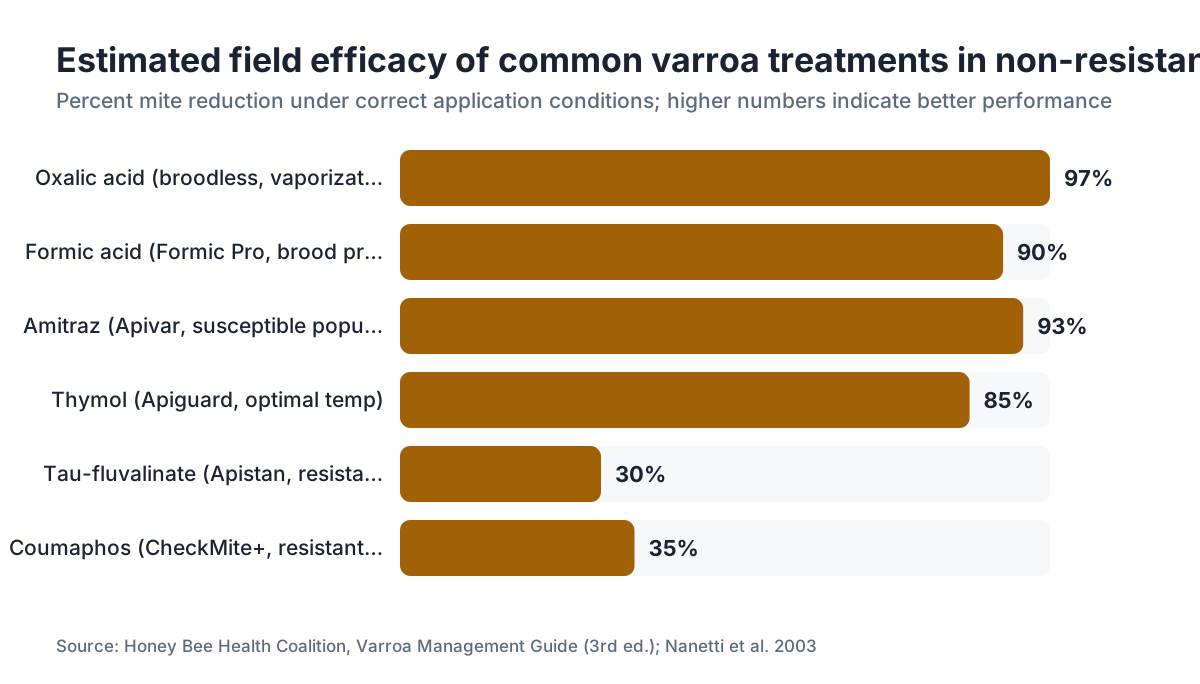
This isn't theoretical. Tau-fluvalinate (Apistan) came into wide use in the late 1980s, and resistance showed up in European mite populations within roughly a decade [1]. Coumaphos (CheckMite+) followed the same arc. The Honey Bee Health Coalition's Varroa Management Guide notes that "resistance to tau-fluvalinate and coumaphos has been documented in the United States," which is why both products do almost nothing in many regions now [2].
The idea that matters here is mode of action. Two products can carry completely different active ingredients and still kill mites the same way, so rotating between them accomplishes nothing. A mite population resistant to one synthetic pyrethroid is almost always cross-resistant to the others in that class. Rotating modes of action means picking products that attack mites through genuinely different biological pathways.
Varroa also breed fast. One fertilized female can found a population of thousands in a single season. That speed lets resistance consolidate in a local mite pool within a few years of heavy, repeated use of any one treatment.
What are the main treatment classes and their modes of action?
Registered varroa treatments fall into three broad groups, and each one kills differently at the cellular or physiological level. Get the group right and the rotation almost designs itself.
Organic acids work by direct chemical contact. Oxalic acid also kills through desiccation and pH disruption of the mite's body surface. Oxalic acid (Api-Bioxal) and formic acid (Mite Away Quick Strips, Formic Pro) live here. Because their target is broad physical chemistry rather than a single receptor or enzyme, mites have a much harder time evolving around them. No confirmed field resistance to organic acids has been published as of this writing [2].
Essential oil treatments use thymol as the active ingredient. ApiLife Var and Apiguard are thymol-based (Apivar is amitraz, not thymol, despite the similar name). Thymol scrambles mite neurological function and respiration. Like the organic acids, it holds efficacy well with low resistance risk, though it comes with strict temperature windows that limit when you can use it.
Synthetic acaricides cover amitraz (Apivar), the pyrethroid tau-fluvalinate (Apistan), and the organophosphate coumaphos (CheckMite+). Amitraz works on octopamine receptors in the mite's nervous system [3]. Tau-fluvalinate and coumaphos both hit neural channels, but through different mechanisms. Here's the part that changes your whole plan: tau-fluvalinate and coumaphos resistance is widespread in the US, and amitraz resistance is documented in some European and South American populations and appears to be emerging here too [4].
A simple reference table:
| Product | Active Ingredient | Class | Resistance Risk |
|---|---|---|---|
| Api-Bioxal | Oxalic acid | Organic acid | Very low |
| Formic Pro / MAQS | Formic acid | Organic acid | Very low |
| Apiguard / ApiLife Var | Thymol | Essential oil | Low |
| Apivar | Amitraz | Formamidine | Moderate (emerging) |
| Apistan | Tau-fluvalinate | Pyrethroid | High (widespread) |
| CheckMite+ | Coumaphos | Organophosphate | High (widespread) |
For most hobbyist and sideliner operations today, a workable rotation alternates between oxalic acid or formic acid and amitraz, and skips tau-fluvalinate and coumaphos anywhere resistance is already on the books.
How does rotating treatments actually prevent resistance?
Picture the math. Oxalic acid kills 95% of susceptible mites, and the 5% that lived happen to carry some mild tolerance trait. Switch to amitraz next cycle, which kills through a completely different pathway, and those survivors get wiped out anyway. The trait that saved them from oxalic acid means nothing against amitraz. The resistance genes never get a chance to concentrate.
Run oxalic acid twice in a row instead, and the 5% that survived round one become the parents of round two. Use it a third time and you're selecting hard. By the fourth or fifth straight use, your survivors might not be 5% of the population. They might be 30% or more.
Rotation doesn't erase resistance pressure. It dilutes it. Each mite generation faces a different selective pressure, so no single resistance trait can sweep the population fast. The Honey Bee Health Coalition tells beekeepers to "rotate chemical classes" rather than swap brand names, because moving from Apistan to a different pyrethroid buys you nothing [2].
One more thing worth knowing. The rotation payoff is partly a community effect. When beekeepers across a region use different treatment classes, the mite population moving between hives on drift and swarms stays genetically mixed. A strongly resistant mite line that escapes one hive can't easily take over the local gene pool if the neighboring hives are running treatments that kill that resistant type.
How often should you rotate varroa treatments?
Rotate by mode of action at least once a year, and ideally at every treatment event. That's the guidance from the Honey Bee Health Coalition and most university extension programs [2].
A working seasonal protocol for a temperate-climate beekeeper looks like this. In late summer (July to August), when mite loads peak and there's still capped brood, use a formic acid product like Formic Pro or MAQS. These penetrate capped cells and kill phoretic and reproductive mites together. Then in late fall or early winter, when the colony is broodless or close to it, follow with an oxalic acid dribble or vaporization. Next season, swap the summer formic acid for amitraz strips (Apivar) and keep the winter oxalic acid in place. Year three, cycle back to formic acid for summer.
That pattern gives you organic-acid dominance with a periodic amitraz rotation. Given that organic acid resistance still isn't documented, it's probably the most resistance-conscious approach you can build right now.
Some beekeepers run pure organic acids (oxalic all winter, formic all summer) and skip synthetics entirely. That's a legitimate choice with the lowest resistance risk on the board. The catch: formic acid has a narrow effective temperature window (roughly 50 to 85°F / 10 to 30°C per label directions [11]) and can cost you a queen at high temperatures. Know your local climate before you commit to it.
Want to understand why timing treatments to the brood cycle matters this much? The varroa mite biology background shapes which treatment types fit which windows.
Does using the same treatment every winter count as resistance-building?
Yes, and it's one of the most common mistakes hobbyist beekeepers make.
Plenty of beekeepers settle into an oxalic acid dribble every winter because it's cheap, it works during broodlessness, and it's low-risk. Fine. Oxalic acid's resistance profile is genuinely good. But if you're also vaporizing oxalic acid in late summer with brood present, and then again mid-winter when the colony is broodless, you're using the same active ingredient three or four times a year, every year. You lose most of the rotation benefit that way.
The winter oxalic acid treatment is the single most productive miticide event a beekeeper gets, because it hits phoretic mites with almost no competition from capped brood. Efficacy in broodless colonies can top 90% with one vaporization [6]. Protect that by using something different in summer, so you never concentrate future oxalic-acid tolerance traits.
The same logic applies to amitraz. Apivar strips left in too long, or Apivar run two summers back to back, puts selection pressure right on the octopamine receptor target site. Amitraz resistance has been characterized at the molecular level in Varroa destructor populations in Europe and in some US apiaries [4]. It's a real problem if amitraz becomes your default.
How do you track your treatment history to rotate properly?
Write it down. Sounds obvious. Most hobbyist beekeepers still don't do it, and a year or two later they genuinely can't remember whether last summer was Formic Pro or Apivar.
A minimal treatment record captures five things: the date, the product name, the active ingredient and class, the mite load before treatment, and the mite load 3 to 4 weeks after. That last number is your efficacy check. If counts aren't dropping much after you apply a product, take that seriously before you reach for the same product again.
The Honey Bee Health Coalition publishes a free Varroa management guide with a monitoring and treatment log template [2]. If you want something more structured, VarroaVault has free protocol tools built around exactly this problem, including a treatment history tracker that flags when you've used the same class twice running.
Ordering products? The beekeeping supply companies that specialize in apiculture usually stock the full range of registered acaricides. Confirm you're buying EPA-registered products, which carry a registration number right on the label. Unregistered or mislabeled products aren't just illegal. They can contaminate wax and honey, and you lose the label guidance that governs safe use.
Is resistance to oxalic acid actually possible?
In theory, yes. In practice, nobody has confirmed it in the field, at least not as of this writing.
Oxalic acid is a simple organic molecule that kills mites through several mechanisms at once: acidification of the hemolymph, disruption of proteolytic enzymes, and direct contact toxicity on the cuticle. Evolving around a mechanism that attacks you three ways at once is far harder than evolving around a treatment with one receptor target.
Nobody has good published data showing confirmed field resistance to oxalic acid in Varroa destructor. The closest studies looked for reduced susceptibility in laboratory bioassays and found no consistent signal. Even so, treating resistance to organics as impossible would be foolish. Keep rotating, even within the organic classes (alternating oxalic acid and formic acid). That's the conservative call and the defensible one.
The EU approved oxalic acid treatments earlier and more broadly than the US did, so European apiculture researchers have been watching for resistance signals in populations with longer exposure histories. So far the news is good. This is an area worth following as usage scales globally.
What do resistance-confirming mite wash results look like?
You can't look at a mite under a hand lens and tell whether it's resistant. Resistance only shows up in numbers.
Here's the field test. Do an alcohol wash or sugar roll before treatment to set your baseline mite load per 100 bees. Treat according to label directions. Recheck 3 to 4 weeks after treatment ends, not during, since some treatments are still working. An effective treatment should drop mite loads by at least 90%, and many hit 95% or higher in susceptible populations [2].
Say you run Apivar for the full 6 to 8 week recommended exposure and your post-treatment wash still shows 20 mites per 100 bees after starting at 25. That's not misapplication. That's a resistance signal. Pull that product class from your rotation and call your state apiarist.
University of Minnesota Extension recommends alcohol washes monthly from July through September, because that's when mite loads climb fastest [7]. Monthly monitoring in that window also gives you three or four data points across the season, so you catch an efficacy problem early instead of finding it when the colony collapses in November.
Can combining treatments speed up resistance?
Combining two treatments from the same class in one season is a bad idea, and it can accelerate resistance faster than using one product alone.
Here's the mechanism. Say you run Apistan in spring and CheckMite+ in late summer. Both are synthetics targeting neural pathways, just different ones. On paper it looks like rotation. In practice, pyrethroid-resistant mites often show elevated cross-resistance to organophosphates, because the resistance machinery relies on general detoxification enzymes that chew through multiple chemicals at once [1]. You've selected twice in one season for broadly resistant mites and gotten none of the benefit of a true mode-of-action switch.
Combining treatments from genuinely different classes, say vaporizing oxalic acid while Apivar strips are in the hive, is something beekeepers sometimes try in high-mite emergencies. The EPA label for Api-Bioxal doesn't prohibit it, but the data on any synergistic benefit is thin, and it raises the chemical load in wax and honey. Most extension apiculturists advise against routine combination use. Match the treatment to the season and brood status, then rotate the next event to a different class.
Before treatment day, check reputable beekeeping supply companies for a proper vaporizer and protective gear. Applying organic acids safely depends on the right equipment.
What should a complete two-year rotation protocol look like?
Here's a concrete example for a hobbyist in a temperate US climate. It's a template, not a mandate. Adjust for your local mite pressure, climate, and colony brood cycles.
Year 1:
- July to August: Formic Pro (formic acid), applied during capped brood, 50 to 85°F window. Kills both phoretic and capped mites.
- November to December (broodless period): oxalic acid vaporization (Api-Bioxal). 90%+ efficacy against phoretic mites.
Year 2:
- July to August: Apivar strips (amitraz), 42-day treatment, placed between brood frames. Different mode of action from Year 1 summer.
- November to December: oxalic acid vaporization again, same as Year 1. This repeat is acceptable because organic acid resistance isn't documented and the treatment hits a broodless colony almost completely.
Year 3: Repeat the Year 1 pattern.
Monitor with alcohol washes before and 3 to 4 weeks after each treatment event. If post-treatment efficacy drops below 90%, flag the product and consult your state apiarist before you use that class again.
The Honey Bee Health Coalition's Varroa Management Guide (now in its third edition) has a decision tree built for this kind of seasonal planning, and it's free to download [2]. VarroaVault's protocol tools can schedule and log these events across multiple hives if you're running more than a few colonies.
One honest caveat: no protocol survives a high-mite emergency unchanged. Pull a July alcohol wash and see 8 mites per 100 bees, and you treat now with the best tool available, even if it isn't "your turn" for that class. Saving the colony beats ideal rotation sequencing every time.
Are there non-chemical methods that reduce resistance pressure?
Yes, and they're underused.
Drone brood removal works because Varroa infest drone brood at a rate roughly 8 to 10 times higher than worker brood [8]. Slot in a drone-comb frame, let the bees fill it, then pull and freeze the capped drone comb before emergence. You physically remove a large chunk of the mite population with zero chemical input. Done every 3 to 4 weeks from spring through mid-summer, it suppresses mite loads in a way you can measure.
Brood breaks work by removing the reservoir that shields mites. Cage the queen for one to two brood cycles and you eliminate the capped brood that protects mites from most treatments. An oxalic acid treatment during a brood break can hit 97 to 99% of mites, because there are almost no capped cells left for them to hide in [6]. A brood break paired with oxalic acid is probably the most efficacious single treatment event available to beekeepers who want to keep chemical inputs low.
Bred-for-resistance genetics is a longer game, but it's the right direction. Hygienic behavior and Varroa Sensitive Hygiene (VSH) traits in queens cut mite reproduction inside capped cells. The USDA Baton Rouge Bee Lab has published extensively on VSH bees [9]. Queens from breeders selecting for these traits mean you lean on acaricides less in the first place, which lowers selection pressure across the board.
These mechanical and genetic tools won't replace chemical treatment for most operations. But they cut the number of chemical events you need per season, and fewer events means less resistance selection pressure.
What does the EPA say about rotating varroa treatments?
The EPA registers each varroa miticide separately under the Federal Insecticide, Fungicide, and Rodenticide Act (FIFRA). Every product label is a legally binding document, and using a product in any way the label doesn't allow is a federal violation. The label sets the number of strips or doses, the exposure duration, the temperature range, and any re-treatment intervals [10].
The EPA doesn't mandate rotation in any label language as of this writing. But the agency's pesticide resistance management guidance for agricultural uses recommends rotating modes of action as best practice, and the same logic carries straight over to varroa [10].
From a compliance standpoint, a few things matter for varroa treatment. Don't exceed the labeled dose. Observe the required interval before extracting honey. Use only in the hive types and at the temperatures the label specifies. Keep the label on file or accessible. The Api-Bioxal label, for one, specifies "42 grams per treatment" for vaporization in full colonies, plus the number of permitted treatments per season [5]. Following those limits precisely is both the legal requirement and the sound practice, since overdosing doesn't improve kill rates and does load wax with more residue.
Your state apiarist is the best local resource for resistance documentation in your area. Most state departments of agriculture keep contacts for apiary programs, and some actively survey for treatment efficacy and resistance markers.
Frequently asked questions
How do I know if varroa mites in my hives are already resistant to a treatment?
Do an alcohol wash before treatment, then recheck 3 to 4 weeks after treatment ends. If mite loads dropped less than 90% and you applied the product correctly per label directions, resistance is a likely explanation. Contact your state apiarist. Some states offer diagnostic support or can refer you to labs that run resistance bioassays.
Can I use oxalic acid every year without building resistance?
Current evidence says yes, with caution. No confirmed field resistance to oxalic acid in Varroa destructor has been published as of this writing. Oxalic acid's multi-mechanism action makes it harder to evolve against than single-receptor synthetics. Still, alternating oxalic acid with formic acid instead of running oxalic acid alone every season is the conservative approach.
Is Apistan (tau-fluvalinate) still worth using?
In most of the US, no. Resistance to tau-fluvalinate is widespread and well-documented. The Honey Bee Health Coalition's Varroa Management Guide acknowledges tau-fluvalinate resistance in US mite populations. Unless you have recent local data showing it still works in your apiary, Apistan is likely to give you a false sense of success while doing almost no mite control.
Does amitraz resistance exist in US varroa mites?
Amitraz resistance in Varroa destructor has been confirmed in European and South American populations, with emerging cases reported in some US apiaries. It's not as widespread as pyrethroid resistance yet, but it's real. Avoid using Apivar two summers in a row, and watch post-treatment mite counts closely after each Apivar cycle.
What temperature do I need for formic acid treatments to work?
Formic Pro and MAQS labels specify roughly 50 to 85°F (10 to 30°C) during treatment. Below that range, vapor production runs too low for effective mite kill. Above it, queens and brood are at risk and worker mortality climbs. Always check the label for your specific product, since formulation differences shift the temperature tolerances.
How many mites per 100 bees means I need to treat?
The Honey Bee Health Coalition recommends treating at 2 mites per 100 bees (2%) during the brood-rearing season, and 1 per 100 bees (1%) in late summer when the winter bee cohort is developing. These thresholds come from colony survival data. Letting counts climb past them before treating raises the risk of colony loss sharply.
Can I rotate between two organic acid treatments instead of using synthetics?
Yes. Alternating formic acid in summer with oxalic acid in winter is a legitimate resistance-management rotation, used by many chemical-minimalist beekeepers. The organic acid class carries the lowest documented resistance risk. The main constraint: formic acid's temperature window can limit you depending on your climate, and neither acid penetrates capped brood the way amitraz does.
Do I need to rotate treatments if I only have one or two hives?
Yes, even with one hive. Mites move between hives through robbing and drifting bees, so your mite population isn't isolated. Selecting for resistance in your one hive feeds the broader local mite gene pool. The effort is small. It mainly means tracking what you used last season and picking a different class next time.
What is mode of action and why does it matter more than brand name?
Mode of action is the specific biological mechanism a pesticide uses to kill its target. Two products can have completely different names and work the same way at the molecular level, so mites resistant to one survive the other. Rotating brand names without switching modes of action gives you no resistance benefit. Check the active ingredient and its class, not the product label.
Is Apivar safe to use during a honey flow?
No. Apivar strips must come out before you put a honey super on the hive, per the EPA label. The label says strips must not be used when honey supers intended for human consumption are present. Amitraz residues accumulate in wax and honey. Follow the label precisely here. It's both a legal requirement and a food safety issue.
Does brood removal help prevent resistance development?
Not directly, but drone brood removal cuts the overall mite population, so you need fewer chemical treatment events per season. Fewer events means less cumulative selection pressure. Drone brood removal paired with strategic treatment rotation is a good integrated approach, especially for beekeepers working to minimize synthetic chemical inputs.
Where can I find the current Honey Bee Health Coalition varroa guide?
The Honey Bee Health Coalition's Varroa Management Guide is free at honeybeehealthcoalition.org. It covers treatment options, resistance considerations, monitoring thresholds, and decision trees for seasonal planning. It's updated periodically. The third edition expanded the treatment options section significantly and is the current version.
Sources
- Milani, N. (1999). The resistance of Varroa jacobsoni Oud. to acaricides. Apidologie, 30(2-3), 229-234.: Resistance to tau-fluvalinate was documented in European Varroa populations within roughly a decade of the product's introduction in the late 1980s.
- Honey Bee Health Coalition, Varroa Management Guide (3rd ed.): HBHC states that resistance to tau-fluvalinate and coumaphos has been documented in the United States and recommends rotating chemical classes rather than brand names.
- Kamler, M. et al. (2016). Mechanism of action of amitraz on octopamine receptors. Experimental and Applied Acarology.: Amitraz acts on octopamine receptors in the mite nervous system, a distinct mechanism from pyrethroids and organophosphates.
- Gregorc, A. et al. (2018). Amitraz resistance and treatment efficacy in Varroa destructor. PLOS ONE.: Amitraz resistance in Varroa destructor has been characterized molecularly in European mite populations and is reported in some US apiaries.
- EPA, Api-Bioxal (oxalic acid) product label, Registration No. 69117-1: Api-Bioxal label specifies 42 grams per treatment for vaporization, treatment temperature guidance, and the number of permitted applications per season.
- Nanetti, A. et al. (2003). Oxalic acid treatment by trickling against Varroa destructor in broodless honey bee colonies. Apidologie.: Oxalic acid vaporization in broodless colonies achieves greater than 90% efficacy against phoretic mites; brood break treatment can approach 97-99%.
- University of Minnesota Extension, Varroa Mite Management: University of Minnesota Extension recommends monthly alcohol washes from July through September when mite loads climb fastest.
- Calis, J.N.M. et al. (1999). Varroa mite infestation in drone brood. Experimental and Applied Acarology.: Varroa mites infest drone brood at a rate roughly 8 to 10 times higher than worker brood.
- USDA ARS Honey Bee Breeding, Genetics, and Physiology Research Laboratory: The USDA Baton Rouge Bee Lab has published extensively on Varroa Sensitive Hygiene (VSH) traits that reduce mite reproduction in capped cells.
- U.S. EPA, Federal Insecticide, Fungicide, and Rodenticide Act (FIFRA) overview: Under FIFRA, pesticide labels are legally binding documents; using a product in a manner inconsistent with its label is a federal violation.
- Formic Pro product label, NOD Apiary Products, EPA Reg. No. 75710-2: Formic Pro label specifies an effective temperature range of approximately 50 to 85°F (10 to 30°C) during application.
- Penn State Extension, Varroa Mite Control in Honey Bee Colonies: Penn State Extension confirms the 2 mites per 100 bees treatment threshold during brood-rearing season and 1 per 100 bees in late summer for winter bee protection.
Last updated 2026-07-09