Treating bees with oxalic acid: the complete practical guide
TL;DR
- Oxalic acid is the most beekeeper-friendly varroa treatment you can buy.
- Applied during a broodless period, it kills 90-99% of the mites riding on your adult bees.
- Three EPA-registered methods exist: dribble, vaporization, and extended-release.
- Each has its own timing rules, safety gear, and the colony conditions where it actually works.
What is oxalic acid and how does it kill varroa mites?
Oxalic acid is a natural organic compound found in rhubarb, spinach, and plenty of other plants. Bees make small amounts of it themselves. That biological familiarity is part of why, at the right dose, it hurts the Varroa destructor mites riding on your bees far more than it hurts the bees.
The exact kill mechanism is still argued over in the literature, but the leading explanation is contact toxicity. Mites that touch oxalic acid crystals or the residue left on bees absorb it through their cuticle, and that wrecks their nervous and metabolic systems. A 2018 study in PLOS ONE found oxalic acid also shuts down the mite's energy metabolism at the cellular level [1]. Whatever the precise pathway, it works fast on mites that are out in the open on adult bees. Researchers call those "phoretic" mites.
Here's the catch that shapes everything else. Oxalic acid can't get inside capped brood cells. Mites hiding under a wax cap are completely safe. That single fact drives almost every timing decision you'll make.
The EPA first registered oxalic acid (as Api-Bioxal) for US honey bee colonies in 2015 [2]. The active ingredient is oxalic acid dihydrate, and only registered products may be legally used in managed colonies. Raw oxalic acid from the hardware store is illegal under federal pesticide law, and it's probably less effective anyway because the concentration isn't standardized.
What are the three methods for treating bees with oxalic acid?
The EPA-registered Api-Bioxal label allows three methods: trickle (dribble), vaporization, and extended-release. They are not interchangeable. Each has its own dose, timing, and gear.
Dribble method: You dissolve Api-Bioxal in a 1:1 sugar syrup and apply it straight onto the bees sitting in each occupied space between frames. The label dose is 5 mL per seam, with a hard cap of 50 mL per colony per treatment. No special equipment beyond a syringe or squeeze bottle. It's a one-shot deal per treatment event and it works best in broodless colonies, usually in winter or right after an artificial swarm [2].
Vaporization (sublimation) method: A measured dose of Api-Bioxal crystals (2.17 grams per hive body) goes into a vaporizer wand, which heats the crystals until they sublimate into a fine vapor that fills the hive. Mites pick it up on contact. Vaporizing oxalic acid is now the favorite among hobbyists because it's fast, it doesn't require cracking the hive open, and you can repeat it without beating up the colony the way a dribble does. The label allows multiple treatments [2].
Extended-release (glycerin-soaked strip method): A glycerin-soaked oxalic acid carrier strip sits between the frames. Over several weeks, the glycerin slowly releases oxalic acid into the colony. This is the method with the most promise for use during brood rearing, because the long exposure may catch mites as they emerge from cells. Efficacy during heavy brood is still lower than a broodless knockdown, so keep expectations honest. Under the current Api-Bioxal label, this method is registered for use even when brood is present [2].
| Method | Equipment needed | Colony must be broodless? | Treatments per event | Best season |
|---|---|---|---|---|
| Dribble | Syringe/bottle | Yes (most effective) | 1 | Winter/artificial swarm |
| Vaporization | OA vaporizer | Yes (most effective) | Multiple | Winter or mid-season broodless |
| Extended-release | None (strips in hive) | No | 1 extended course | Late fall through spring |
When should you treat bees with oxalic acid?
Timing is the whole game. Treat at the wrong moment and you'll miss 50 to 80% of the mite population.
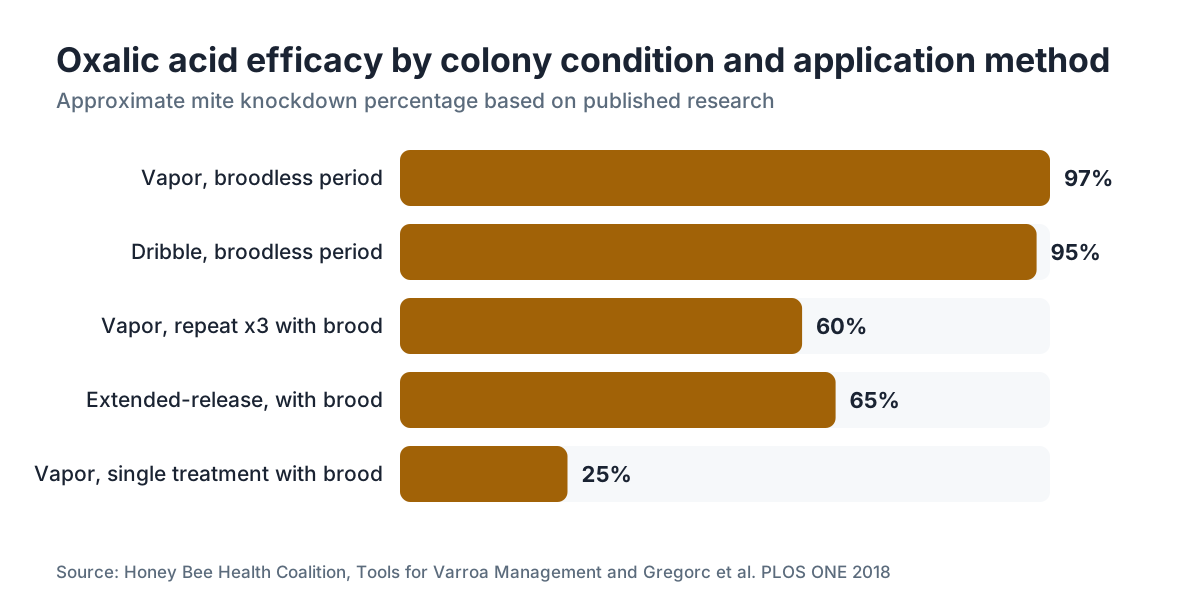
The best window is a real broodless period, which across most of North America happens naturally in midwinter. When the queen has stopped laying and every capped cell has hatched, essentially all the mites are phoretic, out on the adult bees where you can reach them. That's when one oxalic acid treatment, done right, hits 90-99% mite knockdown [3].
With brood in the box, the math turns against you fast. In a colony with a normal amount of capped brood, about 80% of mites are tucked inside cells at any given moment [4]. A dribble or vapor treatment gets the 20% on adult bees. The other 80% emerge over the next 12 days and restart the whole problem.
For summer treatments, extended-release is your best bet under the current label. Some beekeepers manufacture a broodless period by caging the queen for 24 days (long enough for every capped cell to hatch), then treating with vapor or dribble. The kill is excellent. It also stresses the colony and takes practice handling queens, so it's not for everyone.
The Honey Bee Health Coalition's "Tools for Varroa Management" guide recommends treating in late summer or early fall, before mites wreck the winter bees you're raising, and again in the winter broodless window if counts still call for it [3]. An alcohol wash or sticky board count before and after treatment is the only way to know your timing actually worked.
A practical calendar for temperate North America (shift it for your latitude):
- Late August to September: Treat if a mite wash tops 2 mites per 100 bees. This protects the long-lived winter bees being raised now.
- November to January (broodless window): Treat with dribble or vapor for maximum knockdown.
- February to March: Re-test. Treat again if counts warrant it before spring buildup.
- May to July: Extended-release strips if counts climb, or induce an artificial broodless period.
Does oxalic acid vapor harm bees?
This is the question new users ask first, and the honest answer is: at label doses, very little. Overdose them and yes, you can do real harm.
The research on bees exposed to vapor at the recommended dose shows minimal mortality versus untreated controls, as long as the dose is right and you're not treating too often. A 2016 study in the Journal of Apicultural Research found no significant increase in adult bee mortality at the label-rate vapor dose [5]. Extended-release data looks a little different because the exposure is chronic instead of a quick hit, but again, at label concentrations, bee mortality wasn't significantly higher than in controls.
The ways vapor does hurt bees are predictable. Too much acid. Treating more often than the label allows. Treating a colony already worn down by bad nutrition or disease. Trapping vapor in a hive with no ventilation. Small colonies and nucs are more at risk than full hives because the vapor concentration per bee runs higher. Treating a nuc? Read the label's dosing guidance closely, because the dose does not scale straight down with colony size.
One honest caveat. Most safety research measures short-term adult mortality. We have much less data on queen longevity, brood development under chronic low doses, or effects across many treatment seasons. Nobody's hiding anything. That kind of long-term, colony-level data just takes years to gather. The working consensus among researchers and extension apiculturists is that oxalic acid, used per label, is one of the safest treatments available for managed colonies [3].
For your own safety, read the PPE section below before you fire up a vaporizer.
How do you apply oxalic acid by vaporization step by step?
Vaporizing oxalic acid is simple once you have the right gear and you've read the label. Here's how to do it right.
What you need: A registered OA vaporizer (several are on the market, roughly $70 to $250 depending on brand and heating method), Api-Bioxal, a respirator rated for organic vapors and particulates (OV/P100 combination cartridge), eye protection, and nitrile gloves [2].
Step 1: Seal the hive. Close or screen the bottom entrance. Plug any gap bigger than a few millimeters with foam or tape. You want the vapor to stay inside long enough to touch every bee. Roughly 10 minutes of exposure is the general rule, though the label sets the minimum time the hive should stay sealed after application.
Step 2: Measure the dose. The Api-Bioxal label calls for 2.17 grams per hive body for vaporization. Weigh it. Don't guess. A cheap postal or kitchen scale does the job. Under-dose and efficacy tanks. Over-dose and you hurt bees.
Step 3: Load and insert the vaporizer. Put the measured Api-Bioxal in the vaporizer pan. Slide the wand through the sealed entrance. Most vaporizers have a guard plate to seal around the wand so vapor doesn't leak at the entrance.
Step 4: Heat and vaporize. Follow the instructions for your specific vaporizer. Most electric models take 2 to 3 minutes to fully sublimate the crystals. Don't pull the vaporizer until the pan is empty and you've waited the label dwell time.
Step 5: Wait and ventilate. Leave the hive sealed at least 10 minutes. Then open the entrance and let the colony air out before you move on.
Repeat treatments: The label allows repeat vapor applications. A common protocol when brood is present is every 5 to 7 days for three rounds, catching newly emerged mites before they slip back into cells. Efficacy during brood rearing still lags a broodless treatment [2].
You can find quality vaporizers and other beekeeping supplies at reputable suppliers. A reliable vaporizer matters more than most beekeepers expect. Inconsistent heating under-sublimates the crystals and cuts your kill rate.
How do you apply oxalic acid by dribble?
The dribble method is low-tech and it works when conditions are right. It skips the vaporizer. What it demands instead is a broodless colony.
Prepare the solution. Api-Bioxal comes ready to dissolve. The label calls for a 3.5% oxalic acid solution in 1:1 sugar syrup (weight:weight). The Api-Bioxal packaging is sized so one package dissolved in the specified amount of syrup gives you the right concentration. Follow the label's mixing instructions exactly instead of running your own math.
Application. Find each seam between frames that has bees sitting in it. Apply 5 mL per seam. The cap is 50 mL per colony, which works out to 10 seams max. Use a syringe or a small dribble bottle with a narrow tip. You want the solution landing on the bees, not pooling on the bottom board.
One treatment only. Dribble is a single application, not a repeat series, at least under the current Api-Bioxal label. The sugar in the solution can ferment if you re-apply, and repeated dribbling stresses bees more than vapor does.
Temperature matters. Don't dribble below about 40°F (4°C). When it's cold, bees cluster tight and can't spread the treatment by grooming, which cuts efficacy and can concentrate exposure in the cluster.
Some beekeepers prefer dribble for very small colonies or nucs where vapor is harder to control. Fair enough. For full-size production hives with a good broodless window, most experienced beekeepers I've talked with reach for vapor, simply because it's faster and doesn't mean opening the colony in the cold.
What personal protective equipment do you need when using oxalic acid?
Oxalic acid is a moderately hazardous substance. Inhaled vapor or dust irritates your airways and, with high or repeated exposure, can damage your lungs. On skin and in eyes it causes irritation and possible chemical burns. Treat it with respect.
For vaporization, the minimum PPE is not optional: a properly fitted respirator with organic vapor cartridges plus P100 particulate filters. Not a dust mask. Not an N95. A standard N95 does nothing against organic vapor. An OV/P100 combination cartridge (3M 6001 or equivalent) in a half-face respirator gives you adequate protection for brief exposures at label rates [2]. Eye protection means safety glasses or goggles, more than a veil.
For dribble, a dust mask or surgical mask won't cut it while you're mixing the dry product. Once it's dissolved in syrup the respiratory risk drops, but you still want nitrile gloves and eye protection during application.
Store Api-Bioxal cool, dry, and away from children and pets. It corrodes metal, so keep it off your equipment.
The EPA label carries the required safety information, and the signal word for Api-Bioxal is "Caution," the lowest hazard tier [2]. That's reassuring. It doesn't mean skip the PPE. That hazard designation assumes you're following label directions, and those directions include wearing the recommended gear.
What mite kill rate can you actually expect?
Efficacy swings with method, timing, and colony condition. Here's an honest read of what the research shows.
During a broodless period, dribble and vapor both hit 90-99% mite knockdown in controlled studies [3]. That's the high end for any registered varroa treatment. In the real world with hobbyist beekeepers, the numbers run lower, mostly from timing mistakes: more brood present than the beekeeper realized, wrong doses, or treating too late after mites already spiked.
During the brood-rearing season with repeat vapor treatments (3 applications, 5 days apart), efficacy in studies ranged from about 50 to 70% [1]. Not as satisfying as the winter figure, but it can buy time if your colony is below the economic threshold and you have no broodless window to work with.
Extended-release during brood season shows variable efficacy in the published work, generally 40 to 90% depending on how long the strips stay in, colony size, and temperature [3]. The Honey Bee Health Coalition notes the extended-release method "shows promise" but that its data is still accumulating next to the more established dribble and vapor methods [3].
An alcohol wash (a 300-bee sample) before and roughly 72 hours after treatment is the practical way to check your real result. If your post-treatment count still tops 2 mites per 100 bees, you need a plan: repeat the treatment, switch methods, or figure out whether a laying queen was producing brood that shielded mites during your treatment.
For a full look at what varroa mites do to a colony and why these numbers matter, see our primer on the parasite itself.
Is oxalic acid safe to use during a honey flow, and what about honey residues?
This is a real regulatory question, more than a label formality.
The Api-Bioxal label prohibits use during a honey flow when supers are on and the honey is meant for people. Oxalic acid does occur naturally in honey at low levels, but adding treatment-derived residue to honey headed for sale isn't permitted under current EPA registration [2].
For honey you won't sell (personal use), the residue question is less legally fraught, but most extension apiculturists say just follow the label anyway. The practical move is to pull supers before treatment and not replace them until treatment is done and any withdrawal period on the label has passed.
Naturally occurring oxalic acid in untreated honey runs from about 8 to 37 mg/kg depending on floral source [6]. Part of why the EPA registered Api-Bioxal is that residue studies showed a properly applied treatment didn't significantly raise honey oxalic acid above natural background [2]. But "didn't rise above background in a study" and "treat during an active flow with supers on" are two different things. Follow the label.
For your own table honey, if you treat during a broodless winter when supers are off anyway, there's effectively no contamination concern at all. That's the cleanest scenario there is.
How does oxalic acid compare to other varroa treatments?
No single treatment wins in every situation. Here's how oxalic acid stacks up against the main alternatives.
Amitraz (Apivar strips) is a synthetic acaricide that works with brood present, which is exactly oxalic acid's weak spot. It has a longer track record in brood-rearing colonies and generally delivers 90%+ efficacy. The downsides: it leaves residue in wax, resistance is documented in some populations, and there are concerns about amitraz residue in queens [7]. You rotate away from it partly to protect your wax.
Formic acid (Mite Away Quick Strips, Formic Pro) kills mites inside capped brood as well as phoretic mites, which makes it the only organic-approved option that penetrates cells. That's a real edge in summer. The downsides: it's temperature sensitive (apply between 50 and 85°F depending on product), it's rough on the beekeeper, and it can cause queen loss or brood damage when it's too hot [3].
Thymol (Apiguard, ApiLife Var) is another organic option for warm weather. It's temperature-dependent in the opposite direction from formic; it needs warmth to volatilize well. Efficacy runs roughly 75 to 90% in the field.
HopGuard strips (potassium salts of hop beta acids) are USDA-NOP compliant and can be used with supers on in some formulations, but the efficacy data is weaker than the other organic options.
Oxalic acid's niche is the broodless period. It's cheap (a full season's supply runs roughly $20 to $40 depending on how many hives you keep), leaves negligible residue, and lands the highest single-treatment knockdown of anything when you hit a broodless window. VarroaVault's free protocol builder can help you sequence oxalic acid with other treatments across the year so you're not leaning on one mode of action.
| Treatment | Penetrates capped brood | Residues in wax | Resistance documented | Approx. efficacy (broodless) | Approx. efficacy (with brood) |
|---|---|---|---|---|---|
| Oxalic acid | No | Negligible | Not reported | 90-99% | 40-70% |
| Amitraz (Apivar) | No | Yes | Yes | 90%+ | 90%+ |
| Formic acid | Yes | Minimal | Not reported | 90%+ | 75-90% |
| Thymol (Apiguard) | Partial | Minimal | Not reported | 75-90% | 60-80% |
What legal and label requirements apply in the United States?
In the US, any pesticide applied to a managed honey bee colony has to be used according to its EPA-registered label. The label is the law, not a suggestion.
For oxalic acid, the only EPA-registered product for managed colonies is Api-Bioxal (EPA Reg. No. 84922-1), made by Véto-Pharma [2]. Using unregistered oxalic acid, including raw acid from industrial or hardware suppliers, violates the Federal Insecticide, Fungicide, and Rodenticide Act (FIFRA) and can bring fines [10].
The Api-Bioxal label spells out the permitted methods, the dose per hive body, the maximum treatments per period, temperature requirements, PPE requirements, and the restrictions around honey supers. States can pile on their own restrictions above the federal label, so check your state department of agriculture too [11].
No veterinary prescription is required for Api-Bioxal in the US. That's a meaningful difference from some other treatments. Oxalic acid stays accessible to hobbyists without veterinary oversight under the current registration.
Canada, the UK, and EU member states each have their own registrations and approved products. Outside the US, verify which product is registered where you live before buying.
If you're sourcing supplies, knowing which beekeeping supply companies stock properly registered Api-Bioxal helps you dodge the counterfeit or unregistered product that sometimes shows up from overseas sellers.
How do you know if the oxalic acid treatment worked?
Treat and hope is not a plan. Confirm efficacy with a mite count after treatment, every time.
The standard method is an alcohol wash. Pull a sample of roughly 300 adult bees from the brood nest (not honey frames), shake them into isopropyl alcohol, agitate for 60 seconds, and count the mites that drop. Divide mites by bees, multiply by 100, and you have mites per 100 bees. The Honey Bee Health Coalition says treat if you're at or above 2 mites per 100 bees during summer and early fall [3].
Timing the post-treatment count matters. A sticky board right after treatment shows a spike in mite fall, but the meaningful confirmation is an alcohol wash 3 to 7 days later, once dead mites and emerging mites have redistributed. If that wash is still above threshold, work out why: was brood present, was the dose right, did you skip a hive body?
A common mistake is treating once and calling the season done. Mite populations can rebuild from a small survivor group in a few weeks during brood rearing. Plan to monitor monthly through the active season and at least once in winter.
The University of Minnesota Bee Lab recommends alcohol wash over sugar roll because it's far more accurate, and most research protocols treat alcohol wash as the standard [8]. Sugar roll tends to undercount mites by 25 to 40% next to an alcohol wash.
Frequently asked questions
Can I treat bees with oxalic acid when they have brood?
You can, but efficacy drops hard. Oxalic acid can't penetrate capped cells, so mites inside brood survive. During a broodless period you get 90-99% mite kill. With brood present, three vapor treatments over 5-day intervals catch emerging phoretic mites, but total efficacy usually falls to 50-70%. Extended-release is the only Api-Bioxal-approved approach labeled specifically for use with brood present.
How many times can you treat a hive with oxalic acid in one season?
The Api-Bioxal label sets the limits, and they vary by method. Vaporization allows multiple treatments; check the current label for the maximum applications per year. Dribble is generally limited to one application per treatment event. Extended-release strips go in once per treatment course. Always follow the current registered label, which the EPA can update. Never exceed the label-specified frequency.
What temperature do you need to treat bees with oxalic acid vapor?
The Api-Bioxal label doesn't set a minimum temperature for vaporization the way formic acid products do, because the heat comes from the vaporizer, not the air. Bees should be clustered or at least calm. Most experienced beekeepers find vapor works fine above 25 to 30°F as long as the hive is well sealed. Very cold conditions make sealing harder and stress the bees more when you disturb them.
Does vaporizing oxalic acid kill mites better than dribbling?
In head-to-head studies during broodless conditions, both methods reach similar high efficacy, generally 90-99% knockdown. Vapor's practical edge is that it skips opening the hive in cold weather, takes less time per hive, and may spread more evenly through the colony. Dribble needs no vaporizer purchase and is simpler for beekeepers with a few hives. The efficacy gap at label doses during broodless conditions is small.
Is it safe to eat honey from hives treated with oxalic acid?
Oxalic acid occurs naturally in honey at 8 to 37 mg/kg. Research supporting the Api-Bioxal registration showed properly applied treatments didn't significantly raise honey oxalic acid above natural background. The label still prohibits treatment when supers meant for sale are on during a honey flow. Treating in winter with supers off is cleanest. EPA doesn't consider personal-use honey from correctly treated hives a food safety concern.
What respirator do I need for oxalic acid vaporization?
You need a properly fitted half-face respirator with OV/P100 combination cartridges (organic vapor plus P100 particulate filtration). A standard N95, surgical mask, or dust mask does not protect against oxalic acid vapor. A 3M 6000 series half-face respirator with the right cartridges works well. Fit matters as much as rating: a loose respirator gives you little real protection no matter what cartridge is on it.
Can I use oxalic acid on a nuc?
Yes, but cut the dose. A nuc has fewer bees and less air volume, so a full-hive dose produces a higher vapor concentration per bee, which can kill bees. Check the Api-Bioxal label for nuc-specific dosing. For dribble, apply 5 mL per seam of bees; the total volume falls naturally since a nuc has fewer seams. Vapor doses for nucs are typically half or less of the full-hive dose.
How long does oxalic acid take to kill varroa mites?
Phoretic mites that contact oxalic acid vapor or solution start dying within hours. On a sticky board after vaporization, you usually see a big mite drop within 24 to 72 hours. Full efficacy is generally assessed at 3 to 7 days post-treatment. Mites that sat inside capped cells during treatment go untouched and emerge with their host bees, which is exactly why repeat treatments aim to catch them before they re-enter cells.
Does oxalic acid affect the queen?
At label doses, oxalic acid isn't documented to cause consistent queen loss or reproductive damage. Some beekeepers report occasional queen loss after treatment, but studies haven't established a causal link at recommended doses. Risk rises with overdosing or treating very small colonies. As a precaution, many beekeepers avoid treating right after installing a new queen or while a recently mated queen is still settling into the colony.
What is the difference between Api-Bioxal and generic oxalic acid?
Api-Bioxal (EPA Reg. No. 84922-1) is the only oxalic acid product registered for managed honey bee colonies in the US. Using bulk or industrial-grade oxalic acid from non-beekeeping suppliers violates federal pesticide law (FIFRA), even if the active ingredient is chemically identical. Registered products also carry standardized concentration and purity, which matters for accurate dosing. Stick with Api-Bioxal.
Can I use oxalic acid and another varroa treatment at the same time?
The Api-Bioxal label doesn't prohibit concurrent use with other treatments, but stacking treatments isn't generally recommended without a good reason. Using oxalic acid as a cleanup right after pulling Apivar strips (when colonies may be near broodless) is a recognized protocol to catch mites that survived the strips. Running organic and synthetic treatments at once adds complexity without proportional benefit in most cases.
How do I know what mite level requires treatment with oxalic acid?
The Honey Bee Health Coalition recommends treating when an alcohol wash shows 2 or more mites per 100 bees during summer and early fall, the threshold for the winter bees you're raising. Some beekeepers treat during every natural broodless window regardless of count, which is a reasonable low-risk approach. After treatment, recheck within a week to confirm it worked. A count that stays above threshold means something went wrong.
Does oxalic acid leave residues in beeswax?
Oxalic acid residue in wax after treatment is minimal and degrades relatively quickly, especially next to synthetic acaricides like amitraz, which build up in wax over repeated treatments. Studies haven't found treatment-level oxalic acid residue persisting in wax at concerning levels. That's one reason oxalic acid appeals to beekeepers managing wax for comb honey or foundation, and why it fits well in rotation strategies built to keep wax residue low.
Sources
- PLOS ONE, Gregorc et al., 2018: Oxalic acid inhibits mite energy metabolism at the cellular level; repeat vapor treatments during brood-rearing season achieve roughly 50-70% efficacy
- EPA, Api-Bioxal Registration and Label (EPA Reg. No. 84922-1): Api-Bioxal is the only EPA-registered oxalic acid product for managed honey bee colonies; label specifies 2.17 g per hive body for vaporization, 5 mL per seam for dribble (max 50 mL per colony), PPE requirements, and honey super restrictions
- Honey Bee Health Coalition, Tools for Varroa Management Guide: Dribble and vapor methods achieve 90-99% mite knockdown during broodless periods; treatment threshold is 2 mites per 100 bees during summer/early fall; extended-release method efficacy ranges 40-90% with brood present
- Rosenkranz et al., Apidologie, 2010: In a colony with normal brood production, approximately 80% of varroa mites are inside capped cells at any given time
- Journal of Apicultural Research, Coffey, 2016: No significant increase in adult bee mortality at the label-rate oxalic acid vapor dose compared to untreated controls
- Food Chemistry, Ruoff et al., 2006: Naturally occurring oxalic acid in untreated honey ranges from approximately 8 to 37 mg/kg depending on floral source
- USDA Agricultural Research Service, Honey Bee Research: Amitraz residues accumulate in wax with repeated use and resistance has been documented in some varroa populations
- University of Minnesota Bee Lab, Varroa Monitoring Methods: Alcohol wash is significantly more accurate than sugar roll for mite counting; sugar roll undercounts mites by 25-40% compared to alcohol wash
- EPA, Federal Insecticide, Fungicide, and Rodenticide Act (FIFRA): Using unregistered pesticide products in managed colonies violates FIFRA; only Api-Bioxal is legally registered for oxalic acid use in US honey bee colonies
- Penn State Extension, Varroa Management in Honey Bee Colonies: Temperature requirements and seasonal timing protocols for oxalic acid and other varroa treatments in mid-Atlantic and temperate North America
Last updated 2026-07-09