Treating varroa mites organically: a complete field guide

TL;DR
- Organic varroa treatments include oxalic acid (dribble, vaporization, or extended-release strips), formic acid (MAQS or Formic Pro), and thymol products (ApiLife Var, Apiguard).
- Oxalic acid vaporization in a broodless colony reaches 90 to 97 percent mite reduction.
- Each method has firm temperature limits, brood-status constraints, and EPA label rules that decide when and how you can safely use it.
What does 'organic' actually mean for varroa treatments?
In beekeeping, 'organic' is shorthand for treatments whose active ingredients are naturally derived acids or essential oils, not synthetic acaricides like fluvalinate or coumaphos. That line matters for two reasons: resistance and residues. Synthetic miticides leave residues in beeswax that build up over years and have driven documented mite resistance in Europe and North America. The organic acids and thymol break down fast and, so far, have not produced the same resistance pressure [1].
The four actives you'll actually meet are oxalic acid (OA), formic acid, thymol, and hop beta acids (in Hopguard). Each is registered with the EPA as a pesticide, and every label is a federal document you are legally bound to follow. "The label is the law" is not a slogan; it's 7 U.S.C. § 136j [2]. Before you heat a vaporizer or open a packet of MAQS, download the current label from the manufacturer's site or the National Pesticide Information Center.
None of these products are zero-risk. None are magic. Used correctly, the best of them match or nearly match the initial knock-down of synthetic miticides. Used at the wrong temperature, at the wrong colony stage, or at weak doses, they either injure bees or fall short of the 90 percent mark the Honey Bee Health Coalition sets as a treatment goal [3].
How effective are organic varroa treatments compared to synthetics?
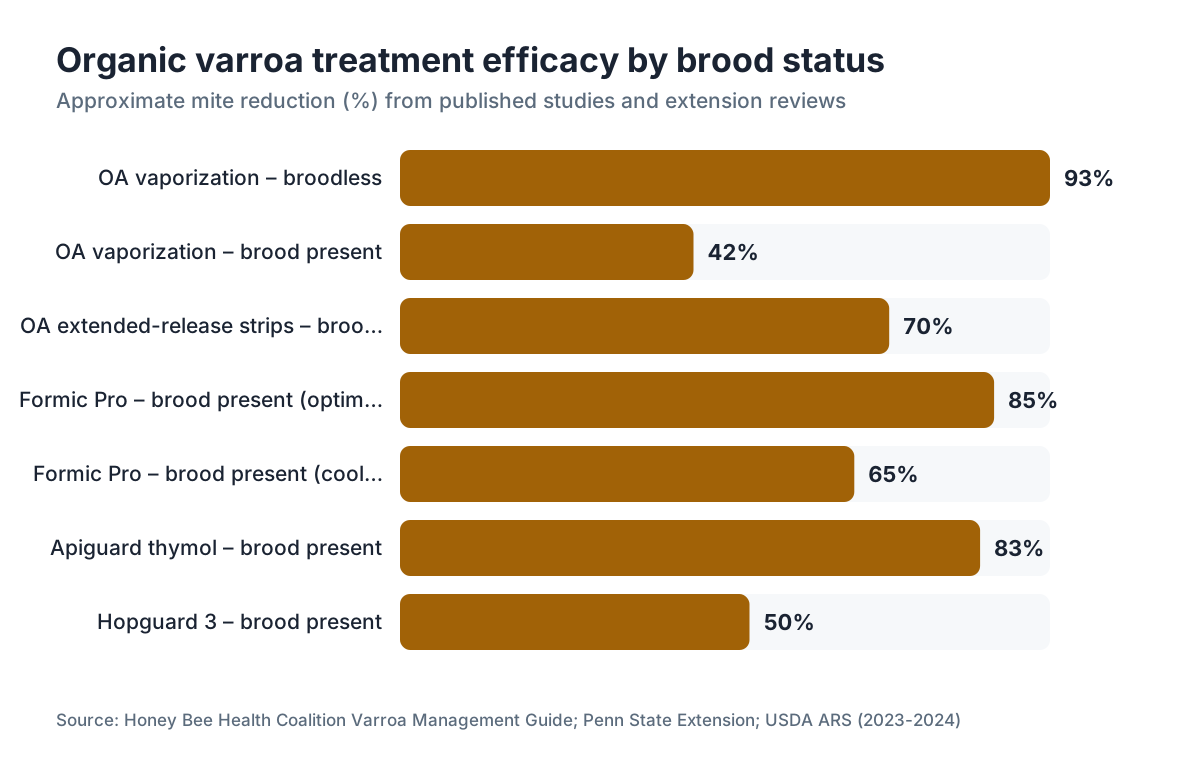
Efficacy rides on one thing above all: whether brood is present. Varroa spend roughly 65 to 70 percent of their life cycle sealed inside capped brood cells, where no topical or fumigant treatment can touch them [4]. That single fact explains why oxalic acid vaporization in a broodless colony (winter cluster, after a brood break, or on a fresh package) regularly hits 90 to 97 percent mite reduction in published trials, while the same treatment on a heavy-brood colony may clear only 30 to 40 percent of the total mite population.
The table below pulls efficacy ranges from published studies and extension reviews:
| Treatment | Active ingredient | Brood present efficacy | Broodless efficacy | Temp range (°F) |
|---|---|---|---|---|
| OA vaporization (single) | Oxalic acid | 30-50% | 90-97% | >40 |
| OA dribble (single) | Oxalic acid | 40-50% | 90-95% | 41-59 (cluster) |
| OA extended-release strips (Api-Bioxal) | Oxalic acid | 60-80% (3 strips, 21 days) | 90%+ | >50 |
| Formic acid MAQS | Formic acid | 61-97%* | N/A (works in brood) | 50-92 |
| Formic Pro | Formic acid | 63-95%* | N/A | 50-85 |
| Apiguard | Thymol | 74-93% | N/A | 59-105 |
| ApiLife Var | Thymol | 70-90% | N/A | 59-95 |
| Hopguard 3 | Hop beta acids | ~50% (varies) | Higher | 40+ |
*Formic acid efficacy swings hard with temperature; the range reflects low versus optimal performance [5][6].
For a closer look at varroa biology and why the brood cycle rules everything, the varroa mite page here walks through the mite's reproductive cycle in detail.
Synthetic miticides, by comparison, typically hit 95 to 99 percent regardless of brood, which is why many commercial operations still lean on them. If you're a hobbyist willing to time treatments around brood breaks, though, the gap gets small.
What is the best organic treatment for varroa mites?
Honest answer: oxalic acid vaporization in a broodless colony, if you can engineer a brood break to make it work. The efficacy data is the strongest of the bunch, the cost per treatment is the lowest (roughly $0.50 to $1.50 per hive once you spread the vaporizer cost over years), and no resistance has turned up in field populations [7].
For colonies with brood, formic acid wins because it penetrates capped cells. MAQS (Mite Away Quick Strips) and Formic Pro are the two label-registered formic acid products in the U.S. Both can be used with the honey super on (Formic Pro at the 42-day treatment has a honey super allowance on the current label; always confirm before applying), which is a real advantage in the middle of a flow [6].
Thymol products (Apiguard, ApiLife Var) work well but carry the tightest temperature window. They need ambient temps between 59°F and 105°F for the gel or tablet to volatilize right. In a short-season climate where you're treating in September and nights already drop into the 40s, thymol falls flat. That's not a product defect. It's chemistry.
Hopguard 3 is registered and earns its keep mainly in broodless colonies or as a supplemental strip, but the efficacy data is shakier than the other three. I treat it as a second-line tool.
For a hobbyist with one to five hives, here's what I actually do: vaporize with oxalic acid after the last honey harvest in late summer or early fall as brood declines, hit again in midwinter if the cluster is warm enough to treat (above 40°F), and reach for Formic Pro mid-season if a flow forces the timing. That covers the whole year without synthetics.
How do you use oxalic acid to treat varroa mites?
There are three EPA-registered methods: dribble, vaporization (sublimation), and extended-release strips. Api-Bioxal is the only oxalic acid product currently registered in the U.S. for all three delivery methods [7].
Dribble (trickle): Mix Api-Bioxal at 3.5 grams per 100 mL of 1:1 sugar syrup (the label spells out this ratio exactly). Dribble 5 mL per occupied seam, up to 50 mL total per colony. Works best when bees cluster in winter with no active brood. Wear chemical-splash goggles and nitrile gloves. OA irritates eyes and mucous membranes.
Vaporization: 2.05 grams of Api-Bioxal per hive. You sublimate it with an electric vaporizer or a propane torch vaporizer (the Varrox, ProVap 110, or similar). The acid vapor coats bees as they move through it, and mites take it up through contact. Seal every hive entrance during treatment and for 10 to 15 minutes after. The label sets a 3-minute re-entry interval, but many beekeepers wait longer as a personal precaution. Do not vaporize without a NIOSH-approved respirator (P100 particulate plus organic vapor cartridge) and eye protection. OA vapor is genuinely dangerous to your lungs.
Extended-release strips: The newer Api-Bioxal strip formulation staples glycerin-saturated cardboard strips inside the brood nest. The label currently allows 3 strips per single-story hive, left in for 21 days, which reaches meaningful efficacy even with brood present by giving mites repeated exposure as they move off cells [8].
On timing, the Honey Bee Health Coalition's Varroa Management Guide states: "Oxalic acid treatments work best when applied to colonies that are broodless or have minimal brood, such as in midwinter in temperate climates" [3]. That's the sentence to memorize.
Equipment and supplies for OA treatments are easy to find from beekeeping supply companies.
How does formic acid treat varroa, and what are the risks?
Formic acid does something oxalic acid can't: its vapor passes through wax cappings and kills mites inside sealed brood cells. That makes it the one broadly available organic option with real efficacy during peak brood season [5].
MAQS (Mite Away Quick Strips) releases formic acid over 7 days from two cellulose pads set on top of the brood frames. Formic Pro releases slower and longer, over 14 days (one strip) or 28 to 42 days (two strips). The slower Formic Pro release usually means less queen loss and brood damage than MAQS, especially near the top of the temperature range [6].
Temperature runs the show. Both products need ambient temps above 50°F for the acid to volatilize enough. Above 92°F (MAQS) or 85°F (Formic Pro), the release rate climbs too fast and you risk killing brood and queens. In a heat wave, pull the strips. This isn't a soft warning. It's in the product labels and in university trials.
Even at correct temperatures, expect side effects: temporary brood pattern disruption, occasional queen loss (reported at 5 to 15 percent in some trials, lower in others), and a sharp odor that slows forager activity for a day or two. A weak colony can tip over under that stress. I hold off on formic acid in any colony below 4 frames of bees.
Protective gear: the labels require gloves and eye protection. Formic acid burns skin on contact and savages mucous membranes.
How does thymol work against varroa, and when should you use it?
Thymol is a phenol compound that occurs naturally in thyme oil. It kills varroa through fumigant action (the vapor is toxic to mites) and by disrupting mite behavior. Apiguard uses a slow-release gel. ApiLife Var uses a tablet of thymol blended with eucalyptol, menthol, and camphor. Both are EPA-registered [9].
Apiguard protocol: set a 25g tray (half the 50g container) at the top of the hive for two weeks, then set the remaining 25g for another two weeks. Published efficacy runs 74 to 93 percent. ApiLife Var: place a tablet broken in thirds near the corners of the top brood box, replace weekly for three applications.
The temperature window is the whole game. Below 59°F, the compounds don't volatilize enough to reach a therapeutic concentration. Above roughly 105°F, you may see more bee irritation and brood effect. So thymol fits late-summer treatments in temperate climates, usually August through mid-September across the northern U.S. In the South, where September nights stay warm, the window stretches. In New England or the upper Midwest, it slams shut.
Thymol also nudges forager behavior and can quiet hive activity for a bit. Remove the honey supers before treating. Thymol taints honey above certain concentrations, and both labels forbid use when supers are on for harvest.
One genuine upside: thymol products are easier to handle than acids. No respirator required (ventilation is still smart), and no acute burn risk like formic or oxalic acid.
What is the right time of year to treat varroa organically?
Timing is probably the biggest lever in any organic varroa program, bigger than which product you pick. The Honey Bee Health Coalition recommends testing mite loads and treating when alcohol wash counts pass 2 percent (2 mites per 100 bees) before the late-summer window when winter bees are being reared [3].
Here's the annual calendar I'd run for a temperate-climate beekeeper in USDA hardiness zones 5 to 7.
Spring (March to April): Check mite levels with an alcohol wash or sugar roll. If counts top 2 percent, treat. Formic Pro or thymol work if temps are in range. OA vaporization is strong if you can catch a brood break, which is common after early splits.
Summer (June to July): Most colonies sit at peak brood. Organic options thin out without a brood break. If you must treat during a honey flow, Formic Pro carries a honey super allowance at the 42-day strip dose; confirm the current label. Hopguard 3 is also labeled for use with supers.
Late summer (August to September): The treatment window that matters most. Mite populations peak while winter bees are about to be reared. A colony that enters October with 3-plus percent mites will likely collapse by spring. Formic Pro, thymol, or OA (if you induce a brood break through a split or queen caging) all work here.
Winter (November to February): Broodless or nearly so in northern climates. Prime time for OA dribble or vaporization. A single OA vaporization of a broodless cluster reaches 90-plus percent efficacy and costs under two dollars in materials.
Nobody has perfectly clean data on ideal timing across every climate zone. The closest thing to a consensus document is the Honey Bee Health Coalition's Varroa Management Guide, updated periodically and free to download [3].
Can you treat varroa organically while honey supers are on?
This is one of the most common questions, and the answer is product-specific.
Formic Pro: yes, with conditions. The current label allows treatment with honey supers in place at the 42-day (two-strip) application rate. Some beekeepers report a faint formic taint in honey extracted right after treatment; the label sets withdrawal before harvest at the end of the treatment period. Read the current label carefully, because formic acid labels have changed.
Oxalic acid: no for dribble, since sugar syrup dribbled onto frames would contaminate honey. OA vaporization isn't strictly prohibited during a flow by the EPA label, but many extension specialists and the HBHC advise against it because vapor can condense in honey cells. The practical consensus is to treat after harvest. Extended-release strips are labeled only for use when supers are off.
Thymol products (Apiguard, ApiLife Var): flatly prohibited with supers on. Both labels state this, and USDA residue research backs the off-flavor concern [9].
Hopguard 3: labeled for use during a honey flow with supers on. That's one of its practical advantages.
Here's the short version: if you're in a heavy July flow and your mite count just hit 3 percent, Formic Pro at the 42-day rate is your best organic option. If harvest is two weeks out, consider pulling supers, running an OA treatment cycle, then returning supers. Timing your mite checks ahead of the flow, so you catch the problem earlier, gives you more room to move.
How do you monitor mite levels to know when to treat?
You can't manage what you don't measure. Alcohol wash is the most accurate method: submerge about 300 bees (half a cup) from the brood nest in isopropyl alcohol (70 percent or higher), shake for 60 seconds, pour through a mesh screen, and count the mites in the wash. Divide mites by bees counted, multiply by 100, and you have mites per 100 bees [3][10].
Sugar roll gives you a live release but undercounts by 20 to 30 percent versus alcohol wash, per several published comparisons. I'd use sugar roll only if you're squeamish about killing bees and accept the undercount.
Shaker jars like the Varroa EasyCheck (used with alcohol) speed the wash up. Sticky boards give population trajectory but are less precise for a point-in-time treatment call. Sticky board counts get muddied by temperature, colony size, and mite-cleaning behavior.
The treatment threshold cited most across U.S. extension literature: 2 mites per 100 bees (2 percent) from spring through midsummer. Some sources drop it to 1 percent in late summer (August to September) because the stakes climb for winter bee production. Cornell's honey bee extension page uses 2 percent as its action threshold year-round [10].
Check monthly at minimum during the active season. Weekly checks in August aren't overkill if last month's count already read 1.5 percent. Mite populations can double in three weeks under the right conditions.
VarroaVault's free mite load calculator takes your raw wash numbers and returns a percentage plus a treatment recommendation, a quick sanity check on your counts.
Do organic varroa treatments cause resistance in mites?
No confirmed field resistance to oxalic acid, formic acid, or thymol has been documented in Varroa destructor populations as of the current literature [1][7]. The working theory: small molecules like organic acids and thymol hit several biological targets at once, so it's harder for mites to evolve a single resistance mechanism. Synthetic pyrethroids like fluvalinate, by contrast, have one target site (the sodium channel), and tau-fluvalinate resistance showed up in European mite populations within a few years of commercial use.
"No confirmed resistance yet" is not a guarantee, though. If organic treatments became the year-round tool in every colony in every generation, selection pressure would rise. Rotating between the three main organic actives (OA, formic acid, thymol) is a reasonable precaution, and the Honey Bee Health Coalition recommends rotation in its resistance management section [3].
Worth noting too: mite tolerance to oxalic acid has been studied in the lab (exposing mites to sublethal doses), and while some behavioral changes turned up, they haven't translated into weaker field efficacy in published hive trials. Nobody has strong long-term data on this specifically. The closest peer-reviewed work I know of comes from European groups tracking OA efficacy over successive years in commercial apiaries, and they found no drift in kill rate across 5-year periods.
What non-chemical organic methods reduce varroa mite levels?
Biotechnical methods use no chemicals and can drop mite loads meaningfully alongside treatment. None of them replaces a well-timed acid or thymol treatment during peak mite season, but they add tools and cut how often you treat.
Brood breaks and queen caging: Removing or caging the queen for 24 to 28 days stops new brood. Once the last capped cells emerge, the whole mite population sits phoretic on adult bees and exposed to a single OA treatment. This is the most effective non-chemical move available, and it can pull mite loads from dangerous to near-zero in one cycle. The trade: a month of reduced honey production and some risk to a caged queen.
Drone brood removal: Varroa prefer drone brood, because drone cells stay capped longer and offer more mite reproduction cycles. Hang a drone-comb frame, let the bees fill it with drone brood, then remove and freeze it before the drones emerge. It pulls a disproportionate share of mites per frame. Studies suggest 10 to 15 percent mite reduction over a season with consistent trapping, not enough alone but useful in a program [4].
Small-cell foundation and screen bottom boards: Both have been studied as mite-reduction tools. Small-cell foundation showed no significant benefit in controlled peer-reviewed trials. Screen bottom boards alone show modest effect (roughly 5 to 15 percent more mite drop) and serve better as a monitoring tool than a treatment. I'd skip both as primary control.
Hygienic behavior and VSH genetics: Colonies bred for Varroa Sensitive Hygiene (VSH) suppress mite reproduction by finding and uncapping mite-infested cells. Pure VSH lines in research settings hold mite population growth way down. Commercial VSH stock from reputable breeders performs unevenly in the real world, but it consistently tolerates mites better than unselected stock. If you're buying queens anyway, paying for VSH or hygienic-tested genetics is probably the best long-term organic investment you can make.
What does an organic varroa treatment program cost per hive per year?
Costs swing with how many hives you run (bulk pricing matters) and which products you choose. Here are realistic per-hive annual estimates at current retail prices for hobbyists (1 to 10 hives) as of 2025.
Oxalic acid vaporization program: Api-Bioxal runs roughly $20 to $35 for 35 grams (enough for 17 vaporization treatments at 2.05 g each). A quality electric vaporizer (ProVap 110 or similar) costs $80 to $130 and lasts years. Spread over 5 hives and 5 years, the vaporizer adds roughly $3 to $5 per hive per year. Total annual OA-only program: $8 to $15 per hive.
Formic Pro: a 10-pack of strips runs about $50 to $70, and one treatment uses 1 to 2 strips depending on protocol. Budget $10 to $20 per hive per treatment. Two treatments a year in a mid-season plus late-summer program lands at $20 to $40 per hive.
Thymol (Apiguard): a pack of four 50g trays costs roughly $25 to $35. Each hive needs two trays per full treatment. One treatment per season runs $12 to $18 per hive.
Combined program (OA in winter, Formic Pro in summer, optional thymol in late summer): roughly $35 to $65 per hive per year, all materials. That's less than the cost of one lost colony.
For comparison, synthetic miticides like Apivar (amitraz strips) run $4 to $7 per hive per treatment. Organic programs cost more per treatment, but the resistance and residue arguments make many beekeepers count it money well spent.
You can find competitive pricing on treatments and tools from reputable beekeeping supply companies, and some sellers run free shipping honey bee supply companies deals worth comparing.
Are there any certified organic honey standards that require organic varroa treatment?
Yes, though U.S. organic honey certification is messy. The USDA National Organic Program (NOP) covers organic livestock production, but its honey bee standards have had regulatory gaps, because the rules were written before strong varroa guidance existed. The current NOP livestock standard (7 CFR Part 205) allows oxalic acid, formic acid, and thymol as approved substances for certified organic operations [11].
Synthetic acaricides (fluvalinate, coumaphos, amitraz) are barred on certified organic operations. If you sell honey as USDA certified organic, your certifier will require that varroa management uses only NOP-approved materials, which in practice means the organic acid and thymol products covered here.
Certified Naturally Grown (CNG) is a peer-review alternative certification used by many small-scale beekeepers. CNG standards also permit oxalic acid, formic acid, and thymol while prohibiting synthetics [12].
For hobbyists not selling honey commercially, certification isn't required, and you can use any registered product. Plenty of hobbyists choose organic-compatible products anyway, either from preference or because they plan to scale up and want the habit in place.
One practical note: running organic treatments on hives with conventional wax foundation already carrying synthetic miticide residues technically breaks an "organic" claim. The NOP handles this through a required conversion period and source documentation of foundation and beeswax.
Frequently asked questions
Can I use oxalic acid on a hive with capped brood?
Yes, but efficacy drops hard. OA in any form doesn't penetrate wax cappings, so mites sealed inside brood cells survive. A single OA vaporization on a full-brood colony might kill only 30 to 50 percent of the total mite population. Extended-release OA strips do better by keeping acid present through multiple brood cycles, reaching 60 to 80 percent over 21 days per published trials. For full-brood treatment, formic acid is the better organic choice.
How many times can I vaporize a hive with oxalic acid in one season?
The Api-Bioxal label allows up to three vaporization treatments per year, each consisting of up to three vapor applications at 5-day intervals. In practice, a single application on a broodless colony reaches 90-plus percent mite kill; repeat applications help most when you're unsure the colony is fully broodless. Don't exceed the label. Going over label rates doesn't improve efficacy and isn't legal.
What temperature is too cold for organic varroa treatments?
OA vaporization works down to about 40°F, with bees loosely clustered rather than sealed tight. OA dribble works when bees cluster, roughly 40 to 50°F. Formic acid products need at least 50°F ambient and shouldn't run above 85 to 92°F depending on the product. Thymol needs at least 59°F to volatilize enough. Below those thresholds, the treatment either won't work or will hurt bees.
Will organic varroa treatments kill the queen?
OA treatments at label rates rarely kill queens directly, though avoid dribbling on the queen herself. Formic acid carries the highest queen-loss risk among organic options, reported at 5 to 15 percent in some trials, especially near the top of the temperature range or in weak colonies. Thymol can cause temporary brood disruption, but queen loss is uncommon at label doses. Always check for a laying queen 10 to 14 days after any formic acid treatment.
Do I need a license or permit to use oxalic acid or formic acid on my hives?
In most U.S. states, hobbyist beekeepers can buy and apply EPA-registered oxalic acid (Api-Bioxal) and formic acid (MAQS, Formic Pro) products without a pesticide applicator license. A few states add registration or notification requirements for beekeepers; check with your state department of agriculture. Every application must follow the federal EPA label, a legal requirement regardless of state rules.
How long after an organic varroa treatment can I extract honey?
For OA dribble and vaporization, the Api-Bioxal label sets no withdrawal period for honey supers, but it says not to dribble when supers are present. Formic Pro's label requires finishing the treatment period before harvesting honey from treated supers. Thymol products (Apiguard, ApiLife Var) require supers off before treatment starts; don't re-add supers until treatment is fully complete and the colony has time to shed residual thymol. Always verify the current product label.
What personal protective equipment do I need for organic varroa treatments?
OA vaporization requires a NIOSH-approved P100 particulate respirator with organic vapor cartridges, chemical-splash goggles, and nitrile gloves. OA dribble requires chemical-splash goggles and nitrile gloves at minimum. Formic acid handling requires gloves and eye protection; the vapor is an intense irritant. Thymol products carry a lower acute hazard, but wearing gloves is still good practice. Never vaporize OA indoors or in enclosed spaces.
Can I treat varroa organically in a nucleus colony or package?
Yes, and packages or nucs are ideal for OA vaporization, because they're usually broodless or have minimal brood. One or two OA vapor treatments on a newly installed package can nearly wipe out the mite load before the first brood cycle finishes. Use 2.05 grams Api-Bioxal per standard nuc box, seal all entrances, and follow standard vaporization protocol. This is one of the best moments to get ahead of mite pressure for the whole season.
How do VSH and hygienic bees reduce my need for organic treatments?
VSH (Varroa Sensitive Hygiene) colonies detect and remove mite-infested capped cells before mites finish reproducing, holding mite population growth down with no chemical input. Pure VSH lines in research can keep mite levels low with no treatment, but commercial VSH stock varies. In practice, VSH or hygienic-tested queens reduce treatment frequency rather than eliminate it. Paired with targeted organic treatments, well-bred VSH stock is the most sustainable long-term strategy.
Is it safe to eat honey from hives treated with oxalic acid?
Oxalic acid occurs naturally in honey at roughly 8 to 9 mg/kg. Published residue studies found OA treatments raised honey OA levels by only about 1 mg/kg above that natural background, well under any safety threshold. The European Food Safety Authority reviewed OA residues in detail and found no consumer safety concern at those levels [13]. The EPA reached a similar conclusion in approving Api-Bioxal for U.S. use.
What is the difference between MAQS and Formic Pro for varroa?
Both use formic acid, but they differ in release rate. MAQS delivers the full dose over 7 days, faster and more intense. Formic Pro releases slower over 14 or 42 days. Formic Pro's slower release means lower queen-loss risk and less brood damage at high temperatures. MAQS handles cooler conditions (down to 50°F), and Formic Pro's lower limit is also 50°F. Both are labeled for use with honey supers under specific conditions.
How often should I check mite levels during the season?
Monthly alcohol wash checks are the minimum during the active season (April through October across most of the U.S.). Step up to every two weeks in August, when mite populations can double in three weeks and winter bee production is starting. One missed August check is how colonies that looked fine in July collapse by February. Ten minutes with an alcohol wash kit is a small bet against a $200 replacement package.
Can I combine multiple organic treatments at the same time?
Generally no, and some combinations are flatly prohibited on product labels. Using MAQS or Formic Pro at the same time as OA or thymol is not label-compliant and risks injuring bees from combined acid or volatile loads. The accepted practice is to finish one treatment fully before starting another. Rotating products between cycles (OA in winter, formic acid mid-season, thymol in late summer) is good resistance management without stacking treatments at once.
Do organic varroa treatments affect other hive pests or diseases?
Thymol has shown some activity against Nosema ceranae (a fungal gut parasite) in lab studies, though it isn't labeled for that use. OA shows no meaningful effect on Nosema, small hive beetles, or wax moths. Formic acid may have a slight effect on chalkbrood (a fungal brood disease) thanks to its antimicrobial properties, but again it isn't labeled for that. Treat each pest or disease with products registered for that specific use.
Sources
- Honey Bee Health Coalition, Varroa Management Guide (6th edition): Organic acids and thymol break down rapidly in the hive and have not produced documented field resistance in Varroa destructor populations
- U.S. EPA, Federal Insecticide, Fungicide, and Rodenticide Act (7 U.S.C. § 136j): Using a pesticide in a manner inconsistent with its labeling is a federal violation under FIFRA
- Honey Bee Health Coalition, Varroa Management Guide: Treatment goal of 90 percent mite reduction and 2 mites per 100 bees action threshold; recommends treating before winter bee production
- University of Minnesota Extension, Varroa mite management: Varroa mites spend approximately 65-70 percent of their lifecycle inside capped brood cells; drone comb trapping removes a disproportionate number of mites
- Pennsylvania State University Extension, Honey Bee Pest Management: Formic acid efficacy against varroa ranges from 61-97 percent depending on temperature and application method
- NOD Apiary Products, Formic Pro EPA-registered label: Formic Pro temperature range 50-85°F; honey super allowance at 42-day application rate; queen loss risk documented at upper temperature extremes
- U.S. EPA, Api-Bioxal (oxalic acid) product registration and label: Api-Bioxal is the only EPA-registered oxalic acid product in the U.S.; label allows dribble, vaporization, and extended-release strip application; no confirmed field resistance documented
- USDA Agricultural Research Service, Oxalic acid extended-release varroa treatment research: Extended-release OA strips left in place for 21 days achieve 60-80 percent efficacy in colonies with brood
- U.S. EPA, Apiguard (thymol) product label and registration: Thymol products require ambient temperature 59-105°F and prohibit use with honey supers present; efficacy 74-93 percent in published trials
- Cornell University, Dyce Lab for Honey Bee Studies, Varroa monitoring: Alcohol wash is the most accurate mite monitoring method; action threshold 2 mites per 100 bees
- USDA National Organic Program, 7 CFR Part 205, Livestock standards: NOP approved substances list permits oxalic acid, formic acid, and thymol for certified organic livestock operations; synthetic acaricides are prohibited
- Certified Naturally Grown, Apiary Standards: CNG apiary standards permit oxalic acid, formic acid, and thymol while prohibiting synthetic miticides
- European Food Safety Authority, Scientific opinion on oxalic acid residues in honey: OA treatments raised honey oxalic acid levels by approximately 1 mg/kg above natural background of 8-9 mg/kg, below any consumer safety threshold
Last updated 2026-07-09