How often to vaporize oxalic acid during brood rearing season
TL;DR
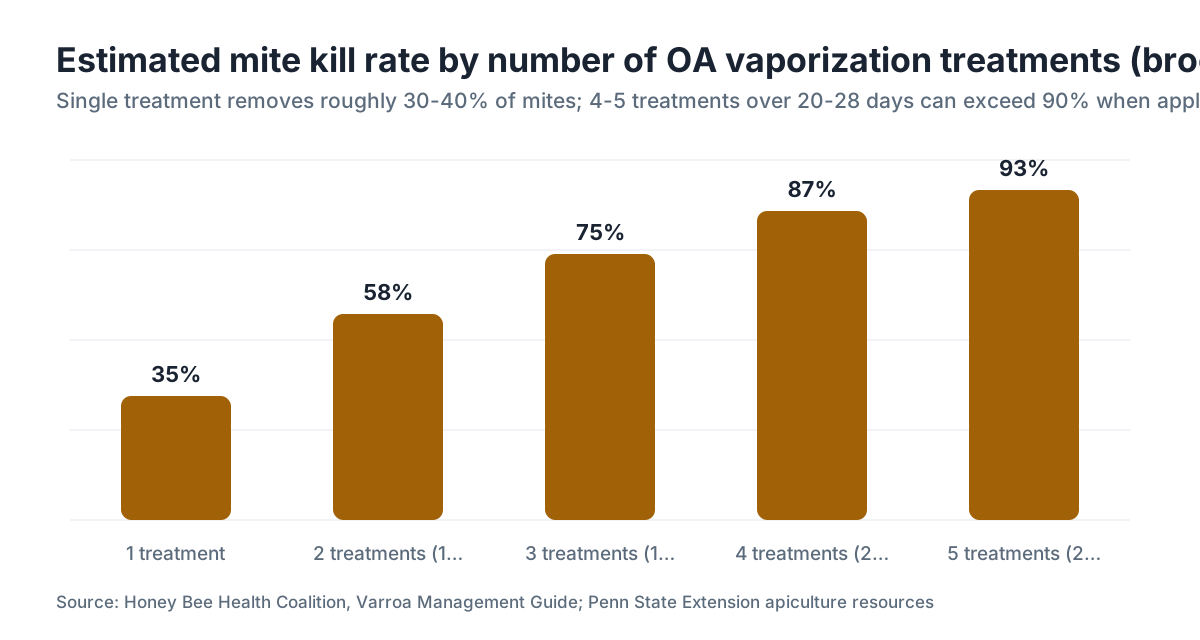
- During brood rearing, vaporize oxalic acid every 5 to 7 days for a total of 3 to 5 treatments.
- This schedule targets phoretic mites as they emerge from capped cells before they re-enter brood.
- A single treatment during brood rearing kills only 30 to 40 percent of mites.
- The repeat schedule pushes efficacy above 90 percent when done correctly.
Why does brood change the whole vaporization math?
Oxalic acid only kills mites out in the open on adult bees, which beekeepers call phoretic mites. It does nothing to the 80 to 90 percent of the mite population sealed inside capped brood cells at any given moment in a colony that is actively rearing brood [1]. That one biological fact is why vaporization protocols look so different in winter versus summer. In a broodless colony, one or two treatments spaced a few days apart wipe out almost the entire mite population. During peak brood rearing, that same one-shot approach barely dents it.
The way around this is timed repetition. You wait for sealed mites to emerge with their host pupae, then hit them while they are exposed before they can find new brood to enter. Do that enough times, at the right interval, and you knock the phoretic fraction back faster than the colony can replenish it from newly capped cells. Miss a treatment or space them too far apart, and the mites hiding in capped brood get ahead of you.
Here is the biology driving all of it. Varroa's reproductive cycle inside a worker cell runs about 12 days from capping to emergence [2]. A mite sealed inside a cell on day one of your treatment series could still be sealed on day twelve. Your repeat applications have to bridge that gap.
What is the correct vaporization frequency during brood rearing season?
Vaporize once every 5 to 7 days for a series of 3 to 5 treatments during brood rearing, then repeat the series as your mite counts dictate. The EPA-registered label for Api-Bioxal (currently the only EPA-registered oxalic acid product for vaporization in the US) states an interval of once every 5 days for a total of 3 applications per year, and permits use in colonies with or without brood [3]. University extension programs and the Honey Bee Health Coalition's Varroa Management Guide push that toward 3 to 5 applications 5 to 7 days apart during the brood season [1] [4].
The 5-day interval is the minimum that makes biological sense. You want enough time for a wave of mites to emerge from brood before treating, but not so much time that emerged mites have already crawled into fresh brood and sealed themselves back in. Seven days is a reasonable practical interval for hobbyists who can't always hit an exact day.
Here is how the logic breaks down by interval:
| Interval | Treatments in a series | Phoretic mites targeted | Practical fit |
|---|---|---|---|
| 5 days | 3 | Most waves of emerging mites | Research-backed, tight schedule |
| 7 days | 4 to 5 | Slightly fewer per cycle, made up by more rounds | Easier for weekenders |
| 10+ days | Any number | Mites re-enter brood between treatments | Not recommended during brood season |
If your mite loads stay above threshold after a full series, rest the colony a week and run another. [See more on monitoring thresholds below.]
One thing worth saying plainly: nobody has clean controlled-trial data comparing 5-day versus 7-day intervals head to head across multiple North American seasonal scenarios. The closest published data comes from European field trials and the work behind the Api-Bioxal label. What the evidence consistently shows is that 3 or more applications beat a single one by a wide margin, and that the interval has to stay short enough to catch multiple emergence cycles [4].
How many total treatments per series do you actually need?
Four to five treatments is what most experienced beekeepers run during heavy brood season, even though three is the legal minimum. Three treatments with 5-day intervals only cover 10 days of brood emergence, and the full worker cell capping period runs about 12 days [3]. A mite capped on your first treatment day is still sealed at the end of a 3-treatment, 5-day series. That is the gap that lets populations rebound.
Penn State Extension's apiculture program has recommended 4 to 6 treatments at 5-day intervals as a practical summer protocol [4]. That covers enough of the brood cycle to collapse the mite population, assuming your technique is sound and you are getting clean sublimation.
For a sideliner running multiple colonies, 4 treatments at 7-day intervals gives you a 21-day window, which brackets the 12-day capping period on both ends with room for error. That is the approach I would use treating 20 hives around a day job.
The number of series per season comes down to your mite counts. This is where monitoring stops being homework and becomes the actual management tool. A mite wash before each series tells you whether the population is falling between rounds or holding steady. If counts aren't dropping after a full series, you have a bigger problem than frequency: bees drifting in from neighboring colonies, or a queen issue.
Does vaporization frequency differ for package bees, nucs, or established colonies?
Yes, and the differences matter. A package installed in spring usually has little or no brood for the first 7 to 10 days, until the queen's first eggs are capped. That short broodless window is a gift. Do 2 to 3 vaporizations in quick succession and knock the starting mite load way down before any sealed brood exists. Miss it and you are back to the full brood-season schedule.
Nucs usually come with brood already, so treat them like an established colony. If anything, nucs from local breeders can carry higher mite loads than they look like they do, because a small colony population creates a mite-to-bee ratio that alcohol washes underestimate when bee numbers are low.
Established colonies in full brood swing from April through August need the full repeat series. A common mistake: treat once, see a good sticky board drop, decide the problem is solved. That board count is mostly mites that fell off phoretic bees during your treatment. The real reservoir is still sealed up in brood.
You can read more about the varroa mite life cycle, which sits under every one of these timing calls.
What mite count threshold should trigger a treatment series?
Treat when an alcohol wash finds 2 percent infestation or higher during brood rearing, which is roughly 2 mites per 100 bees. That is the Honey Bee Health Coalition's Varroa Management Guide threshold [1]. Some extension programs use 1 percent as a more conservative trigger, especially heading into winter. The University of Minnesota Bee Lab has used 1 mite per 100 bees as a pre-winter threshold [5].
Alcohol wash is the most accurate field method and the one to trust. Sticky board counts track trends but give you no reliable mite-to-bee ratio, because you don't know how many bees are in the colony without counting them. Oregon State University Extension names alcohol wash as the preferred monitoring method over sticky boards for the same reason [8].
For timing a series, the workflow is simple. Wash before starting, wash after the final treatment, compare. Start at 3 percent and finish at 0.5 percent, the series worked and you recheck in 3 to 4 weeks. Finish at 2 percent, something went wrong: application technique, a failing vaporizer, robbing from a high-mite colony next door, or too few treatment days in the series.
Tools like the free protocol generator at VarroaVault can calculate treatment windows and log wash results across your apiary, so you can see patterns instead of guessing.
How do you apply oxalic acid vapor correctly for maximum effect?
Application matters as much as frequency. Oxalic acid vapor comes from heating a measured dose of crystalline oxalic acid dihydrate in a pan or resistance vaporizer inserted through the bottom entrance. Api-Bioxal specifies 2.17 grams per brood box (one full-depth super's worth of space) per application [3]. Many beekeepers use about 1 gram per super for a multi-box colony, but confirm current label language, because this has been a point of confusion and the label is the legal document.
Seal the colony entrance for at least 10 minutes after sublimation to keep the vapor inside long enough to contact bees. Some beekeepers seal for 20 minutes. There is no strong evidence that going past 10 to 15 minutes helps much, but shorter exposure almost certainly hurts. Close a screened bottom board with a solid insert during treatment, or vapor escapes before it makes full contact.
Temperature matters too. Vaporizers need to reach roughly 315 to 320 degrees Fahrenheit to sublimate the crystals cleanly. Most battery-powered units get there in under 3 minutes. A cold battery in January drags that out and gives incomplete sublimation, which shows up as white residue left in the pan instead of a clean empty one.
On protective equipment: the Api-Bioxal label requires respiratory protection rated for acid vapors (a NIOSH-approved respirator with acid-rated cartridges), chemical splash goggles, and chemical-resistant gloves [3]. This is not optional and it is not overcautious. Oxalic acid vapor is a respiratory irritant, and repeated unprotected exposure is the kind of thing that stacks up. Wear the gear every single time.
What time of day and year is best for vaporizing during brood season?
Treat in early morning or evening, when more bees are home and more mites are exposed to the vapor. A midday treatment on a warm day can miss 30 to 50 percent of your foragers, who are out in the field. Those bees dodge the treatment and come home later still carrying mites.
Early morning, just after sunrise but before foragers leave in numbers, is the practical sweet spot. You also skip the worst of the heat during a summer series.
Seasonal timing shapes how many series you need. Treatments during spring build-up (March to April across most of the US) hit a smaller mite population before it compounds. Wait until July or August, when loads are already high, and you are playing catch-up. The Honey Bee Health Coalition recommends monitoring monthly through the brood season and treating proactively rather than reactively [1].
The "mite bomb" problem, where nearby collapsing colonies dump thousands of mites into your hives through robbing, makes late-season vigilance matter more. A colony that tested clean in June can hit 5 percent infestation by August if failing colonies sit nearby [10]. Vaporization frequency alone can't solve that biological pathway, but keeping your own colonies strong and sealed tight during robbing season helps.
Can you vaporize while supers are on the hive?
No. The Api-Bioxal label for vaporization does not permit use when honey supers intended for human consumption are on the hive [3]. That matches FDA and EPA guidance on residue in marketable honey. Supers on means supers off before you treat.
For sideline and hobbyist beekeepers who treat their own honey as personal use and don't sell commercially, this feels like a personal call, but the label is a legal document and violating it carries real liability. The practical answer for most people is to treat between flows: pull the supers the night before each treatment, then put them back after the 10 to 15 minute post-treatment window.
This constraint is one reason some beekeepers switch to formic acid (Mite Away Quick Strips or other registered formulations) during peak flow when supers must stay on, since those carry honey-on label language under specific temperature conditions. Formic acid has its own temperature restrictions and risks of brood and queen loss when it gets hot, so it is not a clean drop-in substitute.
For sourcing equipment and registered treatments, the beekeeping supply companies article breaks down major vendors.
How does oxalic acid vaporization compare to other brood-season treatments?
During active brood rearing, oxalic acid vaporization, formic acid (MAQS or Formic Pro), and synthetic acaricides (Apivar, Apistan, ApiLifeVar) each carry real trade-offs. Here is an honest comparison:
| Treatment | Works with brood present? | Penetrates capped brood? | Honey super restriction | Resistance risk |
|---|---|---|---|---|
| OA vaporization (repeat) | Yes, with repeat schedule | No | Remove supers | Very low |
| Formic acid strips | Yes | Partially | Consult label/temp limits | Low |
| Apivar (amitraz strips) | Yes | Yes (gradual) | Remove supers | Moderate (documented resistance) |
| Apistan (tau-fluvalinate) | Yes | Yes (gradual) | Remove supers | High (widespread resistance) |
Oxalic acid's resistance risk stays genuinely low because it kills mites through physical acid contact rather than a specific biochemical pathway [6]. That is one real edge over synthetic acaricides, where resistance is documented in varroa populations across multiple US states for tau-fluvalinate and, increasingly, amitraz [9].
The downside of oxalic acid during brood season is all labor. Five applications over 21 to 28 days is a lot of visits next to a 6 to 8 week Apivar strip. For a hobbyist with two backyard hives, vaporization is easy to manage. For a sideliner running 80 hives across three yards, the math gets harder.
The Honey Bee Health Coalition's Varroa Management Guide puts it well: the best treatment is the one you will actually apply on schedule, correctly, and that your mites are not resistant to [1]. Feed monitoring data into every decision.
What are common mistakes that make brood-season vaporization fail?
Spacing treatments too far apart is the most common failure. Ten days between treatments sounds manageable, but it hands mites that emerged after your last round a full week to find new brood and seal back in. You lose most of the cumulative gain.
Not sealing the entrance is the second biggest problem. Vapor is less dense than air but still needs time to circulate through the cluster. An open bottom board or an unsealed upper entrance means vapor concentration inside the hive never climbs high enough to work. Plug every gap, including small openings around moisture quilts or ventilation holes.
Wrong doses are third. Under-dosing wastes treatments. Over-dosing can stress the queen and cut egg-laying short term, though acute toxicity to adult bees at label doses is low [6]. Follow the label dosage precisely.
Skipping the before-and-after wash is the quiet killer. You end up with no idea whether any of this is working. A mite wash takes 10 minutes. Doing one before a series and after the final treatment is the minimum data set that makes the whole effort mean something. Without it you are treating by calendar instead of by colony condition, and that is how people lose hives in October convinced they treated.
For sourcing quality beekeeping supplies including vaporizers and alcohol wash kits, comparison-shopping across a few reputable vendors pays off.
How should you track and adjust your vaporization schedule across the season?
A seasonal protocol for the average hobbyist looks like this: first mite wash in late March or early April as brood builds. Above 1 percent, run a 4-treatment series at 5-day intervals. Recheck 2 weeks after the last treatment. Below 1 percent, check again in 4 weeks. Above 2 percent at any check, run another series immediately.
The windows that decide the season are pre-summer buildup (May to June) and the summer peak into pre-winter prep (late August to September). A colony that enters winter above 1 mite per 100 bees is at serious risk of collapsing as the cluster contracts and the mite-to-bee ratio climbs with no incoming brood to dilute it [5].
The University of Minnesota and Penn State both publish free seasonal management calendars that map mite monitoring dates onto regional nectar flow and brood cycle. Download one, tape it inside your equipment box, and let it become part of your routine instead of something you look up when things are already going wrong [4] [5].
VarroaVault's free protocol tools can generate a customized treatment calendar based on your location and colony count, which helps if you manage multiple hives with staggered brood cycles and need to track each one separately.
The most durable mite management habit is treating vaporization frequency as a response to data, not a fixed calendar event. Mite populations are not static; they move with bee populations, drone cycles, neighbor colony health, and seasonal nectar. The beekeepers who keep colonies alive through winter are almost always the ones running alcohol washes six or more times a year.
Frequently asked questions
How many times should I vaporize oxalic acid per treatment series during brood season?
Plan on 3 to 5 vaporizations per series, spaced 5 to 7 days apart. Three is the legal minimum on the Api-Bioxal label, but 4 or 5 treatments cover more of the 12-day worker cell capping cycle and give you meaningfully better knockdown when brood is present. After the final treatment, run an alcohol wash to confirm efficacy before deciding whether another series is needed.
Can I vaporize oxalic acid every day to kill mites faster?
Daily vaporization is not recommended. The 5-day interval exists to give sealed mites time to emerge from brood cells before treatment. Treating every day does not penetrate capped brood any better than treating every 5 days, and it adds unnecessary oxalic acid accumulation in comb and beeswax. You would exhaust yourself and the bees for no gain over the biologically correct schedule.
Does oxalic acid vaporization kill mites inside capped brood?
No. Oxalic acid vapor kills only phoretic mites, those on adult bees outside capped cells. Research consistently confirms it has no activity against mites sealed inside brood. This is the core reason repeat treatments are necessary during brood season: you have to wait for mites to emerge before the vapor can reach them.
How long should I leave the hive sealed after vaporizing?
The generally accepted minimum is 10 minutes after sublimation is complete, with most experienced beekeepers sealing for 10 to 20 minutes. Sealing the entrance traps vapor inside long enough for bees throughout the cluster to contact it. Close the screened bottom board insert during treatment. Opening the entrance too soon, within the first 5 minutes, significantly reduces exposure and likely lowers efficacy.
What mite level should trigger a brood-season vaporization series?
The Honey Bee Health Coalition recommends treating when an alcohol wash finds 2 percent infestation or above during the brood season, which is roughly 2 mites per 100 bees. Some extension programs use a more conservative 1 percent trigger, especially approaching the fall buildup of winter bees. Test before you treat, more than after, so you can measure whether the series actually worked.
Is it safe to vaporize oxalic acid when honey supers are on?
No. The Api-Bioxal label for vaporization does not permit use while honey supers intended for human consumption are present on the hive. Remove supers the evening before each treatment and replace them after the post-treatment sealing period is complete. This restriction exists to prevent oxalic acid residue in marketable honey. Violating label instructions is a federal pesticide law violation under FIFRA.
What PPE do I need for oxalic acid vaporization?
The Api-Bioxal label requires a NIOSH-approved respirator with acid vapor cartridges, chemical splash goggles, and acid-resistant gloves as the minimum during vaporization and immediately after. Oxalic acid vapor is a respiratory irritant. Cloth masks and basic dust masks are not adequate. Do not stand near the entrance during or right after vaporizing, and let the vapor dissipate for at least 10 minutes before working the hive.
How does brood break strategy interact with vaporization frequency?
A brood break, whether natural through swarming or induced by caging the queen, creates a temporary broodless period in which mites have no capped cells to hide in. Two or three vaporizations during a brood break can effectively eliminate most of the mite population, similar to a winter treatment. This approach reduces the number of repeat applications needed and is one of the most effective strategies available to small-scale beekeepers.
Can I vaporize oxalic acid in cold weather during brood season?
Yes, with some caveats. Vaporizers need adequate power to reach sublimation temperature, which is around 315 to 320 degrees Fahrenheit. Cold batteries underperform, so charge fully before each use and keep them warm in transit. The vapor itself works effectively even at cold ambient temperatures. However, winter and early spring colonies may be more clustered, so treat during the warmer part of the day to help vapor circulate.
How do I know if my oxalic acid vaporization series is actually working?
Run an alcohol wash before the first treatment and again 3 to 5 days after the last treatment in the series. A successful series should drop infestation below 1 percent, or at minimum cut the pre-treatment load by 80 percent or more. If counts are not dropping significantly, check your application technique, vaporizer function, dosage, and sealing. Also consider whether bees from high-mite colonies nearby are robbing in and reinfesting.
Should I treat new packages with oxalic acid vapor during brood season?
Yes, and the timing matters. A newly installed package has a short window, roughly 7 to 10 days, before the first eggs are capped. Two or three vaporizations during that broodless window can dramatically reduce the starting mite load with the same efficacy as a winter treatment. After brood is established, switch to the full repeat-series protocol. Starting low means fewer series needed later in the season.
How often should I check mite levels between treatment series?
Monthly alcohol washes are the standard recommendation from the Honey Bee Health Coalition and most university extension programs during the active brood season. At the bare minimum, wash before each treatment series and 2 weeks after the final treatment. In high-risk periods, especially late July through September when mite populations peak and surrounding colonies may be failing and robbing, bi-weekly checks give you much earlier warning.
What is the difference between oxalic acid vaporization and dribble method for brood season treatment?
The dribble method, dripping an oxalic acid syrup solution directly onto bees between frames, is only approved on the Api-Bioxal label for broodless colonies. Used during brood rearing, it is far less effective and can cause brood damage from direct contact. Vaporization is the appropriate method during brood season because the vapor circulates through the hive without pooling on brood surfaces, though it still does not penetrate capped cells.
Sources
- Honey Bee Health Coalition, Varroa Management Guide (latest edition): Treatment threshold of 2 percent infestation during brood season; monthly monitoring recommendation; repeat-application rationale for brood-present colonies
- USDA Agricultural Research Service, Bee Research (varroa biology): Varroa reproductive cycle inside worker cell runs approximately 12 days from capping to emergence
- EPA, Api-Bioxal Pesticide Registration Label (EPA Reg. No. 92967-1): Label specifies 2.17 grams per brood box, once every 5 days for 3 applications, no honey supers during treatment, and required PPE including acid-vapor respirator
- Penn State Extension, apiculture and pollinator resources: 4 to 6 treatments at 5-day intervals recommended as a practical summer vaporization protocol; repeat series based on monitoring outcomes
- University of Minnesota Bee Lab: 1 mite per 100 bees as pre-winter treatment threshold; colonies entering winter above this threshold at serious risk of winter collapse
- Journal of Economic Entomology, oxalic acid efficacy and resistance risk in Varroa destructor: Oxalic acid kills mites via physical acid contact, not a specific biochemical target pathway, resulting in very low resistance risk compared to synthetic acaricides
- EPA, Federal Insecticide, Fungicide, and Rodenticide Act (FIFRA) overview: Using a pesticide contrary to label instructions is a federal violation under FIFRA; applies to honey super restriction on Api-Bioxal label
- Oregon State University Extension: Vaporization schedule and repeat-series rationale during brood season; alcohol wash as preferred monitoring method over sticky boards
- North Carolina State University Extension (apiculture program): Comparison of registered treatments including oxalic acid vaporization versus formic acid and amitraz for brood-season use; resistance documented for tau-fluvalinate
- University of California Agriculture and Natural Resources: Mite bomb reinfection risk from neighboring collapsing colonies via robbing behavior; importance of late-season monitoring
Last updated 2026-07-09