Varroa management for beekeepers with fewer than 5 hives
TL;DR
- Beekeepers with 1-4 hives face the same varroa pressure as big operations with almost no margin for error.
- Test monthly from spring through fall with an alcohol wash, keep mite loads under 2% during the brood season, and treat with an EPA-registered miticide the moment you cross that line.
- Small apiaries live or die on a written protocol, not guesswork.
Why does varroa hit small apiaries so hard?
One dead hive out of two is a 50% loss. That math is why hobbyists feel varroa the way a commercial outfit never will. Lose two colonies out of two hundred and you barely blink. Lose one out of two and your whole season is gone.
Varroa destructor is a parasitic mite that reproduces inside capped brood cells and feeds on the fat bodies of adult bees and developing pupae [1]. Every colony you own is a target. Small apiaries often sit within flight range of other beekeepers' hives, so mite drift and robbing can import a fresh mite load days after you finish a clean treatment. The Honey Bee Health Coalition's Varroa management guide warns that colonies can move from manageable mite levels to collapse in as few as six weeks during peak brood season [2]. Six weeks is nothing. You can miss it on one busy stretch of summer.
Small-scale beekeepers also tend to under-monitor. When you have one hive, opening it up feels like a chore instead of a data run. But the data is the whole game here. A single alcohol wash takes about fifteen minutes and hands you a number you can act on.
There's a quieter pressure too. With one or two colonies you get attached, and attachment makes people hesitate to treat, hoping the bees will sort it out on their own. They won't. Apis mellifera has no reliable natural resistance to varroa under normal management, and untreated colonies in North America usually collapse within one to three years [3].
What mite level is actually dangerous, and how do I measure it?
Treat at 2% during the brood season. That means 2 mites per 100 bees on an alcohol wash, and it's the threshold the Honey Bee Health Coalition and most extension programs land on [2]. Some sources say 3%. I'd treat at 2%, because with one or two hives you have no backup colony to absorb a crash.
In winter, when the queen has stopped or nearly stopped laying, mites ride on adult bees instead of reproducing in cells. A few beekeepers use a 1% winter threshold. Others treat at any detectable level, because a broodless winter cluster is the easiest target you'll get all year.
There are three practical ways to measure.
Alcohol wash (most accurate). Collect about 300 bees (roughly half a cup) off a brood frame, avoiding the queen. Add 70% isopropyl alcohol, shake for 60 seconds, pour through a mesh strainer, and count the mites in the liquid. Divide mites by bees and multiply by 100 [4]. The bees die, but you get a real number. The University of Minnesota Bee Lab calls the alcohol wash the most accurate monitoring method available [4].
Sugar roll (gentler, less accurate). Same process, powdered sugar instead of alcohol. Mites stick less reliably to sugar, so sugar rolls undercount by 25 to 40% against an alcohol wash [4]. If you insist on sugar rolls, add a correction factor or drop your treatment trigger to 1.5%.
Sticky board (passive, directional). Slide a sticky board under an open-mesh bottom board for 24 to 72 hours, count the mites, divide by the number of days. A natural drop above roughly 8 to 10 mites per day in summer flags a problem, but this method never gives you a clean percentage and it swings with colony size and season. Use it between washes to catch a trend.
For a hobbyist with 1-4 hives, run a proper alcohol wash once a month from April through October, then one more in late November after the brood shrinks. Write down the date and the result in a notebook or a free monitoring tool like the one at VarroaVault. The trend matters more than any single reading. A lone 1.8% is not an emergency. A run of 0.5%, 1.2%, 2.0% over three months says the colony is losing the race and you act now, not after the next check.
Which varroa treatments actually work for a small apiary?
Every product you put in a hive has to be EPA-registered as a pesticide for use in beehives, and you follow the label exactly. The label is the law. Here's an honest rundown of what's out there and where each one fits.
| Treatment | Active ingredient | Requires no honey super? | Brood penetration | Approximate cost per hive (2024) | Temperature range |
|---|---|---|---|---|---|
| Apivar strips | Amitraz | Yes (remove supers) | Good | $8-14/hive | 50-105°F (10-41°C) |
| Oxalic acid dribble | Oxalic acid | Yes | None (broodless only) | $1-3/hive | 40-60°F ideal |
| Oxalic acid vaporization | Oxalic acid | Yes | Partial (with repeats) | $2-5/hive (vaporizer extra) |
| Api-Bioxal label | Oxalic acid | Yes | None (single treatment) | ~$2/hive |
| MAQS (mite-away quick strips) | Formic acid | No (can treat with supers) | Yes, penetrates cappings | $14-20/hive | 50-85°F (10-29°C) |
| Apiguard / ApiLife Var | Thymol | Yes | Partial | $6-12/hive | 59-105°F (15-41°C) [5] |
A few opinions I'll stand behind:
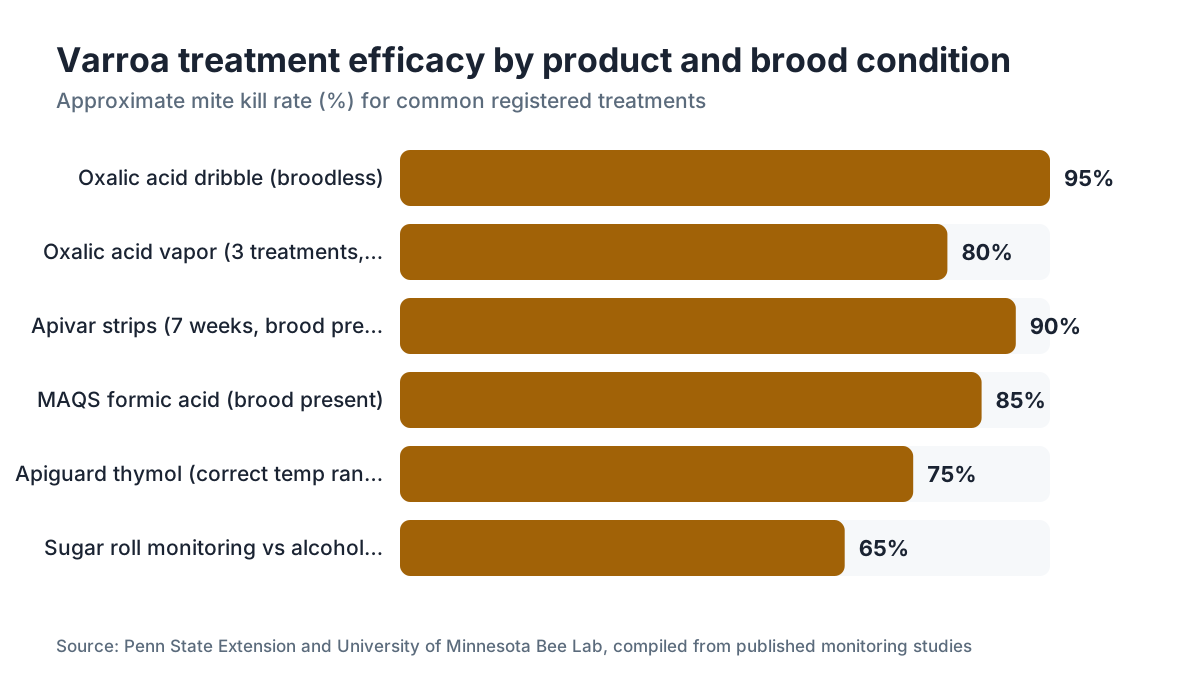
Oxalic acid dribble or vaporization is cheap, leaves no residue in honey, and works beautifully during a broodless stretch. Time a treatment to a natural or induced broodless window (late fall, early winter, or right after pulling a queen) and this is probably the best tool a hobbyist owns. The dribble needs no special gear. A decent vaporizer runs $100 to $200, which is steep for two hives, but split one with a local club and the per-hive cost drops to nothing [6].
Apivar (amitraz) is the most forgiving option for a beginner. Temperature sensitivity is low and it keeps working for seven weeks even with brood present. The catch is resistance. Amitraz resistance in varroa is documented in some U.S. populations, especially where Apivar gets used hard every year, so rotating chemistries matters [7].
MAQS is the only product labeled for use with honey supers on. That's a genuine advantage in July when your crop is sitting on the hive. The formic acid smell is brutal for the first 48 hours and the strips are finicky to apply. Watch the label temperature ceiling. Above 85°F you risk killing the queen [11].
Thymol products (Apiguard, ApiLife Var) work when daytime temperatures sit in range. In the northern U.S. that window is roughly August into early September. Below 59°F the thymol won't volatilize enough to do anything [5].
For where to buy these, our beekeeping supply companies guide covers the major vendors that carry registered miticides.
Skip homemade or unregistered brews entirely. Beyond the legal problem, dosing an unlabeled preparation in a small hive can kill your colony faster than the mites would.
When should I treat, and how does the calendar look for a small apiary?
The Honey Bee Health Coalition recommends at least two monitoring events a year, but for a small apiary four is the real floor: spring buildup, midsummer, late summer before the fall flow ends, and one broodless check in late fall [2]. Miss the August one and you may not know anything is wrong until the cluster dies in January.
Here's a rough seasonal protocol for a temperate, four-season climate. Shift it one or two months for the Deep South or the Pacific Coast.
March-April: Take your first alcohol wash once bees are flying regularly. Most colonies that survived this long carry low mite loads, but not all of them. Above 2%, treat before the colony explodes into its spring population surge.
June: Check again. Spring colonies double and triple fast, and mite numbers scale with brood. A hive that looked fine in April can sit above 2% by June with no symptom you'd ever notice from the outside.
July-August: Highest-risk window of the year. Big colonies, maximum brood, maximum mite reproduction. At or above 2% in July, treat with something that handles brood-present conditions (Apivar or MAQS). The bees you raise in August and September are your winter bees. Varroa-damaged winter bees die early, and the colony dwindles or starves before spring. Protecting August brood is the single highest-payoff thing you can do for overwintering.
October-November: Most northern colonies are low-brood or broodless now. This is your oxalic acid window. A dribble or vapor treatment with brood absent hits 95% or better on phoretic mites, against 60 to 70% when brood is present [6]. Time it carefully. Too early and there's still capped brood; too late and the cluster is tight and cold. A daytime range of 40 to 60°F suits an oxalic dribble.
Write the dates down. On two hives, skipping an August wash because life got busy is exactly how you lose a colony by December.
Do I need to worry about treatment resistance with just a few hives?
Yes, and it isn't a future problem. Amitraz resistance is already confirmed in U.S. varroa populations. A 2020 study in Scientific Reports found amitraz resistance alleles in mite populations sampled across multiple states [7]. That doesn't mean Apivar quits overnight. It means running the same chemistry every treatment cycle every year is asking for trouble.
With a small apiary the temptation is to stick with whatever worked last year. Rotation is smarter. A rotation I'd run:
- Spring, if needed: Apivar (amitraz)
- Late summer: MAQS or a thymol product (formic acid or thymol)
- Winter broodless: oxalic acid
Three different active ingredients across the year is reasonable. If you treat twice in one season, keep the same product for both rounds that season (consistency within a course), then switch the active ingredient next year.
Resistance testing on your own mites isn't realistic at hobbyist scale. You're not running bioassays. The practical stand-in is simple: confirm your mite count drops 90% or more within two to three weeks after a treatment ends. If you went in at 3% and you're still at 2.5% six weeks later, something failed. Wrong application, resistant mites, or heavy reinfestation from a neighbor's collapsing hive.
Can brood breaks help reduce mites without chemical treatment?
Brood breaks work. Varroa can only reproduce inside capped brood cells. Take the brood away, or stop the queen from laying, and the reproductive cycle stalls. Now every mite is phoretic, riding on adult bees, which makes them easy targets for treatments like oxalic acid that can't reach into capped cells.
For a hobbyist with two hives, the most practical brood break is a planned split paired with a treatment. In spring, split your stronger colony, let the queenless half raise a new queen (or drop in a mated one), and while that half is broodless, hit it with an oxalic acid vaporization. You manage mites and grow your colony count in one move.
Another route is caging the queen for 24 to 25 days. You need a cage big enough to hold her on a frame; some beekeepers use a push-in cage. The colony finishes one last round of brood from existing eggs, then goes broodless when that brood hatches. Treat during the gap. The cost is real: caging stresses the colony and cuts honey production. For a hobbyist who cares more about colony health than a big crop, it's a fair trade once a year.
Brood breaks by themselves, with no chemical follow-up, rarely hold mite populations at safe levels through a whole season in most North American climates [3]. Treat them as multipliers for your treatments, not substitutes.
How do I spot varroa damage in the hive before it's too late?
The signs of a varroa-wrecked colony are specific enough that you can learn them before you ever lift a lid.
Deformed wing virus (DWV). The most visible tell. Bees emerge with shriveled, crumpled wings. Varroa spreads DWV while feeding in the pupal cell. A few crumpled-wing bees is a warning. Crumpled-wing bees crawling on the landing board in numbers means the colony is in real trouble [1].
Spotty brood pattern. When mite-infested pupae die in their cells, workers uncap those cells. You get scattered empty cells salted through the capped brood. European foulbrood and other diseases can do this too, so don't jump straight to varroa, but in an otherwise healthy-looking colony varroa is the usual cause.
Greasy, dark-looking bees. Heavy mite loads wreck fat body development in adult bees, hitting their immune function and their appearance. Bees that look duller or oilier than normal, especially in late summer, sometimes read as "sick" before any louder symptom shows up.
A population drop that makes no sense. A colony that goes into August strong and comes out of September looking thin, queen still laying, is losing bees faster than they hatch. Varroa-compromised winter bees die young.
By the time you see heavy DWV or a crashing population, you've already burned weeks of recovery time. That's the whole argument for monitoring on a schedule instead of waiting for symptoms. A mite count warns you earlier than any clinical sign ever will.
What does a simple, written varroa protocol look like for 1-4 hives?
Here's a bare-bones protocol you can actually run. Adjust products and timing to your climate and local rules.
January-February: Nothing, unless you missed a broodless window in November. Confirm your oxalic acid supply is stocked for the season.
March (first warm day above 50°F): Alcohol wash, every hive. Record it. Above 2%, treat with Apivar strips per label.
June: Alcohol wash. Above 2%, treat with MAQS or Apivar depending on temperature and whether supers are on.
August 1-15: Alcohol wash. Most important test of the year. Above 2%, treat immediately. MAQS if supers are on, otherwise Apivar.
October-November (brood declining): Check brood frames. Once fewer than two frames of capped brood remain, do an oxalic acid dribble or vaporization. This is your cleanup shot. Target zero or near-zero mites going into winter.
That's four monitoring dates and up to three treatment windows. Total hands-on time across a year: maybe six hours. Supplies for a two-hive hobbyist running this plan cost roughly $50 to $80 a year, depending on products and whether you own or borrow a vaporizer.
VarroaVault's free protocol planner builds a version of this calendar for your region and colony count, with reminders timed to your local nectar flows.
For sourcing gear, our beekeeping supplies guide covers what you actually need to run this.
Should I bother with varroa-resistant bee genetics?
Honest answer: it depends on where you are and what you can get.
Hygienic behavior and VSH (Varroa Sensitive Hygiene) traits are real. VSH-bred bees detect mite-infested cells and uncap them before the mites finish reproducing. Research at the USDA-ARS Baton Rouge lab, the primary VSH breeding program in the U.S. for decades, has shown VSH colonies suppressing mite reproduction by 90% or more against non-VSH controls [8]. That's a big number.
The practical problem for a two-hive hobbyist is that you can't hold onto VSH genetics. Your queens mate with drones from nearby apiaries, most of which carry no VSH traits, and within a queen cycle or two the trait dilutes back into the general population. Unless you raise your own queens somewhere you control the drone pool (basically impossible for most backyard beekeepers), a VSH queen helps only for her own lifetime, then the advantage fades.
Even so, buying from a reputable VSH or hygienic-stock breeder beats package bees of unknown genetics. You'll probably treat less during that queen's reign. Treat it as a complement to your monitoring-and-treatment plan, never a replacement.
One note on africanized honey bees: they do show some behavioral varroa resistance, but keeping them in a backyard in the U.S. is a serious safety problem and restricted in some states. Don't chase Africanized genetics as a mite strategy.
What mistakes do small-apiary beekeepers make most often with varroa?
These patterns show up again and again in colony loss surveys and extension post-mortems.
Not testing at all. A 2022 USDA National Agricultural Statistics Service survey found a significant share of hobbyist beekeepers report never monitoring mite levels [9]. Treating without testing is dosing medicine without a diagnosis. You treat when you don't need to, or you miss the window when you do.
Treating too late. The Honey Bee Health Coalition frames August as the make-or-break window: the bees raised in August and September are the winter population. Varroa damage to those bees causes winter loss that surfaces in January and looks like starvation or a mystery dwindle. By the time the colony dies, the beekeeper blames the cold. The real cause was mites in August [12].
Undertreating. Fewer Apivar strips than the label calls for, pulling strips early, a single oxalic dribble while the colony still holds heavy brood. Read the label. Strip count by colony strength and treatment duration are specified for a reason.
Ignoring reinfestation. When your neighbor's untreated hive collapses in October, your bees may rob it and haul back hundreds of mites. You can't fully prevent robbing, but knowing the risk tells you to run a post-October wash even if your fall treatment looked clean.
Assuming one good year means you're done. Varroa management never ends. A colony that tested clean in October can sit above 2% by June if spring buildup runs fast and you skip the spring wash.
Are there resources and tools specifically designed for hobbyist varroa management?
Yes, and a handful are worth your time.
The Honey Bee Health Coalition's Varroa Management Guide is the most thorough free resource going. It covers monitoring methods, treatment thresholds, and product selection in language written for beekeepers, not researchers. The current edition downloads free [2].
University extension programs are the other anchor. The University of Minnesota Bee Lab publishes a monitoring page with detailed alcohol wash instructions [4]. Penn State Extension, University of Florida IFAS, and NC State Extension all keep varroa pages updated as products and research change. Free, unaffiliated, written by people who actually keep bees.
The EPA runs a searchable pesticide database where you can confirm any product you're eyeing is registered for use in beehives [10]. If it isn't in there, don't use it.
For structured tracking, VarroaVault's free tools include a monitoring calendar and mite load tracker built for hobbyist-scale operations, with treatment timing tied to your region and colony count.
Local beekeeping associations are underrated. Your state or county association often runs varroa monitoring workshops, sometimes loans out vaporizers, and can tell you what mite pressure looks like in your area this season. That local read never shows up in a national guide.
Frequently asked questions
How often should I test for varroa with only 2 hives?
Test at least four times a year: early spring (March-April), early summer (June), midsummer (August), and late fall before winter. The August test matters most, because the bees raised in August and September are your winter bees, and varroa damage to them is the leading cause of winter loss. With two hives, one failure is a 50% loss, so monthly monitoring from April through October is a realistic target.
Can I use oxalic acid in winter on a small hive without harming the bees?
Yes. An oxalic acid dribble or vaporization during a broodless or near-broodless period is safe for adult bees at label doses. The Api-Bioxal label specifies 5 ml of 3.2% solution per seam of bees for the dribble method. Worker mortality from one correct treatment is minimal. Don't treat below 40°F or when the cluster is too tight to reach, and never exceed one dribble per broodless period per label.
What is the 2% varroa threshold and where does it come from?
A 2% threshold means 2 mites per 100 bees on an alcohol wash, the level at which the Honey Bee Health Coalition and most university extension programs recommend treating during the brood season. Below it, a healthy colony's hygienic behaviors may hold mite growth in check. Above it, mite growth usually outpaces the colony's ability to compensate, especially once it starts raising winter bees in August and September.
Do I need a vaporizer to treat varroa, or can I do it without one?
You don't need a vaporizer. The oxalic acid dribble uses nothing beyond a syringe and a measured solution, costs about $1-3 per hive, and works well during a broodless period. A vaporizer helps more when some brood is present, since repeated vapor treatments can reach mites emerging from cells over several weeks. For a hobbyist with 1-4 hives doing a planned winter treatment, the dribble is practical and proven.
What happens if I skip varroa treatment for one season?
Untreated colonies in North America usually show rising mite loads through summer, then collapse in winter or the following spring. A colony that enters July at 2% mites can hit 5 to 10% or more by September with no intervention. At that level, deformed wing virus transmission is severe, winter bees are compromised, and failure before spring is likely. One skipped season is enough to lose a hive, especially with a hot, long brood-rearing summer.
Can I share varroa treatment supplies with other hobbyist beekeepers?
Sharing consumables like oxalic acid solution between apiaries carries a small disease transmission risk if equipment touches frames or bees. Sharing a vaporizer unit is generally fine, since the heat cycle sterilizes most pathogens. Buying a shared vaporizer through a local beekeeping club is common and cost-effective. Clean shared equipment between apiaries, and never share hive tools or frames.
How do I read an alcohol wash result, and what if I can't find 300 bees exactly?
Count your bees and your mites separately, then do the math: (mites / bees) x 100 = percentage. Collect 250 bees and find 4 mites and that's 1.6%, below the 2% trigger. Exactly 300 bees is ideal but not required; 200 to 350 gives a usable result. Avoid samples under 150 bees, where the margin of error gets wide enough to cause misreads in either direction.
Is it possible to manage varroa without any synthetic chemicals?
Oxalic acid and thymol are organic acids approved for certified organic operations, but they're still registered pesticides and must follow the label. Purely non-chemical management using only brood breaks, drone comb removal, and hygienic genetics can reduce mite pressure, but it hasn't consistently held loads below economic thresholds in North American research. Most extension programs treat organic-acid treatments as essential even in low-input approaches.
Will splitting my hive help control varroa mites?
Yes. A split creates a temporary broodless period in the queenless half, a useful treatment window for oxalic acid. It also cuts the bee population in each unit at first, which slows mite growth. But the mites present at splitting spread into both daughter colonies, so a split without a follow-up treatment is not a fix on its own. Pair a spring split with an oxalic vapor treatment during the queenless window for the best result.
How do I know if a varroa treatment actually worked?
Run an alcohol wash two to three weeks after the treatment ends and compare it to your pre-treatment count. A successful treatment drops the mite load by at least 90%. Treat a colony at 3% and land at 0.3% or below and you're in good shape. Less than a 90% drop means you check the application, the temperature range, or heavy reinfestation from nearby collapsing colonies.
Do I need to tell my neighbors or local authorities about my varroa treatments?
In most U.S. states, no notification to neighbors is required for EPA-registered miticides used per label inside a hive. Some states require hive registration with the state department of agriculture, and inspectors may ask about your treatment history. Check your state's apiary rules. In a homeowner association, local ordinances may restrict beekeeping outright, but the treatment itself isn't separately regulated beyond federal EPA label requirements.
What's the cheapest effective varroa treatment for a single hive?
An oxalic acid dribble during a broodless period runs roughly $1-3 per hive, counting the Api-Bioxal and a syringe, and needs no vaporizer. Efficacy in a truly broodless colony is 95% or better on phoretic mites. With brood present, Apivar strips run $8-14 per hive and need no special gear. The dribble wins on cost for the fall treatment; Apivar is the budget pick for in-season work.
Can varroa mites spread from my hives to my neighbors' hives?
Yes. When a heavily infested colony collapses, nearby colonies rob its honey and pick up mites doing it. Robbing and drifting bees are the main way mites move between apiaries. That's why hobbyists in areas thick with untreated hives keep seeing reinfestation after clean treatments. You can't fully stop it, but treating on schedule and closing up collapsing hives fast to block robbing cuts the risk.
Sources
- USDA Agricultural Research Service, Varroa destructor biology: Varroa destructor feeds on fat bodies of developing honey bee pupae and adult bees, transmitting viruses including deformed wing virus
- Honey Bee Health Coalition, Varroa Management Guide: The 2% threshold during brood season; colonies can go from manageable mite levels to collapse in as few as six weeks; recommendation for minimum monitoring events per year
- University of Florida IFAS Extension, Varroa Mite Management: Untreated colonies in North America typically collapse within one to three years due to varroa and associated viruses; brood breaks alone are insufficient to maintain safe mite levels
- University of Minnesota Bee Lab, Varroa Monitoring Methods: Alcohol wash protocol using 300 bees and 70% isopropyl alcohol is the most accurate monitoring method; sugar rolls undercount mites by 25-40% compared to alcohol wash
- EPA, Pesticide Registration: Thymol-based products require ambient temperatures of 59-105°F (15-41°C) for effective volatilization and mite control
- Penn State Extension, Oxalic Acid for Varroa Control: Oxalic acid achieves 95%+ efficacy on phoretic mites in broodless colonies versus 60-70% efficacy when brood is present; vaporizer units cost $100-200 for basic models
- Scientific Reports (2020), Amitraz resistance in Varroa destructor from the United States: Amitraz resistance alleles confirmed in Varroa mite populations sampled across multiple U.S. states
- USDA-ARS, VSH (Varroa Sensitive Hygiene) Bee Breeding Program, Baton Rouge: VSH colonies can suppress varroa mite reproduction by 90%+ compared to non-VSH control colonies in research settings
- USDA National Agricultural Statistics Service, Honey Bee Colony Loss Survey (2022): A significant share of hobbyist beekeepers report never monitoring mite levels in colony health surveys
- U.S. EPA, Pesticide Registration: EPA maintains registration database for all legal pesticide products including miticides registered for use in honey bee colonies
- NC State Extension Apiculture, Varroa Management Protocols: MAQS (formic acid) is labeled for use with honey supers in place; effective temperature range is 50-85°F; above 85°F queen loss risk increases
- Honey Bee Health Coalition, Varroa Management Guide: Treatment Thresholds: August is identified as the critical brood-rearing window for winter bee production; varroa damage to August-September brood is the leading cause of winter colony loss
Last updated 2026-07-10