Varroa mite feces: what it is and why it matters for hive health
TL;DR
- Varroa mite feces build up inside capped brood cells and soak into the wax.
- The frass carries guanine and other compounds that disrupt bee larval development and suppress immune peptides like abaecin and defensin-1.
- It helps explain why colonies crash even before adult mite counts look scary.
- Control mite load, rotate old comb, and the frass problem shrinks with it.
What exactly is varroa mite feces and where does it end up in the hive?
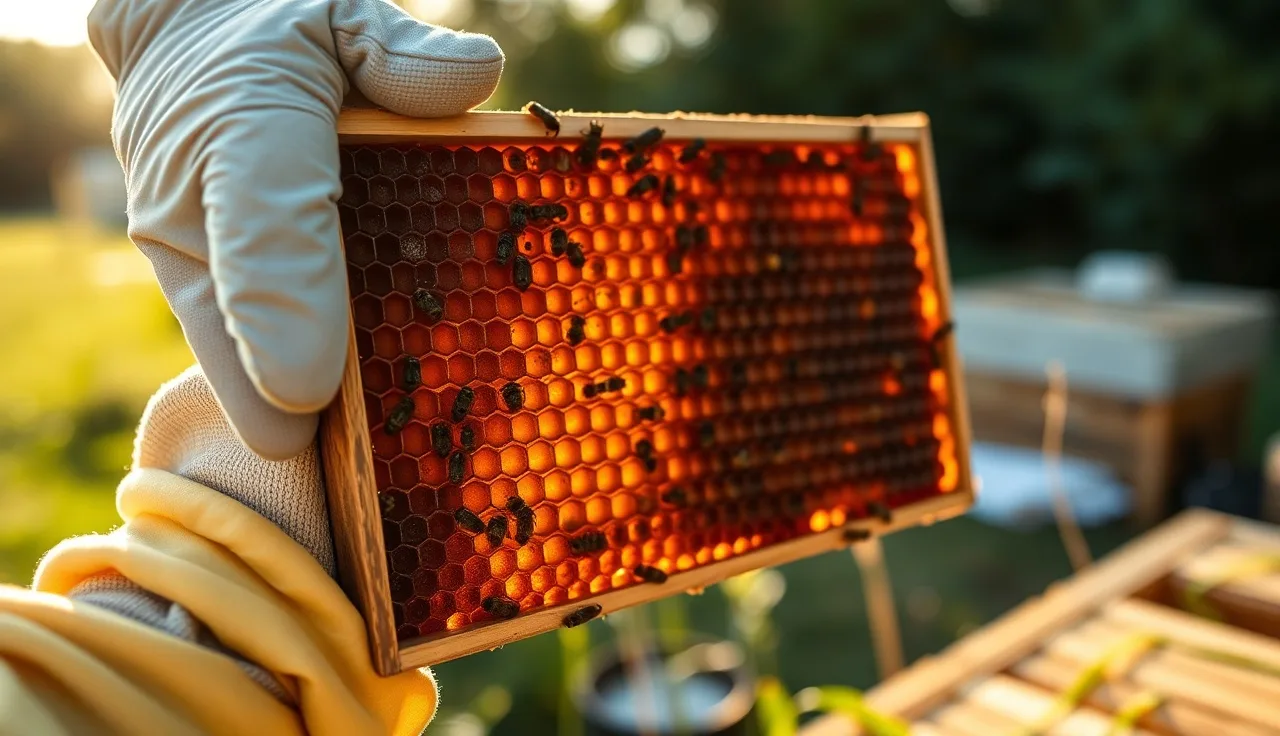
Varroa destructor feeds on the fat body of developing honey bee pupae, and like anything that eats, it produces waste. That waste is the feces, or frass, and it gets deposited straight into the sealed brood cell while the mite reproduces. The cell stays capped for about 12 days for worker brood and around 15 days for drone brood, so the frass sits in close contact with the developing bee the whole time [1].
The frass isn't inert. Studies have found a mix of compounds in it, including guanine, the main nitrogenous waste product in arachnids, plus proteins and other metabolic byproducts. Guanine shows up as white crystalline deposits you can see under magnification if you uncap and inspect a heavily infested cell. Beekeepers doing brood autopsies sometimes describe a faint discoloration at the base of old comb cells. Part of that is accumulated frass from earlier mite generations [2].
Beyond single cells, those compounds absorb into the wax over time. Old, dark comb that has run through many brood cycles in a high-infestation colony carries a different chemical profile than fresh wax. Where that crosses into a direct health hazard is still being studied. The Honey Bee Health Coalition's Varroa Management Guide treats comb renewal as a reasonable part of colony management, partly for this reason [3].
So when you pull a frame, don't expect a visible pile of droppings. The feces are microscale deposits baked into cell walls and soaked into wax across successive brood cycles.
Does varroa frass actually harm developing bees, or is the mite's feeding the real problem?
This is genuinely contested, and anybody who hands you a clean either-or answer is oversimplifying. The mite's direct feeding on fat body tissue is clearly harmful on its own. Fat body in pupae works something like a vertebrate liver, managing immune compounds, energy reserves, and protein storage. When varroa feeds on it, the emerging bee has less vitellogenin, weaker immune competence, and a shorter adult lifespan [4].
The frass adds a separate layer. Research in Scientific Reports found that varroa feces contain compounds that change the chemical environment inside the brood cell on their own, apart from the feeding wound. The frass alters the volatile profile of infested cells, and some of those volatiles appear to prime or suppress the bee's immune response at the larval stage. The honest read on the evidence: the feces are not inert, they do add to larval stress, but pinning down how much of a heavily infested bee's lost fitness comes from frass versus direct feeding is hard to separate experimentally [2].
Here's what that means at the frame level. A colony at 3% infestation on old, dark comb that has held mites for two seasons may be in worse shape than a colony at 3% on newer comb. The cumulative chemical load matters, even though nobody can yet give you a clean parts-per-million threshold for harm.
Can varroa feces be seen during a hive inspection?
Not easily, and not without magnification. The frass deposits inside cells are microscale. What you can sometimes catch with a good hand lens or a phone macro lens is the white, chalky guanine residue at the base of cells that have housed mites repeatedly. It reads as a faint white smear or powder.
A sticky board shows you mite bodies and mite parts, not feces. The sticky board mite count, also called a natural mite drop count, tells you how many mites fell over 24 or 72 hours, which you use to estimate infestation rates. The frass stays in the comb, never on the board.
If you do a brood autopsy, uncapping cells with tweezers and pulling out pupae, you might notice cell walls that look darker or feel slightly gritty compared to fresh comb. That's part frass, part propolis, part cocoon residue. You can't separate those by eye without lab analysis.
The practical takeaway is short. Frass in comb is a downstream sign of infestation history. The number you actually need is your current mite load, measured by alcohol wash or sugar roll. If you aren't running alcohol washes regularly, the varroa mite page has the full testing protocol.
How does varroa frass affect the bee's immune system?
The mechanism isn't fully pinned down, but the working model from several research groups runs like this. Varroa mites, through both feeding and frass, suppress the expression of certain antimicrobial peptides in developing bees. Abaecin and defensin-1 are two immune peptides that show reduced expression in bees raised in heavily infested cells [4].
This matters more for disease than for the mite itself. A bee that emerges with weakened immune function is more open to Nosema, American foulbrood, and the viruses varroa vectors, including Deformed Wing Virus. DWV moves during feeding, not through frass, but a bee already compromised by the frass-altered cell has less capacity to fight any of it.
Work from the University of Minnesota Bee Lab shows that varroa infestation and virus transmission together explain most of the winter colony loss pathway, each making the other worse [5]. Frass fits into that as one of several stacked stressors. It's not a single villain. It's one link in a cascade.
The practical line: keep mite loads below 2% through the summer brood cycle, which is when you're raising the long-lived winter bees, and you limit the frass exposure those bees get while developing. That's the same threshold you'd use for any other varroa reason. The frass biology just gives you one more reason to hold it.
Does varroa frass persist in old comb and should you replace it?
Yes, frass compounds persist in wax. Wax is lipophilic, so fat-soluble compounds move into it readily and stay put. Studies of old commercial comb have found a long list of pesticide residues, mite treatment residues, and biological metabolites, including compounds tied to mite activity [6].
The Honey Bee Health Coalition's Varroa Management Guide recommends rotating out old comb as part of integrated management. Their guidance points to replacing roughly 20% of frames per year, which cycles a whole brood box over five years [3]. This is no magic fix for varroa, but it limits everything that builds up in wax over time, frass included.
Dark comb, run through many brood cycles, carries a thicker cocoon and residue layer inside each cell. That shrinks cell volume slightly, so emerging bees may come out marginally smaller. A study in PLOS ONE also found old comb affects the gut microbiome of emerging bees, though it didn't fully separate frass from the other accumulated compounds [7].
The honest answer on comb replacement: probably a net positive, cheap to do incrementally, and no substitute for controlling mite loads directly. A colony on brand-new comb at 5% infestation is still in serious trouble. Treat first. Rotate comb as an ongoing habit.
What role does varroa frass play in virus transmission inside the colony?
Varroa transmits viruses through feeding, not through feces, as far as current research can tell. The primary route for Deformed Wing Virus, Sacbrood, and several other bee pathogens is the feeding wound, where viral particles from the mite's body fluids or mouthparts enter the bee's hemolymph directly [8].
Frass does not appear to be a meaningful viral vector on current evidence. But the frass-induced immune suppression above means a bee developing in a cell thick with frass is less equipped to clear a viral load that arrived by some other route.
Deformed Wing Virus is the clearest example. DWV is the most common honey bee virus worldwide, and the link between high varroa loads and high DWV titers is well established [8]. The frass isn't delivering the virus. It may be weakening the bee's defenses against the virus the feeding mite delivered.
This distinction earns its keep when you're explaining to a fellow beekeeper why colonies with identical mite counts sometimes crash at very different rates. The colony with cleaner comb and lower background frass may hold bees with better immune reserves, and that changes how fast DWV tips from subclinical to symptomatic.
How does frass accumulation compare to other stressors in a varroa-infested colony?
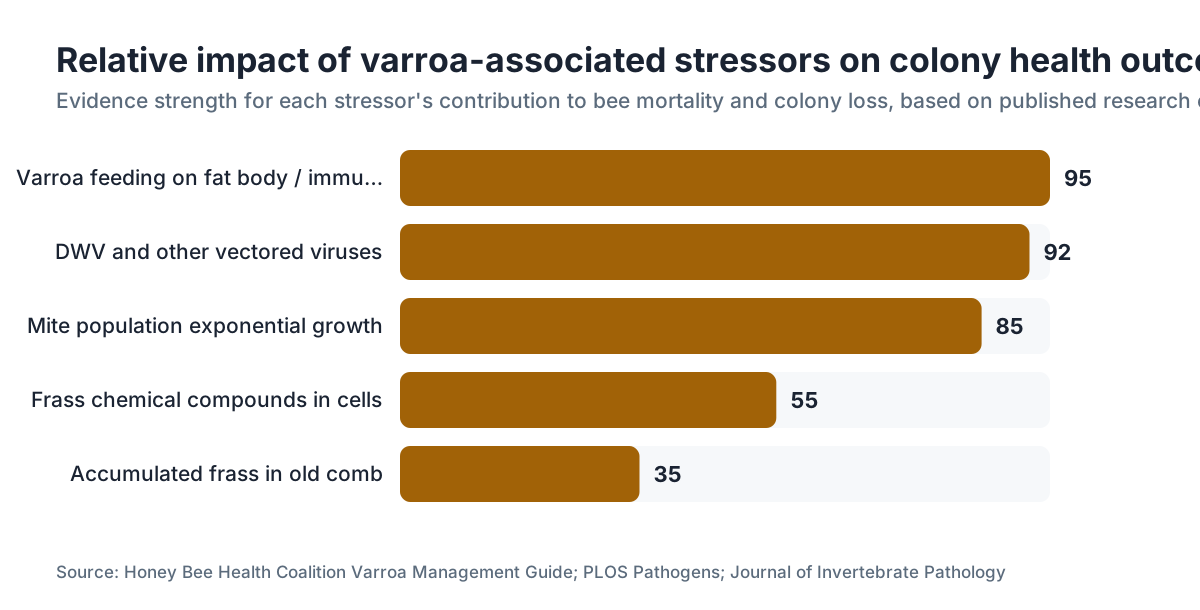
Here's a rough ranking based on what the current research supports, from most to least impact on colony outcomes:
| Stressor | Primary mechanism | Evidence strength |
|---|---|---|
| Varroa feeding on fat body | Direct tissue loss, immune suppression, DWV transmission | Very strong [4][8] |
| DWV and other vectored viruses | Systemic viral infection, wing deformity, reduced lifespan | Very strong [8] |
| Mite reproductive pressure | Exponential population growth, colony overwhelm | Strong [1] |
| Frass chemical compounds in cells | Immune disruption, altered larval development environment | Moderate, still being quantified [2] |
| Accumulated frass in old comb | Chronic background stressor, possible gut microbiome effects | Weaker, emerging evidence [7] |
The frass issue is real, but it sits below direct feeding and virus effects in the hierarchy of harm. That's why treatment thresholds ride on mite counts, not on comb age or some frass proxy. You treat to knock down the mite population, and frass exposure falls proportionally.
Writing frass off entirely would be a mistake, though. It's part of why varroa damage is nonlinear. Colonies don't decline at a steady pace matched to mite counts. They tip suddenly, and the chronic chemical stress on bees raised in frass-laden comb is probably part of what sets up that tipping point.
Can varroa frass be used as a diagnostic marker for infestation history?
In a research setting, yes. Analytical chemistry on wax samples can detect guanine and other frass-associated compounds and sketch a rough infestation history for that comb. This is not a field test for hobby beekeepers. It needs lab equipment and comes nowhere near the value of a $2 alcohol wash.
What does carry some practical weight is a visual check during frame rotation. Pull a frame and see white powdery deposits at the base of the cells, and you've likely had mite reproduction in that comb across multiple seasons. Take that as a prompt to rotate the frame out sooner and to recheck your current mite load.
For tracking infestation trends over time, the free protocols at VarroaVault let you log mite wash results season over season, which paints a far clearer picture of colony history than comb inspection ever will.
The alcohol wash stays the gold standard. The Honey Bee Health Coalition sets a 2% infestation threshold (roughly 2 mites per 100 bees in a 300-bee sample) as the treatment trigger during summer brood-rearing, and 1 to 2% in late summer when winter bees are being produced [3]. Frass biology reinforces why that late-summer window matters so much. The bees developing under high frass loads in August are the ones keeping your colony alive in February.
Does the type of treatment you use affect frass accumulation or its effects?
No treatment targets frass directly. Every approved varroa treatment works by killing or disabling mites, which stops new frass from being laid down. Whether a treatment leaves its own residue in wax alongside the frass is a separate and well-documented question.
Oxalic acid, registered with the EPA for varroa control in the US, doesn't leave persistent wax residues at meaningful levels under normal use [9]. EPA's registration review found oxalic acid residues in treated comb negligible next to the oxalic acid that occurs naturally in honey.
Amitraz-based products (Apivar) and fluvalinate-based products (Apistan) do leave residues in wax, and those build up over years of use. So old comb in a colony treated with synthetic miticides for a decade carries both frass and treatment residues. That layered chemistry in aged comb is one more argument for rotating comb [6].
Organic acid and essential oil treatments, including thymol-based products like ApiLife VAR and Apiguard (both EPA-registered), leave minimal wax residue. If you're rotating comb out strategically, prioritize frames that soaked up the most synthetic treatment over the years. Those carry the highest combined chemical load alongside any frass.
What should beekeepers actually do about varroa feces in practical terms?
The action list is shorter than the science, which is often true in beekeeping.
First: control your mite population. Every piece of frass biology traces back to mite load. Fewer mites, less frass laid down, less chemical stress in the cell. Run an alcohol wash at least four times a year: spring buildup, early summer, late summer (the most important window), and before the winter cluster forms [3].
Second: rotate old comb. Aim to replace 20% of your brood frames per year, which comes to one or two frames per brood box each season. Pull the darkest, most worn frames first. It's a slow process and it won't rescue a colony with an untreated mite problem, but as a background habit it limits accumulated frass and residue.
Third: favor new comb during re-queening or splits. Starting a colony from a split or package? Give them the newest foundation you have. The queen's first brood cycles then happen in the cleanest cells possible, which sets up better-developed bees for the founding population.
Fourth: don't panic about frass as an isolated issue. It's part of the larger varroa picture, not a separate crisis to fight on its own. Keep mite counts under 2% in summer and under 1% going into winter, and you've handled the frass problem as a side effect of good mite management.
Shopping beekeeping supplies for comb renewal? Foundationless frames or plastic foundation both work. What matters is actually rotating the frames, not buying foundation and letting it sit. A simple marking system, a dot of paint or a notch in the end bar, lets you track frame age across seasons without fussy record-keeping.
How does varroa feces biology compare to what we know about other bee pests?
Varroa is the only major honey bee ectoparasite in North America now that Acarapis woodi (tracheal mite) has faded as a serious threat, thanks to genetic resistance in commercial stock. Small hive beetle (Aethina tumida) also produces feces, which ferment honey and wreck comb, but that's a different kind of damage from a different organism working different substrates.
Among arachnid parasites in general, guanine-rich frass is standard. Ticks and spider mites do the same. What makes varroa unusual is the closed cell where the frass builds up and stays in sustained contact with the host. Most ectoparasites drop feces into the open environment. Varroa's reproductive biology forces a sealed situation that concentrates the exposure.
African-lineage honey bees, Apis mellifera scutellata and related populations, show higher rates of hygienic behavior, detecting and pulling infested cells faster [10]. That shortens the time frass sits in cells. Exactly how bees detect infested cells is still being studied, but volatile compounds tied to frass and mite presence are likely part of the signal. Breeding for hygienic behavior, including VSH (Varroa Sensitive Hygiene) lines, may work partly by sharpening detection of those frass-associated volatiles. If bee resistance genetics interest you, the africanized honey bee page covers how African traits map onto resistance.
The bigger point: frass biology isn't unique to varroa, but the honey bee brood cycle creates an unusual accumulation scenario. That's part of why varroa does more damage than a similarly sized ectoparasite would on an open-nesting host.
Frequently asked questions
Can I see varroa mite feces without a microscope?
Not reliably. Under a good hand lens or phone macro, you may catch white chalky deposits at the base of heavily infested cells, which is guanine-based frass. Most frass, though, is absorbed into wax at a scale your eye can't resolve. For practical hive assessment, an alcohol wash mite count gives you far more useful information than visual frass inspection.
Is varroa frass toxic to bees?
Toxic is probably too strong a word on current evidence, but it's biologically active and harmful. Compounds in the frass change the chemical environment of brood cells, suppress expression of antimicrobial peptides in developing bees, and add to the immune deficits seen in bees from heavily infested colonies. It's part of a stacked stressor picture, not a standalone poison.
Does freezing frames kill varroa frass or neutralize it?
Freezing frames at about minus 20 degrees Celsius for 24 hours kills varroa mites and their eggs in stored comb, which helps prevent new infestations from stored equipment. It does not neutralize or remove frass compounds already absorbed into the wax. Those residues stay in the comb regardless of temperature treatment.
How long does varroa frass persist in comb?
Based on what we know about lipophilic compounds in beeswax, frass-associated compounds can persist for years. Pesticide residue studies show wax holds compounds from treatments applied many seasons back. There's no published half-life figure specific to varroa frass, but the working assumption is that accumulation is progressive and doesn't clear on any useful timescale.
Will replacing comb reduce varroa damage to my bees?
Comb replacement lowers accumulated frass and other residues, which helps developing bee quality. It has no direct effect on current mite population levels. A colony on fresh comb at 4% infestation is still headed for collapse. Comb renewal is a useful long-term habit alongside proper mite management, not a substitute for it.
Does varroa frass affect honey quality or safety?
There's no evidence that varroa frass in comb contaminates honey at levels harmful to humans. Honey stored in cells that previously held infested brood isn't considered unsafe under current regulatory standards. The frass is mostly in brood comb rather than honey storage comb, and the two are largely separate in a well-managed hive. Food safety agencies have not flagged varroa frass as a honey contaminant.
Can varroa frass transmit diseases to other bees or animals?
Current research doesn't point to varroa frass as a meaningful transmission route for bee pathogens. Viruses like Deformed Wing Virus move through the mite's feeding, not its feces. The frass may weaken bee immune responses, making bees more susceptible to pathogens arriving by other routes, but the frass itself is not a known vector for bee diseases and poses no known risk to animals or humans.
Do bees clean varroa feces out of cells?
Hygienic bees can detect infested cells and remove the contents, including mites and their deposits, before capping completes. But that behavior targets the living mite and infested pupa, not frass already in the cell wall. Once compounds absorb into wax, normal cleaning behavior doesn't remove them. VSH (Varroa Sensitive Hygiene) lines show the highest rates of cell detection and removal.
What does varroa frass look like under a microscope?
Under magnification, varroa frass appears as small granular deposits, often white to yellowish-white, concentrated at the base of brood cells where the mite rests. The white crystalline part is mostly guanine, the main nitrogenous waste product in arachnids. The frass mixes with other cell debris and isn't always easy to pick out unless you know what you're looking for.
Does the amount of varroa frass in a cell relate to how many mites were in it?
In principle, yes. More mites reproducing means more frass laid down. Drone brood, which hosts higher mite reproduction at roughly 2.2 reproductive females per cell versus about 1.5 for worker brood, would accumulate more frass per cell cycle [12]. But there's no validated field method to quantify frass load per cell as a practical management metric.
Are there any treatments that specifically address varroa frass damage?
No treatments currently target frass directly. Some beekeepers use amino acid and vitamin supplements like Amino-B Booster to support bee health during high-stress periods, but those help nutrition, not frass. The only way to reduce ongoing frass deposition is to reduce the mite population through timely treatment. Comb rotation lowers accumulated historical frass but doesn't touch active infestation effects.
Is varroa frass studied in the context of colony collapse disorder?
Varroa, and the virus loads it enables, is a primary driver of colony loss in North America, and frass biology is part of the broader varroa damage picture. Colony Collapse Disorder as a specific syndrome has not been definitively linked to frass as a discrete factor. CCD research points to varroa-virus interactions, pesticide exposure, and nutritional stress together. Frass fits into the varroa-virus arm of that complex.
Sources
- USDA Agricultural Research Service, Varroa destructor biology and research projects: Varroa mites reproduce inside sealed brood cells: approximately 12 days capped for worker brood, 15 days for drone brood
- Scientific Reports (Nature Publishing), varroa feces and brood cell chemical environment study: Varroa feces contain compounds that alter the volatile and chemical environment inside brood cells and affect the bee immune response
- Honey Bee Health Coalition, Tools for Varroa Management guide: HBHC recommends a 2% infestation threshold for treatment during summer brood-rearing, 1-2% in late summer; recommends rotating 20% of frames per year
- PLOS Pathogens, varroa feeding on bee fat body and immune suppression: Varroa feeds on honey bee fat body tissue, reducing vitellogenin levels and suppressing expression of antimicrobial peptides including abaecin and defensin-1 in infested pupae
- University of Minnesota Bee Lab, varroa and winter colony loss research: Combination of varroa infestation and vectored virus transmission, especially Deformed Wing Virus, explains the primary winter colony loss pathway
- Apidologie, pesticide and biological residues in beeswax: Old brood comb accumulates synthetic miticide residues including amitraz and fluvalinate breakdown products alongside biological metabolites over successive brood cycles
- PLOS ONE, old comb and honey bee gut microbiome: Bees emerging from old comb show differences in gut microbiome composition compared to bees on new comb, with accumulated comb chemistry as a contributing variable
- Journal of Invertebrate Pathology (Elsevier), varroa as vector for Deformed Wing Virus: Varroa transmits Deformed Wing Virus through feeding wounds; DWV is the most prevalent honey bee virus globally and correlates strongly with high varroa loads
- US EPA, pesticide registration and oxalic acid residue review: EPA's registration review found oxalic acid residues in treated comb to be negligible compared to naturally occurring oxalic acid levels in honey
- USDA Agricultural Research Service, honey bee hygienic behavior and varroa resistance: African-lineage honey bee subspecies show higher rates of hygienic behavior including faster detection and removal of varroa-infested cells
- University of Florida IFAS Extension, varroa mite biology and management: Drone brood hosts higher mite reproductive success with an average of approximately 2.2 reproductive female mites per drone cell versus approximately 1.5 per worker cell
Last updated 2026-07-09