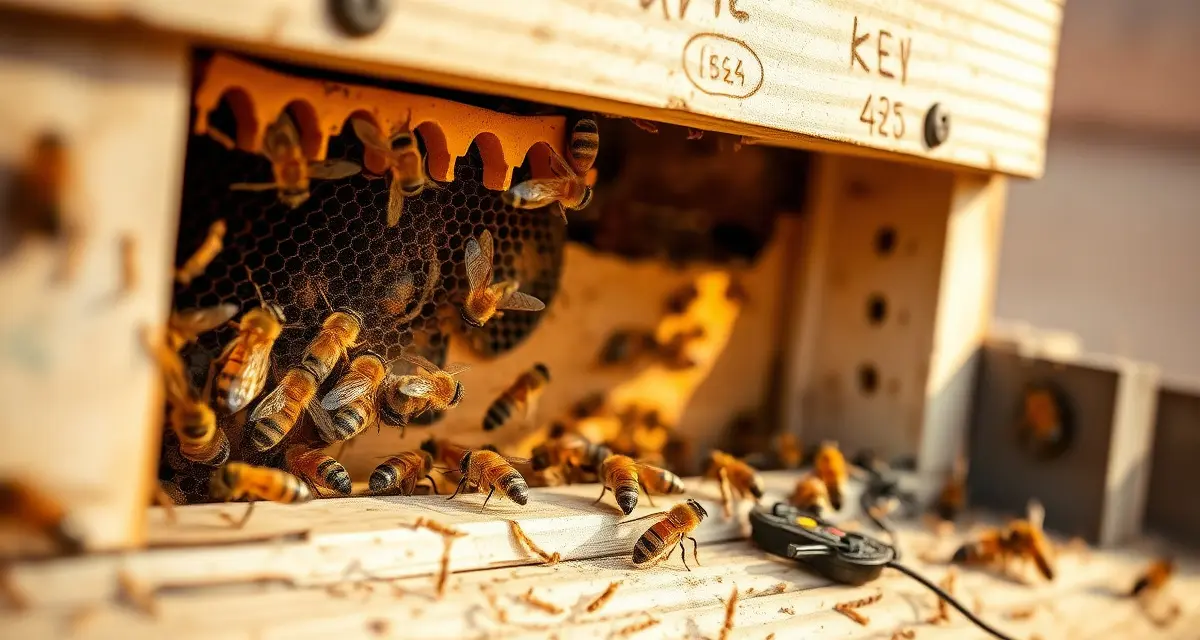
Sentinel Hives for Varroa Monitoring: How to Set Them Up and Use Them
A properly selected sentinel hive detects apiary-level threshold breaches an average of 10 days earlier than random sampling. That 10-day advantage is meaningful in August, when mite populations can increase by a percentage point or more per week and the winter bee cohort is actively being raised.
Sentinel hive programs are standard practice in commercial beekeeping for the same reason that sentinel species programs are standard in wildlife monitoring: monitoring a carefully chosen indicator gives you reliable early warning at a fraction of the effort of monitoring the full population.
TL;DR
- This guide covers key aspects of sentinel hives for varroa monitoring: how to set them up and
- Mite monitoring should happen at minimum every 3-4 weeks during active season
- The 2% threshold in spring/summer and 1% in fall are standard action points based on HBHC guidelines
- Always run a pre-treatment and post-treatment mite count to calculate efficacy
- Treatment records including product name, EPA number, dates, and counts are required for state inspection compliance
- VarroaVault stores all monitoring and treatment data with automatic threshold comparison and state export formatting
What a Sentinel Hive Is
A sentinel hive is a designated indicator colony that you monitor more frequently than the rest of your apiary. When the sentinel crosses a threshold, it triggers a broader apiary-level count to confirm whether the sentinel result reflects the wider population.
Sentinels are not the same as sacrificial hives or research hives. You're not using the sentinel as a mite source or allowing it to develop unchecked. It receives the same treatment as the rest of the apiary -- but it's tested more often, and its results inform testing decisions for the broader operation.
How to Choose Sentinel Hives
The selection criteria matter. A poorly chosen sentinel gives you misleading signals.
Select sentinels that represent the apiary average, not the extremes:
The best sentinel is a colony that consistently runs at or slightly above the apiary average mite count. This colony functions as a reliable indicator because when it rises, it's likely that the full apiary is trending upward. A colony that's historically your lowest-mite hive will lag the apiary trend by weeks -- it'll still be at 0.5% when the rest of your apiary has hit 2%.
Avoid using outlier colonies as sentinels:
A colony that's always your highest-mite outlier isn't a good sentinel because its counts reflect colony-specific factors (genetics, location, history) rather than apiary-level trends. A colony that's always your lowest isn't a good sentinel for the opposite reason.
Consider location within the apiary:
Colonies at the apiary perimeter are more exposed to reinfestation from neighboring operations. Including a perimeter colony as a sentinel -- particularly on the side of the apiary nearest neighboring beekeeping activity -- gives you early warning of reinfestation events that would hit perimeter hives first.
Practical sentinel selection: At the start of the season, look at your prior year's count records. Identify the 2-3 colonies that consistently ran near the apiary average with no extreme outlier history. Flag those as your sentinels.
How Many Sentinels Per Apiary
For most apiary sizes:
- 5-15 hives: 1-2 sentinels
- 15-30 hives: 2-3 sentinels
- 30-50 hives: 3-4 sentinels
- 50-100 hives: 4-5 sentinels
Adding sentinels beyond this generally produces diminishing returns. The value of a sentinel program is the early warning it provides with reduced testing burden. Adding sentinels increases your testing burden without proportionally improving early warning.
Testing Frequency for Sentinel Hives
Sentinels are tested more frequently than the general apiary population. A typical sentinel testing schedule:
Monthly from April through September. When the rest of your apiary gets a representative sample (15% of hives) every 6-8 weeks, your sentinels get tested every 4 weeks. This gives you a count at every point where mite population dynamics could shift significantly.
Within 1-2 weeks of any known stress event. If you know there's been a pesticide kill event nearby, a neighboring colony absconded, or you've observed robbing behavior (a reinfestation indicator), test your sentinels within a week rather than waiting for your scheduled date.
Immediately before and after any treatment. Sentinel counts provide the pre/post treatment data you need for efficacy calculation at the apiary level, in addition to whatever individual hive counts you collect.
Using Sentinel Counts to Trigger Broader Testing
The sentinel's primary function is decision support: when should you expand testing to the full apiary?
Trigger rule: When a sentinel count exceeds your normal seasonal threshold by 50% or more, conduct a full representative apiary sample within 7-10 days.
Examples:
- A sentinel at 1.5% in June (50% above the 1% "watch" level for that period) triggers a broader sample
- A sentinel at 2% in July (at the action threshold) triggers immediate broader testing and treatment planning
- A sentinel at 1% in August (at the August action threshold) confirms the treatment window is open for the full apiary
When sentinel counts don't require broader testing:
- When the count is below threshold and consistent with the sentinel's historical pattern
- When the count is slightly elevated but trending flat rather than rising
The sentinel's utility is in the early warning it provides before the full apiary crosses threshold. Using it to trigger broader testing at the right moment is what produces the 10-day detection advantage.
Keeping Sentinel Records Separate
Sentinel hive data should be tracked separately from the general apiary pool in your records. The reason: sentinel counts are not random samples of the apiary -- they're targeted samples from selected indicator colonies. Mixing sentinel results with general apiary counts confounds your apiary-level average.
A VarroaVault account with sentinel hive designation tracks this automatically. Sentinel counts appear in the sentinel panel separately from general hive count data, and the apiary trend graph shows sentinel trends alongside (but separate from) the apiary-average trend.
When to Update Your Sentinel Selection
Revisit your sentinel selection at the start of each season using that year's data:
- Did your sentinels actually lead the apiary trend last season? If the sentinel triggered at 2.5% and the representative sample confirmed 2.4% apiary average, the selection worked. If the sentinel was at 0.8% when the apiary average was 2.2%, the sentinel was underperforming its indicator role.
- Have any of your sentinel colonies experienced significant genetic changes (requeening with a notably different line)?
- Are any prior sentinels now clear outliers (consistently high or low) compared to the apiary average?
Updating sentinel selection annually based on performance data keeps your program calibrated to your current apiary dynamics.
VarroaVault supports sentinel hive designation with automatic testing frequency reminders that fire more often for sentinel-flagged hives. The varroa scouting frequency commercial guide covers the full representative sampling approach for large operations. The mite count tracking app page covers how VarroaVault handles sentinel count data separately from general apiary monitoring.
Frequently Asked Questions
How do I choose sentinel hives for varroa monitoring?
Select colonies that consistently track at or slightly above the apiary average mite count -- not your highest-count outliers and not your lowest. The sentinel's value is as an indicator of apiary-level trends; a colony that's an outlier in either direction won't give you reliable early warning of what's happening across the apiary. Review your prior season's count records to identify 2-3 colonies that ran near the apiary average throughout the season. Those are your best sentinel candidates. Favor colonies at the apiary perimeter, which are more exposed to reinfestation from neighboring operations.
How often should I test my sentinel hives?
Monthly from April through September. While the rest of your apiary gets a representative sample every 6-8 weeks, your sentinel hives get tested every 4 weeks. Additionally, test sentinels within 1-2 weeks of any stress event (pesticide kill nearby, robbing behavior, neighboring colony abscond) and within a week of any apiary visit where you observe signs that mite pressure may be building. The sentinel's value is the early warning it provides between your full-apiary sampling events -- monthly testing captures the dynamics between those broader assessments.
Does VarroaVault support sentinel hive designation and tracking?
Yes. In VarroaVault's hive record settings, you can flag any hive as a sentinel for its apiary. Sentinel-flagged hives receive automatic monthly testing reminders (more frequent than the default monitoring schedule for regular hives), and their count data is tracked in a separate sentinel panel that shows sentinel trends alongside the apiary average trend. When a sentinel count exceeds your defined trigger threshold, VarroaVault generates an alert recommending a broader apiary representative sample to confirm whether the sentinel result reflects the wider population.
How do I know if my varroa treatment is working?
Run a mite count 2-4 weeks after the treatment ends and compare it to your pre-treatment count. The efficacy formula is: ((pre-count - post-count) / pre-count) x 100. A result above 90% indicates effective treatment. Results below 80% should trigger investigation for possible resistance, application error, or reinfestation. Log both counts in VarroaVault to track efficacy trends across treatment cycles.
How often should I check mite levels in my hives?
At minimum, once per month (every 3-4 weeks) during the active season. Increase to every 2 weeks when counts are near threshold or after a treatment to verify it worked. In fall, monitoring frequency matters most because the window to treat before winter bees are raised is narrow. VarroaVault's monitoring reminders can be set to your preferred interval for each apiary.
What records should I keep for varroa management?
Each record should include: date of count or treatment, hive identifier, monitoring method used, number of bees sampled, mites counted, infestation percentage, treatment product name and EPA registration number, dose applied, treatment start and end dates, and PHI end date. State apiarists typically expect this level of detail during inspections. VarroaVault captures all of these fields in a single log entry.
What is Sentinel Hives for Varroa Monitoring: How to Set Them Up and Use Them?
A sentinel hive is a designated indicator colony within your apiary that you monitor more frequently and rigorously than the rest of your hives. Rather than sampling every colony, you select one or more hives with characteristics that make them reliable early-warning systems for mite pressure across the entire apiary. Research shows a well-chosen sentinel hive can detect apiary-level varroa threshold breaches an average of 10 days earlier than random sampling—a critical advantage during August when mite populations surge.
How much does Sentinel Hives for Varroa Monitoring: How to Set Them Up and Use Them cost?
Sentinel hive monitoring is a beekeeping management strategy, not a purchasable product. The approach itself is free to implement using standard mite-counting methods like alcohol wash or sticky boards. However, tools like VarroaVault can streamline the process by storing monitoring data, automatically comparing counts against treatment thresholds (2% in spring/summer, 1% in fall), tracking treatment records with EPA numbers, and generating state-compliant inspection exports—replacing manual spreadsheets with a purpose-built monitoring platform.
How does Sentinel Hives for Varroa Monitoring: How to Set Them Up and Use Them work?
You designate one or more colonies as sentinels based on characteristics that make them representative of your apiary's mite exposure. You then sample these hives every 3–4 weeks during active season using an alcohol wash or similar method. Because mite populations in a well-chosen sentinel track closely with apiary-wide pressure, a threshold breach in the sentinel—2% in spring/summer or 1% in fall per HBHC guidelines—triggers apiary-wide assessment and treatment decisions before populations become unmanageable.
What are the benefits of Sentinel Hives for Varroa Monitoring: How to Set Them Up and Use Them?
The core benefit is early detection: sentinel hives surface threshold breaches roughly 10 days sooner than random colony sampling. In late summer, when winter bees are being raised and mite populations can climb over a percentage point per week, that lead time is operationally significant. The strategy also reduces monitoring labor—you gain reliable apiary-level intelligence by intensively tracking a few indicator colonies rather than sampling every hive with equal frequency every cycle.
Who needs Sentinel Hives for Varroa Monitoring: How to Set Them Up and Use Them?
Any beekeeper managing multiple colonies benefits from a sentinel hive program, but it is especially valuable for those running apiaries of five or more hives, commercial or sideliner operations where full-apiary sampling every cycle is impractical, and beekeepers in high-mite-pressure regions or seasons. It is also important for anyone subject to state inspection compliance, since treatment records including pre- and post-treatment mite counts, product names, EPA registration numbers, and application dates are required documentation.
Related Articles
- Sticky Board Mite Counts: How Accurate Are They and When to Use Them
- Nectar Flow Mite Monitoring: Balance Honey Production and Varroa Control
Sources
- American Beekeeping Federation (ABF)
- USDA ARS Bee Research Laboratory
- Honey Bee Health Coalition
- Penn State Extension Apiculture Program
- Project Apis m.
Get Started with VarroaVault
The information in this guide is most useful when you have your own mite count data to apply it to. VarroaVault stores every count, flags threshold crossings automatically, and builds the treatment history you need for state inspections and effective management decisions. See pricing and free tools at varroavault.com.