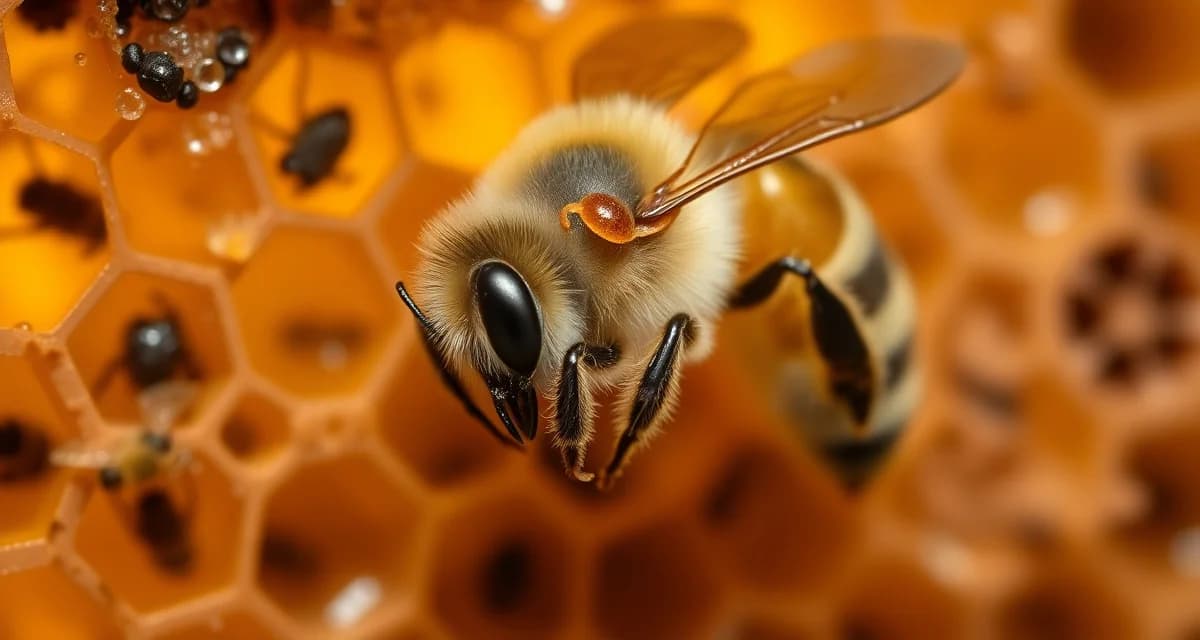
Varroa in Observation Hives: Managing a Display Colony
Observation hives in high-traffic environments have 4x higher mite transmission risk from visitor bee contact, bees entering from outside, and the stress of constant human proximity. That transmission risk, combined with the small population and limited treatment options that come with an observation hive, makes varroa one of the most challenging aspects of maintaining a healthy display colony.
Observation hives serve an important educational role, they're often the first up-close experience people have with bees, and they're used in schools, nature centers, zoos, and educational farms. Keeping those colonies healthy requires a different varroa management approach than a standard production hive.
TL;DR
- This guide covers key aspects of varroa in observation hives: managing a display colony
- Mite monitoring should happen at minimum every 3-4 weeks during active season
- The 2% threshold in spring/summer and 1% in fall are standard action points based on HBHC guidelines
- Always run a pre-treatment and post-treatment mite count to calculate efficacy
- Treatment records including product name, EPA number, dates, and counts are required for state inspection compliance
- VarroaVault stores all monitoring and treatment data with automatic threshold comparison and state export formatting
Why Observation Hives Are Varroa-Vulnerable
Small population: A typical observation hive contains 1-3 frames of bees and brood. This small population means each mite has a proportionally large impact. A count of 3% in a 1,000-bee observation colony represents a much more critical situation than 3% in a 40,000-bee production colony.
Limited space: Standard treatment doses are designed for full colonies. Formic acid at a label dose, for example, is far too concentrated for a 1-frame observation hive and can kill the colony outright. Treatment options narrow significantly at small scales.
High visitor traffic: In educational settings, visitors often bring bees from outside the observation hive into contact with it. Schools sometimes run multiple colonies, creating inter-colony transmission. Even handling the connection tube that runs between the hive and the external access port introduces risk.
Stress: Constant vibration, handling, and artificial lighting in educational settings stresses colonies. Stressed colonies are more susceptible to varroa-associated viruses.
Monitoring Protocol for Observation Hives
Because an observation hive's population is small, standard alcohol wash protocol (300 bees) represents a significant portion of the colony. This creates a conflict: the most accurate testing method removes too many bees to be practical.
Modified monitoring approaches for observation hives:
Reduced alcohol wash: Sample 100 bees rather than 300, and adjust your calculation accordingly. A count of 3 mites in 100 bees equals 3% infestation. Note in your records that this is a modified sample size, which reduces statistical confidence slightly but preserves more of the colony population.
sugar roll: For colonies where you want to avoid killing bees, a sugar roll on 100-150 bees is a reasonable alternative. Return bees to the hive after counting. Accuracy is lower than alcohol wash (70% versus 95%), but the bees are returned. Powdered sugar does not harm bees if returned promptly.
Natural mite drop: Place a sticky board or white paper under the observation hive's screen for 24 hours. Count the mites that fall. Natural drop counts are less reliable for threshold-based decisions, but for an observation hive they can provide trend information without requiring any bee sampling.
Test every 14-21 days if the colony is in an active educational environment.
Treatment Options for Small Observation Colonies
OA dribble (best option): If the colony is queenless or can be temporarily made broodless, OA dribble at a reduced dose proportional to the number of seams is the safest and most effective option. A single-frame observation hive with 2 seams gets 10mL total. This is the gentlest intervention available.
OA vaporization: Effective but requires vacating the educational space during application and ensuring the display tube is sealed to prevent vapor escape. The small hive volume means a full vapor dose can be excessive. Use the minimum registered dose.
Apivar strips: A single amitraz strip cut to size for the hive volume is feasible but introduces a treatment that remains in the hive for 42-56 days. For educational settings where visitors observe the bees directly, this may not be appropriate. Check with your institution's policy on chemical treatments in display settings.
Formic acid treatments: Not recommended for observation hives. The standard dose is far too high for the colony size and the confined educational environment makes vapor exposure to people a safety concern.
For any treatment in an educational setting, post a sign noting that treatment is in progress and clarifying that the product is safe for observers. This is both good communication and a common-sense precaution.
Setting Up in VarroaVault
VarroaVault's observation hive profile creates a tracking record without requiring full-scale treatment inputs. When you register an observation hive, the app adjusts the monitoring recommendations for small colony size and sets the default sample size to 100 bees.
The profile also flags any treatment log entry that uses a standard full-colony dose and asks you to confirm the adjusted dose for the small colony. This prevents accidental over-treatment.
Use VarroaVault's mite count tracking to log modified sample counts with a note in the comments field documenting the sample size used. The app records this alongside standard counts in your hive history.
For broader context on managing small or atypical colonies, the varroa in top bar hives guide covers similar challenges around small populations and limited intervention options.
Maintaining Colony Health Long-Term
Observation hive colonies typically need replacement every 1-3 seasons. Varroa is a primary reason for this turnover. Rather than fighting a losing battle against mite buildup in a small, stressed colony, plan a deliberate replacement schedule:
- In late summer or early fall, source a new package or nucleus colony for the following season.
- Start the new colony in a standard hive and manage it through winter with full treatment capability.
- Transition it to the observation hive in spring after confirming a low mite count.
- Retire the previous colony to a standard hive where it can be treated normally and recovered if the queen is still productive.
This rotation keeps the educational colony fresh and minimizes the period during which a small stressed colony is fighting elevated mite loads.
Frequently Asked Questions
How do I control varroa in an observation hive?
The most practical approach is OA dribble during any broodless period, combined with frequent monitoring at reduced sample sizes (100 bees rather than 300). OA dribble at a dose proportional to the number of seams (5mL per seam) is gentle enough for small colonies and highly effective in broodless conditions. For queenright colonies with active brood, reduced-dose OA vapor is an option, but requires clearing the space during application. Formic acid products should be avoided due to the colony size and the risk of chemical vapor in educational environments. Planning for deliberate colony rotation every 1-2 seasons also helps because small stressed colonies in display settings typically struggle to remain mite-free long-term.
Which treatments can I use on a small observation hive?
OA dribble at a reduced dose proportional to the colony size is the best option. For a 2-seam observation hive, apply 10mL total. OA vaporization is also feasible but requires sealing the display access tube and clearing the space during application due to vapor. A single Apivar strip cut to 25% of standard size is usable but leaves residues in the hive for 42-56 days, which may not suit educational settings. Avoid full-dose formic acid, thymol treatments, and standard amitraz doses, all of these are too concentrated for the small colony volume and can kill the colony or cause queen loss. Always adjust doses for the actual colony size and document the adjusted dose in your treatment records.
How do I set up an observation hive in VarroaVault?
Go to the Add Colony screen in VarroaVault and select Colony Type: Observation Hive. Enter the approximate number of frames and bees. The app registers this as a small colony and adjusts the default sample size to 100 bees for monitoring records. When you log a treatment, the system checks the standard dose against the colony size and flags any entry that uses a full-colony dose, prompting you to confirm or adjust. Monitoring reminders are set at 14-21 day intervals for observation hives in high-traffic educational settings. The hive history report for an observation hive includes a notation of the modified sample sizes used, maintaining a clear record for future review.
How do I know if my varroa treatment is working?
Run a mite count 2-4 weeks after the treatment ends and compare it to your pre-treatment count. The efficacy formula is: ((pre-count - post-count) / pre-count) x 100. A result above 90% indicates effective treatment. Results below 80% should trigger investigation for possible resistance, application error, or reinfestation. Log both counts in VarroaVault to track efficacy trends across treatment cycles.
How often should I check mite levels in my hives?
At minimum, once per month (every 3-4 weeks) during the active season. Increase to every 2 weeks when counts are near threshold or after a treatment to verify it worked. In fall, monitoring frequency matters most because the window to treat before winter bees are raised is narrow. VarroaVault's monitoring reminders can be set to your preferred interval for each apiary.
What records should I keep for varroa management?
Each record should include: date of count or treatment, hive identifier, monitoring method used, number of bees sampled, mites counted, infestation percentage, treatment product name and EPA registration number, dose applied, treatment start and end dates, and PHI end date. State apiarists typically expect this level of detail during inspections. VarroaVault captures all of these fields in a single log entry.
What is Varroa in Observation Hives: Managing a Display Colony?
Varroa in observation hives refers to the challenge of managing varroa mite infestations in small display colonies kept in high-traffic educational settings like schools, zoos, and nature centers. These hives face unique pressures: a 4x higher mite transmission risk from visitor bee contact, limited treatment options due to small colony size, and stress from constant human proximity. This guide covers monitoring schedules, action thresholds, treatment strategies, and record-keeping requirements specific to display colonies.
How much does Varroa in Observation Hives: Managing a Display Colony cost?
Monitoring and managing varroa in an observation hive costs nothing beyond your standard beekeeping supplies—an alcohol wash kit or sticky board for mite counts, and approved treatment products when thresholds are exceeded. VarroaVault offers free and paid tiers for tracking monitoring data, treatment records, and compliance documentation. The main investment is time: plan on a mite check every 3–4 weeks during active season.
How does Varroa in Observation Hives: Managing a Display Colony work?
Varroa management in observation hives works by applying the same core framework as standard hives—regular mite counts, threshold-based treatment decisions, and pre/post-treatment efficacy checks—but adapted for small populations and public environments. Monitoring happens every 3–4 weeks using alcohol wash or sugar roll. Action thresholds are 2% in spring/summer and 1% in fall, following HBHC guidelines. Treatment options are more limited due to colony size and visitor safety considerations.
What are the benefits of Varroa in Observation Hives: Managing a Display Colony?
Proper varroa management in a display colony protects the educational value of the hive by keeping it visibly healthy and active for visitors. It reduces the risk of mite-driven colony collapse, lowers drift and transmission risk to nearby production hives, and keeps the colony in compliance with state inspection requirements. A well-managed observation hive also serves as a live teaching tool for demonstrating responsible beekeeping practices to students and the public.
Who needs Varroa in Observation Hives: Managing a Display Colony?
Anyone maintaining an observation hive in a public or educational setting needs this guidance—teachers, museum staff, nature center educators, zoo horticulturalists, and hobbyist beekeepers who display colonies at events or farms. It's also essential reading for beekeeping educators who advise institutions on colony care. If your hive is visible to the public and located in a high-traffic area, standard mite management protocols are insufficient and a display-colony-specific approach is required.
Sources
- American Beekeeping Federation (ABF)
- USDA ARS Bee Research Laboratory
- Honey Bee Health Coalition
- Penn State Extension Apiculture Program
- Project Apis m.
Get Started with VarroaVault
The information in this guide is most useful when you have your own mite count data to apply it to. VarroaVault stores every count, flags threshold crossings automatically, and builds the treatment history you need for state inspections and effective management decisions. See pricing and free tools at varroavault.com.