Varroa mite thermal treatment: how heat kills mites without chemicals
TL;DR
- Varroa thermal treatment heats the brood nest to about 106-108°F (41-42°C) for 2 to 3 hours.
- Heat denatures mite proteins while bees tolerate the temperature.
- No chemical residue, no resistance risk.
- Devices run $300 to $1,500.
- Controlled trials show 90-97% efficacy, but sloppy temperature control and bad timing cut that hard in the field.
What is varroa mite thermal treatment and how does it work?
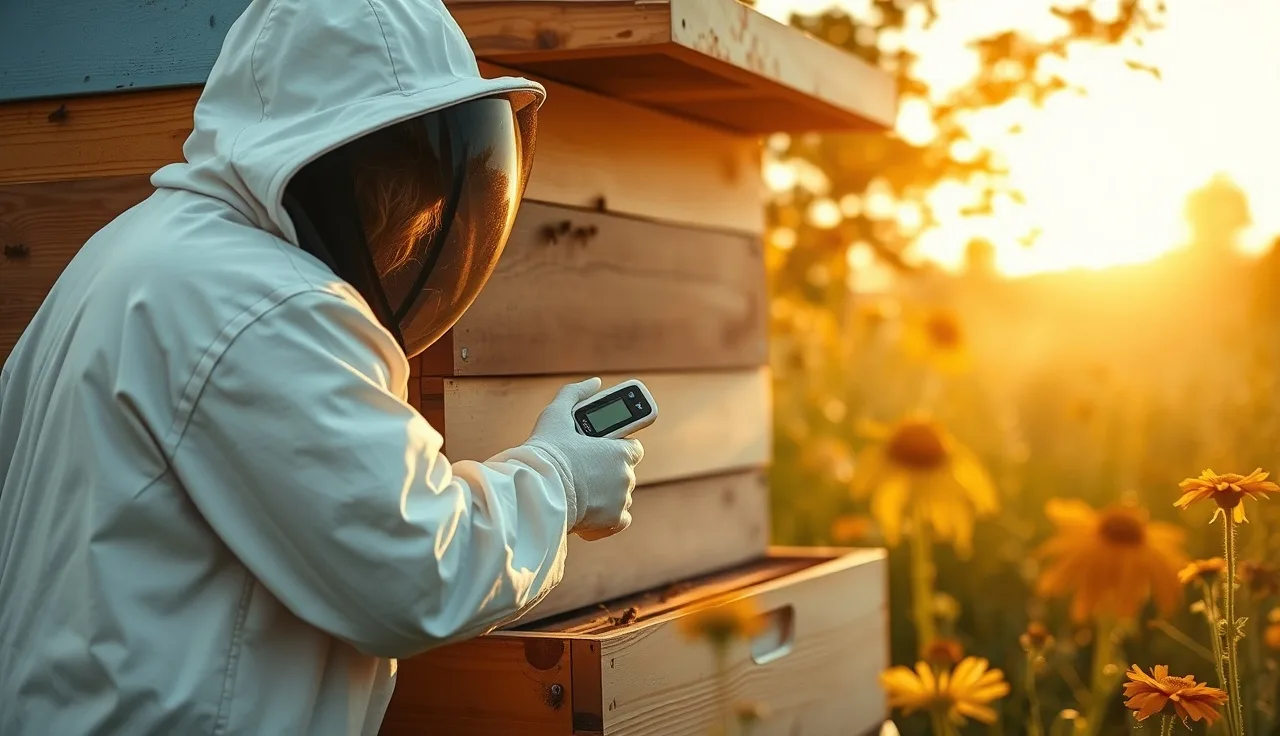
Varroa mites and honey bees have different heat tolerances, and thermal treatment lives in the gap between them. Bees hold their brood nest around 93-96°F (34-35°C), and they can take short exposure up to roughly 111°F (44°C). Varroa destructor starts dying at sustained temperatures near 106°F (41°C). Hold 108°F (42°C) for two to three hours and mite mortality in capped brood climbs to 90-97% in lab and field trials [1].
The mechanism is simple. Heat cooks the proteins in mite tissue faster than it damages bee tissue inside the treatment window. An external heater overrides the colony's own thermoregulation and brings the whole hive, sealed brood cells included, up through the lethal line for the parasite.
That's the whole pitch. Oxalic acid reaches mites riding on adult bees but can't get through wax cappings. Synthetic miticides like Apistan (tau-fluvalinate) and Apivar (amitraz) do penetrate wax, but they leave residues in comb and face documented resistance in many varroa populations [2]. Heat reaches capped brood, leaves zero residue, and resistance is physically impossible. There's no metabolic pathway to evolve around a temperature.
The catch is engineering. You have to bring an insulated box full of bees, wax, and honey to a precise temperature, hold it there, then cool it before the bees cook. Harder than it sounds. That's why backyard results scatter wider than the lab numbers promise.
What temperature and duration actually kill varroa mites?
The window is narrow. Below about 104°F (40°C), mite mortality is low and you're mostly stressing the colony for nothing. Above 111°F (44°C), you start killing bees and cooking brood. The working target is 106-108°F (41-42°C) held for at least 90 minutes, with most protocols aiming for 2 to 3 hours [1].
A 2016 study in the Journal of Apicultural Research found that holding 42°C (107.6°F) for 2 hours killed mites in capped brood at rates above 90%, while bee mortality stayed level with control hives [3]. The same study made a point worth repeating: temperature uniformity across the brood frames mattered more than peak temperature. Hot spots above 44°C near the heating elements caused localized queen and brood loss even when the average hive temperature read fine.
Here's the number that shapes everything. Varroa mites spend roughly 70-80% of their reproductive cycle inside capped cells [4]. Any treatment that skips capped brood leaves the bulk of the mite population untouched. That's the theoretical edge over oxalic acid dribble or vapor on an uncapped, broodless colony. You go after the mites where they actually live.
One honest caveat. Those efficacy numbers come from research hives where temperature was monitored at multiple points. Commercial and hobbyist devices differ a lot in how evenly they spread heat, and a single-probe thermometer tells you almost nothing about the center of a frame versus its edge. If you buy a thermal system, budget for a multi-probe digital thermometer on top of the device.
What thermal treatment devices are available and what do they cost?
Devices range from heated insert boards to full-hive systems. Here's an honest comparison of the main approaches:
| Device type | Example product | Approximate cost | Treatment approach |
|---|---|---|---|
| Heated brood frame insert | Varrojet, BeeShot | $350-$600 | Individual frames heated in external chamber |
| Whole-hive heating pad/mat | Thermosolar Hive | $400-$800 | Enclosed hive with solar-assisted or electric heating |
| Heated insert board | Various EU manufacturers | $300-$500 | Bottom board replacement that heats upward |
| Full-hive electric treatment system | Mite-Zapper type units | $800-$1,500 | Clamp-around heating with digital control |
These prices reflect the 2024-2025 retail range from US and European suppliers. Exchange rates matter here because most devices are built in Europe or Israel [5].
The Thermosolar Hive gets the most hobbyist chatter because it runs on solar energy and has published trials behind it, but it replaces your existing hive body entirely. Most beekeepers aren't ready for that. The frame-extraction approach, where you pull frames and heat them in a separate chamber, plays nicer with standard Langstroth gear but makes you handle frames twice and risks chilling brood in transit.
US availability through beekeeping supply companies is still patchy next to Europe, where these products have sold for years. Plan on importing if you want a specific model.
My honest take: cost is the real wall for most hobbyists. At $500 to $1,000 a device, the per-hive math works if you run 20 or more colonies, or if you have a hard reason to avoid all residue (comb honey, treatment-free goals, chemical sensitivity). With two or three hives, an oxalic acid vaporizer at $100 to $150 covers most of your needs for far less money.
How does thermal treatment compare to chemical varroa treatments?
This is a fair question, and the answer bends hard to your situation.
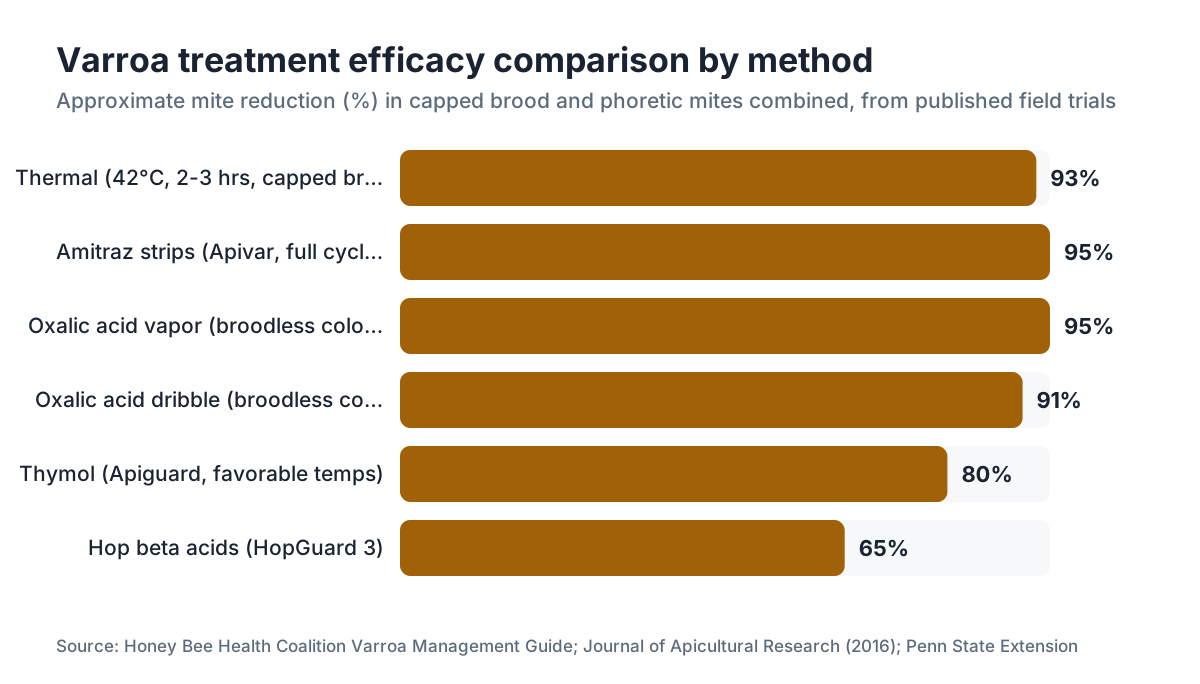
Oxalic acid is the most-used alternative in the US, EPA-approved under Api-Bioxal and other names [6]. Dribble or vapor kills phoretic mites (the ones on adult bees) at 90-99% but does almost nothing to mites in capped brood. That's why the standard protocol wants a broodless window, usually the winter brood break, or repeated treatments across a brood cycle. Thermal treatment reaches capped brood in one application. That difference is the whole reason to consider it.
Amitraz strips like Apivar hit 93-97% efficacy in trials [10] and work through the brood cycle, but they need 6 to 8 weeks of contact time, leave residues in beeswax, and resistance is now confirmed across North America and Europe. A 2019 paper in Scientific Reports found amitraz resistance alleles in varroa populations from 11 of 21 US states sampled [2].
Hop compounds (hop beta acids, sold as HopGuard 3) work on mites riding adult bees with limited reach into capped brood. Organic-approved, low residue, but efficacy runs consistently lower than oxalic acid or amitraz head to head.
Thymol products like Apilife VAR and Apiguard work through vapor. Effective at 70-90% in good conditions, but they need ambient temperatures above 60°F, which shrinks their seasonal window [11].
Thermal treatment sits in its own spot: efficacy up near amitraz, zero residue like oxalic acid, and reach into capped brood like amitraz, paid for with the highest equipment cost and the most operator skill. The Honey Bee Health Coalition's Varroa Management Guide says plainly that no single method fits every situation and pushes integrated approaches keyed to colony status and season [7].
Can thermal treatment harm bees or damage brood?
Yes, done wrong. That's the honest answer, and it's why thermal treatment carries a learning curve that chemical methods mostly don't.
Bee mortality climbs measurably above 111°F (44°C). Queens look more sensitive than workers in some studies. Temperatures above 109°F (43°C) held past 90 minutes in the brood area have been linked to queen loss in field reports, though that data is mostly anecdotal and device-specific rather than controlled. Brood viability drops off a cliff above 44°C.
Honey is a separate worry. Sustained heat above 104°F (40°C) degrades honey enzymes and can start softening comb if temperatures spike. For full frames of capped honey next to the treatment zone, that's a genuine risk with whole-hive systems.
Proper treatment needs a device with tight temperature control (ideally plus or minus 1°C), monitoring at several points, and a slow cool-down instead of an abrupt cutoff. Rushing the cool-down is the top source of bee losses among first-timers.
Colony strength counts too. A weak colony has less capacity to ride out thermal stress. Most protocols want at least 5 to 6 frames of bees before treating. Nucs and tiny splits make poor candidates for whole-hive heat.
Is varroa thermal treatment approved or regulated in the US?
Here's where it gets murky for American beekeepers. In the US, most varroa treatments that make a pest-control claim need EPA registration. Oxalic acid and amitraz are EPA-registered pesticides with legally binding label instructions [6].
Thermal devices aren't pesticides. No chemical active ingredient means no EPA pesticide registration required. Some makers have chased USDA or state-level endorsements, and a few European devices carry CE certification under agricultural or medical device rules.
What that means in practice: nothing at the federal level stops you from running a thermal device on your hives. But no federal agency has reviewed specific devices for efficacy and safety the way EPA reviewed Api-Bioxal. You're buying on published research, user reports, and manufacturer claims, not a regulatory stamp.
The Honey Bee Health Coalition's guide, the closest thing to a US consensus document, covers thermal treatment among non-chemical approaches but stops short of naming specific commercial devices [7].
Europe is further along. Germany, Austria, Switzerland, and several other EU countries have licensed specific thermal devices under national plant-protection or veterinary medicine frameworks. Most of the research behind products like the Thermosolar Hive and the Varroa Controller comes from European university trials.
When is the best time of year to do a varroa thermal treatment?
Timing matters more with heat than with most chemicals, but for a reason you might not expect. The treatment works any time brood is present. Having capped brood is the point. What changes with the season is how hard the heater has to work to reach target and hold it.
In cold weather (below 40°F/4°C), external heaters strain to reach target without dumping extreme thermal load on the hive. Some systems aren't rated for winter at all. In hot weather (ambient above 90°F/32°C), hitting target is easy but overheating gets more likely because there's less buffer between the air and the bee-lethal line.
The sweet spot in most US climates is late spring (May to June) or early fall (August to September). Those windows also line up with mite needs. Spring buildup means heavy brood that shelters mites, and August to September is the classic pre-winter slot to protect winter bees.
A single treatment in late summer, colonies still strong but before the winter bee cohort goes down, drops neatly into a year-round plan. The Honey Bee Health Coalition recommends going into winter below 2% (2 mites per 100 bees) [7]. If your late-summer alcohol wash or sugar roll reads above that, thermal treatment is one tool that can pull counts down fast before winter prep starts.
You can see how this slots into a full-year plan in tools like VarroaVault's free protocol planner, which walks seasonal timing alongside your monitoring data.
Does varroa thermal treatment work on capped brood specifically?
Yes, and this is thermal treatment's clearest edge. Mites inside capped cells hide from contact insecticides, vapor-phase chemicals fade as they diffuse through the cappings, and oxalic acid in any form basically can't reach them. Heat conducts straight through wax.
A wax cap is roughly 0.1 mm thick, conducts heat well, and offers no real insulation against a sustained gradient from outside the cell. When the brood frame hits 42°C, the inside of capped cells reaches a similar temperature within 15 to 30 minutes depending on frame thickness and cell depth [3]. The mite in there has nowhere to run and no way to regulate its own body temperature.
Research from the Julius Kühn Institute in Germany, one of Europe's main centers for varroa thermal work, has documented mite mortality in capped brood of 90-97% at sustained 42°C, dropping to 70-85% at 40°C [1]. The gap between those two numbers is exactly why precise control matters so much.
For anyone used to the ease of oxalic vapor, be honest about the trade. Oxalic vapor is cheap, fast (10 to 15 minutes a hive), and proven when timed to a broodless window. Thermal treatment on the same hive runs 3 to 4 hours plus setup and cool-down, needs gear 5 to 10 times pricier, and demands more monitoring. What you buy back is efficacy against mites in brood with no wait for a broodless window.
What monitoring should you do before and after thermal treatment?
Monitoring isn't optional. Treating blind wastes your time and risks the colony.
Before treatment, run an alcohol wash or a standardized sticky-board drop count to set your baseline. The Honey Bee Health Coalition calls alcohol wash the most accurate field method [7]. Take about 300 adult bees (roughly half a cup), wash with alcohol or windshield washer fluid, strain, and count mites. Divide by 3 for mites per 100 bees. Above 2% in summer or 1% in fall, you treat.
Alcohol wash steps and thresholds are well documented across university extension. The University of Minnesota Bee Lab, one of the most active US varroa groups, publishes a detailed sampling protocol [8].
After treatment, wait 48 to 72 hours for dead mites to drop, then run a 24-hour natural mite drop count on a sticky board as a rough check. For a real efficacy number, repeat an alcohol wash 7 to 10 days out. Efficacy is pre-treatment count minus post-treatment count, divided by the pre-treatment count. A clean thermal treatment should show 85-95% reduction.
If your post-treatment count still sits above the action threshold, you have three moves: repeat the thermal treatment (devices are built for it), add a supplemental chemical treatment, or figure out whether your device actually reached and held the right temperature. A cheap multi-probe digital thermometer set at several hive spots during the next run will teach you a lot about uniformity.
For a structured way to track this over time, VarroaVault has free monitoring log templates that tie treatment timing to mite-count trends across your apiary.
What are the practical limitations of thermal varroa treatment?
Real limitations, not marketing disclaimers.
Scale is the first. Run 50 or more hives and treating each for 3 to 4 hours with one device gets brutal. Chemicals scale better because you can treat many hives at once in minutes. Some larger operations run multiple thermal units in parallel, but the capital cost stacks up right along with them.
Hive configuration matters. Most devices target standard Langstroth 10-frame gear. Running 8-frame mediums, top-bar hives, or Warré hives makes fitting a standard device anywhere from awkward to impossible. Read the specs before you buy.
Temperature uniformity is a recurring headache. Frame spacing, honey stores next to the brood nest, ventilation leaks in the box, and ambient conditions all shape whether heat spreads evenly. A single thermometer reading gives false confidence. This is one of the most common reasons field efficacy comes in under the lab numbers.
Device durability and support are real concerns with European products sold in the US. A failed heating element can mean international shipping and a wait that runs right through your treatment window.
Then there's the learning curve. Your first thermal treatment, block out a whole day and expect mistakes. The second and third go faster. Most experienced users say once they've dialed in their device and hive setup, the run takes 4 to 5 hours including setup and monitoring, which is manageable for a small to mid-sized operation.
For the full kit list, the beekeeping supplies section covers thermometers, monitoring boards, and hive tools that back up good treatment practice.
How does varroa thermal treatment fit into an integrated mite management plan?
No single method is a complete varroa strategy. Thermal treatment is a tool, not a system.
The standard framework has three legs: monitor on a schedule (at least every 4 to 6 weeks in active season), treat when counts pass threshold, and select for hygienic or mite-resistant genetics over time [7]. Thermal treatment sits in the second leg and changes nothing about the other two.
One spot it fits well: when you want to keep all chemicals out of honey supers or comb honey. Because heat leaves no residue, it can in principle run during a flow without tainting the crop. Most protocols still say pull the supers to protect honey quality during heating, but the residue concern that limits chemical treatments simply doesn't apply.
It also works as a reset after chemical resistance shows up. If an amitraz treatment fails to knock counts down, switching to a resistance-independent method like heat makes sense before you reach for another chemical.
For breeding programs chasing varroa-sensitive hygiene (VSH) or mite-resistant stock, thermal treatment keeps experimental colonies clear of confounding chemical inputs while you still manage mite loads.
The Honey Bee Health Coalition's guide lays out a layered approach: monitor, then pick the treatment that suits the season, the colony state, and your tolerance for residues [7]. Thermal treatment earns a place there for beekeepers serious enough to invest in the gear and the learning curve. For most hobbyists with one to five hives, it's a second option behind well-timed oxalic acid, but a legitimate one with real efficacy data behind it.
For the pest itself, the varroa mite overview covers biology, reproduction cycles, and why the mite hits modern beekeeping so hard.
Frequently asked questions
Does varroa thermal treatment work without removing brood frames?
Yes, most whole-hive systems treat brood in place. You heat the whole hive body to 106-108°F for 2 to 3 hours and the heat conducts through wax cappings to reach mites in sealed cells. Frame-removal systems pull frames to an external chamber, which works but risks chilling brood in transit. Whole-hive systems are simpler if you want minimal colony disruption.
Can varroa mites develop resistance to heat treatment?
No. Heat kills mites by denaturing their proteins at temperatures their cells can't survive. There's no metabolic pathway to evolve around a temperature, unlike the enzyme changes behind resistance to amitraz or tau-fluvalinate. This is thermal treatment's clearest long-term advantage, especially as chemical resistance spreads through varroa populations across North America and Europe.
How many times per year can I do a thermal varroa treatment?
Most manufacturers and research protocols describe 1 to 3 treatments per season without meaningful colony harm, as long as each run is done right and colonies recover between them. Nothing accumulates with repeated use, which beats miticide strips. The real limit is usually your time and equipment availability, not any biological constraint on the colony.
What mite infestation level warrants a thermal treatment?
The Honey Bee Health Coalition action threshold is 2 mites per 100 bees (2%) in summer and 1% in fall as winter bees are raised. Measure with an alcohol wash of about 300 bees. If your count clears those thresholds and you want a residue-free method that works during brood rearing, thermal treatment is a reasonable pick. Below threshold, treatment generally isn't recommended.
Is thermal treatment safe for the queen bee?
At controlled temperatures of 106-108°F, queen mortality isn't reliably higher than in untreated hives in published trials. Risk climbs if temperatures spike above 109-111°F near the queen. Since her position isn't always known during treatment, some beekeepers cage her in a cooler hive location first. Overheating, not properly run treatment, is the documented cause of queen loss in field reports.
Can I use thermal treatment in winter when the colony is clustered?
Generally no, or only with devices rated for low ambient temperatures. In cold climates, external heaters strain to reach 106-108°F when the air is below 40°F without risking overshoot. Winter colonies also carry less brood, which lowers the payoff of a brood-penetrating treatment. The better winter move is oxalic acid dribble or vapor during a natural broodless period, which works well on phoretic mites on the cluster.
Do I need to remove honey supers before thermal treatment?
Most protocols say remove them. Sustained heat above 104°F can degrade honey enzymes, cloud crystallized honey, and in extreme cases soften comb. The treatment itself leaves no residue in honey, which beats miticide strips. But protecting honey quality during heating still means keeping supers out of the heat zone. Put them back once the hive returns to normal temperature.
How accurate do thermal treatment devices need to be?
Accuracy of plus or minus 1-2°C (about 2-3°F) matters a lot. The effective window is only about 4-6°F wide, between the minimum lethal mite temperature (about 106°F) and the bee-harm line (about 111°F). Devices that can't hold temperature within that band either under-treat, leaving survivors, or risk bee and queen loss. Before trusting a built-in display, verify with an independent calibrated thermometer at several frame locations.
What is the Thermosolar Hive and does it actually work?
The Thermosolar Hive is a Czech-designed hive body with a clear polycarbonate roof that uses solar energy to heat the colony to varroa-lethal temperatures. Published Central European trials showed 80-95% mite reduction in field conditions. It replaces your standard hive body entirely, which is the main barrier for most beekeepers. It works best in sunny climates and struggles when clouds or cold cut the solar input below what's needed to hit target.
How does thermal treatment compare to oxalic acid in terms of cost per hive?
Oxalic acid vaporization runs roughly $0.50 to $2 per treatment in materials, plus an $80 to $150 one-time vaporizer. Thermal devices cost $300 to $1,500 upfront with minimal per-treatment consumables. Amortize a $600 device over 5 years and treat 10 hives twice a year, and your per-treatment cost lands around $6. Still more than oxalic acid, but not wildly so for a small operation. The cost case gets stronger at scale.
Can thermal treatment replace oxalic acid entirely?
For most beekeepers, probably not completely. Heat handles mites in capped brood well but doesn't necessarily reach every phoretic mite on adult bees the way vapor does. A combined approach, thermal during active brood season then oxalic vapor at a broodless or near-broodless point, covers both populations. Some beekeepers report managing on thermal alone, but the research comparing full-season thermal-only against combined approaches is thin.
Where can I buy a varroa thermal treatment device in the United States?
US availability is limited next to Europe. A handful of supply companies import European systems, and some devices ship straight from makers in Germany, the Czech Republic, and Israel. Search specifically for Varroa Controller, BeeShot, or Thermosolar Hive at US retailers. Prices will include shipping and possibly import duties. Allow extra lead time for a specific treatment window, since stock is often thin outside spring ordering season.
Is varroa thermal treatment approved by the USDA or EPA?
Thermal devices aren't regulated as pesticides by the EPA because they carry no chemical active ingredient, so they need no EPA registration number. The USDA hasn't issued device approvals but does fund research into non-chemical varroa management [9]. No federal body has reviewed specific devices for efficacy or safety the way Api-Bioxal was reviewed. Beekeepers lean on published university research and European licensing when weighing products.
Sources
- Julius Kühn Institute, Germany, Varroa thermal treatment research publications: Sustained 42°C for 2 hours kills varroa mites in capped brood at 90-97% efficacy in controlled trials
- Scientific Reports (Nature Publishing), 'A nationwide survey of resistance to miticides in Varroa destructor populations in the USA' (2019): Amitraz resistance alleles were detected in varroa populations from 11 of 21 US states sampled
- Journal of Apicultural Research, Thermal treatment efficacy against Varroa destructor (2016): 42°C for 2 hours achieved mite mortality above 90% in capped brood with bee mortality at background levels; temperature uniformity across frames mattered more than peak temperature
- Honey Bee Health Coalition, Varroa Management Guide (current edition): Varroa mites spend approximately 70-80% of their reproductive cycle inside capped brood cells; no single treatment method is ideal for all situations
- Bee Culture Magazine, Thermal treatment device overview and pricing (2023-2024): Thermal treatment devices range from approximately $300 to $1,500 depending on type; most are manufactured in Europe or Israel
- US EPA, Oxalic Acid (Api-Bioxal) Pesticide Registration: Oxalic acid is EPA-registered for varroa control under trade names including Api-Bioxal; label instructions are legally binding
- Honey Bee Health Coalition, Varroa Management Guide (current edition): The Honey Bee Health Coalition recommends targeting mite levels below 2% (2 mites per 100 bees) going into winter; thymol treatments require ambient temperatures above 60°F; alcohol wash is the most accurate field monitoring method
- University of Minnesota Bee Lab, Varroa mite sampling protocols: Standardized alcohol wash protocol uses approximately 300 adult bees; mite infestation rate is expressed as mites per 100 bees
- USDA Agricultural Research Service, Honey Bee Research: USDA funds ongoing research into non-chemical varroa management approaches including thermal methods
- Penn State Extension, Varroa Mite Management for Honey Bee Colonies: Apivar (amitraz) requires 6-8 week contact time and has documented wax residue concerns; efficacy cited at 93-97% in controlled trials
- University of California Agriculture & Natural Resources, Integrated Pest Management for Varroa: Thymol-based treatments including Apiguard show 70-90% efficacy in favorable temperature conditions with seasonal restrictions
Last updated 2026-07-10