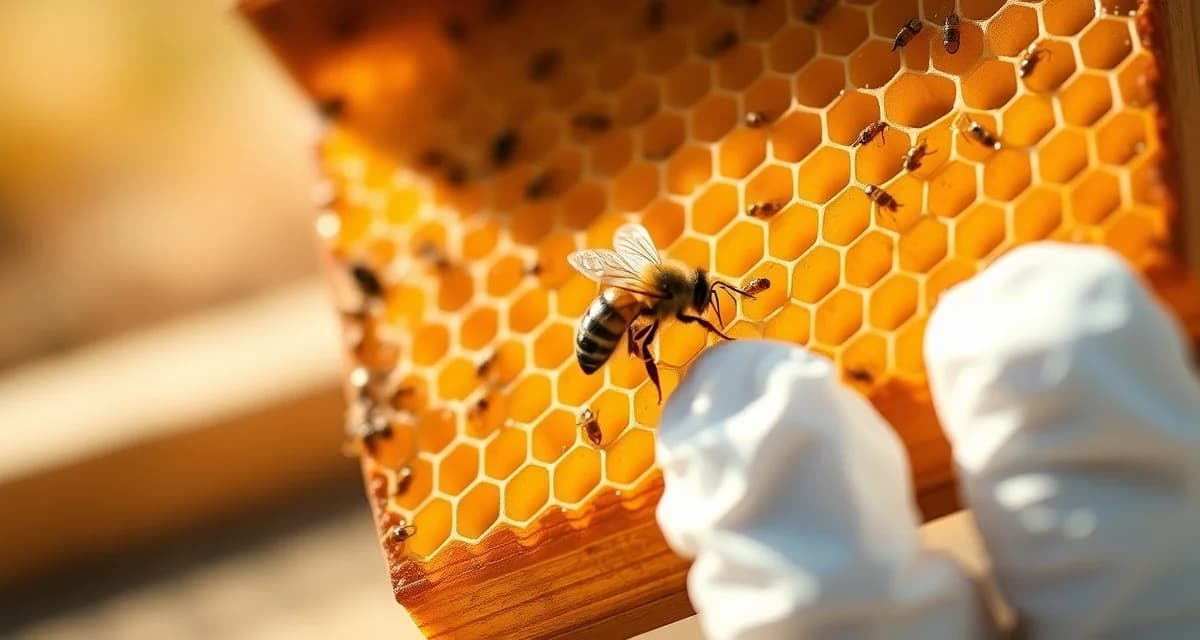
Top 10 Varroa Management Tips From Commercial Beekeepers
Commercial beekeepers who follow all 10 of these tips consistently report winter loss rates below 15%, compared to the national average of 37%. These aren't theoretical guidelines -- they're practices drawn from operations that measure outcomes year over year and have refined their approach based on what the data shows. Every one of these tips corresponds to a feature in VarroaVault that helps you implement it automatically.
TL;DR
- This guide covers key aspects of top 10 varroa management tips from commercial beekeepers
- Mite monitoring should happen at minimum every 3-4 weeks during active season
- The 2% threshold in spring/summer and 1% in fall are standard action points based on HBHC guidelines
- Always run a pre-treatment and post-treatment mite count to calculate efficacy
- Treatment records including product name, EPA number, dates, and counts are required for state inspection compliance
- VarroaVault stores all monitoring and treatment data with automatic threshold comparison and state export formatting
Tip 1: Test Every Hive, Every Month, From April Through September
Hobbyists often test a few hives, sporadically, when they remember. Commercial beekeepers know that's not good enough. Monthly monitoring from April through September catches the population inflection points -- the moments when a manageable 2% becomes a problematic 5% -- before they become colony losses.
Yes, testing 200 hives every month is a lot of work. That's why representative sampling exists: testing 15-20% of your hives per apiary using a stratified random selection gives you 95% confidence in your apiary-level status without testing every colony. VarroaVault's mite count tracking app generates the sampling list for you so you're not making subjective choices about which hives to test.
Tip 2: Set a Hard August 1 Treatment Date
The best commercial beekeepers treat August 1 -- not "early August," not "when I get around to it," not "after I finish extracting." August 1 is the date. It's in the calendar. It happens.
The logic: winter bee rearing begins in late August in most of the US. For those bees to be reared under low mite pressure, your treatment needs to be complete or well underway by the time the queen starts laying the first winter-bee cohort. Waiting until you see a problem in September is too late.
VarroaVault's treatment reminder system includes an August 1 prompt that fires for every account regardless of recent test history.
Tip 3: Rotate Active Ingredient Classes Every Year
The most experienced commercial beekeepers treat resistance management as seriously as they treat mite management. They know that using the same active ingredient in the same season for 3-4 consecutive years is how you create a resistant population in your own apiary.
The rotation plan is simple: if you used amitraz (Apivar) last fall, use formic acid this fall. Next fall, use OA vaporization. The following fall, back to amitraz. Document it in VarroaVault so you never have to remember what you used three years ago.
Tip 4: Always Do a Post-Treatment Count
No exceptions. Treating without a post-treatment count is like taking medicine without monitoring whether your symptoms improved. The treatment may have worked perfectly. Or it may have failed due to resistance, incorrect application, or reinfestation -- and you won't know until the colony crashes in December.
Post-treatment counts taken 3-4 weeks after completion are how commercial operators catch problems early. If the count is still above threshold after treatment, the response is a different product class, not the same treatment again.
Tip 5: Log Every Treatment Event Immediately
Memory is not a record-keeping system. Log every treatment at the time of application: date, product, dose, hive IDs, reason for treatment. Do it in the apiary on your phone while you're standing there.
Commercial beekeepers who delay logging end up reconstructing records from memory weeks later and making mistakes that come back to haunt them during state inspections. VarroaVault's mobile app is designed for gloves-on apiary use with large buttons and minimal steps. The whole treatment log takes 90 seconds to complete on the spot.
Tip 6: Calculate PHI Before Honey Supers Go On, Not After
PHI planning is backwards for most beekeepers -- they treat, then realize they should have calculated the harvest interval, then scramble to figure out whether their honey is compliant. Commercial beekeepers do this in reverse: they know when supers go on, they count backward from that date to the latest possible treatment start date, and they plan accordingly.
VarroaVault's [pre-harvest interval tracker](/pre-harvest-interval-tracker) automates this. Set your expected super installation date in the spring, and the planner tells you the latest you can start each treatment product and still clear PHI before your supers go on.
Tip 7: Use Sentinel Hives in Each Apiary
Monitoring 100% of hives monthly isn't practical at commercial scale. Sentinel hives are the solution: designate 2-3 high-risk colonies in each apiary (typically those at the edges, near drift paths, or historically higher-mite) as sentinel hives. Test them monthly; test the rest of the apiary quarterly.
When a sentinel hive crosses threshold, test the rest of the apiary immediately. In most cases, the sentinel hive's elevated count predicts the broader apiary population -- catching it early through the sentinel saves the whole apiary from needing emergency treatment.
Tip 8: Build Treatment Into Your Apiary Visit Schedule
Varroa management happens because it's scheduled, not because you feel like doing it. Commercial beekeepers with structured apiary visit schedules that include treatment and monitoring events have lower loss rates than those who treat reactively.
Block your treatment days on the calendar in January for the whole year. Include the treatment event, the supply order date (order 6-8 weeks before treatment), and the post-treatment count date. VarroaVault's commercial beekeeper operations guide provides a full annual scheduling template.
Tip 9: Track Treatment Efficacy Over Time
An Apivar treatment that achieved 95% efficacy three years ago but is now achieving 75% is telling you something important. Declining efficacy is the earliest signal of developing resistance -- you'll see it in your efficacy data 1-2 years before you have a full resistance problem.
Track your pre- and post-treatment counts as a consistent practice. Calculate efficacy: (pre-treatment count - post-treatment count) / pre-treatment count x 100. A healthy efficacy score is above 90%. If you're consistently hitting 70-75%, rotate immediately and investigate further.
Tip 10: Review Your Annual Data Before Each Season
Every February, before the season starts, pull up the previous year's data and ask three questions: Which hives were consistently high? Which treatments worked and which underperformed? Did I miss any monitoring windows?
This review takes 30 minutes but sets up the whole season. It tells you which colonies need closer attention, whether your rotation plan is working, and where your gaps were. VarroaVault generates an automatic annual summary report on February 1 that surfaces these patterns for you.
Beekeepers who implement systematic varroa programs don't experience varroa as a crisis -- they experience it as a managed variable. These 10 tips are what systematic looks like in practice.
Frequently Asked Questions
What is the single most important varroa management tip?
Treating on a firm August 1 date is arguably the highest-leverage single action a beekeeper can take. The fall treatment window is the most critical event in the varroa management calendar, and it's also the most commonly missed. Everything else -- monthly monitoring, rotation, post-treatment counts -- depends on having healthy winter bees, and healthy winter bees depend on low mite loads in August and September when those bees are being raised.
Do commercial beekeepers use different strategies than hobby beekeepers?
The core principles are identical: monitor regularly, treat to threshold, rotate products, document everything. What differs is scale and logistics. Commercial operations use representative sampling instead of whole-apiary counts, sentinel hive programs for early warning, batch treatment scheduling, and crew-based logging. Hobby beekeepers can monitor every hive individually and log at a more casual pace. The strategy is the same; the systems differ.
Which of these tips does VarroaVault implement automatically?
VarroaVault automates tips 1 (monthly monitoring reminders), 2 (August 1 treatment alert), 3 (rotation tracking), 4 (post-treatment count reminders), 5 (in-apiary mobile logging), 6 (PHI planning calendar), 7 (sentinel hive designation and elevated monitoring), 9 (efficacy scoring), and 10 (annual summary report generation). The scheduling in tip 8 is done by you, but VarroaVault's calendar exports to Google Calendar or Apple Calendar to keep it in your active schedule.
How do I know if my varroa treatment is working?
Run a mite count 2-4 weeks after the treatment ends and compare it to your pre-treatment count. The efficacy formula is: ((pre-count - post-count) / pre-count) x 100. A result above 90% indicates effective treatment. Results below 80% should trigger investigation for possible resistance, application error, or reinfestation. Log both counts in VarroaVault to track efficacy trends across treatment cycles.
How often should I check mite levels in my hives?
At minimum, once per month (every 3-4 weeks) during the active season. Increase to every 2 weeks when counts are near threshold or after a treatment to verify it worked. In fall, monitoring frequency matters most because the window to treat before winter bees are raised is narrow. VarroaVault's monitoring reminders can be set to your preferred interval for each apiary.
What records should I keep for varroa management?
Each record should include: date of count or treatment, hive identifier, monitoring method used, number of bees sampled, mites counted, infestation percentage, treatment product name and EPA registration number, dose applied, treatment start and end dates, and PHI end date. State apiarists typically expect this level of detail during inspections. VarroaVault captures all of these fields in a single log entry.
What is Top 10 Varroa Management Tips From Commercial Beekeepers?
This article compiles the ten most effective varroa mite management strategies used by professional commercial beekeepers. Drawing from operations that track outcomes year over year, it covers monthly monitoring schedules, action thresholds, treatment timing, and record-keeping requirements. Beekeepers who follow all ten tips consistently report winter loss rates below 15%, compared to the national average of 37%. Each tip maps directly to a feature in VarroaVault that helps automate implementation.
How much does Top 10 Varroa Management Tips From Commercial Beekeepers cost?
The article itself is free to read on VarroaVault. The practices it describes — monthly testing, threshold tracking, treatment logging, and state-compliant record exports — can be implemented manually at no cost. VarroaVault offers a paid platform that automates these workflows, stores your monitoring and treatment history, and flags when counts exceed action thresholds, saving significant time for beekeepers managing multiple hives.
How does Top 10 Varroa Management Tips From Commercial Beekeepers work?
The guide breaks varroa management into ten discrete, actionable practices: testing every hive monthly from April through September, using standardized alcohol wash or sugar roll methods, applying the 2% threshold in spring/summer and 1% in fall, running pre- and post-treatment counts to measure efficacy, and keeping compliant treatment records including EPA registration numbers. Each tip builds on the last to create a complete, data-driven management cycle.
What are the benefits of Top 10 Varroa Management Tips From Commercial Beekeepers?
Following these ten practices reduces winter colony losses, improves treatment efficacy by ensuring interventions happen at the right time, and creates an auditable record for state inspections. Beekeepers gain confidence that decisions are based on actual mite load data rather than guesswork. Consistent monitoring also catches reinfestation early, preventing the compounding losses that occur when mite populations go unchecked through late summer.
Who needs Top 10 Varroa Management Tips From Commercial Beekeepers?
Any beekeeper managing more than a handful of hives will benefit, but the article is especially valuable for hobbyists looking to adopt commercial-grade discipline, sideliners scaling up their operations, and new beekeepers building their first management system. It is also useful for beekeepers who have experienced high winter losses and want a structured, evidence-based framework to diagnose and correct gaps in their current varroa approach.
Sources
- American Beekeeping Federation (ABF)
- USDA ARS Bee Research Laboratory
- Honey Bee Health Coalition
- Penn State Extension Apiculture Program
- Project Apis m.
Get Started with VarroaVault
The information in this guide is most useful when you have your own mite count data to apply it to. VarroaVault stores every count, flags threshold crossings automatically, and builds the treatment history you need for state inspections and effective management decisions. See pricing and free tools at varroavault.com.