Varroa mite treatment chart: every approved option compared
TL;DR
- Six categories of EPA-registered varroa treatments exist: oxalic acid (vapor, dribble, extended-release), formic acid (MAQS, Formic Pro), amitraz (Apivar), thymol (ApiLife VAR, Apiguard), hop beta acids (HopGuard), and Amiflex.
- Each has a different temperature window, brood tolerance, and resistance risk.
- No single product fits every season.
Why does every beekeeper need a varroa treatment comparison chart?
Varroa destructor kills colonies. Full stop. A mite infestation that starts small in spring can push a colony past its breaking point by fall, and the research says so again and again. The Honey Bee Health Coalition's Varroa management guide puts colonies above a 2 percent mite wash threshold (2 mites per 100 bees) at serious risk of collapse in weeks, not months [1].
The problem you actually face isn't ignorance of the danger. It's the number of products, each with its own temperature limits, brood-safety rules, honey super restrictions, and resistance concerns. A chart puts all of that in one place. You look at your calendar, your mite count, and your forecast, then make a real decision in two minutes instead of forty-five.
This article is that chart, with enough detail behind each row that you understand why the numbers are what they are, more than what they are.
What is the complete varroa treatment comparison chart?
The table below covers every EPA-registered varroa treatment category as of mid-2026, including Amiflex, the extended-release oxalic acid product that got EPA registration and has been moving into wider commercial availability. Efficacy figures come from peer-reviewed studies and university extension summaries unless noted. Where studies disagree, you get a range.
| Treatment | Active ingredient | Form | Temp window | Brood-safe? | Honey super off? | Typical efficacy | Resistance documented? | Approx. cost per hive |
|---|---|---|---|---|---|---|---|---|
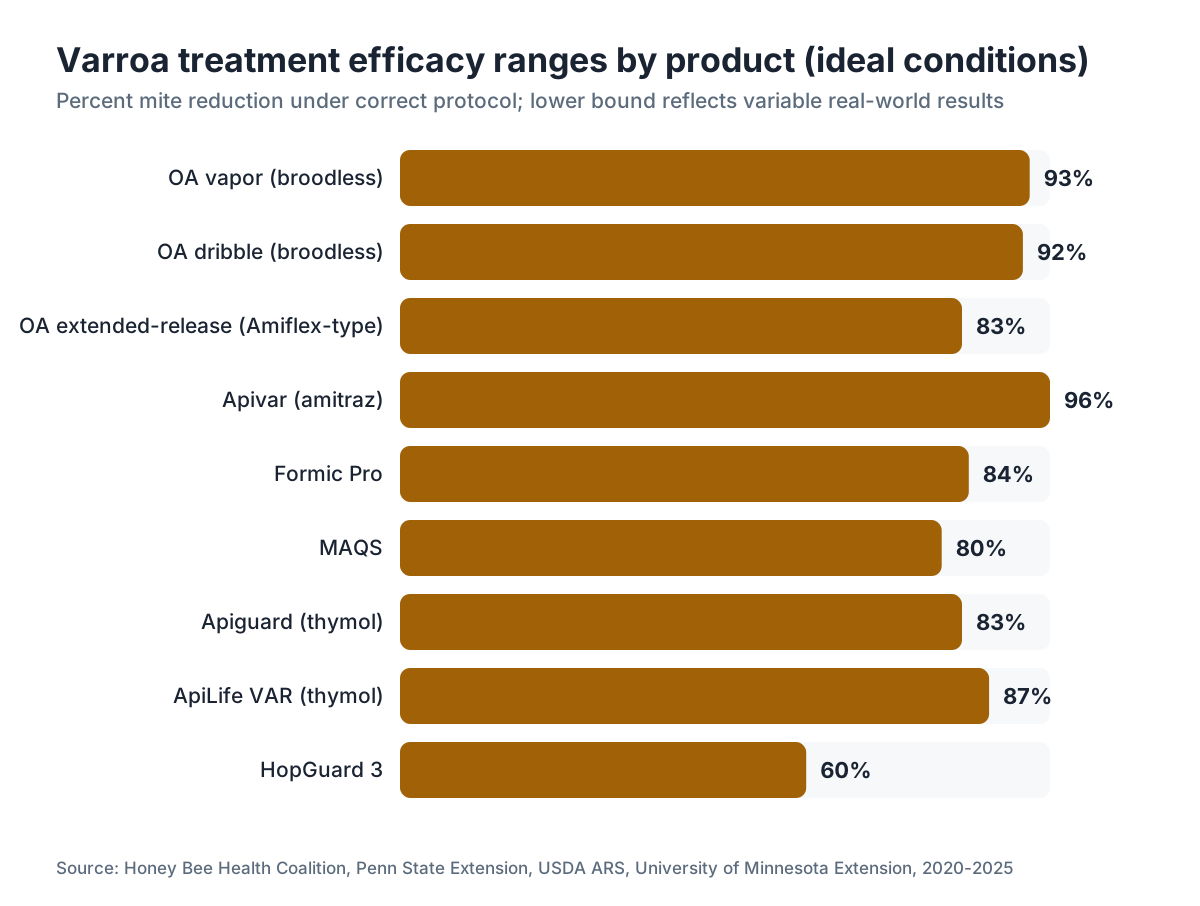
| Oxalic acid vaporization (single) | Oxalic acid dihydrate | Vapor | Below 50°F best; works up to ~70°F | No (poor kill in capped brood) | Yes, supers off | 90-95% brood-free period [2] | No | $0.50-$1.50 |
| Oxalic acid dribble | Oxalic acid dihydrate | Liquid | 40-60°F | No | Yes, supers off | 90%+ brood-free period [2] | No | $0.25-$0.75 |
| Oxalic acid extended-release (Api-Bioxal glycerin towel / Amiflex) | Oxalic acid dihydrate | Slow-release pad/strip | 50-90°F, label range varies | Yes, reaches capped mites over time | Yes, supers off | 70-95% depending on duration [3] | No | $3-$8 |
| Formic acid (MAQS) | Formic acid | Strip | 50-85°F (10-day strip) | Partial, some queen risk | No (unique) | 70-90% [4] | No | $10-$18 |
| Formic acid (Formic Pro) | Formic acid | Strip | 50-92°F | Partial | No (unique) | 75-92% [4] | No | $10-$16 |
| Amitraz (Apivar) | Amitraz | Strip | Above 50°F recommended | Yes (slow-kill, strips in brood nest) | Yes, supers off | 93-99% in most studies [5] | Yes, some populations | $8-$16 |
| Thymol (ApiLife VAR) | Thymol blend | Tablet | 65-95°F | Partial | Yes, supers off | 80-93% [6] | No | $4-$8 |
| Thymol (Apiguard) | Thymol gel | Gel tray | 60-105°F (optimal 59-86°F) | Partial | Yes, supers off | 74-92% [6] | No | $4-$7 |
| Hop beta acids (HopGuard 3) | Potassium salts of hop beta acids | Strip | 40-100°F (broad) | Partial | No | 40-80%, variable [7] | No | $5-$12 |
A few caveats. Cost figures are retail approximations for 2025-2026 and shift with region, supplier, and whether you buy oxalic acid in bulk. Efficacy numbers reflect ideal-protocol use. Real results often run 5-15 percentage points lower because of bad timing, temperature violations, or partial colony coverage. Learn more about varroa mite biology to see why timing drives everything.
Amitraz resistance is documented in some U.S. and European populations [5]. That's the reason to rotate chemistries every treatment cycle even while Apivar still works well in your yard.
What temperature limits should I use when picking a treatment?
Temperature is the single most common reason treatments fail, and the cause is chemistry, not fine print.
Oxalic acid vaporization works at almost any temperature because you're sublimating the compound into a gas. Mite kill peaks when bees cluster tight and brood is absent, which happens in cold weather. Above 50-55°F bees roam the hive and vapor spreads less evenly, though plenty of beekeepers vaporize fine at 60°F and a bit above. The Api-Bioxal label sets no maximum vaporization temperature, but university extension guidance and the Honey Bee Health Coalition both say treat when brood is minimal and temperatures sit below 50°F for the best single result [1][2].
Formic acid evaporates faster in heat. MAQS strips say do not apply above 85°F (10-day strip) or 92°F (Formic Pro extended-release version) because rapid evaporation spikes vapor concentration and risks queen loss and brood damage. Below 50°F, formic acid barely evaporates and the treatment just doesn't work. The window is real and narrow.
Thymol has the opposite problem. Below 59-60°F, thymol crystallizes and stops volatilizing. Above 105°F (common inside a summer hive in a hot climate), it volatilizes so fast it injures bees and queens. Thymol belongs in a shoulder-season sweet spot that doesn't exist everywhere.
Amitraz in Apivar strips leaches slowly into wax and the coating on bees over 6-8 weeks. The chemistry still works at lower temperatures but runs slower, and the label says colonies should be active (above 50°F) for the strips to work. Leaving strips in past 8-10 weeks also raises resistance pressure.
HopGuard 3 carries the broadest label temperature range (40-100°F), which makes it an appealing honey-super-safe backup. That tolerance comes with lower and more variable efficacy across studies [7].
Which varroa treatments are safe with honey supers on?
Two products are labeled for use with honey supers on the hive: MAQS (Mite-Away Quick Strips) and Formic Pro, both formic-acid-based. Every other registered varroa treatment needs supers off before you apply, plus a waiting period before they go back on.
That matters in spring and early summer when nectar flows are running and supers are active. Formic acid's super-on allowance exists because formic acid occurs naturally in honey at trace levels, it volatilizes completely, and it leaves no detectable residue at labeled doses. The EPA determined residue levels are not a food-safety concern at label rates [4].
Here's the catch. Formic acid strips harm some queens and some brood at higher temperatures or in weaker colonies. Run MAQS during a July heat wave with supers on and you're taking a real queen risk to skip pulling supers. Whether that math works depends on how hard super removal is for your setup and how replaceable your queens are.
For sideliners running many hives, treating with supers on during a flow without stopping production is worth real money. For a hobbyist with two hives, pulling supers for three weeks costs almost nothing.
What is Amiflex and how does it fit into the treatment chart?
Amiflex is an extended-release oxalic acid product. It uses a slow-delivery strip or pad to hold low, steady oxalic acid levels in the hive for several weeks. The point is to kill mites as they emerge from capped cells, which is the fundamental limit of single-dose oxalic acid: one hit kills phoretic mites (mites riding adult bees) and does nothing to mites breeding inside sealed brood.
This matters because roughly 75-80 percent of mites in an active colony sit inside capped cells at any moment, out of reach of standard dribble or vapor [10]. Extended-release formats including Amiflex hold an oxalic acid presence long enough that mites meet the compound the moment they emerge with their host bee.
Early studies and manufacturer EPA submissions put extended-release oxalic acid at 70-95% mite reduction in colonies with open brood. That closes most of the gap against the 30-50% you'd see from a single vapor treatment during heavy brood [3]. Independent peer-reviewed confirmation of Amiflex specifically is still thin as of mid-2026, so treat the efficacy claims with skepticism until more field data lands.
Amiflex and other extended-release oxalic acid products require supers off, same as Api-Bioxal. You can't run them during spring and summer flows, which limits them. For fall treatment they're getting hard to argue against, because you get oxalic acid's resistance-free profile plus real efficacy in colonies that still hold some capped brood.
If you're sourcing treatment gear including extended-release OA formats, beekeeping supply companies increasingly stock these newer products, though availability still varies by region.
How do I choose the right varroa treatment for the time of year?
Seasonal timing drives treatment choice more than any other factor. Here's how the logic runs through the year.
Winter (broodless, roughly December-February across most of the U.S.): the single best window for oxalic acid vaporization or dribble. No brood means every mite is phoretic and exposed. One oxalic acid treatment during a genuine broodless period knocks mites down 90-95% and hands the colony a clean start for spring buildup [2]. Pick a day above 40°F so you can open the hive briefly, then treat.
Spring (February-May, depending on region): brood comes back fast. By March most climates have all brood stages present and the single-treatment OA window closes. This is amitraz (Apivar) season when mite counts run high, because the strips work in the brood nest over 6-8 weeks and kill mites as bees emerge. Expecting an April or May flow? MAQS or Formic Pro let you treat with supers on. Thymol gets viable once daytime highs reliably cross 60°F.
Summer (June-August): the hardest season. Temperatures run high, mite populations explode with peak brood, and supers complicate everything. Formic acid with supers on is one option. Apivar works but strips must come out before harvest, which takes planning. HopGuard 3 is labeled for super-on use in some formulations and has the broadest temperature range, though efficacy is lower. Extended-release oxalic acid works but needs supers off.
Fall (August-October): the treatment window that decides your winter. Colonies need to enter winter with mites below 1-2% [1]. Apivar in August, Formic Pro in September if temperatures cooperate, or extended-release OA once brood drops in October all make sense. The Honey Bee Health Coalition recommends treating by October 1 in most northern U.S. climates to protect the long-lived winter bees that raise next spring's brood [1].
The VarroaVault mite management calendar maps these windows to your region if you want structured reminders. A paper calendar on the barn wall works too.
For broader seasonal context, the varroa mite biology guides are worth reading before you lock in a protocol.
What efficacy should I actually expect from each treatment?
Published efficacy numbers look great on paper. Apivar at 97% sounds like a solved problem. Those numbers come from controlled studies with correct dosing and correct timing. Real results are messier.
A Penn State Extension summary of registered products notes efficacy drops hard when strips or pads aren't in direct contact with the cluster, when temperatures fall outside the recommended window, when treatments sit too long (resistance pressure) or come out too early, or when a colony is so strong it physically blocks product distribution [3].
Here's how I'd calibrate expectations.
Oxalic acid (broodless, single treatment): catch a genuine broodless period and 85-95% reduction is realistic. Treat through patchy brood because you can't wait, and it's 40-70%.
Apivar (amitraz, 6-8 weeks): 85-97% in amitraz-susceptible populations. If you've run Apivar exclusively for years without rotating and your counts aren't dropping, suspect resistance and test with a mite wash before and after treatment. Confirmed amitraz resistance exists in some U.S. populations [5].
Formic acid (MAQS / Formic Pro): 70-90%, with the top end reached when temperatures hold steady in the 65-80°F range. Queen loss in studies runs roughly 5-15% depending on conditions, real and worth knowing before you treat.
Thymol (ApiLife VAR / Apiguard): 75-93% inside the right temperature band. Inconsistent in hot climates or cool falls.
HopGuard 3: 40-80% across studies, and that range is real, not rounding. The evidence base is thinner and shakier than for the other products [7]. Not a primary treatment for a heavily infested colony.
Extended-release OA (Amiflex-type): 70-95% with open brood present, based on available data, though independent confirmation is still building [3].
What are the resistance risks and how do you rotate treatments correctly?
Amitraz resistance is documented and real in some Varroa populations. A 2020 study in PLOS ONE confirmed amitraz resistance in U.S. mite populations tied to a mutation in the octopamine receptor gene [5]. The takeaway: run Apivar every treatment cycle for three or four years and you may select for resistant mites without noticing.
Oxalic acid, formic acid, and thymol are organic acids or naturally derived compounds. Resistance to any of these hasn't been meaningfully documented in Varroa so far, which is one reason to keep them in rotation even when they're less convenient than amitraz.
A sensible rotation: one amitraz treatment, then an organic acid or thymol for the next one or two cycles, then back to amitraz. That keeps mite populations off constant pressure from a single chemistry.
Don't stack amitraz with oxalic acid or formic acid in overlapping treatments. Some beekeepers try to boost efficacy by doubling up, but the label prohibits it for some products and the interactions aren't well studied. Follow one label at a time.
Hop beta acids (HopGuard) work through a different mechanism, and there's no documented cross-resistance with amitraz or the organics. That's part of their value even though their efficacy ceiling sits lower.
Which varroa treatments are EPA-registered and how do labels work?
In the U.S., every varroa treatment you put on a managed colony has to be EPA-registered as a pesticide, and you're legally bound to follow its label. The label is the law. That's not hyperbole. Misapplication of a registered pesticide is a federal violation under FIFRA (the Federal Insecticide, Fungicide, and Rodenticide Act) [8].
As of 2026, the EPA-registered products for Varroa are:
- Api-Bioxal (oxalic acid dihydrate), EPA Reg. No. 83299-1, for vaporization and dribble
- Amiflex and other extended-release oxalic acid formats where registration has been granted
- Mite-Away Quick Strips (MAQS), EPA Reg. No. 83005-3
- Formic Pro, EPA Reg. No. 83005-4
- Apivar (amitraz 3.2%), EPA Reg. No. 58955-6
- ApiLife VAR, EPA Reg. No. 73093-1
- Apiguard, EPA Reg. No. 71434-1
- HopGuard 3, EPA Reg. No. 84322-2
Registration numbers sit on the product label. No number means it's not legally registered for this use in the U.S. Homemade oxalic acid mixed from hardware-store OA rather than Api-Bioxal is a gray area many beekeepers work around pragmatically, but it's technically not labeled for hive use.
The EPA pesticide registration section is publicly searchable at https://www.epa.gov/pesticide-registration [8]. The Honey Bee Health Coalition's Varroa guide also lists these products with current registration status and links to full labels [1].
Canadian and EU registrations differ. Canadian beekeepers use Apivar, Api-Bioxal, Thymovar, Formic Pro, and HopGuard under PMRA registrations. Always check your own jurisdiction's current registered list.
How do I monitor mite loads to know when to treat?
A treatment chart only works if you know your mite level. Treating blind on a calendar beats not treating, but it wastes product when counts are low and misses the timing when they're climbing.
The two reliable monitoring methods are the alcohol wash and the sugar roll. Alcohol wash is more accurate. Take a sample of roughly 300 bees (about 1/2 cup), submerge them in isopropyl alcohol or windshield washer fluid, agitate, and count the mites in the liquid. Divide mites by bees and multiply by 100 for percent infestation [1].
Sticky board counts are easier and notoriously unreliable for absolute levels. The number of mites dropping in 24 hours swings too much on colony size, brood area, temperature, and whatever else is happening in the hive. Sticky boards confirm mite presence. They shouldn't drive treatment decisions alone.
The Honey Bee Health Coalition recommends a 2% action threshold (2 mites per 100 bees) during brood-rearing season for most beekeepers, and some researchers argue for treating at 1% during the fall buildup of winter bees [1]. The right threshold depends on local conditions, colony strength, and season.
Check mite levels at least four times a year: early spring before buildup, midsummer at peak brood, late summer before fall treatment, and after fall treatment to confirm it worked. Go more often after colony losses or if you sit near other apiaries.
What are the real costs of varroa treatment per colony per year?
Cost is a real factor when you're running 50 or 100 colonies. Here's honest math based on mid-2026 retail prices from major suppliers.
A typical two-treatment-per-year protocol (one fall, one spring or winter) using different products runs roughly:
- Oxalic acid vaporization (winter, broodless) plus Apivar (fall): $9-18 per hive per year, assuming you own a vaporizer (a one-time $150-250 for a solid propane or electric unit)
- Formic Pro twice: $20-35 per hive per year, no capital equipment
- Apivar twice: $17-32 per hive per year, strips only
- Thymol twice: $8-16 per hive per year, temperature-dependent reliability
Bulk oxalic acid runs as little as $20-30 per pound, and one pound covers 50-100 vaporizer treatments, which makes OA vaporization one of the cheapest per-application options once you own the equipment [2].
The cost of not treating beats all of these. A dead-out plus a replacement package or nuc runs $140-200+ in most U.S. markets in 2026, and varroa is the leading documented driver of managed colony mortality in USDA-NASS annual survey data [9].
For current pricing and sourcing, check free shipping honey bee supply companies or compare across beekeeping supply companies.
Are there any non-chemical varroa management options that actually work?
Yes, though none replace chemical treatments entirely right now.
Brood interruption (caging the queen for 24 days to force a broodless period) paired with oxalic acid vaporization has research behind it. The idea is simple. No capped brood means all mites are phoretic, and a single OA treatment then catches them all. European program studies show this approach can top 95% efficacy [1]. The hard parts are handling queens, managing cranky bees during the broodless stretch, and the temporary hit to honey production.
Drone brood removal exploits varroa's preference for drone brood, where mites reproduce at roughly 8-10 times the rate they hit worker cells [10]. Insert a drone comb frame, let it cap, then pull and freeze it to remove a disproportionate share of reproductive mites. It works as suppression, not as a standalone treatment.
Small cell foundation, powdered sugar dusting, and other folk methods haven't survived rigorous testing. I wouldn't spend money on them.
Breeding for varroa-sensitive hygiene (VSH) and hygienic behavior is the strongest long-term non-chemical path, but it needs access to VSH-bred queens and steady selection pressure. Some commercial queen breeders now sell VSH-tested stock. If you can source it, it's worth the premium over standard queens. The bees' own behavior cuts mite reproductive success and buys you more time between treatments.
One more thing. Some beekeeping species like Apis cerana (the Asian honey bee) co-evolved with Varroa and hold lower infestation levels through grooming. Western honey bees (Apis mellifera) never did, which is why this mite is so brutal in managed apiaries.
How do I use a varroa treatment protocol in practice, step by step?
Step 1: Monitor. Do an alcohol wash. Know your mite percentage before you pick a product.
Step 2: Check the calendar and forecast. What month is it, and what will temperatures do for the next 6-8 weeks? That decides which products are even viable.
Step 3: Check your supers. Supers on during a flow means you're limited to formic acid products, or you pull supers first.
Step 4: Pick a product that fits your conditions and that you haven't used recently (rotation). Read the entire label before applying. Not the summary. The whole label.
Step 5: Apply correctly. For strips, place them in the brood nest with direct or near-contact to the cluster. For vaporizer use, seal the entrance completely so no vapor escapes for at least 10-15 minutes. Wear proper PPE. The Api-Bioxal label requires a NIOSH-approved respirator for oxalic acid vapor applications [2].
Step 6: Record what you did. Date, product, lot number, number of strips or dose, weather. Two minutes, and it's worth a lot if a treatment fails or you need to plan your next rotation.
Step 7: Test after treatment. Run another alcohol wash 3-4 weeks after treatment ends. Still above threshold? Something went wrong: bad timing, resistance, or reinfestation from nearby collapsing colonies. Find the cause before you retreat with the same product.
VarroaVault's free protocol tools include a treatment log template and a seasonal reminder system that make steps 6 and 7 easier to track across multiple hives or yards.
Frequently asked questions
What temperature is too cold for Apivar strips to work?
Apivar's label recommends colonies be active above 50°F for the strips to work properly. Below that, bees cluster tight and don't move across the strips enough to pick up amitraz. The strips don't stop entirely in cold, but efficiency drops. Treating in fall? Get Apivar in by early October in northern climates so there's still enough warm-weather time to run its full 6-8 weeks.
Can I use multiple varroa treatments at the same time?
Generally no. Most labels prohibit concurrent use with other varroa treatments, and the interactions are poorly understood. Layering products also raises residue risk and can injure queens or brood. The one exception sometimes discussed is oxalic acid vaporization during a Formic Pro treatment to catch phoretic mites faster, but neither label endorses it, and I wouldn't recommend it without clearer data.
How long do I leave Apivar strips in the hive?
The Apivar label says a minimum of 6 weeks and a maximum of 8 weeks. Leaving strips in past 8-10 weeks raises the risk of amitraz resistance developing. Remove and dispose of strips at 8 weeks even if you think the colony still needs help. If mites stay high after removal, wait a few weeks, test again, and consider switching to a different chemistry.
Is oxalic acid safe to use in a hive with a laying queen?
Yes, oxalic acid is safe for queens, workers, and brood at labeled doses. The brood-safety concern isn't the queen, it's efficacy: oxalic acid doesn't penetrate capped brood cells, so mites inside those cells survive. The queen tolerates oxalic acid well, which is why OA is a preferred option during brood breaks or winter when you can treat without harming her.
What's the difference between MAQS and Formic Pro?
Both are formic acid strip products from NOD Apiary Products, and both are labeled for use with honey supers on. MAQS uses a faster 7-day or 10-day release with a max temp of 85°F. Formic Pro uses a slower 14-20 day release with a max temp of 92°F and a gentler initial vapor spike that can mean lower queen loss. Formic Pro is the newer formulation and generally preferred by beekeepers who've run both.
How accurate is a sugar roll compared to an alcohol wash for measuring varroa?
Sugar rolls are less accurate. Mites cling to bees better in a sugar roll than in alcohol, so sugar rolls consistently undercount by roughly 20-30% versus alcohol wash in comparative studies. The Honey Bee Health Coalition recommends alcohol wash as the more reliable method. If you use sugar rolls, read the results conservatively and treat at a lower threshold than you would with an alcohol wash number.
Can I use oxalic acid in a flow season if I remove honey supers?
Yes. Oxalic acid (Api-Bioxal) requires supers off, but once they're off you can apply any time label conditions are met. The summer problem is that pulling supers during a flow costs you honey. Single-application OA also performs poorly against brood-stage mites in summer. Extended-release OA formats like Amiflex do better during brood-on periods but still require supers off.
What is varroa mite resistance to amitraz and how do I know if my mites have it?
Amitraz resistance in Varroa involves a mutation in the mite's octopamine receptor that reduces amitraz binding. Suspect it when mite counts don't drop as expected after a full 8-week Apivar treatment in a colony with no reinfestation source. A bioassay can confirm it, though those aren't widely available to hobbyists. The practical response is switching to organic acids (OA or formic acid) for the next treatment cycle.
How many varroa treatments per year does a typical colony need?
Most U.S. beekeepers run two to three treatments per year: one in late summer or early fall to protect winter bees, one in winter or early spring during the broodless period, and sometimes a summer intervention if counts spike. The right number depends on local mite pressure, your monitoring results, and how well each treatment performs. Treating on a calendar without monitoring is a common and correctable mistake.
Does Amiflex work on colonies with a lot of open brood?
Better than single-application oxalic acid, yes. The extended-release format holds oxalic acid levels over 4-8 weeks, reaching mites as they emerge from capped cells with their host bee. Published data suggests 70-95% efficacy even with brood present, against 30-50% for a single OA vapor treatment during heavy brood production. It still requires supers off and works best with moderate rather than peak brood levels.
Can I treat varroa with honey supers on in summer?
Yes, but your options are limited to formic acid: MAQS or Formic Pro. Both are labeled for use with supers on because formic acid occurs naturally in honey and leaves no residue at label doses. HopGuard 3 is labeled for some super-on uses but has lower and more variable efficacy. Every other registered varroa treatment requires supers off.
How do I dispose of used varroa treatment strips?
Used Apivar, MAQS, Formic Pro, and HopGuard strips go in household trash (in a sealed bag) in most states. Don't compost or burn them. Oxalic acid dribble solution or towels can be disposed of similarly. Check your state's pesticide disposal guidance for specifics, since some states run collection programs. Never leave used strips in a hive past the label maximum.
What is the best varroa treatment for a beginner beekeeper?
Oxalic acid vaporization during the winter broodless period is where most beginners should start. It's cheap, highly effective when timed right, carries no resistance risk, and skips pulling supers or hitting a narrow temperature window. You need to buy or borrow a vaporizer (about $150-200), wear a respirator, and know when your colony is broodless. For summer and fall cycles, Apivar strips are the most forgiving to apply correctly.
Does HopGuard 3 actually work well enough to be a primary varroa treatment?
Honestly, no, not as a standalone primary treatment for a heavily infested colony. Efficacy across published studies runs 40 to 80%, with most real-world results at the lower end. HopGuard's value is as an emergency option when supers are on and formic acid isn't viable, or as a supplemental tool between primary treatments. I wouldn't rely on it as my main fall treatment when winter bee protection is the goal.
Sources
- Honey Bee Health Coalition, Varroa Management Guide (current edition): 2% mite wash action threshold; four-times-per-year monitoring recommendation; October 1 fall treatment deadline for northern U.S.; brood interruption efficacy above 95%
- EPA, Api-Bioxal (oxalic acid) pesticide registration and label: Api-Bioxal efficacy 90-95% during broodless period; NIOSH respirator requirement for vaporization; honey super removal requirement; EPA Reg. No. 83299-1
- Penn State Extension, Varroa Management in Honey Bee Colonies: Extended-release oxalic acid products show 70-95% efficacy with open brood present; real-world efficacy drops 5-15 percentage points below controlled-study figures
- NOD Apiary Products / EPA, Formic Pro and MAQS labels, EPA Reg. Nos. 83005-3 and 83005-4: Formic acid products labeled for use with honey supers on; MAQS max temperature 85°F; Formic Pro max temperature 92°F; 70-92% efficacy range
- PLOS ONE (2020), Identification of amitraz resistance in Varroa destructor: Amitraz resistance confirmed in U.S. Varroa populations via octopamine receptor mutation; Apivar efficacy 93-99% in susceptible populations
- University of Minnesota Extension, Varroa Mite Management: Thymol products (ApiLife VAR, Apiguard) efficacy 74-93%; optimal temperature range 59-86°F; queen and brood risk above 105°F
- USDA Agricultural Research Service, Evaluation of Hop Beta Acids for Varroa Control: HopGuard efficacy 40-80% across studies; variable results noted; HopGuard 3 EPA Reg. No. 84322-2
- U.S. Environmental Protection Agency, Pesticide Registration Search: All varroa treatments must carry EPA registration number; FIFRA requires label compliance; list of registered varroa products
- USDA National Agricultural Statistics Service (NASS), Honey Bee Colony Loss Surveys: Varroa is the leading documented driver of managed colony mortality in U.S. annual colony loss surveys; replacement package/nuc market pricing context
- Clemson University Extension, Varroa Mite Biology and Control: 75-80% of mites in active colonies are inside capped brood at any given time; drone brood preferred by Varroa at 8-10x worker cell rate
- Apivar (Amitraz) EPA-registered label, EPA Reg. No. 58955-6, Véto-pharma: Apivar label: 6-8 week treatment duration; strips must be removed before honey harvest; colony should be active above 50°F for efficacy
Last updated 2026-07-09