Varroa treatment for newly installed packages: what to do and when

TL;DR
- Newly installed packages almost always carry some varroa mites.
- The broodless window right after installation is one of the best treatment chances you get all year.
- Test first, then treat with an oxalic acid dribble or vaporization if mites hit 2 per 100 bees or higher.
- Timing and product choice matter more than most beginners expect.
Do newly installed packages actually have varroa mites?
Yes. Nearly every package sold in the United States comes from commercial queen-rearing and package operations in California, Hawaii, or the Southeast, and those bees lived with varroa their whole lives. The producer shakes bees off frames that held sealed brood, so the adults in the cage can carry phoretic mites (mites riding on adult bees between reproductive cycles) with not a single capped cell present.
How many mites? That swings hard by source, season, and how carefully the producer treated. The Honey Bee Health Coalition notes that mite loads in packages range widely, and that healthy-looking bees are not the same as mite-free bees [1]. Some packages land well under the treatment threshold. Others arrive already at or above it. You do not know until you test.
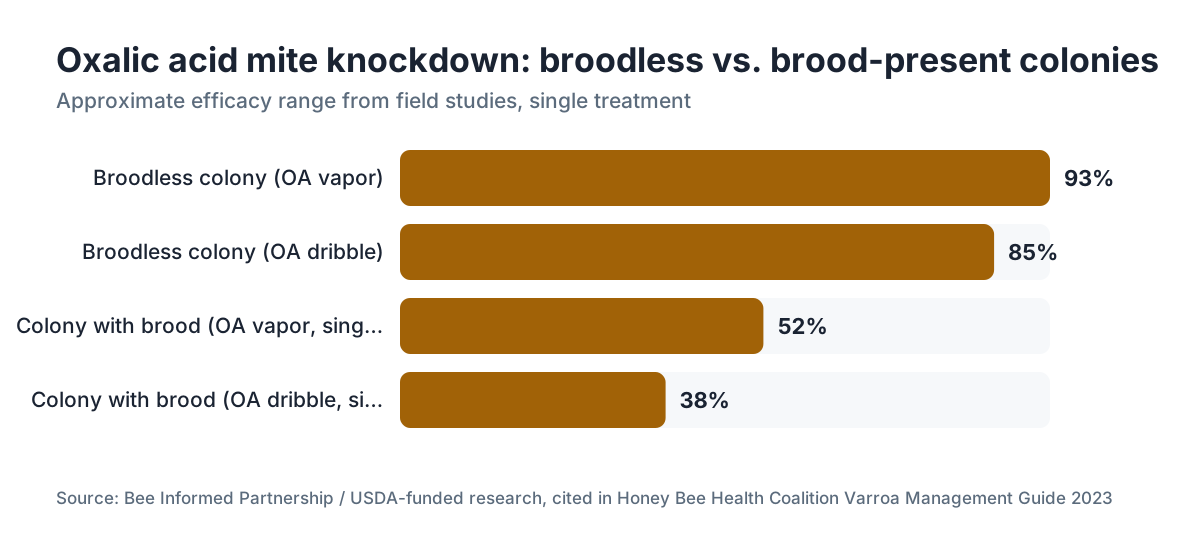
Here is the upside. The broodless window right after installation, usually the first seven to fourteen days before the new queen ramps up laying and sealed brood shows up, is one of the most effective treatment windows for oxalic acid all year. With no capped brood for mites to hide in, a single oxalic acid treatment can wipe out 90 percent or more of the mites [2]. Miss that window and mites are breeding inside sealed cells within a few weeks, which complicates every treatment decision after it.
Should you test mite levels before treating a new package?
Test before you treat. Some packages arrive below the 2-mites-per-100-bees threshold that the Honey Bee Health Coalition sets as the action point during the broodless spring buildup [1]. Treating below threshold is not automatically harmful, but it puts chemical on bees already stressed from shipping, and it burns a slot in your treatment rotation for no real reason.
A fresh package holds enough bees to sample. Three pounds is roughly 10,000 bees, plenty for an alcohol wash. Take a half-cup sample (about 300 bees) from the cluster, keep the queen out of it, wash with isopropyl alcohol, count the mites in the bottom of the jar, and divide by the number of bees. A count at or above 2 per 100 bees (that is 6 or more mites in a 300-bee sample) means treat now.
If you plan to treat regardless, testing still earns its keep. It tells you whether your supplier is shipping high-mite bees, which is worth knowing when you order next year. Keep a simple log. Nobody in this hobby has good data on package mite loads by supplier, so your own records add up to something useful over a few seasons.
What is the best treatment for a newly installed package?
Oxalic acid is the clear first choice during the broodless window. The EPA approves it for hives with or without brood, though efficacy is far higher when there is no brood [2]. Two methods are available in the United States under the Api-Bioxal label, the only EPA-registered oxalic acid product approved for honey bee colonies [3].
The dribble applies a 3.5% oxalic acid solution in sugar syrup directly onto the bees between frames. Per the Api-Bioxal label, the dose is 5 mL per occupied bee space, up to 50 mL total per colony. For a fresh package with 8 to 10 occupied spaces, that is a five-minute job.
Vaporization (sublimation) uses a heated wand to turn solid oxalic acid crystals into vapor inside a sealed hive. Field data compiled by the Bee Informed Partnership and cited in the Honey Bee Health Coalition guide put vapor at roughly 90 to 95% mite reduction in broodless colonies under good conditions [2]. The dribble lands a bit lower but still strong, around 80 to 90%, in the same window. Either one works well on a new package.
Here is what I would actually do. If you own a vaporizer, use it. Seal the entrance, apply one dose of oxalic acid vapor per the Api-Bioxal label (1 gram of oxalic acid dihydrate per brood box), wait ten minutes with the entrance shut, then open up. Done. If you only have the dribble kit, that works too. Just measure carefully, because overdosing stresses bees.
Formic acid products (Formic Pro, MAQS) and amitraz strips (Apivar) are registered treatments, but they are hard to justify on a brand-new package. Formic acid needs a temperature window of 50 to 85 degrees Fahrenheit and carries some short-term brood and queen mortality risk even in established colonies [4]. Apivar strips (amitraz) take 6 to 8 weeks to work and leave residues in wax [5]. On a fresh, broodless package, oxalic acid wins on every axis: faster, cleaner, and highly effective in exactly the conditions a new package gives you.
When exactly should you apply the treatment after installation?
The ideal window is days 3 through 10 after installing the package. The logic runs like this. On installation day the bees are still in transport stress. Give them 48 to 72 hours to settle in, find water, and start drawing comb. Then treat before the queen has sealed brood, which usually shows up 9 to 12 days after she starts laying (3 to 4 days of laying plus 8 to 9 days to capping).
Check the queen cage on day 3 to 5. If she has not been released, you may need to release her manually before you treat, because you need to confirm she is alive and in the hive before anything goes on. Once she is out and you see fresh eggs or young larvae, treat within the next few days.
Miss the broodless window and find sealed brood already present, and a single oxalic acid hit is no longer your best tool. At that point you are looking at either oxalic acid vapor every 5 days for 3 cycles to catch mites as they emerge from cells [2], or a full Apivar course.
Is oxalic acid safe to use on a package with a caged queen?
Probably yes, but hold off if you can. The Api-Bioxal label does not explicitly ban treatment while a queen is caged. Some beekeepers report that queen candy can absorb oxalic acid vapor and stress the attendant bees inside the cage. Most extension apiarists give the same practical advice: wait until the queen is released, then treat.
If your queen came out through the candy plug and you confirm she is moving freely in the hive, there is no label restriction on treating the colony. Vapor or dribble at the labeled dose will not harm a healthy, free-moving queen. Some research links high-dose oxalic acid to higher supersedure rates, but those effects show up above labeled rates [6]. Stick to the label and you are fine.
Release the queen first, confirm she is alive and in the colony, then treat. That is the whole rule.
What mite threshold triggers treatment in a new package?
The Honey Bee Health Coalition sets the treatment threshold at 2 mites per 100 bees during the broodless period or spring buildup [1]. That number comes from field research showing colonies that cross it early in the season face compounding mite populations that turn very hard to control by midsummer.
For a new package, the threshold holds. Run an alcohol wash, get your count per 100 bees, and treat if you hit 2 or above. Below 2 with healthy-looking bees, you can monitor and retest in two to three weeks once brood is established. Given how cheap and fast an oxalic acid treatment is on a broodless colony, plenty of beekeepers (me included) just treat every new package and test afterward to confirm it worked. Nothing wrong with that as long as you follow the label.
The one move I would not make is skipping both the test and the treatment and hoping. Package mite loads are genuinely unpredictable. A colony that builds up on a high mite load from April through June can crash by August in ways that feel mysterious but are entirely predictable in hindsight.
Can you treat a package the same day you install it?
You can apply oxalic acid the same day, but there are good reasons not to. Fresh bees are stressed from days in a wire cage, maybe short on food. They need a few hours to a day or two to cluster around the queen cage, take feed, and orient to the new hive. Treating in the first 24 hours stacks stress on stress and probably does not improve outcomes, since the broodless window runs another week or more anyway.
A practical compromise works better. Install the package, feed 1:1 sugar syrup to push comb drawing, leave it alone for 3 days, check queen release on day 3 to 5, then treat. That schedule gives the bees time to settle without giving up much of the treatment window.
How do you actually do an alcohol wash mite count on a small package?
The alcohol wash is the most accurate mite count available, and it works on a package population. Here is the step-by-step.
You need a half-cup measure (roughly 300 bees), a wide-mouth mason jar with a hardware-cloth lid, and 70% isopropyl alcohol. Scoop the half-cup of bees from the cluster, away from the queen. Pour alcohol into the jar until the bees are covered. Shake firmly for 30 to 60 seconds. Pour the alcohol through the mesh lid into a white tray or a second container. Count the mites that washed off. Divide the mite count by the number of bees in your sample (count them, or use the rule that a half-cup holds about 300 bees). Multiply by 100 for mites per 100 bees.
North Carolina State University Extension Apiculture documents the half-cup (about 300 bees) sample size and the math for turning it into a mites-per-100 figure [10]. Some beekeepers use a powdered sugar roll as a less lethal option, but Penn State Extension research shows the sugar roll undercounts mites by 40 to 60% against the alcohol wash [7]. For a new package where you are killing 300 bees out of 10,000 (3% of the colony), the alcohol wash earns the accuracy.
If you want to track counts across hives and seasons, VarroaVault's free varroa management tools include digital wash logs and threshold calculators that spot trends faster than a paper notebook.
What happens if you do not treat a new package for varroa?
The mite population compounds fast. Varroa breeds in sealed brood, and USDA Agricultural Research Service work shows mite populations can double every 4 to 6 weeks during the brood-rearing season when left unchecked [8]. A package that arrives at a 1.5% infestation rate in late April can reach 4 to 6% by July, right as the colony is trying to raise the winter bees that carry it into the next spring.
Colonies that collapse from varroa rarely die from the mite itself. They die from the viruses varroa spreads, especially deformed wing virus and sacbrood virus [8]. By the time you see crumpled wings or a patchy shotgun brood pattern, the colony is in serious trouble and recovery takes aggressive work.
Then there is your neighbors' bees. A colony that crashes and gets robbed out in late summer throws off a cloud of mite-carrying bees that drift into nearby hives. Run more than one hive, or keep bees near other beekeepers, and an untreated collapsing colony is a mite bomb for everyone in a two-mile radius.
To see the biology behind the timing, the varroa mite article here walks through the mite's reproductive cycle, which makes the treatment logic click into place.
What about using Apivar or formic acid on a new package instead of oxalic acid?
Apivar (amitraz) strips release amitraz slowly over 6 to 8 weeks and hit hard in colonies with brood [5]. On a broodless new package they still kill phoretic mites, but you are running a 6-to-8-week chemical exposure for a job oxalic acid finishes in one shot. There is a wax problem too. Amitraz and its metabolites build up in beeswax, and new comb drawn during an Apivar treatment carries those residues [5]. A new package is drawing its foundational comb right now, so starting with clean chemistry (oxalic acid) protects that fresh wax.
Formic acid (Formic Pro, MAQS) does penetrate capped brood and works in colonies with sealed cells, which makes it genuinely useful once brood is established. The catches are temperature sensitivity (50 to 85 degrees Fahrenheit for the full window, per the Formic Pro label [4]), a documented risk of higher queen mortality in some conditions, and a two-strip protocol that runs 10 to 14 days. None of those downsides apply to oxalic acid in the broodless window.
Apivar and formic acid are not bad treatments. They are both registered, effective, and part of a good year-round rotation. They are the wrong tools for this one specific job.
How should you plan varroa treatments for the rest of your first season?
One oxalic acid treatment on a new package is not a season-long plan. It handles the broodless window well, but as the colony grows and sealed brood piles up, mite counts climb again, faster still if drifter bees from neighboring colonies join yours over the summer.
A reasonable first-season schedule looks like this. Treat with oxalic acid during the broodless window (days 3 to 10 after installation). Run an alcohol wash in late June or early July to check the load. At or above 2 per 100 bees, treat again. For a summer treatment with brood present, Formic Pro at the right temperatures or a full Apivar course (minimum 6 weeks, maximum 8 weeks, strips out before a honey super goes on) are the standard choices [4][5].
Aim for a late-summer or early-fall treatment, usually August across most of the continental US, to protect the long-lived winter bees emerging in September and October. Those bees have to be mite-free and virus-free to make it to spring. Oregon State University Extension lays out a seasonal treatment calendar tied to colony phenology, with August treatment called out for the winter bee cohort [11].
When you buy supplies for the season, beekeeping supply companies that specialize in apiculture (rather than general farm stores) stock the full range of registered treatments and usually carry the right dilution gear for oxalic acid dribble applications.
Are there any situations where you should not treat a new package?
A few situations call for a pause instead of an immediate treatment.
If the package arrives clearly stressed, with a heap of dead bees, a poorly laying or missing queen, or signs of pesticide exposure (bees twitching, unable to fly), stabilize the colony first. Chemical treatment does not save a dying colony. Sort out the queen, confirm you have one laying, then treat.
If nights are consistently below 50 degrees Fahrenheit and the bees cluster tight, oxalic acid vapor still works because the vapor reaches the cluster directly. The dribble can fall short in that case, since clustered bees do not spread the liquid across the whole population. This matters most for packages installed in early spring up north.
No law stops you from treating a package. EPA label requirements govern what product and dose you use, not who can treat a new colony. Michigan State University Extension recommends confirming queen release before any hive manipulation, which is the practical gate here [9]. Always read the current label before applying any registered treatment, because labels are the law and they do get revised [3].
Frequently asked questions
How soon after installing a package should I treat for varroa?
Treat 3 to 10 days after installation, once the queen has left her cage and you have confirmed she is alive in the hive. This window catches the colony while it is still broodless, which is when oxalic acid works best. Wait until sealed brood appears (usually day 9 to 12 after the queen starts laying) and mites hide in capped cells, dropping treatment efficacy sharply.
Can I skip treating a new package if it comes from a reputable breeder?
Reputable sources tend to have lower mite loads, but no commercial operation can promise a zero-mite package. The only way to know your level is to test. Run an alcohol wash 3 to 5 days after installation. Below 2 mites per 100 bees, and with a source that manages mites well, watchful monitoring is reasonable. At or above 2 per 100, treat no matter the reputation.
Does the broodless window in a new package really improve oxalic acid efficacy?
Yes, dramatically. Oxalic acid kills phoretic mites on adult bees but does not reach through capped wax, so mites breeding inside sealed cells are fully protected. Field data cited by the Honey Bee Health Coalition put efficacy around 90 to 95% in broodless colonies versus roughly 40 to 60% in colonies with significant brood. A new package is one of the few times a colony is naturally broodless outside winter.
What mite count is too high for a new package to survive?
The Honey Bee Health Coalition sets the action threshold at 2 mites per 100 bees during the broodless and spring buildup period. Packages above 3 to 4 per 100 are at elevated risk without prompt treatment. There is no hard number above which a colony is unsaveable, but the higher the starting load, the faster it compounds once sealed brood arrives, and the harder it gets to control by midsummer.
Is the oxalic acid dribble or vaporization better for a new package?
Both work well in the broodless window. Vaporization runs slightly higher (roughly 90 to 95% knockdown) and does not wet the bees, which cuts chilling risk. The dribble is cheaper to start with, since it needs only a measuring syringe and no specialized gear. If you already own a vaporizer, use it. If not, the dribble is an effective, label-compliant alternative.
Do I need to remove honey supers before treating a new package with oxalic acid?
New packages do not have honey supers, so this is not a concern at installation. For established colonies, the Api-Bioxal label bans treatment when honey supers with honey for human consumption are on the hive. Once your first-season hive grows enough to add supers, check the current label for restrictions before you treat.
Can varroa treatment hurt a newly installed queen?
At labeled doses, oxalic acid dribble or vapor should not harm a free-moving queen. The main risk is treating while she is still caged, since vapor or absorbed liquid can stress the attendants inside the cage. Confirm the queen has been released and is moving freely before you apply anything. Some research links overdosing oxalic acid to higher supersedure rates, so follow the label precisely.
How many oxalic acid treatments does a new package need in its first year?
Plan for two to three treatments in the first season: one during the broodless window after installation, one in late June or July based on a mite count, and one in late summer (August) to protect the winter bees. Single-treatment strategies rarely hold mites below threshold all season. Test after each treatment to confirm it worked and decide whether you need more.
Can I use a hive-top feeder while treating with oxalic acid?
Yes. Feeding and oxalic acid treatment do not conflict. Feeding new packages 1:1 sugar syrup while they establish is strongly recommended to push comb drawing. Apply the oxalic acid to the bee cluster, not the syrup, and follow normal label guidance on dose and method. The two interventions leave each other alone.
What if my new package dies shortly after installation? Could varroa be the cause?
Rarely is varroa the direct cause of a very early package failure within the first 2 to 3 weeks. Early failures more often trace to a failing or missing queen, pesticide exposure in transit, starvation from bad foraging weather, or chilling in a cold snap. Varroa-driven collapse takes weeks to months. If a package fails early, check for a laying queen first and call your supplier.
Are there any natural or treatment-free options for managing varroa in a new package?
No naturally sourced or treatment-free method has shown reliable mite reduction in the field on par with registered treatments. Powdered sugar dusting does not remove meaningful numbers of mites in controlled studies. Brood breaks slow mite reproduction but require a deliberate move like caging the queen. For most hobbyists, oxalic acid during the broodless window is the lowest-intervention, highest-efficacy option there is.
Does the time of year I install the package change my treatment plan?
Yes, somewhat. Spring packages (March through May in most of the US) are the common case, and the broodless treatment window applies cleanly. Summer packages or late-season splits with a mated queen may have a shorter broodless window if the queen starts laying fast. Fall packages up north are uncommon and bring survival challenges beyond varroa. In every case, test first and treat on the count.
Where can I get Api-Bioxal and what does it cost?
Api-Bioxal sells through beekeeping supply retailers and some farm supply stores. As of 2024, prices ran roughly 25 to 35 dollars for a 35-gram bottle, enough for multiple treatments depending on colony count and method. Some states have added requirements for veterinary oversight of certain animal treatments, so check your state's rules. Most specialty beekeeping retailers carry it and can advise on local regulations.
Sources
- Honey Bee Health Coalition, Varroa Management Guide (2023 edition): Treatment action threshold of 2 mites per 100 bees during broodless/spring buildup period; mite loads in packages vary by source and management
- Bee Informed Partnership, oxalic acid efficacy data (cited in Honey Bee Health Coalition Varroa Management Guide): Oxalic acid achieves roughly 90-95% mite reduction in broodless colonies; repeated vapor treatments every 5 days over 3 cycles recommended when brood is present
- EPA, Pesticide Registration (Api-Bioxal, the only EPA-registered oxalic acid product for honey bee colonies): Api-Bioxal is the only EPA-registered oxalic acid product approved for use in honey bee colonies in the United States; labels are legally binding
- NOD Apiary Products, Formic Pro product label and instructions: Formic Pro requires a temperature window of 50 to 85 degrees Fahrenheit; two-strip protocol runs 10 to 14 days; documented risk of increased queen mortality in some conditions
- Veto-Pharma, Apivar (amitraz) product information and label: Apivar strips require 6 to 8 weeks for full efficacy; amitraz and metabolites accumulate in beeswax over repeated treatments
- University of Florida IFAS Extension, EDIS honey bee varroa mite management: Overdosing oxalic acid above labeled rates associated with increased queen supersedure rates in some studies; labeled doses do not harm freely moving queens
- Pennsylvania State University Extension, Mite-A-Thon monitoring protocol: Powdered sugar roll undercounts mites by 40 to 60% compared to alcohol wash in side-by-side studies; alcohol wash recommended as most accurate method
- USDA Agricultural Research Service, Varroa destructor biology and virus vectoring: Varroa mite populations can double every 4 to 6 weeks during brood-rearing season; mite is primary vector of deformed wing virus and sacbrood virus driving colony collapse
- Michigan State University Extension, installing a package of bees: Queen release timeline and package installation best practices; recommendation to confirm queen release before hive manipulation
- North Carolina State University Extension Apiculture, varroa mite sampling methods: Half-cup (approximately 300 bees) sample size for alcohol wash; methodology for calculating mites per 100 bees from a package population
- Oregon State University Extension, varroa mite management in Oregon: Seasonal treatment calendar referenced to colony phenology; late-summer treatment in August recommended to protect winter bee cohort
Last updated 2026-07-09