Varroa treatment news: what's changed and what's coming

TL;DR
- Varroa management is moving fast.
- Oxalic acid vaporization is now standard practice, USDA-funded resistance research is reshaping monitoring advice, and two newer approaches (oxalic acid glycerin strips and RNA-based treatments) sit in regulatory review.
- No silver bullet exists yet.
- But your monitoring and treatment options are meaningfully better than they were five years ago.
What is the current state of varroa treatment in 2025?
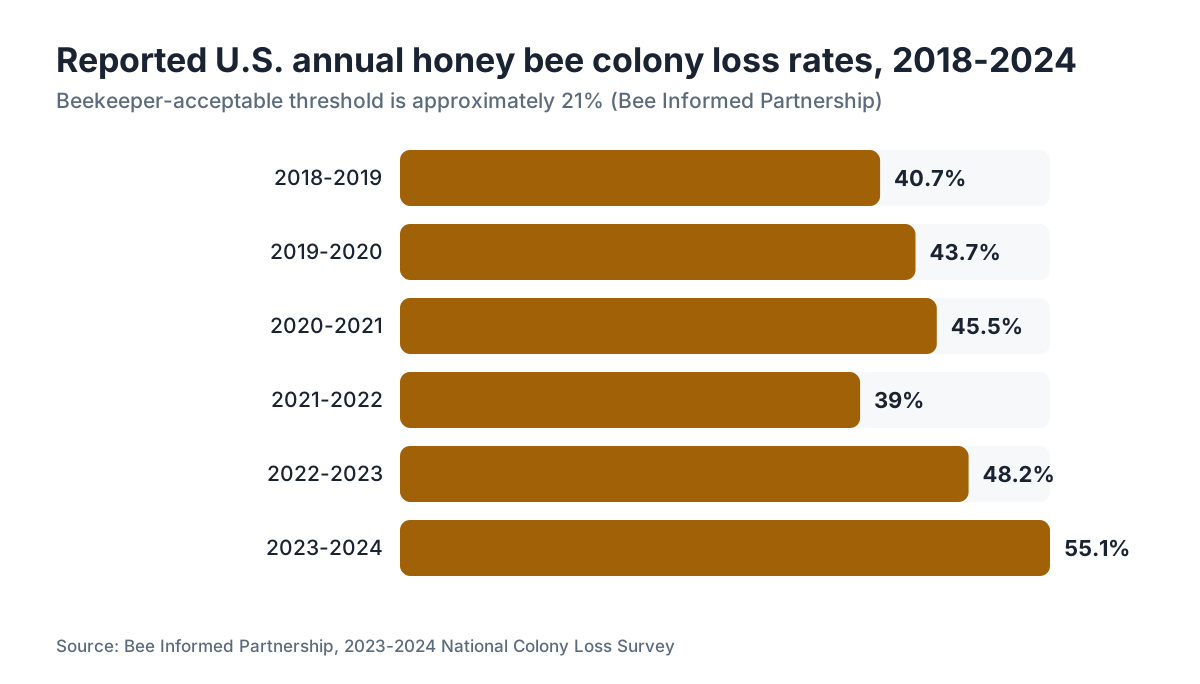
Varroa destructor is still the number one cause of managed honey bee colony loss in North America. The Bee Informed Partnership's 2023-2024 national survey reported total annual colony losses of about 55.1%, continuing nearly two decades of losses well above the beekeeper-acceptable threshold of roughly 21% [1]. That number is why treatment research is finally getting real money and real regulatory attention.
The treatment menu breaks into a few groups. Synthetic miticides like amitraz (Apivar) and tau-fluvalinate (Apistan) are still common, and amitraz is the workhorse in most commercial operations. Organic acids, mostly oxalic acid in its various delivery forms, have exploded among hobbyist and sideliner beekeepers since the EPA widened its registered uses. Formic acid products (Mite-Away Quick Strips, Formic Pro) fill out the organic acid options. Thymol (ApiLife Var, Apiguard) works well, but only in a narrow temperature band.
The real news is not a new miracle product. It's that several things are landing at once: confirmed resistance in U.S. mite populations, new oxalic acid formulation research, and the first RNA-based treatments moving through the regulatory pipeline. Each one deserves an honest look.
Is varroa mite resistance to amitraz confirmed in the United States?
Yes. Amitraz resistance in U.S. varroa populations is confirmed in published research, and it's a real problem for anyone leaning on Apivar as their main tool. A 2021 study in Scientific Reports by Morfin and colleagues found amitraz resistance in commercial U.S. apiaries, documenting mite populations with sharply reduced sensitivity to the active compound [2]. That confirmed what commercial beekeepers had been muttering about for years, and it lined up with earlier European reports.
What does resistance look like in a hive? You treat, you wait out the full 42 to 56 days for Apivar, and your mite counts barely budge. If that's happening and you know the strips went in correctly, resistance is the likely answer. The Honey Bee Health Coalition names chemical class rotation as the main defense, specifically alternating amitraz (a formamidine) with organic acids across treatment cycles [3].
Tau-fluvalinate (Apistan) resistance is much older news, dating to the late 1990s. It's now so widespread that most extension apiculturists treat Apistan as effectively dead. Running it as your only synthetic is a bad bet unless you've recently confirmed it still works in your own mites through an efficacy check.
Here's the blunt version. If you're not rotating chemical classes and not monitoring after treatment, you're speeding resistance along. See VarroaVault's varroa mite breakdown for the full resistance mechanism.
What are the latest updates on oxalic acid treatments and vaporization?
Oxalic acid dihydrate is now the spine of most organic treatment programs, and its regulatory history explains why. The EPA registered oxalic acid for U.S. use in 2015 [4]. The first label allowed dribble application on broodless colonies only, which pinned timing to winter or a deliberate brood break. The 2019 label expansion added vaporization (sublimation) as a legal method and cleared use on colonies with brood when treatments repeat. That change rewrote how beekeepers can use it across the whole season.
Vaporization gets oxalic crystals to mites hiding under brood cappings, but only when you repeat it. A 2019 University of Florida efficacy study found that repeated vaporization (every 5 days over 4 to 5 treatments during the brood season) hit mite reduction above 90% in treated colonies [5]. That matches synthetic miticides, with none of the resistance baggage.
The gear has matured too. The Varroa Controller (battery-powered, fan-assisted) and various wand vaporizers are easy to find now. Basic wand units run about $120 to $250 depending on brand and power source. The Varroa Controller sits closer to $400 to $600. All of them need an EPA-registered oxalic acid product (Api-Bioxal is the registered U.S. brand) used per label. Grabbing generic oxalic acid off a pool supply shelf is an off-label application, and it's not legal under FIFRA.
One thing the community keeps quiet about: applicator safety. Api-Bioxal vaporization calls for a NIOSH-approved respirator with an OV/P100 cartridge, full protective clothing, and eye protection. The EPA label says plainly: "Do not breathe vapors or spray mist." That's not filler text. Oxalic acid vapor is a serious respiratory irritant, and injuries from sloppy homemade vaporizer rigs go underreported.
One more practical edge: oxalic acid carries no pre-harvest honey withdrawal period under the current Api-Bioxal label when used as directed. Amitraz can't say that.
What is oxalic acid glycerin (shop towel) treatment and is it approved?
Oxalic acid extended release through glycerin-soaked material, often called the "shop towel method" or OA/glycerin strips, has floated around beekeeping circles for years. The idea is simple. Cellulose strips soaked in a glycerin-oxalic mixture bleed the acid out slowly over weeks, dosing mites as bees walk across them.
As of early 2025, this formulation and delivery method has no standalone EPA registration for U.S. beekeeping use [4]. Plenty of hobbyists run it anyway as a DIY off-label treatment. The research is mixed. A 2020 study from the LSU AgCenter found efficacy swinging widely with strip placement, colony strength, and season, some trials landing at 70 to 90% reduction and others far below that [6].
Here's the part worth tracking. A commercial oxalic acid extended-release product has been submitted for EPA Section 3 registration. The review timeline isn't publicly confirmed as of this writing, but the filing tells you demand is real and manufacturers see the market. If that registration lands, beekeepers get a legally labeled alternative to vaporization for season-long control. That's a big deal for anyone who finds repeated vaporization too much labor.
For now, DIY OA/glycerin strips are off-label. Some beekeepers make a calculated choice and do it anyway. Just be honest with yourself about the tradeoff.
Are RNA-based varroa treatments actually coming, and how do they work?
This is the class drawing the most scientific excitement, so it's worth knowing what it actually is before you get your hopes up about timing.
RNA interference (RNAi) works by feeding mites double-stranded RNA (dsRNA) matched to a gene the mite needs to survive. When a mite takes in the dsRNA through contact with treated bees or feeders, its own cellular machinery chops up that gene's messenger RNA and silences it. Knock out a gene the mite can't live or breed without, and the mite dies. The appeal is precision. A dsRNA sequence written for varroa genes shouldn't touch bees, mammals, or other organisms at that gene level.
Hawthorne LLC's product, once called Remebee and now in a renamed late-stage form, is the furthest along in U.S. regulatory review. DARPA funded early RNAi work for agricultural pests, and USDA's National Institute of Food and Agriculture has funded bee-specific RNAi research at several land-grant universities [7]. The EPA would regulate an RNAi varroa treatment as a pesticide under FIFRA, and it has already granted experimental use permits for field trials.
Nobody has solid public data on when an RNAi product actually reaches commercial registration. The closest we have is company disclosures pointing at 2026 to 2028, and those dates have slipped before. What peer-reviewed work does show is that dsRNA aimed at varroa reproductive genes cut mite reproduction in controlled colony experiments. A 2023 paper in PLOS Pathogens reported significant mite mortality using dsRNA delivered through sugar syrup feeding in cage trials [8].
If it clears EPA review and reaches shelves, RNAi would be the first genuinely new mode of action against varroa since thymol arrived in the 1990s. That matters for resistance management. But "if" and "when" are carrying a lot of weight in that sentence.
What does the Honey Bee Health Coalition say about current treatment best practices?
The Honey Bee Health Coalition (HBHC) is a collaborative group with members including USDA-ARS, university researchers, industry groups, and NGOs. Its "Tools for Varroa Management" guide, now in its 7th edition, is the closest thing North American beekeeping has to a consensus treatment protocol [3].
The core guidance hasn't swung wildly, but the 7th edition tightens a few points. It sets a 3% mite infestation threshold (3 mites per 100 bees on an alcohol wash) as the treatment trigger, replacing looser earlier language. It pushes post-treatment monitoring within 3 to 4 weeks of finishing a treatment, which is how you catch resistance before it costs you the colony. And it states flatly that no treatment is 100% effective, so integrated pest management (brood breaks and genetic selection for hygienic behavior) should ride alongside chemical treatment.
The guide is free to download from the Honey Bee Health Coalition website. Read it. It's the single best practical reference in the space, and it cites the underlying study for each recommendation so you can check the evidence yourself.
If you want to track your own mite counts and treatment timing across a few hives, VarroaVault's free protocol tools let you log alcohol wash results and flag when you cross the 3% threshold. That gets useful fast once you're running more than four or five colonies.
What new varroa treatments are under EPA review or recently registered?
The EPA's varroa registration pipeline is busier now than it's been in years. Here's an honest rundown of what's moving, with the standard warning that regulatory timelines are unpredictable.
Oxalic acid extended-release formulations: at least one commercial application is in review, as covered above. EPA decisions on Section 3 applications usually take 12 to 24 months from submission, and complex new formulations can drag longer.
Hops beta acids: HopGuard (now HopGuard 3, registered by BetaTec Hop Products) is EPA-registered and labeled for U.S. use. The active ingredient is potassium salts of hop beta acids. It's been around for years but sees low adoption. It goes in on strips, works best in broodless or low-brood conditions, and treats bees gently. It's underused, honestly, and worth a look if you're trying to skip synthetics.
RNAi products: experimental use permits have been issued for field trials. Full Section 3 registration would follow successful data submission and EPA review.
Acaricide rotation labels: the EPA has signaled interest in label language that pushes rotation between chemical classes, similar to the resistance management labels already required for row crop insecticides. That's a label change, not a new product, but it would formalize what the HBHC already tells you to do.
The EPA's pesticide registration page keeps a public database of registered products [4]. Search it by active ingredient to confirm current label status before you buy anything.
How does genetic selection for varroa resistance change the treatment picture?
Breeding mite-resistant or mite-tolerant bees is the oldest alternative to chemical treatment, and it's finally getting more traction in the lab and the marketplace.
The USDA-ARS Baton Rouge Bee Lab has selected for Varroa Sensitive Hygiene (VSH) behavior for decades. VSH bees find and pull out mite-infested brood, which breaks varroa's reproductive cycle. In well-selected colonies, VSH can hold mite growth down hard without chemical treatment. The USDA VSH line is available through some queen breeders, though supply swings by region [9].
Small cell comb, the once-popular idea that smaller cells physically block varroa reproduction, has mostly failed controlled testing. Peer-reviewed studies haven't found a statistically significant mite reduction from small cell foundation. This one is a clean case of beekeeper enthusiasm running past the evidence.
More recently, work on survivor-derived lines selected from feral colonies in the southeastern U.S. has shown low mite populations sustained over multiple years without chemical treatment in some studies, though replication across different climates is still ongoing. The Baton Rouge lab also runs a collaborative program with commercial queen producers, using genomic tools to speed up trait selection.
Genetic selection does not replace monitoring. Even VSH colonies can spike, especially when VSH traits dilute through drone mating with unselected drones in open mating areas. You still have to count mites.
What varroa monitoring methods have changed recently?
The alcohol wash (ethanol wash) is still the gold standard for mite counting. It gives you a direct count of phoretic mites per 100 adult bees. Take a sample of about 300 bees (roughly half a cup), shake it in 70% isopropyl alcohol or ethanol, and count the mites in the liquid. At or above 3 mites per 100 bees (3%), the HBHC says treat [3].
Sugar roll is the non-lethal option, and it's fallen out of favor as its accuracy has come under fire. A 2019 study in the Journal of Apicultural Research found that sugar rolls consistently undercounted mites versus alcohol washes in the same colonies, and the gap widened as infestation climbed [10]. The danger with undercounting is obvious. You think you're under threshold when you're not.
Sticky boards (natural mite fall or 24-hour counts) still work for tracking population trends, but not for the threshold-based treatment calls that alcohol wash supports. Mite fall shifts with season, colony size, and bee behavior in ways that make reliable thresholds tough to pin down.
Automated mite counting is an active research area. Machine learning image tools can count mites on sticky boards or on bees straight from photos. A few commercial products have reached the market, but cost and real-world field reliability are still barriers. University trials show promising accuracy in controlled conditions. Independent field validation is thin.
The honest advice today: use alcohol washes, run them at least twice a year (before spring buildup and in late summer before winter prep), and use the HBHC sample size. Everything else is supplementary.
How do treatment timing and seasonal protocols need to change based on new research?
The biggest shift in seasonal thinking over the last few years is the weight now put on the late-summer treatment window. It's the most consequential of the year. August through early September is when winter bees get raised, and mite loads during that window decide whether the colony sees spring. A 2022 Bee Informed Partnership analysis found that colonies treated after mites crossed 3% in late summer had much higher winter mortality than colonies treated before crossing it [1].
That carries a hard lesson. If you only treat once a year in late fall or early winter, you're letting mites wreck winter bee development first and then treating the wreckage. Treat in mid to late summer, ideally wrapping up before the last week of August in most northern U.S. climates, and the colony builds clean winter bees.
Oxalic acid vaporization covers much of the active season when done right. Amitraz (Apivar) needs strips in place for 42 to 56 days and works best with brood present so mites contact the strips. Formic acid (Formic Pro, MAQS) can push through cappings to hit mites in brood cells, but temperature pins its use to 50 to 85 degrees Fahrenheit (10 to 29 C) to avoid killing brood and queens [11].
Brood breaks change everything. Requeen, cage the queen for 24 days, or split the colony, and you create a window where every mite is phoretic and exposed. A single oxalic dribble or vaporization treatment during that window works dramatically better. A brood break followed by oxalic acid is the most effective one-shot scenario outside of midwinter.
If you're sorting out hive equipment and supplies, see our beekeeping supplies guide for which monitoring gear you actually need and which is optional.
What should beekeepers watch for in varroa treatment news over the next 12-24 months?
A handful of developments are worth watching if you want to stay ahead.
EPA registration decisions on oxalic acid extended-release products are the near-term event most likely to change your options. A labeled glycerin-based commercial product would shift the cost and labor math for season-long treatment, especially if you run dozens of colonies.
RNAi field trial results from USDA-funded studies will start showing up in peer-reviewed journals. Watch for papers out of collaborating labs at Penn State, the University of Maryland, and UC Davis. Those give you an independent read on efficacy long before a commercial product hits your local supplier.
Resistance mapping is getting better. USDA-ARS bee labs have been building geographic databases of amitraz resistance prevalence. If that data goes public, beekeepers in high-resistance regions can pick smarter first-line treatments.
State-level rules matter too. Some states fold oxalic acid vaporization into pesticide applicator certification requirements or add other conditions. Check your state department of agriculture's current requirements before you treat, because this varies and keeps changing [12].
And watch the breeding sector. The supply of VSH queens through regional queen producers has been growing. If that supply chain firms up, a genetic component to mite management becomes realistic for hobbyists who currently can't get resistant queens at all.
For the bigger picture of varroa mite biology behind all of these treatments, understanding the mite's reproductive cycle is the key to understanding why timing matters this much.
Frequently asked questions
What is the treatment threshold for varroa mites in 2025?
The Honey Bee Health Coalition recommends treating when alcohol wash counts reach 3 mites per 100 bees (3%) during the active season, and 2% in late summer when winter bees are being raised. These thresholds held steady in the 7th edition of the HBHC guide, but the emphasis on catching that late-summer window has sharpened, based on colony loss data from the Bee Informed Partnership.
Is oxalic acid vaporization safe to use when honey supers are on?
The Api-Bioxal label in the U.S. does not list a pre-harvest interval, but it does specify conditions for use. Many apiculturists recommend pulling honey supers before vaporizing to avoid contaminating marketable honey. Check the current EPA-registered Api-Bioxal label directly before treating, since label conditions are legally binding and can be updated independently of product availability.
How do I know if my varroa treatment stopped working due to resistance?
Run an alcohol wash 3 to 4 weeks after finishing a full treatment course. If mite counts haven't dropped by at least 90% from your pre-treatment baseline, efficacy failure (possibly resistance) is the likely cause, assuming you applied the product correctly. The Honey Bee Health Coalition recommends documenting pre- and post-treatment counts specifically to catch this pattern early, before you lose the colony.
What is the shop towel or glycerin oxalic acid method and is it legal?
The oxalic acid glycerin extended-release method soaks cellulose strips in a mix of oxalic acid and glycerin, then places them in the hive. It has no EPA-registered label in the U.S. as a standalone DIY preparation, which makes it an off-label use under FIFRA. A commercial formulation is reportedly in EPA review. University trial efficacy is mixed, with results ranging from 70 to 90% reduction depending on conditions.
Are there any new varroa treatments approved by the EPA recently?
HopGuard 3 (hop beta acids) is registered and available. No entirely new active ingredient has received full EPA Section 3 registration for varroa since oxalic acid vaporization was added to the Api-Bioxal label in 2019. RNAi-based products sit in experimental use permit territory, with full registration likely several years out. Check the EPA's pesticide product database for current registration status.
Does the brood break method actually work for controlling varroa?
Yes. A confirmed brood break followed immediately by oxalic acid treatment is one of the most effective one-time interventions available. With no capped brood present, every mite is phoretic (riding adult bees) and fully exposed to treatments like oxalic acid. A single dribble or vaporization treatment during a brood break can reach 95%+ mite reduction. The catch is that a true brood break requires requeening, splitting, or caging the queen for at least 24 days.
What's the difference between Apivar and Apistan and which is better now?
Apivar contains amitraz (a formamidine). Apistan contains tau-fluvalinate (a pyrethroid). Apistan resistance in U.S. varroa is so widespread that most extension apiculturists no longer recommend it as a primary treatment. Apivar resistance is confirmed in some U.S. commercial operations but is less universal. Apivar is the more reliable synthetic choice today, but post-treatment monitoring is essential to confirm it's working in your own mites.
How often should I test for varroa mites?
At a minimum, twice a year: once in early spring before population buildup starts, and once in late summer (late July through August) before winter bee production peaks. The Bee Informed Partnership's colony loss data consistently shows that beekeepers who test more often, ideally every 4 to 6 weeks during the active season, catch mite spikes earlier and lose fewer colonies over winter. Use alcohol wash for accurate counts.
Can I use multiple varroa treatments at the same time?
Mixing treatments in one hive at the same time is generally not recommended and may not be covered by either product's label. Some combinations carry known risks: amitraz combined with certain other compounds can raise bee toxicity. The standard approach is to finish one treatment course, monitor efficacy, then choose the next treatment based on results and chemical class rotation. The HBHC guide covers combination safety explicitly.
What temperature do I need for formic acid varroa treatments?
Formic acid products like Formic Pro and MAQS have a labeled temperature window of 50 to 85 degrees Fahrenheit (10 to 29 C) for application. Above 85, formic acid evaporates too fast and can harm brood and queens. Below 50, evaporation is too slow for effective mite contact. That restriction makes formic acid less practical in high-summer heat or early spring cold snaps, which is one reason oxalic acid has grown more popular in those windows.
Is there a varroa treatment that's totally safe for bees?
No treatment is completely without risk to bees. Oxalic acid, used per label, has minimal direct bee toxicity, and the Api-Bioxal label rests on studies confirming safety at recommended doses. Formic acid can harm brood or kill queens if temperatures exceed the labeled range. Amitraz has a low bee safety margin at overdose. The safest approach is using labeled products at labeled rates in appropriate conditions, not improvising concentrations or timing.
What is VSH and how does it help with varroa?
VSH stands for Varroa Sensitive Hygiene, a heritable behavior where bees detect and remove mite-infested pupae from capped brood cells, breaking mite reproduction. USDA-ARS has selected and distributed VSH-trait queens since the 1990s. In well-selected colonies, VSH can hold varroa population growth down substantially. Open mating dilutes VSH traits over time, so periodic requeening with VSH stock is needed to keep the benefit.
Where can I find free varroa treatment protocol tools?
The Honey Bee Health Coalition offers free downloadable treatment guides at honeybeehealthcoalition.org. VarroaVault provides free monitoring logs, threshold calculators, and seasonal protocol frameworks built for hobbyist and sideliner beekeepers managing multiple hives. Your state's land-grant university extension apiculture program often has region-specific timing guides, which matter because climate affects both mite population cycles and treatment temperature windows.
Sources
- Bee Informed Partnership, 2023-2024 National Colony Loss Survey: Total annual U.S. colony losses of approximately 55.1% reported for the 2023-2024 survey year; late-summer mite load linked to higher winter mortality
- Morfin et al., Scientific Reports (2021), 'Occurrence of mutations associated with pyrethroid and amitraz resistance in varroa mites from North American commercial colonies': Amitraz resistance confirmed in U.S. commercial varroa populations via identified resistance-associated mutations
- Honey Bee Health Coalition, Tools for Varroa Management Guide, 7th Edition: 3% alcohol wash threshold as treatment trigger; post-treatment monitoring within 3-4 weeks; chemical class rotation for resistance management
- U.S. EPA, Pesticide Registration: Api-Bioxal (Oxalic Acid) label and registration history: EPA registered oxalic acid (Api-Bioxal) in 2015; 2019 label expansion added vaporization for brood-present colonies with repeated treatments
- Egekwu et al., University of Florida / USDA-ARS, Scientific Reports (2019), 'Using in-hive varroa mite counts to evaluate oxalic acid vaporization treatments': Repeated oxalic acid vaporization every 5 days over 4-5 treatments achieved mite reduction rates above 90% in colonies with brood
- LSU AgCenter, Oxalic Acid Glycerin Strip Research (2020): Efficacy of DIY OA/glycerin strips ranged from 70-90% reduction in favorable conditions; results varied by strip placement, colony strength, and season
- PLOS Pathogens (2023), research on RNA interference-mediated control of Varroa destructor: dsRNA targeting varroa reproductive genes demonstrated significant mite mortality in cage trial experiments via sugar syrup feeding
- USDA-ARS Honey Bee Breeding, Genetics & Physiology Research Unit, Baton Rouge: USDA-ARS has maintained VSH selection lines and made them available through collaborating queen producers for decades
- Macedo et al., Journal of Apicultural Research (2019), 'Comparison of sugar roll and alcohol wash for varroa mite counting': Sugar rolls consistently undercount mites compared to alcohol washes, with discrepancy increasing at higher infestation levels
- Formic Pro EPA-registered product label (NOD Apiary Products): Formic acid (Formic Pro) labeled for use at 50-85F (10-29C); above 85F risks brood and queen damage from excessive evaporation
- National Pesticide Information Center (NPIC) / State pesticide registration offices: State-level requirements for pesticide applicator certification and varroa treatment vary and are subject to change; beekeepers should verify local regulations
- Penn State Extension, Varroa Management in Honey Bee Colonies: Extension guidance on treatment timing, monitoring frequency, and resistance management consistent with HBHC recommendations
Last updated 2026-07-09