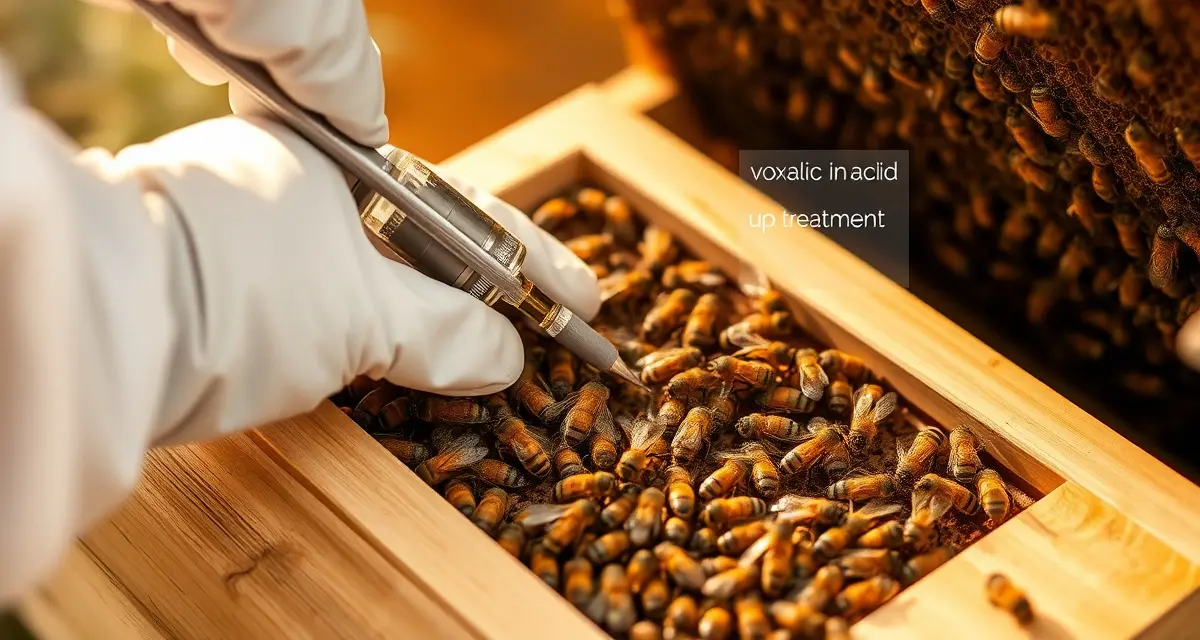
Varroa Treatment for Nucleus Colonies: Lower Threshold, Gentler Methods
Applying a full-dose OA dribble to a 2-frame nuc can cause significant bee mortality and sometimes kills the queen. This isn't a theoretical risk. Beekeepers who treat nucs exactly like full-sized colonies find this out the hard way, often at the worst possible time, like when a just-purchased nuc they've been nursing suddenly collapses two days after treatment.
Nucleus colonies are fragile. They have fewer adult bees, smaller brood volumes, and less thermal mass than full colonies. Treatment decisions for nucs need to account for that.
TL;DR
- Nucleus colonies have smaller bee populations, making the standard 300-bee alcohol wash harder without stressing the colony
- For nucs with fewer than 4 frames of bees, collect as many as possible and note the actual sample size
- Mite infestation percentages in nucs can be variable due to small sample sizes; repeat counts are important
- oxalic acid dribble is often the preferred treatment for nucs because dose can be scaled to frame count
- Track nucs separately from full colonies in VarroaVault using the nucleus colony type designation
- Nucs used for queen rearing should be monitored weekly during the queenless period
Why Nucs Need Different Thresholds
The standard 2% treatment threshold is calibrated for established colonies of roughly 20,000+ adult bees. At that population, a mite count of 2% represents a manageable mite load that can be addressed without emergency urgency.
A 3-frame nuc with 3,000-5,000 bees at 2% is in a different situation. The smaller population means fewer total bees to absorb treatment stress. Fewer adult bees means less capacity to care for brood during a treatment disruption. And a queen that's stressed or injured by an overdosed treatment in a nuc is harder to replace than in a large established colony.
In general, many experienced beekeepers treat nucs at a lower threshold than full colonies, typically 1-1.5% rather than 2%. The reasoning is precautionary: catch the problem before it becomes serious in a colony that doesn't have as much resilience to fall back on.
VarroaVault's nuc profile automatically adjusts threshold alerts for small colonies, flagging at a lower mite percentage than the standard adult colony alert.
Dose Adjustments for Nuc-Sized Colonies
Oxalic Acid Dribble
The standard OA dribble dose is 5mL per seam of bees, up to 10 seams (50mL maximum). For a 2-3 frame nuc with 2-4 seams, this translates to 10-20mL total. Stay within that range. Don't apply a full 50mL to a small nuc because you have 50mL of solution ready. Scale to the number of seams actually present.
Use the treatment dose calculator to confirm the correct dose based on your nuc's current frame count and estimated population.
OA Vaporization
OA vaporization dosed for a full 10-frame colony may overfill a small nuc with vapor if applied at the full standard dose and duration. For nucs in smaller enclosures (5-frame nuc boxes), use shorter vaporization times or smaller dose amounts to avoid OA concentration buildup that can harm bees.
Some beekeepers use standard vaporization on nucs by ensuring good ventilation during and immediately after treatment. The key is not allowing OA vapor to accumulate in an enclosed space too small to dissipate it.
Formic Acid (MAQS and Formic Pro)
MAQS and Formic Pro have specific warnings about use in nucleus colonies. Formic acid at standard doses can cause queen loss and significant bee mortality in small colonies. Read the label carefully before applying to any colony below the minimum population threshold specified.
For colonies too small for formic acid labels, OA or amitraz strips are the safer options.
Amitraz Strips (Apivar)
Apivar can be used in nucs but at a reduced strip count. The label specifies the number of strips per colony size. In a 2-5 frame nuc, one strip is typically appropriate. Position it between brood frames where maximum bee contact will occur. Remove the full strip even when treatment is complete (don't leave partial strips in a small colony).
Treatment Timing and Colony Strength
Time nuc treatments to avoid the most vulnerable periods:
Don't treat immediately after installation. Give a newly installed nuc 2-3 weeks to establish before any treatment. The queen needs to be laying steadily and the colony needs to be stable before introducing treatment stress.
Avoid treating during nectar flows if possible. Nucs during a strong flow may be at their most fragile due to maximum forager activity and peak brood rearing. If treatment is necessary during a flow (because counts are high), choose the gentlest option available.
Time OA treatment to coincide with maximum broodlessness. For nucs that undergo queen replacement or natural supersedure with a period of no laying, that's an ideal OA treatment window. The broodless period provides maximum OA efficacy with minimum treatment dose.
When to Treat a Nuc vs. When to Wait
The decision framework for nucs is similar to full colonies but with a more conservative threshold:
| Nuc Mite Count | Action |
|---|---|
| Below 1% | Monitor monthly, no treatment |
| 1-1.5% | Increase monitoring to 3 weeks, consider treatment if trending up |
| Above 1.5% | Treat promptly with dose-adjusted method |
| Approaching 2% | Treat immediately regardless of colony size |
If a nuc is too small for safe treatment (fewer than 2 frames of bees), consider combining it with another colony to reach a treatable size before applying any treatment.
Logging Nuc Treatments in VarroaVault
VarroaVault's nuc profile automatically adjusts dose calculator inputs for small colonies. When you set a colony's type as "nucleus," the mite count tracking app adjusts threshold alert sensitivity and the dose calculator uses the appropriate nuc-sized treatment parameters.
This prevents the most common nuc treatment error, which is logging a standard adult-colony dose when the colony is actually a small nuc and doesn't need or tolerate that dose level.
Monitoring After Nuc Treatment
Follow-up monitoring after nuc treatment follows the same principle as full colonies but at closer intervals. A 30-day post-treatment count is the minimum. For nucs that recently went through a treatment event, a 2-week check is worth doing to catch any stress-related decline early while you can still intervene.
Frequently Asked Questions
What varroa treatments are safe for nucleus colonies?
Oxalic acid dribble at dose-adjusted amounts (5mL per seam of bees, scaled to the actual nuc size) is the gentlest and most reliable option for nucs. Apivar strips at reduced counts (typically one strip for 2-5 frame nucs) are also appropriate and temperature-insensitive. Formic acid products like MAQS and Formic Pro have label warnings for small colonies and can cause queen loss and bee mortality if applied to nucs below their minimum colony size threshold. Always check the label minimum population requirement before applying formic acid to a nuc.
What mite level is dangerous for a nuc?
Treat nucs at 1.5% rather than waiting for the 2% threshold that applies to full colonies. Nucleus colonies have less resilience, fewer adult bees to absorb treatment stress, and less thermal mass to maintain brood warmth during a treatment-related disruption. A mite load that a strong colony handles with a treatment cycle can tip a fragile nuc toward failure. Catching it at 1.5% gives you a treatment window before the colony is already in a weak or declining state.
How does VarroaVault adjust treatment recommendations for nucs?
VarroaVault's nuc colony profile adjusts threshold alerts to 1.5% rather than the standard 2%, reflecting the more conservative treatment trigger appropriate for small colonies. The dose calculator pre-populates nuc-appropriate dose amounts based on your entered frame count and estimated bee population, preventing the application of full-colony doses to a nuc. When you log a nuc treatment, the platform also schedules a 2-week check-in reminder in addition to the standard 30-day post-treatment monitoring prompt, to catch any treatment-related stress early.
How do I know if my varroa treatment is working?
Run a mite count 2-4 weeks after the treatment ends and compare it to your pre-treatment count. The efficacy formula is: ((pre-count - post-count) / pre-count) x 100. A result above 90% indicates effective treatment. Results below 80% should trigger investigation for possible resistance, application error, or reinfestation. Log both counts in VarroaVault to track efficacy trends across treatment cycles.
How often should I check mite levels in my hives?
At minimum, once per month (every 3-4 weeks) during the active season. Increase to every 2 weeks when counts are near threshold or after a treatment to verify it worked. In fall, monitoring frequency matters most because the window to treat before winter bees are raised is narrow. VarroaVault's monitoring reminders can be set to your preferred interval for each apiary.
What records should I keep for varroa management?
Each record should include: date of count or treatment, hive identifier, monitoring method used, number of bees sampled, mites counted, infestation percentage, treatment product name and EPA registration number, dose applied, treatment start and end dates, and PHI end date. State apiarists typically expect this level of detail during inspections. VarroaVault captures all of these fields in a single log entry.
What is Varroa Treatment for Nucleus Colonies: Lower Threshold, Gentler Methods?
Varroa treatment for nucleus colonies refers to a modified approach to managing Varroa mite infestations in small, fragile bee colonies (nucs) that have fewer frames, bees, and brood than full-sized hives. Because nucs have less thermal mass and smaller populations, standard treatment doses can cause significant bee mortality or even kill the queen. This approach emphasizes scaled-down dosing, lower infestation thresholds, and gentler methods like oxalic acid dribble to protect the colony while still controlling mite levels effectively.
How much does Varroa Treatment for Nucleus Colonies: Lower Threshold, Gentler Methods cost?
Varroa treatment methods themselves vary in cost, but nucleus colonies require less product per treatment due to their smaller size. Oxalic acid, the preferred treatment for nucs, is inexpensive and widely available. The real cost consideration is the value of the nuc itself—often $150–$300 or more—which makes getting treatment right critical. Overtreating a nuc with a full-colony dose risks queen loss and colony collapse, making the cost of improper treatment far higher than the treatment itself.
How does Varroa Treatment for Nucleus Colonies: Lower Threshold, Gentler Methods work?
Scaled nuc treatment works by matching the treatment dose to the colony size. For oxalic acid dribble, this means applying roughly 5ml per occupied frame rather than a flat full-colony dose. Alcohol washes for mite counts should use as many bees as safely possible while noting the actual sample size, since small samples create more statistical variability. Nucs are monitored more frequently—especially during queenless periods—because mite populations can spike faster in colonies with limited brood and bee mass.
What are the benefits of Varroa Treatment for Nucleus Colonies: Lower Threshold, Gentler Methods?
The primary benefit is keeping small colonies alive during treatment. Scaled, gentler methods reduce the risk of queen loss, excess bee mortality, and colony collapse that can occur when full-colony doses are applied to nucs. Additional benefits include more accurate mite monitoring, better outcomes for nucs used in queen rearing programs, and the ability to track nuc health separately from full colonies. Catching infestations early with lower thresholds also prevents mite pressure from spreading to stronger hives in your apiary.
Who needs Varroa Treatment for Nucleus Colonies: Lower Threshold, Gentler Methods?
Any beekeeper managing nucleus colonies needs this approach—whether you're buying nucs, making splits, running queen rearing operations, or overwintering small colonies. Beginners who treat nucs exactly like full hives are most at risk of accidental colony loss. Experienced beekeepers running multi-colony operations benefit from tracking nucs separately and applying appropriate thresholds. If you're using nucs as mating nucs or for queen introduction, weekly monitoring during queenless periods is especially critical, as mite levels can escalate rapidly without a laying queen present.
Sources
- American Beekeeping Federation (ABF)
- USDA ARS Bee Research Laboratory
- Honey Bee Health Coalition
- Penn State Extension Apiculture Program
- Project Apis m.
Get Started with VarroaVault
The information in this guide is most useful when you have your own mite count data to apply it to. VarroaVault stores every count, flags threshold crossings automatically, and builds the treatment history you need for state inspections and effective management decisions. See pricing and free tools at varroavault.com.