VarroaVault vs BeeScanning: Detection Is Not Management
TL;DR: BeeScanning uses AI image analysis to detect varroa mites from photos. It's an interesting detection tool. But detecting mites and managing mites are completely different things. BeeScanning has no treatment tracking, no efficacy scoring, no rotation planning. VarroaVault covers everything after the count.
TL;DR
- VarroaVault's vs beescanning is designed specifically for varroa mite tracking and PHI compliance
- Setup takes under 30 minutes for most beekeeping operations
- All data is securely stored and exportable as formatted PDF for state inspections
- Free trial available with no credit card required
- Mobile app access works offline at remote apiaries without cell service
- Efficacy scoring and resistance trend flagging are built-in features unavailable in general beekeeping apps
What Each Platform Actually Does
| Feature | VarroaVault | BeeScanning |
|---------|------------|------------|
| Mite detection / counting | Alcohol wash logging | AI image analysis |
| Infestation rate calculation | Yes | Yes |
| Treatment threshold alerts | Yes | No |
| Treatment scheduling | Yes | No |
| Efficacy scoring | Yes | No |
| Resistance tracking | Yes | No |
| Rotation planning | Yes | No |
| General hive management | Yes | No |
| Works without smartphone camera | Yes | No |
| Quantitative accuracy | Validated (alcohol wash) | Image-dependent |
BeeScanning: What the Technology Is
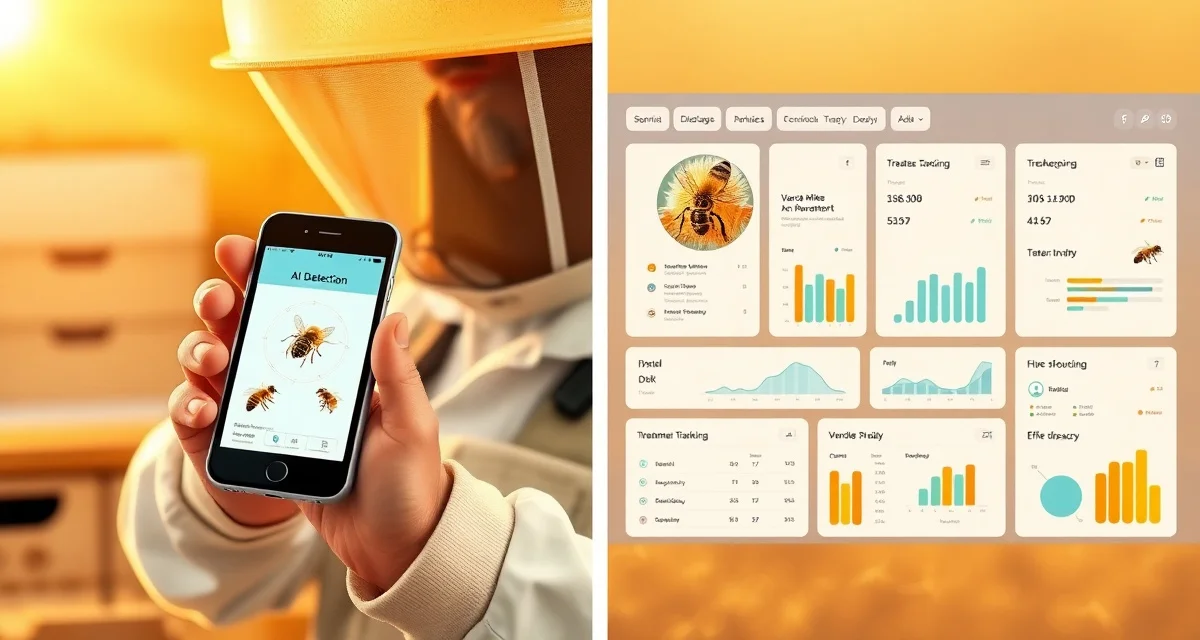
BeeScanning uses a mobile app with AI-powered image recognition to detect varroa mites on bees from photos. You photograph bees on a frame or in a container and the algorithm estimates the mite load based on visible mites.
The technology is genuinely interesting. For beekeepers who find alcohol washing difficult or who want a faster way to do rough monitoring, image-based detection has appeal.
Where it works: Quick field checks, rough monitoring when exact counts aren't critical, educational purposes.
Where it falls short: Image-based detection has accuracy limitations. Mites on the underside of bees, partially hidden mites, and photo quality all affect results. alcohol wash is the gold standard for a reason, it's physical and complete. BeeScanning acknowledges in their own documentation that it's not a replacement for alcohol wash.
The Larger Problem: BeeScanning Stops at Detection
Even if BeeScanning's detection were perfectly accurate, it only solves the first step of the problem.
You have a mite count. Now what?
BeeScanning has no answer. There's no treatment scheduling. No threshold-based alerts. No efficacy scoring. No rotation planning. No resistance tracking.
You detect mites with BeeScanning, then open a notebook (or a different app) to figure out what to do. That's not a management system, it's a single-step tool.
VarroaVault: After the Count Is Where the Management Happens
VarroaVault works with alcohol wash counts, sugar roll counts, or sticky board data, whichever method you use. The count is the input; the management loop is the output.
From your count, VarroaVault:
- Calculates your current infestation rate
- Compares against the seasonal threshold (2% or 1%)
- Alerts you if treatment is needed
- Recommends treatment options based on your constraints
- Schedules the treatment window with reminders
- Prompts your post-treatment count
- Calculates efficacy
- Flags resistance patterns
- Recommends rotation
BeeScanning gives you a number. VarroaVault turns the number into a program.
Accuracy: Alcohol Wash vs. AI Image Analysis
For treatment decisions at threshold (especially the tight 1% pre-winter threshold), accuracy matters.
Alcohol wash, when done correctly with a proper 300-bee sample, is the most accurate counting method available. It's the method used in research studies and the one thresholds are calibrated against.
AI image analysis from photos is subject to:
- Mites that aren't visible (under abdomen, in crevices)
- Photo quality and lighting variation
- Sample population (are you photographing the right bees?)
- Algorithm limitations at low mite loads
At 3% mite infestation, a rough estimate is enough to know you need to treat. At 0.8% vs. 1.2%, close to the pre-winter threshold, you need accurate data. Alcohol wash gives you that. Image analysis doesn't reliably differentiate at that scale.
Using Both
Some beekeepers use BeeScanning for quick mid-season rough checks and VarroaVault for formal threshold counts, treatment management, and efficacy tracking. The platforms aren't directly competing in this workflow, BeeScanning is a quick-check tool, VarroaVault is the management system.
If budget requires a choice, VarroaVault is the more complete tool since it handles both the logging and the management side.
FAQ
Is BeeScanning accurate enough for varroa threshold decisions?
BeeScanning can give useful estimates for rough monitoring but may not be accurate enough for threshold-level decisions, particularly at the tight 1% pre-winter threshold. Alcohol wash is the validated standard that varroa action thresholds were calibrated against. For treatment decisions, use alcohol wash counts.
Can BeeScanning replace alcohol wash?
BeeScanning themselves don't claim this. Their technology supplements monitoring but doesn't replace the validated accuracy of alcohol wash, particularly for low-level infestations near treatment thresholds.
Does BeeScanning have treatment management features?
No. BeeScanning's platform focuses on mite detection. It has no treatment scheduling, efficacy scoring, rotation planning, or resistance tracking. For full-cycle varroa management, you need a separate platform like VarroaVault.
How do I know if my varroa treatment is working?
Run a mite count 2-4 weeks after the treatment ends and compare it to your pre-treatment count. The efficacy formula is: ((pre-count - post-count) / pre-count) x 100. A result above 90% indicates effective treatment. Results below 80% should trigger investigation for possible resistance, application error, or reinfestation. Log both counts in VarroaVault to track efficacy trends across treatment cycles.
How often should I check mite levels in my hives?
At minimum, once per month (every 3-4 weeks) during the active season. Increase to every 2 weeks when counts are near threshold or after a treatment to verify it worked. In fall, monitoring frequency matters most because the window to treat before winter bees are raised is narrow. VarroaVault's monitoring reminders can be set to your preferred interval for each apiary.
What records should I keep for varroa management?
Each record should include: date of count or treatment, hive identifier, monitoring method used, number of bees sampled, mites counted, infestation percentage, treatment product name and EPA registration number, dose applied, treatment start and end dates, and PHI end date. State apiarists typically expect this level of detail during inspections. VarroaVault captures all of these fields in a single log entry.
What is VarroaVault vs BeeScanning: Detection Is Not Management?
VarroaVault vs BeeScanning: Detection Is Not Management is an article comparing two varroa mite tools for beekeepers. BeeScanning uses AI image analysis to detect mites from photos, while VarroaVault goes further — covering treatment tracking, efficacy scoring, resistance trend flagging, and rotation planning. The article argues that detecting mites is only the first step; true mite management requires the full workflow that VarroaVault provides, including threshold alerts, scheduling, and exportable PDF reports for state inspections.
How much does VarroaVault vs BeeScanning: Detection Is Not Management cost?
VarroaVault offers a free trial with no credit card required. Specific pricing tiers are not detailed in this article, but the platform is designed for beekeeping operations of most sizes and can be set up in under 30 minutes. BeeScanning operates as a separate product with its own pricing. For current VarroaVault plan details, visit the VarroaVault website directly to compare subscription options against your operation's needs.
Sources
- American Beekeeping Federation (ABF)
- USDA ARS Bee Research Laboratory
- Honey Bee Health Coalition
- Penn State Extension Apiculture Program
- Project Apis m.
Detection Is Step One. Management Is What Saves Colonies.
BeeScanning can tell you mites are present. VarroaVault tells you what to do about it, tracks whether you did it, and verifies whether it worked.
Start managing varroa with data at VarroaVault, free trial, no credit card required.
Get Started with VarroaVault
The information in this guide is most useful when you have your own mite count data to apply it to. VarroaVault stores every count, flags threshold crossings automatically, and builds the treatment history you need for state inspections and effective management decisions. See pricing and free tools at varroavault.com.