Will a brood break kill enough mites to save your colony?
TL;DR
- A brood break forces all varroa mites onto adult bees, where treatments like oxalic acid vaporization can kill 90 to 95% of them.
- Without a follow-up treatment, the brood break alone typically reduces mite loads by only 30 to 60%.
- Paired with oxalic acid during the broodless window, it's one of the most effective, low-resistance strategies available to hobbyist and sideliner beekeepers.
What does a brood break actually do to varroa mites?
A brood break strips varroa of the only place they can breed. Mites reproduce inside capped brood and nowhere else. Stop the queen from laying, wait for the last sealed cells to empty, and every surviving mite ends up riding on an adult bee with no way to make more.
When a queen stops laying, whether by swarm impulse, deliberate caging, or removal, no new capped brood forms. Every mite sealed in a cell emerges with the last of the young bees. Within about 12 days of the break starting, all surviving mites are phoretic, clinging to adult workers and drones. That's the colony's most exposed moment, because phoretic mites feed on fat bodies and hemolymph. It's also the beekeeper's best shot at killing them.
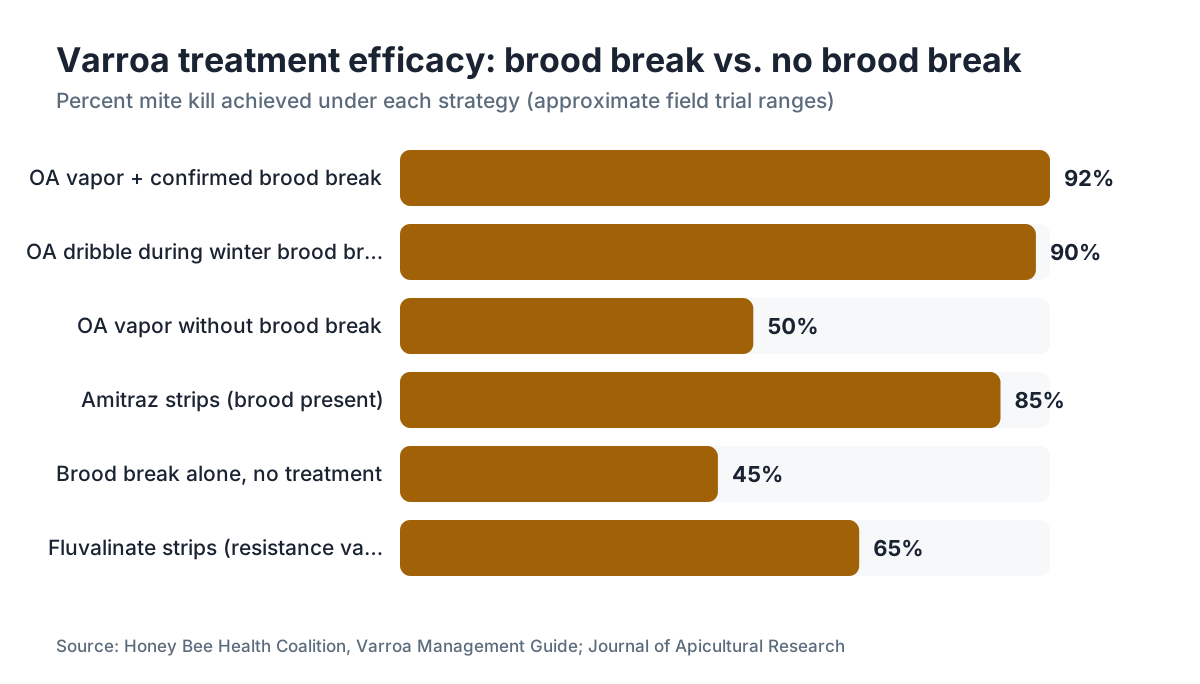
Oxalic acid, the most widely used brood-break treatment in North America, works by direct contact. Bees walk through vaporized crystals or across a surface treated by the dribble method, and the acid kills the mites clinging to them. It does almost nothing to mites sealed in capped brood, because those mites never touch treated bees. The Honey Bee Health Coalition's Varroa Management Guide reports that oxalic acid applied during a broodless period reaches "greater than 90% efficacy" compared to roughly 40 to 60% when brood is present [1].
So the brood break is a setup move. On its own it stalls reproduction, and a few mites die from failed breeding attempts or get groomed off. But bees don't groom well enough to clear an infestation. You still need the treatment. What the brood break buys you is the perfect window to apply it.
How much do mite levels actually drop during a brood break without treatment?
Not as much as beekeepers hope. A brood break with no treatment usually cuts mite loads by 30 to 60%, which sounds good until you run the numbers against a real starting count. Stopping reproduction is not the same as stopping the infestation.
The intuitive assumption trips people up. Halting the queen feels like it should halt the mites. It doesn't, not fully.
A 2017 review in PLOS ONE examined brood interruption studies across several European programs and found reductions of roughly 30% to 60% in mite wash counts over broodless periods of 21 to 28 days [2]. The range is wide because it hangs on starting mite load, how long the break lasts, local mite strain, and whether the beekeeper actually confirmed the queen had stopped laying.
Run it forward. Start with a 3% alcohol wash and a 40% drop leaves you at 1.8%, still above most emergency thresholds for a colony heading into winter. The Honey Bee Health Coalition recommends treating at 2% during the summer brood-rearing season and 1% before or during winter prep [1]. A brood break alone often moves you from "treat now" to "still treat now."
Here's what it does reliably: it flattens the growth curve. Varroa populations in an active colony double roughly every 4 to 6 weeks during peak brood season [3]. Halt that doubling and you buy real time, keeping a bad situation from turning into a dead-out. It just doesn't replace the treatment.
What mite kill rate can you expect when you combine a brood break with oxalic acid?
Combine a confirmed brood break with a single oxalic acid vaporization and you can expect 90 to 95% mite kill in peer-reviewed field trials [1][4]. Every mite in the colony is exposed at once, because none are hiding in capped cells. This is where the math finally works in your favor.
The EPA-registered label for Api-Bioxal, the only oxalic acid product with a U.S. federal label for honey bee use, specifies that vaporization works best when no capped brood is present [4].
Run the numbers. Start at a 3% mite wash, hit a 92% kill, and you finish near 0.24%. That's below every published threshold and well under the level where mites cause measurable damage. A study in the Journal of Apicultural Research found colonies treated with oxalic acid during a brood break had mite levels 10 to 15 times lower three months out than colonies treated when brood was present [5].
Some beekeepers run two or three vaporizations about 5 days apart during the broodless window to catch stragglers. The data on whether that helps during a true brood break is mixed. If you've confirmed no capped brood (confirmed, not assumed), one well-timed vaporization is likely enough. If you're not sure all brood has emerged, the second treatment is cheap insurance.
Managing several hives and want to track this systematically? The free protocol calculators at VarroaVault can schedule treatments against confirmed brood-break windows so you're not guessing at dates.
How long does the brood break need to last for the method to work?
Fifteen days minimum. Worker brood stays capped about 12 days, so the last workers from before you caged or pulled the queen emerge 12 days later. Drone brood runs 14 to 15 days capped. If any drone brood was present when you started, wait at least 15 days of no new laying before you can trust that all brood has emerged and every mite is phoretic.
Don't rely on the calendar alone. Confirm with a full brood inspection at day 14 to 17. Queens escape cages. A queen cell you missed can hatch and start laying within days. Treat based on what you see, not what the timeline predicts.
Natural brood breaks run longer. A late-season colony that went queenless or swarmed may go 3 to 6 weeks without a laying queen before a new one mates and starts up. That's usually plenty, and it's why experienced beekeepers time splits or requeening to overlap with treatment. In northern winters, the natural break often stretches from November through January or February, the traditional and highly effective window for oxalic acid dribble [1].
Timing, plainly: 15 days minimum for brood to clear, 21 days preferred for confidence, and verify by actually looking for capped cells.
Is a brood break safe for the colony, or does it set them back?
It depends almost entirely on when you do it and for how long. Timed well, a brood break costs the colony little. Timed badly, especially late in the fall, it can wreck winter bee production even while it cleans up the mites.
A break in early summer on a strong colony causes a noticeable but recoverable dip. Worker lifespan during brood-rearing season runs about 6 weeks. Stop brood for 3 to 4 weeks and the colony shrinks, then rebounds once laying resumes. You give up some of the season. That's a real cost.
A break timed to the nectar dearth in late July or August, or to natural brood reduction in early fall, costs far less. The population is already trending down toward winter. A short interruption followed by a clean start does less net damage than dragging a 3% mite load through September.
Run the break too long into fall and you can leave the colony short on the young bees it needs to overwinter. Winter bees differ from summer bees physically: fatter, longer-lived, and produced only when colonies rear brood in late summer and early fall. Erase that window and you can sink winter survival even with spotless mite counts.
The verdict: brood breaks are safe with good timing. The riskiest play is a long break starting after August 1 in the north, where you clean the mites and starve winter bee production at the same time.
What methods can you use to create a brood break?
You've got several options, and they don't all deliver the same reliability. The trade-off is always control versus effort.
Queen caging gives you the most control. Catch the queen, put her in a cage (a JZ-BZ or push-in cage works fine), and either leave her in the colony or pull her out. Leaving her in keeps queen pheromone flowing and cuts the odds the bees start emergency cells. Removing her raises the risk they raise a new queen from eggs or young larvae, which restarts the clock if you miss a cell. Either way you have to find the queen first, which isn't always easy.
Queen removal or splitting is another route. Pull the old queen into a split or a new hive. The split carries the queen and a small mite load. The parent colony goes queenless, and you treat it. Then you reunite them or run each unit on its own. The side benefit: a young, productive queen if you introduce a mated replacement.
Natural swarm management sometimes hands you a brood break in the parent colony. The old queen leaves with the swarm. What's left has the old capped brood, no new eggs, and a virgin queen that needs 2 to 3 weeks to mate and start laying. Manage that window and you can slot in a clean treatment.
Confining the queen to a broodless section of the hive is a specialty technique used in some European programs and rarely seen in North American hobbyist beekeeping.
For the hardware behind any of these methods, established beekeeping supply companies carry the cages, marking pens, and nucleus boxes you'll need.
Does a brood break work on its own, or do you always need a chemical treatment?
Let's be straight, because there's real wishful thinking around this question in the treatment-free crowd. A brood break alone will lower mite loads. In most colonies it will not lower them enough to carry the bees safely through a brood-rearing season or a winter.
The exception might be a colony starting with very low mite levels (under 1%) where the break happens to line up with other pressure on the mites, like cold weather or scarce drone brood. Nobody has clean, repeatable data showing brood breaks alone hit 90%+ mite reduction in real colonies under normal conditions.
Oxalic acid is not a synthetic pesticide. It's approved for organic production, has no known residue issues at labeled rates, and doesn't drive the resistance that ruined fluvalinate and coumaphos. Oxalic acid during a brood break is the lowest-intervention, lowest-risk, highest-efficacy combination available right now [1][4]. Skipping the treatment to "go treatment-free" is, in my view, a choice that routinely kills colonies and seeds mites into neighbors' hives. Worth saying plainly.
Curious about the mite biology and resistance picture underneath all this? The varroa mite overview covers what makes this parasite so hard to knock out without steady intervention.
How does a brood break compare to other varroa treatment strategies?
The brood break plus oxalic acid combination beats every other option on efficacy ceiling and resistance risk, at a cost of $1 to $3 per hive. Its one real limitation is timing: you need a broodless window, which means planning ahead or waiting for a natural one. Here's how the main strategies stack up.
| Strategy | Typical Efficacy | Brood Present OK? | Resistance Risk | Cost per Hive |
|---|---|---|---|---|
| Brood break + OA vaporization | 90 to 95% [1][4] | No | None known | $1 to 3 [4] |
| OA vaporization without brood break | 40 to 60% [1] | No | None known | $1 to 3 |
| OA dribble (winter broodless) | 85 to 95% [1] | No | None known | $1 to 2 |
| Amitraz (Apivar strips) | 80 to 90% [6] | Yes | Emerging resistance | $5 to 10 |
| Fluvalinate (Apistan) | 50 to 90% variable [6] | Yes | Widespread resistance | $3 to 8 |
| Formic acid (Mite Away Quick Strips) | 60 to 90% [6] | Yes (partial) | None known | $8 to 15 |
| Thymol (ApiLife Var) | 70 to 90% [6] | Yes (temperature-dependent) | None known | $4 to 8 |
The combination wins on efficacy and on the absence of any known resistance in varroa populations. For beekeepers willing to manage queen timing, it's the most cost-effective high-efficacy strategy going.
When should you use a brood break instead of (or alongside) synthetic treatments?
Use a brood break plus oxalic acid when your mite counts hit emergency levels (above 3% in summer). It's actually a faster path to a clean colony than most synthetic strips, which work over 6 to 8 weeks. Amitraz strips in a high-mite colony still kill slowly while mites keep breeding in capped brood.
If you've had treatment failures with fluvalinate or coumaphos, resistance in your local mites may be gutting the labeled efficacy. The brood break plus oxalic acid approach sidesteps the resistance problem entirely.
If you're heading into fall and need good winter bees, start the break no later than mid-August in most northern U.S. climates and finish by early September. That leaves enough time for winter bee production. A break started in September or October up north usually does more harm than good.
If you run a handful of hives, the broodless window is also a convenient time for other work: check the queen's laying pattern, replace a failing queen, or decide whether to combine weak colonies.
The one time I'd reach for amitraz strips first is a collapsing colony in peak summer with very high mite loads, when you don't have time to manage a break carefully and just need to slow the explosion fast. Even then, follow up with a brood break and oxalic acid once things stabilize.
How do you confirm a brood break is complete before treating?
Look at the frames. That's the whole answer, and it's the step people skip most, which is why brood-break treatments underperform. Go through the box and confirm there's no capped worker or drone brood. Uncapped larvae are fine, because mites can't reproduce in open brood.
What you're hunting for: cells with the wax cap intact and slightly domed, the sign of a pupa inside. Check every frame. It takes about 15 minutes.
If you find capped cells, you have two moves. Pull those frames out entirely (park them in a queenless nuc, let them emerge, then destroy the nuc or treat it). Or wait another 5 to 7 days and inspect again.
A practical rhythm: mark the date you caged or removed the queen, then inspect at day 15 and day 21. No capped brood at day 15, treat. Still some capped, wait and re-inspect. Never assume the timing worked without looking.
For winter natural breaks in cold climates, ambient temperature is a decent indicator. If nights have run below 50°F consistently for 3 to 4 weeks, the queen has almost certainly shut down. Even then, cracking the cluster briefly on a mild day (above 50°F) to confirm beats treating blind.
Alcohol washes before and after tell you whether the whole thing worked. A wash before gives your starting load. A wash 48 to 72 hours post-treatment tells you if the treatment hit. The Honey Bee Health Coalition's guide includes a standardized alcohol wash protocol with specific volume and calculation steps [1].
What are the realistic limits of a brood break strategy?
A brood break plus oxalic acid is a strong tool, not a permanent fix. It won't solve every problem, and reinfestation is the big one.
Mites drift and rob their way back in. Research shows varroa can reinfest a treated colony within weeks if surrounding hives carry high loads [3]. A perfectly treated hive can climb back to 2% within 6 to 8 weeks sitting next to untreated colonies. That's a strong argument for treating consistently and for nudging beekeeping neighbors to do the same.
Genetics help but don't erase the problem. VSH and hygienic traits slow mite build-up, yet a colony with Varroa Sensitive Hygiene still needs monitoring and periodic treatment. It tolerates higher loads longer; it doesn't clear them.
One annual brood break often isn't enough. The Honey Bee Health Coalition recommends monitoring at least every 30 days during the active brood season and treating on thresholds, not a fixed calendar [1]. A spring break and treatment might leave you clean in April, but populations can rebound to threshold by July without another round.
Running multiple hives? VarroaVault's free tracking tools log brood-break dates, treatment applications, and wash results across all your colonies so nothing slips.
One last thing: none of this works without monitoring. Skipping alcohol washes because the bees "look healthy" is exactly how beekeepers lose colonies in October or November and never figure out why. The bees won't tell you they're in trouble until it's nearly over.
Frequently asked questions
Can a brood break alone save a colony without any chemical treatment?
Rarely. A brood break alone typically reduces mite loads by 30 to 60%, which is often not enough to bring counts below treatment thresholds. Without a follow-up treatment like oxalic acid vaporization, mite populations rebound quickly once brood production resumes. The brood break is most valuable as a setup for treatment, not as a standalone strategy.
How long does a brood break need to last for oxalic acid to be fully effective?
A minimum of 15 days is needed to clear worker brood, since worker cells are capped for about 12 days. If drone brood was present, allow 15 to 17 days. Most beekeepers aim for 21 days to be certain, then visually confirm no capped cells remain before treating. Treating based on the calendar without inspection is a common and costly mistake.
What mite kill rate should I expect from oxalic acid during a brood break?
Field studies consistently show 90 to 95% efficacy for oxalic acid vaporization applied during a confirmed broodless period, compared to roughly 40 to 60% when brood is present. The Honey Bee Health Coalition's Varroa Management Guide documents this difference directly. That gap in efficacy is why timing the treatment to a brood break makes such a large practical difference.
Is a winter brood break a reliable opportunity to treat with oxalic acid?
Yes. In northern U.S. climates, queens typically stop laying once sustained temperatures drop below 50°F, creating a natural broodless window from roughly November through January or February. This is one of the most reliable and traditional windows for oxalic acid dribble treatments. Confirm no capped brood is present by opening the cluster on a mild day before treating.
Will mites come back quickly after a brood break treatment?
Yes, if neighboring colonies have high mite loads. Research shows that robbing and bee drift can reintroduce varroa within 6 to 8 weeks of treatment. Monitor with alcohol washes every 30 days during brood season and treat again if levels hit the 2% threshold in summer or 1% heading into fall. One treatment per year is rarely sufficient.
Can I use amitraz strips instead of oxalic acid during a brood break?
You can, but it's not ideal. Amitraz strips (Apivar) work well with brood present and are labeled for use whether or not brood is there. During a brood break, oxalic acid vaporization achieves comparable or better efficacy at a fraction of the cost, with no residue concerns and no known resistance in varroa. Oxalic acid is the better choice for the broodless window.
How do I know if my brood break is complete?
Visual inspection is required. Go through every frame and confirm no capped worker or drone cells remain. Uncapped larvae are not a problem since mites can't reproduce in open brood. Inspect at day 15 and again at day 21 after removing or caging the queen. If capped cells still exist, wait 5 to 7 days and look again before treating.
What is the best time of year to do an intentional brood break for varroa control?
Late summer, between late July and mid-August in most northern U.S. climates, is generally the best window. It avoids disrupting the critical spring build-up, catches mite populations before they peak in fall, and still leaves enough time for winter bee production before September. Winter natural brood breaks are also highly effective if you monitor carefully.
Does a brood break help if I already have varroa resistance to Apistan or Apivar?
Yes, significantly. Resistance to fluvalinate (Apistan) is widespread, and amitraz resistance is emerging in some regions. Oxalic acid has a completely different mode of action and no documented resistance in varroa populations as of current research. Pairing a brood break with oxalic acid gives you high efficacy regardless of what synthetic treatments may have failed in the past.
Can a new beekeeper do a brood break, or is it too advanced?
It's manageable for a first or second-year beekeeper who can reliably find and cage the queen. The hardest part is queen finding. If that's still a challenge, timing a brood break around a planned queen replacement (pull the old queen, treat the queenless colony, then introduce a new mated queen) sidesteps the caging difficulty and gets the same broodless window.
Do I need to do multiple oxalic acid treatments during a brood break?
If you've confirmed no capped brood is present, a single well-timed oxalic acid vaporization is typically sufficient and achieves 90 to 95% efficacy. Some beekeepers do two treatments spaced 5 days apart as insurance if they aren't fully certain all brood has emerged. The second treatment adds cost but minimal risk, and it's reasonable if your inspection isn't definitive.
How does varroa mite reproduction work, and why does capped brood matter so much?
Female varroa mites enter brood cells just before capping and lay eggs on the developing pupa. Mite reproduction happens entirely inside the sealed cell. Without capped brood, mites can't reproduce at all. A brood break doesn't just stop population growth; it forces every surviving mite into the phoretic phase, where treatments can reach them. That's the core biology the strategy exploits.
What mite level is considered safe before and after a brood break treatment?
The Honey Bee Health Coalition recommends treating when mite levels reach 2% on an alcohol wash during the summer brood season and 1% in fall as you head into winter. After a brood break and oxalic acid treatment, aim to confirm post-treatment counts below 1%. A wash 48 to 72 hours after treatment gives a reliable read on efficacy.
Sources
- Honey Bee Health Coalition, Varroa Management Guide (current edition): Oxalic acid applied during a broodless period achieves greater than 90% efficacy; treatment thresholds are 2% in summer and 1% before winter; standardized alcohol wash protocol.
- PLOS ONE, Higes et al. / Gregorc et al. review of brood interruption efficacy studies, 2017: Brood interruption without treatment reduced mite wash counts by approximately 30 to 60% over 21 to 28 day broodless periods.
- Penn State Extension, honey bee and varroa mite resources: Varroa populations double roughly every 4 to 6 weeks during peak brood season; drift and robbing can reinfest treated colonies within weeks.
- EPA, Pesticide Registration (Api-Bioxal oxalic acid registration): Api-Bioxal is the only EPA-registered oxalic acid product for honey bee varroa treatment in the U.S.; label specifies greatest efficacy when no capped brood is present; vaporization cost per hive is approximately $1 to 3.
- Journal of Apicultural Research, oxalic acid brood-break vs. non-brood-break efficacy comparison: Colonies treated with oxalic acid during a brood break had mite levels 10 to 15 times lower three months post-treatment than colonies treated when brood was present.
- University of Minnesota Extension, beekeeping and varroa resources: Amitraz (Apivar) achieves 80 to 90% efficacy; fluvalinate (Apistan) efficacy is variable due to widespread resistance; formic acid 60 to 90%; thymol 70 to 90% temperature-dependent.
- USDA Agricultural Research Service, honey bee health research: Varroa mite reproduction occurs exclusively inside capped brood cells; mites in the phoretic phase feed on adult bee fat bodies and hemolymph.
- Cornell University College of Agriculture and Life Sciences, pollinator and bee health resources: Winter natural brood breaks in northern climates typically occur when ambient temperatures remain below 50°F, creating reliable broodless windows for oxalic acid dribble treatment.
- North Carolina State University Extension, apiculture resources: Visual inspection of all frames is required to confirm brood-break completion before treatment; worker cells are capped approximately 8 to 9 days after egg-laying and emerge 12 days after capping.
- Oregon State University Extension, integrated pest management for honey bees: VSH and hygienic bee traits reduce mite build-up rates but do not eliminate mites; monitoring every 30 days during brood season is recommended regardless of colony genetics.
Last updated 2026-07-09