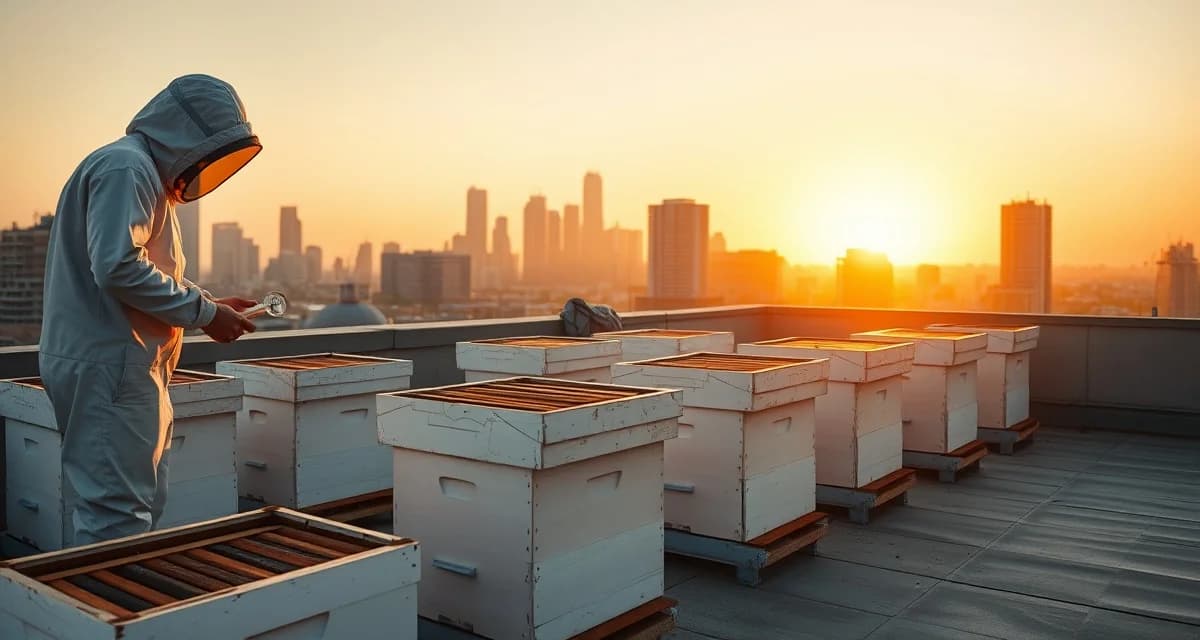
Varroa Management for Rooftop Beekeepers: Urban Apiary Considerations
Rooftop heat can push summer temperatures 10-15°F above street level. That's not an academic observation. It's a treatment restriction. If you're applying MAQS on a day where the street-level forecast is 85°F, the actual temperature at your rooftop apiary may be 95-100°F. Formic acid at that temperature is both less effective and more harmful to your colony.
Rooftop beekeeping has its own varroa management considerations that most guides don't address at all. The physical environment of a rooftop apiary, heat amplification, wind exposure, and access challenges, directly affects your treatment options and monitoring schedule.
TL;DR
- This guide covers key aspects of varroa management for rooftop beekeepers: urban apiary consi
- Mite monitoring should happen at minimum every 3-4 weeks during active season
- The 2% threshold in spring/summer and 1% in fall are standard action points based on HBHC guidelines
- Always run a pre-treatment and post-treatment mite count to calculate efficacy
- Treatment records including product name, EPA number, dates, and counts are required for state inspection compliance
- VarroaVault stores all monitoring and treatment data with automatic threshold comparison and state export formatting
How Rooftop Conditions Differ
Heat amplification: Rooftops collect and radiate heat from the building and surrounding surfaces. Dark roofing materials, HVAC exhaust, and limited shade can push rooftop temperatures well above ambient. On a 90°F summer day, a Manhattan rooftop or a Chicago flat roof can easily be 100°F or higher. Factor this into every formic acid application decision.
Wind exposure: Rooftops are more exposed than ground-level apiaries. Wind can accelerate formic acid evaporation, potentially shortening the contact time the product achieves and reducing efficacy. It can also carry vapors toward neighbors' HVAC intakes or roof access areas.
Access limitations: Getting up to a rooftop apiary requires carrying equipment. This affects what monitoring methods and treatment equipment you can practically use. An OA vaporizer that works great in an open field is manageable on a rooftop with planning. But if access requires a narrow staircase or a ladder, your equipment choices matter.
Visibility and neighbor considerations: Rooftop apiaries are visible. Smoke, chemical vapors, and beekeeper activity are all more noticeable to neighboring buildings and residents than they would be at ground level. This doesn't change what you need to do for varroa management, but it affects how you do it.
Treatment Options for Rooftops
oxalic acid vaporization: The most rooftop-compatible treatment because it works at any temperature, doesn't produce excessive visible vapor (though ventilation and personal protective equipment are still required), and the application time is brief (30-60 seconds per hive per application). The vaporizer itself is compact. This is the best primary treatment tool for most rooftop apiaries.
oxalic acid dribble: Works during broodless periods. No vaporization equipment needed. Compact to transport. The limitations are the same as any OA dribble: best efficacy in broodless colonies.
Apivar strips: Easy to transport, effective at any temperature, and once installed in the brood box, they require no additional visits for the 42-63 day treatment period. Good for rooftop apiaries where frequent access is difficult. PHI compliance tracking is important.
MAQS/Formic Pro: Use with caution on rooftops due to heat amplification. Check the actual temperature at the rooftop before applying. If it's above 85°F on the roof, err toward rescheduling rather than applying. Wind can also affect formic acid application effectiveness and drift direction.
Vaporizer safety: OA vaporizer use on a rooftop requires the same personal protective equipment as anywhere else (proper respirator rated for oxalic acid vapor, protective eyewear). Consider your neighbors and building access points when positioning yourself during vaporization.
Can I Use an OA Vaporizer on a Rooftop?
Yes, with appropriate precautions. An OA vaporizer on a rooftop requires:
- Proper personal protective equipment (respirator, eye protection, gloves)
- Sealing of hive entrances during vaporization and for 10-15 minutes after
- Awareness of wind direction relative to building HVAC intakes and roof access points
- A stable work surface
The vaporization event is brief, but vapor can drift. Orient yourself so wind carries vapor away from access points and adjacent structures.
VarroaVault's urban mode allows rooftop beekeepers to log site-specific conditions that affect treatment selection, including rooftop temperature at time of application, wind conditions, and any access or equipment notes. These entries build a record of site conditions over time that helps you plan future treatments.
For the broader context of urban varroa management, including drift and reinfestation dynamics, see our varroa management for urban beekeeping guide. The varroa treatment temperature restrictions article covers the temperature limits for each treatment product in detail.
Frequently Asked Questions
What varroa treatments are safe for rooftop beehives?
Oxalic acid vaporization and dribble are the most practical rooftop treatments because they work at any temperature and are compact to transport. Apivar strips are also excellent for rooftop apiaries because they're easy to transport, install once, and work for 42-63 days without additional visits. Formic acid (MAQS, Formic Pro) requires temperature monitoring before use on rooftops where heat amplification can push conditions above the safe application range.
How does rooftop heat affect varroa treatment choices?
Rooftop temperatures can run 10-15°F above street level. If your forecast shows 82°F and your rooftop measures 94°F, formic acid is at or above its maximum safe temperature. Use temperature-independent treatments on heat-amplified rooftops. VarroaVault's treatment log includes a temperature field, and the urban mode allows you to flag rooftop conditions that affected treatment selection.
Can I use an oxalic acid vaporizer on a rooftop?
Yes. Use proper personal protective equipment including a respirator rated for oxalic acid vapor and protective eyewear. Seal the hive entrance during vaporization and for 10-15 minutes after. Be aware of wind direction relative to neighboring HVAC intakes, roof access points, and adjacent buildings. The vaporization event is brief (30-60 seconds per hive) but vapor can drift, so position yourself and direct vapor appropriately.
How do I know if my varroa treatment is working?
Run a mite count 2-4 weeks after the treatment ends and compare it to your pre-treatment count. The efficacy formula is: ((pre-count - post-count) / pre-count) x 100. A result above 90% indicates effective treatment. Results below 80% should trigger investigation for possible resistance, application error, or reinfestation. Log both counts in VarroaVault to track efficacy trends across treatment cycles.
How often should I check mite levels in my hives?
At minimum, once per month (every 3-4 weeks) during the active season. Increase to every 2 weeks when counts are near threshold or after a treatment to verify it worked. In fall, monitoring frequency matters most because the window to treat before winter bees are raised is narrow. VarroaVault's monitoring reminders can be set to your preferred interval for each apiary.
What records should I keep for varroa management?
Each record should include: date of count or treatment, hive identifier, monitoring method used, number of bees sampled, mites counted, infestation percentage, treatment product name and EPA registration number, dose applied, treatment start and end dates, and PHI end date. State apiarists typically expect this level of detail during inspections. VarroaVault captures all of these fields in a single log entry.
What is Varroa Management for Rooftop Beekeepers: Urban Apiary Considerations?
Varroa management for rooftop beekeepers is a specialized approach to controlling Varroa destructor mites in urban hive environments. Rooftop apiaries face unique challenges including heat amplification of 10-15°F above street level, wind exposure, and limited access. These conditions directly affect which treatments are safe and effective. Standard varroa protocols must be adjusted to account for rooftop microclimates, with monitoring every 3-4 weeks during active season and treatment thresholds of 2% in spring/summer and 1% in fall.
How much does Varroa Management for Rooftop Beekeepers: Urban Apiary Considerations cost?
Varroa management itself relies on approved treatments like formic acid (MAQS) or oxalic acid, which are available at varying price points. The primary cost consideration for rooftop beekeepers is treatment efficacy lost to improper application conditions, which can require retreatment. VarroaVault, a platform referenced in this guide, offers digital monitoring and record-keeping tools that help rooftop beekeepers track mite counts, treatment history, and compliance data, reducing costly mismanagement errors over time.
How does Varroa Management for Rooftop Beekeepers: Urban Apiary Considerations work?
Rooftop varroa management works by adapting standard mite monitoring and treatment protocols to account for elevated temperatures and wind exposure. Beekeepers run alcohol wash or sugar roll counts every 3-4 weeks, record results against action thresholds, and select treatments appropriate for actual rooftop temperatures rather than street-level forecasts. A pre-treatment count establishes baseline infestation, and a post-treatment count confirms efficacy. All records including product name, EPA number, and dates must be maintained for state inspection compliance.
What are the benefits of Varroa Management for Rooftop Beekeepers: Urban Apiary Considerations?
The core benefit of rooftop-specific varroa management is colony survival. Applying treatments without accounting for rooftop heat amplification risks harming your bees while failing to control mites. A structured monitoring schedule catches infestations before they reach damaging levels. Accurate record-keeping ensures state compliance and provides data to improve future treatment decisions. For urban beekeepers with limited hive access, systematic protocols reduce the risk of missing critical intervention windows during the active season.
Who needs Varroa Management for Rooftop Beekeepers: Urban Apiary Considerations?
Any beekeeper maintaining hives on a rooftop, terrace, or urban elevated structure needs rooftop-specific varroa management guidance. Standard beekeeping resources rarely address how heat amplification, wind, and restricted access alter treatment safety and timing. This is especially relevant for urban beekeepers in dense cities where rooftop temperatures routinely exceed safe application thresholds for formic acid products. Beekeepers subject to state inspection requirements also benefit from the structured record-keeping approach outlined in this guide.
Sources
- American Beekeeping Federation (ABF)
- USDA ARS Bee Research Laboratory
- Honey Bee Health Coalition
- Penn State Extension Apiculture Program
- Project Apis m.
Get Started with VarroaVault
The information in this guide is most useful when you have your own mite count data to apply it to. VarroaVault stores every count, flags threshold crossings automatically, and builds the treatment history you need for state inspections and effective management decisions. See pricing and free tools at varroavault.com.