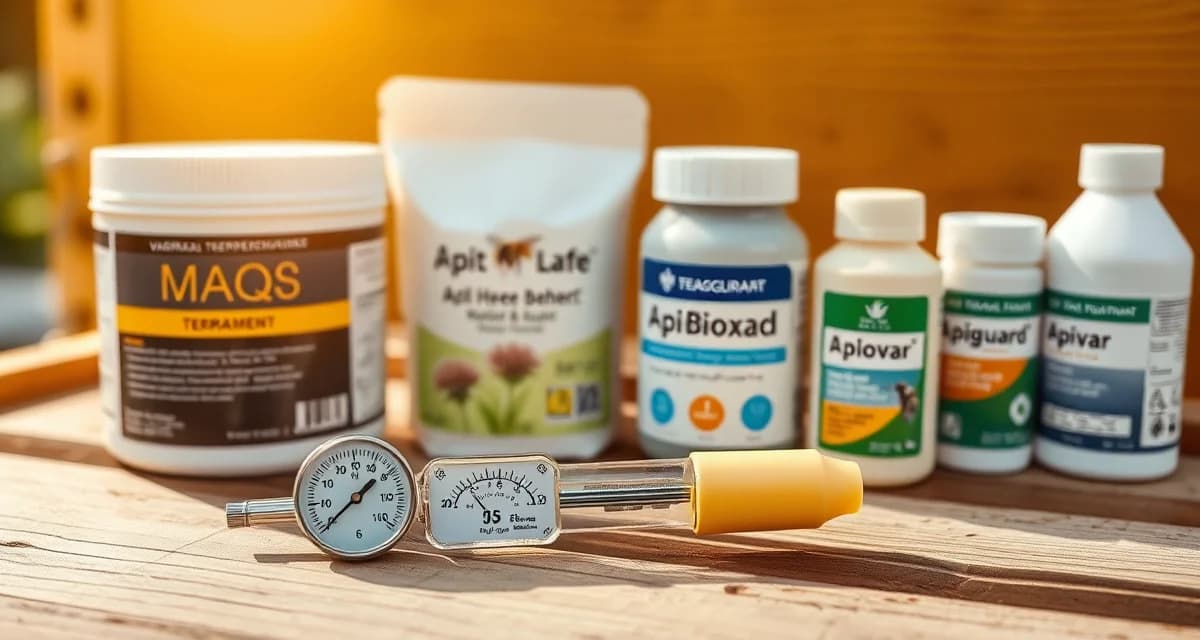
Varroa Treatment Temperature Restrictions: What Works When
Temperature is one of the most commonly ignored variables in Varroa treatment. Every soft chemical treatment has a temperature range where it works as labeled. Outside that range, you get reduced efficacy, elevated risk to the queen, or both. Understanding these requirements before you reach for a product is essential.
Why Temperature Matters
The active ingredients in soft acaricides work through vapor pressure, volatility, or topical contact. Temperature directly governs these mechanisms:
- Formic acid is a volatile organic acid. Evaporation rate scales with temperature. Too cold and it barely off-gasses; too hot and it releases too fast, overwhelming bees and stressing queens.
- Thymol is a crystalline compound that must warm enough to vaporize into the hive atmosphere. Below the threshold temperature, it sits inert.
- Oxalic acid is applied by dribble or vaporization. In dribble form, temperature is less critical, but efficacy depends heavily on brood state rather than temperature. Vaporization is not temperature-dependent in the way formic acid is.
- Amitraz (Apivar) is a slow-release strip. Temperature affects the rate of active ingredient release, but the window is wide enough that it is rarely a limiting factor in practice.
Formic Acid (MAQS, Formic Pro)
Lower limit: 50F (10C)
Upper limit: 85F (29C) daytime high
Formic acid requires active off-gassing to penetrate capped brood and kill mites inside cells. Below 50 degrees Fahrenheit, off-gassing drops too low for effective treatment. The product sits in the hive without meaningful mite kill.
Above 85 degrees Fahrenheit daytime high, the rate of release exceeds what colonies can tolerate safely. Queen losses increase significantly. MAQS and Formic Pro labels both specify this upper limit. Some beekeepers push to 90 degrees with reduced strip counts, but this is off-label and increases queen risk.
The narrow formic acid window is a real constraint in hot-summer states. In Kansas, Missouri, or Georgia, the July-August peak mite period often falls entirely outside the safe temperature range for formic acid. Beekeepers in these climates need alternative options for their primary summer treatment. See varroa treatment temperature restrictions and state-level planning for how Kansas beekeepers navigate this.
Thymol (Apiguard, Api Life Var)
Minimum effective temperature: 59-65F (15-18C)
Maximum: 105F (40C) for Apiguard; approximately 95F for Api Life Var
Apiguard is a thymol gel that requires hive temperatures above 59F to begin vaporizing. The label recommends above 60F daytime temperatures for consistent treatment. Api Life Var tiles have similar requirements with a slightly narrower upper limit.
Thymol works by saturating the hive atmosphere with vapor. The treatment relies on bees walking through and fanning the vapors throughout the colony. This mechanism is effective in moderate conditions and works on both phoretic mites and, to some extent, mites in capped cells through vapor penetration.
The practical window for thymol in northern states is mid-August through September. In the South, October. In areas where October temperatures drop quickly, beekeepers sometimes install Apiguard before nighttime lows become consistently cold and watch carefully.
Oxalic Acid (Api-Bioxal)
Dribble method: No strict temperature restriction, but works best above 40F
Vaporization: Works across a wide range; best during broodless period regardless of temperature
Oxalic acid is the most temperature-flexible of the major soft treatments, which is part of why it has become the go-to winter treatment for most operations. Vaporization can be performed even in cold weather as long as the colony is accessible.
The critical variable for oxalic acid is not temperature but brood state. Oxalic acid kills phoretic mites on adult bees but does not penetrate capped brood. In a broodless colony, nearly all mites are on bees, and a single vaporization achieves 90%+ knockdown. In a colony with heavy brood, OA is far less effective.
This is why oxalic acid vaporization is most commonly used in late fall or winter, during the natural broodless period. Repeated applications during a broodless period (every 5 days for 3 to 5 treatments) can further improve efficacy.
Amitraz (Apivar)
Functional range: 50-100F (10-38C)
Apivar strips release amitraz through slow evaporation from the plastic matrix. The release rate is temperature-dependent, but the functional range is broad enough to cover most treatment seasons. In very cold conditions (below 50F), release slows; in extreme heat, it accelerates. But neither extreme typically prevents effective treatment the way formic acid's limits do.
Apivar should not be used with honey supers on. The treatment duration is 6 to 8 weeks. The primary constraints on Apivar use are regulatory (label compliance) and resistance management, not temperature.
HopGuard 3
Works in a wider temperature range than formic acid or thymol
HopGuard 3 (beta acids from hops) can be used year-round, including when other treatments are temperature-restricted. It is approved for use with honey supers and is attractive for operations that need to treat during summer honey flows when other options are off the table. Efficacy is somewhat lower than the premium treatments, and it requires repeated applications.
Planning Treatments Around Temperature Windows
The practical implication of these restrictions is that treatment planning must account for your local climate calendar, not just your mite counts. A colony that hits threshold on August 1 in Georgia is in a temperature window where formic acid is not safe, thymol is borderline, and amitraz is the most reliable option.
VarroaVault's varroa treatment calendar builder integrates temperature guidance for each product class so you can plan your season in advance. Log your monitoring results, set treatment dates, and get alerts when a scheduled treatment falls outside its safe temperature window.
Tracking your treatment history against temperature records also helps you identify whether a treatment failure was due to out-of-range conditions rather than true resistance. See varroa resistance management program for how to use treatment history to make better rotation decisions.
Quick Reference
| Treatment | Min Temp | Max Temp | Brood Restriction |
|-----------|----------|----------|-------------------|
| Formic acid (MAQS/Formic Pro) | 50F | 85F daytime high | None (penetrates capped brood) |
| Thymol (Apiguard) | 60F | 105F | None |
| Thymol (Api Life Var) | 60F | ~95F | None |
| Oxalic acid (vaporization) | No strict limit | No strict limit | Broodless period for best efficacy |
| Amitraz (Apivar) | 50F | 100F | No honey supers |
| HopGuard 3 | Wide range | Wide range | Can use with supers |
Related Articles
FAQ
What is Varroa Treatment Temperature Restrictions: What Works When?
Varroa Treatment Temperature Restrictions: What Works When is a practical guide for beekeepers covering the temperature requirements of common Varroa mite treatments including formic acid (MAQS, Formic Pro), thymol, oxalic acid, and amitraz (Apivar). It explains why temperature directly affects how well each treatment works, detailing the specific ranges where each product performs safely and effectively — and the risks of applying treatments outside those windows.
How much does Varroa Treatment Temperature Restrictions: What Works When cost?
This article is free educational content published on VarroaVault. There is no purchase required to read it. The treatments discussed — formic acid strips, thymol-based products, oxalic acid, and Apivar — vary in cost depending on brand, quantity, and supplier. Most soft chemical treatments for a single hive range from roughly $5 to $30 per application, with oxalic acid being among the most affordable options available.
How does Varroa Treatment Temperature Restrictions: What Works When work?
The article works by explaining the chemistry behind each treatment's temperature sensitivity. Formic acid volatilizes faster at higher temperatures, meaning too cold means poor efficacy and too hot risks queen loss. Thymol must warm enough to vaporize into hive air. Oxalic acid dribble relies less on temperature and more on brood absence. Amitraz strips release slowly across a wide range. Knowing these mechanisms helps beekeepers time applications correctly.
What are the benefits of Varroa Treatment Temperature Restrictions: What Works When?
The key benefit is avoiding costly treatment failures and unnecessary colony stress. Applying a treatment outside its effective temperature range wastes money, allows Varroa populations to grow unchecked, and can injure or kill queens. Understanding temperature windows also helps beekeepers plan treatment timing around seasonal conditions, choose the right product for their current weather, and reduce the risk of resistance developing from repeated sub-lethal dosing.
Who needs Varroa Treatment Temperature Restrictions: What Works When?
Any beekeeper managing hives with Varroa mite pressure needs this information — which is essentially every beekeeper outside of a handful of naturally resistant populations. It is especially relevant for hobbyists and small-scale beekeepers who may reach for a product without checking conditions first, and for those in climates with extreme seasonal temperature swings where the usable treatment window is narrow.
How long does Varroa Treatment Temperature Restrictions: What Works When take?
Reading the article takes roughly five to ten minutes. Applying the knowledge is ongoing — temperature restrictions apply every time you treat. Formic acid treatments typically run seven to fourteen days per application. Thymol treatments usually span two to four weeks. Oxalic acid dribble is a single application most effective on broodless colonies. Apivar strips remain in the hive for six to eight weeks. Timing each correctly is what this guide helps you do.
What should I look for when choosing Varroa Treatment Temperature Restrictions: What Works When?
Look for guidance that covers specific temperature minimums and maximums, not just vague cautions. Good resources will tell you what happens when you apply outside the range — reduced efficacy, queen risk, or both — and explain the chemistry behind it. For products like formic acid, the upper limit matters as much as the lower one. A trustworthy guide also distinguishes between dribble and vaporization methods for oxalic acid, since their requirements differ.
Is Varroa Treatment Temperature Restrictions: What Works When worth it?
Yes, understanding temperature restrictions before treating is one of the highest-leverage things a beekeeper can do. Treatment failures are expensive in time, money, and colony health. A Varroa population left unchecked through a botched application can crash a hive before the next treatment window opens. The five minutes spent confirming temperature conditions match product requirements pays back many times over in effective mite control and healthier bees.
Sources
- Formic Pro and MAQS product labels (NOD Apiary Products)
- Apiguard product label (Vita Bee Health)
- Api-Bioxal product label (Veto-Pharma)
- Apivar product label (Veto-Pharma)
- Honey Bee Health Coalition Varroa Management Guidelines